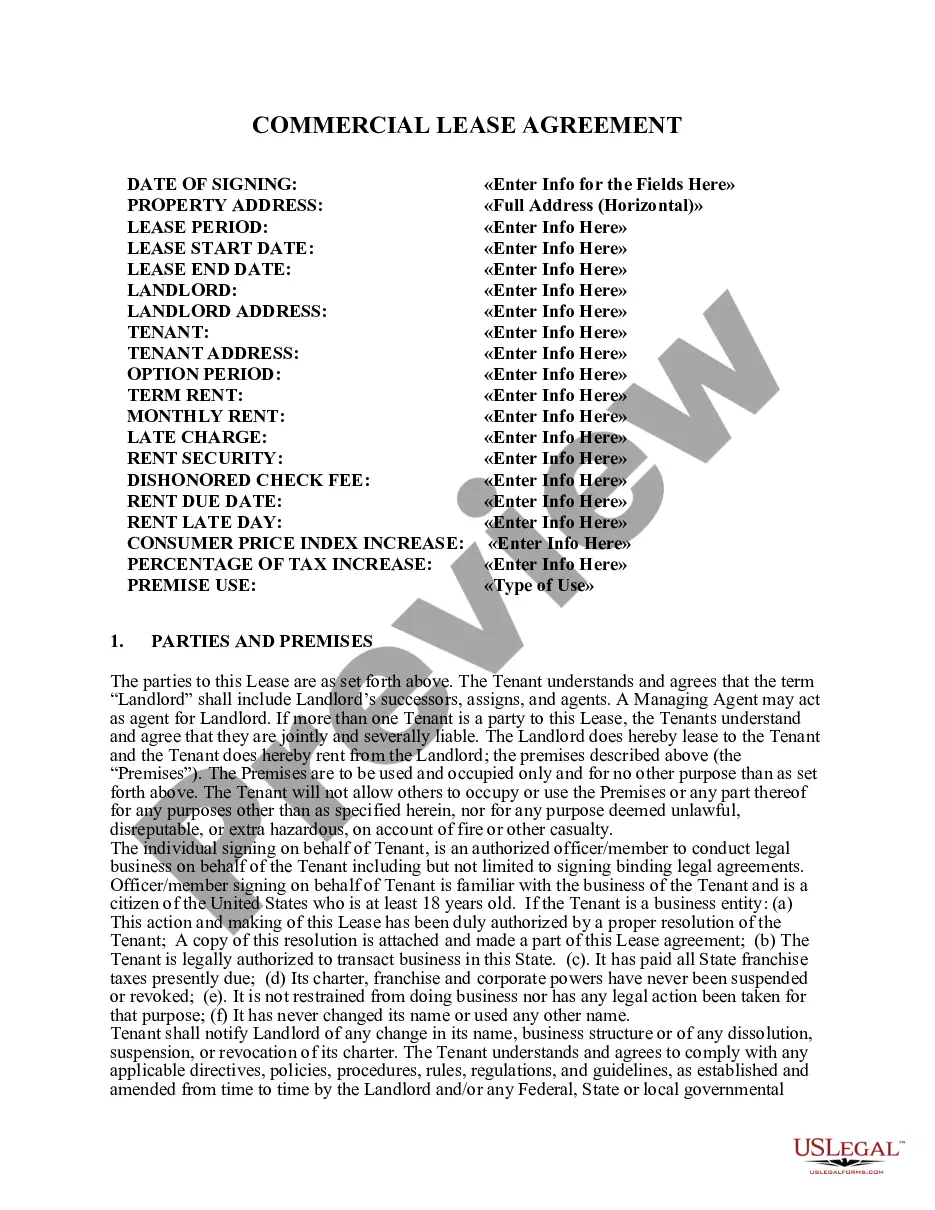
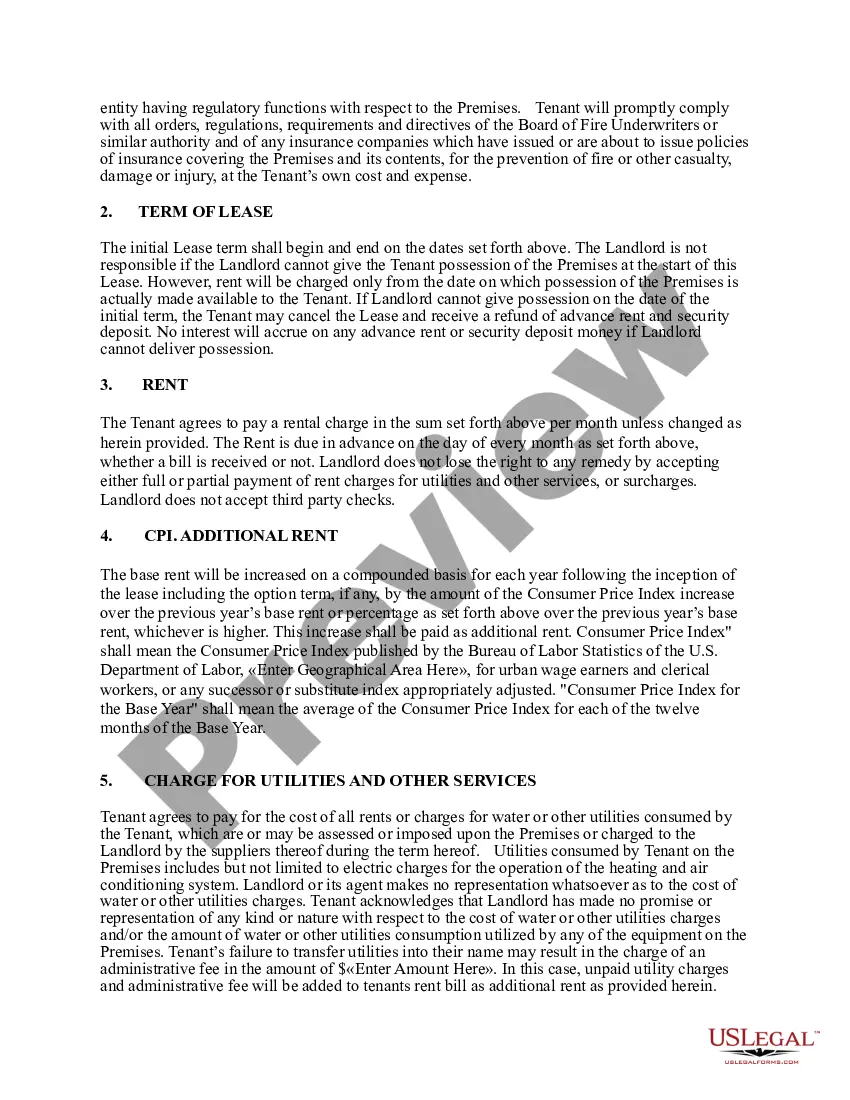
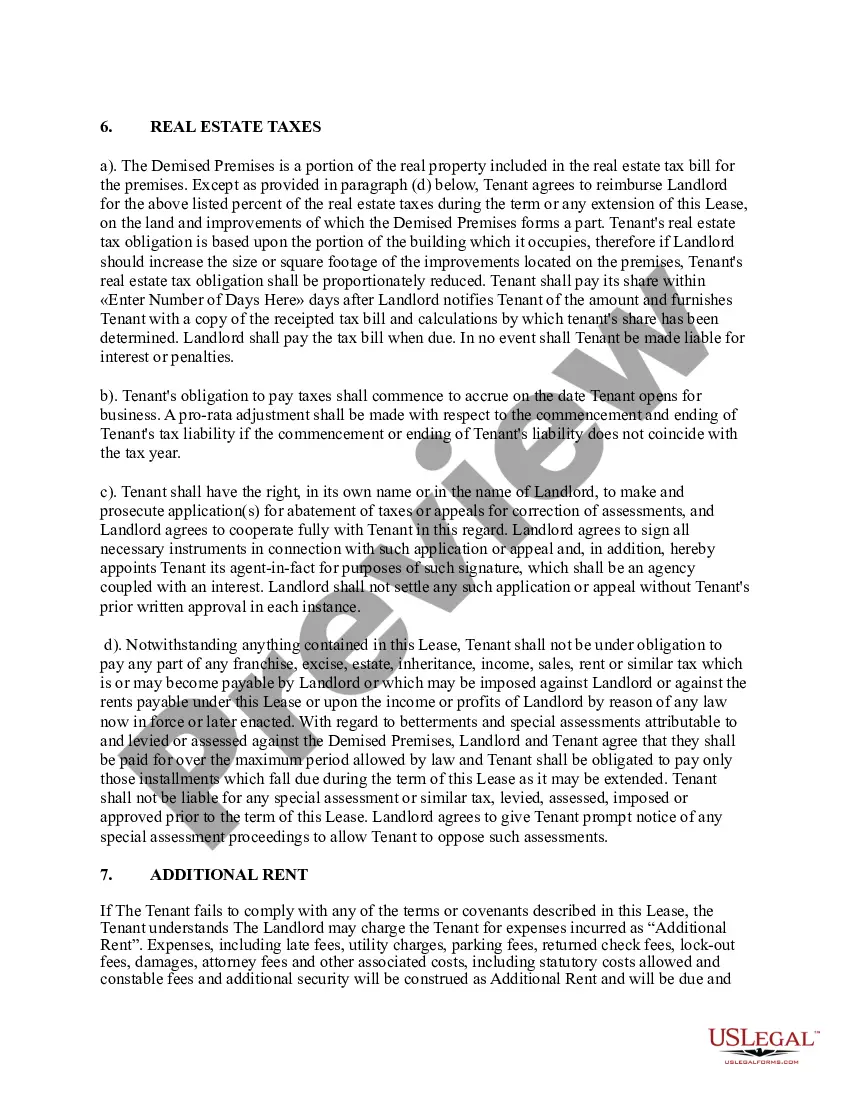
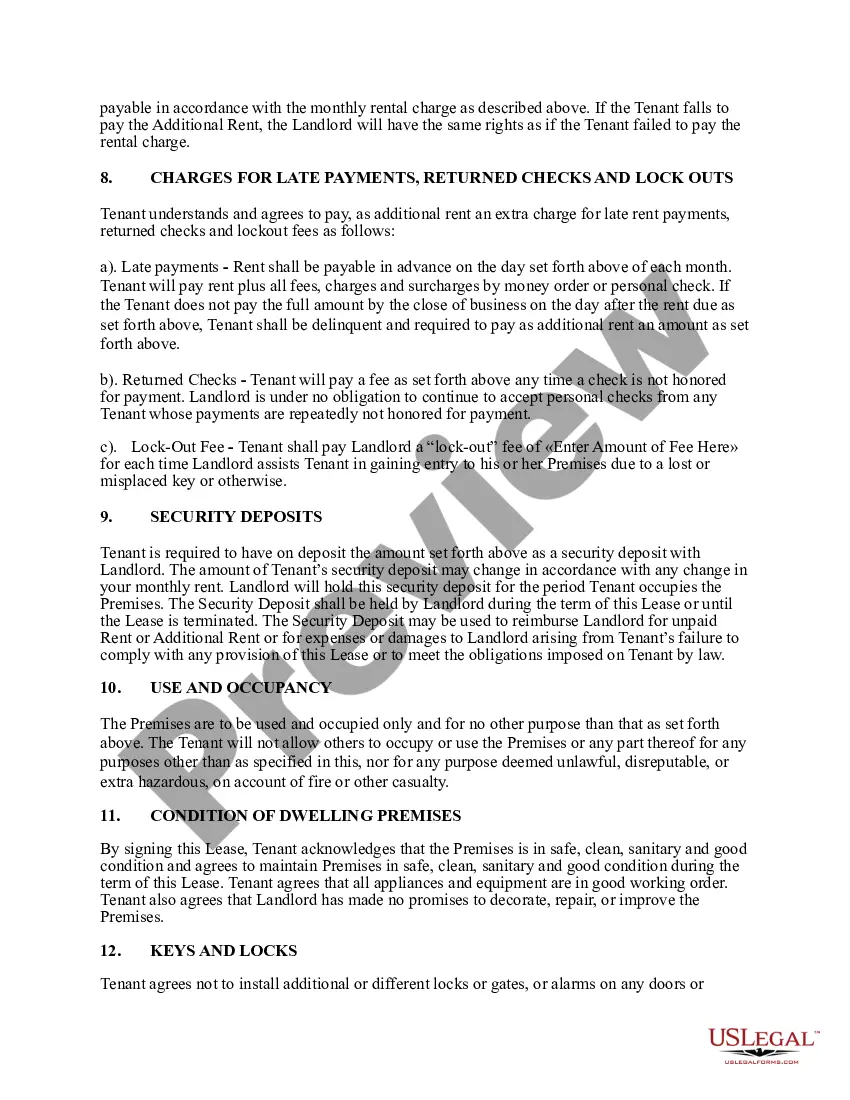
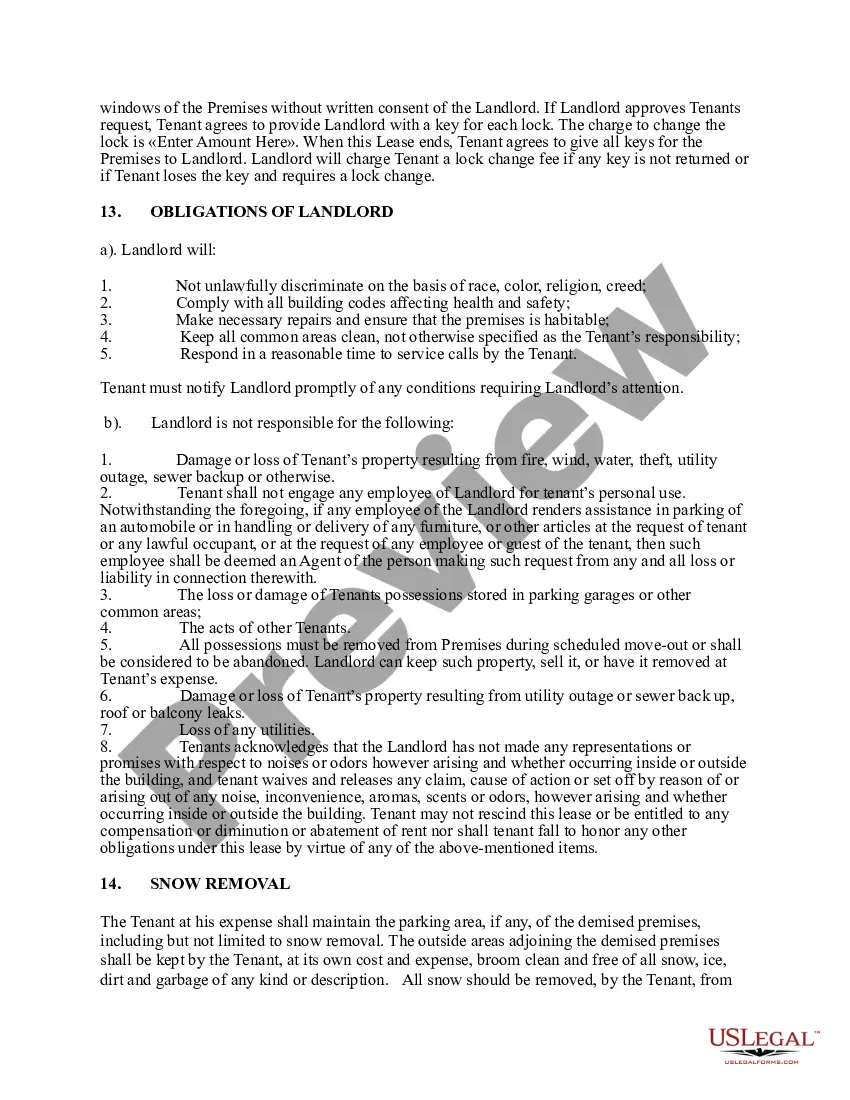
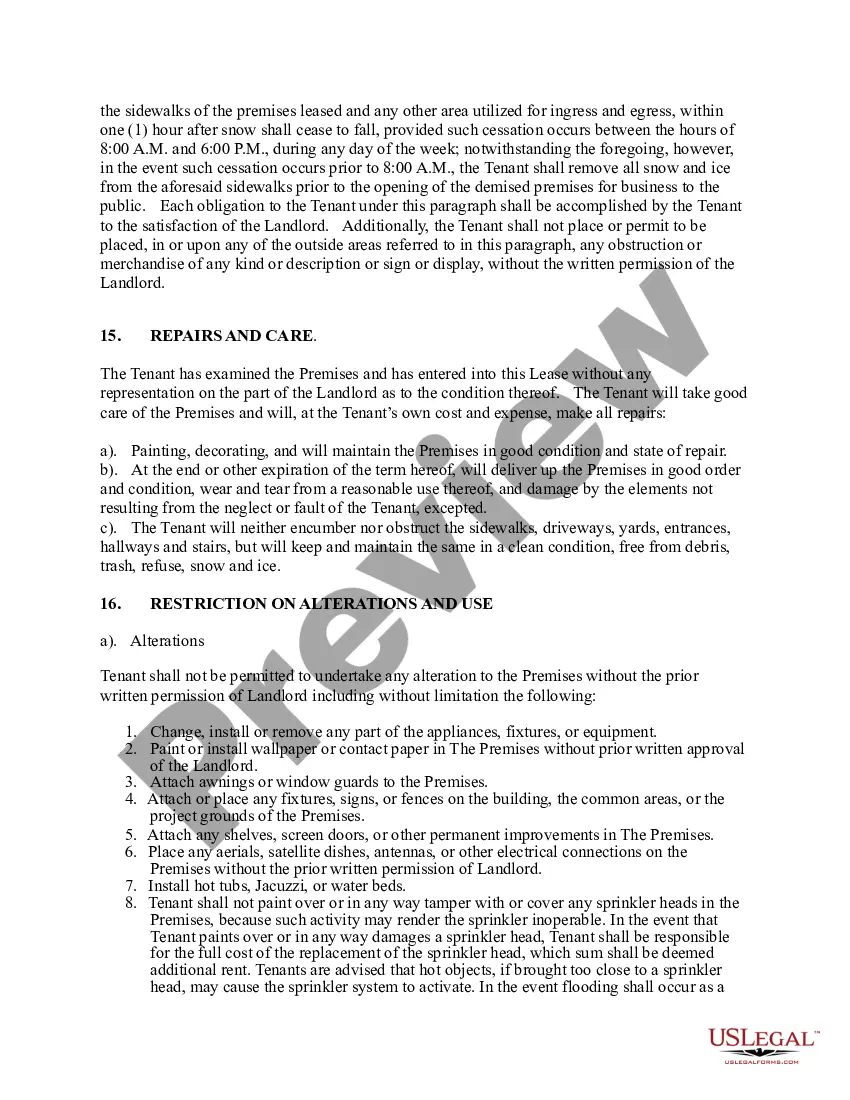
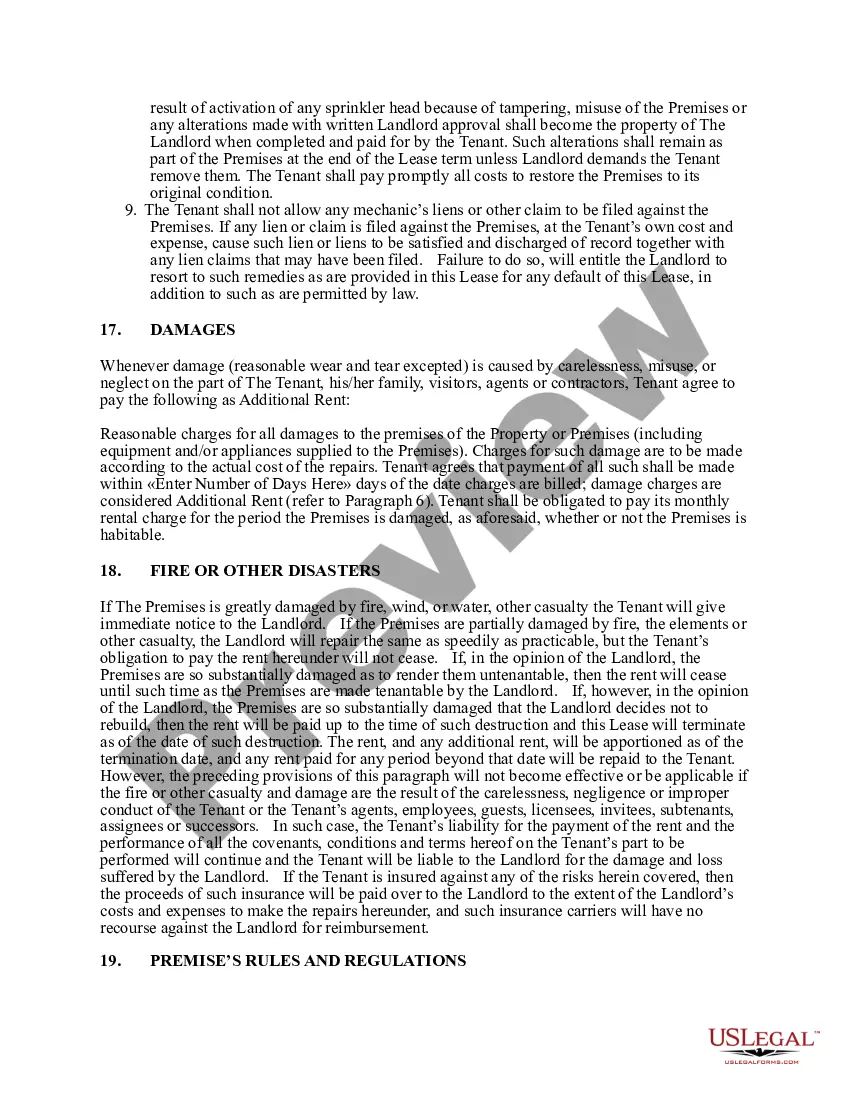
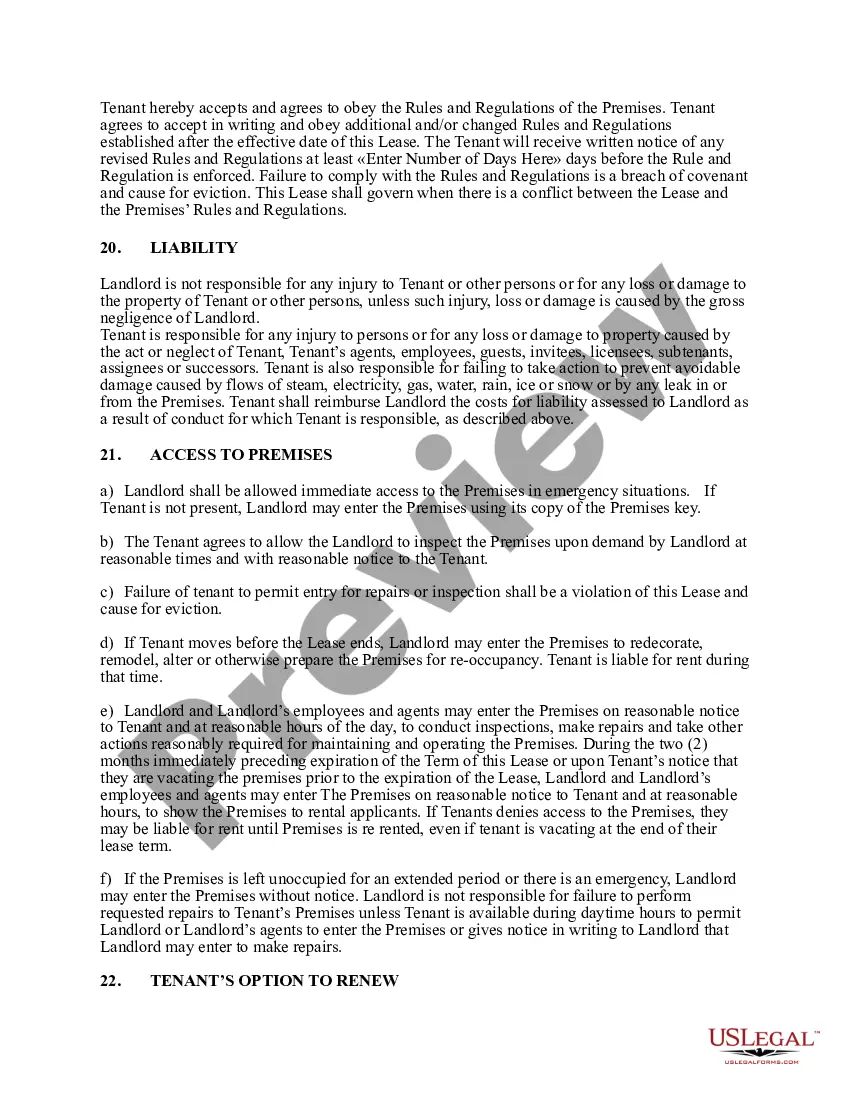
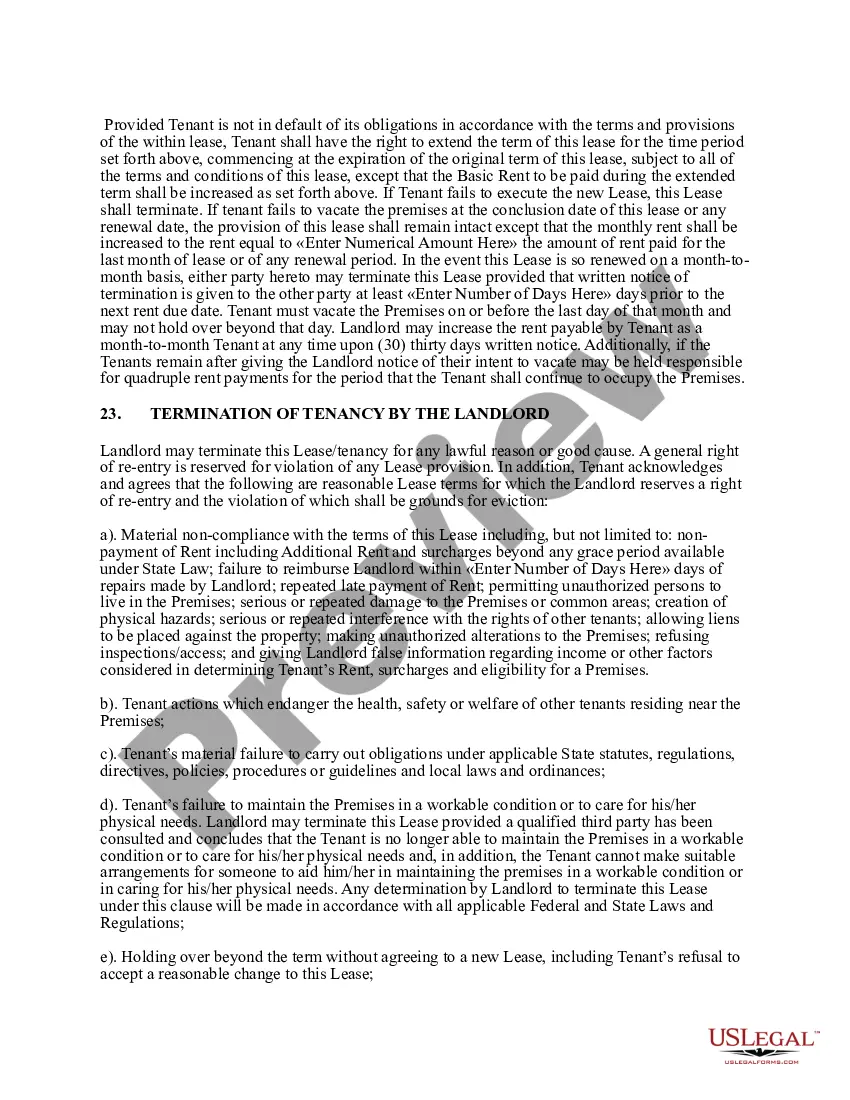
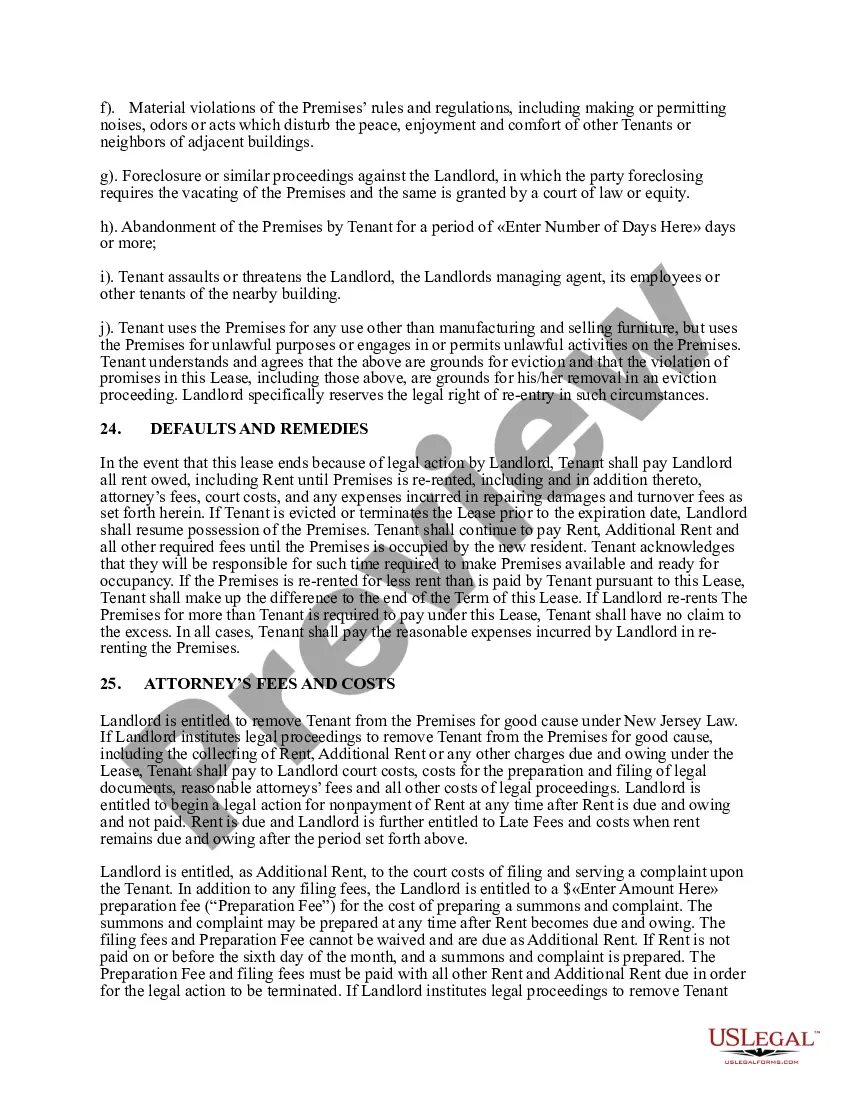
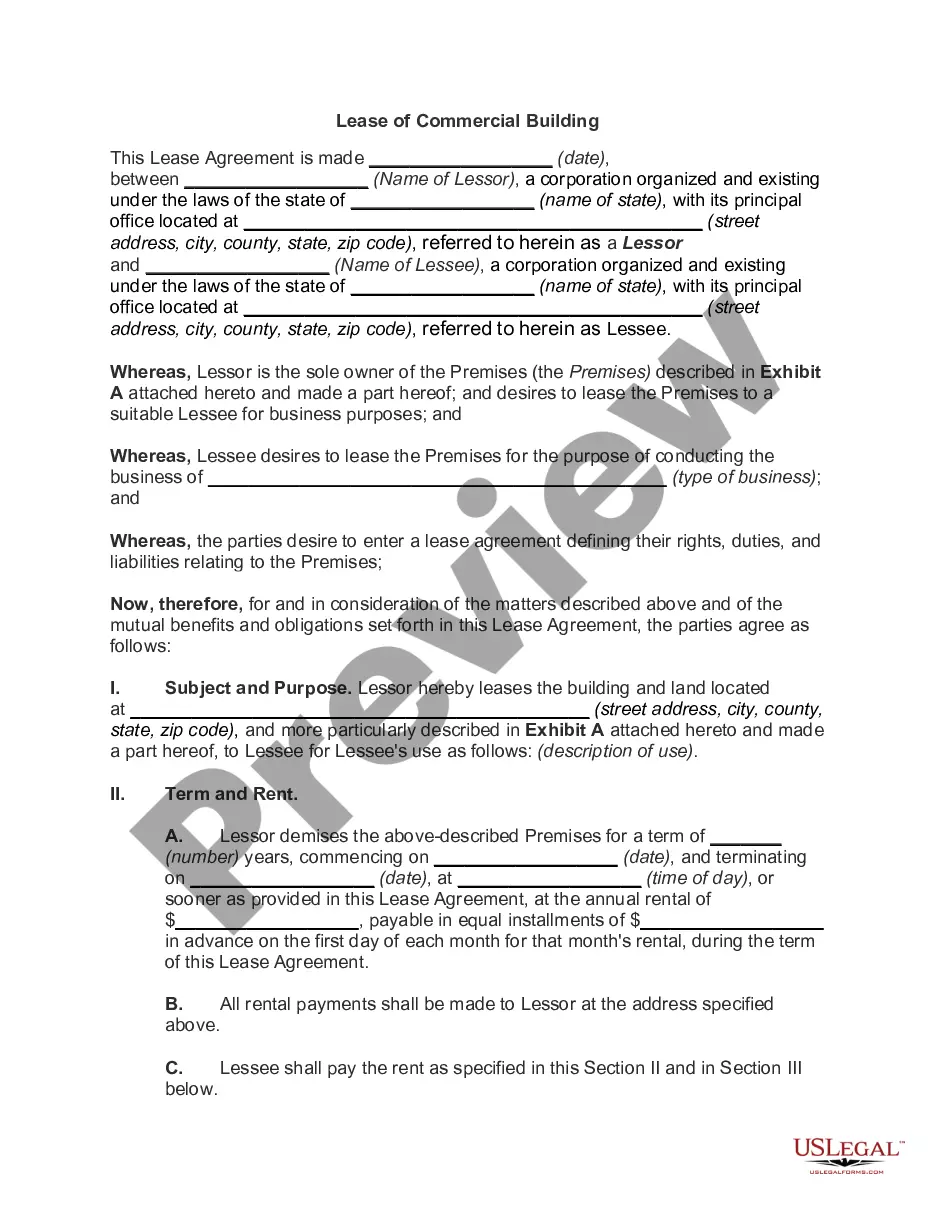
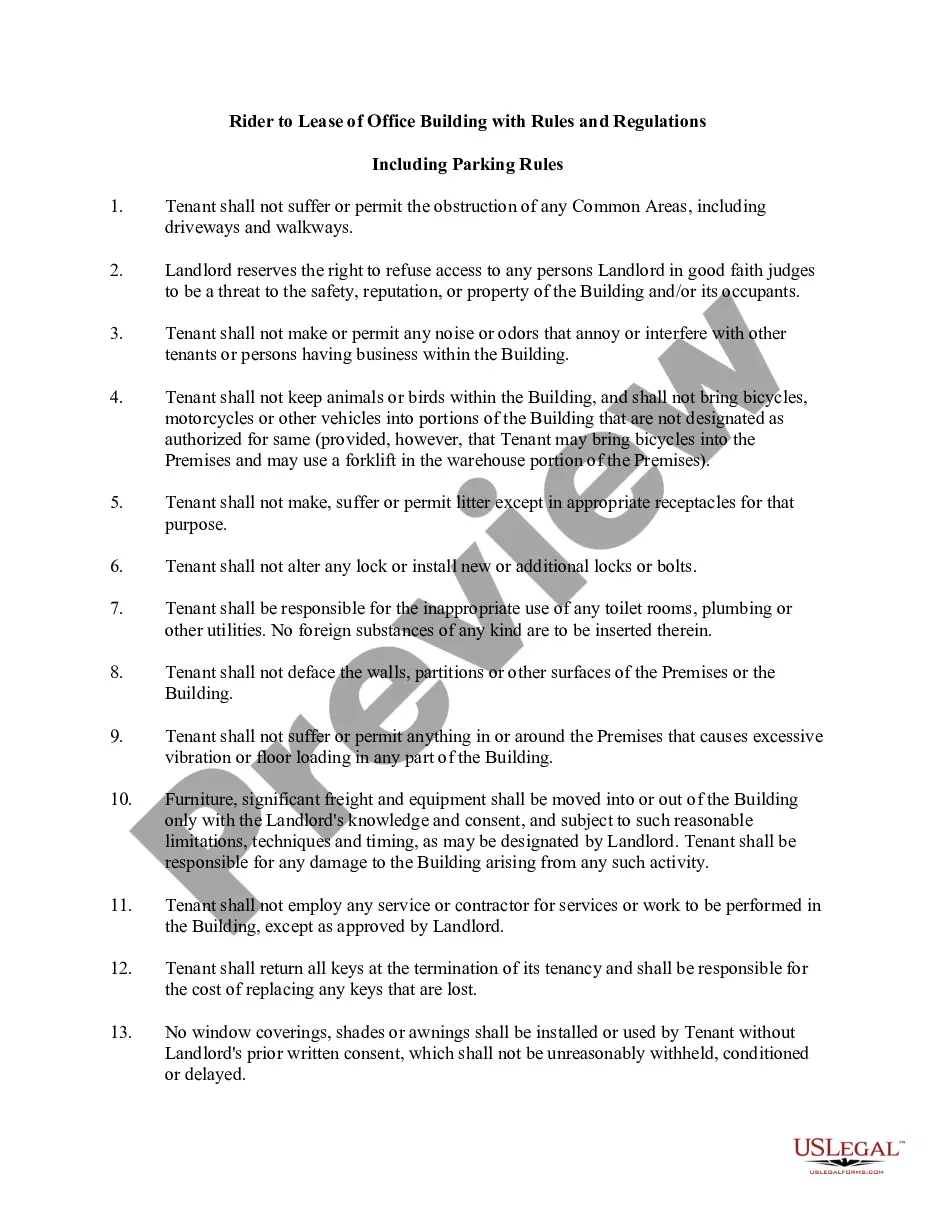
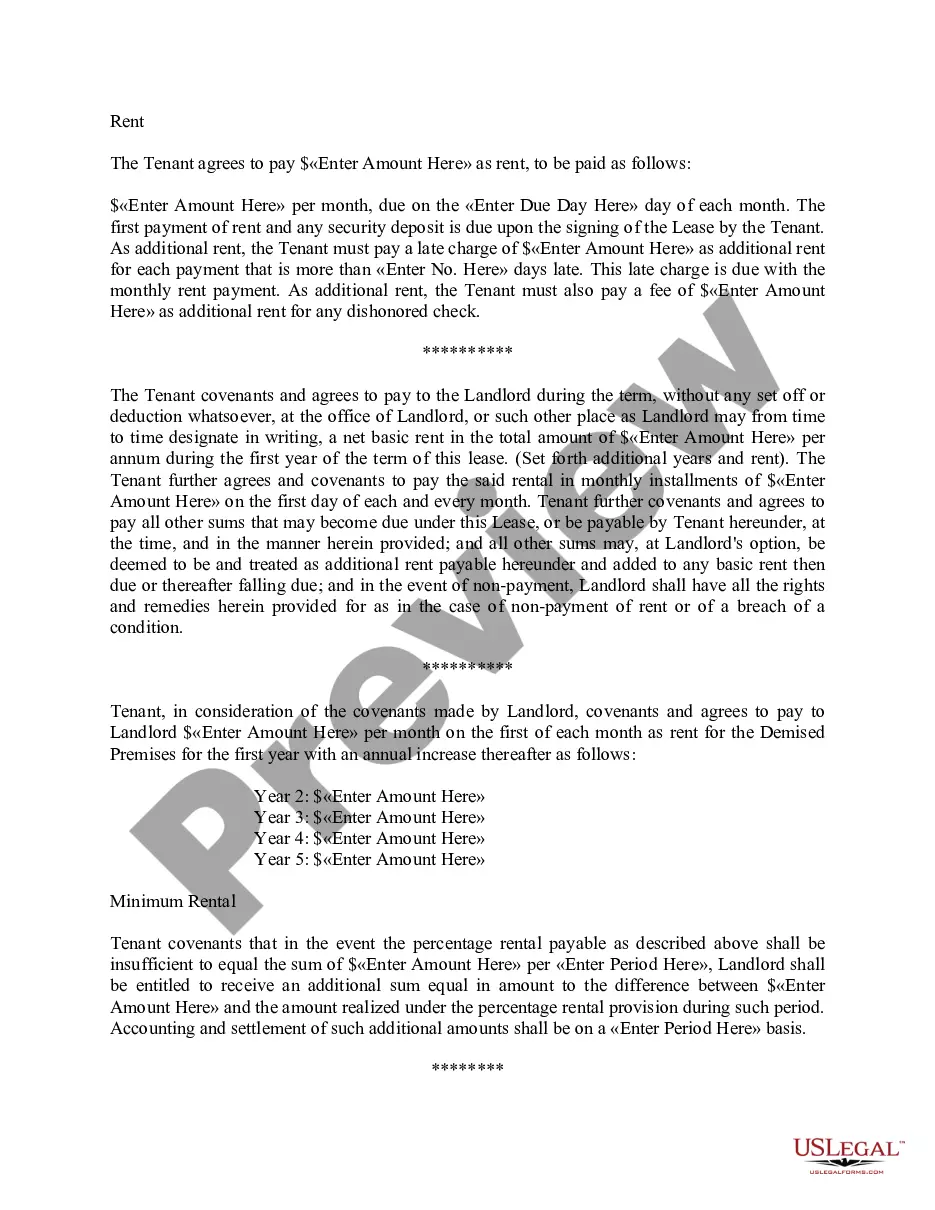
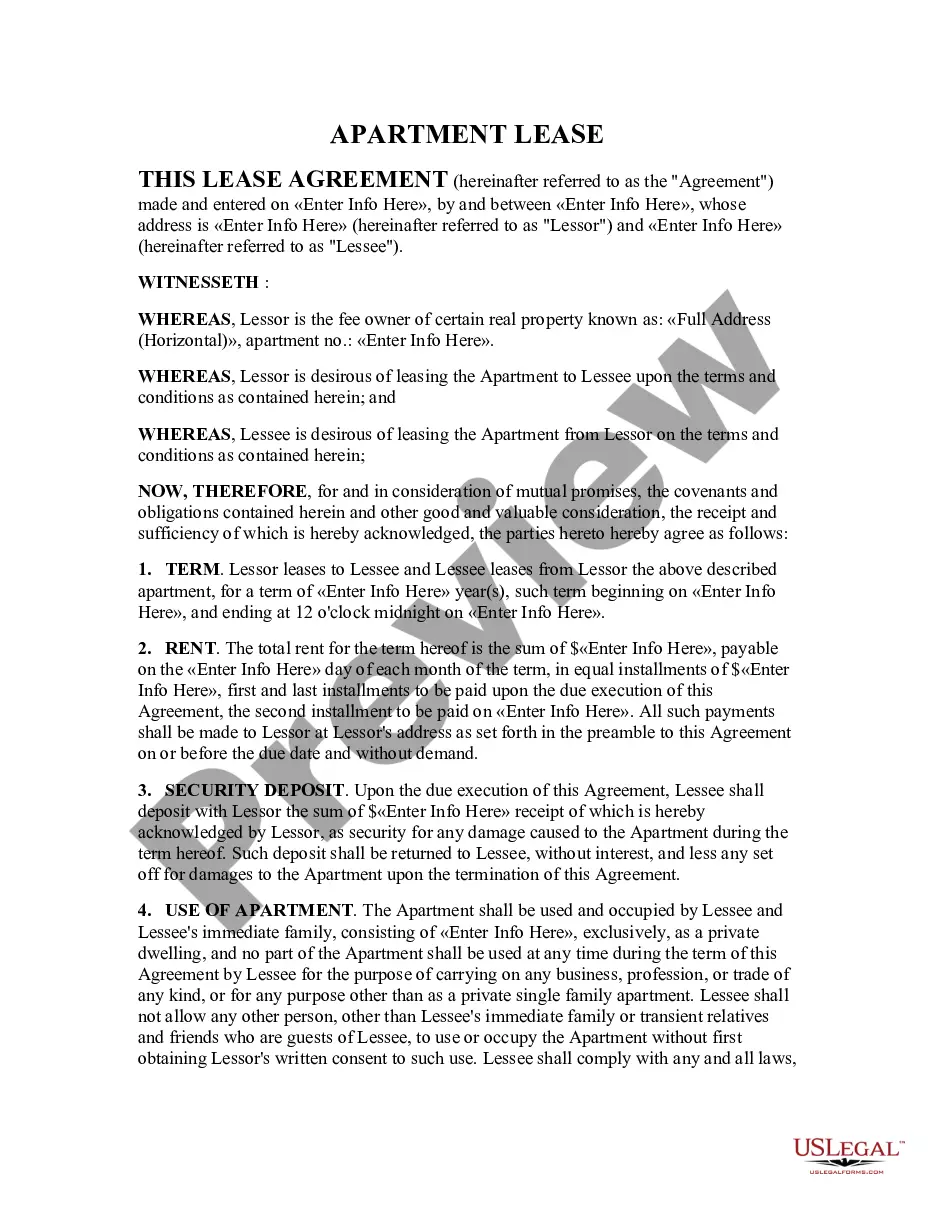
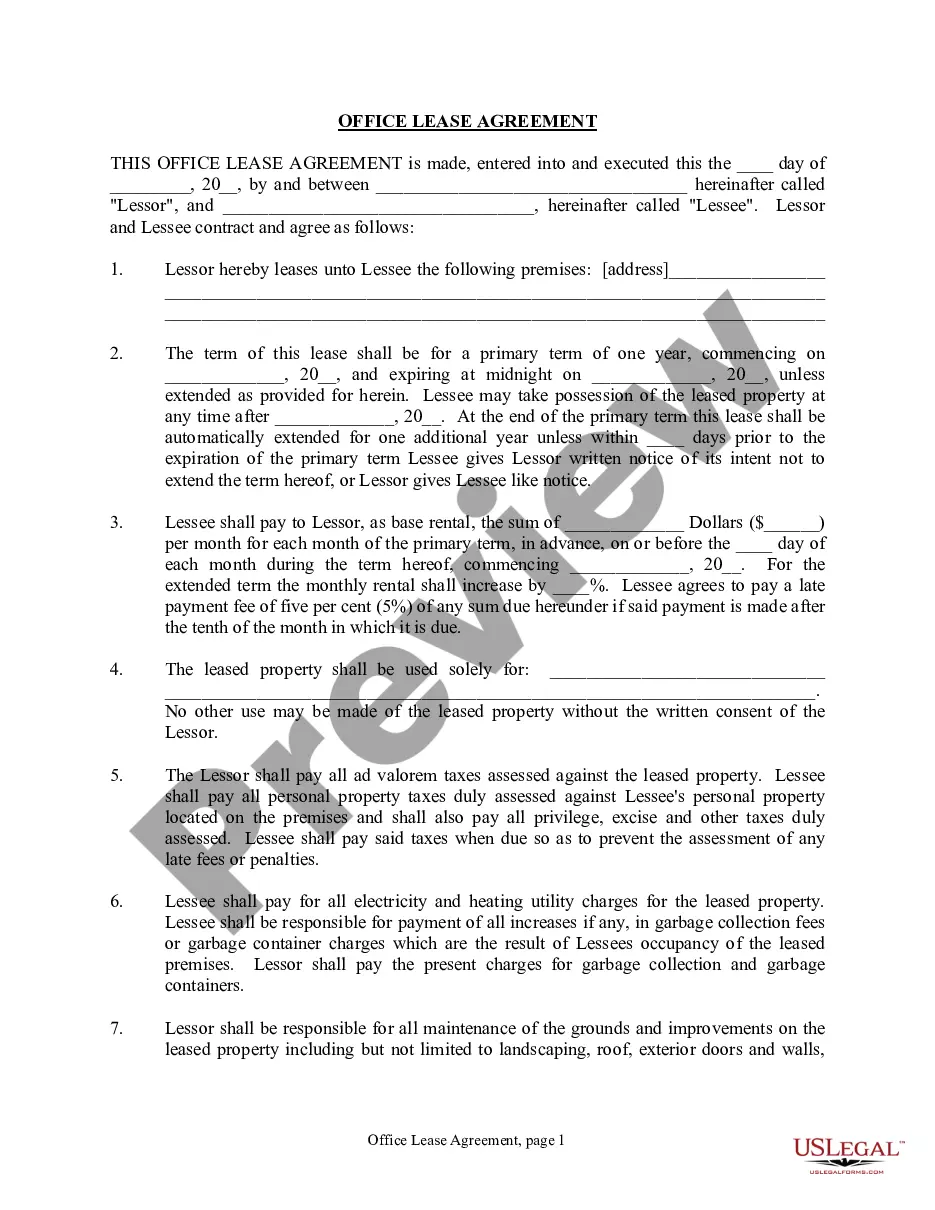
This form is for the lease of commercial property. Commercial property differs from residential property in that the property's primary or only use is commercial (business oriented), rather than serving as a residence. Commercial leases are often more complex than residential leases, have longer lease terms, and may provide for the rental price to be tied to the tenant business's profitability or other factors, rather than a uniform monthly payment (though this is also quite ordinary in commercial leases).
Absolutely! It's smart to consult a lawyer or a real estate expert to make sense of the legal jargon. A little professional insight can save you a lot of headaches down the road.
Ending a lease early isn't as easy as pie. You'll likely need to provide notice and may face penalties. Check your lease for any clauses that discuss early termination options.
Missing a rent payment can lead to late fees and, in the worst cases, eviction. It's best to keep an open line of communication with your landlord if you find yourself in a pinch.
Generally, tenants need to get the landlord's agreement before making any alterations. It's like they say: 'Better safe than sorry.' So, always check first.
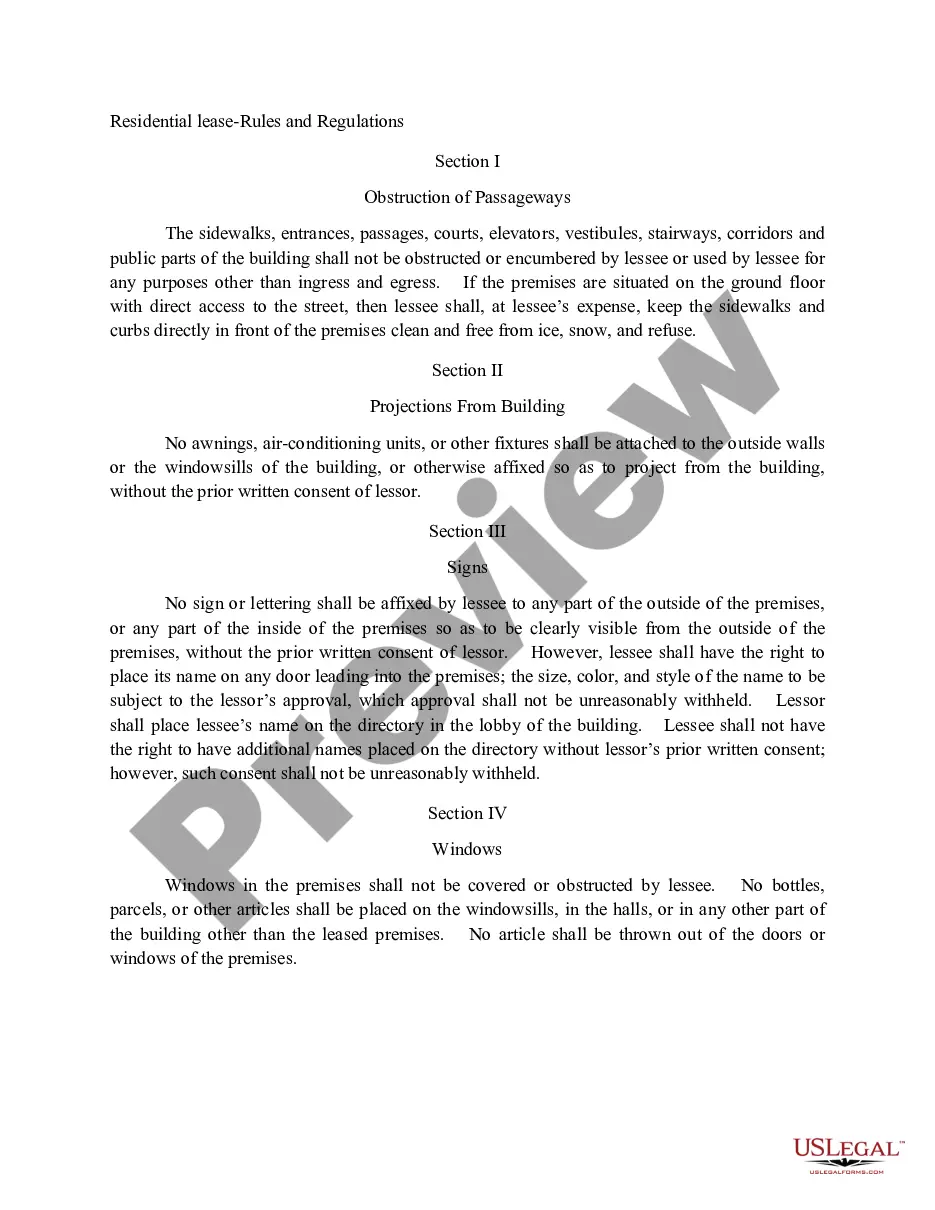
You'll often find rules around noise levels, signage, and what you can and can't do with the property. It's wise to know the house rules ahead of time to avoid any sticky situations.
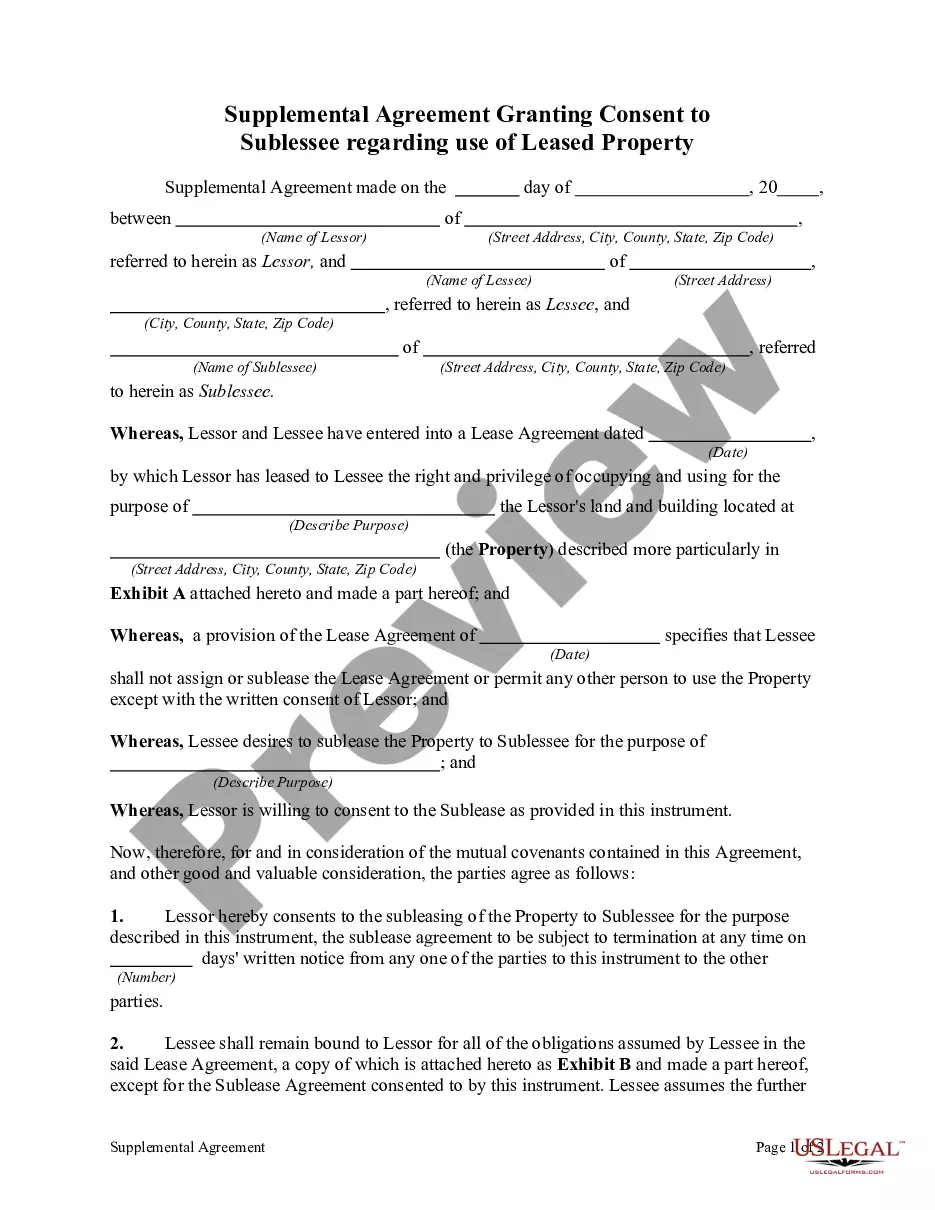
Subleasing may be an option, but it typically depends on your lease agreement. Always check if you need the landlord's thumbs up before going down that road.
When diving into a commercial lease, keep your eyes peeled for the duration, rent amount, and maintenance responsibilities. Make sure to read the fine print on renewal options and any hidden fees.