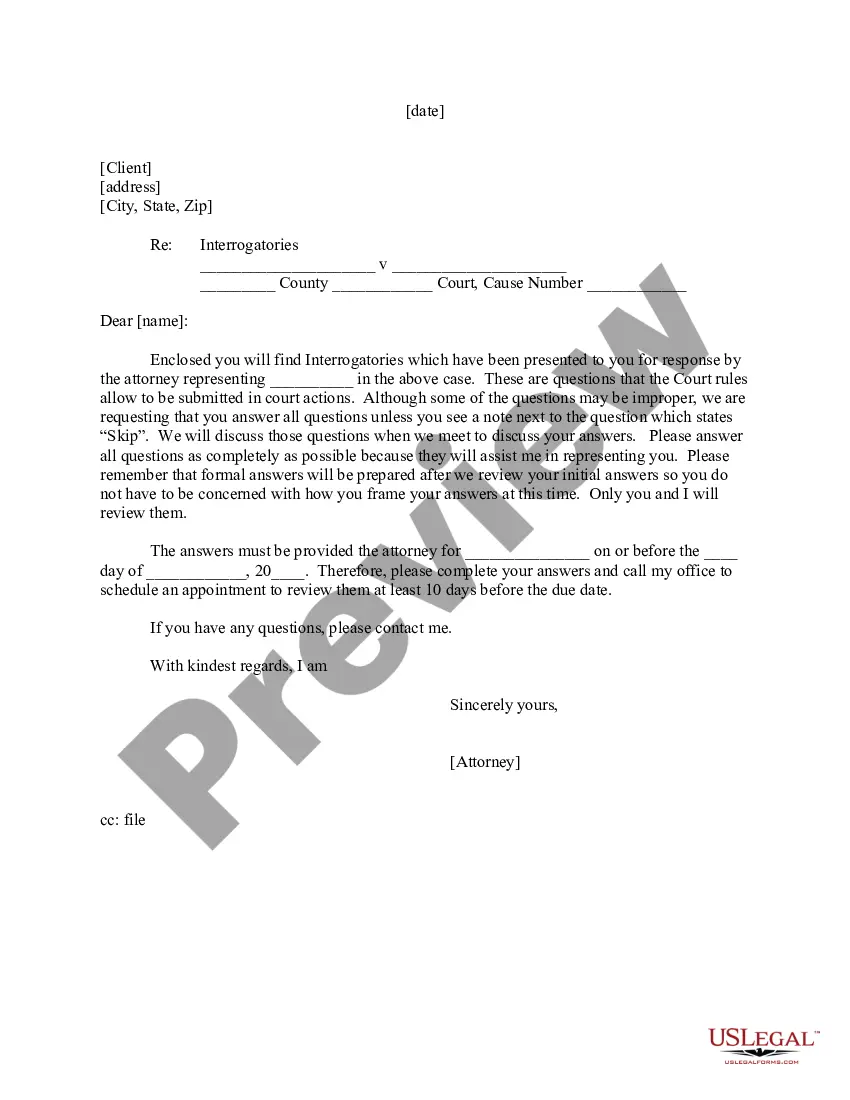
Columbus Letter to Client - Interrogatories to Answer
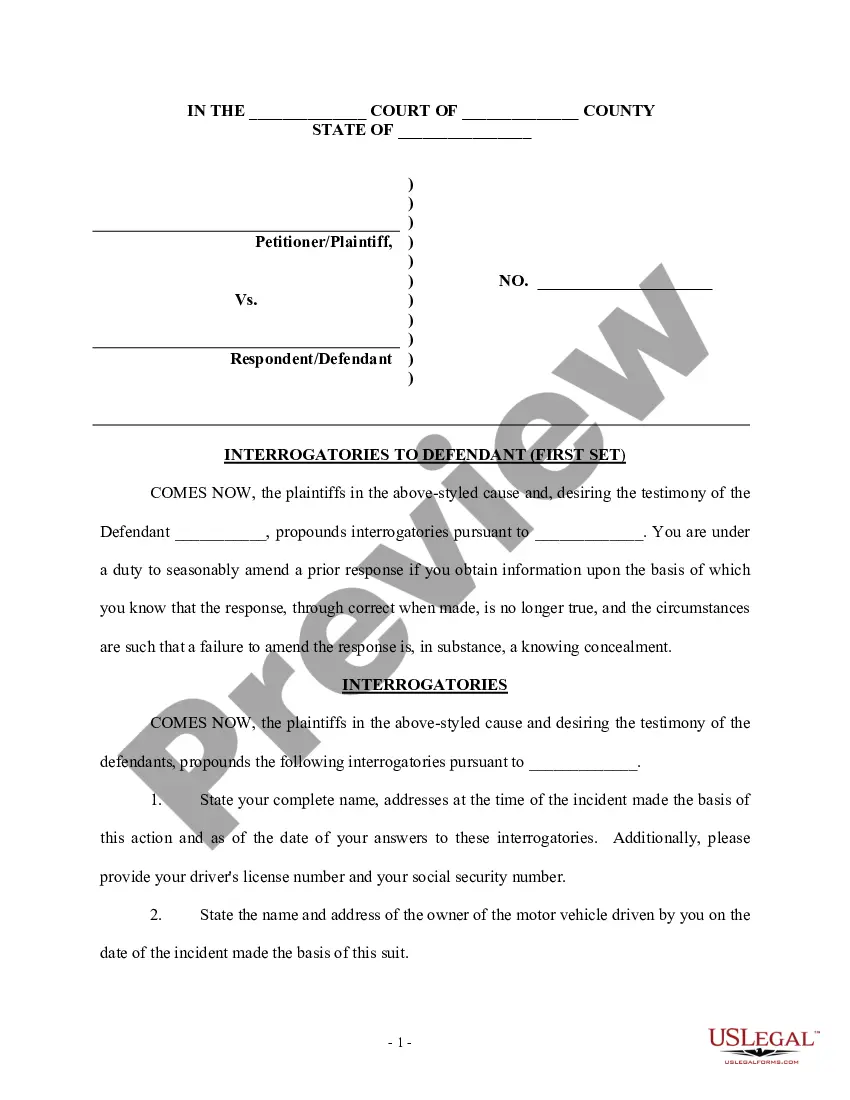
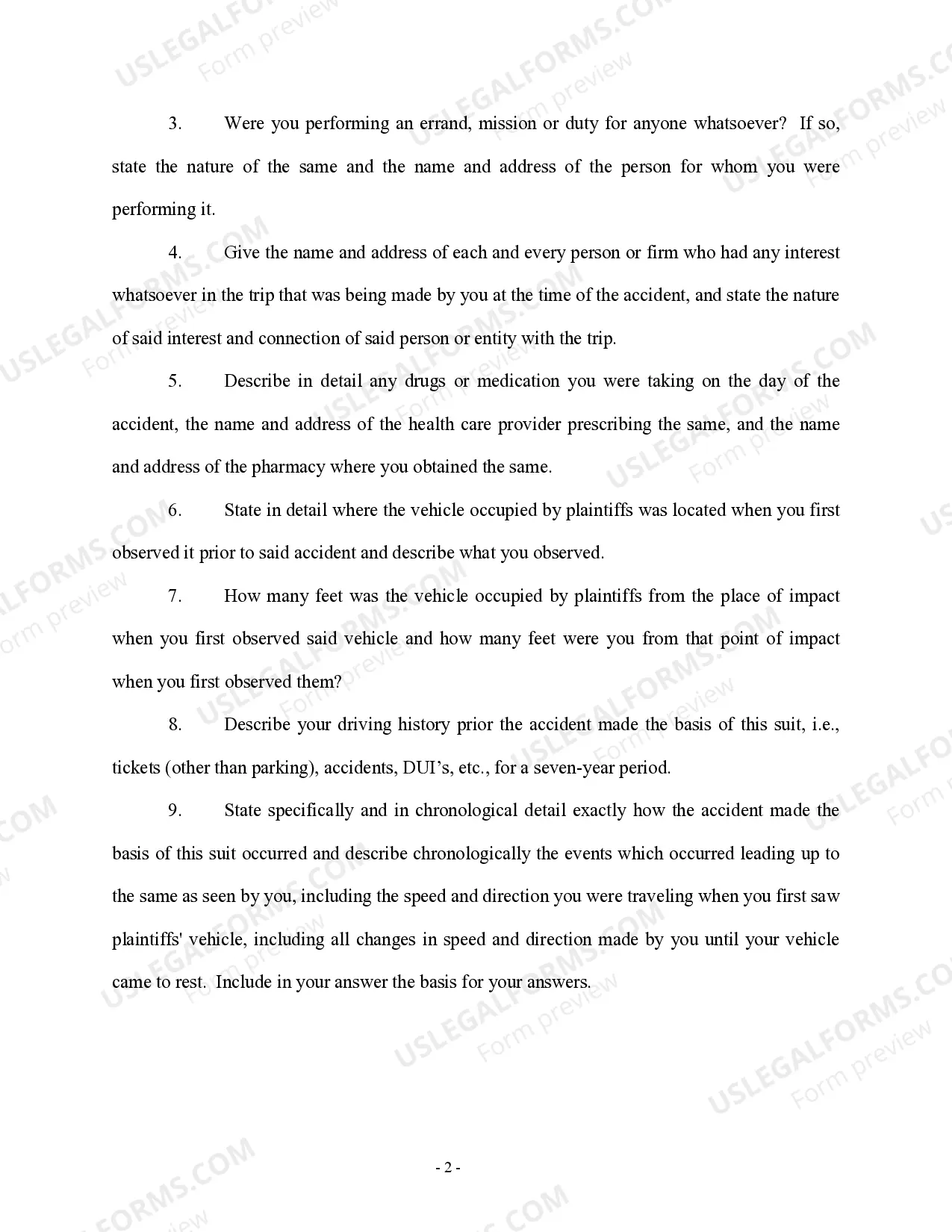
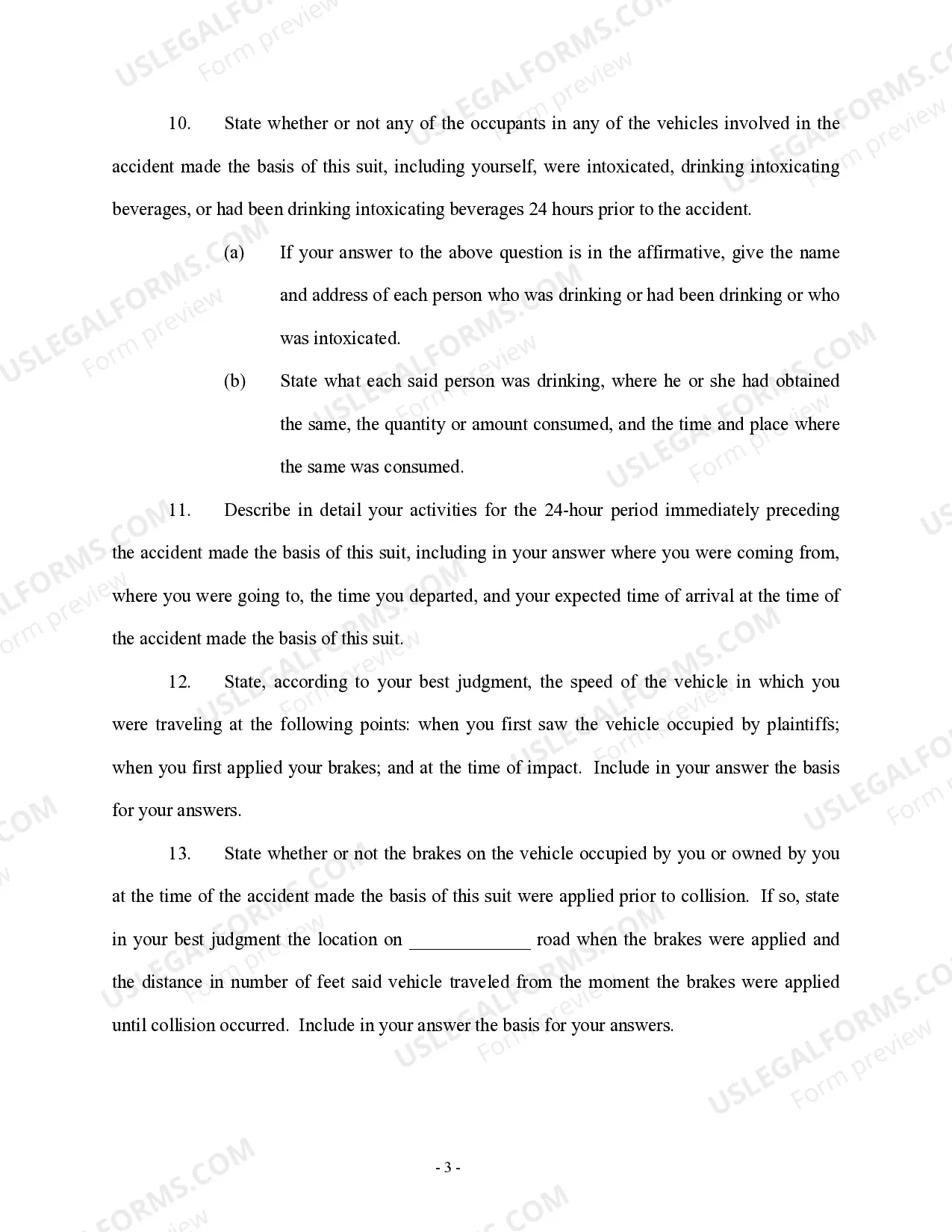
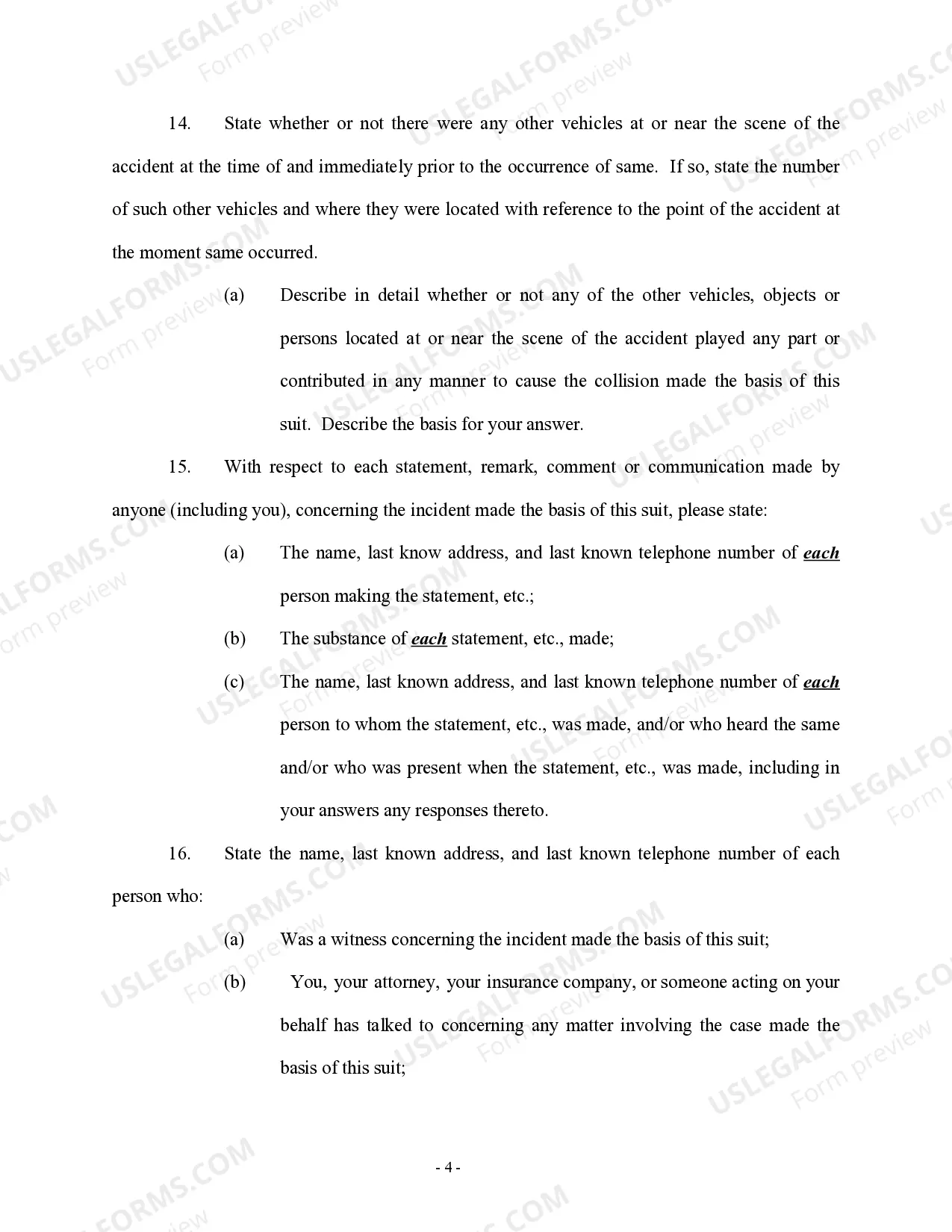
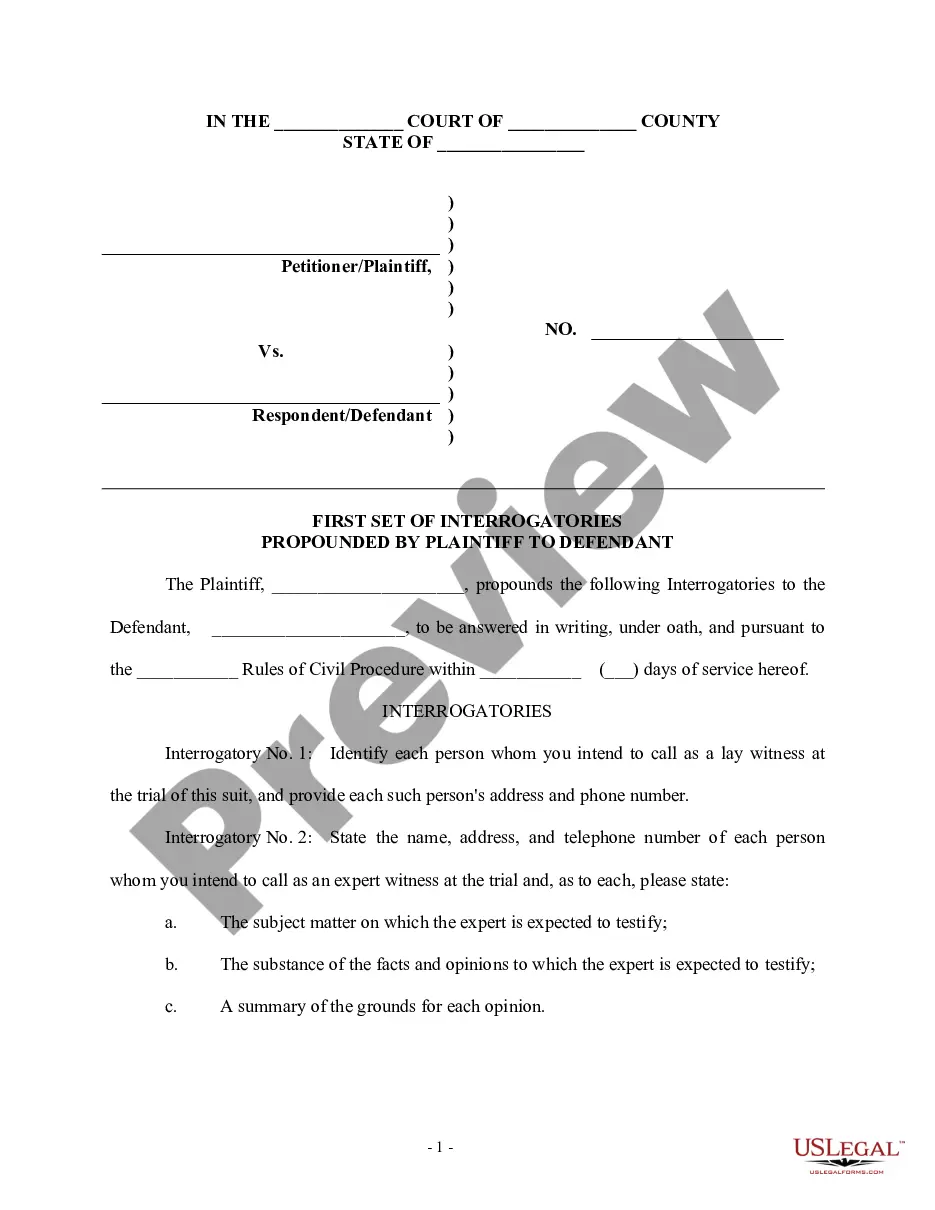
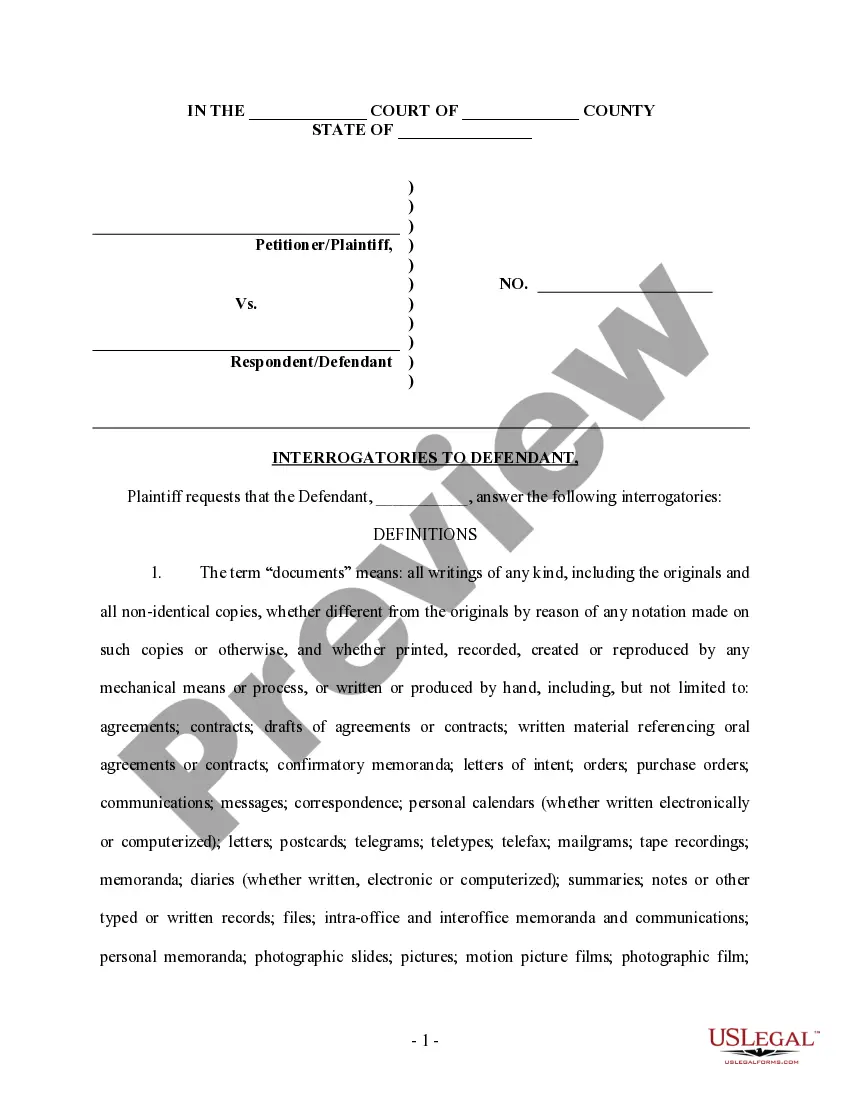
Columbus First Set of Interrogatories Propounded by Plaintiff to Defendant
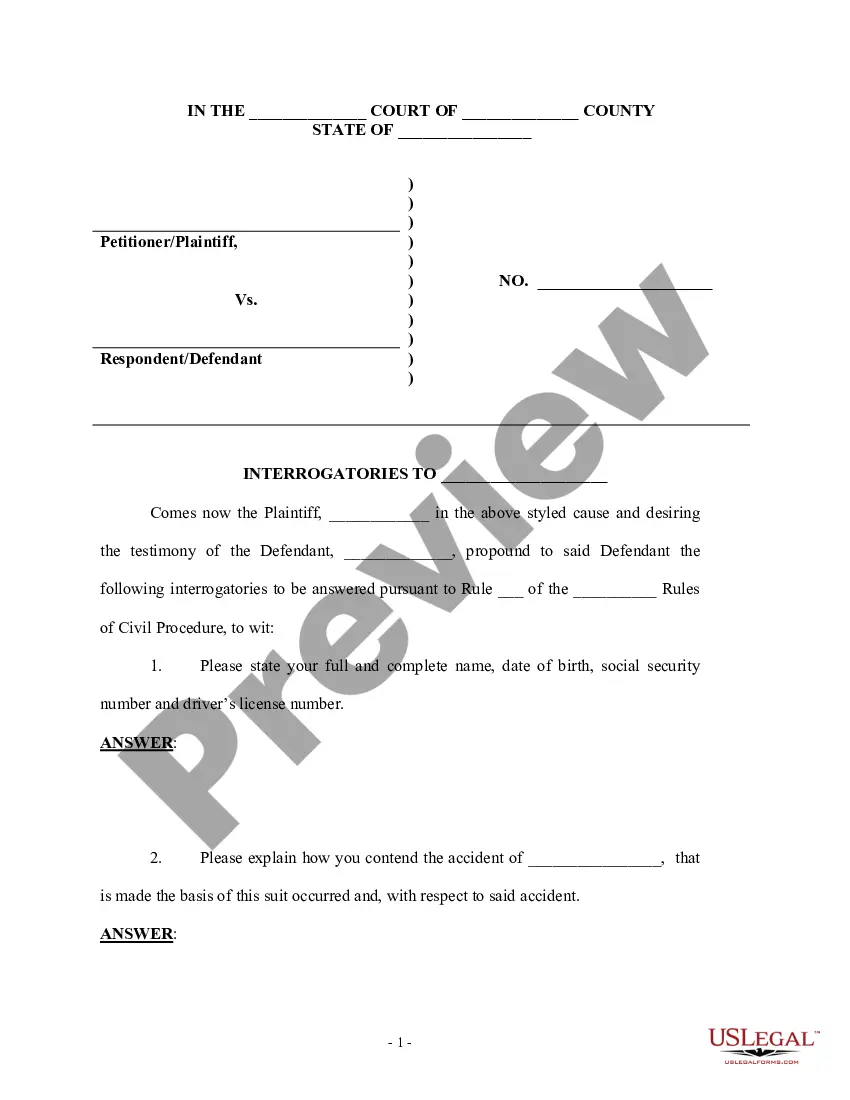
Columbus Interrogatories to Defendant - Personal Injury
Columbus Plaintiff's Interrogatories to Defendant - Personal Injury
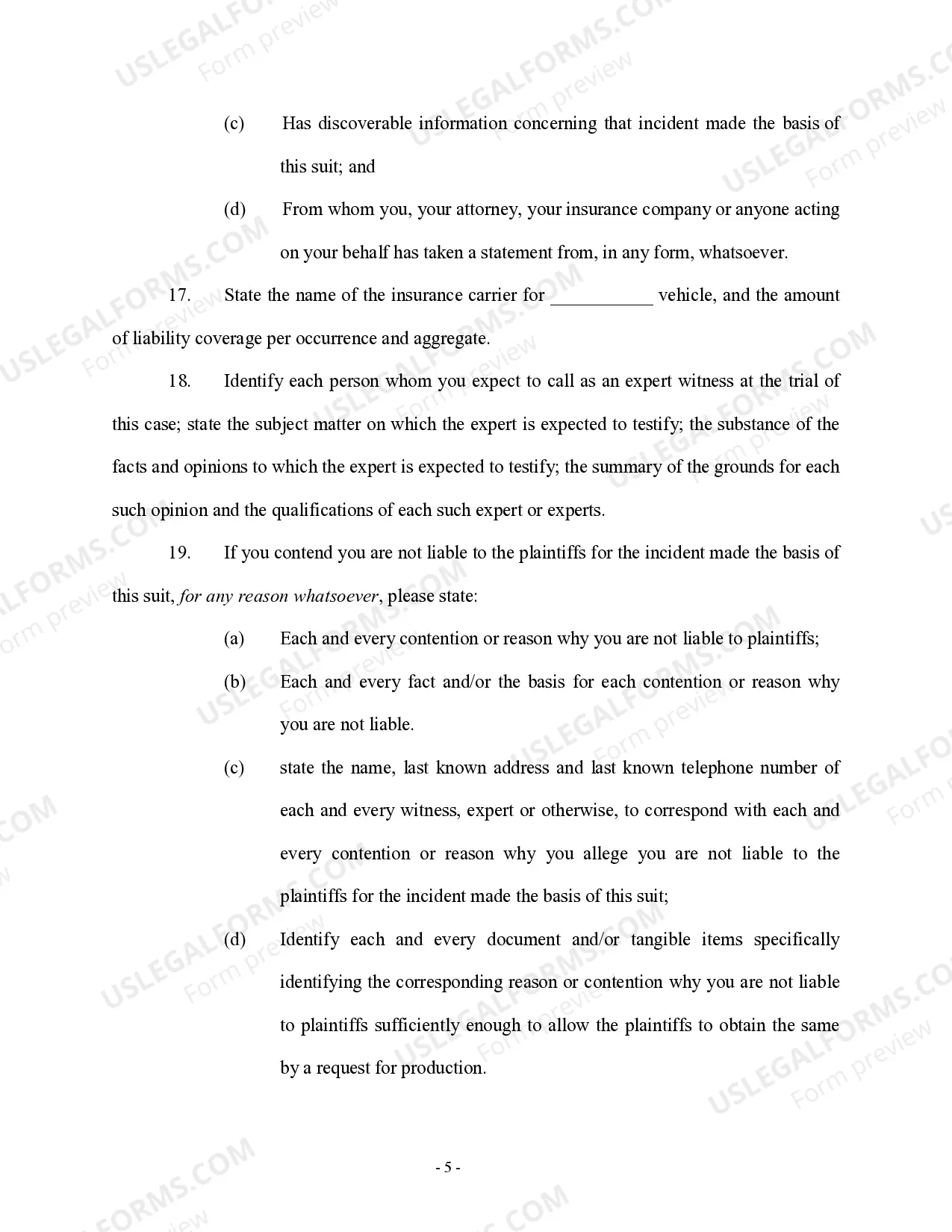
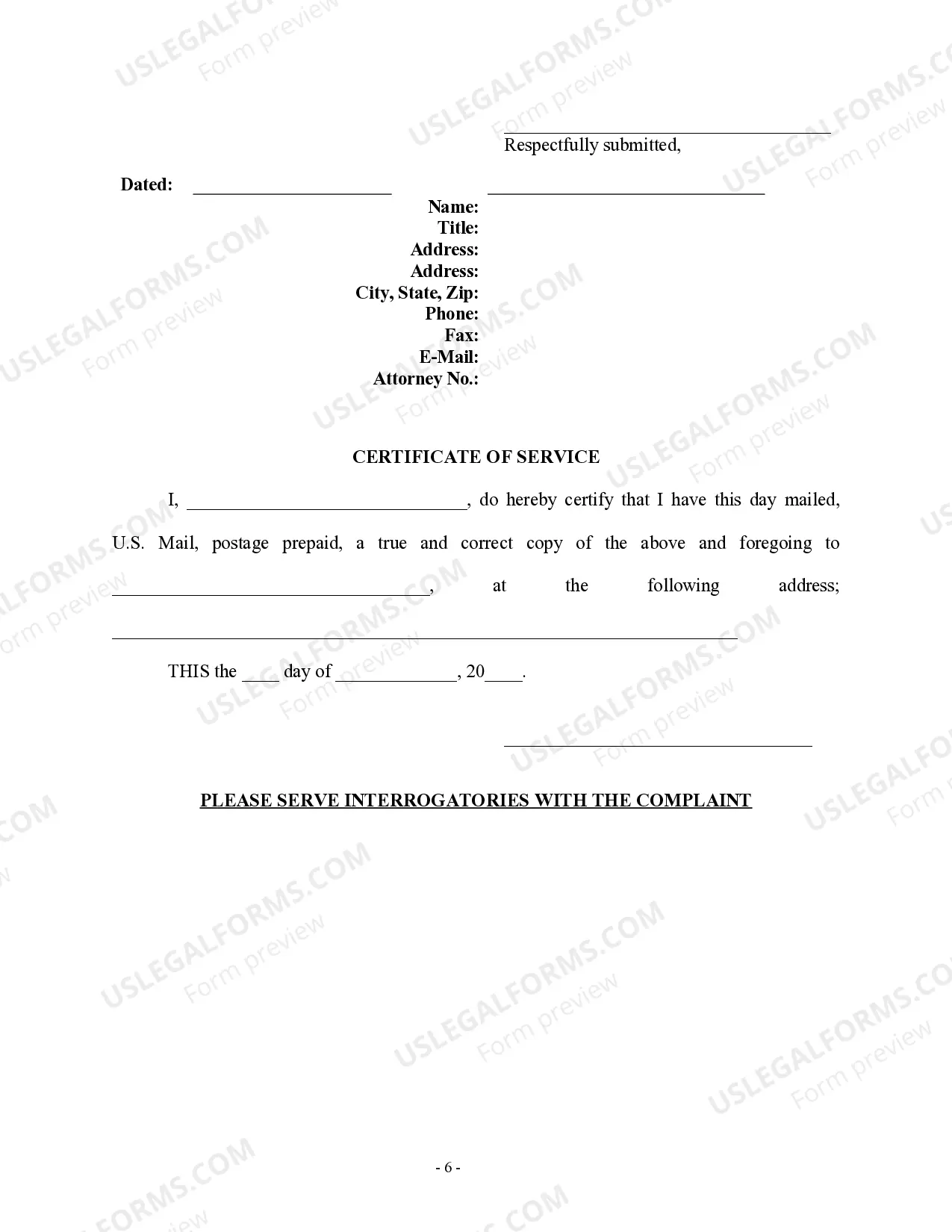
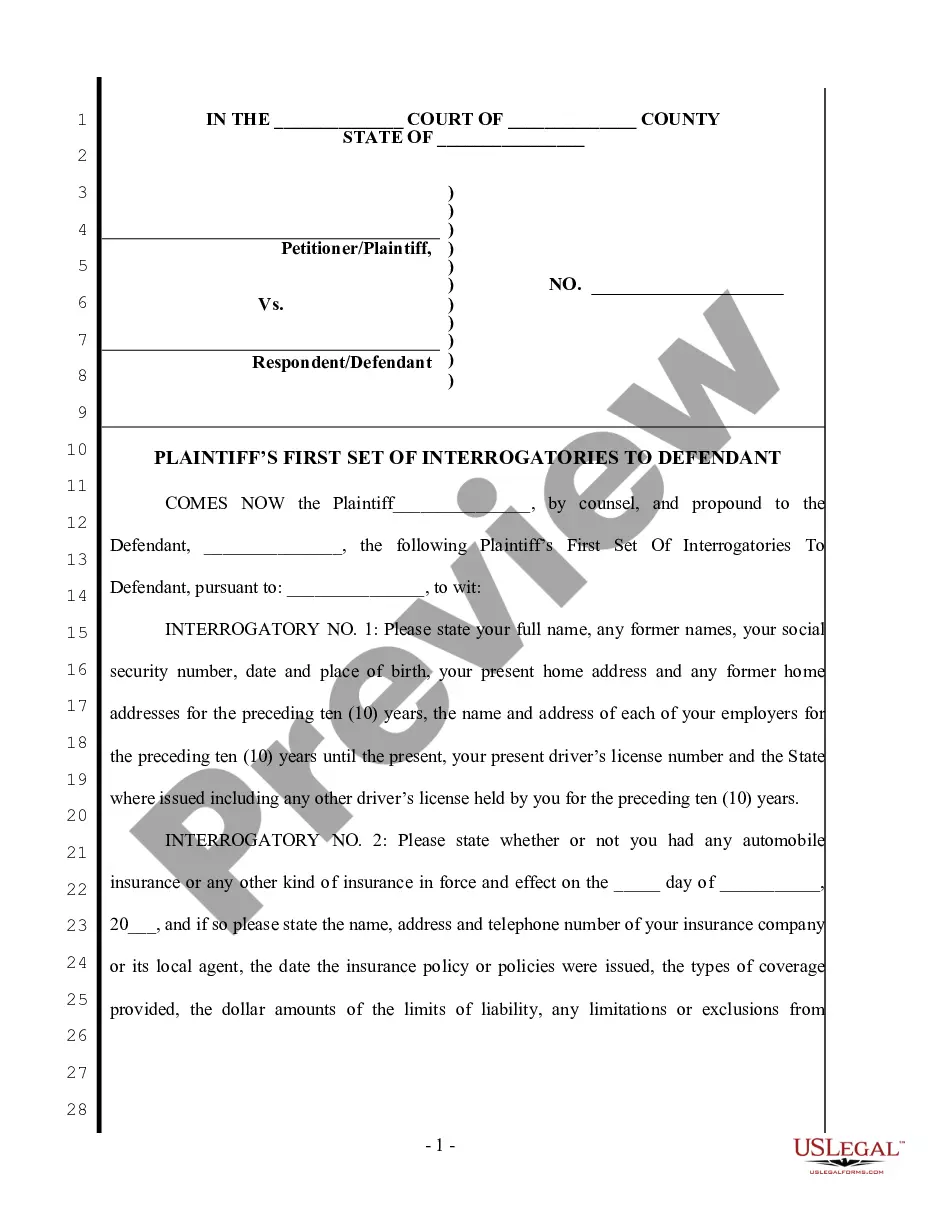
Columbus Plaintiff's First Set of Interrogatories to Defendant - Personal Injury
Sample Letter for Acknowledgment of Warranty - Instruction for Product Return
Invoice Template for Cleaner
Sample Letter for Acceptance of Resignation - Expression of Sadness by Employer because of Departure
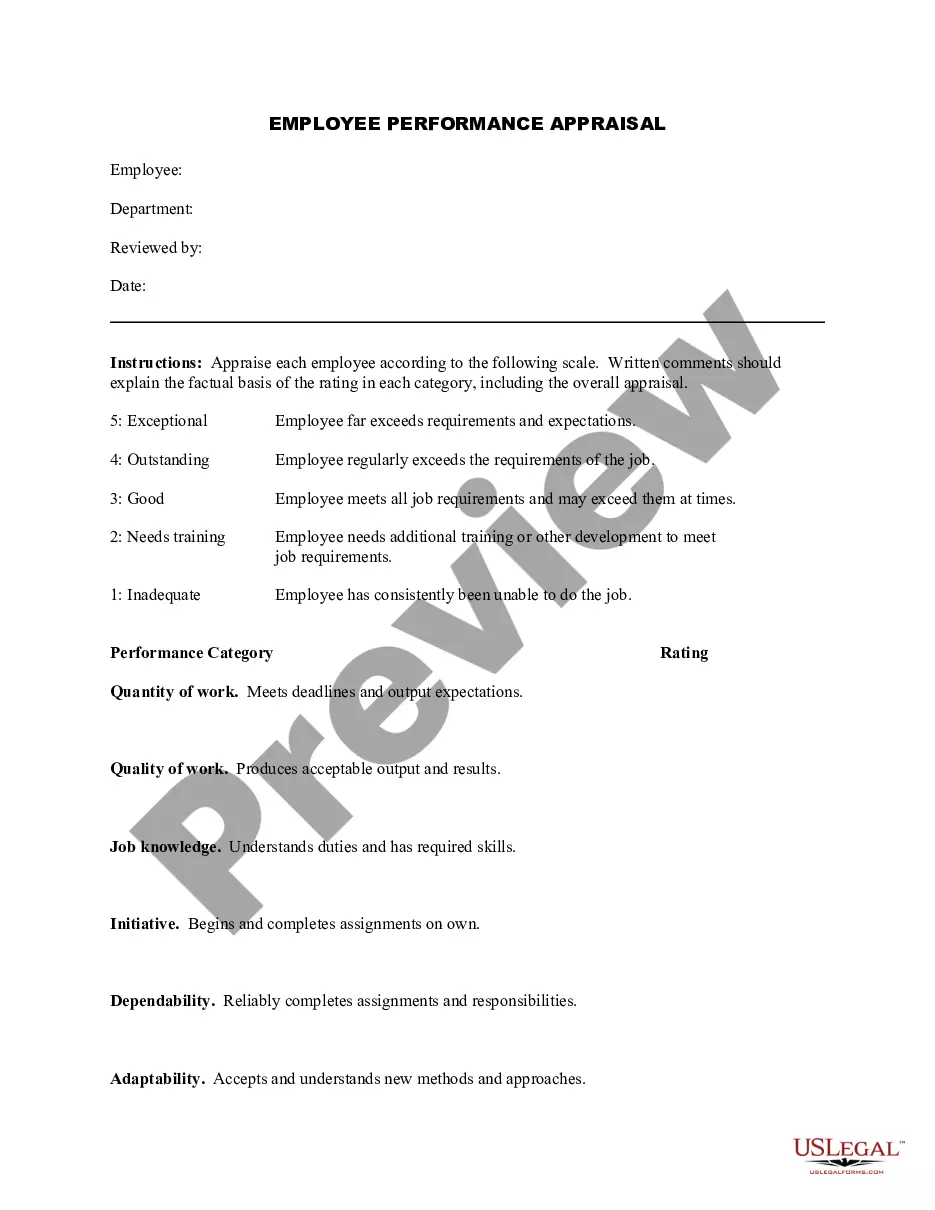
Employee Performance Appraisal
Factoring Agreement
Equity Share Agreement
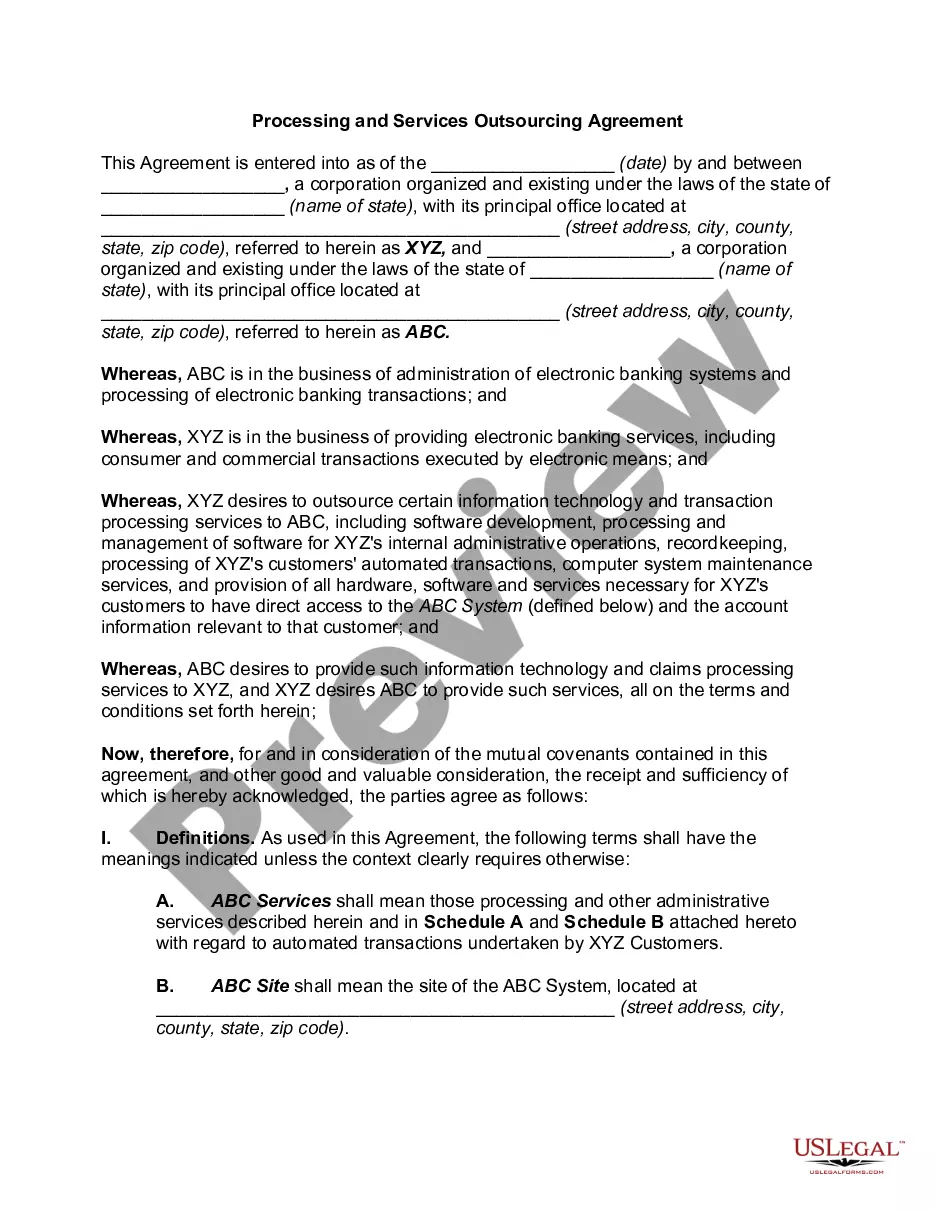
Processing and Services Outsourcing Agreement
Cease and Desist Letter for Libelous or Slanderous Statements - Defamation of Character
Sample Letter for Speaking Engagement
Sample Letter for Change of Venue and Request for Homestead Exemption
Absolutely! Interrogatories can be sent to the other party too, helping you gather information that could be key to your case.
If you don’t respond, it could hurt your case. The court might impose penalties, or you could lose your chance to present your side.
Typically, you have 30 days to respond, but it’s wise to check the local rules or talk to your attorney to be sure.
You can’t refuse outright, but if a question seems irrelevant or too personal, you might be able to object. Always consult your lawyer!
Your answers should be clear and complete. Think of it like telling a story; you want to give enough detail for someone to understand what happened.
Answering interrogatories is important because it helps clarify the facts and can make or break your case. It’s all about painting the full picture.
Interrogatories are written questions that one party sends to another in a lawsuit. They help gather information about the case.