Generally, the property owner is responsible for keeping the easement clear and in good shape. Think of it like mowing your lawn — it's your job to keep things tidy and functional.
Building on a drainage easement can lead to trouble down the line. It’s crucial to check local regulations first, as these easements are meant to keep water flowing freely.
If your drainage easement gets blocked, it's a good idea to clear any obstructions. If it's more complicated, consulting with a professional or local authorities can help straighten things out.
Yes, they can have an impact. A well-maintained drainage system can boost property value, while a neglected easement might turn potential buyers away — it’s all about curb appeal!
To find out if you have a drainage easement, you can check your property deed or survey. You may also need to consult city records or a local land surveyor.
You might need a drainage easement to maintain proper water flow on your property and avoid any future problems. It's like giving water a clear path, so it doesn't cause a ruckus elsewhere.
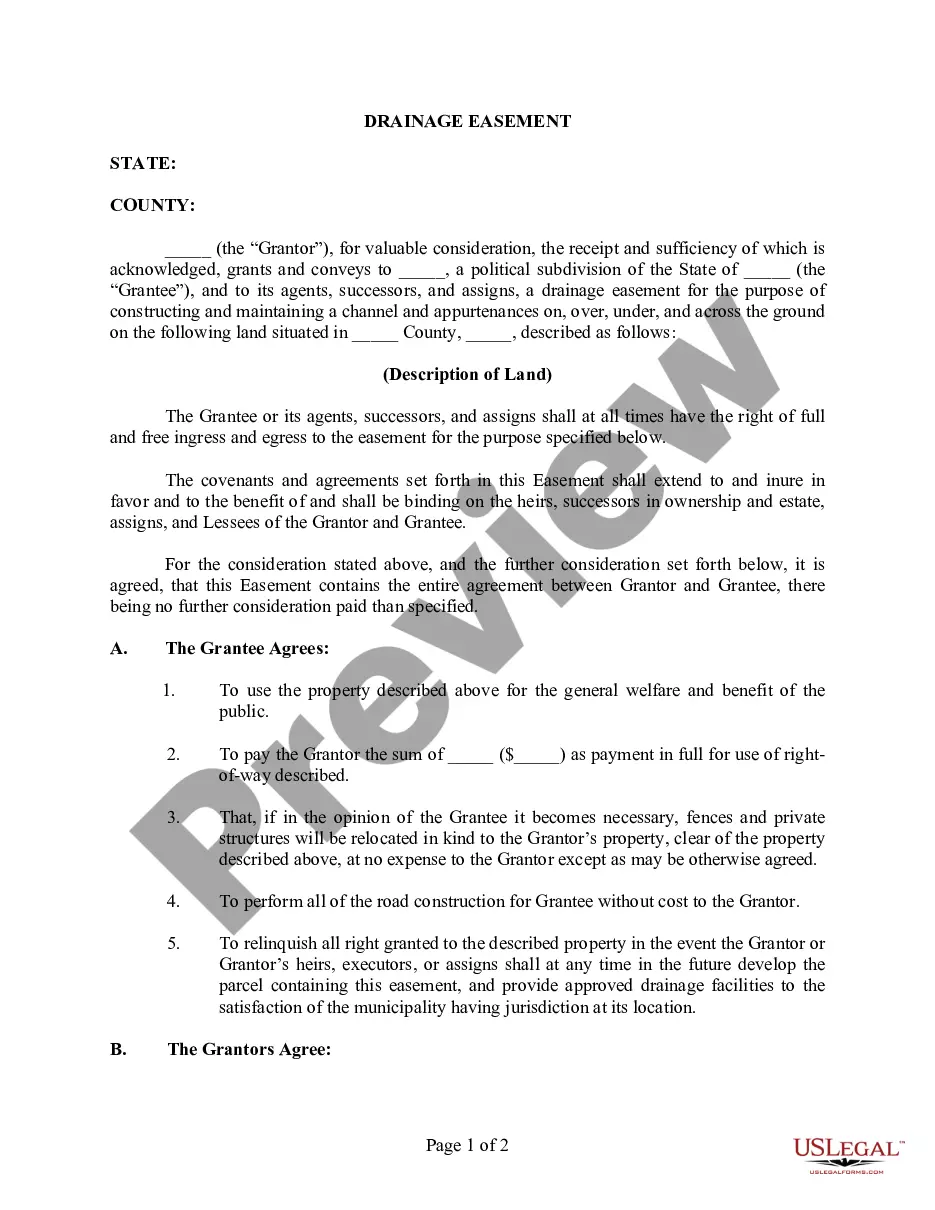
A drainage easement is a legal right that allows water to flow through a specific area of land. It ensures that rainwater and runoff can be managed properly, helping to prevent flooding and water damage.