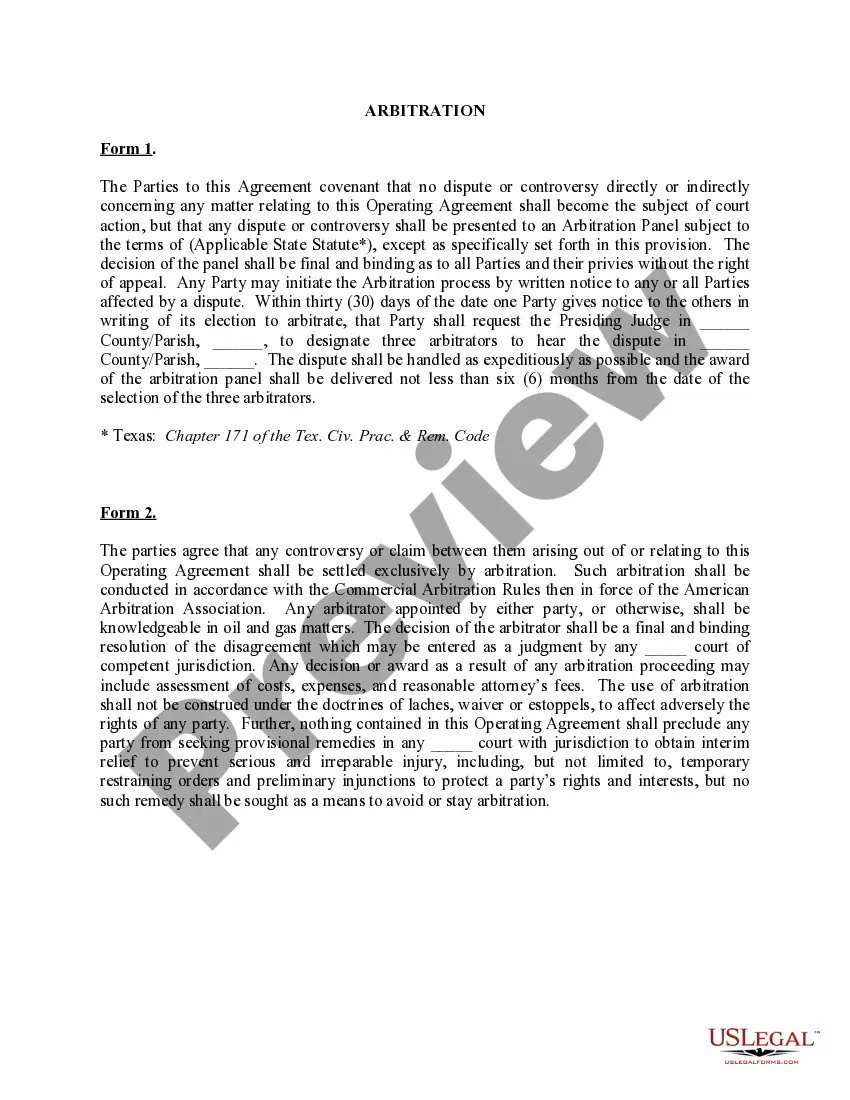
This agreement is used when questions, differences, or disputes arise with regard to any of the Operator and Nonoperator agreements or the operations of the Leases.
If someone tries to back out of the arbitration agreement, the other party can ask a court to enforce the arbitration, ensuring everyone plays by the rules they agreed to.
Yes, in most cases, the arbitrator’s decision is final and binding, meaning there's not much wiggle room for appeal unless something went really wrong.
The process usually involves presenting evidence and arguments to the arbitrator, who then makes a call based on what they've heard, kind of like a private judge.
Absolutely! Both sides can chat and decide on the rules that will guide their arbitration process—it’s all about working together.
In this context, the operator is the person who manages the day-to-day activities, while the nonoperator is more of a silent partner who invests but doesn't handle operations.
Arbitration can be quicker and less formal than a court case, plus it often allows for more privacy when sorting out disputes.
An arbitration agreement is like a deal between two parties to settle their differences outside of court, with a neutral person helping make the final decision.