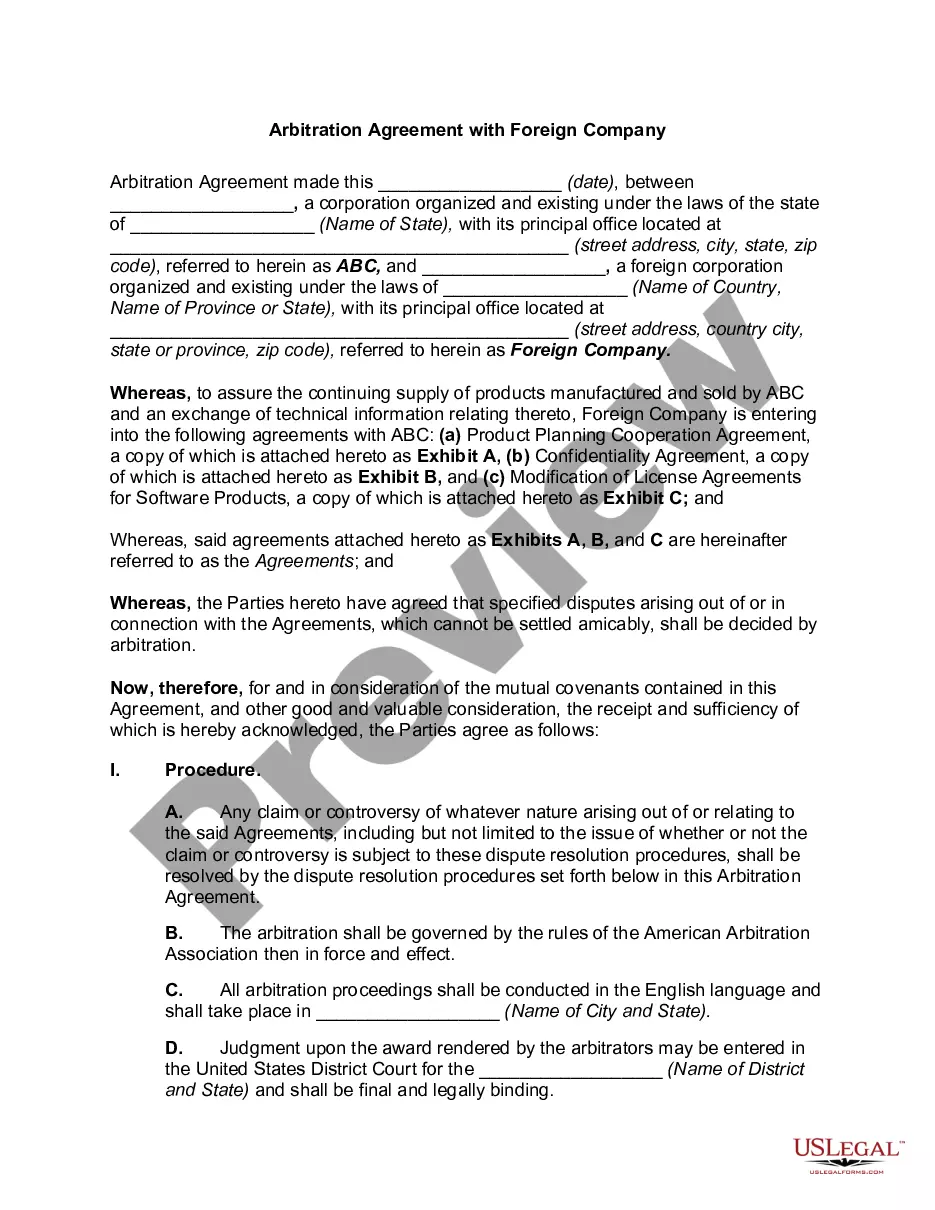
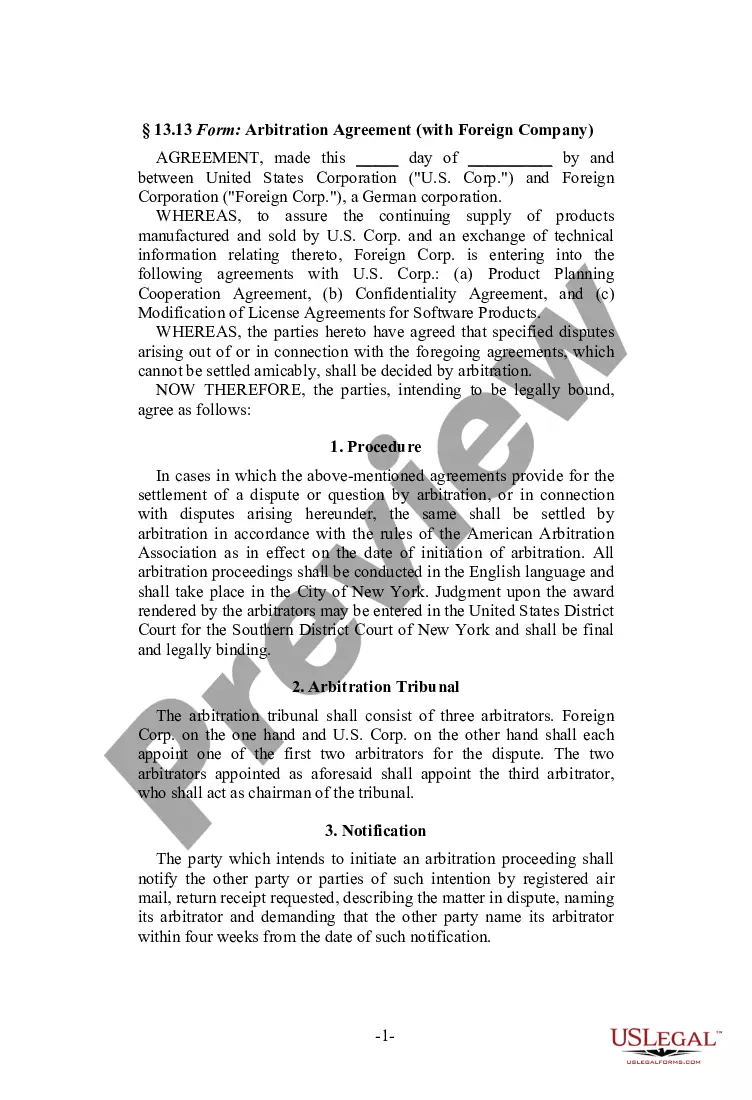
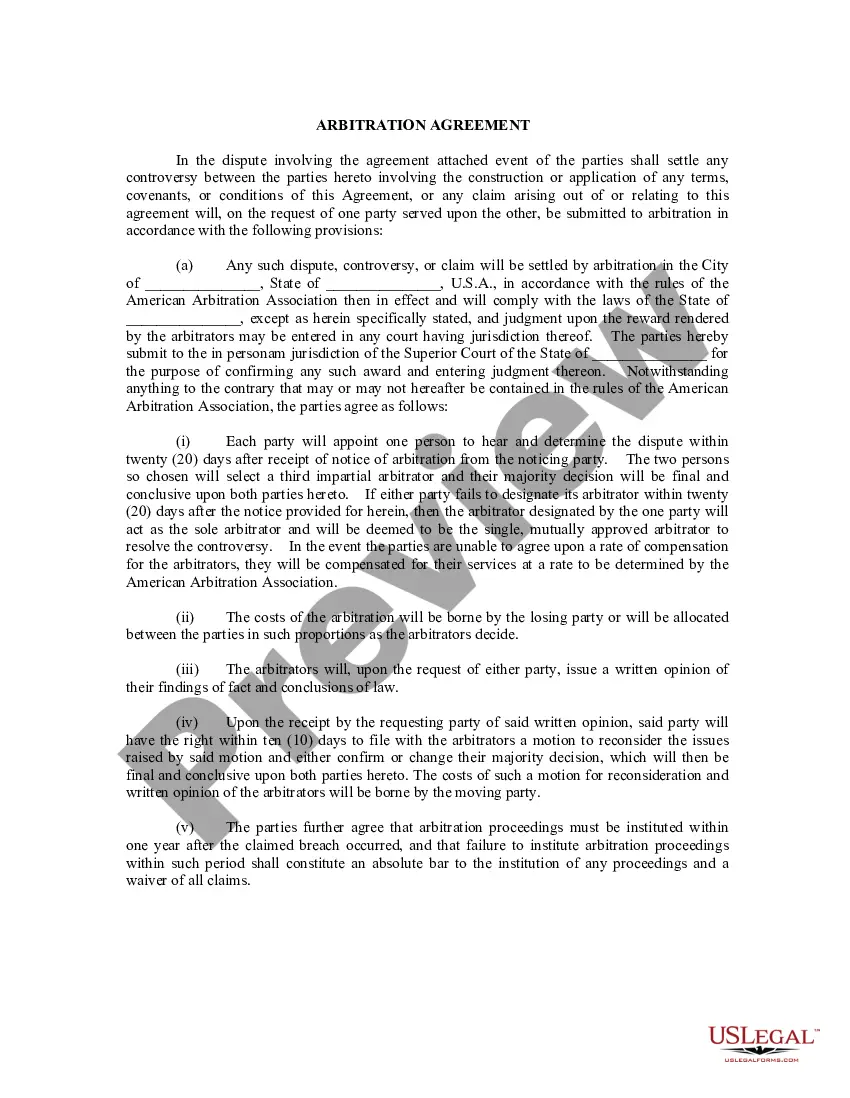
This form is an Arbitration Agreement. The form provides that each party will appoint one person to hear and determine the dispute within twenty days after receipt of notice of arbitration from the noticing party. The costs of the arbitration will be absorbed by the losing party or will be allocated between the parties in such proportions as the arbitrators decide.
To get ready for arbitration, gather all relevant documents, outline your arguments clearly, and consider seeking advice from a legal professional if you're feeling unsure.
Typically, the decision made by an arbitrator is final and binding, meaning it can be tough to challenge unless there's a serious issue like bias or misconduct.
Some of the key benefits of arbitration include reduced legal costs, speedier resolutions, and increased privacy, as the proceedings are generally not public.
Yes, many companies allow individuals to opt out of the arbitration agreement, but you usually need to do so within a specific timeframe after signing the agreement.
In arbitration, a neutral third party called an arbitrator listens to both sides of a dispute and makes a decision that can be binding or non-binding, depending on the terms of the agreement.
Companies often use arbitration agreements to resolve conflicts quickly and privately, saving both time and the hassle that comes with going to court.
The OEM Arbitration Agreement is a legal document that outlines how disputes related to certain products or services are resolved outside of traditional court settings in Seattle.