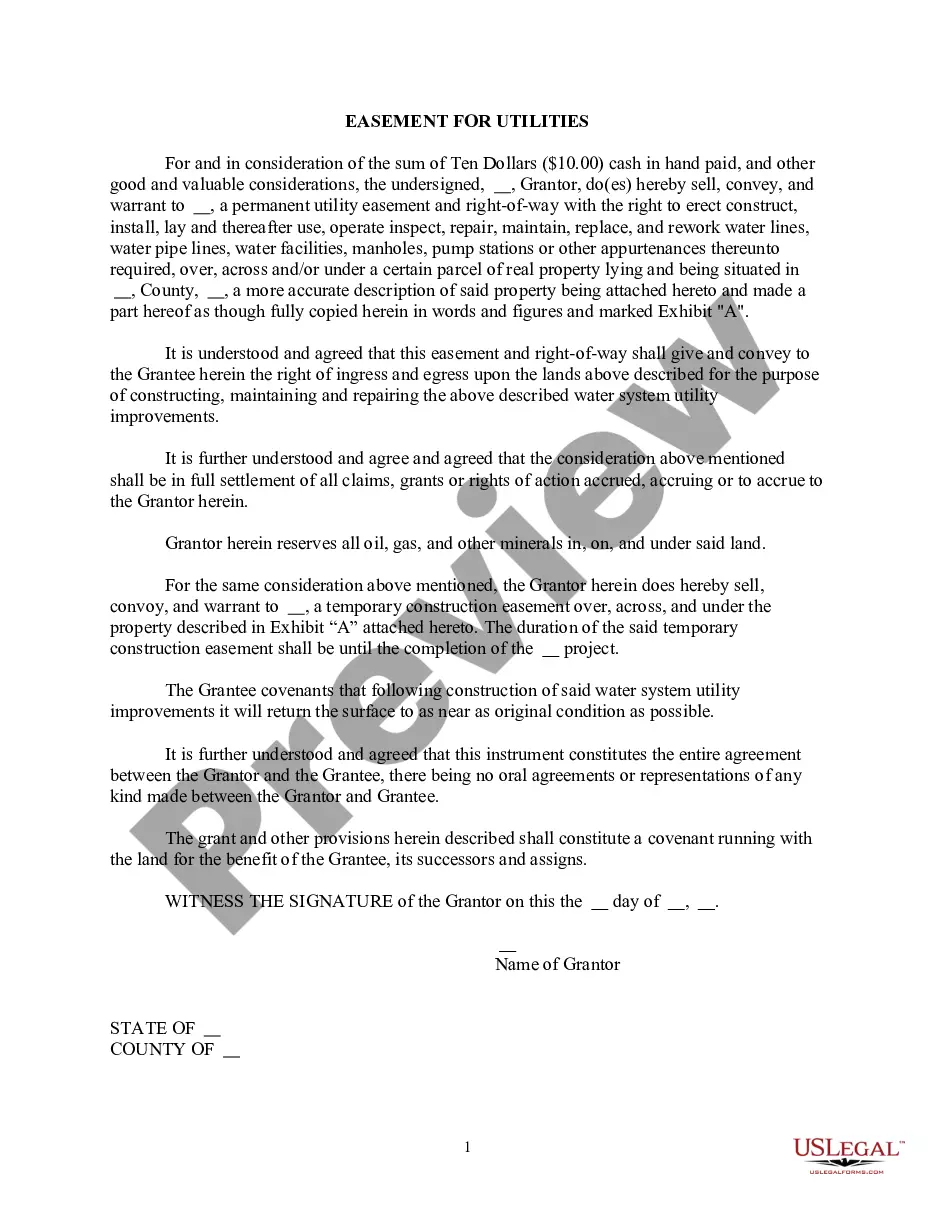
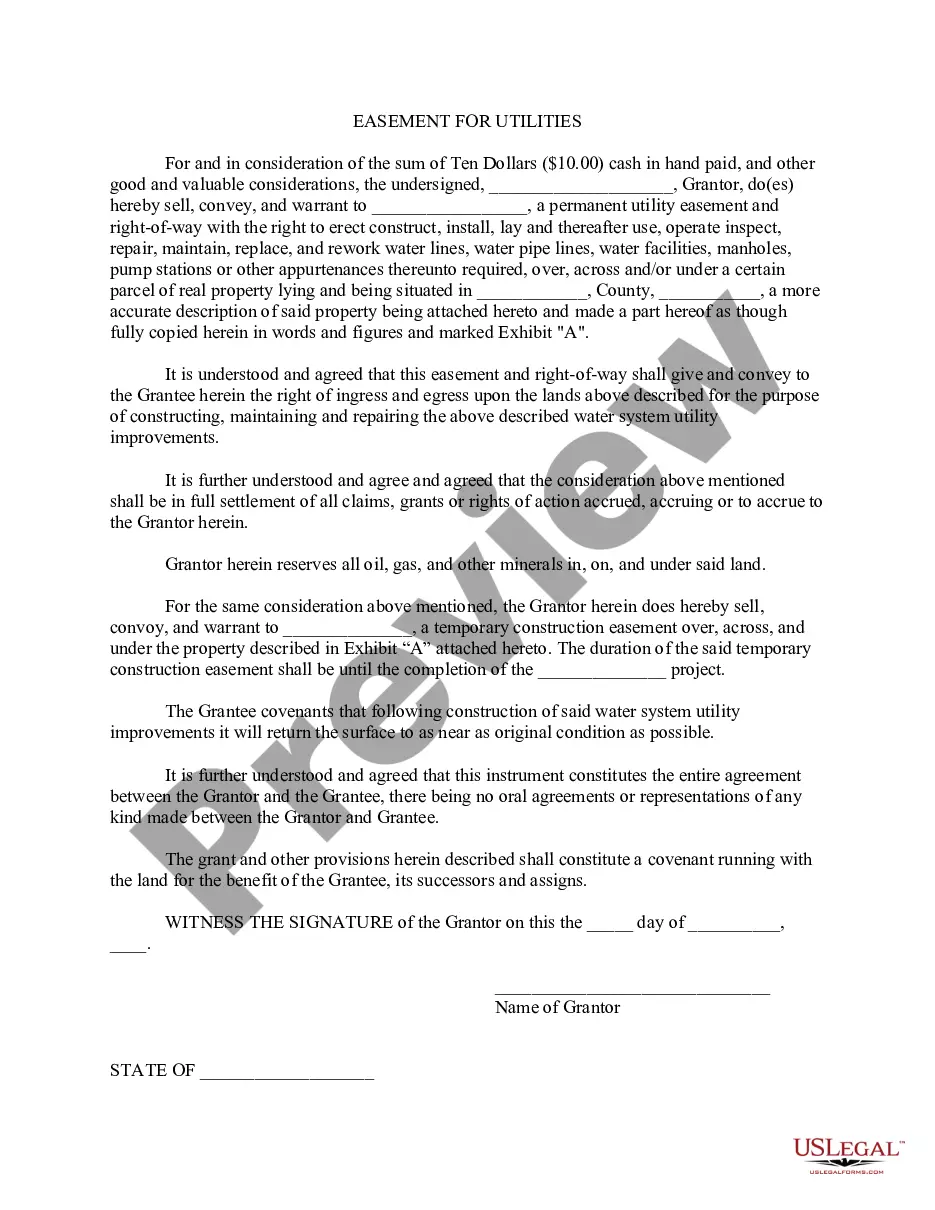
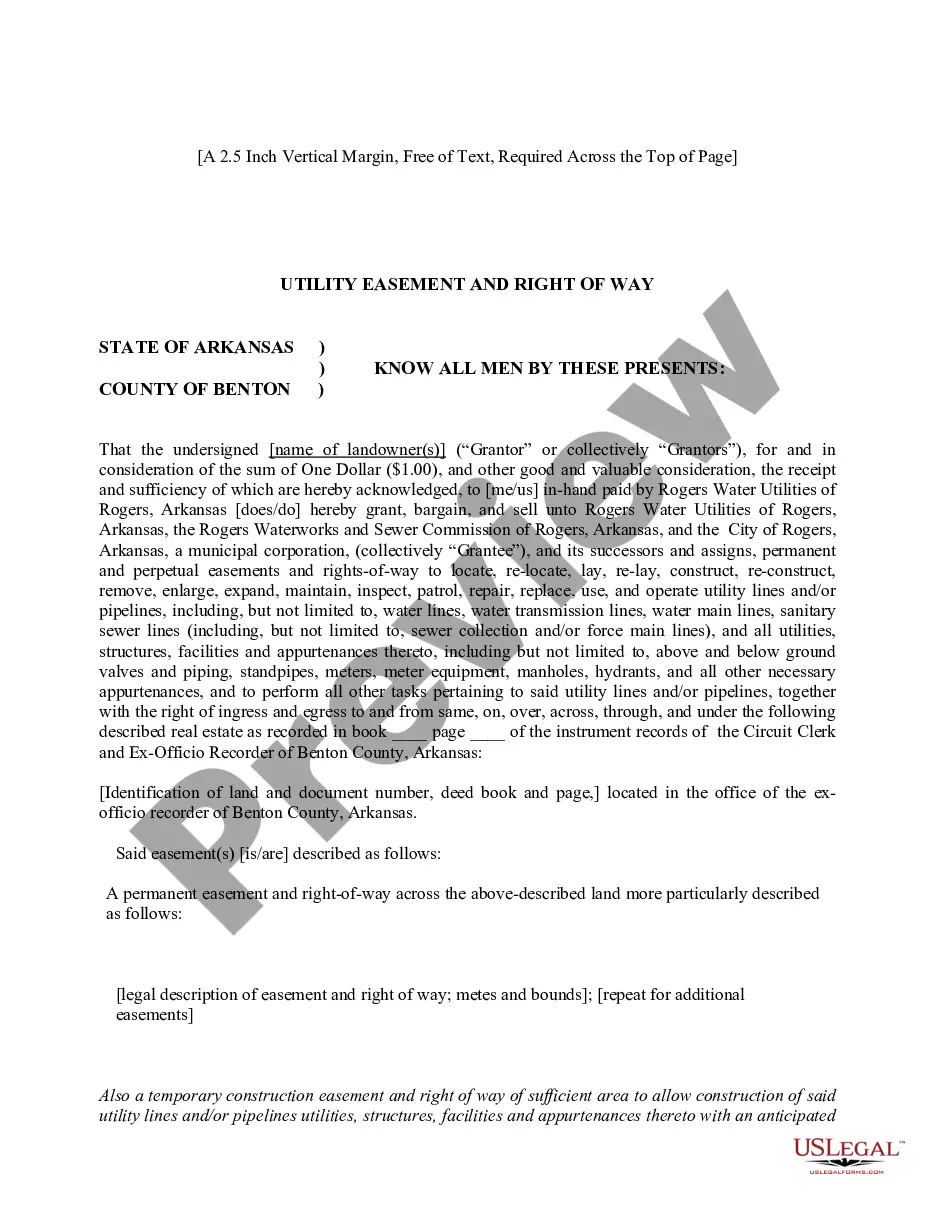
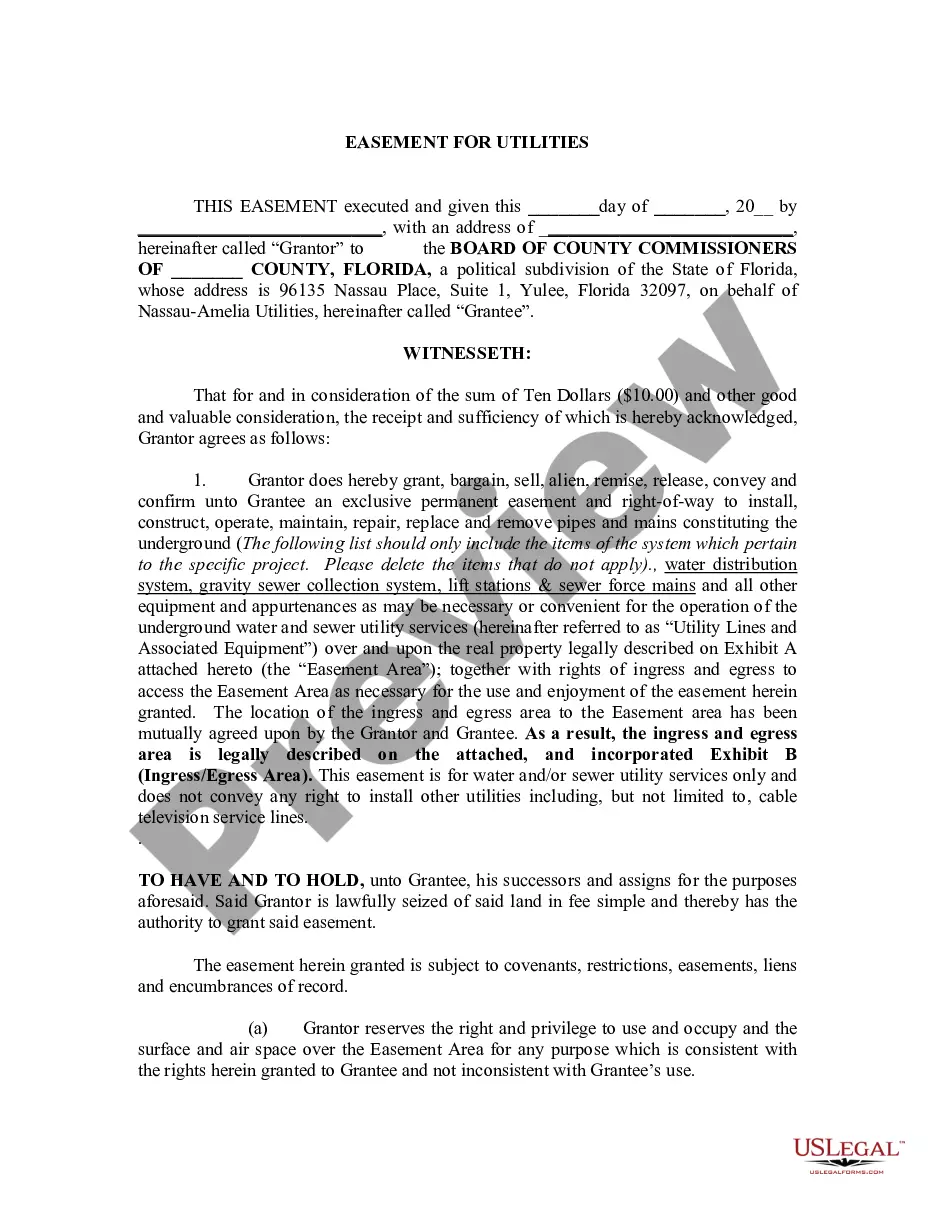
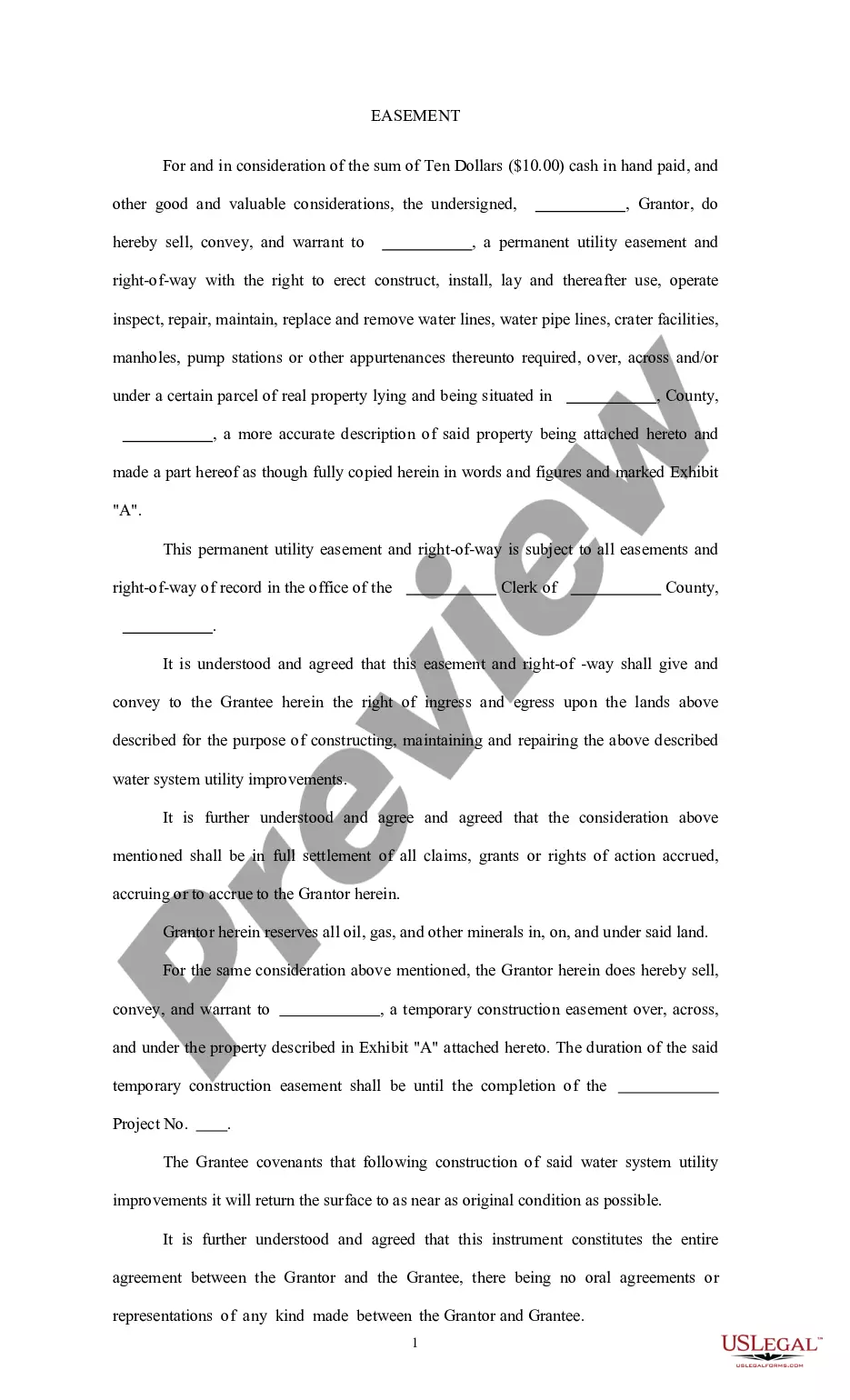
A permanent utility easement and right of way with the right to erect, construct, install, lay and thereafter use, operate, inspect, repair, maintain, replace, and rework water lines, water pipe lines, water facilities, manholes, pump stations or other appurtenances thereunto required, over, across and/or under a certain parcel of real property.
An easement gives one party the right to go onto another party's property. That property may be owned by a private person, a business entity, or a group of owners. Utilities often get easements that allow them to run pipes or phone lines beneath private property. Easements may be obtained for access to another property, called "access and egress", use of spring water, entry to make repairs on a fence or slide area, drive cattle across and other uses. The easement is a real property interest, but separate from the legal title of the owner of the underlying land.
Yes, there are usually some restrictions, like not planting large trees or constructing permanent structures in the easement. It's a bit like following the rules of the game—keeping the area clear helps avoid any headaches down the line.
If you see work being done and it seems fishy, you should contact the utility company or local authorities right away. They can help sort out who’s supposed to be there and take appropriate action.
Absolutely! You can still sell your property, but you'll want to let potential buyers know about the easement. It's better to be upfront—like shining a light on the situation—so there are no surprises down the road.
If there's an issue, the utility company has the right to enter the easement area to fix things up. In other words, it's like having an emergency exit that they can use whenever they need to jump in and sort things out.
Yes, it's a good idea to check with the local utility company before you start building. They might have specific rules about how close you can get, like a safety zone, to keep everything shipshape.
When a utility easement is in place, you still own your property, but the utility company has the right to access it for their needs. It's like sharing a bit of your backyard with a neighbor, so they can put in a fence for better access.
A general easement for utilities is basically a green light for utility companies to use certain properties to install and maintain their services, like water, gas, and electricity. Think of it as giving them a right-of-way to make sure everything runs smoothly.