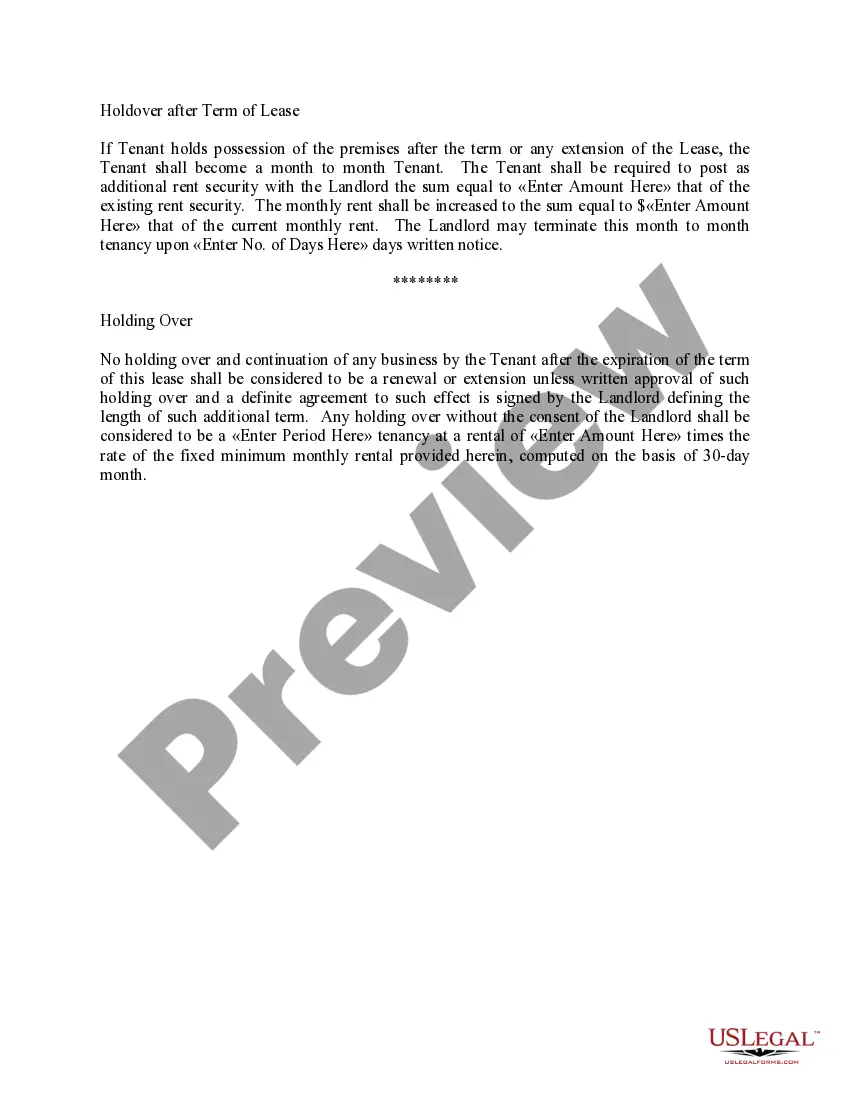
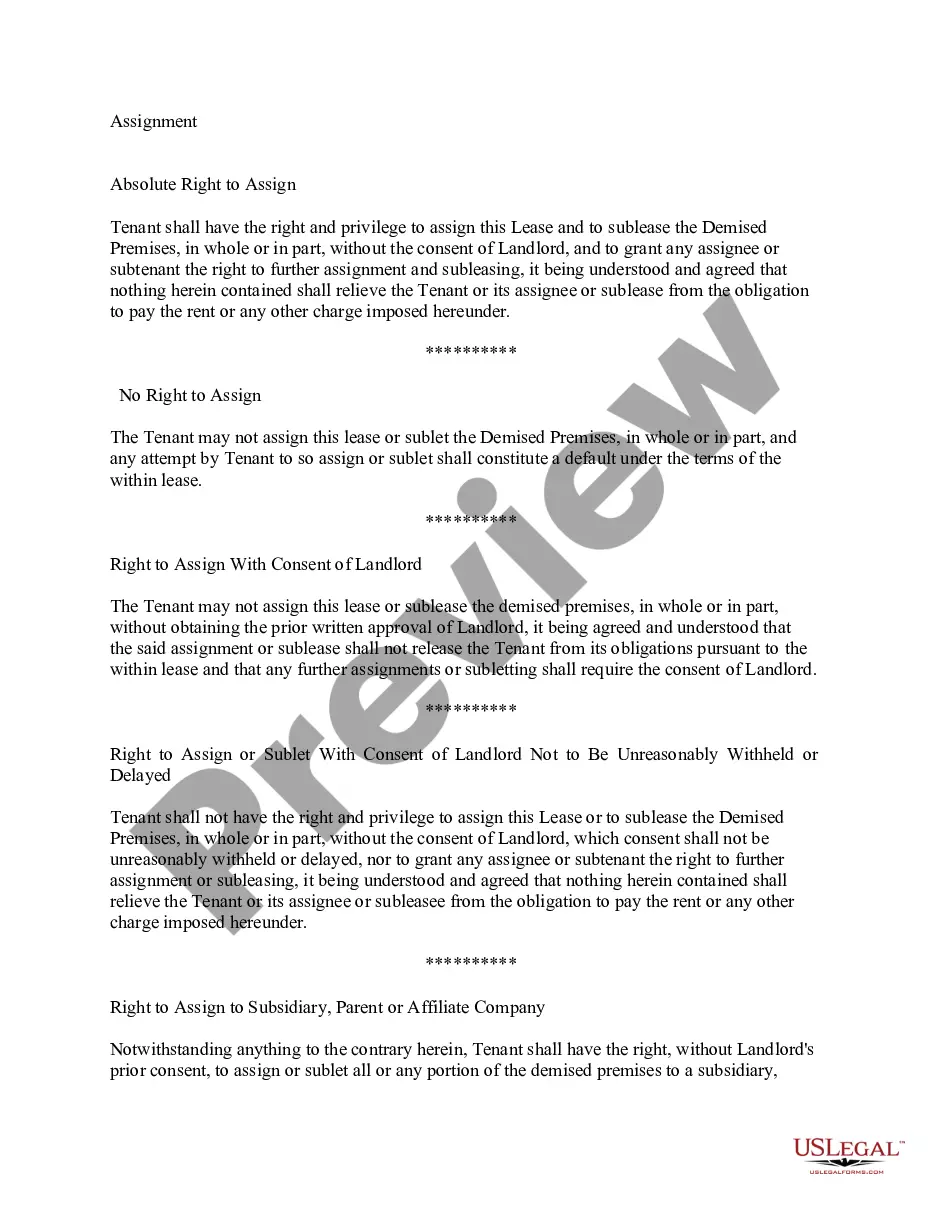
Example of clause regarding Holdover of property by Tenant. A hold-over clause in a commercial lease typically provides that if a tenant remains in possession of the leased premises after the expiration of the stated lease term, the tenant must pay rent to the landlord in an amount substantially in excess of the rental rate at the end of the term – often as high as 150 percent
If there’s no holdover clause, it may be a bit murky; generally, you might have more leeway, but it's still a good idea to wrap things up before your lease runs out.
You can play it safe by keeping an eye on your lease dates and communicating with your landlord to make sure you're on the same page.
If you find yourself in a pickle, the best move is to reach out to your landlord right away to sort things out and avoid any trouble.
Yes, they can. If you're still in the property after your lease ends without a renewal, the landlord can start eviction proceedings.
If you're thinking of renewing, a holdover clause can affect your negotiations. You might have to stick to the old terms or face different ones.
A holdover clause is a part of a lease that lets the landlord keep you on the hook for rent if you don't move out on time.