Disruptive Defendant
What this document covers
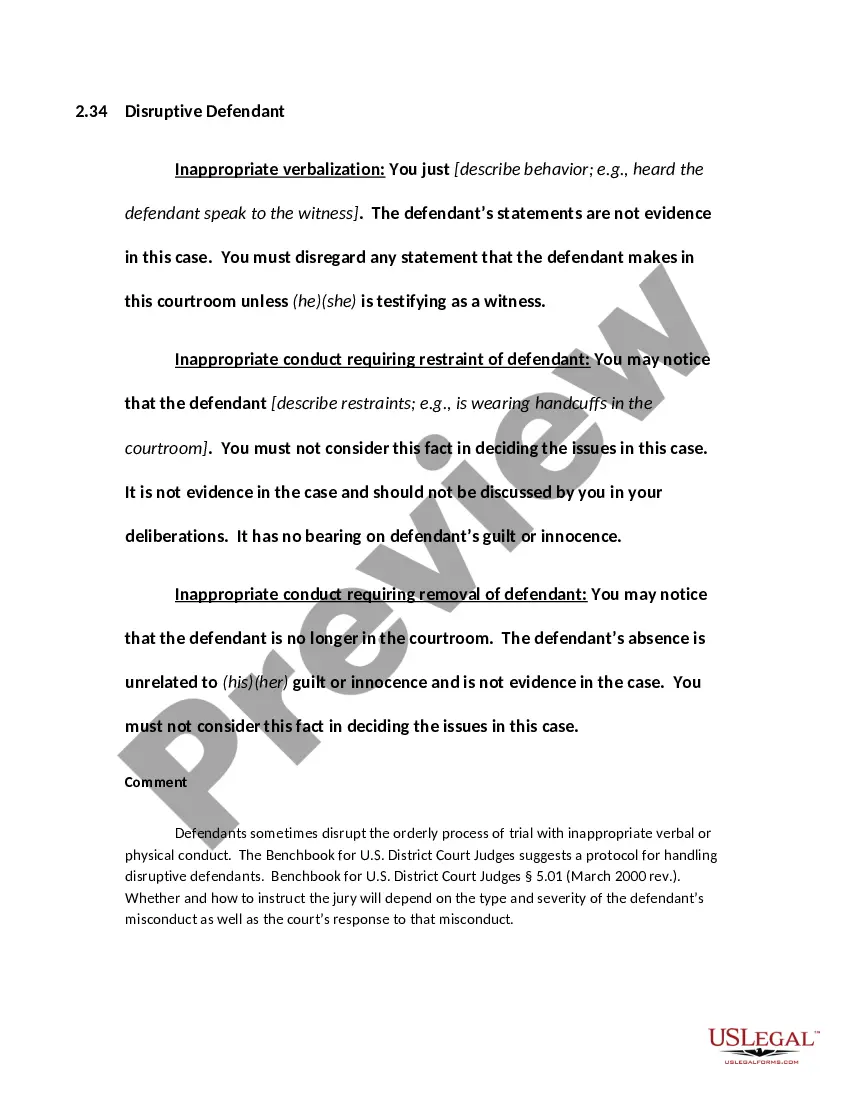
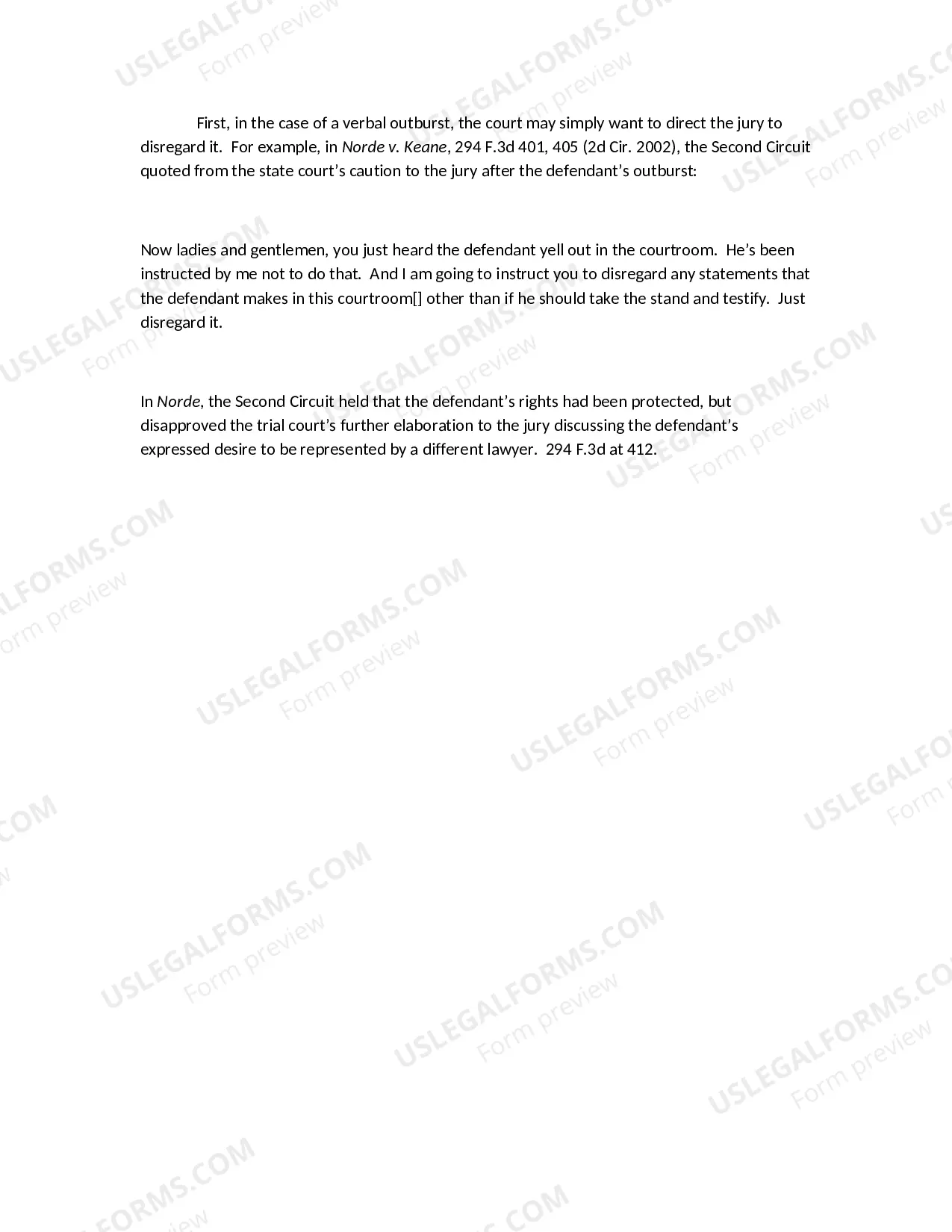
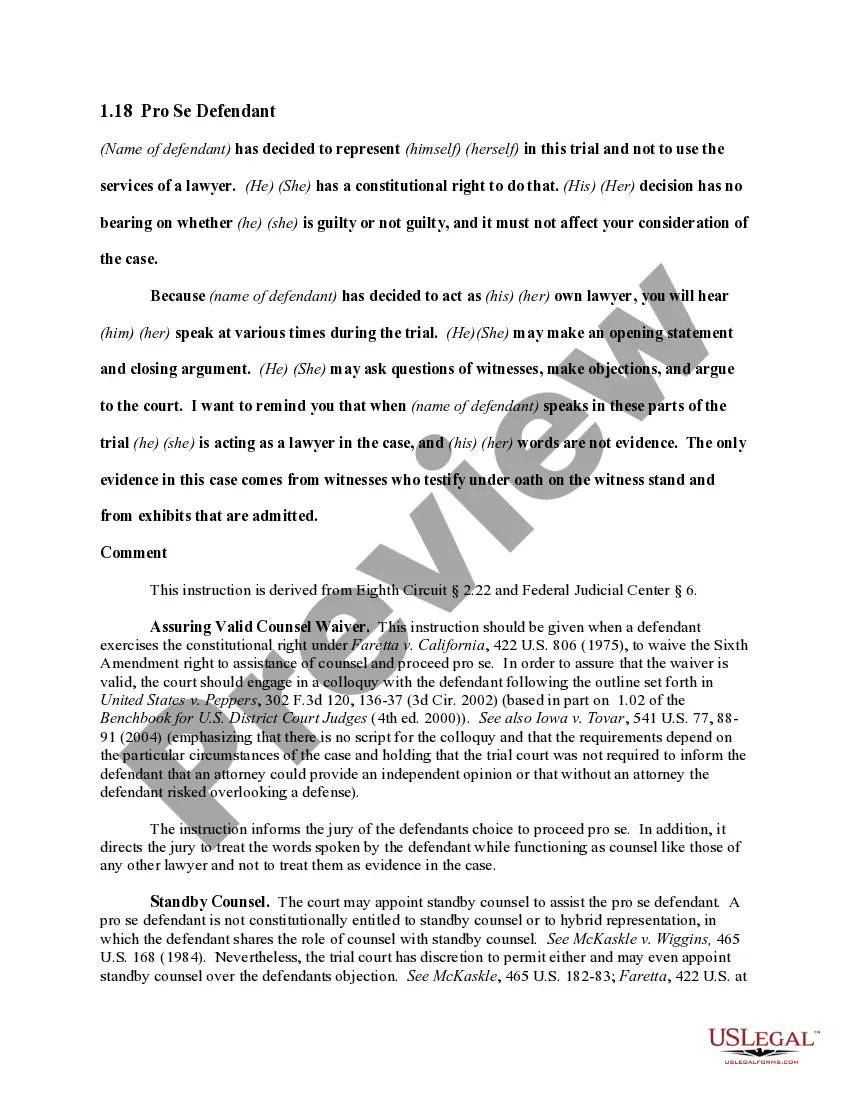
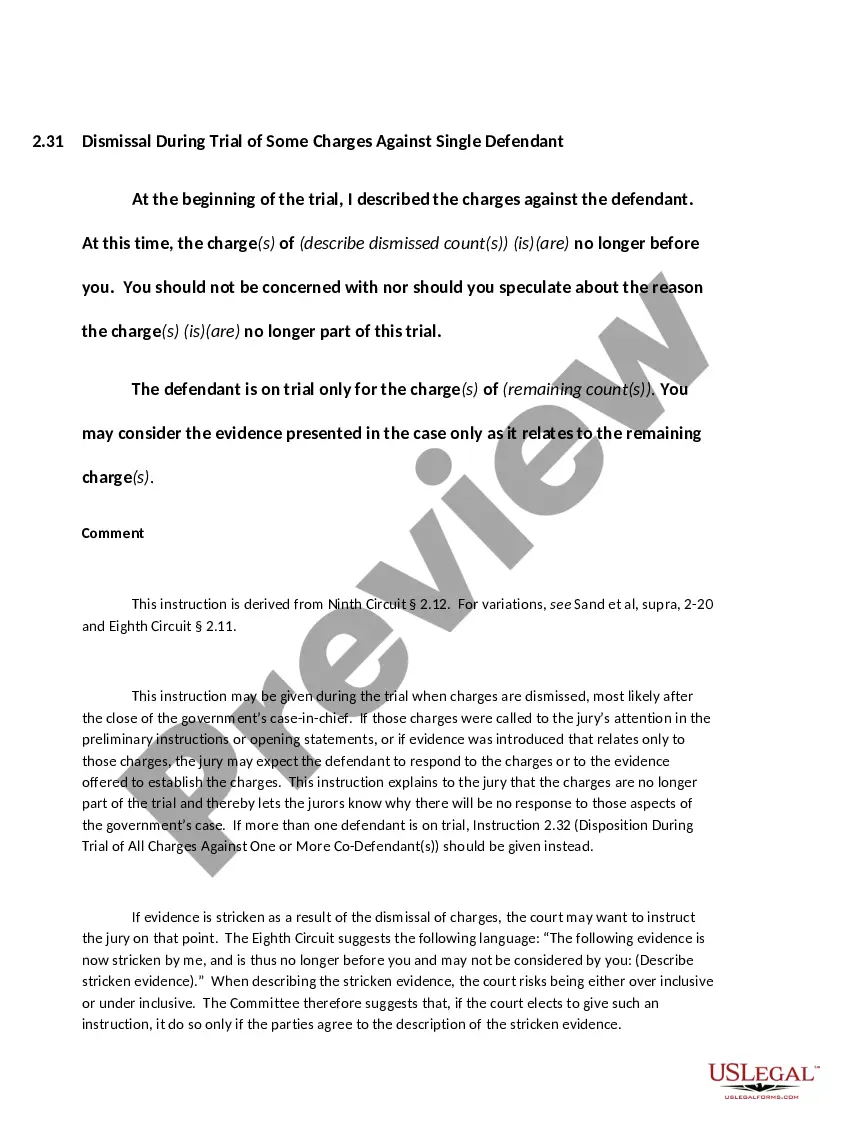
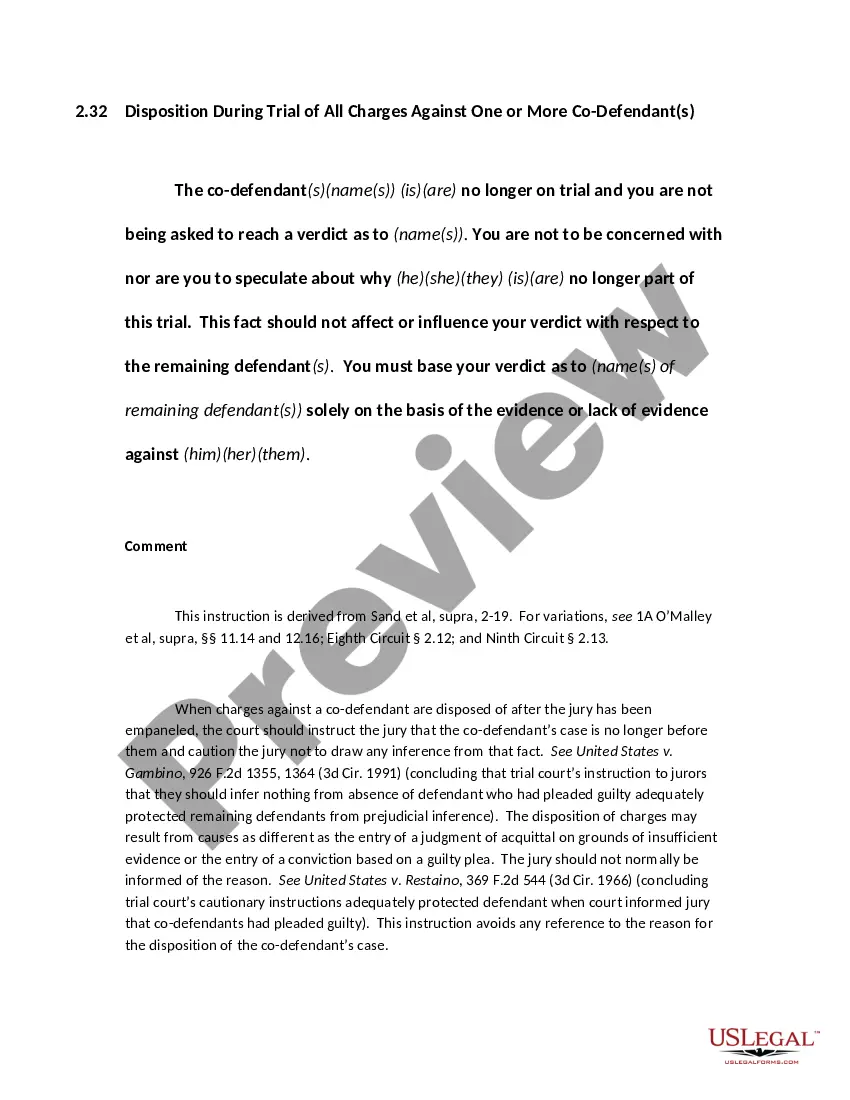
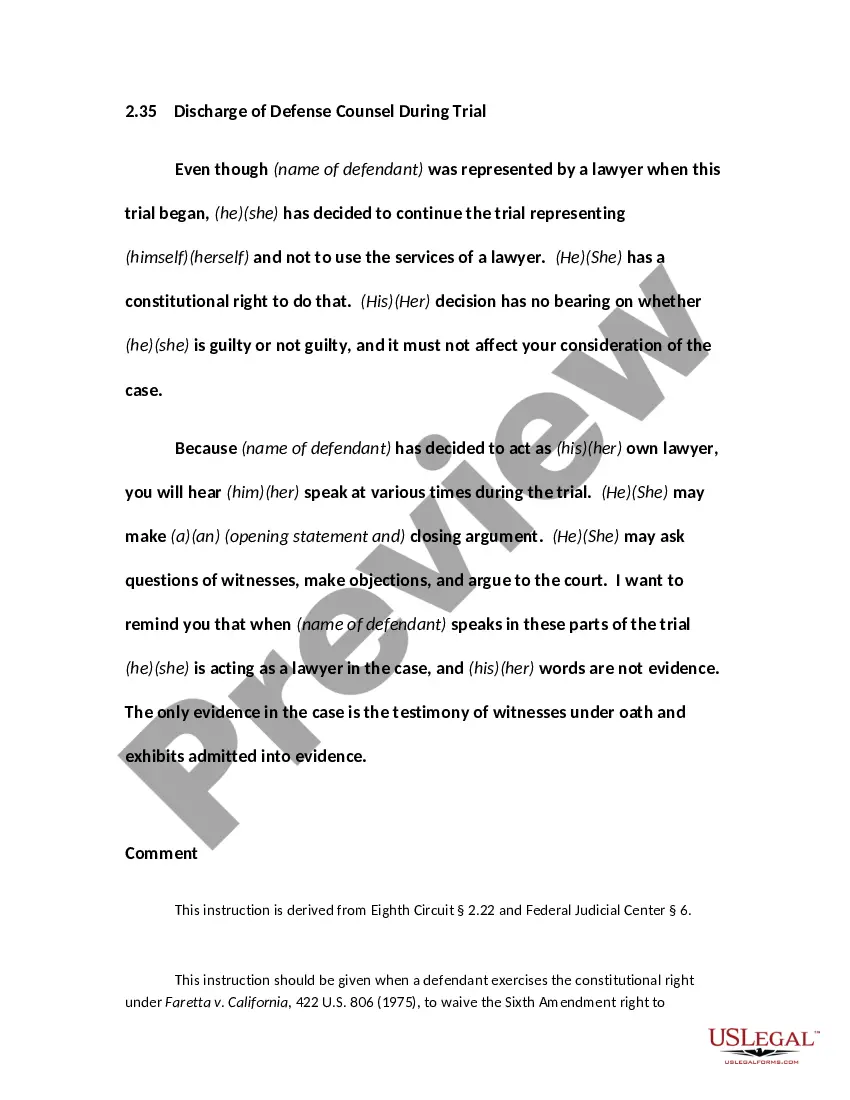
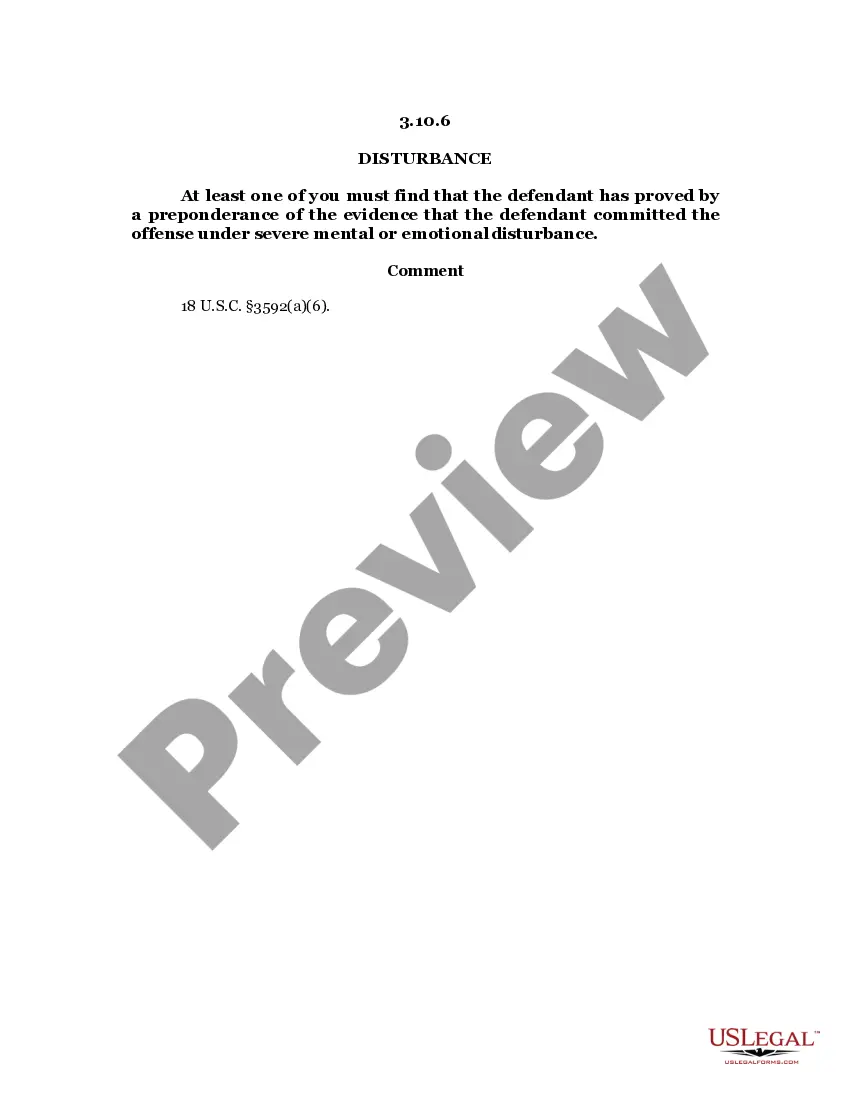
The Disruptive Defendant form provides legal instructions for juries regarding how to handle a defendant's disruptive behavior during a courtroom trial. This includes guidance on disregarding inappropriate verbalizations, understanding the implications of restraints, and addressing the potential removal of a defendant from the courtroom. This form is crucial for maintaining the integrity of the trial process, ensuring that jurors focus solely on the evidence presented, without bias introduced by the defendant's actions.
Main sections of this form
- Inappropriate verbalization instruction: jurors must disregard any statements made by the defendant unless they are giving formal testimony.
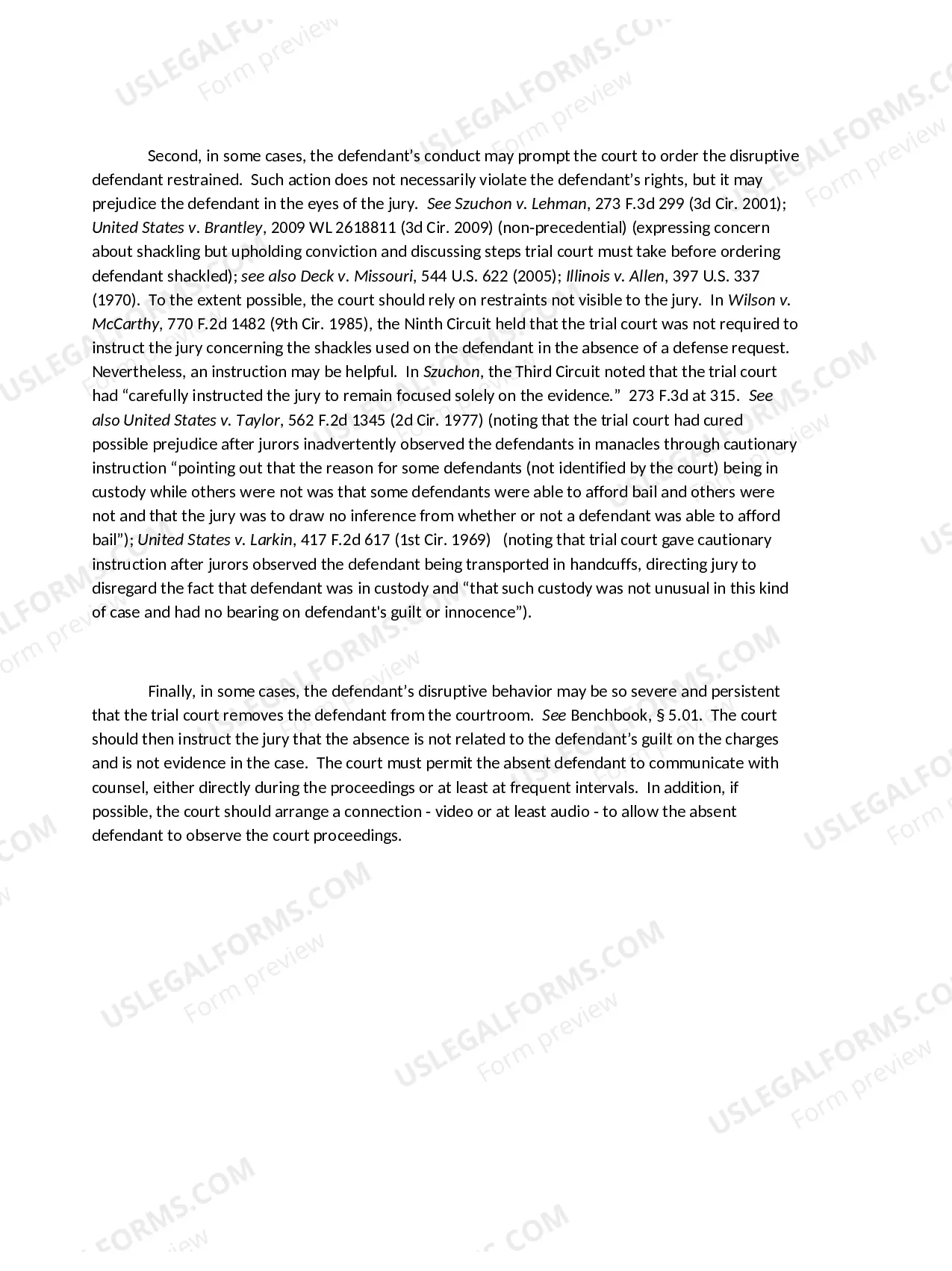
- Guidance on visible restraints: jurors should not consider the defendant's restraints in their deliberations.
- Instructions for absent defendants: the jury must understand that a defendant's absence does not correlate with guilt or innocence.
- Handling different types of disruptive behavior based on severity, including verbal outbursts and physical conduct.
- Specific judicial protocols for addressing disruption, as provided in the Benchbook for U.S. District Court Judges.
Common use cases
This form is used during criminal trials when a defendant exhibits disruptive behavior that may distract jurors or compromise the trial's fairness. If a defendant makes inappropriate comments, is restrained physically, or is removed from the courtroom, the court will utilize instructions from this form to ensure jurors understand how these issues should not influence their verdict.
Who needs this form
- Judges presiding over criminal trials.
- Trial attorneys representing either the prosecution or defense.
- Legal clerks assisting in trial preparations.
- Courtroom personnel managing trial proceedings.
Instructions for completing this form
- Identify the nature of the defendant's disruptive behavior (verbal or physical).
- Specify any relevant details, such as the type of restraint used or if the defendant is absent.
- Follow judicial protocol as outlined in the Benchbook for U.S. District Court Judges.
- Ensure that jurors are clearly instructed to disregard any irrelevant statements or behaviors during deliberations.
- Document any special instructions given to the jury regarding the handling of disruptions.
Is notarization required?
This form does not typically require notarization to be legally valid. However, some jurisdictions or document types may still require it. US Legal Forms provides secure online notarization powered by Notarize, available 24/7 for added convenience.
Get your form ready online
Our built-in tools help you complete, sign, share, and store your documents in one place.
Make edits, fill in missing information, and update formatting in US Legal Forms—just like you would in MS Word.
Download a copy, print it, send it by email, or mail it via USPS—whatever works best for your next step.
Sign and collect signatures with our SignNow integration. Send to multiple recipients, set reminders, and more. Go Premium to unlock E-Sign.
If this form requires notarization, complete it online through a secure video call—no need to meet a notary in person or wait for an appointment.
We protect your documents and personal data by following strict security and privacy standards.

Make edits, fill in missing information, and update formatting in US Legal Forms—just like you would in MS Word.

Download a copy, print it, send it by email, or mail it via USPS—whatever works best for your next step.

Sign and collect signatures with our SignNow integration. Send to multiple recipients, set reminders, and more. Go Premium to unlock E-Sign.

If this form requires notarization, complete it online through a secure video call—no need to meet a notary in person or wait for an appointment.

We protect your documents and personal data by following strict security and privacy standards.
Common mistakes
- Failing to clarify that the defendant's actions do not affect their guilt or innocence.
- Not instructing the jury adequately about disregarding inappropriate comments made by the defendant.
- Over-explaining the situation, which can create bias or confusion among jurors.
Benefits of completing this form online
- Immediate access to the latest legal language and guidelines.
- Convenient download and customization options to meet specific trial needs.
- Ensures adherence to legal standards, enhancing courtroom management.
Legal use & context
- This form is designed to protect the rights of defendants while ensuring a fair trial.
- Failure to issue proper jury instructions may lead to appeals or mistrials.
- Instructions related to disruptive defendants must be clear to minimize juror bias.
What to keep in mind
- Proper handling of disruptive defendants is essential for maintaining trial integrity.
- This form provides critical guidance for juries in the face of disruptive behavior.
- Judges and legal professionals must ensure jurors understand to separate defendant conduct from case deliberations.
Looking for another form?
Form popularity
FAQ
Defendant: In civil cases, the person who is given court papers, also called a respondent. In criminal cases, the person who is arrested and charged with a crime.
The court held that a defendant may lose his right to be present at his own trial if, following warnings from the judge that he will be removed if his disruptive behavior persists, he nonetheless insists on conducting himself in a manner inconsistent with the continuance of the trial.
A defendant need not be present under any of the following circumstances: (1) Organizational Defendant. The defendant is an organization represented by counsel who is present. (2) Misdemeanor Offense.
A gag order basically instructs a party to a litigation to refrain from speaking publicly about the case. A New York judge overseeing a criminal case has the power to issue a gag order over one or more of the parties to the case. Gag orders are relatively rare, however.
Typically, judges issue injunctions barring trial participants ? including attorneys, litigants, and witnesses ? from discussing trial-related material outside the courtroom. In general, courts have held that gagging people involved in trials is more acceptable than similar orders issued against the press.
In Allen, the court held that ?there are at least three constitutionally permissible ways for a trial judge to handle an obstreperous defendant like Allen: (1) bind and gag him, thereby keeping him present; (2) cite him for contempt; (3) take him out of the courtroom until he promises to conduct himself properly.? 397
The Gag Rule statutes make it illegal for employers and employees to discuss their rights concerning union membership, dues, or even the Janus decision; such discussions are allowed only with the union itself.
A "Gag Order" is usually a Judge's order directed at the attorneys, witnesses, and parties before the court not to publicly discuss the facts of a case. This is typically done in criminal cases of particular notoriety in order to assure the defendant receives a fair trial.