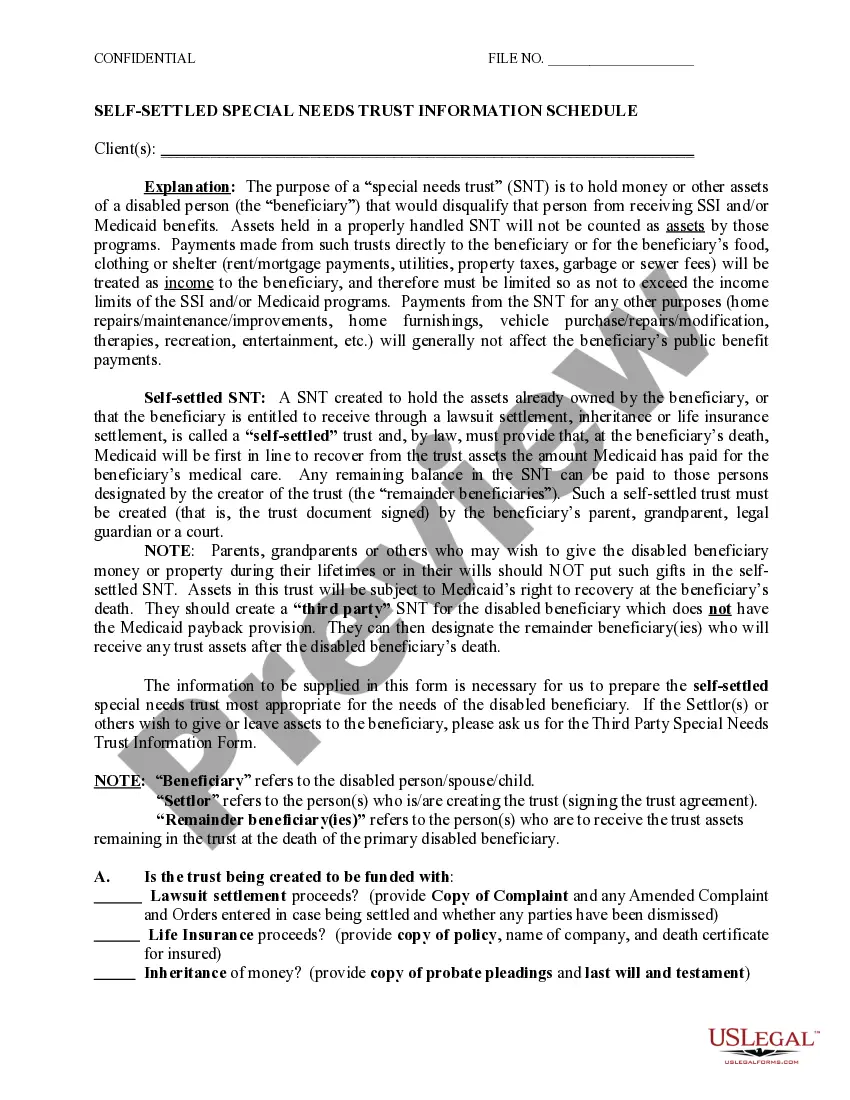
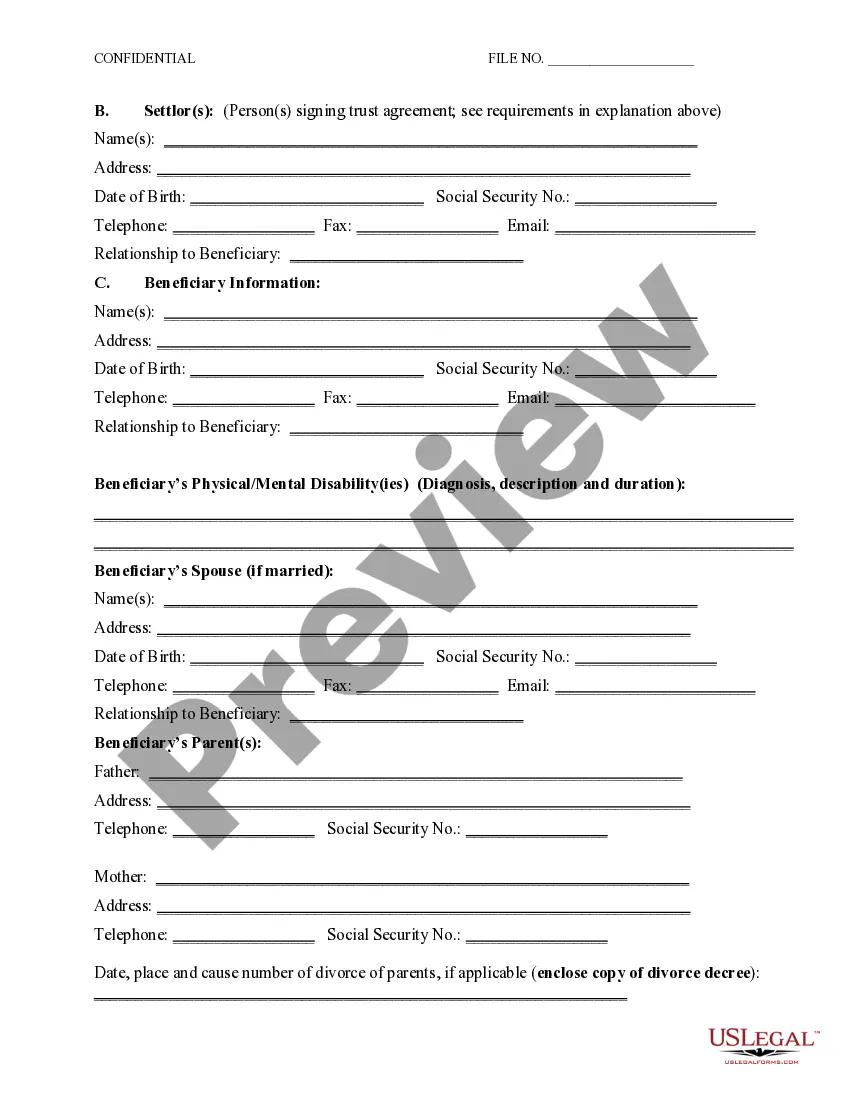
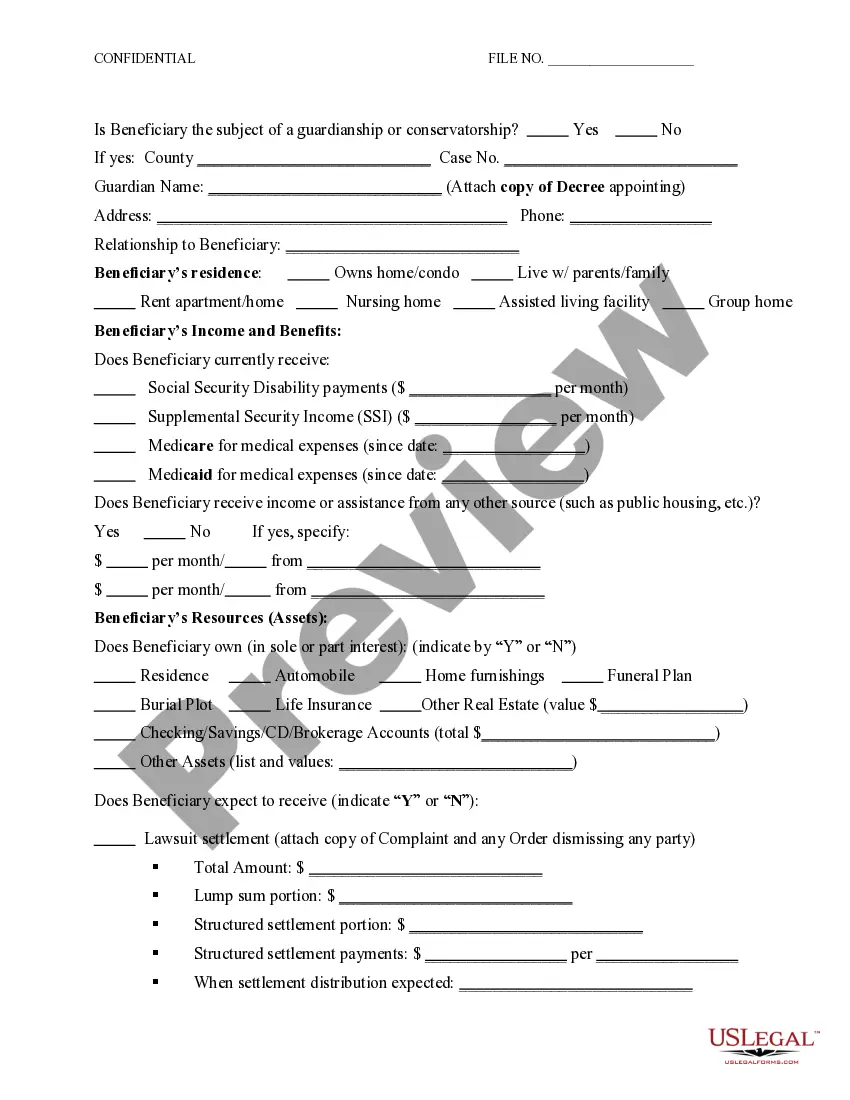
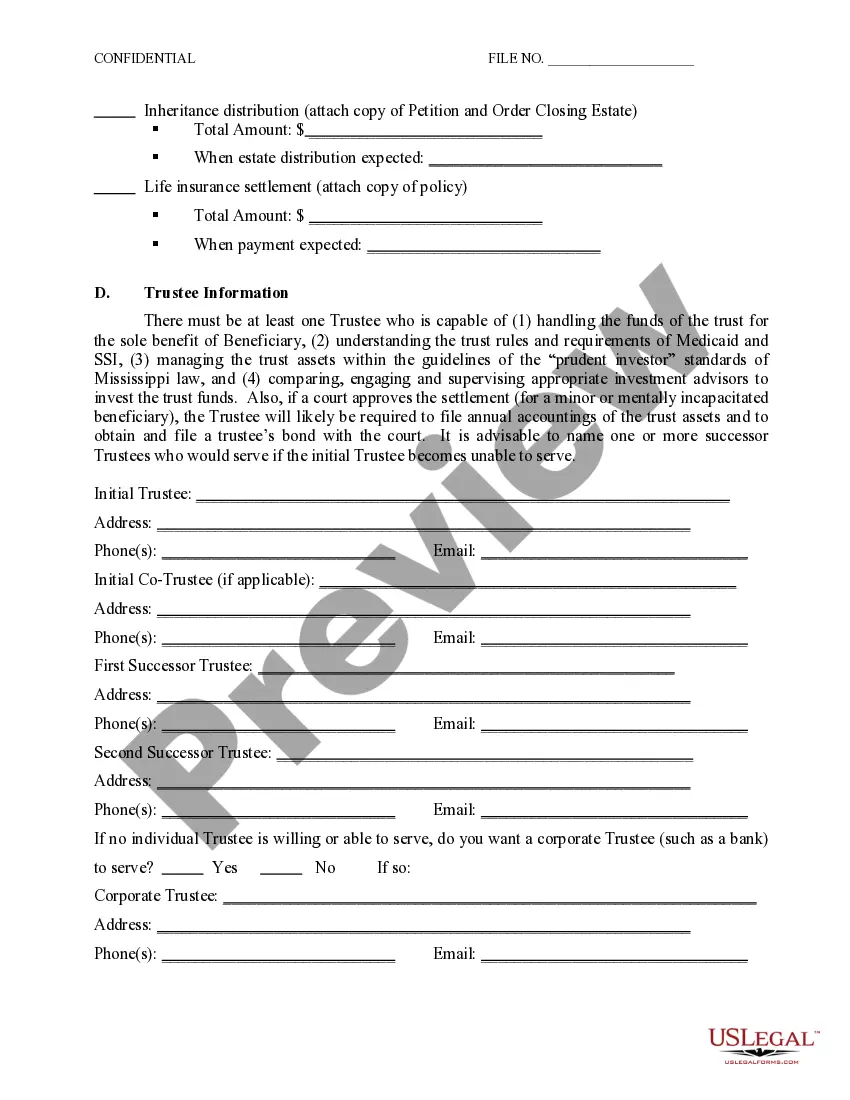
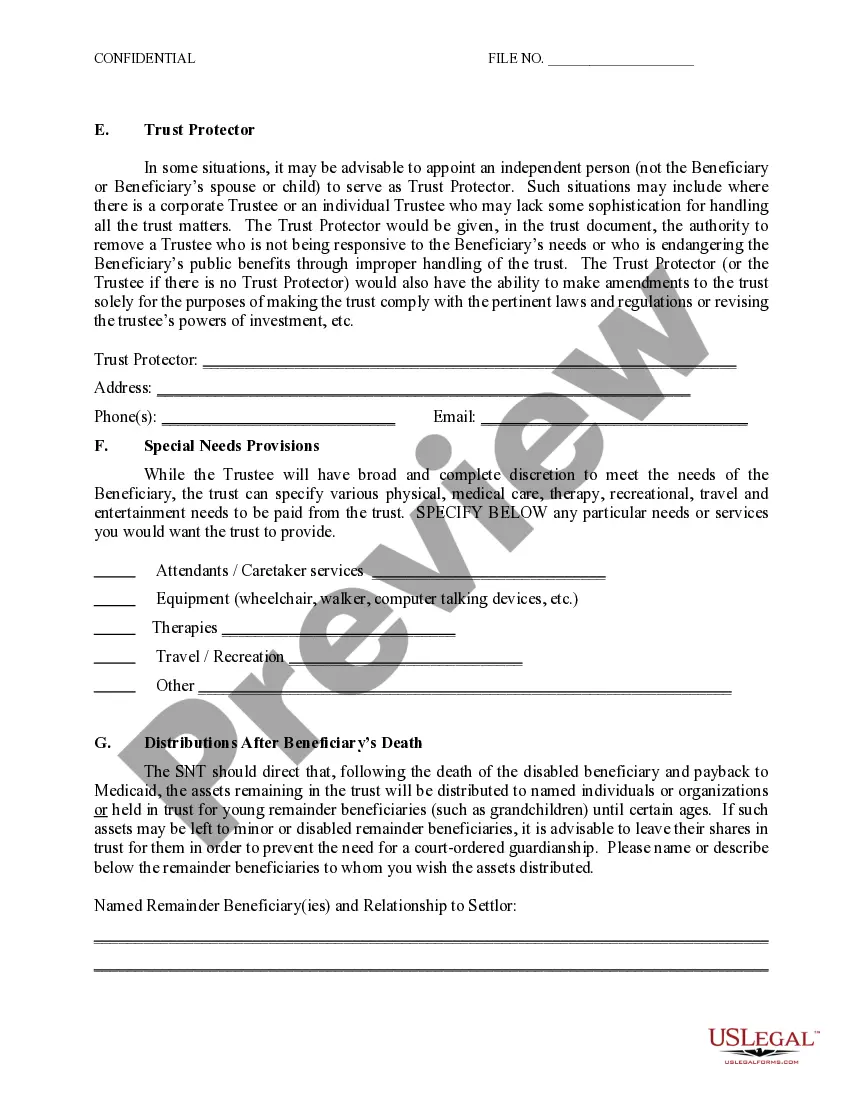
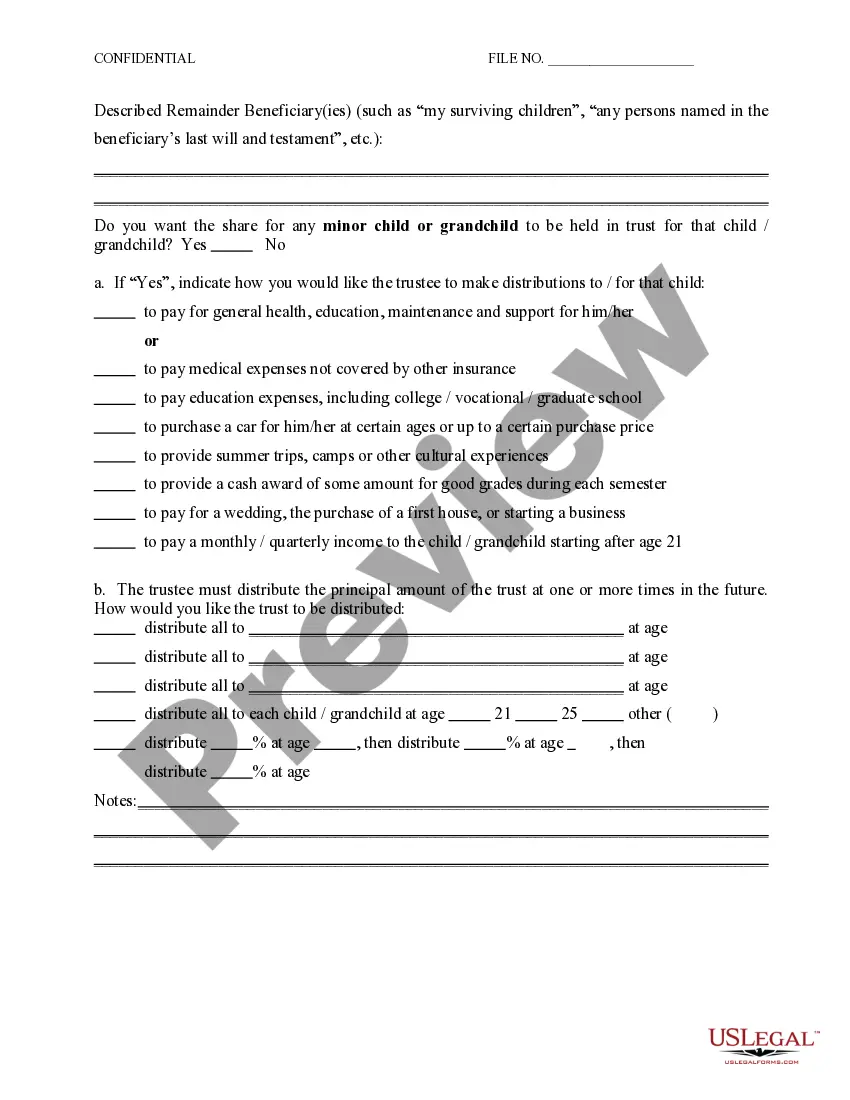
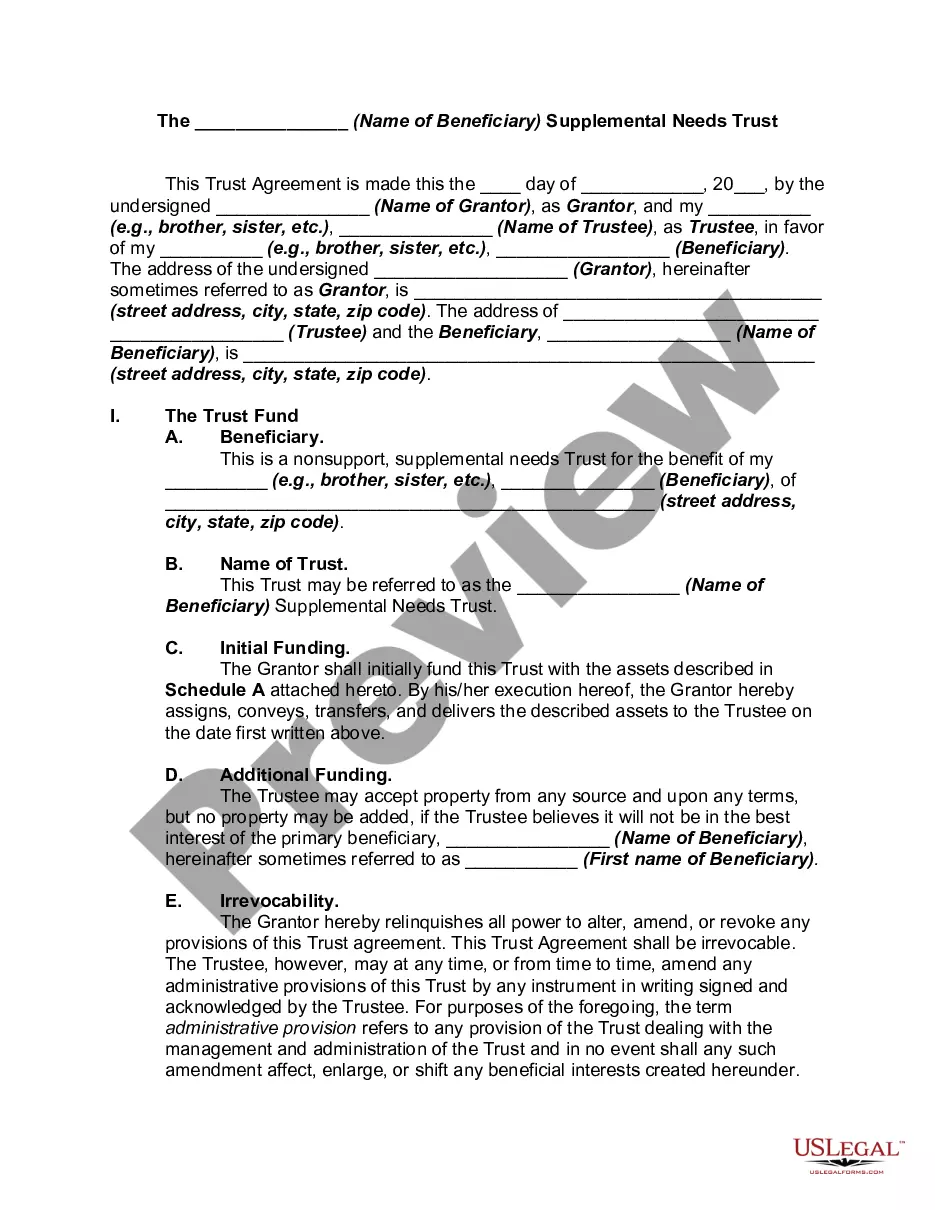
This document summarizes the progression of information that assists an attorney in preparing and advising a client about self-settled special needs trusts.
A good starting point would be talking to an attorney who specializes in special needs planning. There are also local nonprofit organizations that can offer resources and guidance. Don’t hesitate to reach out; there are plenty of folks ready to help you navigate this process!
Yes, the trustee should be someone responsible and knowledgeable about managing funds for special needs. It could be a family member, a trusted friend, or even a professional fiduciary who knows the ropes.
This trust keeps the assets out of the beneficiary's name, which means those funds won’t count against their eligibility for programs like Medicaid or SSI. In other words, it’s a way to keep the benefits rolling in while still having some extra support.
The funds can be used for things that improve the beneficiary's quality of life, like medical expenses, education, and recreational activities. It's all about enhancing their everyday living without interfering with their government benefits.
Typically, family members or legal guardians of a person with disabilities can set up this trust. Think of it as their way of creating a financial cushion for their loved one.