Indiana Timber Sale Contract
About this form
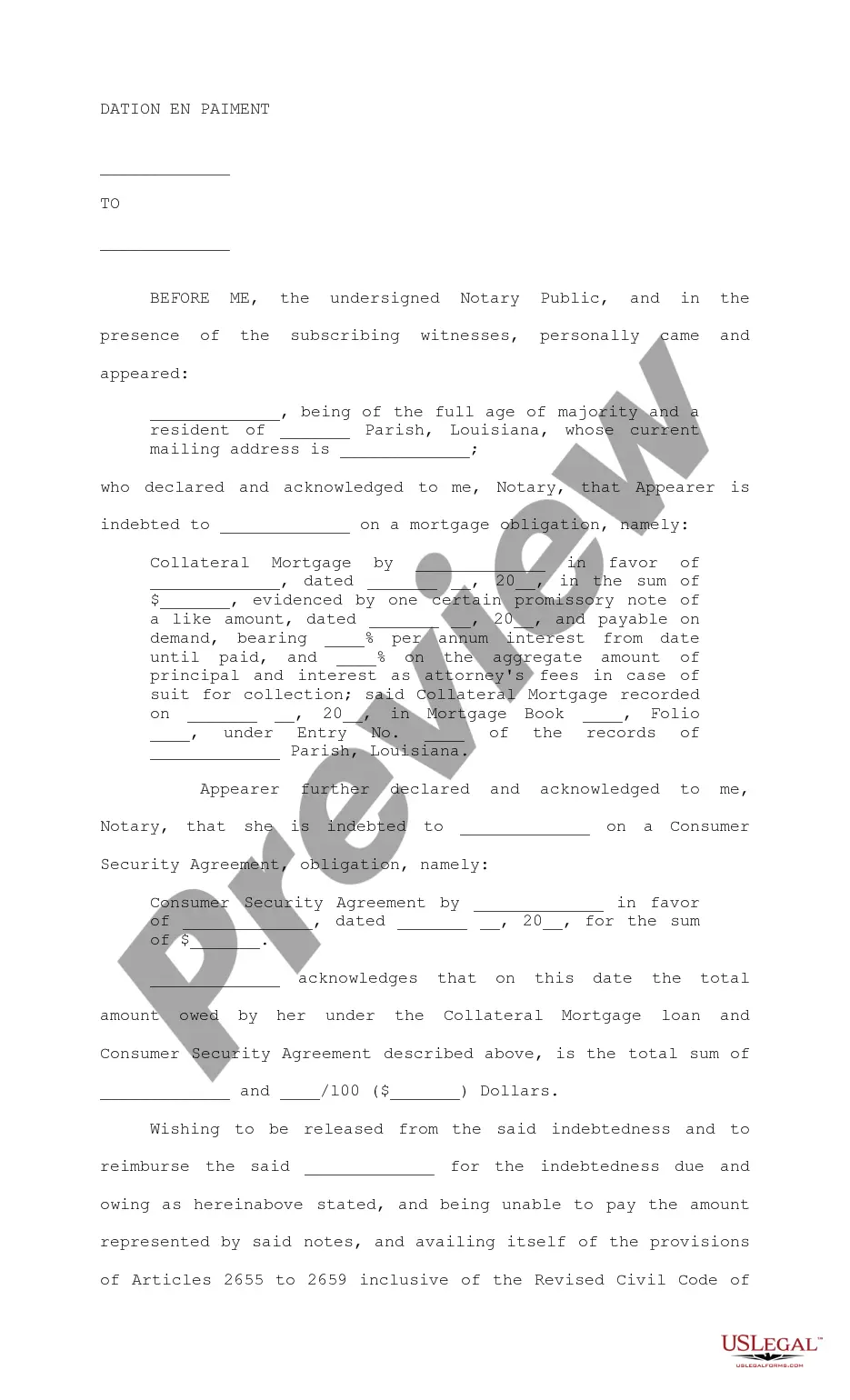
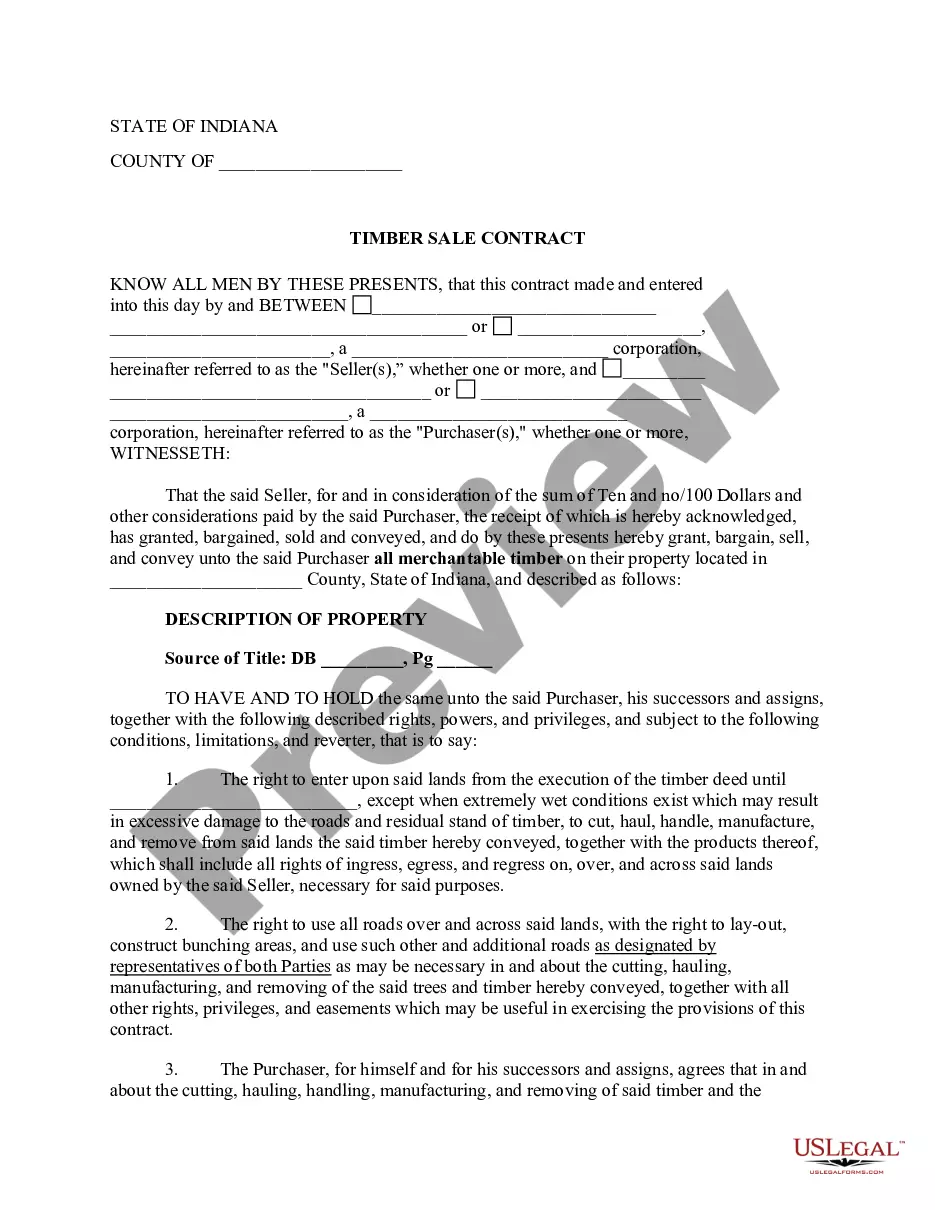
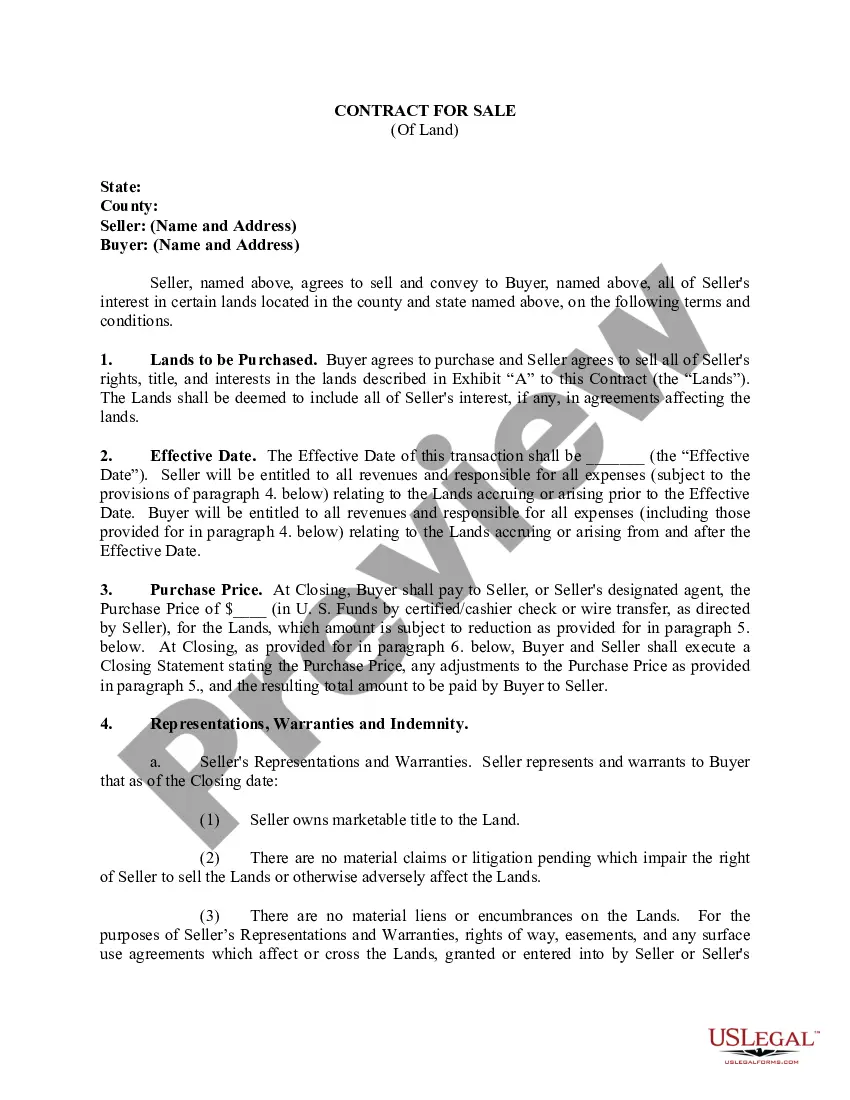
The Indiana Timber Sale Contract is a legal agreement specifically designed for the sale of merchantable timber in the State of Indiana. This contract is utilized between sellers (individuals or corporations) and buyers (individuals or corporations) to formalize the sale of timber by outlining rights, responsibilities, and considerations. It is essential for ensuring clear terms and conditions regarding the management and harvesting of timber resources compared to informal agreements or less formal sales methods.
Main sections of this form
- Identification of the Seller(s) and Purchaser(s) involved in the contract.
- Description of the timber being sold, including specifics about the property and merchantable timber.
- Rights granted to the Purchaser for cutting, handling, and removing timber from the seller's property.
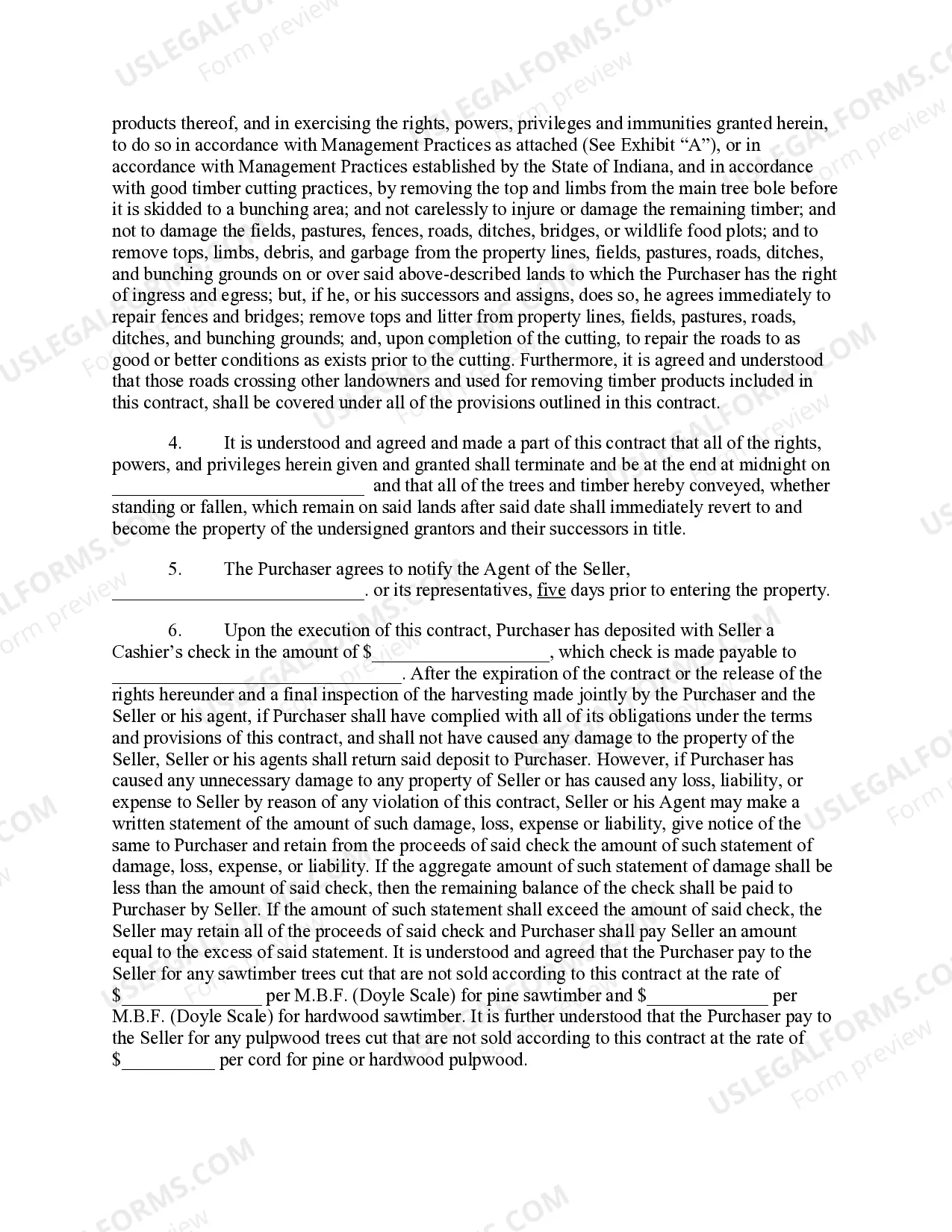
- Conditions regarding maintenance of the property and potential damage liabilities during timber harvesting.
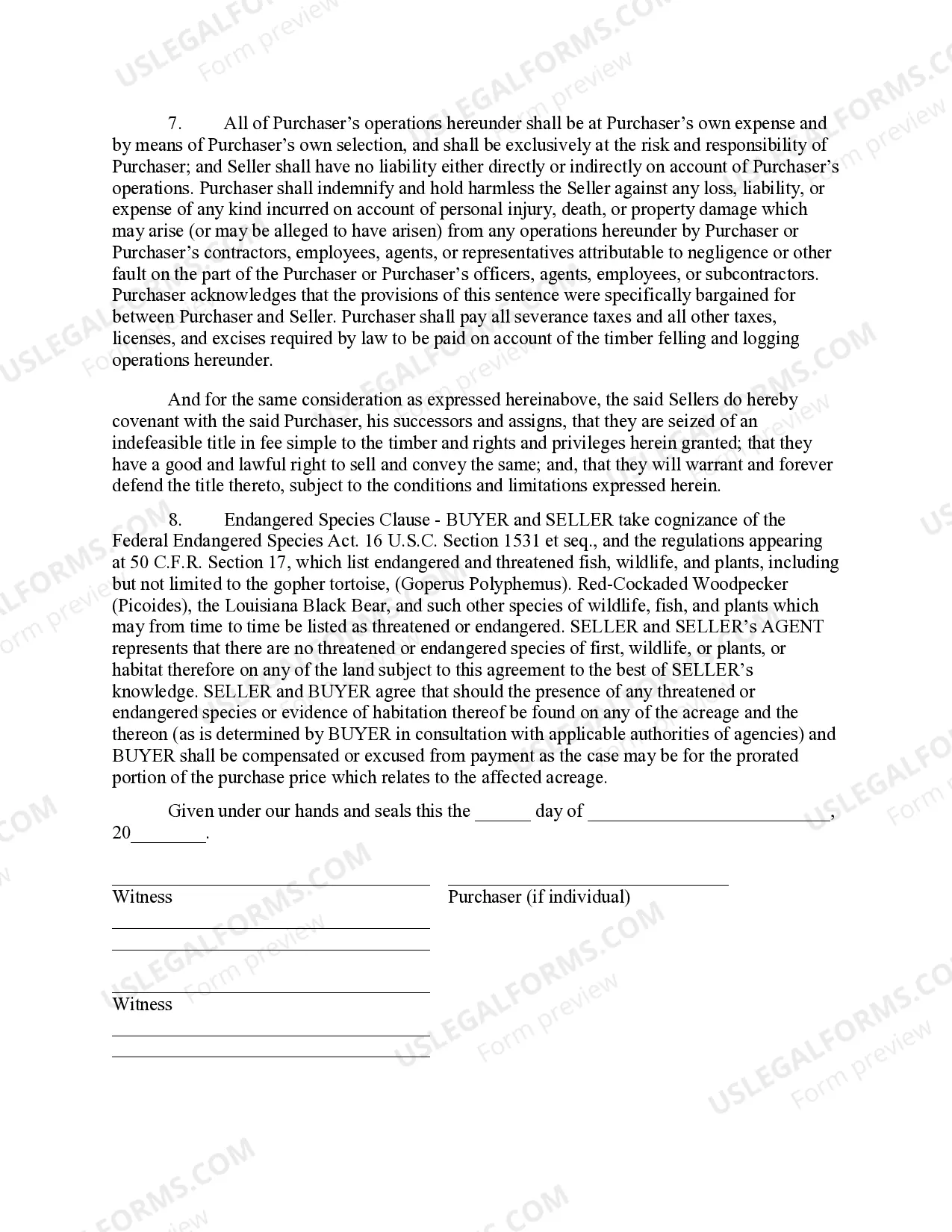
- Endangered species acknowledgment ensuring compliance with federal regulations.
- Deposit and payment terms for timber, including penalties for damages caused by the Purchaser.




When this form is needed
This form should be used in situations where an individual or corporation intends to sell or purchase timber in Indiana. It is beneficial for both parties to have a legally binding agreement that clearly states the conditions of the sale, responsibilities during timber harvesting, and other critical elements to safeguard their interests. Common scenarios include private landowners selling timber to logging companies or individuals buying timber rights for personal or commercial use.
Who this form is for
This contract is intended for:
- Landowners selling timber (individuals or corporations).
- Timber buyers or logging companies looking to purchase timber rights.
- Real estate professionals and attorneys involved in land transactions.
- Any party that requires a clear, legal framework for the sale and management of timber resources in Indiana.
How to complete this form
- Identify and enter the names of the Seller(s) and Purchaser(s) at the beginning of the contract.
- Clearly describe the location and boundaries of the property where timber is being sold.
- Specify the amount and type of timber being sold, including pricing details based on the merchantable timber.
- List the rights granted to the Purchaser, such as access and harvesting methods.
- Ensure both parties sign and date the document in the presence of witnesses, if required.
Notarization guidance
This form must be notarized to be legally valid. US Legal Forms provides secure online notarization powered by Notarize, allowing you to complete the process through a verified video call.
Get your form ready online
Our built-in tools help you complete, sign, share, and store your documents in one place.
Make edits, fill in missing information, and update formatting in US Legal Forms—just like you would in MS Word.
Download a copy, print it, send it by email, or mail it via USPS—whatever works best for your next step.
Sign and collect signatures with our SignNow integration. Send to multiple recipients, set reminders, and more. Go Premium to unlock E-Sign.
If this form requires notarization, complete it online through a secure video call—no need to meet a notary in person or wait for an appointment.
We protect your documents and personal data by following strict security and privacy standards.

Make edits, fill in missing information, and update formatting in US Legal Forms—just like you would in MS Word.

Download a copy, print it, send it by email, or mail it via USPS—whatever works best for your next step.

Sign and collect signatures with our SignNow integration. Send to multiple recipients, set reminders, and more. Go Premium to unlock E-Sign.

If this form requires notarization, complete it online through a secure video call—no need to meet a notary in person or wait for an appointment.

We protect your documents and personal data by following strict security and privacy standards.
Common mistakes
- Failing to provide complete and accurate descriptions of the timber and property.
- Not specifying the duration of the contract and conditions for termination.
- Overlooking liability clauses or the necessity for environmental compliance.
- Neglecting to obtain necessary signatures and notarization, if required.
Why use this form online
- Immediate access to a professionally drafted contract, saving time and reducing costs related to legal fees.
- Easy to customize to reflect specific terms agreed upon by both parties.
- Secure storage options for digital copies, ensuring you can access the contract when needed.
- Convenience of filling out and managing your contract from anywhere at any time.
Legal use & context
- The contract serves as a legally binding agreement outlining the rights and obligations of both Seller and Purchaser.
- It provides legal protection in case of disputes regarding the sale or logging practices.
- Compliance with local timber laws and regulations is crucial for enforceability.
- Timber sale contracts help to prevent illegal logging or environmental violations.
What to keep in mind
- Ensure clarity in the contract to prevent future disputes about timber rights.
- Maintain compliance with Indiana's environmental regulations during timber sales.
- Verify notary requirements when finalizing the contract.
- Consider the real-world implications of the contract before signing, ensuring both parties understand their responsibilities.
Looking for another form?

Form popularity
FAQ
If you want out of a real estate contract and don't have any contingencies available, you can breach the contract.The seller could also decide to sue you for breach of contract. Some real estate contracts have a liquidated damages clause that states the maximum the seller can keep if the buyers breach the contract.
The Contract of Sale can be prepared by a conveyancer, solicitor, or real estate agent. When the house is sold privately this task tends to go to the seller's real estate agent. You'll want to choose a real estate agent who has the experience to create a solid contract.
Federal law gives borrowers what is known as the "right of rescission." This means that borrowers after signing the closing papers for a home equity loan or refinance have three days to back out of that deal.
Find a buyer. Set a purchase price. Write up a land contract. Have it notarized. Set up a disbursement account.
No, the buyer does not have 3 days to back out. In the State of California in a real estate purchase contract there are a number of contingencies that must be met before the contract moves forward.
In an ideal world, it should take around 9 weeks from the draft contract stage until the day you exchange. But as we've covered, it's not always that simple. A lot can happen before completion day, and for a taste of what can go wrong, read our blog on why house sales fall through.
There is no automatic three day right to cancel, but most real estate contracts have other "contingencies" such as financing or inspection that would give a buyer a right to cancel for specific reasons.
Generally, the settlement period runs for about 30-90 days, although 60-day period is the most common (aside from New South Wales, where it is usually set for just 42 days).
There is a federal law (and similar laws in every state) allowing consumers to cancel contracts made with a door-to-door salesperson within three days of signing. The three-day period is called a "cooling off" period.