Technology Licensing is the process by which patentable intellectual property is made
marketable and is licensed or otherwise disposed for use by the pubic.
Fairfax Virginia Technology Licensing Agreement
Category:
State:
Multi-State
County:
Fairfax
Control #:
US-13257BG
Format:
Word;
Rich Text
Instant download
Description
Free preview

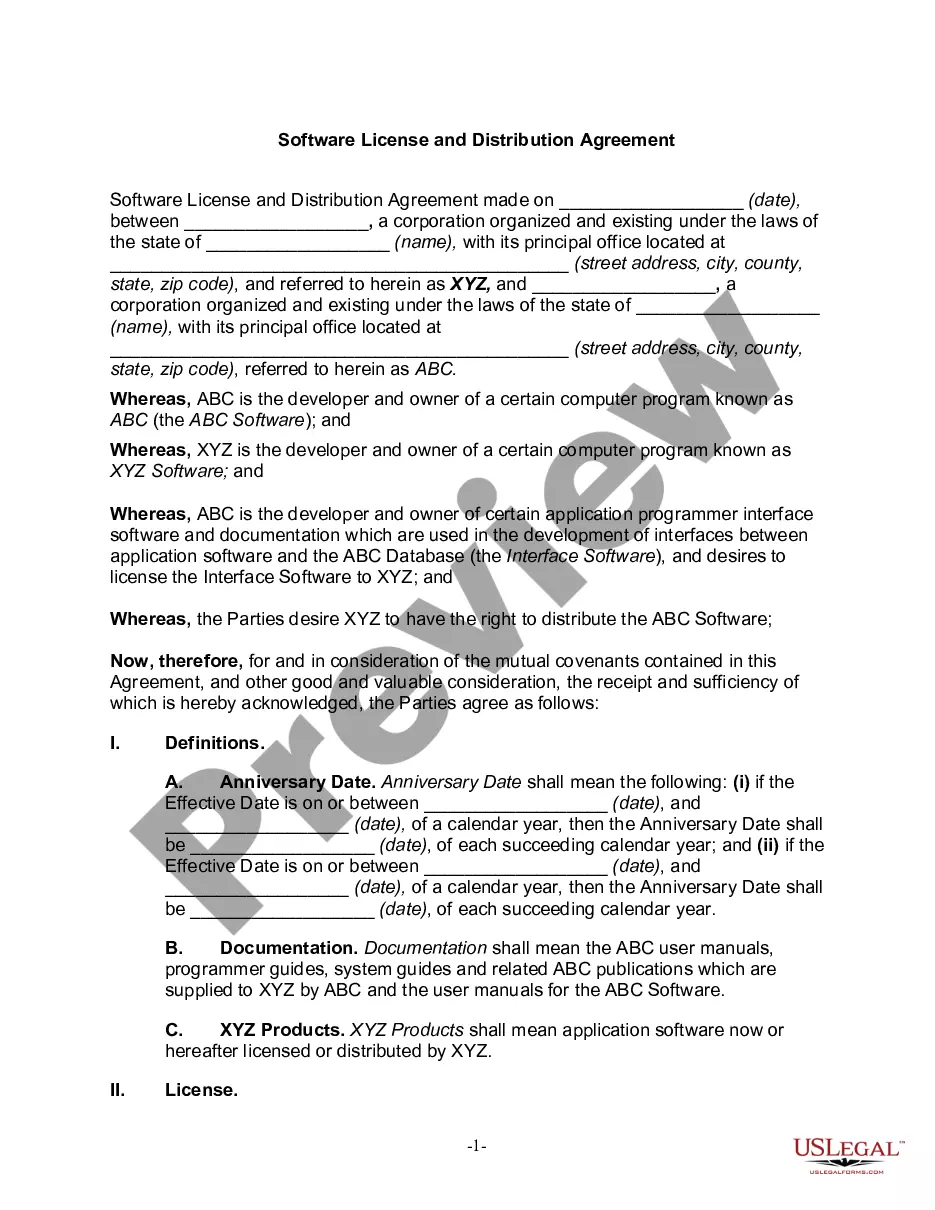
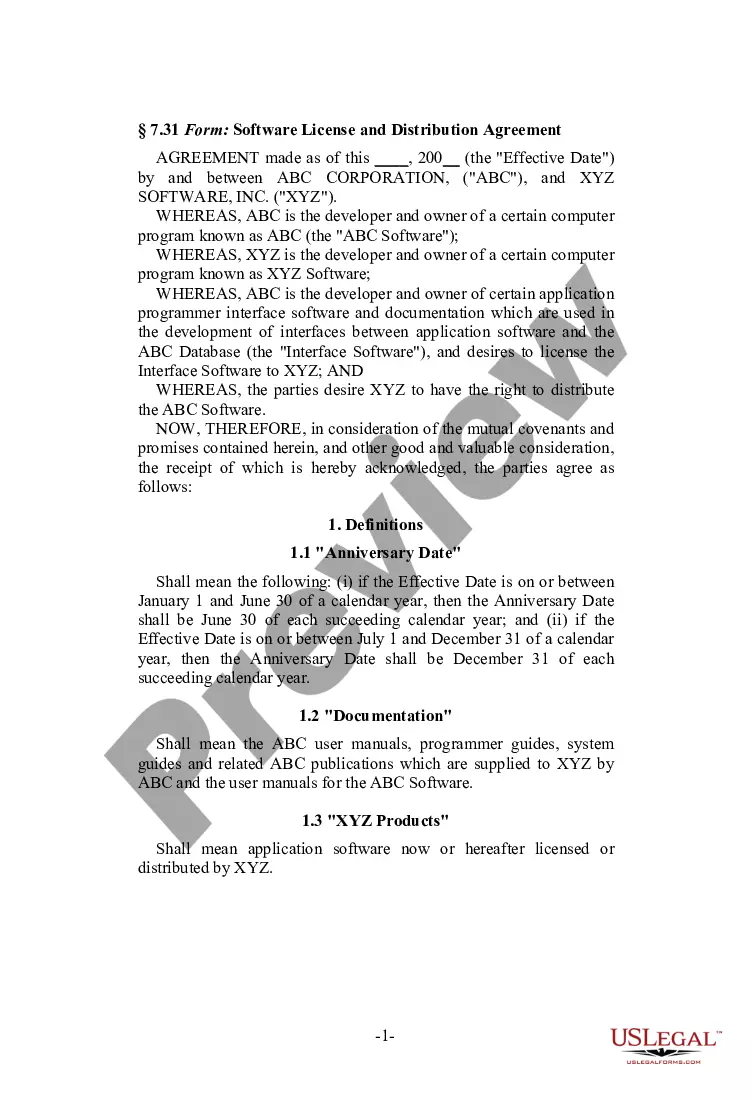
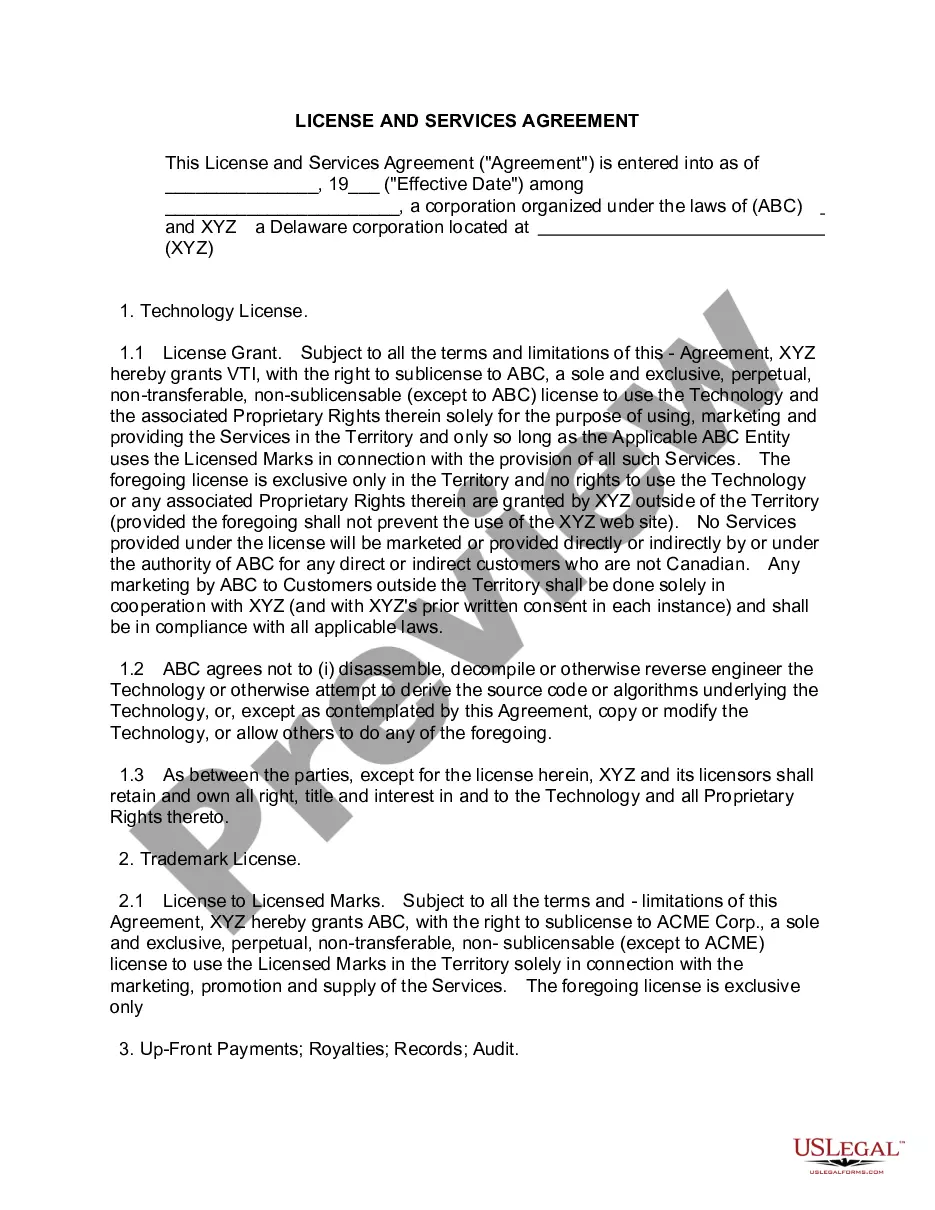
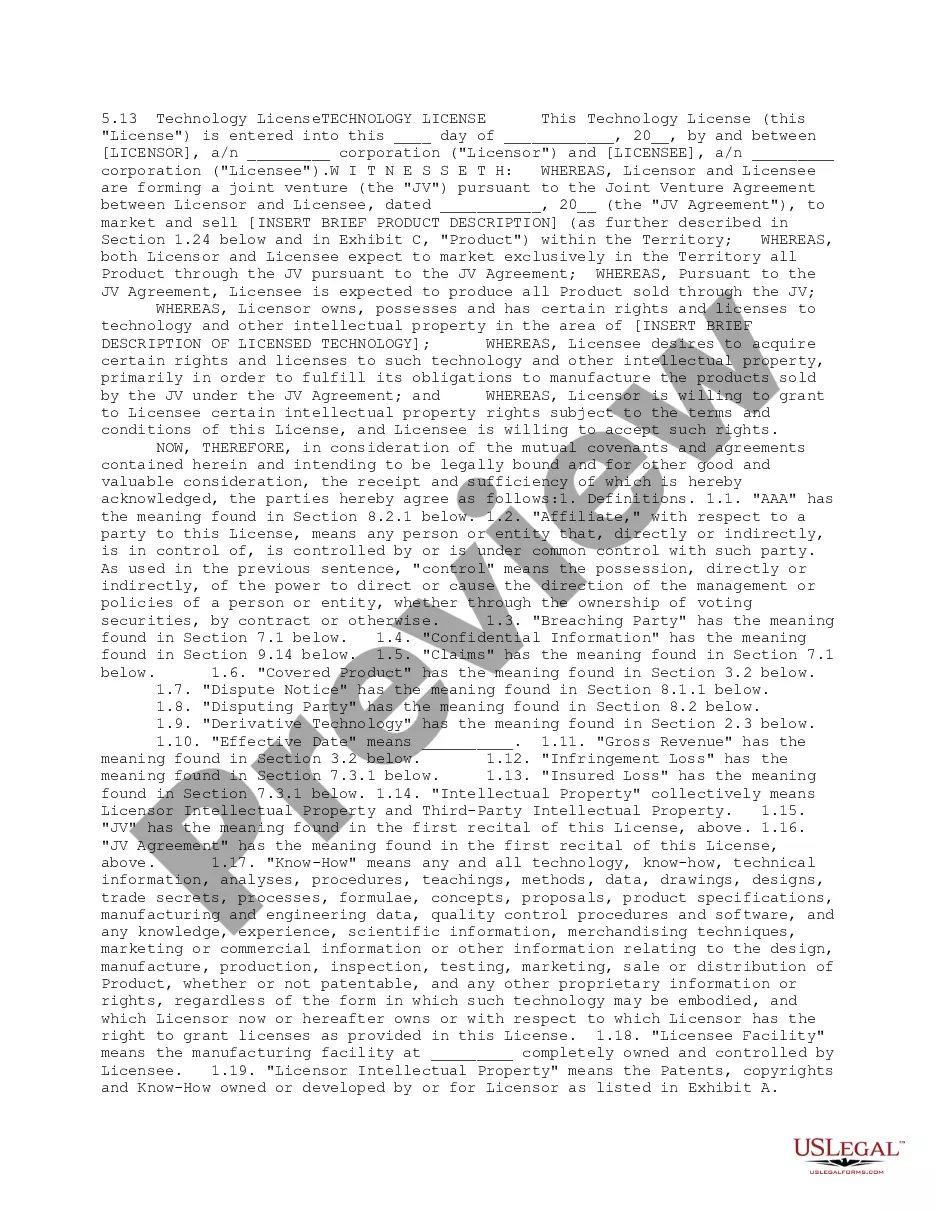





How to fill out Technology Licensing Agreement?
Drafting legal documents can be taxing.
Moreover, if you choose to hire an attorney to create a business contract, paperwork for property transfer, prenuptial agreement, divorce documents, or the Fairfax Technology Licensing Agreement, it could cost you a significant amount.
Review the form description and utilize the Preview option, if accessible, to confirm it's the template you require.
- So, what’s the ideal method to conserve time and money while producing valid forms in complete accordance with your state and local statutes and regulations.
- US Legal Forms provides an excellent answer, whether you are in need of templates for personal or corporate purposes.
- US Legal Forms represents the largest online repository of state-specific legal documents, offering users current and professionally verified forms for any situation consolidated in one location.
- As a result, if you need the latest version of the Fairfax Technology Licensing Agreement, you can effortlessly find it on our platform.
- Acquiring the documents takes very little time.
- Those with an existing account should confirm their subscription is active, Log In, and choose the sample using the Download button.
- If you haven't signed up yet, follow these steps to obtain the Fairfax Technology Licensing Agreement.
- Browse through the page and ensure there is a sample available for your region.
Form popularity
FAQ
Most licensing agreements will be valid only for a certain length of time. The agreement may have an option to renew the contract or have it modified at that time....Scope of the Agreement Exclusivity. Territory Rights. Guarantees of Sales.
Source Code License means any contract or contractual provision (whether or not denominated a "license") that prescribes the terms, conditions and restrictions applicable to the possession and use of Source Code by a licensee of the Software to whom Source Code of any Software has been released.
Practitioners and licensing executives often refer to three basic types of voluntary licenses: non-exclusive, sole, and exclusive. A non-exclusive licence allows the licensor to retain the right to use the licensed property and the right to grant additional licenses to third parties.
As a general rule, any well-drafted license agreement should address the following topics: Scope of the grant.Term and renewal.Performance standards and quotas.Payments to the licensor.Quality control, assurance and protection.Insurance and indemnification.Accounting, reports and audits.
Precisely identifying which intellectual property will be the subject of the license is necessary to ensure both parties are on the same page and not exceeding their rights. Scope of the Grant.Exclusivity.Territory.Term.Compensation.Termination.Conclusion.
Strategic licensing, by which the developer of intellectual property, technology or a product embeds it in the licensee's product for distribution, is typically a win-win for the companies involved.
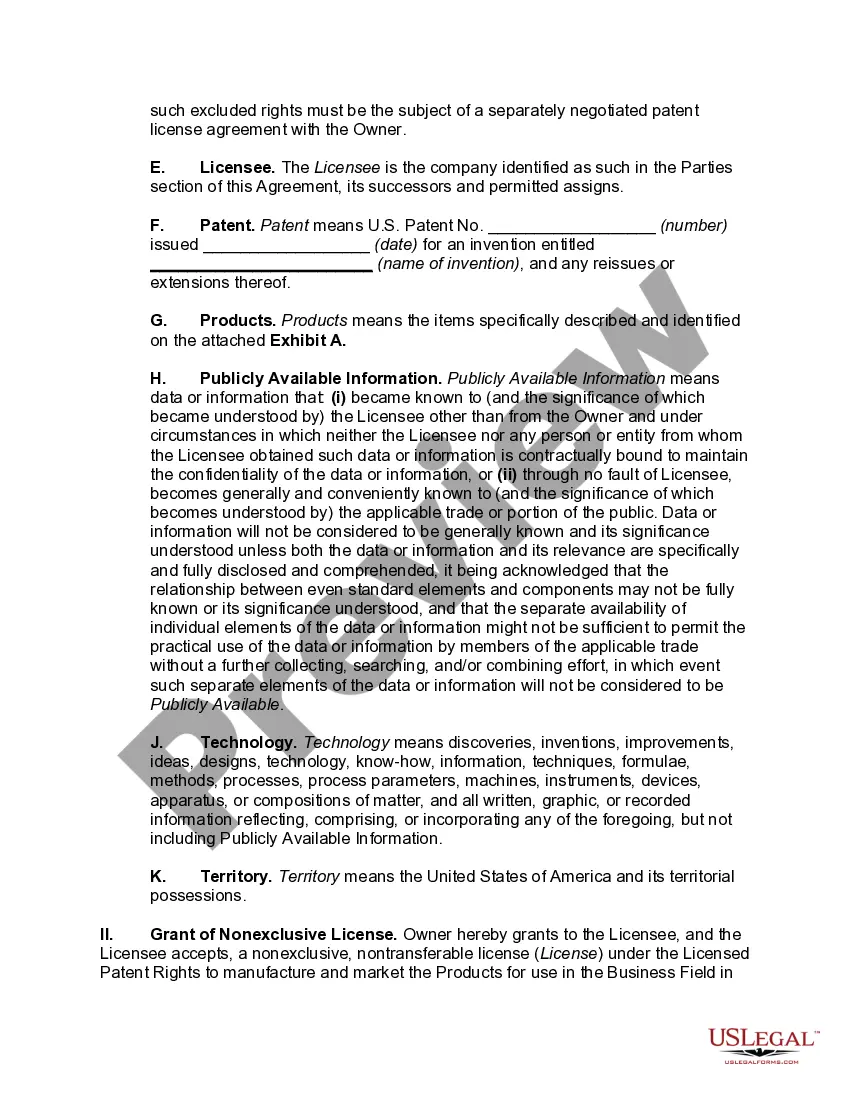
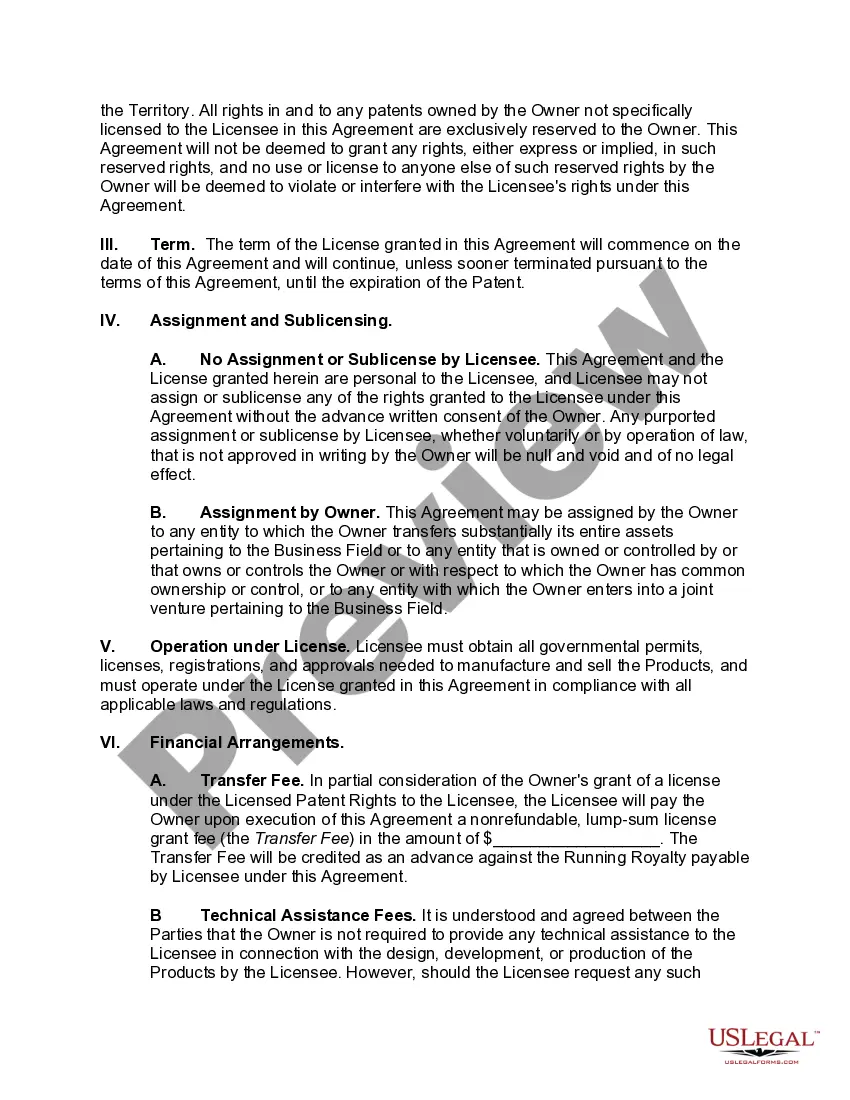
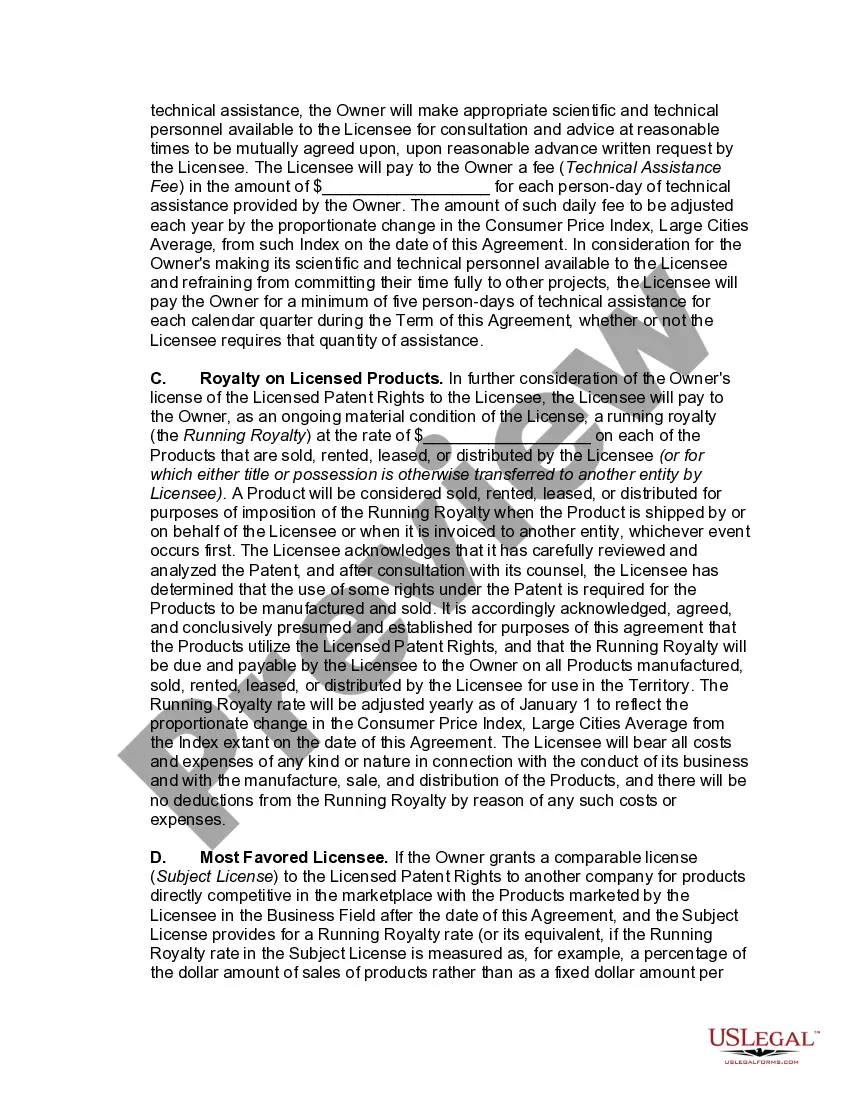
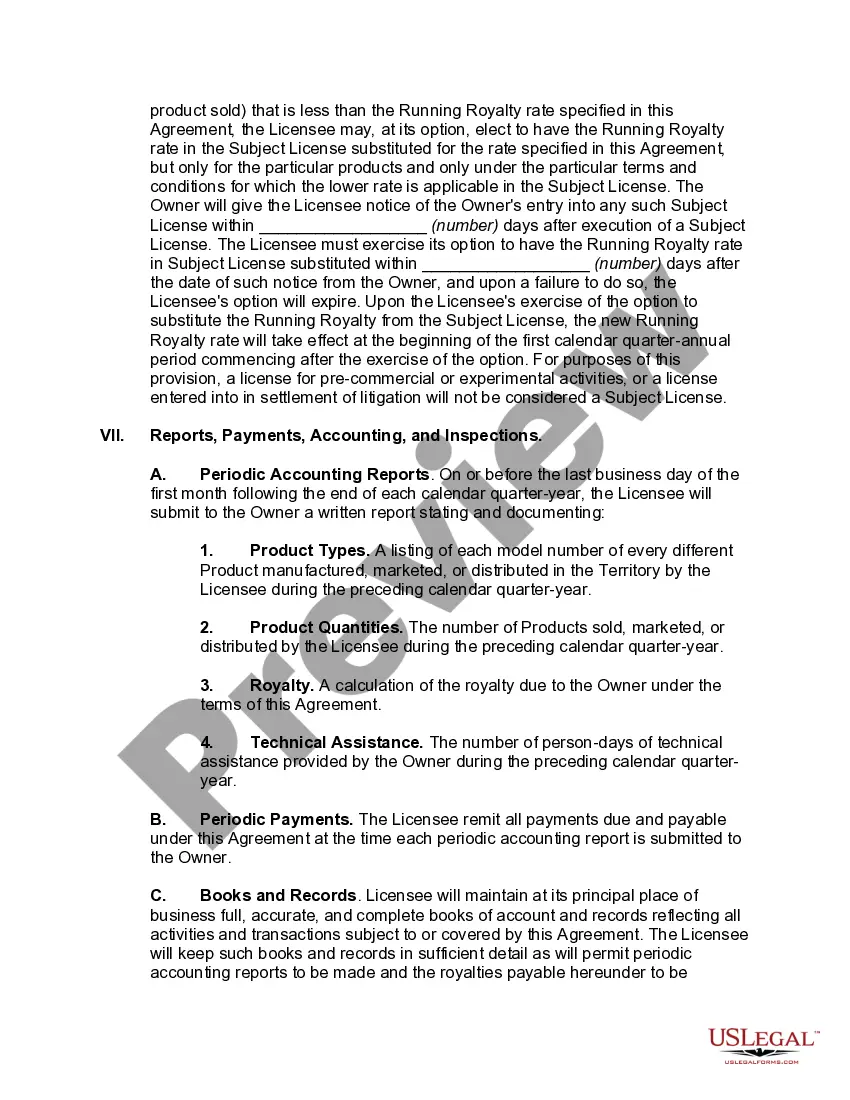
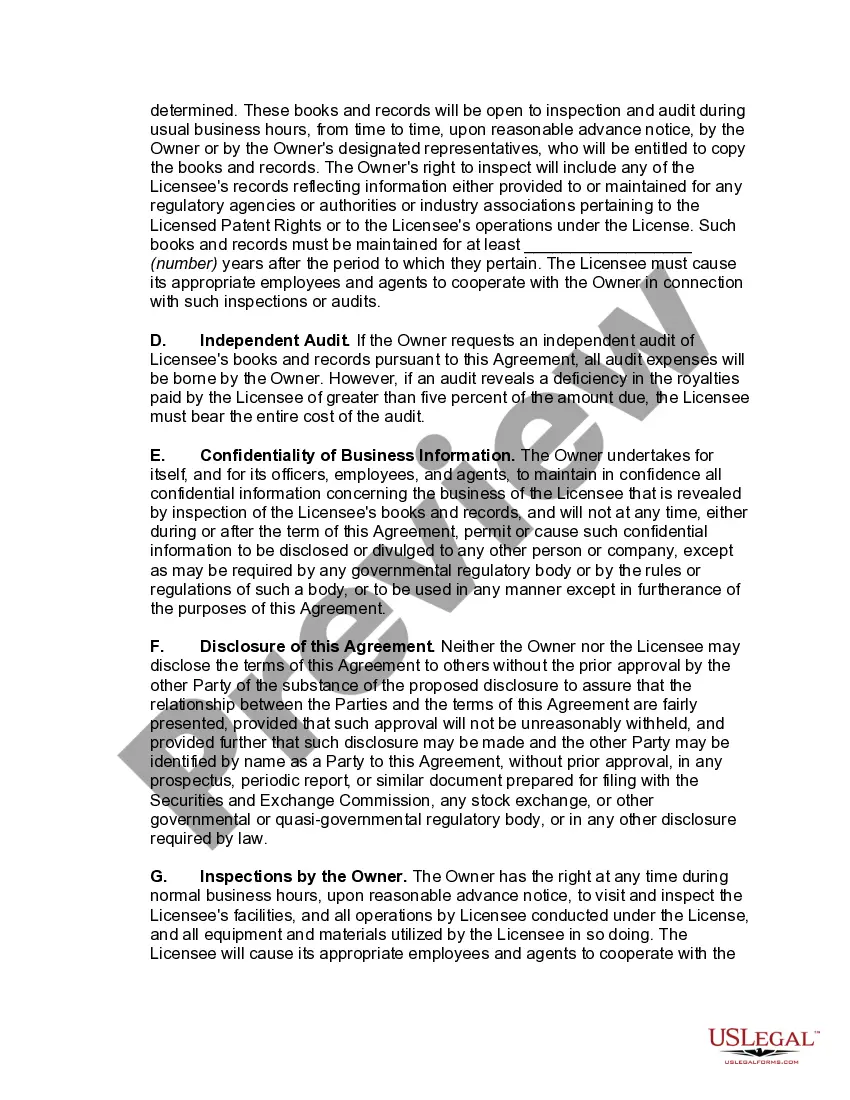
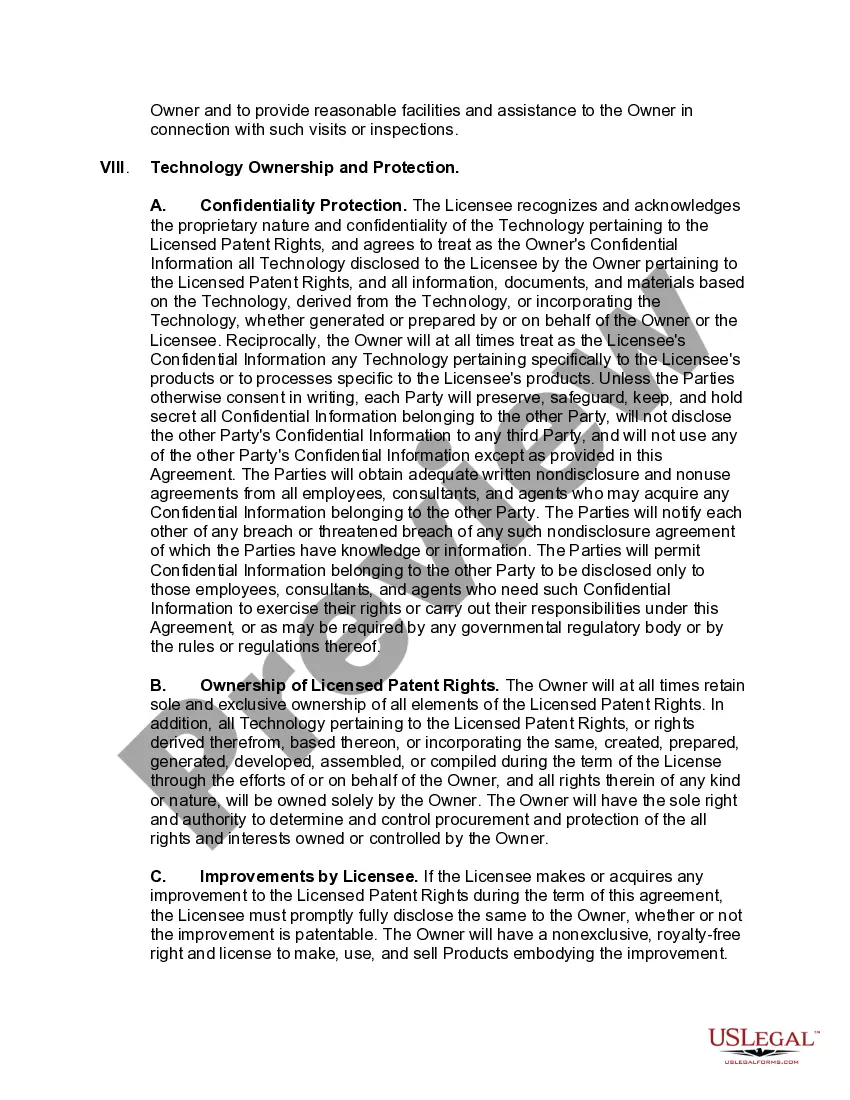
Technology licensing agreements are contracts or arrangements that involve an owner of a technology-based intellectual property, also known as a licensor, who will accept compensation in exchange for allowing an outside party, known as the licensee, resell the property, make alterations to it, or simply use it.
The steps for making a license agreement are as follows: Download a template for a licensing agreement. Choose your role as the licensor or licensee. Define the license(s) in the agreement. Decide whether the license is exclusive or not. Settle the matter of fees and payment schedule. Add a renewal date and rules.
The most commonly used licensing agreements will include trademarks, technology, and trade secrets. Many times, these agreements will include more than one form of intellectual property. Many agreements have some similarities, but there are some significant differences as well.
The term licensing agreement refers to a legal, written contract between two parties wherein the property owner gives permission to another party to use their brand, patent, or trademark.