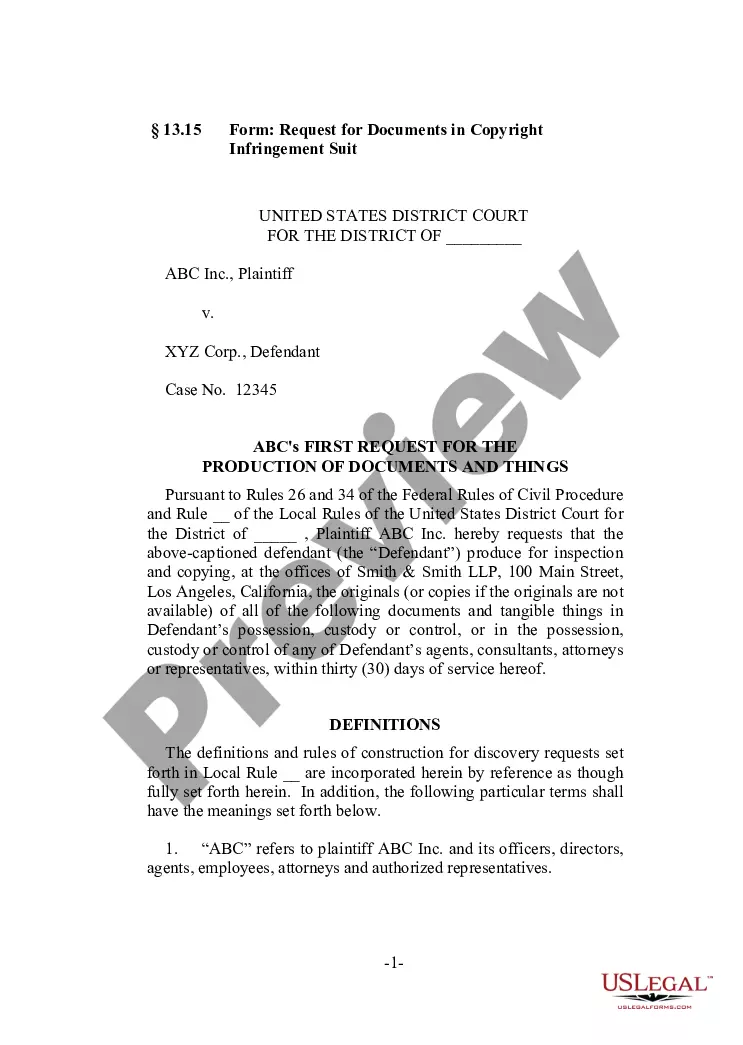
Orange California Plaintiff's Request for Documents in Copyright Infringement Suit
Description
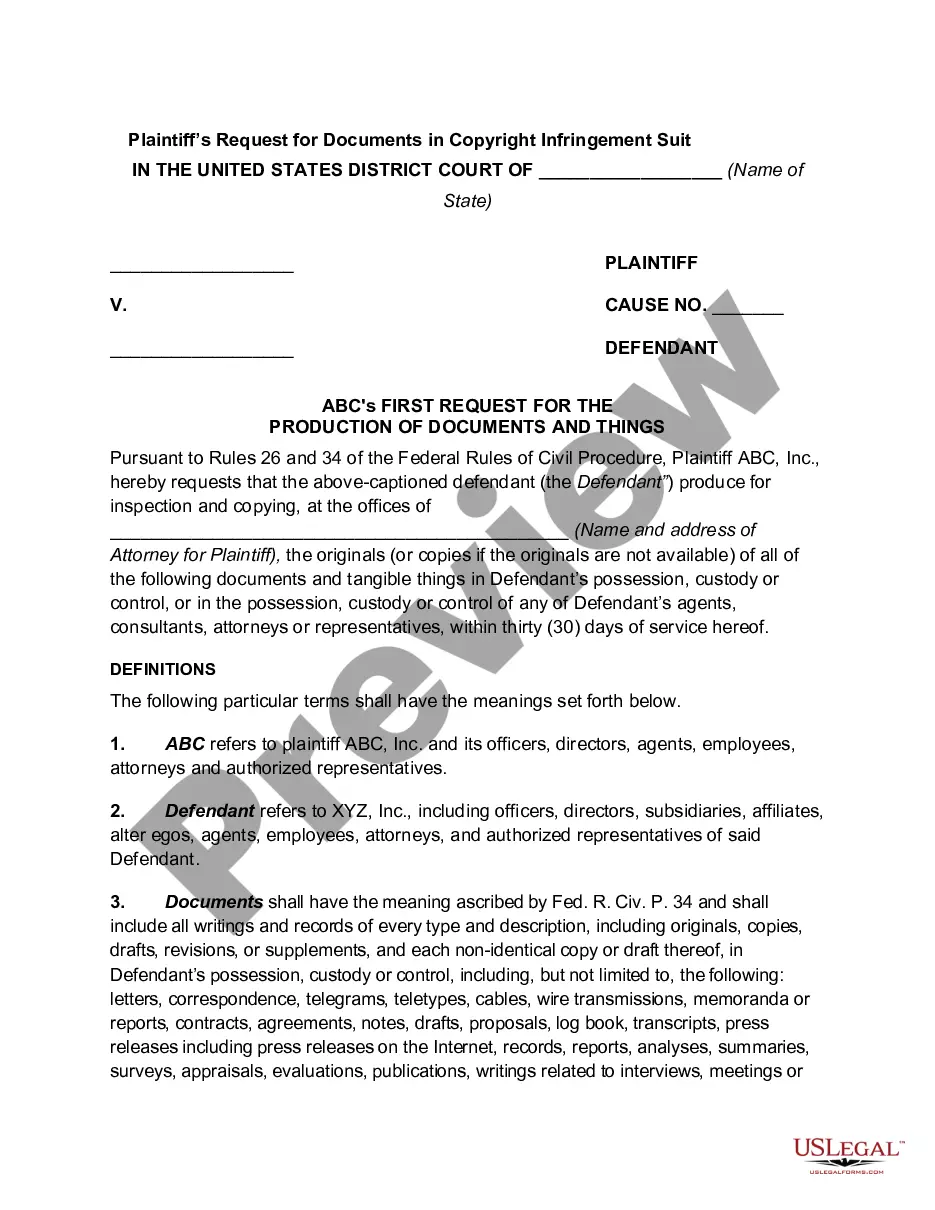
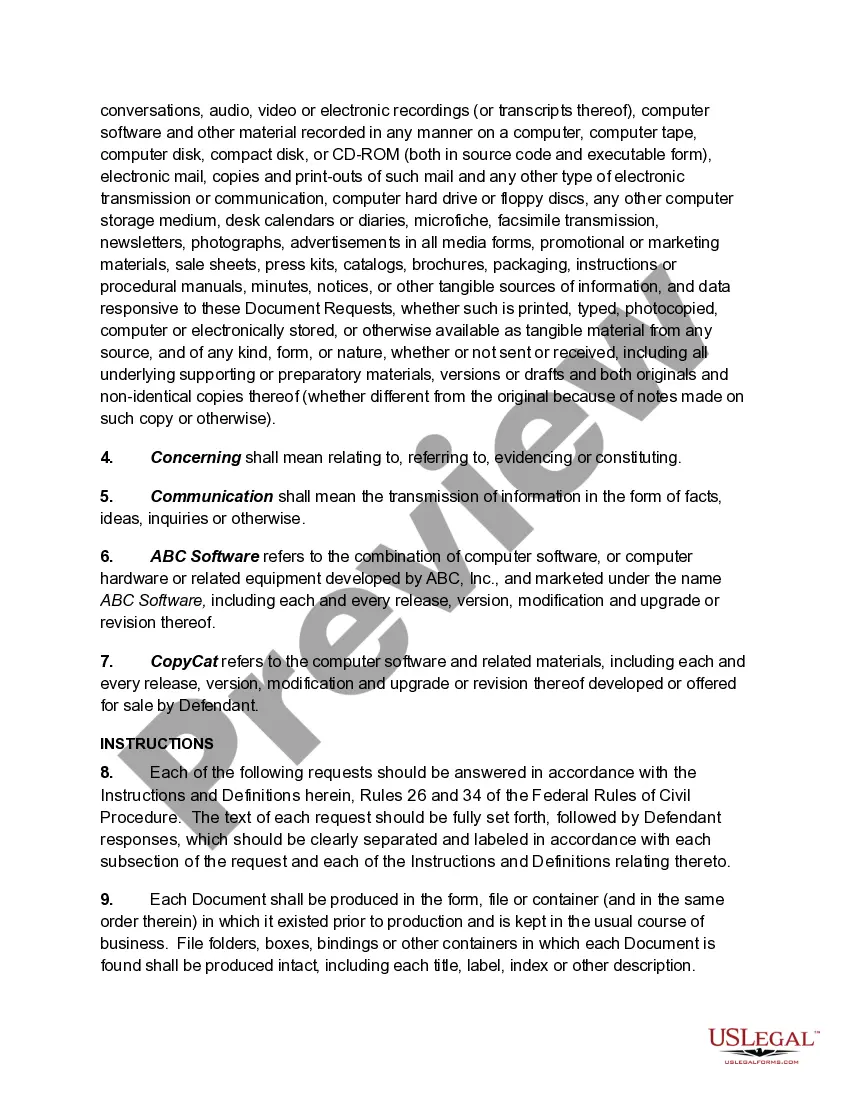
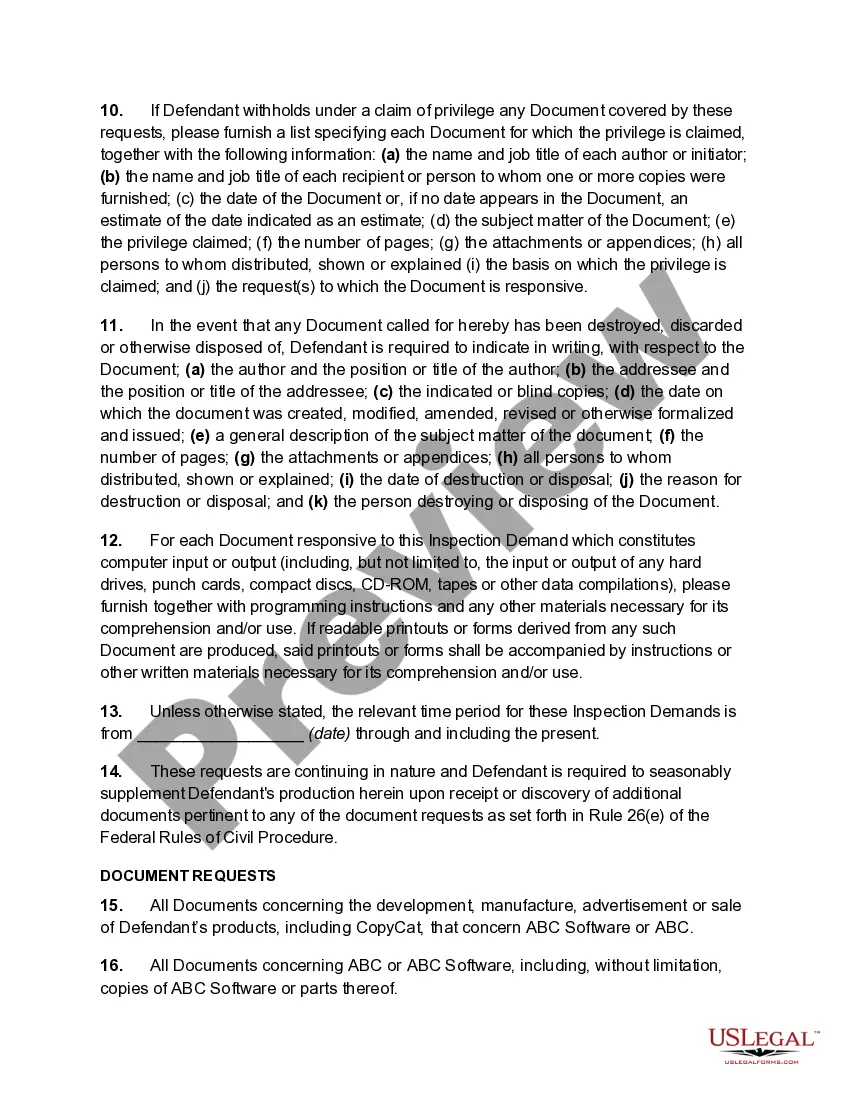
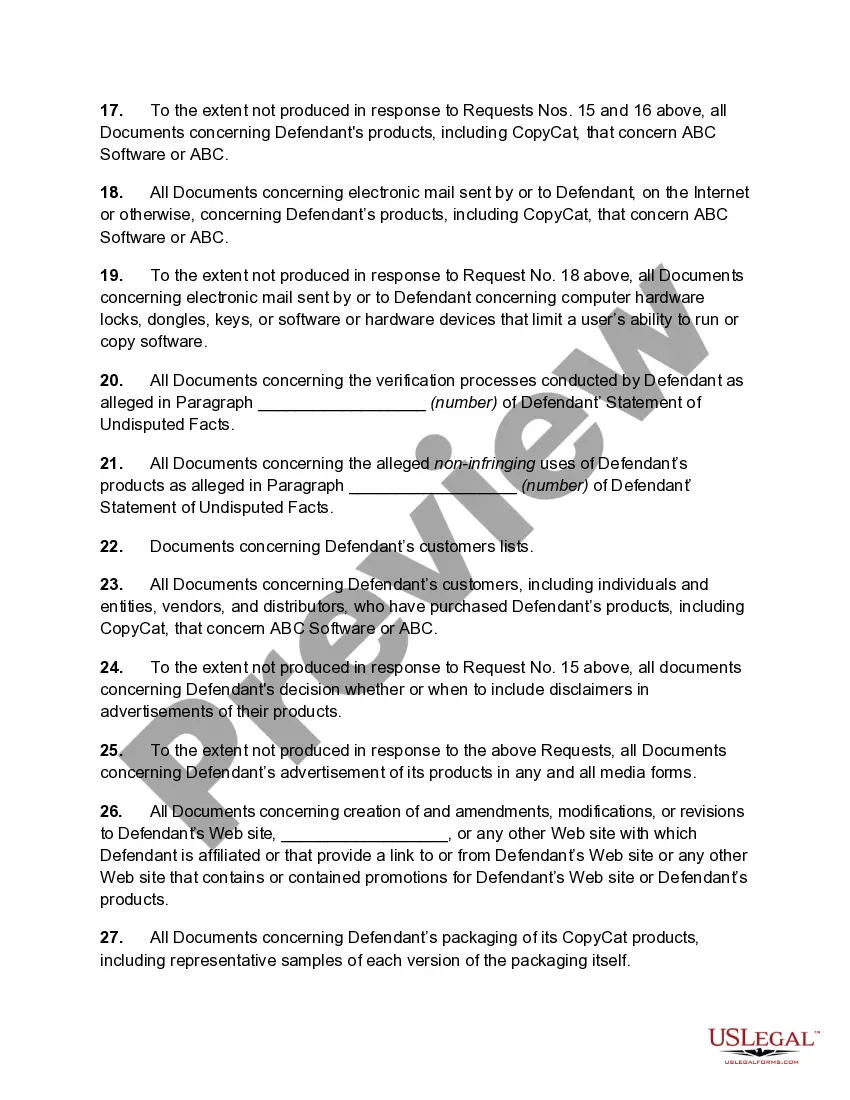
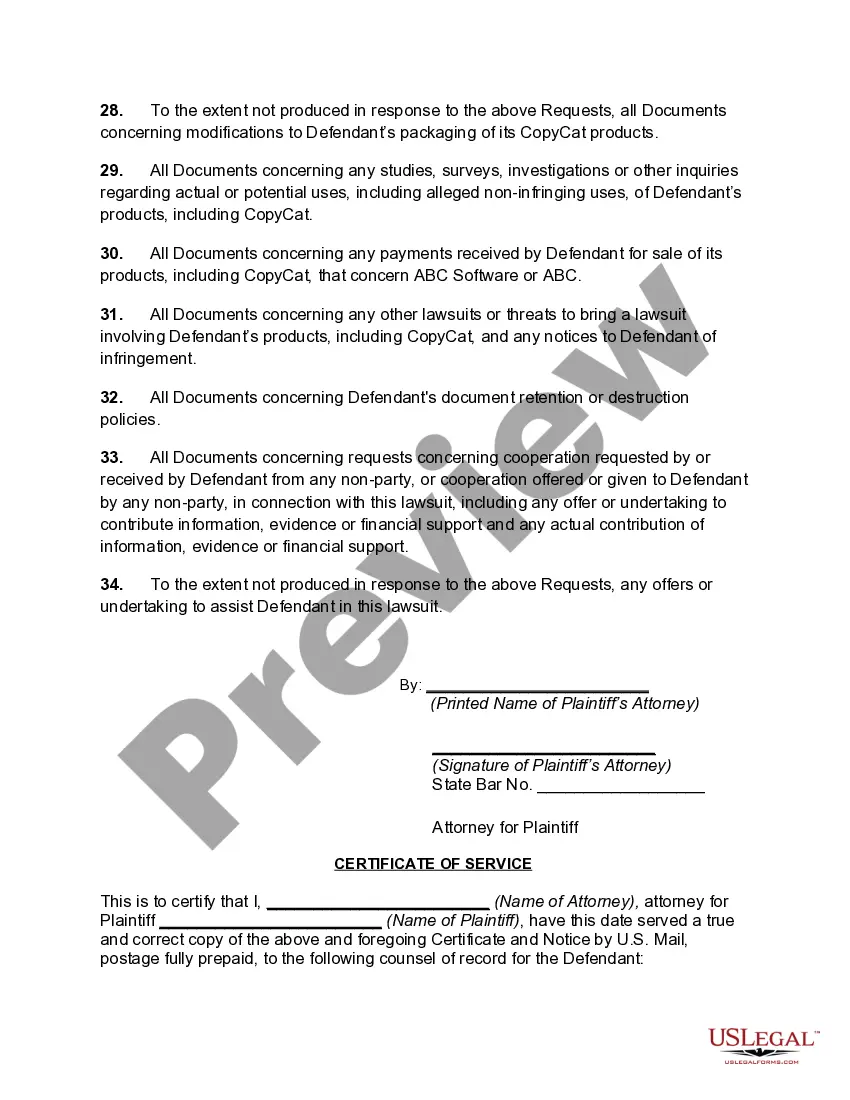
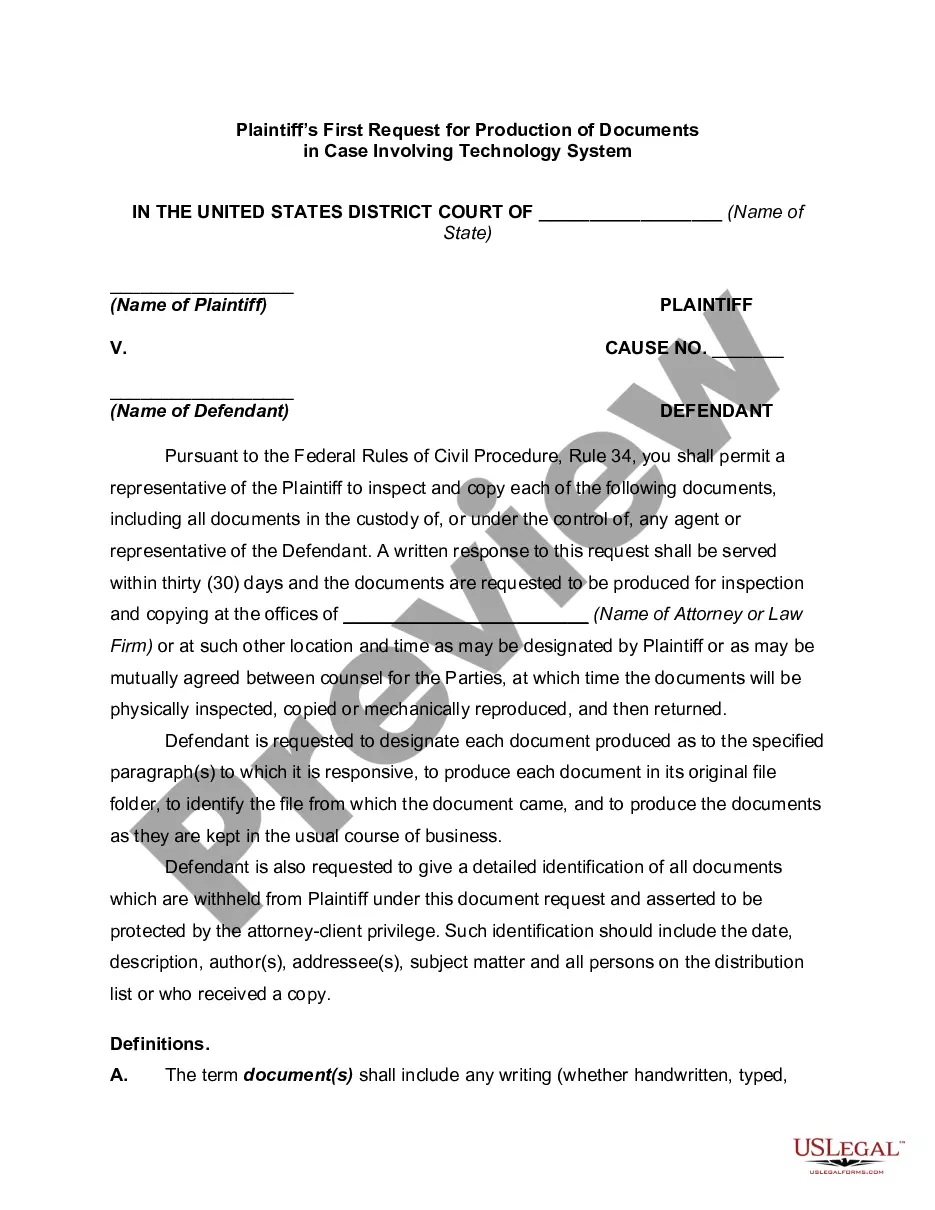

How to fill out Plaintiff's Request For Documents In Copyright Infringement Suit?
Getting documents ready for business or personal requirements is always a significant obligation.
When drafting a contract, a public service inquiry, or a power of attorney, it is crucial to consider all federal and state laws and regulations pertinent to the particular area.
Nonetheless, minor counties and even municipalities have legislative stipulations that you must regard.
The remarkable aspect of the US Legal Forms library is that all the documents you have ever acquired remain accessible - you can retrieve them in your profile under the My documents tab at any time. Enroll in the platform and swiftly obtain verified legal templates for any scenario with just a few clicks!
- All these intricacies make it tedious and time-consuming to formulate Orange Plaintiff’s Request for Documents in Copyright Infringement Suit without expert assistance.
- You can potentially evade costs on lawyers drafting your documents and produce a legally binding Orange Plaintiff’s Request for Documents in Copyright Infringement Suit by yourself, utilizing the US Legal Forms online library.
- It is the largest digital repository of state-specific legal templates that are professionally vetted, so you can be confident in their legitimacy when choosing a template for your county.
- Previously registered users just need to Log In to their accounts to retrieve the necessary form.
- If you don't yet have a subscription, follow the step-by-step guide below to acquire the Orange Plaintiff's Request for Documents in Copyright Infringement Suit.
- Review the page you've accessed and check if it includes the template you require.
- To do this, utilize the form description and preview if these features are available.
Form popularity
FAQ
A copyright infringement action requires a plaintiff to prove (1) ownership of a valid copyright, and (2) actionable copying by the defendant of constituent elements of the work that are original. Feist Publications, Inc. v. Rural Tel.
You can ask for it. If you know who the copyright owner is, you may contact the owner directly. If you are not certain about the ownership or have other related questions, you may wish to request that the Copyright Office conduct a search of its records or you may search yourself.
You can search through copyright files by visiting the Copyright Office at (see Figure 2, below). All copyright information is located in the Public Catalog (click Search Public Catalog) which contains information about works registered since January 1978.
In general, the permissions process involves a simple five-step procedure: Determine if permission is needed. Identify the owner. Identify the rights needed. Contact the owner and negotiate whether payment is required. Get your permission agreement in writing.
In order to prove copyright infringement, the plaintiff must: Establish the ownership of legitimate copyright. That the infringing party had access to the copyrighted work. That the infringing party had the opportunity to steal that work. Prove that protected elements of the original work have been copied.
To prove copyright infringement, a copyright holder must establish a valid copyright and that original material was used illegally. To prove a valid copyright, the plaintiff can produce a copyright certificate or other proof that establishes the date the copyrighted material was created.
One way to make sure your intended use of a copyrighted work is lawful is to obtain permission or a license from the copyright owner. Contact a copyright owner or author as far as pos- sible in advance of when you want to use the material specified in your permissions request.
To prove copyright infringement, a copyright holder must establish a valid copyright and that original material was used illegally. To prove a valid copyright, the plaintiff can produce a copyright certificate or other proof that establishes the date the copyrighted material was created.
There are three kinds of remedies against infringement of copyright, namely: Civil remedies. Injunction damages or account of profit, delivery of infringing copy and damages for conversion. Criminal remedies. Imprisonment of the accused or imposition of fine or both.Administrative remedies.
The plaintiff in a copyright infringement lawsuit has the burden of proving two elements: that they own a copyright, and that the defendant infringed it. To establish ownership of a valid copyright, a plaintiff must demonstrate that the work is original, and that it is subject to legal protection.