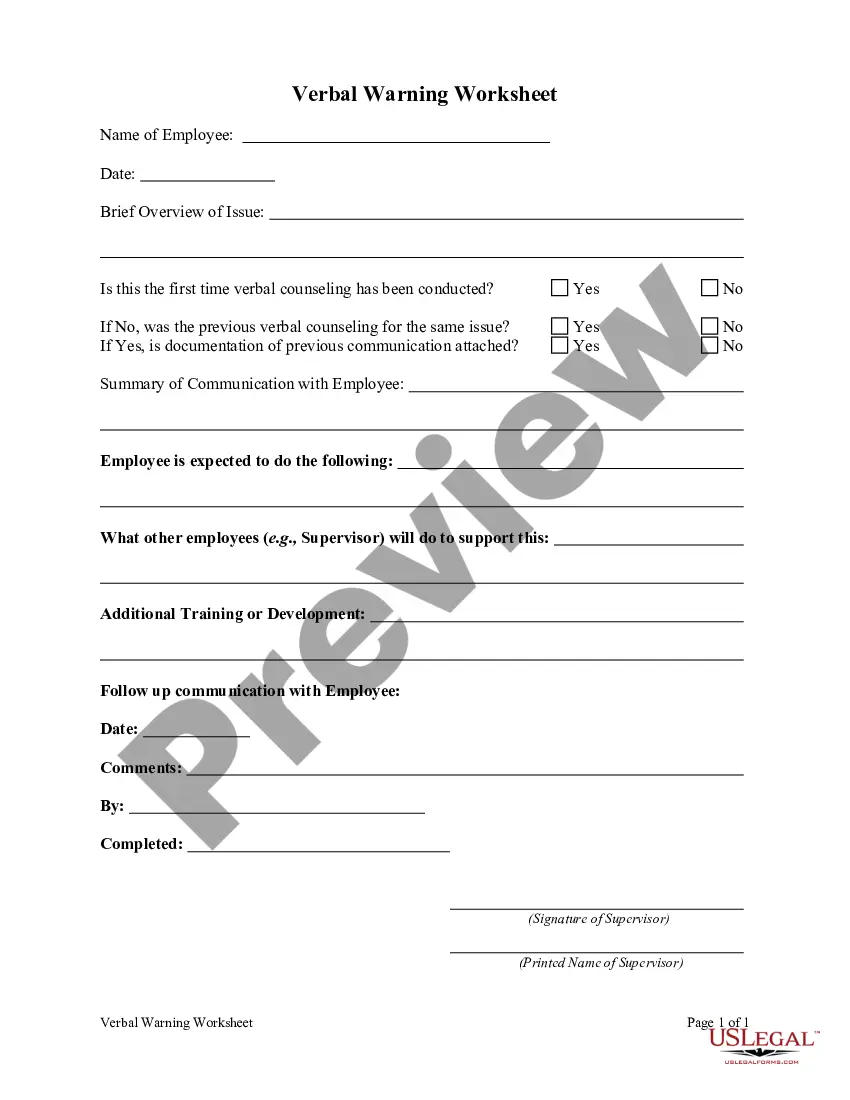
Fulton Georgia Verbal Warning Worksheet
Description
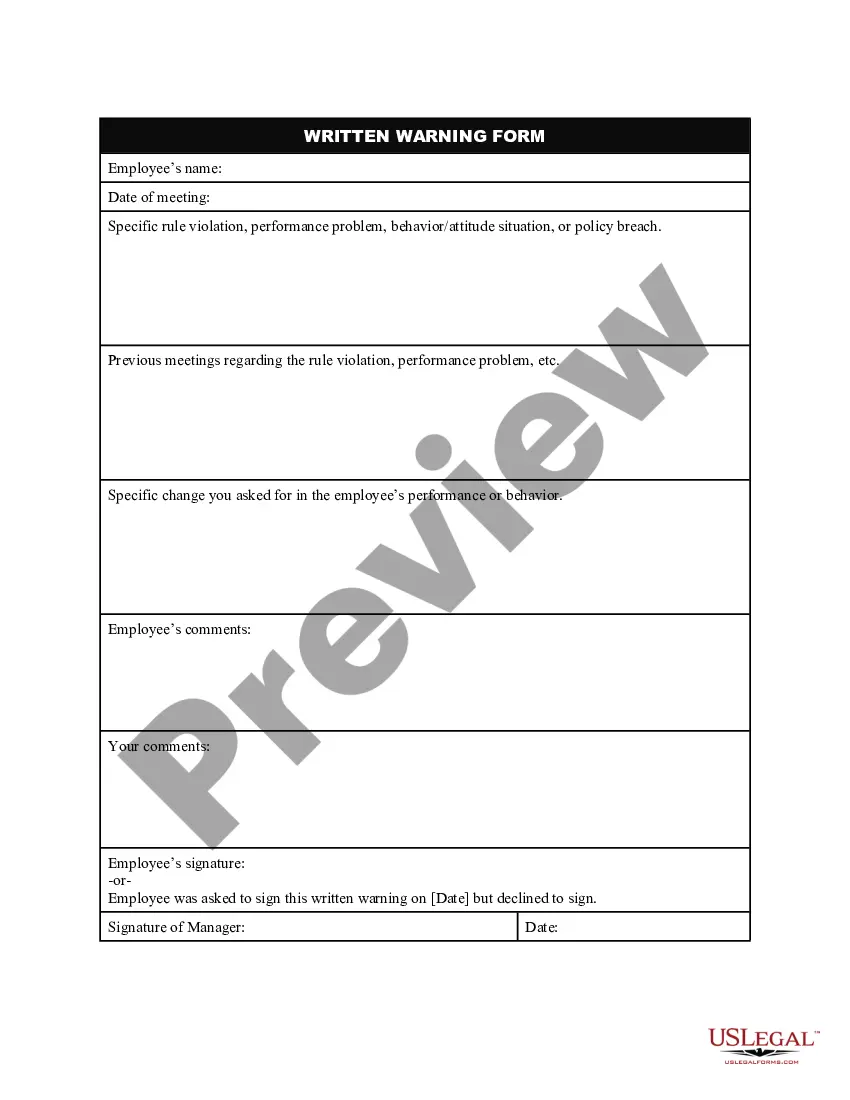
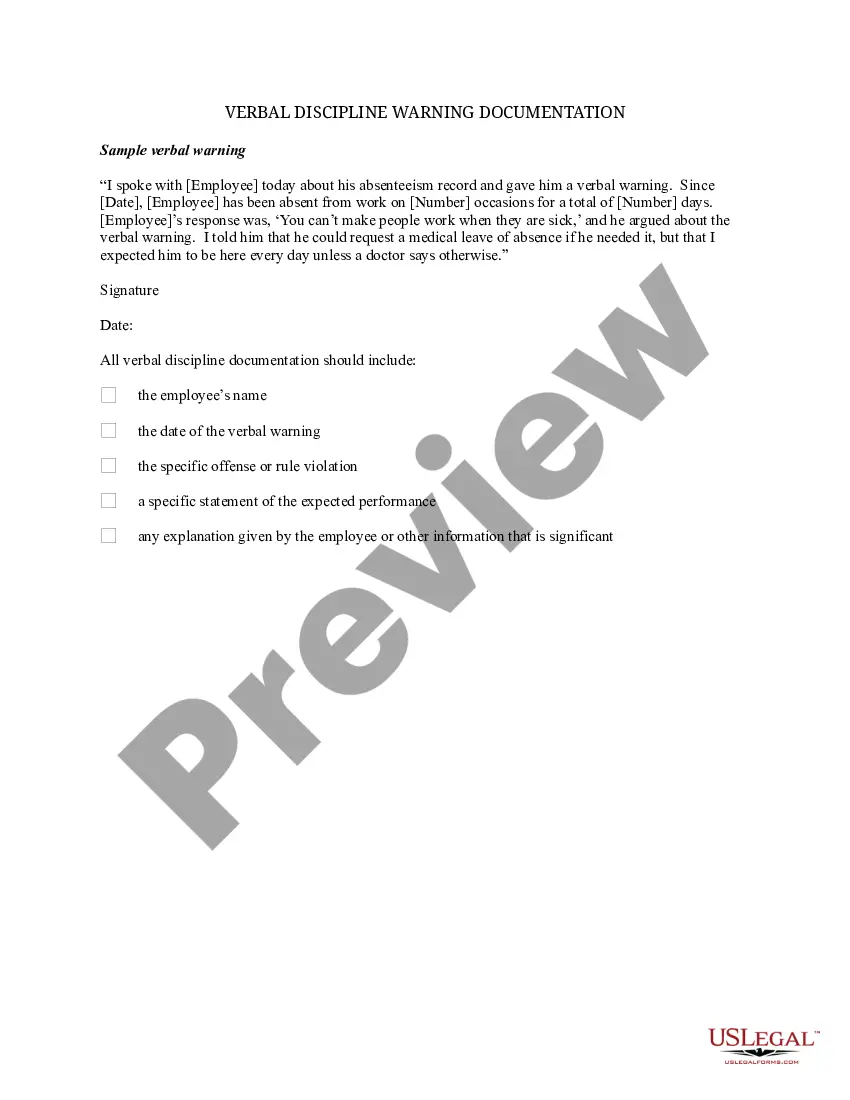
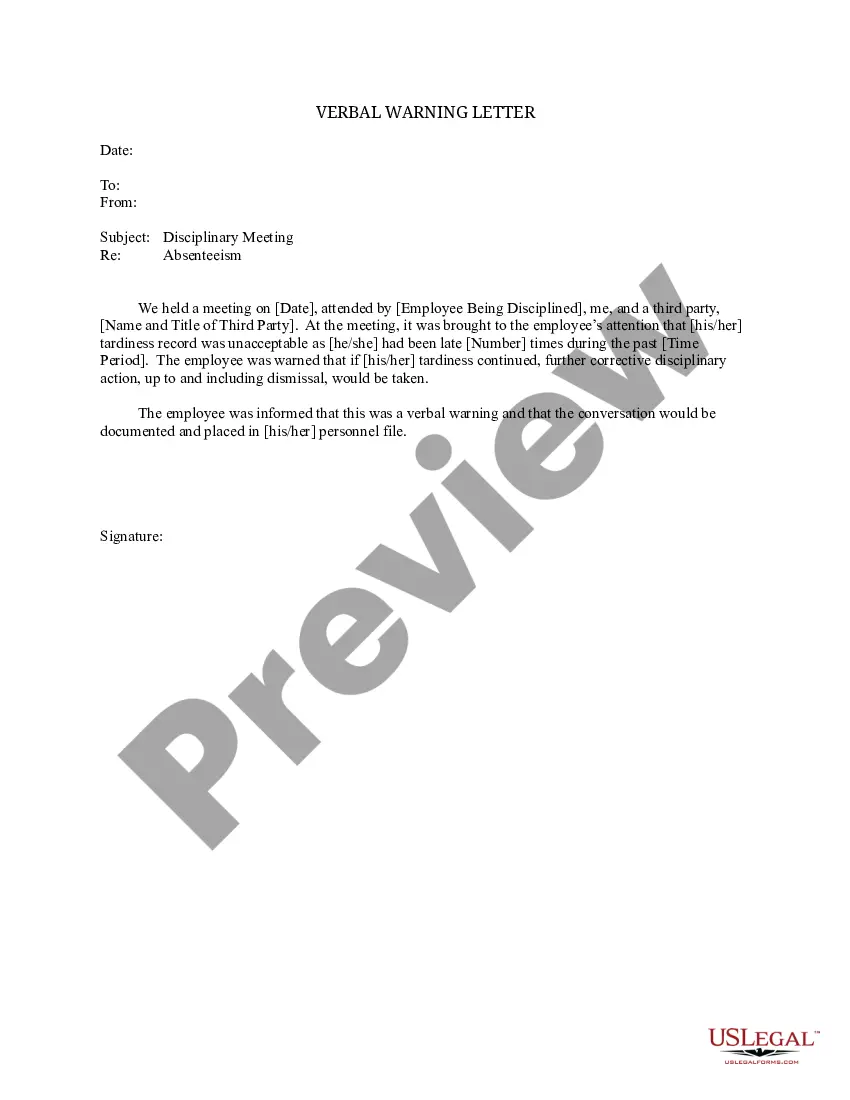
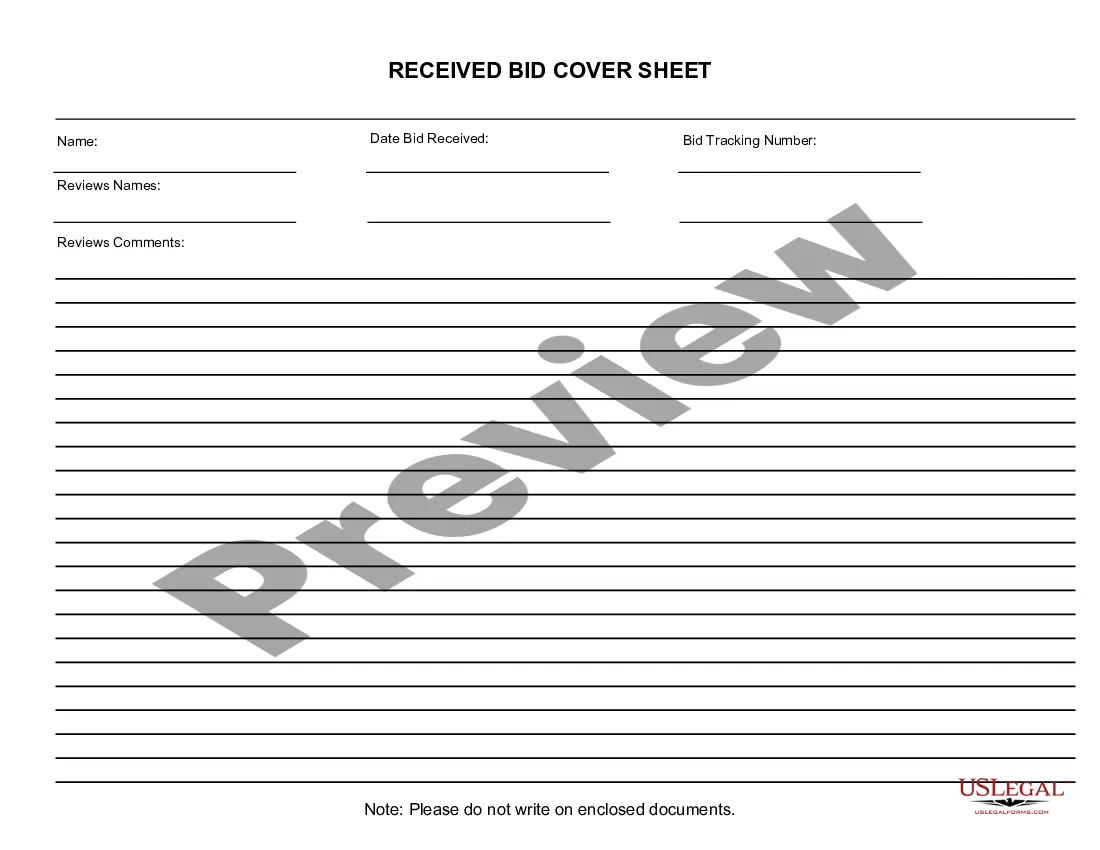

How to fill out Verbal Warning Worksheet?
Creating documents for business or personal requirements is consistently a major obligation.
When drafting a contract, a public service application, or a power of attorney, it's crucial to take into account all local and national laws applicable to the specific area.
Nonetheless, smaller counties and even municipalities have legal regulations that you must also take into consideration.
To locate the document that suits your requirements, use the search tab in the page header. Verify that the template adheres to legal standards and select Buy Now. Choose your subscription plan, then Log In or create an account with US Legal Forms. Pay for your subscription using your credit card or PayPal account. Download the chosen document in your preferred format, print it, or complete it electronically. The remarkable aspect of the US Legal Forms library is that all the paperwork you have ever acquired remains accessible—you can find it in your profile within the My documents tab at any time. Sign up for the platform and effortlessly obtain verified legal forms for any situation with just a few clicks!
- All these factors render it challenging and time-intensive to prepare a Fulton Verbal Warning Worksheet without expert help.
- It is straightforward to prevent unnecessary expenses on lawyers drafting your documents and produce a legally acceptable Fulton Verbal Warning Worksheet independently, utilizing the US Legal Forms online library.
- It is the largest virtual collection of state-specific legal documents that are professionally verified, ensuring the authenticity when selecting a sample for your locality.
- Previously enrolled users simply need to Log In to their accounts to retrieve the required form.
- If you are yet to have a subscription, follow the structured guide below to acquire the Fulton Verbal Warning Worksheet.
- Review the page you have accessed and confirm if it contains the sample you need.
- For this purpose, utilize the form description and preview if these options are available.
Form popularity
FAQ
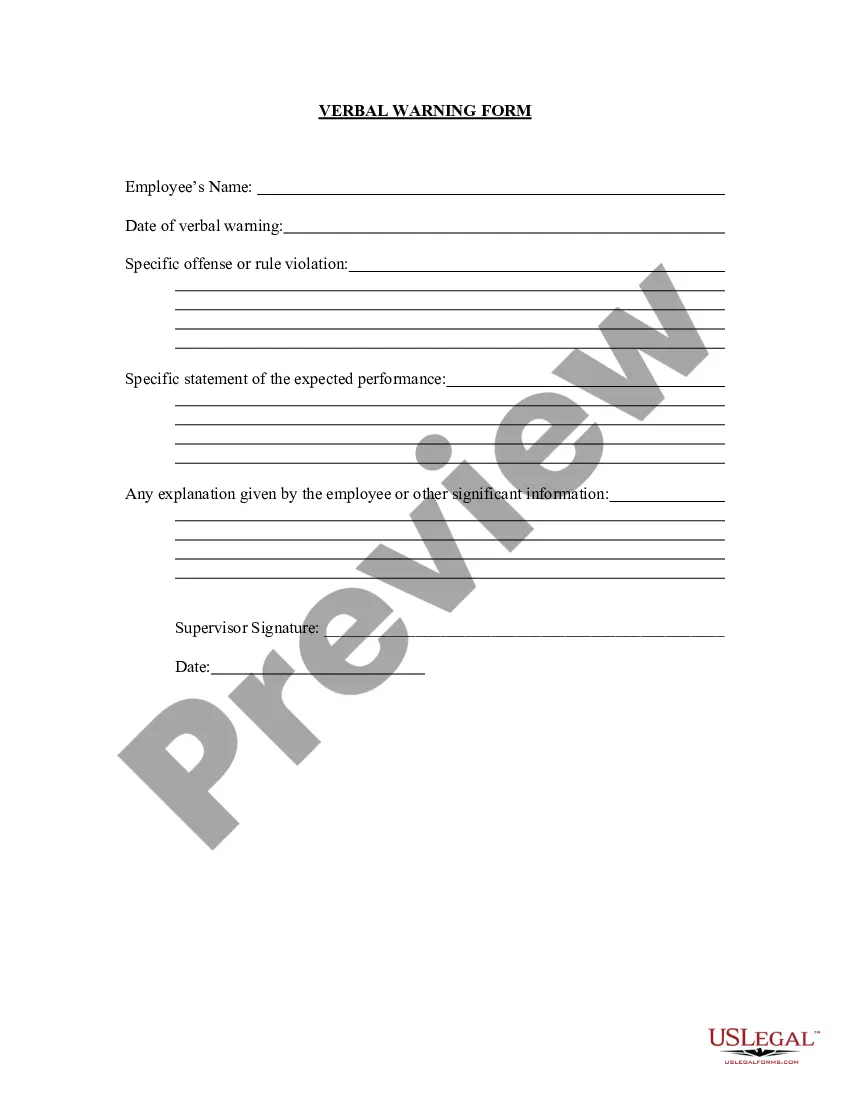
Does a verbal warning need to be documented? A verbal warning should definitely be documented. Employers should keep the documentation of the verbal warning in their informal notes, and you as the employee should sign the documentation to indicate that you have received it.
The purpose of a verbal warning is to inform the employee of his/her performance or behavioural issue and thereby give an opportunity to correct him/her. A written warning is issued to inform the consequences if the said behaviour or performance issue is not corrected or improved within a specific period.
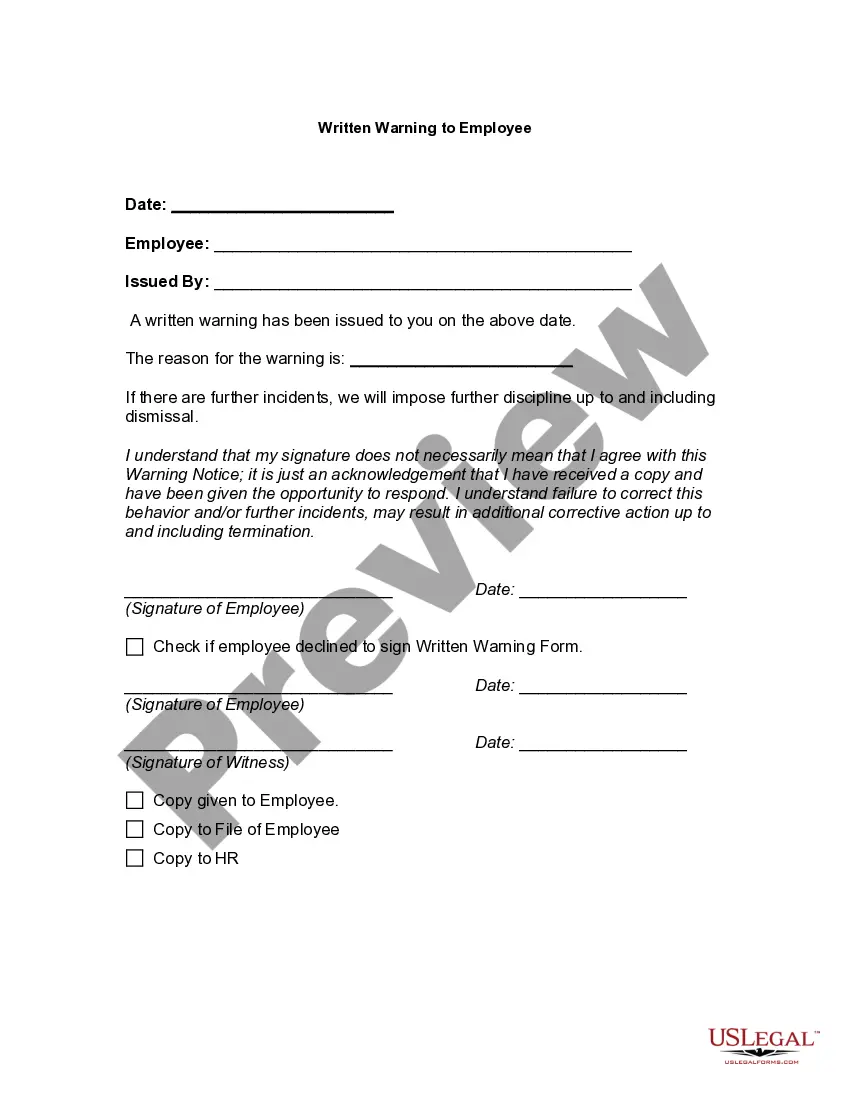
Here are the 10 guidelines for drafting a written warning. Document verbal warnings first. Track all verbal warnings and disciplinary measures in writing at the time they are given.Determine tone.Consult with manager.Formalities.State company policy.Describe what happened.State expectations.Outline consequences.
The purpose of a verbal warning is to inform the employee of his/her performance or behavioural issue and thereby give an opportunity to correct him/her. A written warning is issued to inform the consequences if the said behaviour or performance issue is not corrected or improved within a specific period.
A verbal warning is usually an informal warning. Even though it's not a formal written warning, it's still a good idea to document a verbal warning. This information helps you track the employee's development, and it can be important if you fire the employee in the future.
How to issue a verbal warning Take the employee into a private room. Always discuss issues with employees in a private office/room or video call (if your company is remote).State the issue clearly.Discuss the changes they should make.Provide a timeframe for correction.State consequences.Provide support for change.
Here's an eight-step guide to follow when issuing a verbal warning: Determine the need for a warning.Confirm your organization's verbal warning procedures.Document behavior.Schedule a meeting.Ask another supervisor to attend the meeting.Issue the warning concisely and offer solutions.Document the warning.
Here are some steps you can take to issue a verbal warning easily and appropriately: Take the employee into a private room.State the issue clearly.Discuss the changes they should make.Provide a timeframe for correction.State consequences.Provide support for change.
How to Write Up an Employee for Insubordination Discuss The Issue Verbally And Privately.Gather Facts Surrounding the Incident.Be Objective.Get Support from People Present During the Incident.Include Company Rules on Insubordination.Mention the Consequences of Such Behavior and Action Plan Expectations.
Employers might want to include the following elements in a written warning: the date of the warning; the name of the employee; the name and position of the person issuing the discipline; the level/type of discipline (e.g., written warning or written warning with three-day suspension);