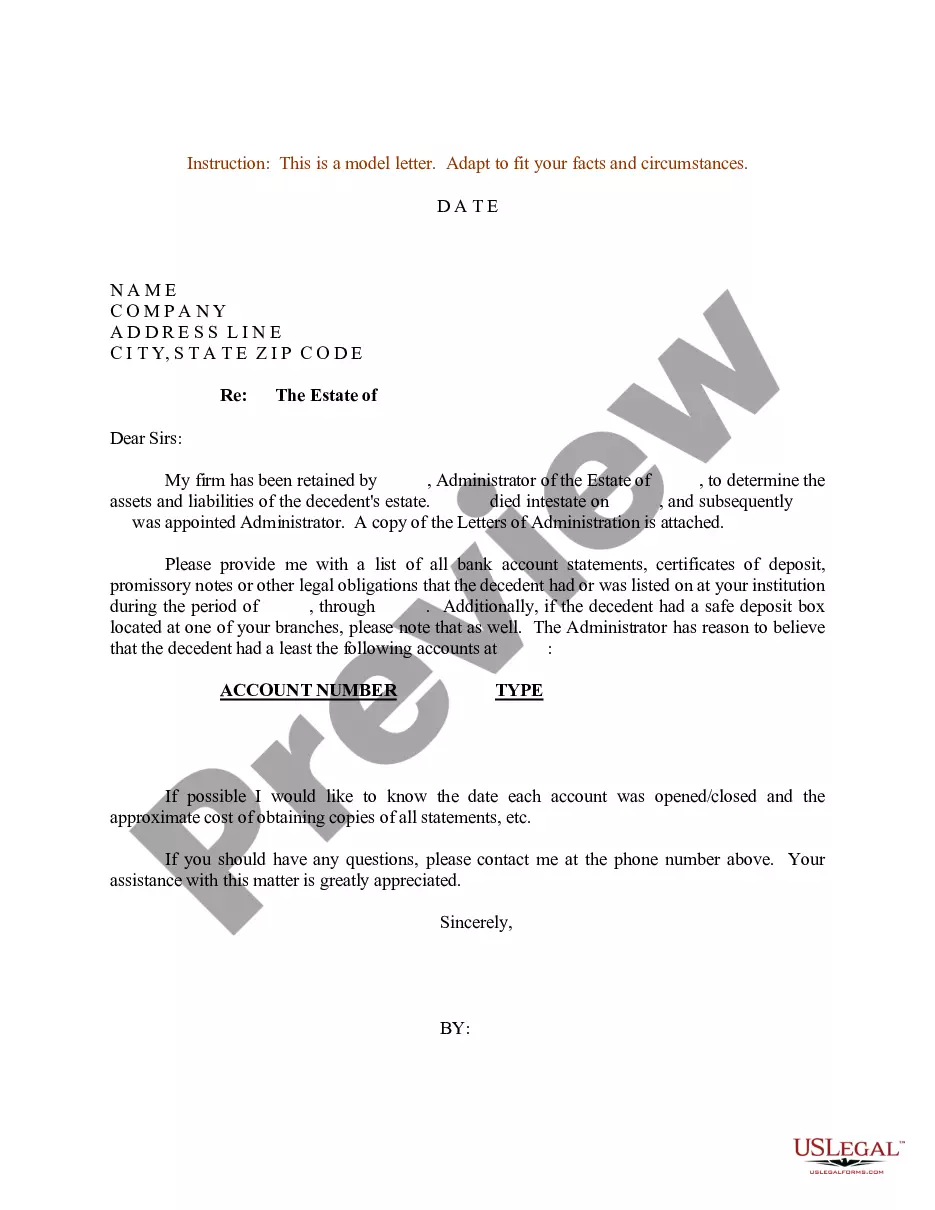
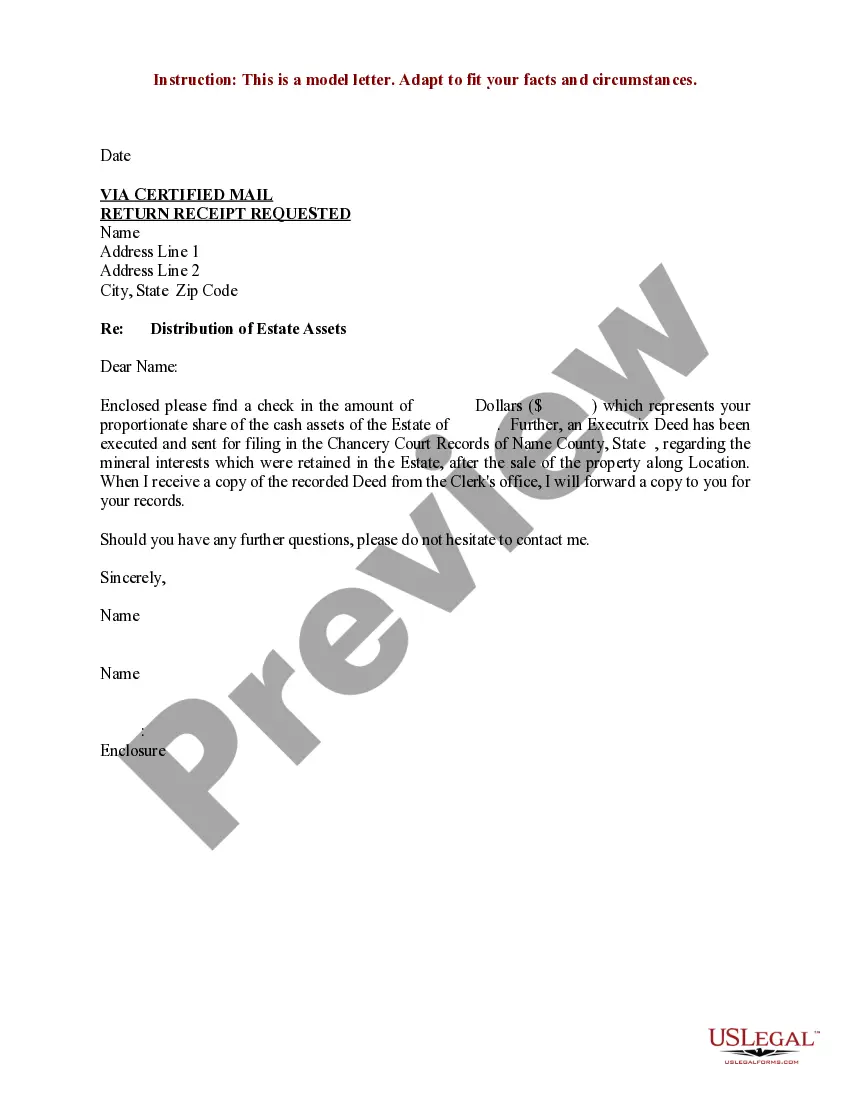
Chicago Illinois Sample Letter for Assets and Liabilities of Decedent's Estate
Description
Get your form ready online
Our built-in tools help you complete, sign, share, and store your documents in one place.
Make edits, fill in missing information, and update formatting in US Legal Forms—just like you would in MS Word.
Download a copy, print it, send it by email, or mail it via USPS—whatever works best for your next step.
Sign and collect signatures with our SignNow integration. Send to multiple recipients, set reminders, and more. Go Premium to unlock E-Sign.
If this form requires notarization, complete it online through a secure video call—no need to meet a notary in person or wait for an appointment.
We protect your documents and personal data by following strict security and privacy standards.

Make edits, fill in missing information, and update formatting in US Legal Forms—just like you would in MS Word.

Download a copy, print it, send it by email, or mail it via USPS—whatever works best for your next step.

Sign and collect signatures with our SignNow integration. Send to multiple recipients, set reminders, and more. Go Premium to unlock E-Sign.

If this form requires notarization, complete it online through a secure video call—no need to meet a notary in person or wait for an appointment.

We protect your documents and personal data by following strict security and privacy standards.
Looking for another form?

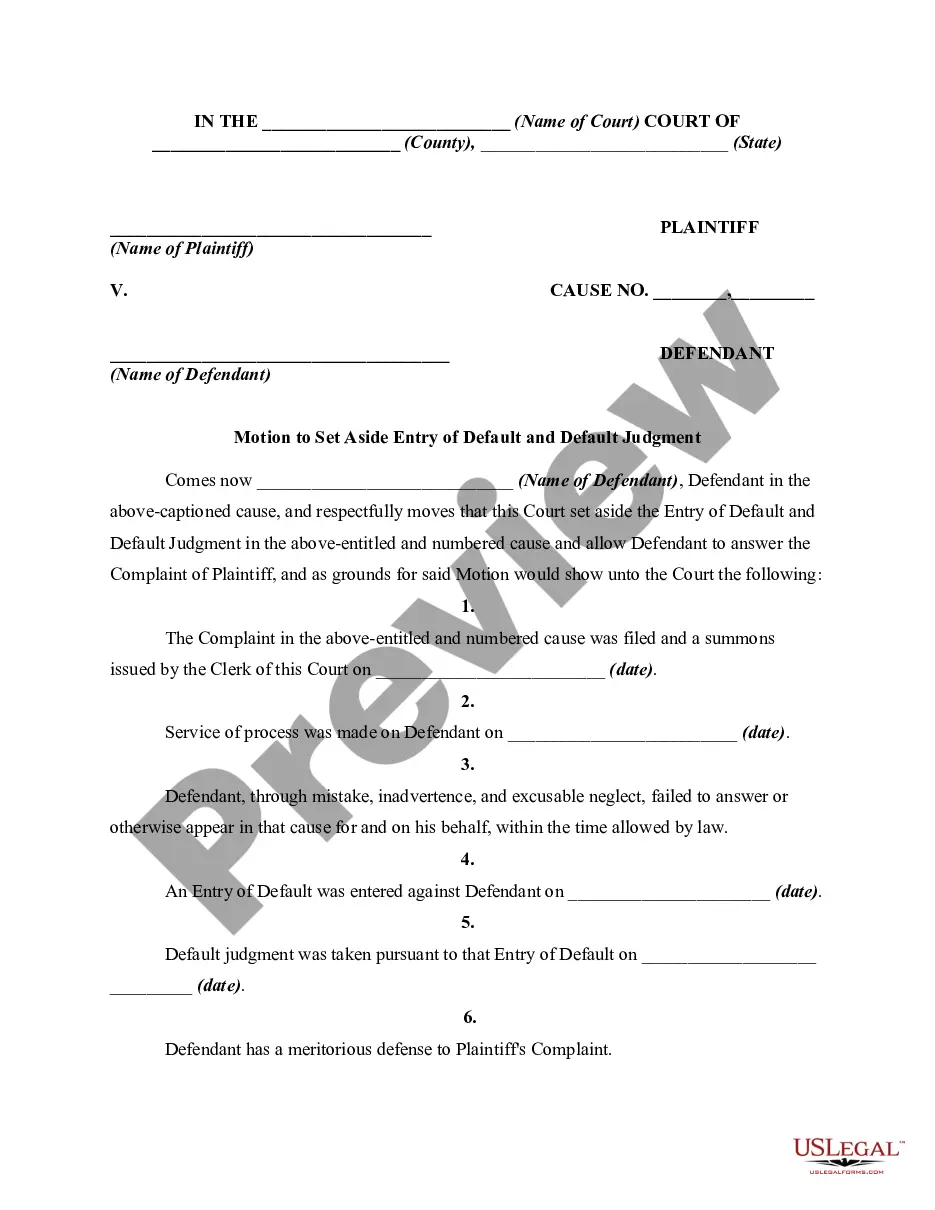

How to fill out Sample Letter For Assets And Liabilities Of Decedent's Estate?
Regardless of whether you intend to establish your business, enter a legal agreement, renew your identification, or address family-related legal matters, it is essential to assemble specific documents complying with your local statutes and regulations.
Finding the appropriate paperwork can consume significant time and energy unless you utilize the US Legal Forms library.
This service offers users over 85,000 expertly crafted and verified legal documents for any personal or commercial situation. All documents are categorized by state and area of application, making it easy to select a template like the Chicago Sample Letter for Assets and Liabilities of Decedent's Estate.
Documents available in our library are reusable. With an active subscription, you can access all of your previously obtained documents anytime from the My documents section of your account. Stop spending time on an endless search for current official documentation. Join the US Legal Forms platform and organize your paperwork with the largest online form library!
- Ensure the template satisfies your personal requirements and adheres to state law.
- Review the form description and consult the Preview if available.
- Use the search bar above to find another template relevant to your state.
- Select Buy Now to acquire the document when you identify the correct one.
- Pick the subscription plan that best fits your needs to advance.
- Log in to your account and process the payment with a credit card or PayPal.
- Download the Chicago Sample Letter for Assets and Liabilities of Decedent's Estate in your preferred file format.
- Print the document or complete and sign it electronically using an online editor to save time.
Form popularity
FAQ
Illinois, for example, requires executors to allow six months. California requires a bit less, with four months.
Deadline to close the estate: 14 months from the date the will is admitted to probate. If the estate remains open after 14 months, the court will expect the representative to account or report to the court to explain why the estate needs to remain open.
The statute of limitations for probate claims in Illinois provides that creditors have two years from the decedent's death to file a claim against the estate. However, the representative can shorten this period by providing notice to known and unknown creditors.
Remember, credit does not die and continues after the death of the debtor, meaning that creditors have a right to claim from the deceased's estate. Remember, the executor is obliged to pay all the estate's debts before distributing anything to their heirs or legatees of the deceased.
A claim against the probate estate can either be filed with the court or mailed to the representative of the estate. Once the representative receives notice of the claim, he or she can either allow the claim or send a notice to the claimant informing them that they are ?disallowing? the claim.
A claim against the probate estate can either be filed with the court or mailed to the representative of the estate. Once the representative receives notice of the claim, he or she can either allow the claim or send a notice to the claimant informing them that they are ?disallowing? the claim.
How Long Do You Have to File Probate After a Death in Illinois? Once a person is made aware that they are the executor, they have 30 days from that time or the time the person died to present the will to the court.
Executors must not unreasonably delay distributing the estate for their own gain or any other party. However, even after the executor's year, the court will not order a distribution of the estate if the executors can show there is good reason to wait.
Claims to personal estate Claims to receive a beneficiaries interest in a deceased's personal estate, being under a Will or Intestacy, must be brought within 12 years of the right to the interest arising.
Beneficiaries have every right to see the accounting, including all of an executor's activities before the file is permanently closed. Technically, this is the only time the executor is required to share the accounting with all of the beneficiaries.