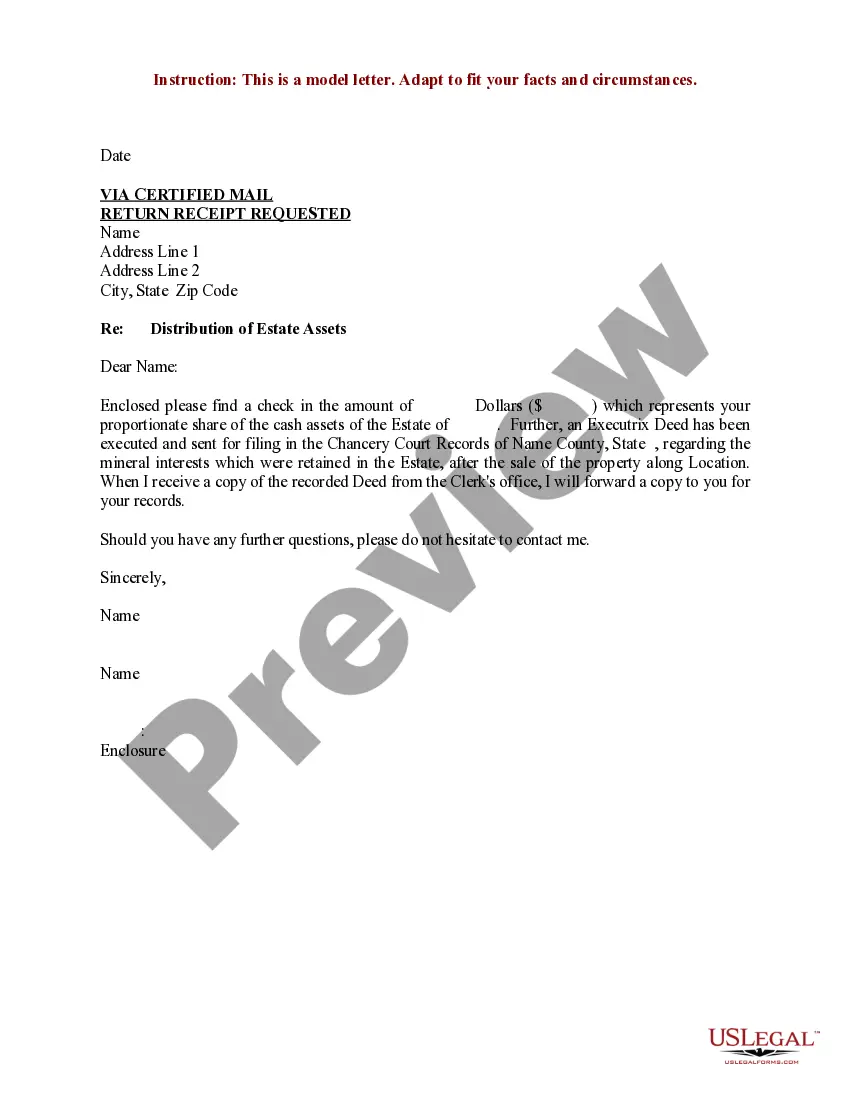
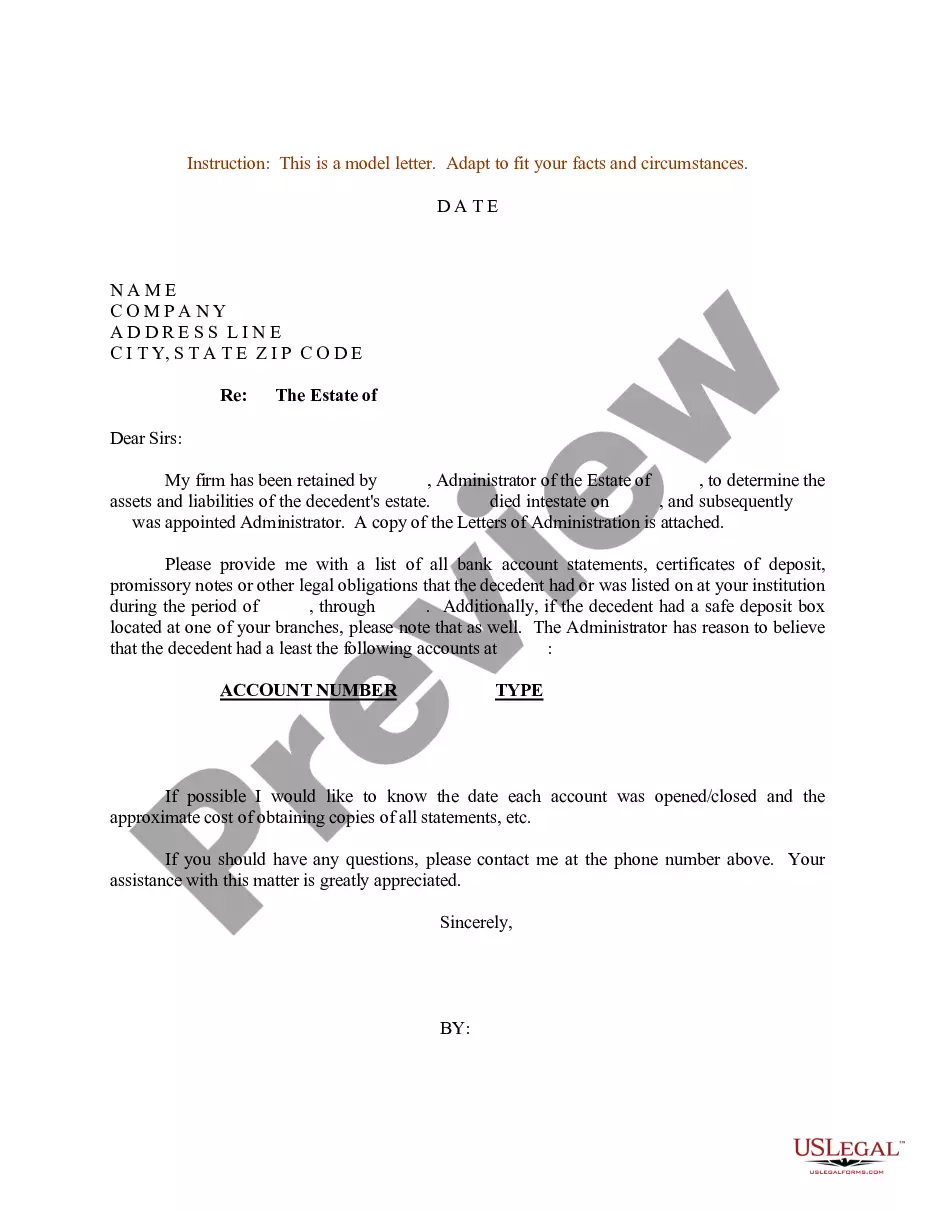
Franklin Ohio Sample Letter for Distribution of Estate Assets
Description
Get your form ready online
Our built-in tools help you complete, sign, share, and store your documents in one place.
Make edits, fill in missing information, and update formatting in US Legal Forms—just like you would in MS Word.
Download a copy, print it, send it by email, or mail it via USPS—whatever works best for your next step.
Sign and collect signatures with our SignNow integration. Send to multiple recipients, set reminders, and more. Go Premium to unlock E-Sign.
If this form requires notarization, complete it online through a secure video call—no need to meet a notary in person or wait for an appointment.
We protect your documents and personal data by following strict security and privacy standards.

Make edits, fill in missing information, and update formatting in US Legal Forms—just like you would in MS Word.

Download a copy, print it, send it by email, or mail it via USPS—whatever works best for your next step.

Sign and collect signatures with our SignNow integration. Send to multiple recipients, set reminders, and more. Go Premium to unlock E-Sign.

If this form requires notarization, complete it online through a secure video call—no need to meet a notary in person or wait for an appointment.

We protect your documents and personal data by following strict security and privacy standards.
Looking for another form?



How to fill out Sample Letter For Distribution Of Estate Assets?
Are you aiming to swiftly generate a legally-binding Franklin Sample Letter for Distribution of Estate Assets or perhaps any other document to manage your personal or business matters.
You can choose between two alternatives: hire a professional to prepare a legal document for you or create it entirely yourself. Fortunately, there's an additional choice - US Legal Forms. It will assist you in obtaining well-crafted legal paperwork without incurring exorbitant fees for legal services.
If the form isn't what you needed, restart the search using the search box in the header.
Select the subscription that best suits your requirements and proceed to payment. Choose the format you wish to receive your document in and download it. Print it, complete it, and sign in the designated area. If you have already established an account, you can simply Log In, locate the Franklin Sample Letter for Distribution of Estate Assets template, and download it. To re-download the form, just visit the My documents tab. It's straightforward to locate and download legal forms when you utilize our services. Moreover, the templates we provide are refreshed by legal professionals, which enhances your confidence when handling legal issues. Experience US Legal Forms today and see for yourself!
- US Legal Forms offers an extensive assortment of over 85,000 state-compliant document templates, including the Franklin Sample Letter for Distribution of Estate Assets and various form packages.
- We present templates for a wide range of purposes: from divorce documentation to real estate forms.
- We have been operating for more than 25 years and have earned an impeccable reputation among our clients.
- Here's how you can join them and acquire the required template without unnecessary complications.
- To commence, carefully ensure that the Franklin Sample Letter for Distribution of Estate Assets aligns with your state's or county's regulations.
- If the document contains a description, confirm its applicability.
Form popularity
FAQ
Distribution of probate assets During probate, the court examines your will (if you have one) to determine whether it is valid and enforceable. In addition, the court appoints a personal representative to perform important tasks such as finding your heirs and paying your outstanding bills and taxes.
Give the letter a personal touch and address each of your heirs and beneficiaries personally. Tell them any last wishes you may have or any hopes you have for their future. Write as clearly as possible. Use specific details and avoid using shorthand.
Most assets can be distributed by preparing a new deed, changing the account title, or by giving the person a deed of distribution. For example: To transfer a bank account to a beneficiary, you will need to provide the bank with a death certificate and letters of administration.
For the inheritance process to begin, a will must be submitted to probate. The probate court reviews the will, authorizes an executor and legally transfers assets to beneficiaries as outlined. Before the transfer, the executor will settle any of the deceased's remaining debts.
In the financial world, a beneficiary typically refers to someone eligible to receive distributions from a trust, will, or life insurance policy. Beneficiaries are either named specifically in these documents or have met the stipulations that make them eligible for whatever distribution is specified.
State deciding the distribution rules Although state laws dictate the exact process, generally the people in your bloodline will get the preference. In other words, spouse, children, parents, and siblings are in line to receive your assets. Friends and charities get nothing.
Disbursements are payments made from the estate to pay debts of the deceased, funeral bills, and all ongoing costs of administering the estate (funeral expenses, storage fees, and attorney's fees). As the executor, it is your responsibility to determine if the estate's assets can cover all outstanding debts and bills.
An estate statement of account and a distribution report must be prepared by the executor to be given to the beneficiaries when they receive their share of the estate. This shows what the assets were, how much money resulted from any sale of assets they raised and what expenses and debts were paid from the proceeds.
Here are some things to consider when drafting a letter to your executor or trustee. Your thoughts about wealth. Share your story about how you came to the assets that you are leaving in your will. How was your wealth created, what do you value and what are your long-term goals for your wealth?