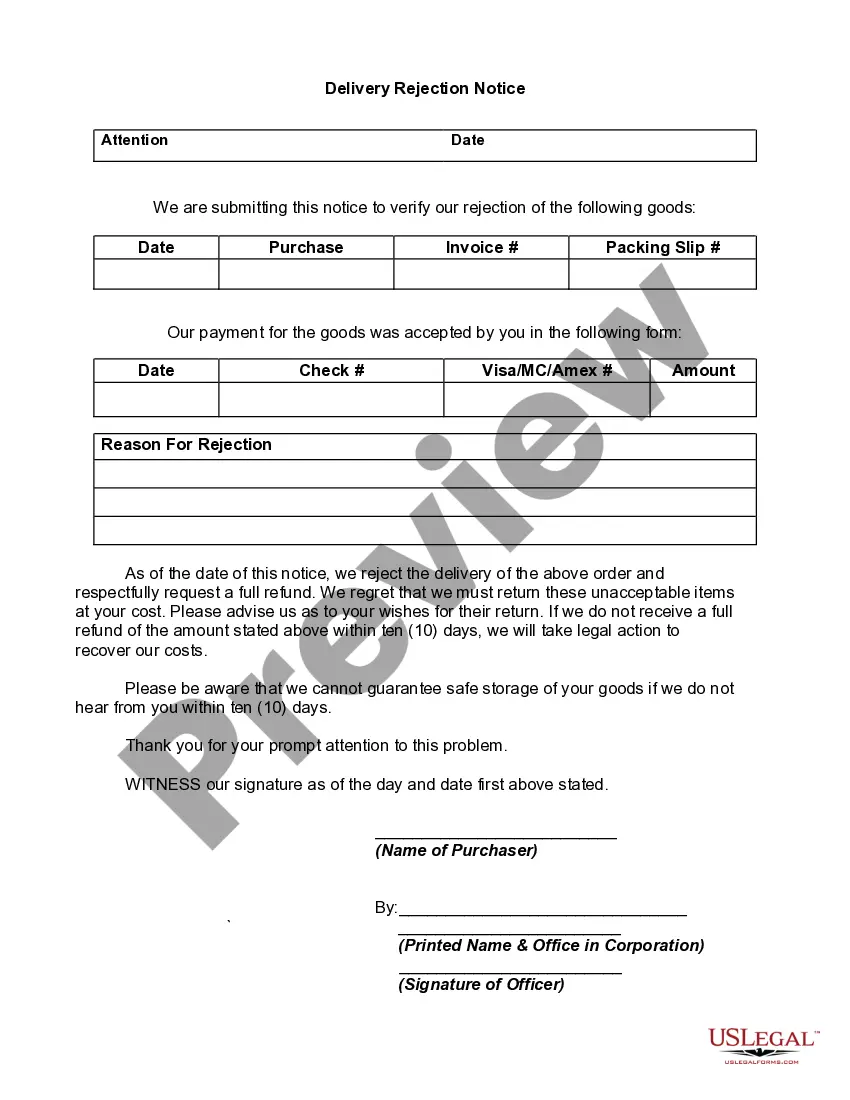
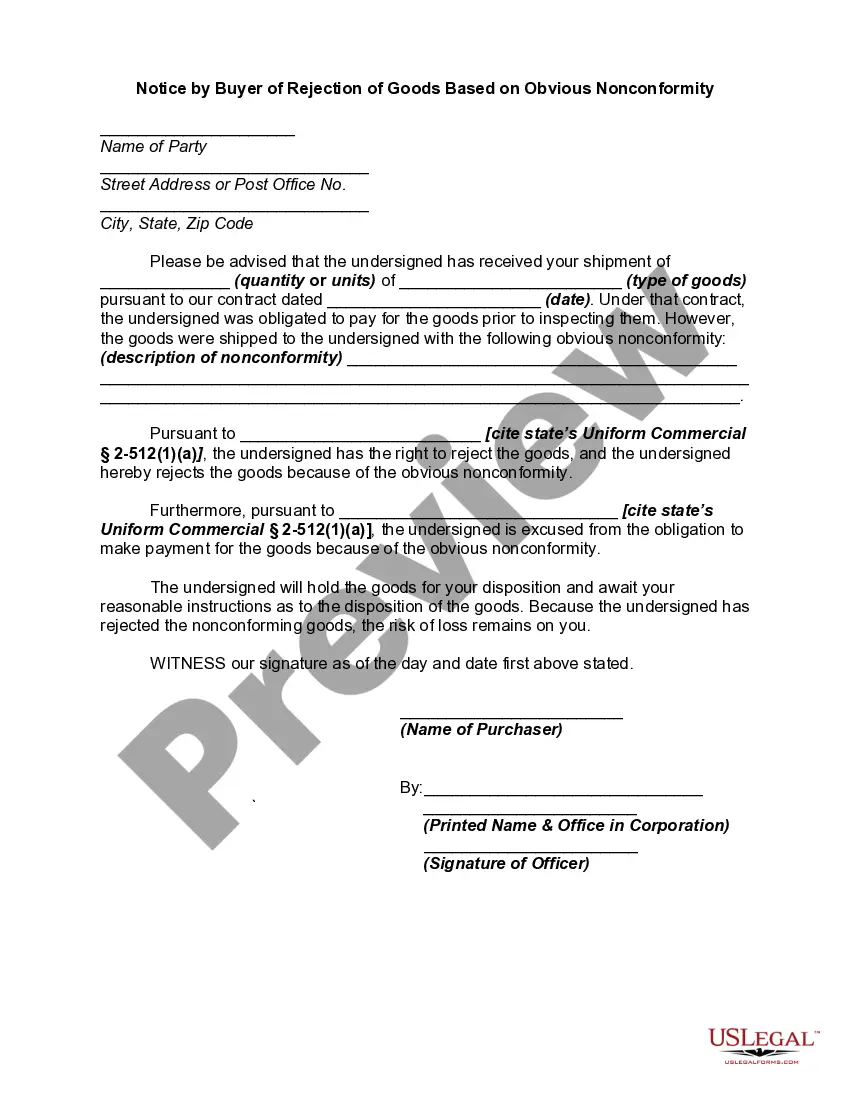
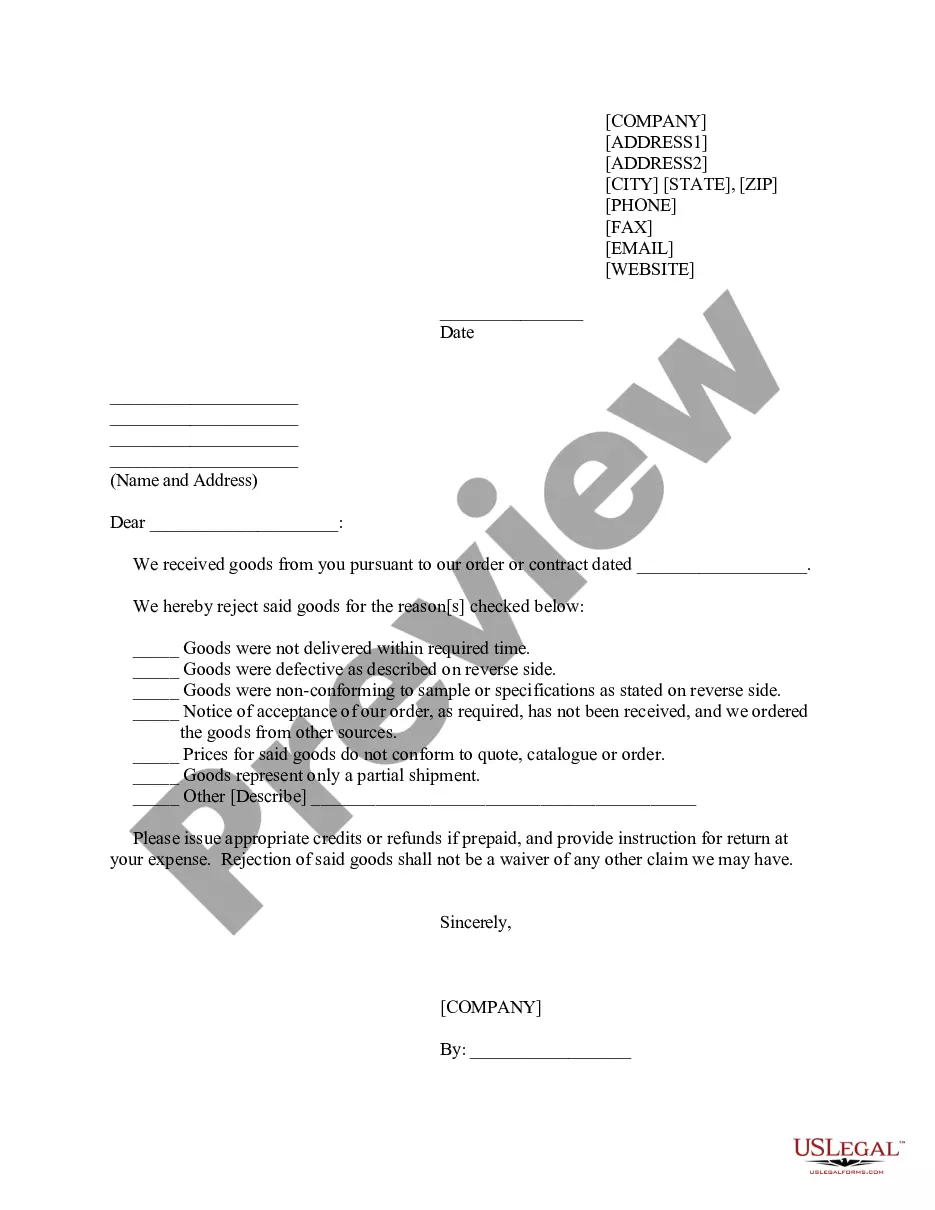
In this form the buyer giving notice of his/her rejecting delivery of the goods. This is covered by Section 2-602 of the Uniform Commercial Code, which state:
Rejection of goods must be within a reasonable time after their delivery or tender. It is ineffective unless the buyer seasonably notifies the seller. Subject to the provisions of the two following sections on rejected goods (Sections 2-603 and 2-604). After rejection any exercise of ownership by the buyer with respect to any commercial unit is wrongful as against the seller.
Seattle Washington Delivery Rejection Notice
Category:
State:
Multi-State
City:
Seattle
Control #:
US-02881BG
Format:
Word;
Rich Text
Instant download
Description


Form popularity
FAQ
The app-based worker deactivation rights ordinance in Seattle establishes clear guidelines for when and how delivery drivers can be deactivated. It aims to protect drivers from unjust terminations while promoting transparency in the process. This ordinance also requires companies to provide drivers with a reason for deactivation and an opportunity to contest the decision. For those facing issues, the Seattle Washington Delivery Rejection Notice is an important document to understand their rights.
Yes, Uber has filed a lawsuit against Seattle regarding the new law that governs the deactivation of delivery drivers. The company claims that the law imposes unnecessary restrictions on its operational flexibility. This legal challenge highlights the ongoing clash between app-based platforms and local government regulations. The Seattle Washington Delivery Rejection Notice is crucial for drivers navigating these changes.
The lawsuit against Uber Eats in Seattle is currently progressing through the court system. As the case unfolds, it could set important precedents for gig worker rights in Washington. Legal experts are closely monitoring the developments, as outcomes may influence future regulations. For drivers, understanding the Seattle Washington Delivery Rejection Notice is critical during such legal proceedings.
The lawsuit against Uber Eats in Seattle addresses allegations of unfair labor practices and improper deactivation of delivery drivers. Plaintiffs claim that the company has not adhered to the required standards of conduct outlined in local laws. This legal battle could have significant implications for the gig economy and worker rights in the region. Thus, the Seattle Washington Delivery Rejection Notice becomes an essential tool for drivers to assert their rights.
As of now, the minimum wage for delivery drivers in Seattle is set at $16.69 per hour, which is higher than the federal minimum wage. This rate reflects the city's commitment to ensuring fair compensation for gig workers. Additionally, drivers may also receive tips and other benefits, enhancing their overall earnings. The Seattle Washington Delivery Rejection Notice can highlight wage rights for drivers facing unfair practices.
Indeed, Uber has initiated legal action against Seattle concerning the law that regulates the deactivation of delivery drivers. The company argues that this regulation infringes on its operations and flexibility in managing its workforce. This lawsuit underscores the ongoing tensions between gig economy platforms and local regulations. Understanding the implications of the Seattle Washington Delivery Rejection Notice is crucial for affected drivers.
Yes, Uber did not succeed in blocking the Seattle law that regulates the deactivation of app-based workers. This law aims to provide protections for delivery drivers, ensuring they have recourse when facing deactivation. The Seattle Washington Delivery Rejection Notice serves as a vital document in this context, outlining the rights of drivers. It emphasizes the importance of transparency in the deactivation process.
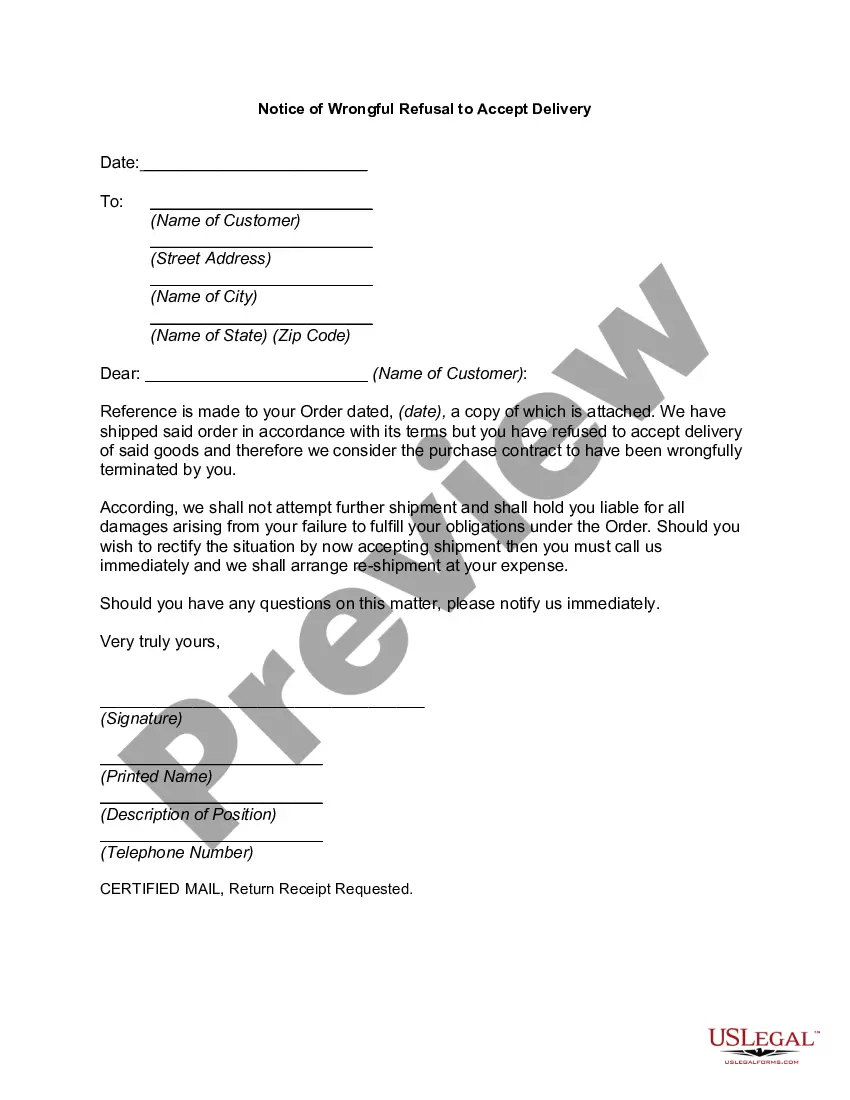
Yes, you have the right to refuse a delivery. This means you can decline any package you do not wish to receive. However, be sure to follow the specific procedures outlined by the carrier for proper handling. For detailed rights on package refusal, explore the Seattle Washington Delivery Rejection Notice on uslegalforms.
To refuse delivery with the USPS, inform the postal carrier that you do not want the package. You can also write 'Refused' on the package. This notifies the carrier of your decision and helps facilitate the return process. For more information on this topic, consider the Seattle Washington Delivery Rejection Notice on uslegalforms.
Yes, you can take a refused package to the Post Office. Make sure to mark it as refused and inform the staff that you wish to return it. This helps ensure the package is sent back to the original sender. For more detailed guidance, refer to the Seattle Washington Delivery Rejection Notice on uslegalforms.