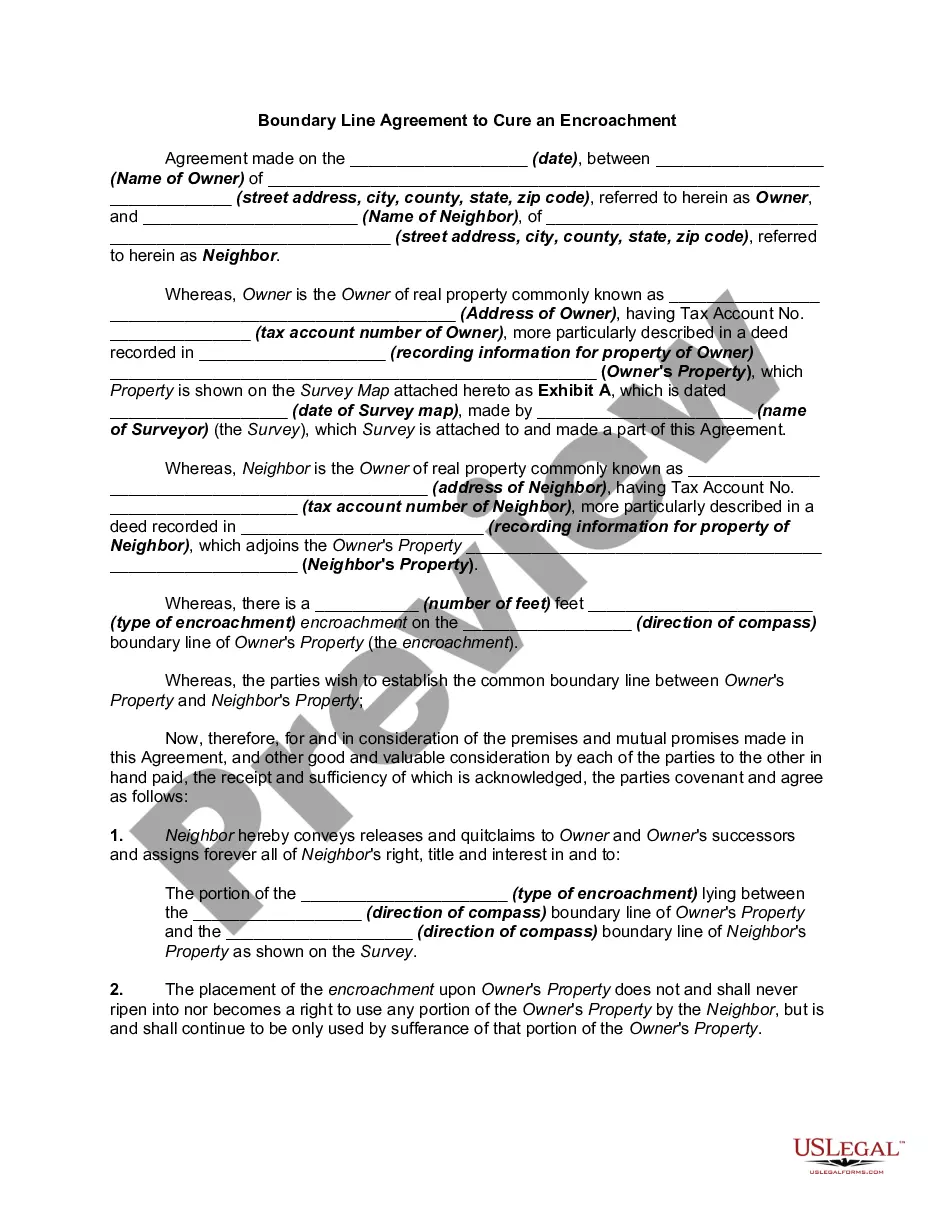
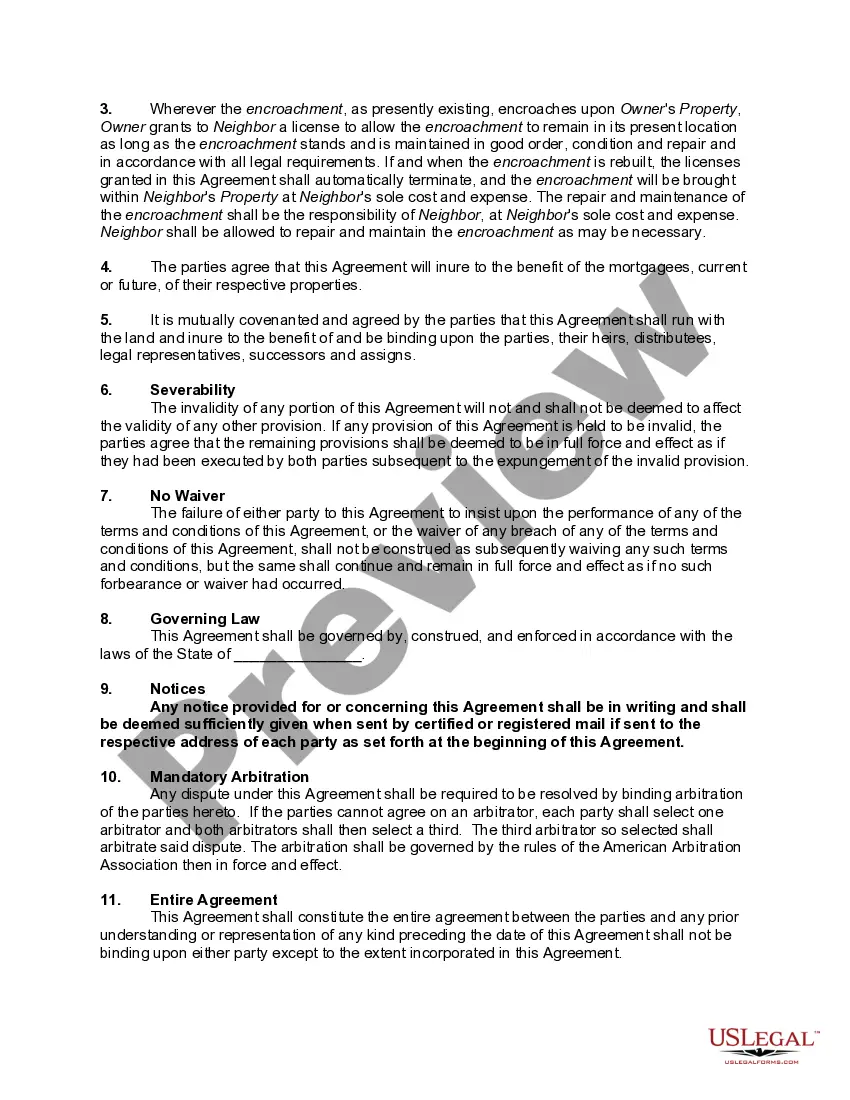
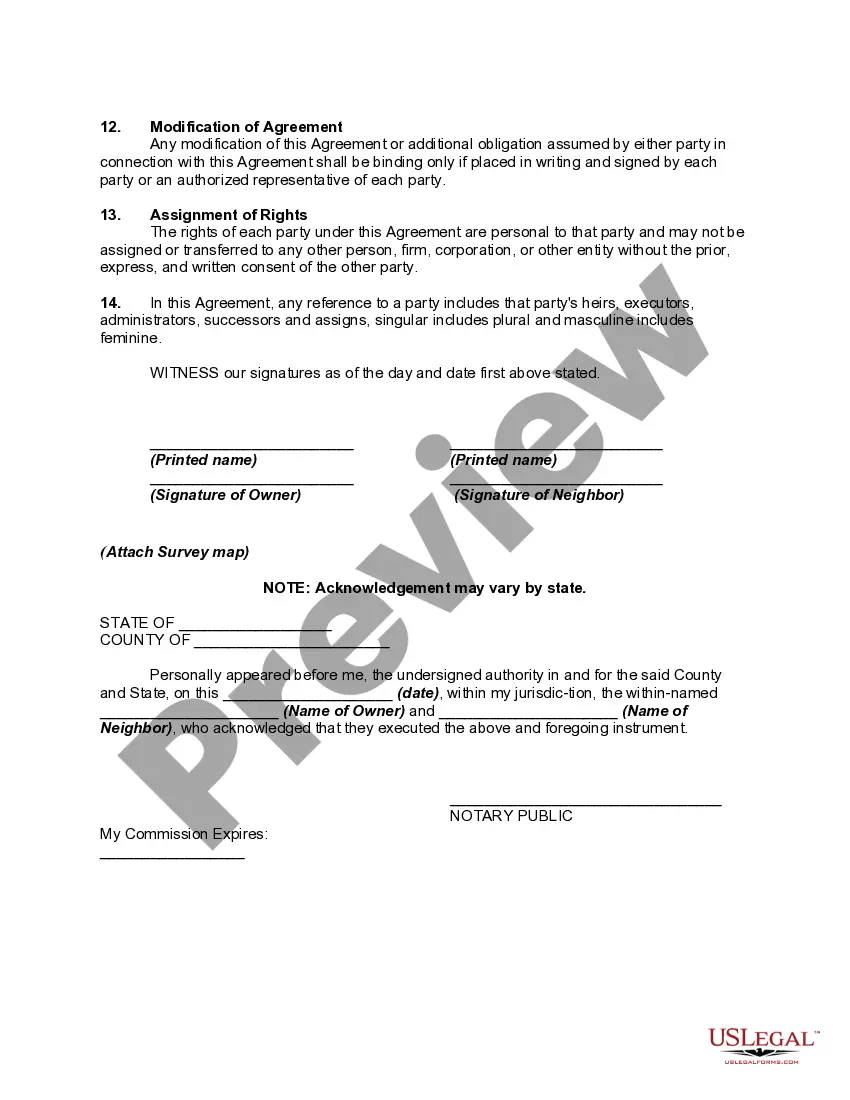
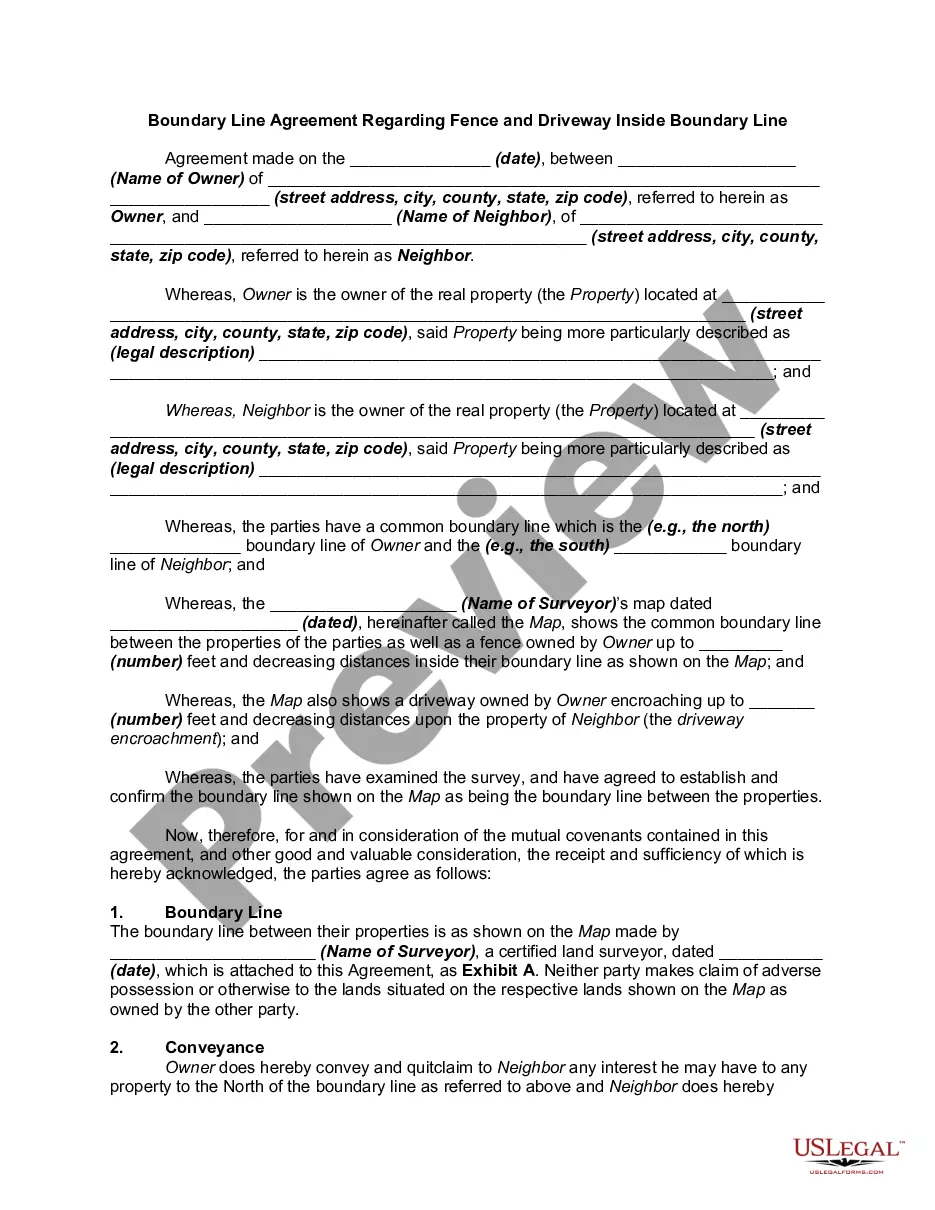
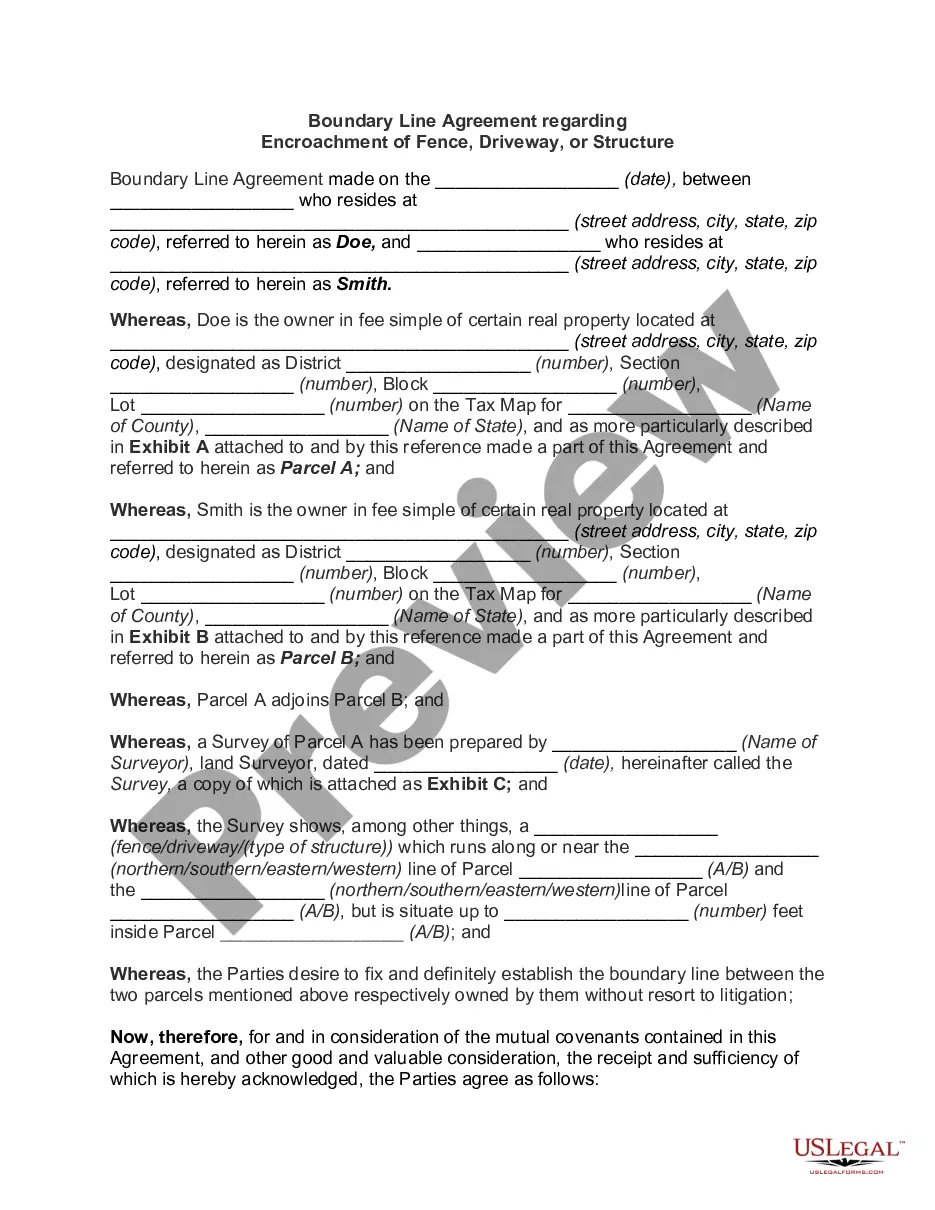
Dallas Texas Boundary Line Agreement to Cure an Encroachment
Description
Get your form ready online
Our built-in tools help you complete, sign, share, and store your documents in one place.
Make edits, fill in missing information, and update formatting in US Legal Forms—just like you would in MS Word.
Download a copy, print it, send it by email, or mail it via USPS—whatever works best for your next step.
Sign and collect signatures with our SignNow integration. Send to multiple recipients, set reminders, and more. Go Premium to unlock E-Sign.
If this form requires notarization, complete it online through a secure video call—no need to meet a notary in person or wait for an appointment.
We protect your documents and personal data by following strict security and privacy standards.

Make edits, fill in missing information, and update formatting in US Legal Forms—just like you would in MS Word.

Download a copy, print it, send it by email, or mail it via USPS—whatever works best for your next step.

Sign and collect signatures with our SignNow integration. Send to multiple recipients, set reminders, and more. Go Premium to unlock E-Sign.

If this form requires notarization, complete it online through a secure video call—no need to meet a notary in person or wait for an appointment.

We protect your documents and personal data by following strict security and privacy standards.
Looking for another form?



How to fill out Boundary Line Agreement To Cure An Encroachment?
Laws and statutes in each area vary across the nation.
If you aren't a lawyer, it's simple to become confused by different regulations when it comes to creating legal documents.
To prevent expensive legal advice when drafting the Dallas Boundary Line Agreement to Cure an Encroachment, you require a verified template valid for your locality.
That's the easiest and most economical method to obtain current templates for any legal needs. Discover everything within a few clicks and maintain your documents organized with US Legal Forms!
- That's when utilizing the US Legal Forms platform proves to be highly beneficial.
- US Legal Forms is a reliable online directory for over 85,000 state-specific legal templates, trusted by millions.
- It serves as an ideal resource for professionals and individuals seeking do-it-yourself templates for diverse life and business situations.
- All documents can be reused: once you select a template, it remains available in your account for future access.
- Therefore, if you possess an account with an active subscription, you can simply Log In and re-download the Dallas Boundary Line Agreement to Cure an Encroachment from the My documents section.
- For newcomers, a few additional steps are necessary to acquire the Dallas Boundary Line Agreement to Cure an Encroachment.
- Review the page content to ensure you have located the correct template.
- Utilize the Preview option or examine the form description if present.
Form popularity
FAQ
The term encroachment refers to a situation in real estate where a property owner violates the property rights of his neighbor by building on or extending a structure to the neighbor's land or property intentionally or otherwise.
An encroachment agreement is a legally binding real estate document signed by neighboring property owners when a property encroachment is found to exist. An encroachment agreement acknowledges and describes the encroachment, identifies the owner of the encroachment, and states the agreed-upon resolution.
The council can order that the encroachment be removed or altered to comply with the approved plan. Under the Environmental Planning and Assessment Act 1979, section 123, any person can apply to the Land and Environment Court for an order to remedy a breach of the Act, including failure to follow approved plans.
Sometimes, despite your best efforts, the only way to settle a boundary dispute is via litigation. There are two ways in which the Courts can resolve these issues....They are: Mediation. This is when a neutral third party helps both sides to negotiate and reach a settlement.A binding evaluation.A non-binding evaluation.
It refers to a situation that needs to be negotiated, authorized, or taken to court. Examples of a major encroachment would be extending a building over property lines or an overhanging tree branch that could potentially cause serious injury.
An encroachment is an unauthorized intrusion onto a neighboring property through the creation or extension of a physical structure (including flora) above or below the surface of land.
Common Ways to Deal With Encroachments Have a Professional Land Survey Done.Talk Things Out and Offer Concessions.Seek Mediation or a Neutral Third Party.If all else fails, hire a qualified real estate attorney.
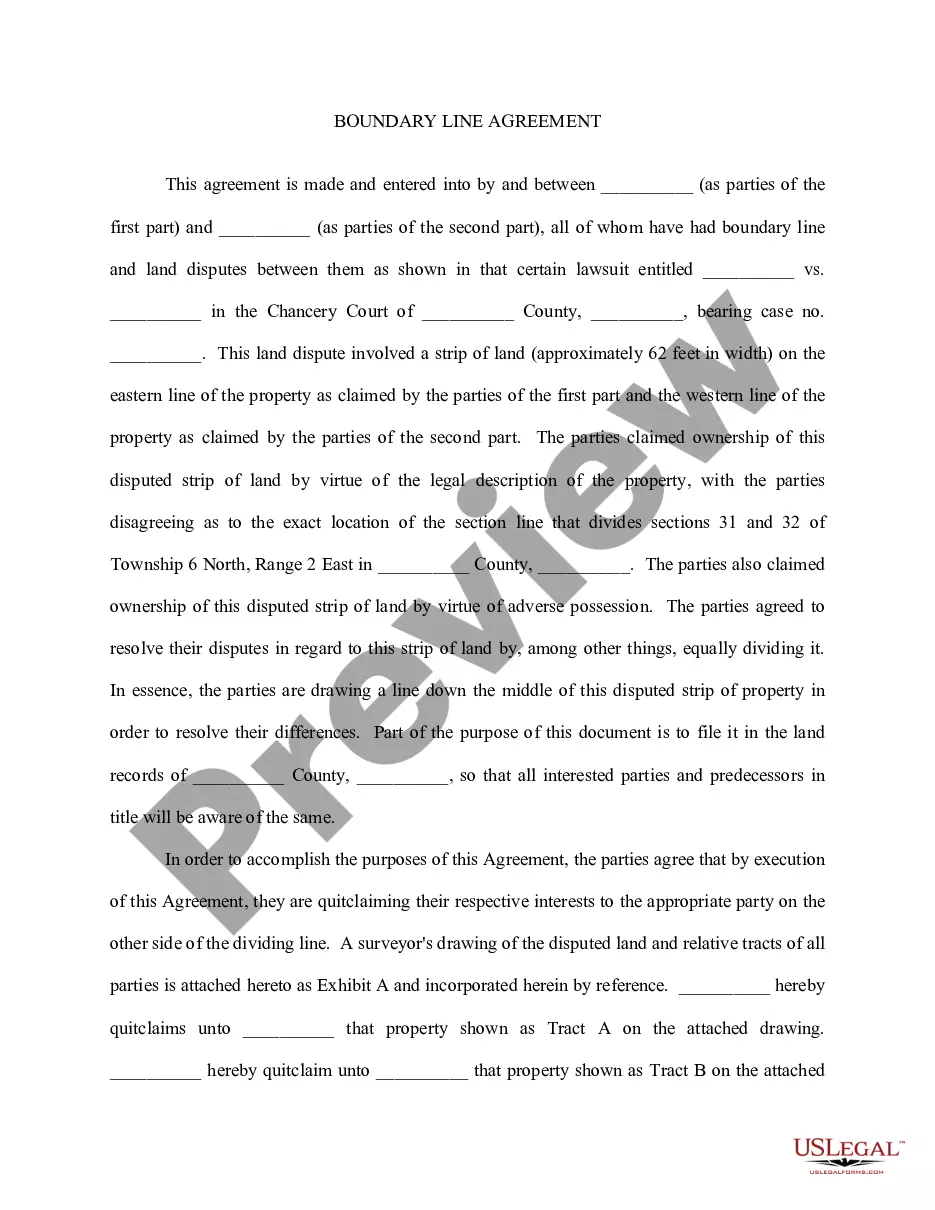
Simply put, a boundary line agreement is an agreement between two owners of adjacent parcels of land whereby the owners agree on the precise location of an otherwise unclear common boundary.
How to Deal with Land Encroachment Legally? Permanent or Temporary Injunction. Injunction against Illegal Land Encroachment.Ex-parte Injunction. The justice system in India allows both parties equal opportunity to be heard and put their point across.Claim Damages.
Boundary lines can change over time and these changes are rarely recorded. It is believed that the way a boundary is constructed dictates who owns the land.