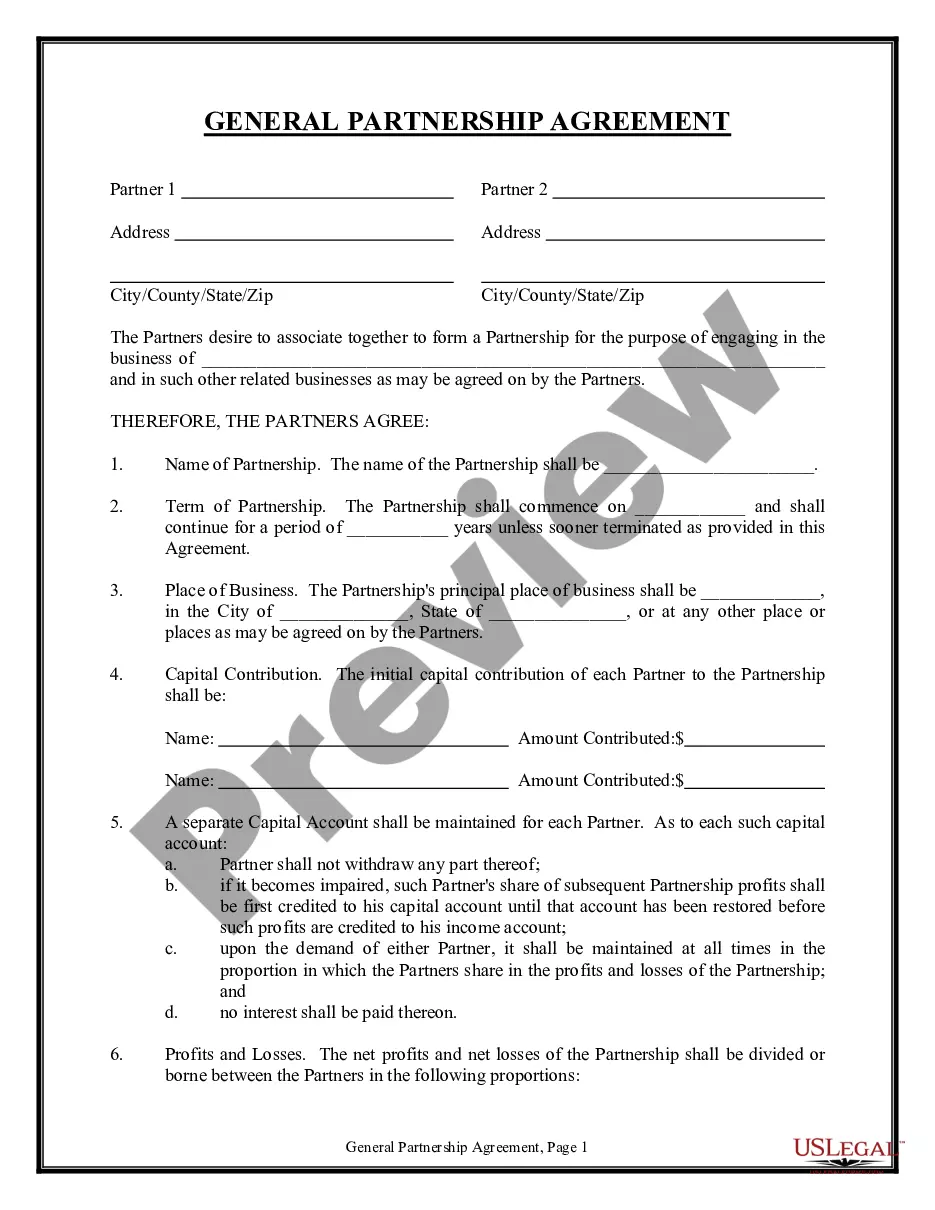
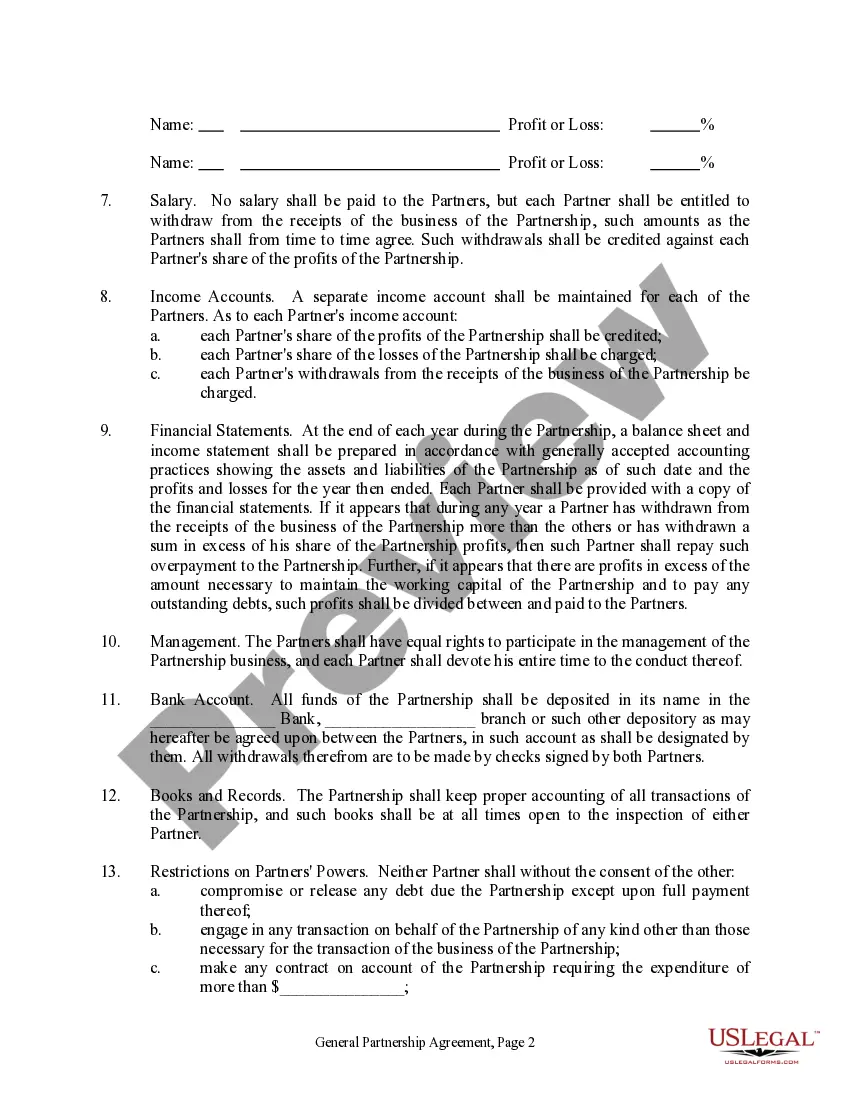
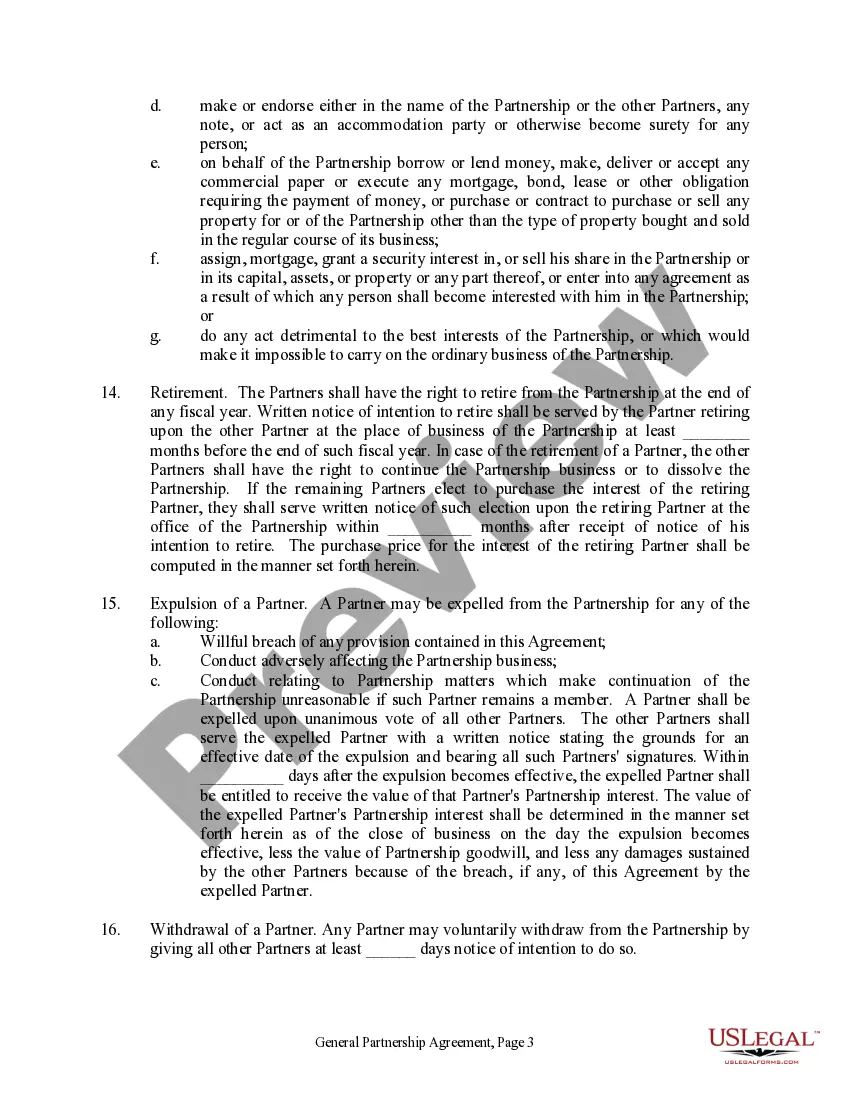
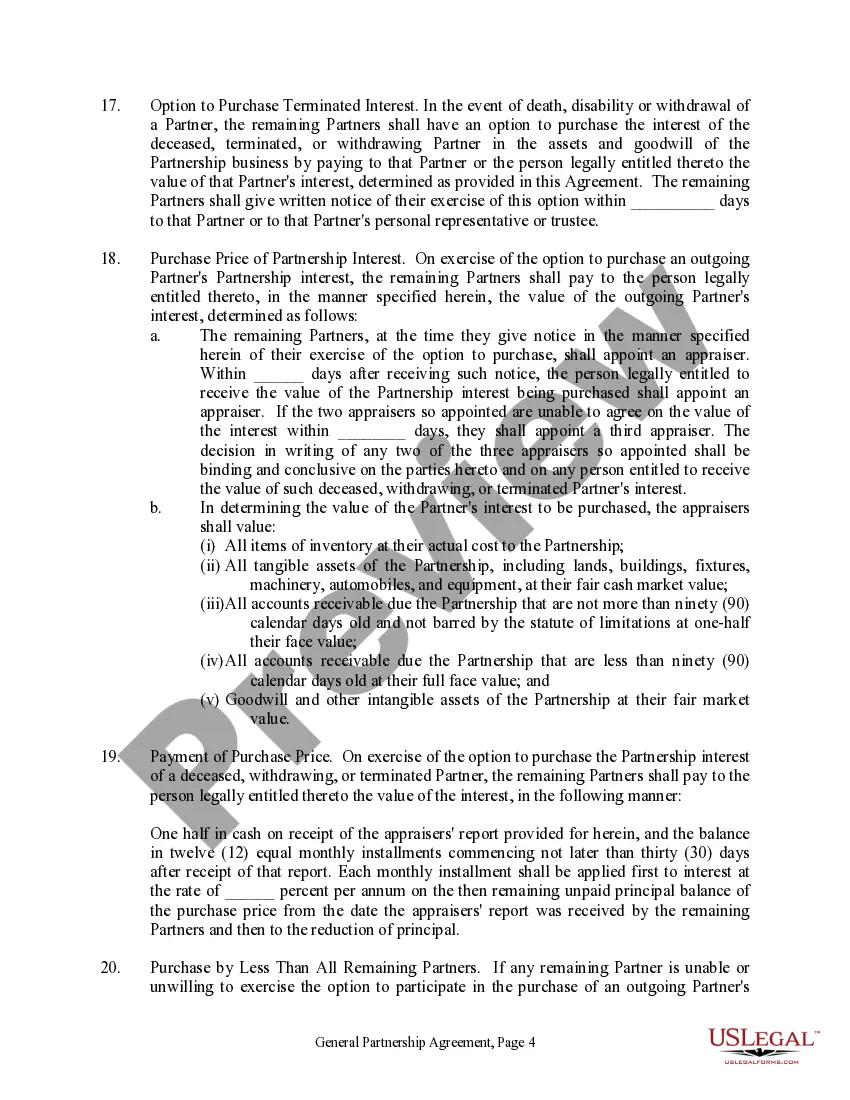
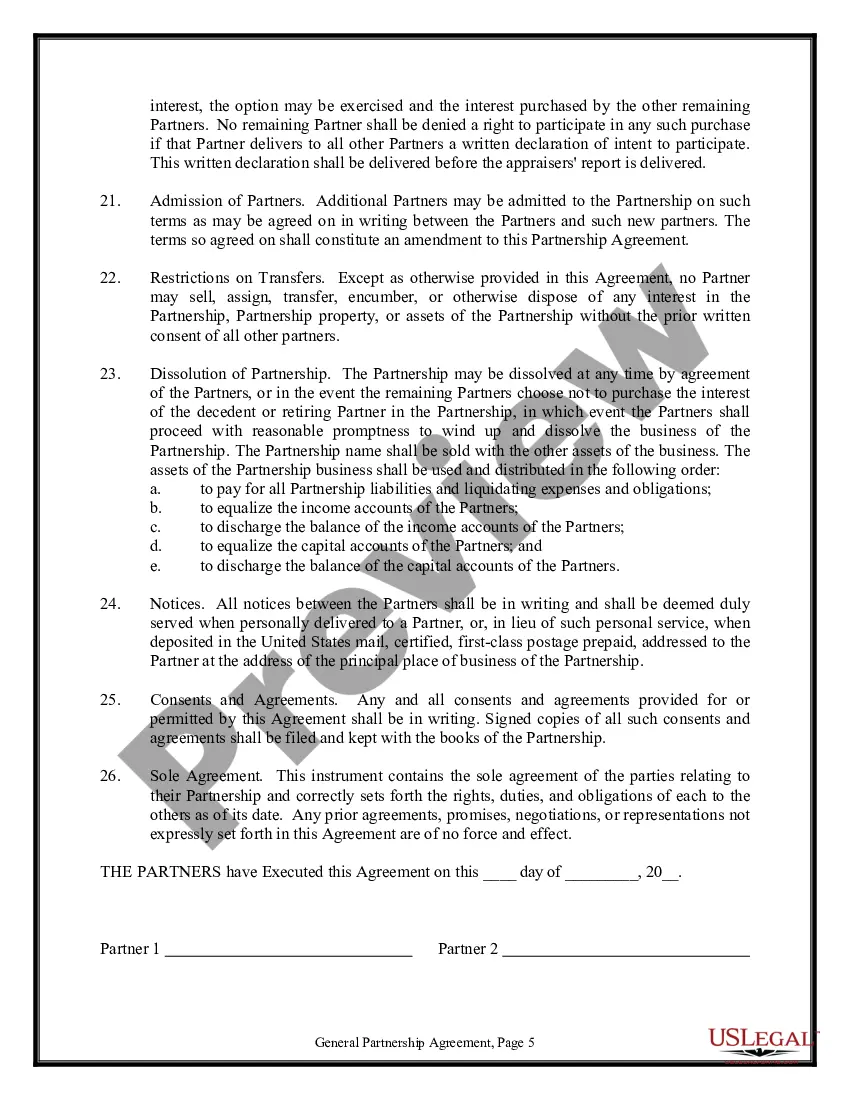
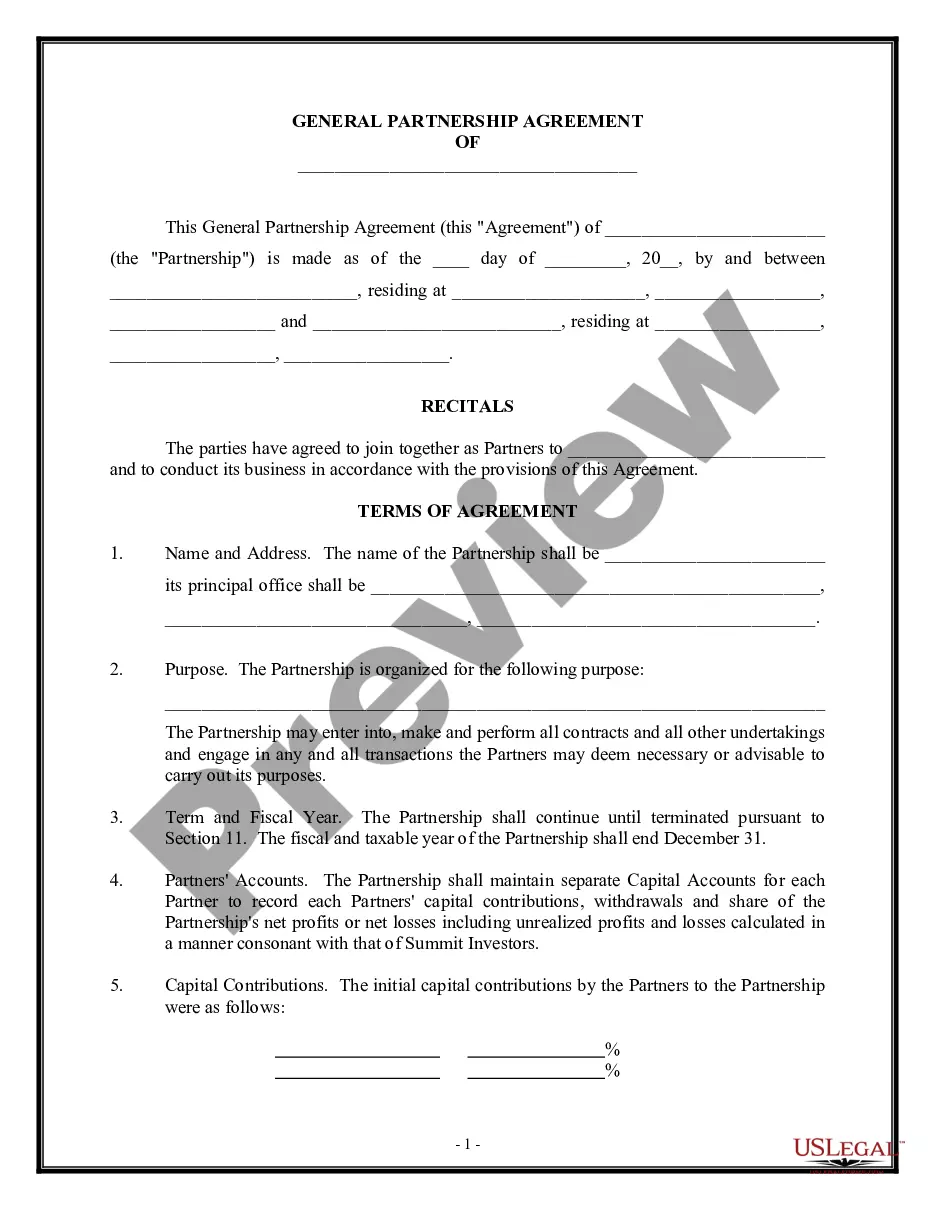
The partners desire to associate together to form a partnership. No salary shall be paid to the partners, but each partner shall be entitled to withdraw from the receipts of the business of the partnership, such amounts as the partners shall from time to time agree.
Pittsburgh Pennsylvania General Partnership Agreement - version 2
Category:
State:
Multi-State
City:
Pittsburgh
Control #:
US-01737-AZ
Format:
Word;
Rich Text
Instant download
Description
Free preview


Form popularity
FAQ
Choosing between a general partnership and an LLC depends on your business needs. A general partnership is easier to set up and manage, but it carries greater personal risk. Conversely, an LLC offers liability protection and may be a safer option for many entrepreneurs. Consider creating a Pittsburgh Pennsylvania General Partnership Agreement - version 2 if you opt for a partnership.
To apply for a general partnership, start by gathering your partners and discussing the business's objectives. Next, create a Pittsburgh Pennsylvania General Partnership Agreement - version 2 that outlines each partner's roles and responsibilities. While there is no formal application process, ensure all partners agree to the terms in writing.
One significant downside of a general partnership is the unlimited personal liability that partners face. This means that if the partnership incurs debt or is sued, each partner's personal assets could be at risk. Therefore, understanding the implications of a Pittsburgh Pennsylvania General Partnership Agreement - version 2 is essential before deciding on this business structure.
In Pennsylvania, you do not need to formally register a general partnership. However, it is wise to create a Pittsburgh Pennsylvania General Partnership Agreement - version 2 to outline the terms of the partnership. This document helps establish trust among partners and serves as a reference point in case of disputes.
A general partnership and an LLC serve different purposes in business structure. In a general partnership, all partners share responsibility for debts and liabilities, while an LLC limits individual liability and offers more protection to its members. Understanding these differences is crucial when deciding if a Pittsburgh Pennsylvania General Partnership Agreement - version 2 or an LLC is right for you.
To form a general partnership, you need at least two partners who intend to conduct business together. You should draft a Pittsburgh Pennsylvania General Partnership Agreement - version 2 that details how the partnership will operate, including decision-making processes and the distribution of profits. While no formal registration is required, having a written agreement is highly recommended to ensure clarity.
To form a partnership in Pennsylvania, you need to gather your partners and agree on the terms of your partnership. It's essential to create a written Pittsburgh Pennsylvania General Partnership Agreement - version 2, which outlines the roles, responsibilities, and profit-sharing arrangements of each partner. Although you are not required to file this agreement with the state, having it in writing can help avoid misunderstandings later.
In Pennsylvania, a partnership does not need to file a formal agreement with the state to establish itself, but it is highly recommended to have a written partnership agreement. This document, often referred to as a Pittsburgh Pennsylvania General Partnership Agreement - version 2, outlines the roles and responsibilities of each partner, profit-sharing arrangements, and procedures for resolving disputes. While you may operate without this agreement, having one can help prevent misunderstandings and legal complications down the line. Using platforms like US Legal Forms can simplify the process of creating your partnership agreement and ensure compliance with state regulations.
A general partner agreement is a specific type of partnership contract that details the relationship between general partners within a partnership. It outlines the decision-making authority, responsibilities, and profit-sharing ratios of each general partner. Crafting a thorough Pittsburgh Pennsylvania General Partnership Agreement - version 2 can help partners establish a solid foundation for their business and avoid misunderstandings down the line.
The four types of partnerships include general partnerships, limited partnerships, limited liability partnerships, and joint ventures. Each type has distinct features regarding liability, management, and profit distribution. Understanding these differences is crucial when drafting a Pittsburgh Pennsylvania General Partnership Agreement - version 2 to ensure that the partnership aligns with each partner's goals and risk tolerance.