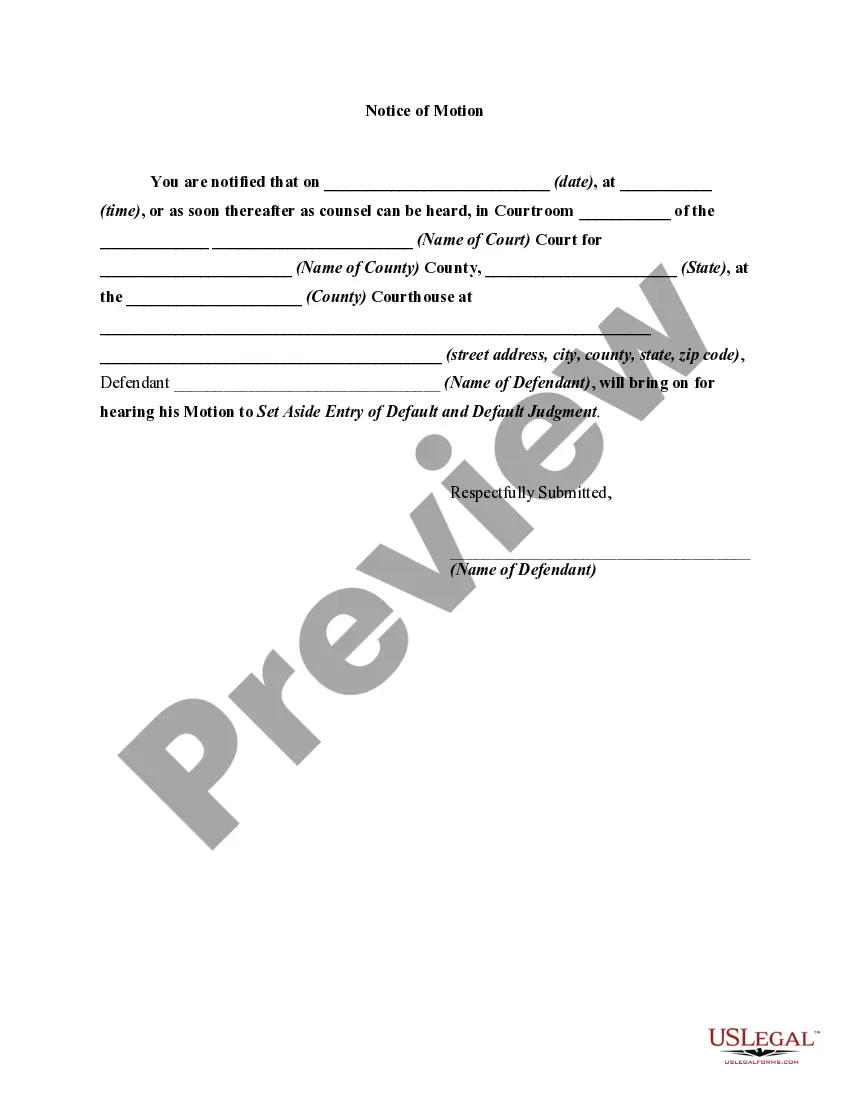
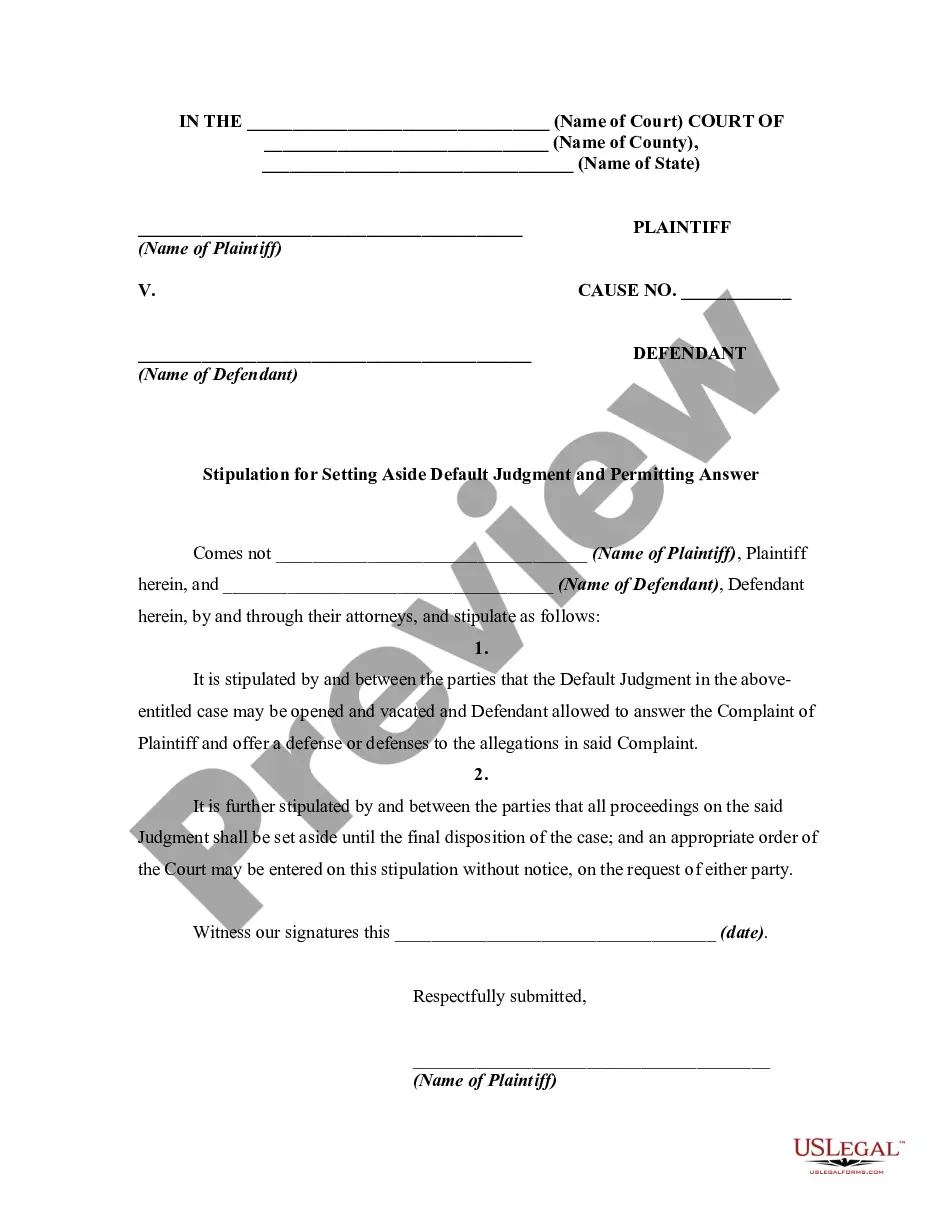
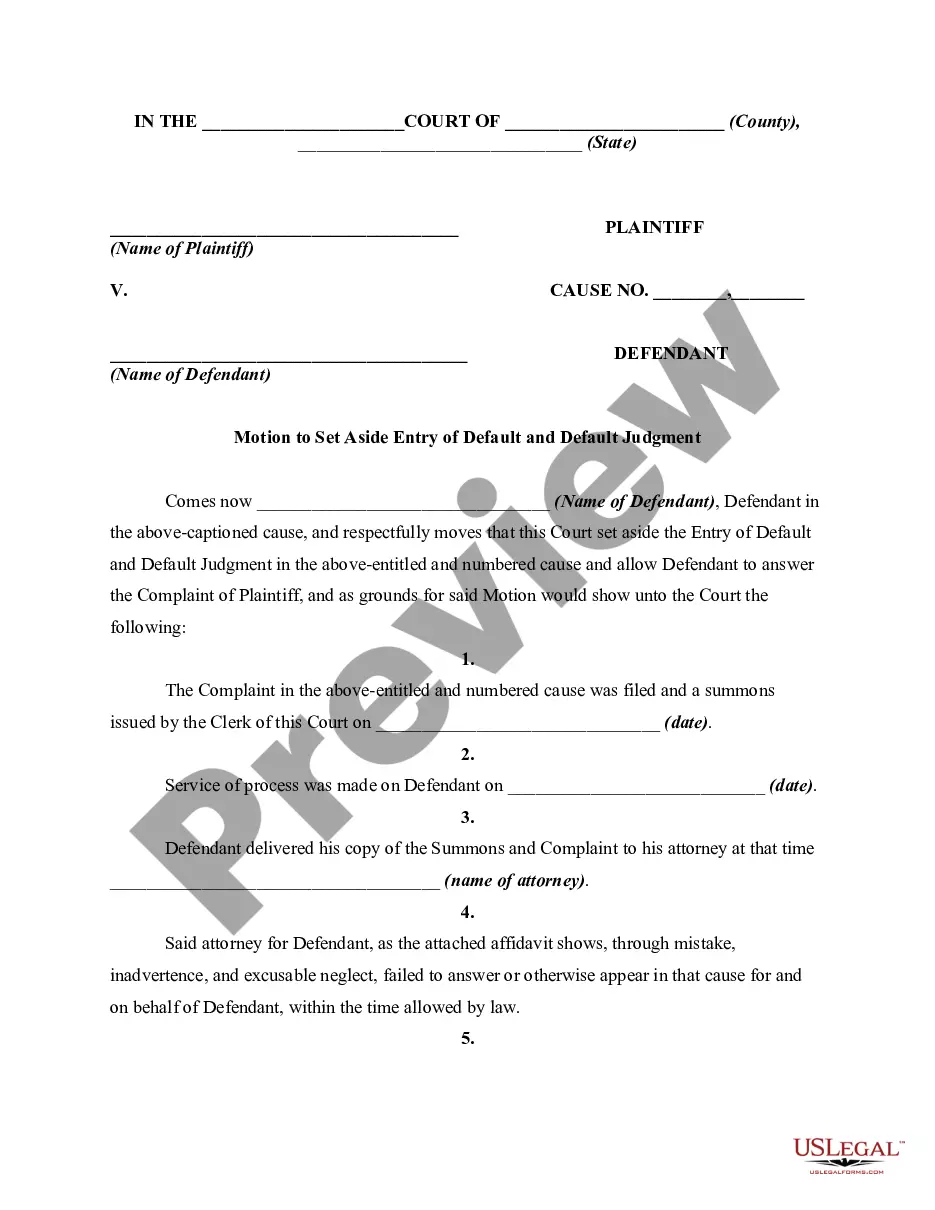
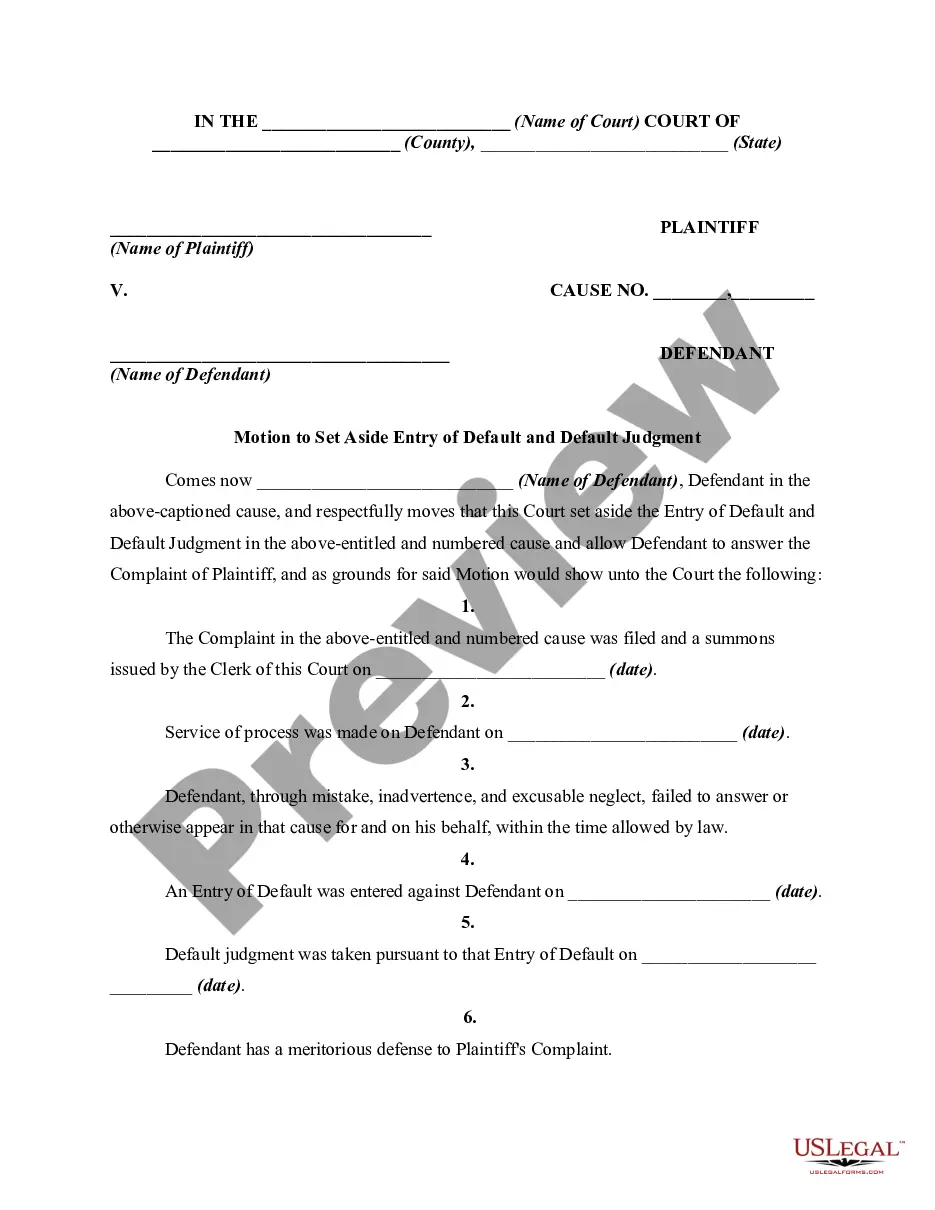
Minneapolis Minnesota Motion to Set Aside Entry of Default and Default Judgment

State:
Multi-State
City:
Minneapolis
Control #:
US-01704BG
Format:
Word; 
Rich Text
Instant download

Description

In deciding whether to set aside a default judgment, courts seek to balance two competing interests: (1) the need to promote judicial economy; and (2) the need to preserve an individual's right to defend on the merits. Therefore, in addition to the requirement that defendant show that the judgment was entered through excusable neglect or another statutory ground, the court will consider a variety of factors, including:


the nature and extent of the prejudice which may be suffered by the non-defaulting party if the default is set aside;
2. the presence of material issues of fact;
3. the presence of a meritorious defense to the claim;
4. the significance of the interests at stake, including, but not limited to, the amount of money involved;
5. whether the failure to answer was intentional or willful or the result of conscious indifference;
6. whether party or counsel bears responsibility for default; and the availability of less drastic sanctions.
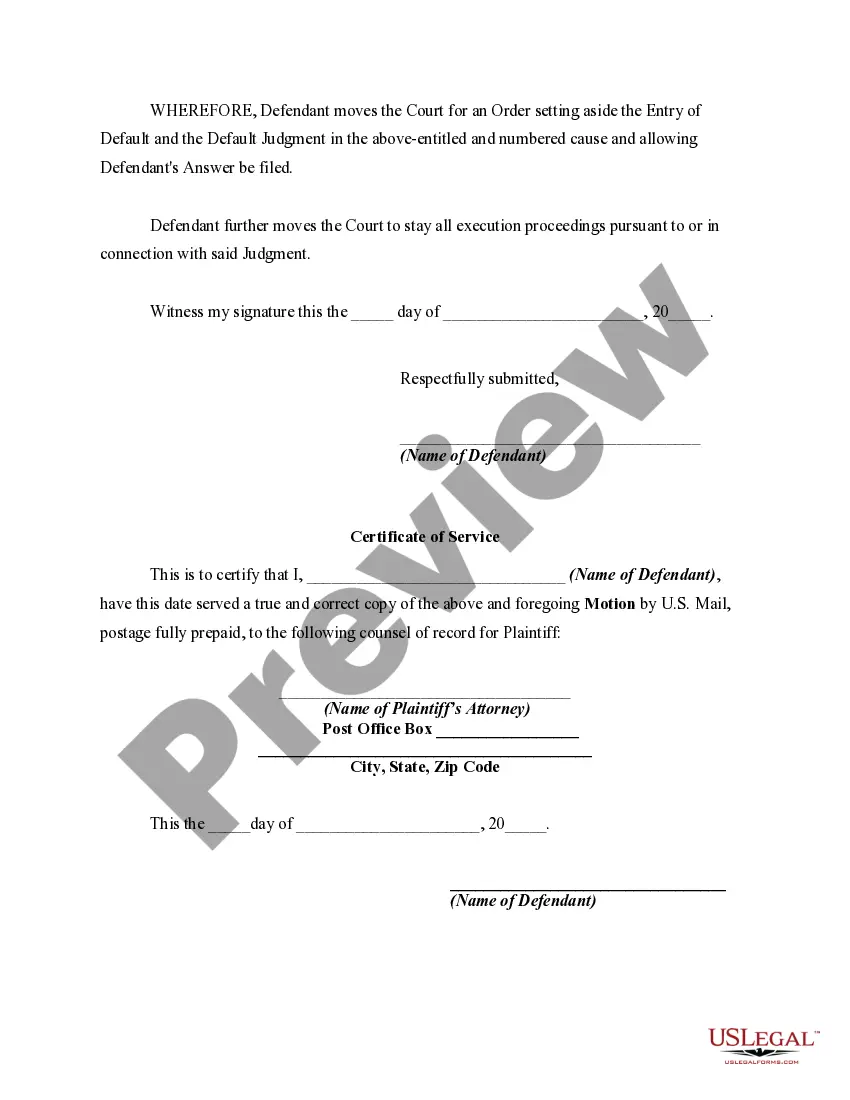
Free preview
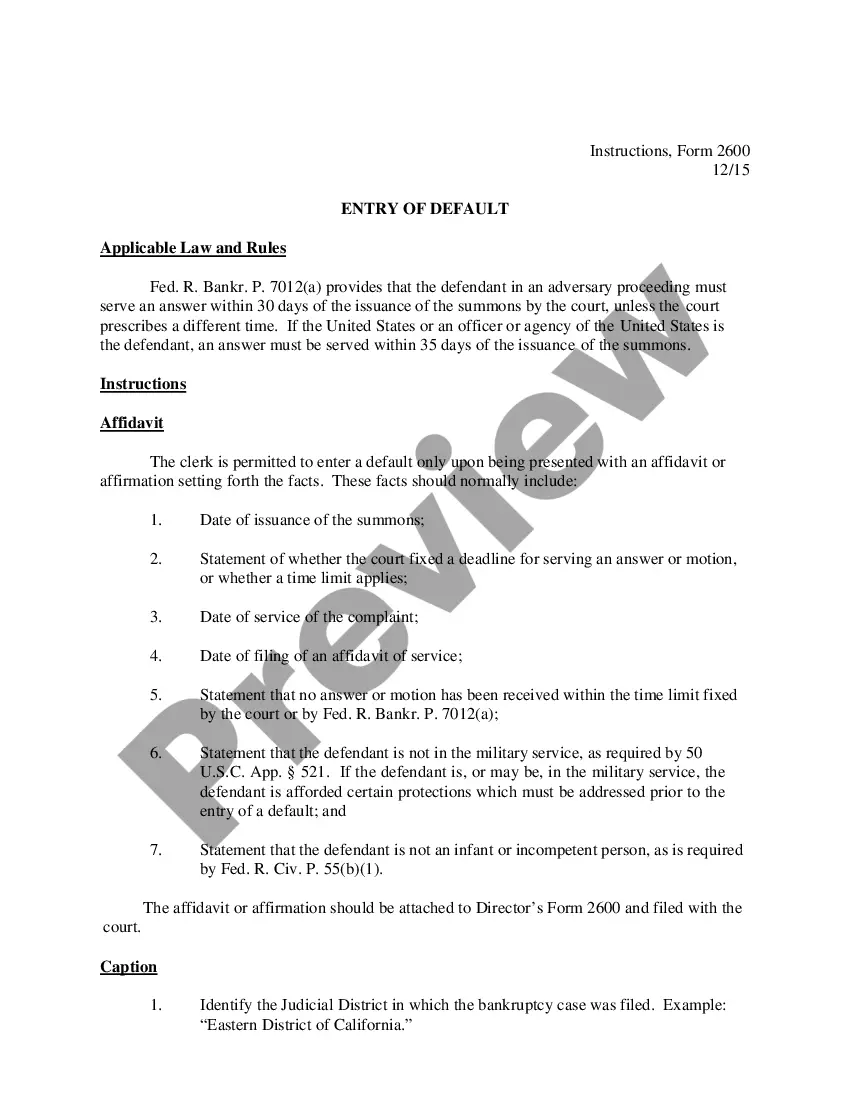
  • Preview Motion to Set Aside Entry of Default and Default Judgment
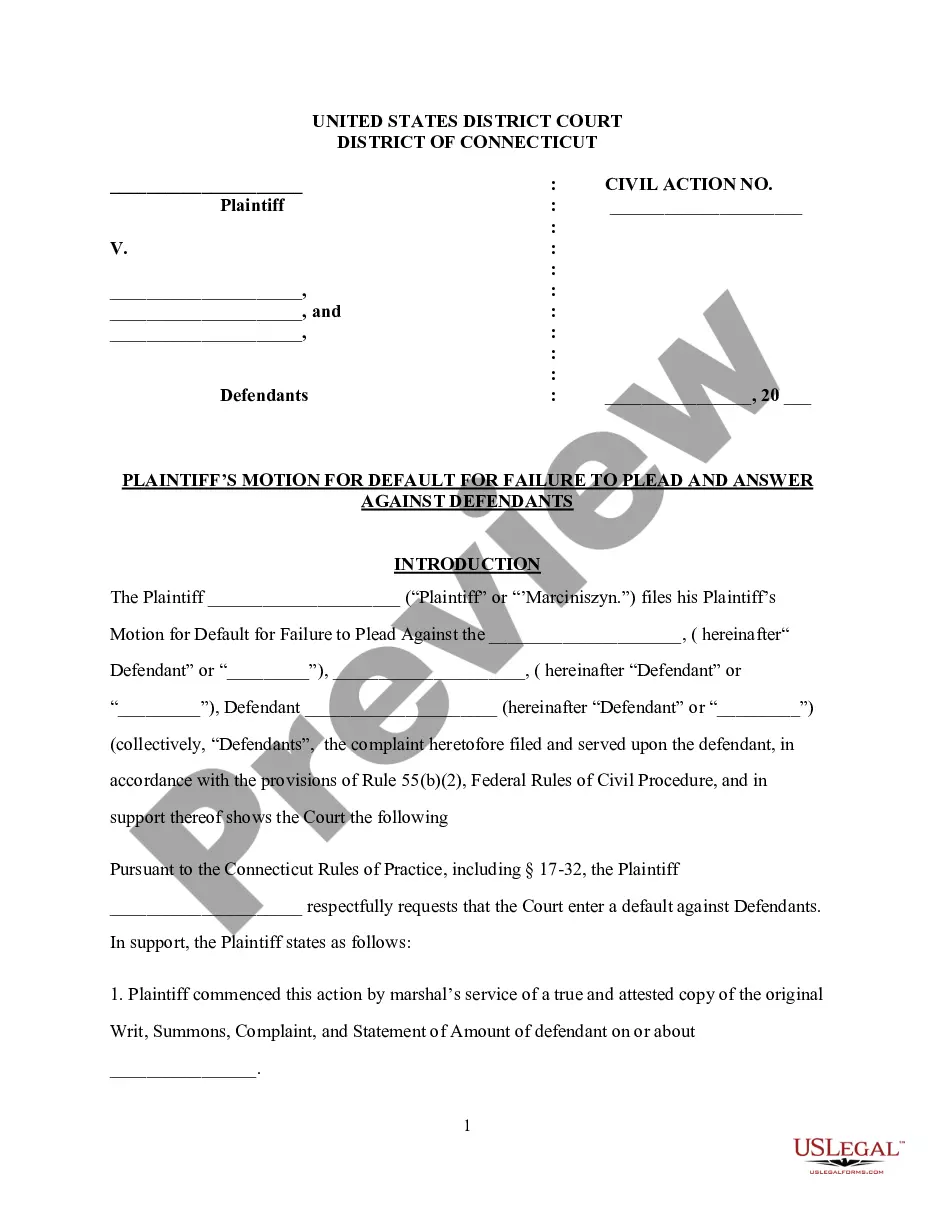
  • Preview Motion to Set Aside Entry of Default and Default Judgment
  • Preview Motion to Set Aside Entry of Default and Default Judgment

Form popularity

FAQ

In Minnesota, Rule 60 governs the relief from judgments and orders, allowing individuals to request that a court revisit its decisions. This applies particularly to cases involving default judgments, where a party may not have had the chance to defend themselves. By filing a Minneapolis Minnesota Motion to Set Aside Entry of Default and Default Judgment, you can seek to have the court reconsider its ruling. To simplify this process, uslegalforms offers resources that can assist you in navigating the legal requirements effectively.

The Rule of 60 refers to a specific rule within the Minnesota Rules of Civil Procedure that allows a party to challenge a court's decision under certain circumstances. In essence, it provides a legal pathway to address errors or injustices that have occurred in prior rulings. For those facing a default judgment, understanding the Rule 60 can be crucial in pursuing a Minneapolis Minnesota Motion to Set Aside Entry of Default and Default Judgment. Utilizing resources from uslegalforms can help clarify this process and empower you to take action.

A Rule 60 motion is a legal request made to a court to set aside a previous judgment or order. In the context of a Minneapolis Minnesota Motion to Set Aside Entry of Default and Default Judgment, this motion allows individuals to seek relief from a default judgment that may have been entered against them without their knowledge. This process ensures that parties have the opportunity to present their case and avoid unfair consequences. If you need assistance, platforms like uslegalforms can guide you through the necessary steps.

A 473 motion to set aside is a legal motion that requests a court to nullify a previously entered default judgment. This motion is typically filed when a party believes they have valid grounds, such as improper notice or excusable neglect. If you find yourself in a situation requiring a Minneapolis Minnesota Motion to Set Aside Entry of Default and Default Judgment, uslegalforms offers templates and guidance to streamline your filing process and improve your chances of success.

The 55.01 rule in Minnesota allows a party to request the court to relieve them from the consequences of a default judgment. This rule is crucial for individuals who may not have been properly notified of a lawsuit or who have legitimate reasons for not responding. Understanding this rule can be beneficial if you are considering a Minneapolis Minnesota Motion to Set Aside Entry of Default and Default Judgment. Utilizing resources from uslegalforms can help you navigate this process effectively.

To file a motion to set aside a default judgment, you should prepare your motion and submit it to the court where the judgment was issued. Include any relevant evidence and a clear explanation of why the judgment should be set aside. You can leverage the resources from uslegalforms to ensure you're following the correct format and to access helpful guides throughout the process.

A Rule 60 motion in Minnesota allows a party to seek relief from a judgment or order under certain specific circumstances. This rule is particularly useful for those wanting to set aside a default judgment, as it provides grounds for doing so, such as mistake, inadvertence, or newly discovered evidence. Understanding the implications of a Rule 60 motion can significantly impact your ability to contest a default judgment.

Filing a motion for default judgment requires you to prepare a formal document that states your case against the defendant. You must provide evidence that the defendant failed to respond or appear in court. Ensure that you include all necessary documentation, and consider using uslegalforms to access tailored templates that can guide you through the filing process efficiently.

To set aside a default judgment, you must demonstrate a valid reason for your absence during the original proceedings. This may include showing that you did not receive proper notice or that you have a legitimate defense to the underlying claim. The Minneapolis Minnesota Motion to Set Aside Entry of Default and Default Judgment is a formal request that needs to be submitted to the court, detailing your reasons clearly.

Making an application to set aside a default judgment in Minneapolis involves drafting a formal motion that outlines your reasons for the request. You will need to present any evidence that supports your case, such as proof of lack of notice or a valid defense to the original claim. Utilizing the resources available on uslegalforms can simplify this process and provide you with the necessary templates.

Interesting Questions

Trusted and secure by over 3 million people of the world’s leading companies

Minneapolis Minnesota Motion to Set Aside Entry of Default and Default Judgment