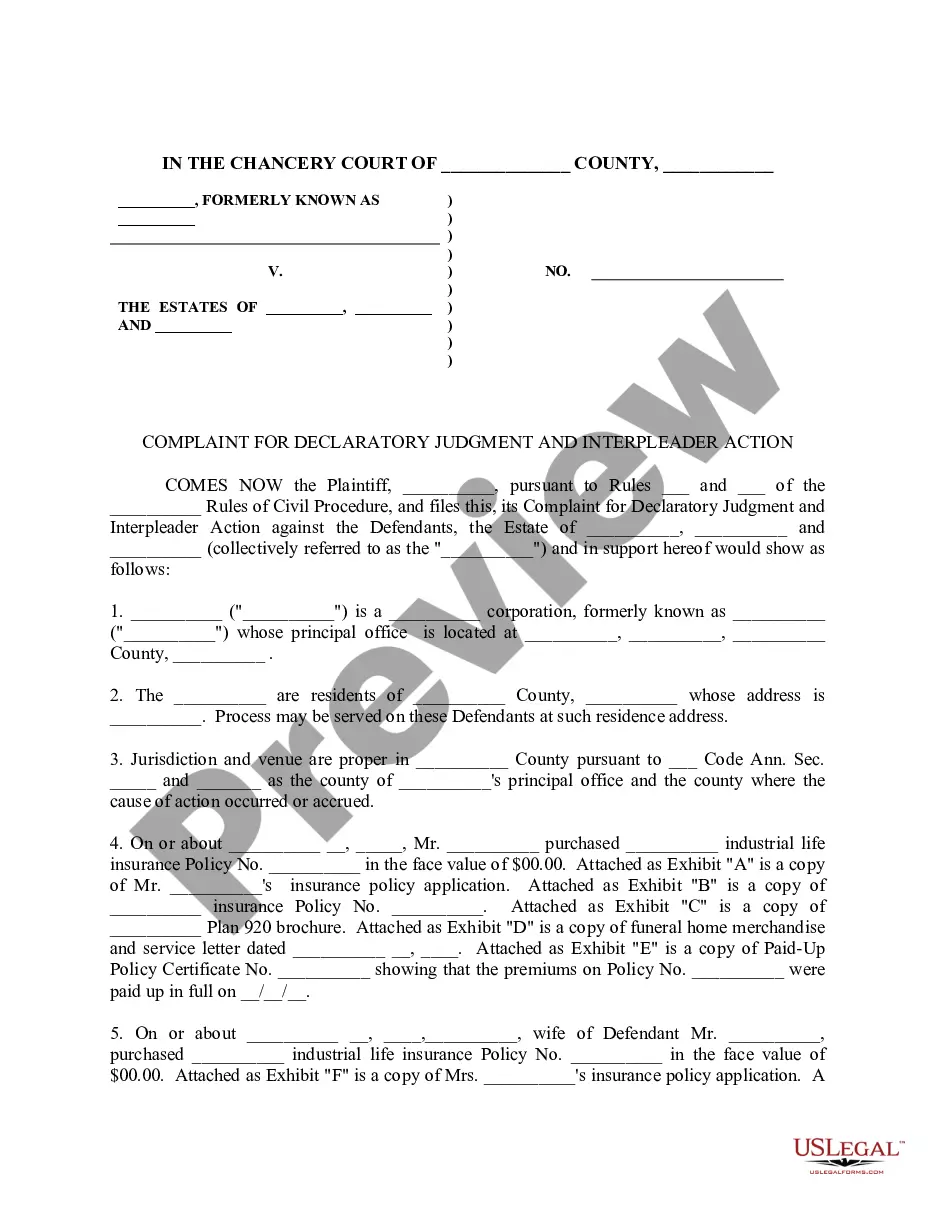
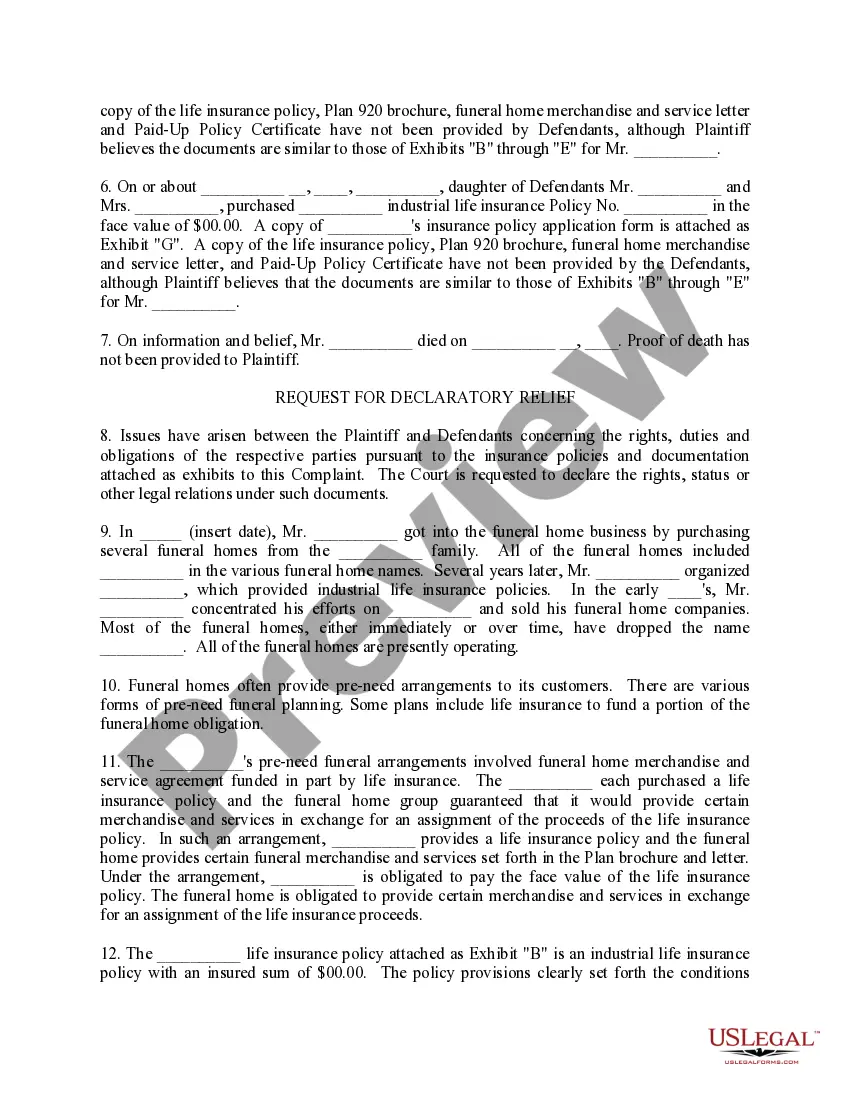
Atlanta Georgia Complaint for Declaratory Judgment and Interpleader Action or Burial Policy
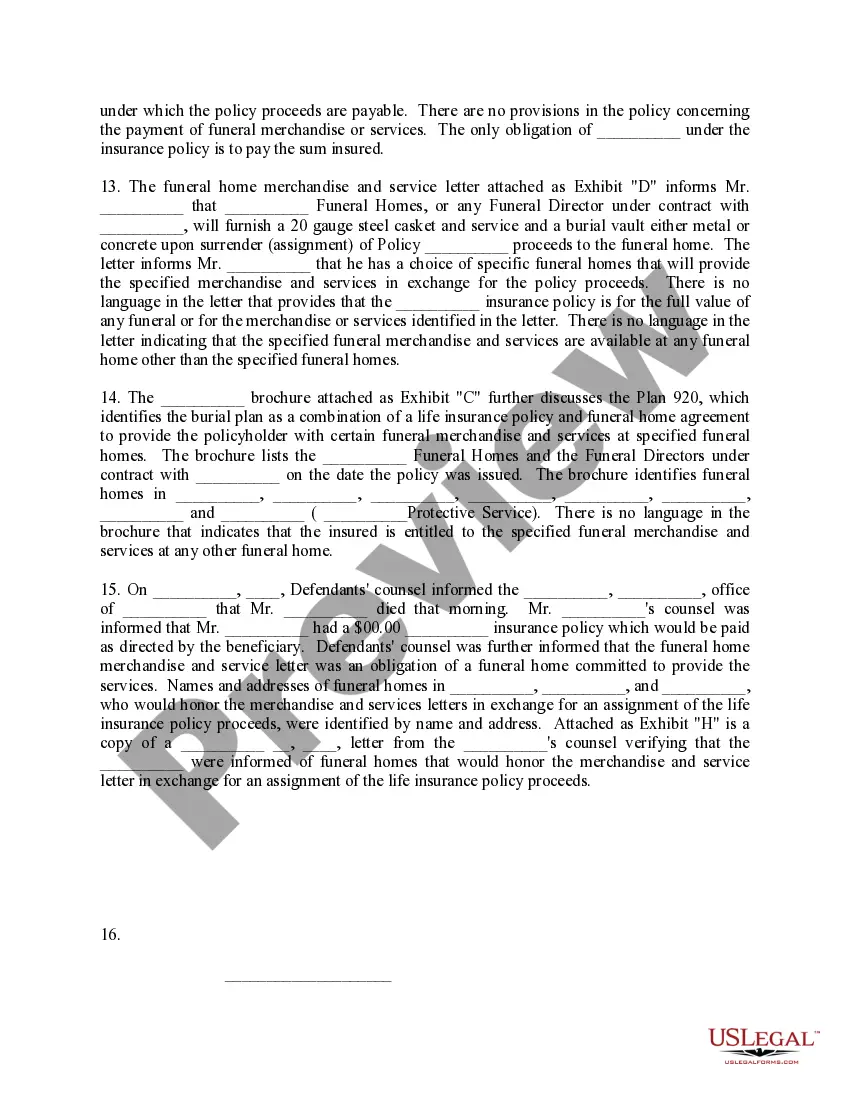
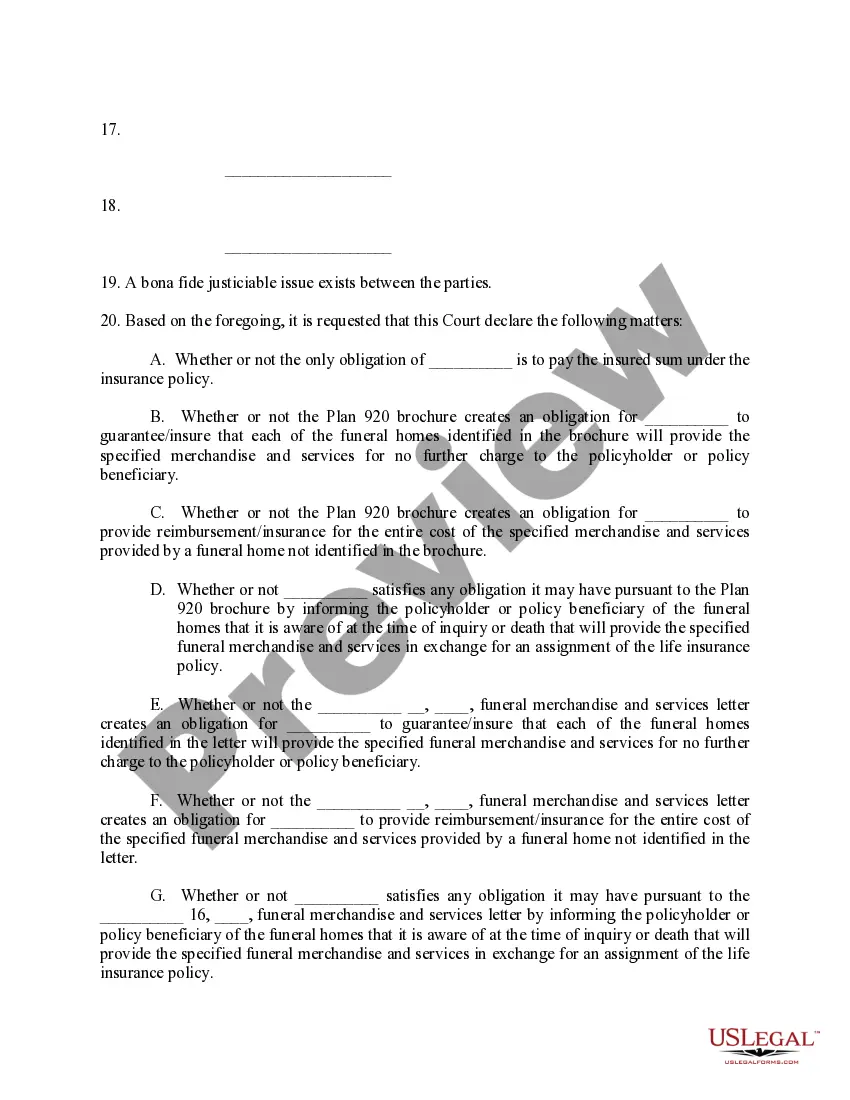
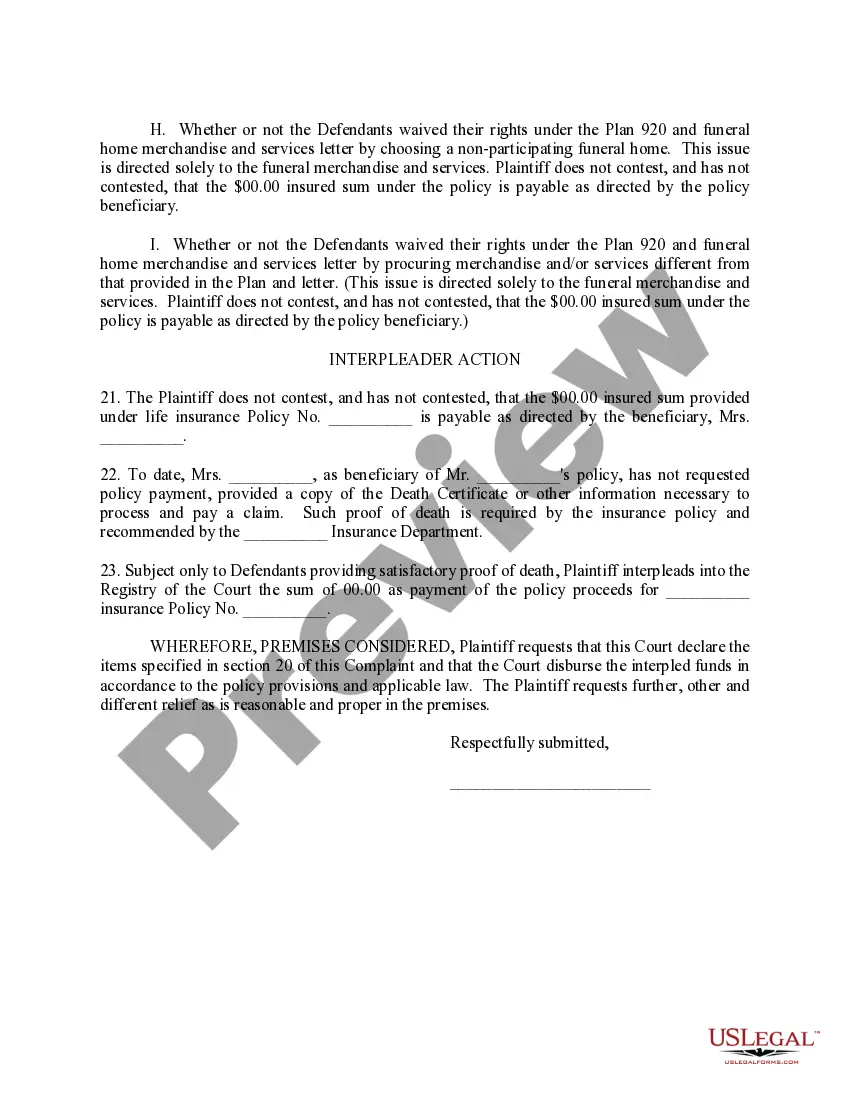
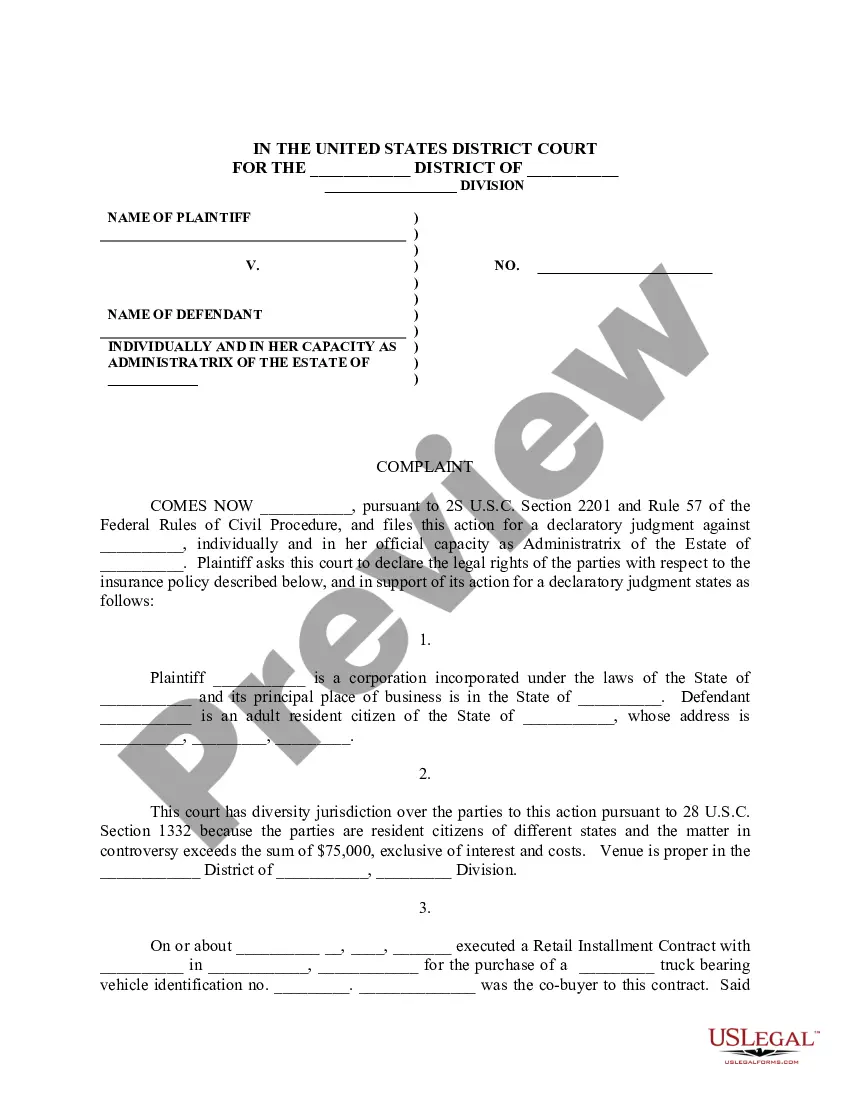
Description






Form popularity
FAQ
When responding to an Atlanta Georgia Complaint for Declaratory Judgment and Interpleader Action or Burial Policy, you generally need to provide a clear admission or denial of each allegation. Additionally, you may present affirmative defenses that could bar the claims against you. It is crucial to comply with court deadlines and ensure your answer is thorough and well-structured to avoid default judgments. By using a platform like uslegalforms, you can access templates and guidelines for crafting the correct responses.
To initiate an Atlanta Georgia Complaint for Declaratory Judgment and Interpleader Action or Burial Policy, you must establish a legal dispute that needs resolution. Firstly, there should be a clear legal right or obligation that is in question. Secondly, the parties involved in the action must have standing to seek a resolution. Lastly, it is essential to file the complaint in the appropriate court, ensuring adherence to local rules and procedures.
To plead for declaratory relief, you should clearly outline the facts that necessitate the court's intervention and your legal basis for seeking such relief. You will need to submit a well-structured complaint that articulates your position and requests a judicial determination. Utilizing a service like USLegalForms can help you draft an effective Atlanta Georgia Complaint for Declaratory Judgment and Interpleader Action or Burial Policy to achieve your desired outcome.
The 16-9-33 statute in Georgia addresses issues related to fraudulent use of identity and the associated penalties. This law plays a vital role in protecting individuals against identity theft. When filing an Atlanta Georgia Complaint for Declaratory Judgment and Interpleader Action or Burial Policy, awareness of this statute can be essential for ensuring compliance and safeguarding your legal interests.
Statute 44-7-52 in Georgia provides details about the procedures related to the recovery of designated funds in specific legal situations. It includes protections for parties involved in disputes over rights to funds or assets. Knowing this statute is beneficial when you are preparing an Atlanta Georgia Complaint for Declaratory Judgment and Interpleader Action or Burial Policy.
The statutory interpleader rule allows a party, usually a stakeholder, to seek relief from the court when multiple parties claim the same asset or fund. By filing an interpleader action, you can resolve competing claims while protecting yourself from potential liability. This is particularly relevant when addressing an Atlanta Georgia Complaint for Declaratory Judgment and Interpleader Action or Burial Policy.
Rule 7.2 in Georgia addresses the standards for legal pleadings and motions in civil cases. This rule requires parties to provide clear and concise statements about their claims or defenses. Understanding this rule is crucial, especially when filing an Atlanta Georgia Complaint for Declaratory Judgment and Interpleader Action or Burial Policy, as it ensures your filing meets the court's expectations.
A complaint for declaratory judgment seeks a judicial determination on the rights and obligations of parties without the need for damages. This legal action helps clarify rights in situations of potential disputes or uncertainties. When dealing with sensitive matters like burial policies, a declaratory judgment can provide peace of mind. Utilize US Legal Forms to easily draft your Atlanta Georgia Complaint for Declaratory Judgment and Interpleader Action or Burial Policy and ensure your rights are protected.
The interpleader statute in Georgia is a legal provision that allows a party holding funds or property to initiate an action and resolve conflicting claims from multiple parties. This statute enables a person or entity to bring all claimants into one case, ensuring a fair resolution. It is particularly useful in situations like disputes over a burial policy. For assistance in navigating this process, US Legal Forms offers convenient forms for an Atlanta Georgia Complaint for Declaratory Judgment and Interpleader Action or Burial Policy.
A complaint for declaratory judgment allows a party to seek court clarity on a legal issue without requiring the pursuit of damages. Essentially, it helps define the rights of parties involved in a dispute. This type of complaint is essential when uncertainty exists about legal obligations or interpretations. If your case involves such clarity, consider using the US Legal Forms platform for drafting your Atlanta Georgia Complaint for Declaratory Judgment and Interpleader Action or Burial Policy.