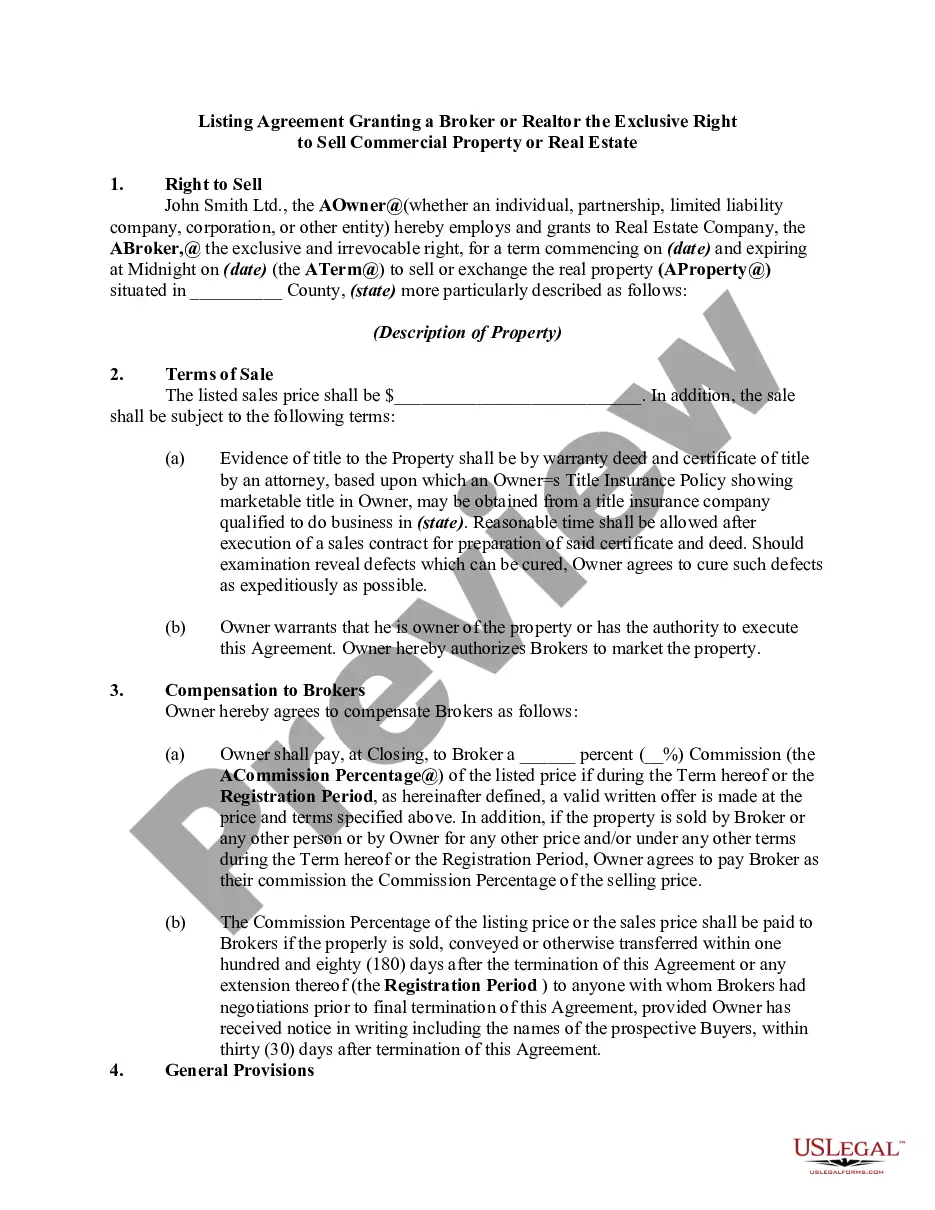
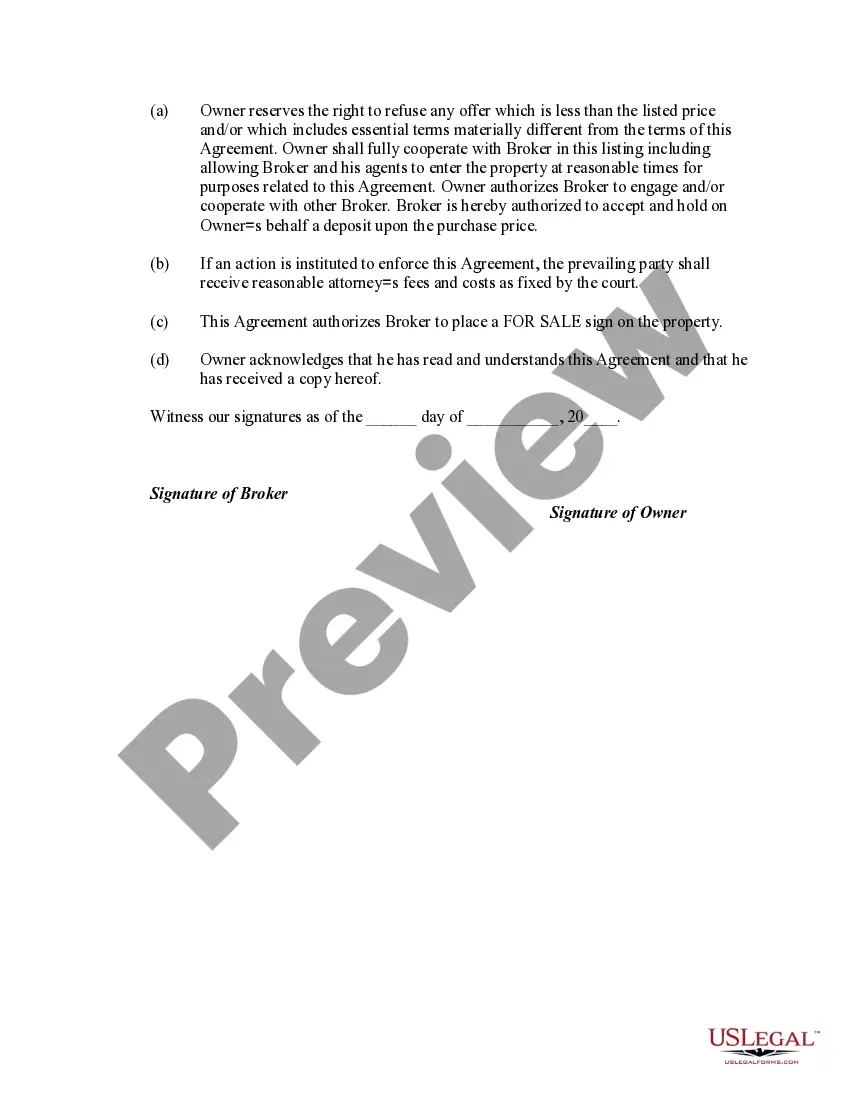
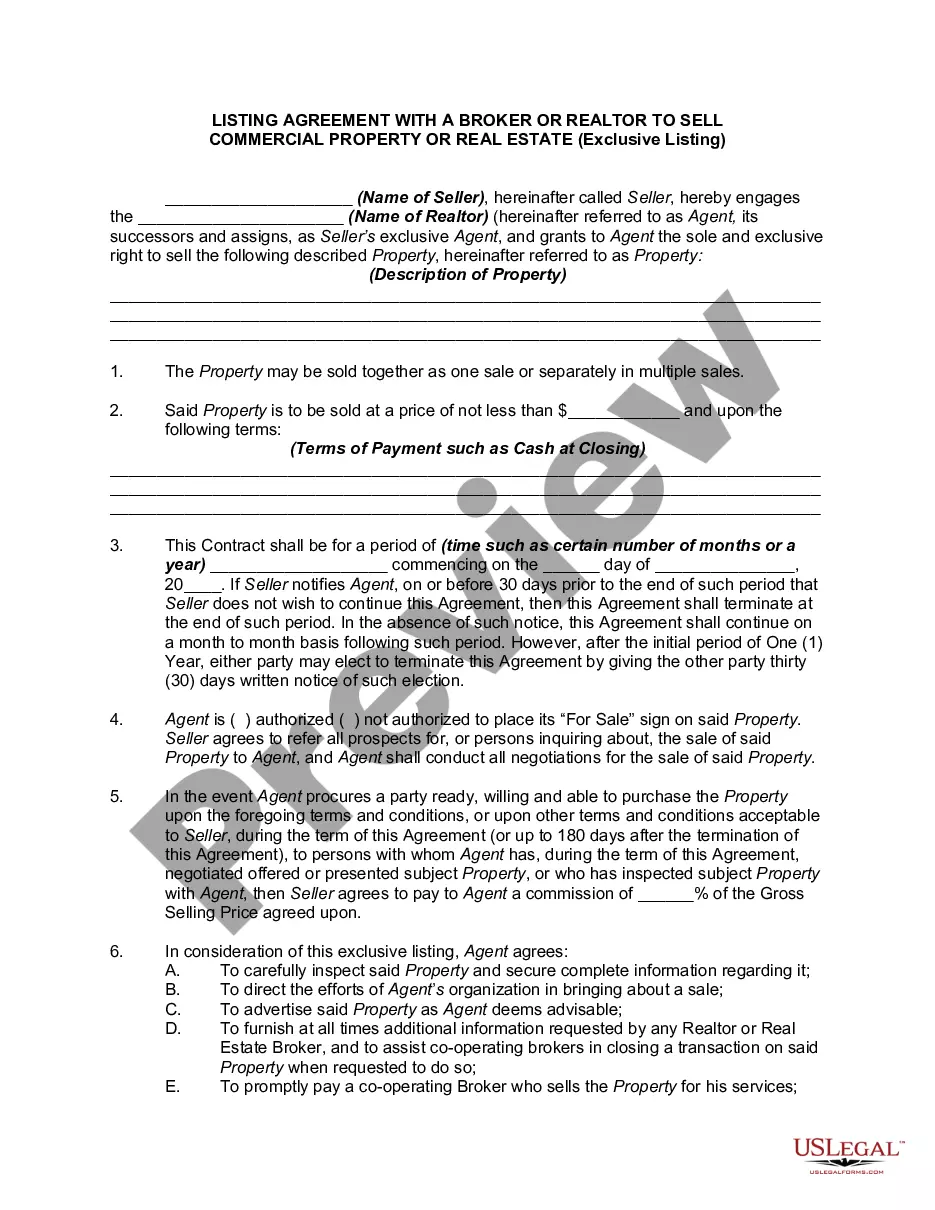
Miami-Dade Florida Listing Agreement Granting a Broker or Realtor the Exclusive Right to Sell Commercial Property or Real Estate
Description
Get your form ready online
Our built-in tools help you complete, sign, share, and store your documents in one place.
Make edits, fill in missing information, and update formatting in US Legal Forms—just like you would in MS Word.
Download a copy, print it, send it by email, or mail it via USPS—whatever works best for your next step.
Sign and collect signatures with our SignNow integration. Send to multiple recipients, set reminders, and more. Go Premium to unlock E-Sign.
If this form requires notarization, complete it online through a secure video call—no need to meet a notary in person or wait for an appointment.
We protect your documents and personal data by following strict security and privacy standards.

Make edits, fill in missing information, and update formatting in US Legal Forms—just like you would in MS Word.

Download a copy, print it, send it by email, or mail it via USPS—whatever works best for your next step.

Sign and collect signatures with our SignNow integration. Send to multiple recipients, set reminders, and more. Go Premium to unlock E-Sign.

If this form requires notarization, complete it online through a secure video call—no need to meet a notary in person or wait for an appointment.

We protect your documents and personal data by following strict security and privacy standards.
Looking for another form?
Form popularity
FAQ
Contracts can be classified into two main categories: express contracts and implied contracts. An express contract is explicitly stated through written or spoken terms, while an implied contract is formed through actions, circumstances, or conduct. Familiarity with these classifications is valuable for anyone navigating the Miami-Dade Florida Listing Agreement Granting a Broker or Realtor the Exclusive Right to Sell Commercial Property or Real Estate. It helps clarify your legal obligations and rights.
Commercial real estate in Florida can be sold by any licensed real estate sales associate. Individuals who wish to obtain a commercial real estate license in Florida must first attend and successfully complete real estate training through one of the approved real estate schools in the state.
Name so our brokerage would be ms realty inc. Now if you want sometimes you could uh put your nameMoreName so our brokerage would be ms realty inc. Now if you want sometimes you could uh put your name here next to it. So let's say you want to put uh. You put your name.
The primary difference between exclusive agency and exclusive right-to-sell relates to commission fees. In an exclusive agency listing, the seller only pays fees if the agent sells the property. In an exclusive right to sell agreement, the seller must pay realtor fees regardless of if the property is sold.
Can a residential real estate agent sell commercial properties? Yes?a licensed real estate agent can sell any type of property they'd like, including commercial and residential. Even if you choose to specialize in residential real estate, you can later try selling commercial real estate as well.
An exclusive listing means your listing won't appear on Realtor.ca right away. Rather, your agent will advertise your home only to a selected pool of buyers for a period of time before opening it up to the full market.
Exclusive agency agreements In this kind of agreement, you give exclusive rights to one agent to sell your property. This may entitle the agent to be paid commission if the property is sold during the fixed term of the agreement, even if the property is sold by you or by another agent.
Exclusive Right-to-Sell Listing: A contractual agreement under which the listing broker acts as the agent or as the legally recognized non-agency representative of the seller(s), and the seller(s) agrees to pay a commission to the listing broker, regardless of whether the property is sold through the efforts of the
How should I find a broker? In Florida, a third-party selling a business must be a licensed real estate broker.
A business guarantees they have a right to sell the goods, also known as clear title. If a third party has placed a mortgage or security on the goods, the seller has 'limited title'. This is usually because the seller owes money to the third party.