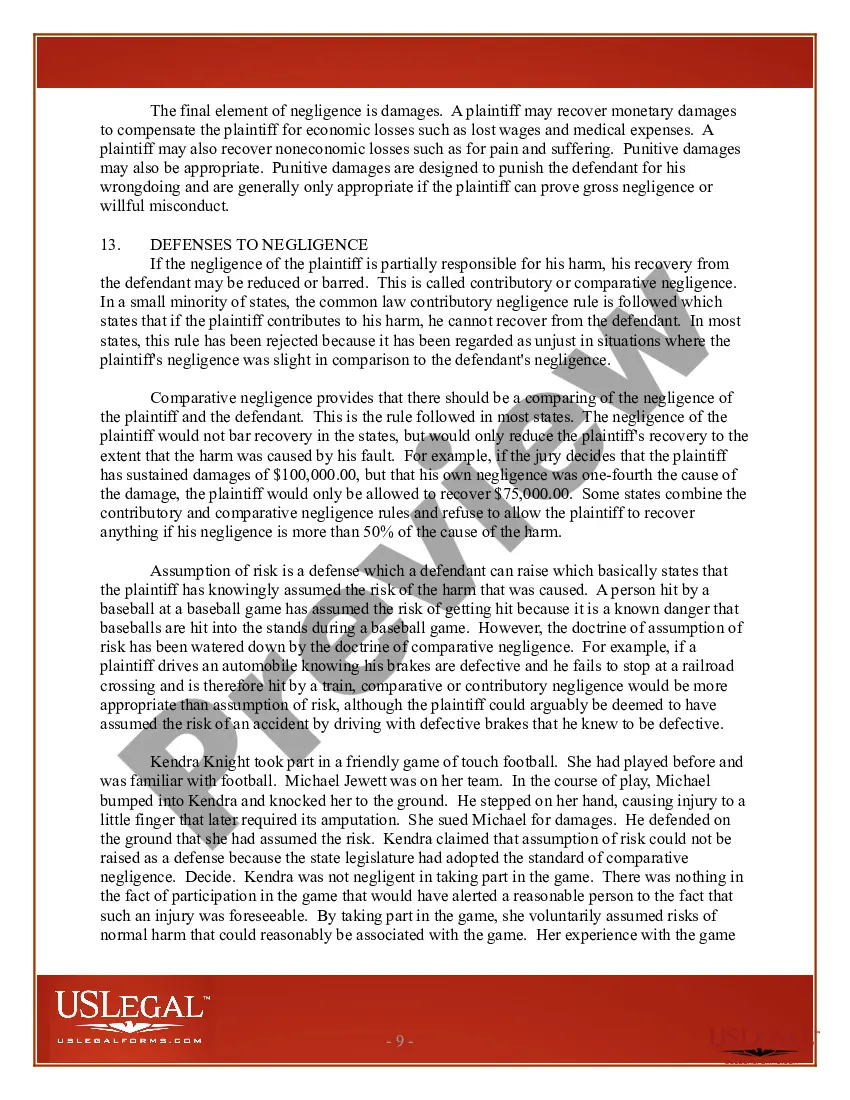
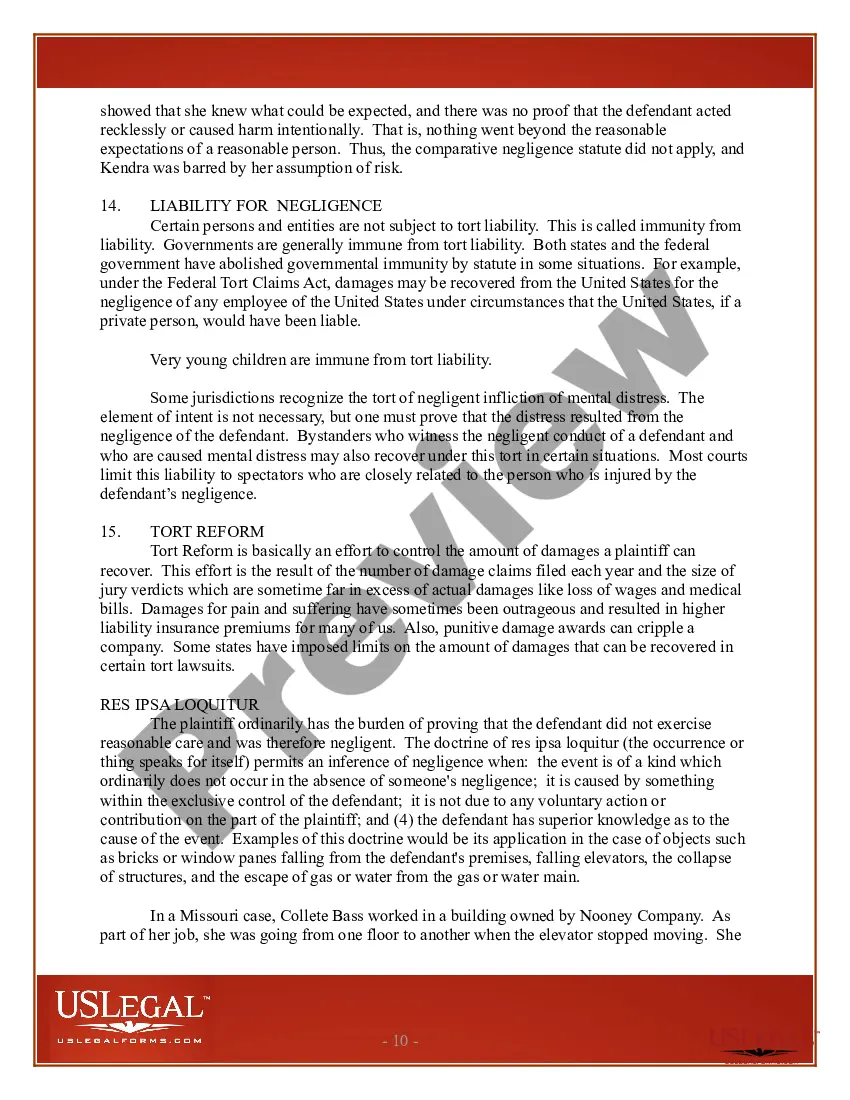
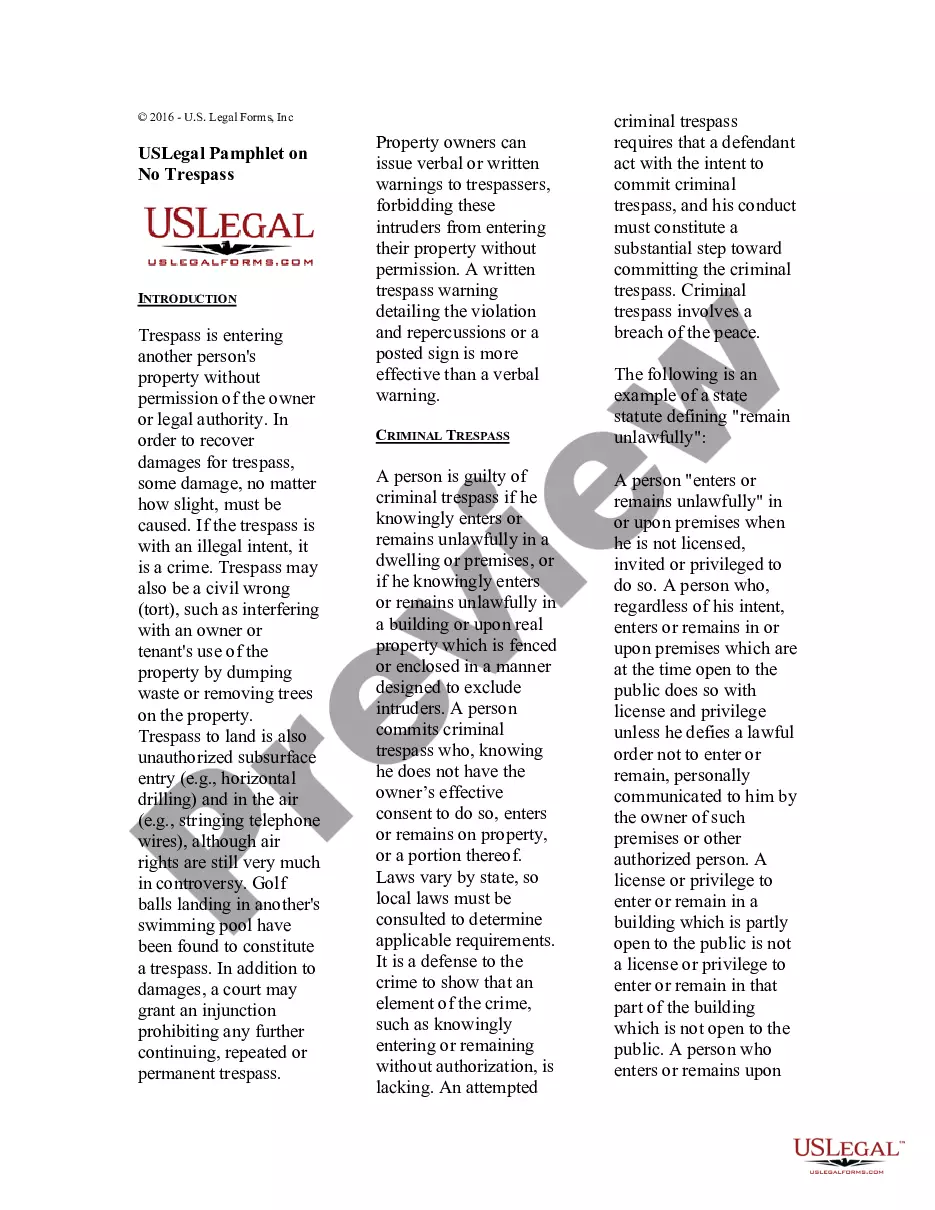
Bexar Texas USLegal Law Pamphlet on Torts
Description


Get your form ready online
Our built-in tools help you complete, sign, share, and store your documents in one place.
Make edits, fill in missing information, and update formatting in US Legal Forms—just like you would in MS Word.
Download a copy, print it, send it by email, or mail it via USPS—whatever works best for your next step.
Sign and collect signatures with our SignNow integration. Send to multiple recipients, set reminders, and more. Go Premium to unlock E-Sign.
If this form requires notarization, complete it online through a secure video call—no need to meet a notary in person or wait for an appointment.
We protect your documents and personal data by following strict security and privacy standards.

Make edits, fill in missing information, and update formatting in US Legal Forms—just like you would in MS Word.

Download a copy, print it, send it by email, or mail it via USPS—whatever works best for your next step.

Sign and collect signatures with our SignNow integration. Send to multiple recipients, set reminders, and more. Go Premium to unlock E-Sign.

If this form requires notarization, complete it online through a secure video call—no need to meet a notary in person or wait for an appointment.

We protect your documents and personal data by following strict security and privacy standards.
Looking for another form?
How to fill out USLegal Law Pamphlet On Torts?
Statutes and guidelines across different domains differ from one jurisdiction to another.
If you're not an attorney, it's simple to become confused by a range of regulations when it involves crafting legal documents.
To prevent expensive legal fees while creating the Bexar USLegal Law Pamphlet on Torts, you require a certified template valid for your locality. This is where utilizing the US Legal Forms platform becomes incredibly advantageous.
This is the simplest and most economical method to acquire current templates for any legal needs. Discover them all with just a few clicks and keep your paperwork organized with the US Legal Forms!
- Verify the content of the page to ensure you've located the correct sample.
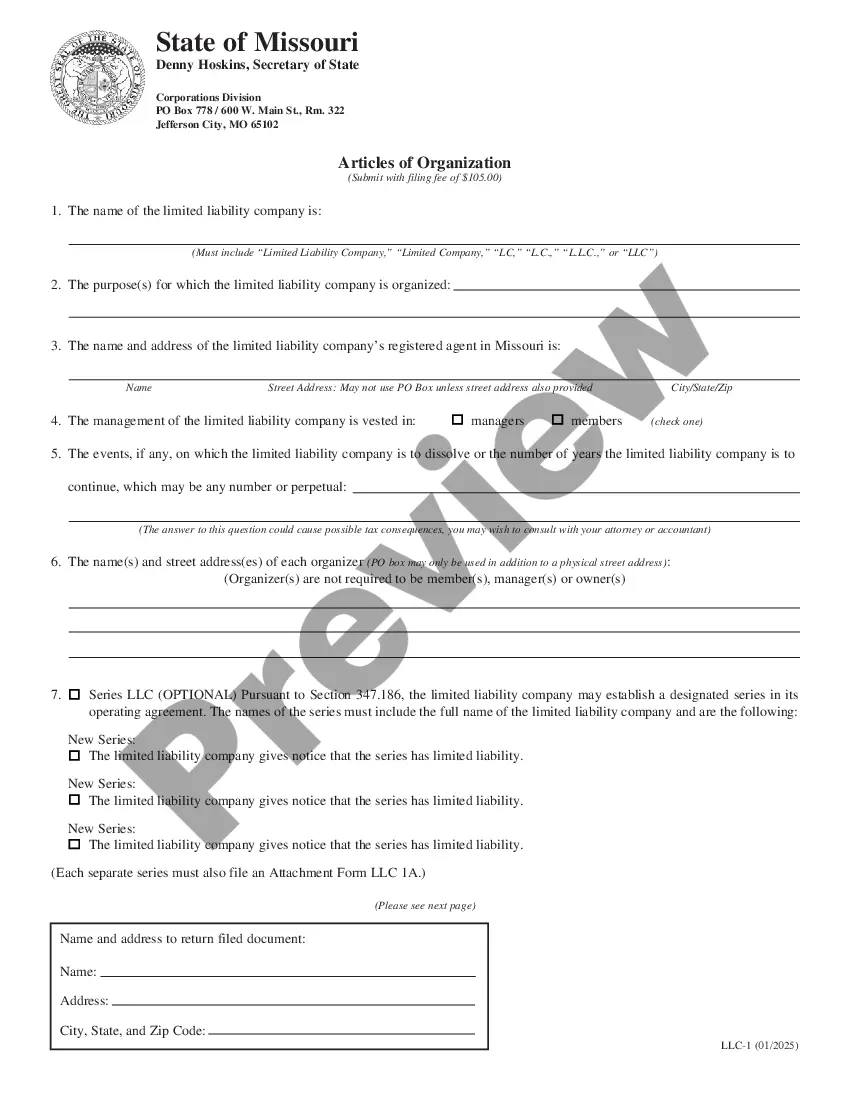
- Utilize the Preview feature or review the form description if it's provided.
- Look for another document if there are discrepancies with any of your specifications.
- Press the Buy Now button to obtain the template once you identify the suitable one.
- Choose one of the subscription plans and sign in or register for an account.
- Indicate how you wish to pay for your subscription (via credit card or PayPal).
- Select the format you prefer to save the file in and click Download.
- Fill out and sign the template in handwriting after printing it or complete everything electronically.
Form popularity
FAQ
To provide compensation for injured parties; contributes to maintaining order by discouraging retaliation by injured persons and their friends; and to satisfy our collective sense of right and wrong by providing that someone who creates harm should make things right by compensating those harmed.
The most common intentional torts for which people contact an attorney are battery, assault, and trespass to property. If you have been the victim of these common torts, please use this form to contact an intentional tort attorney for a free case evaluation.
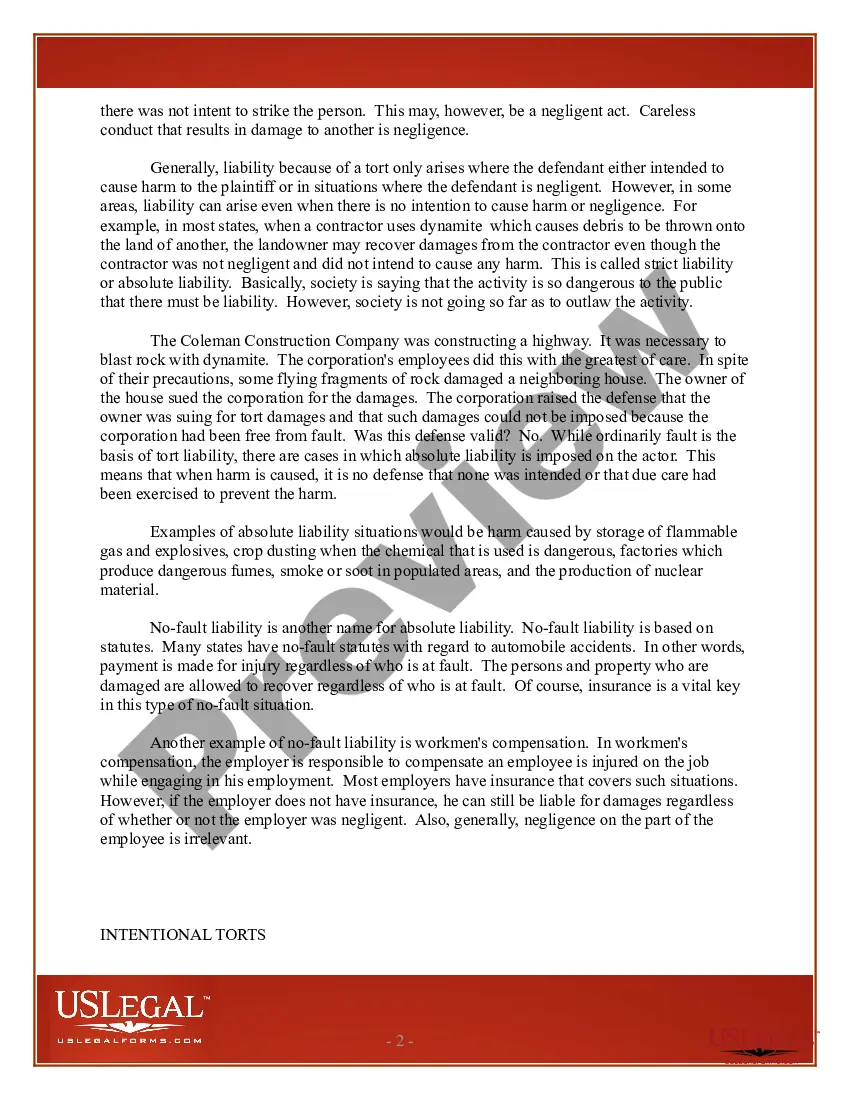
Torts fall into three general categories: intentional torts (e.g., intentionally hitting a person); negligent torts (e.g., causing an accident by failing to obey traffic rules); and strict liability torts (e.g., liability for making and selling defective products - see Products Liability).
Negligence is by far the most common type of tort. Negligence occurs when a person fails to act carefully enough and another person gets hurt as a result. For this type of case, a person must owe a duty to another person. Then, they must fail in their duty to act reasonably.
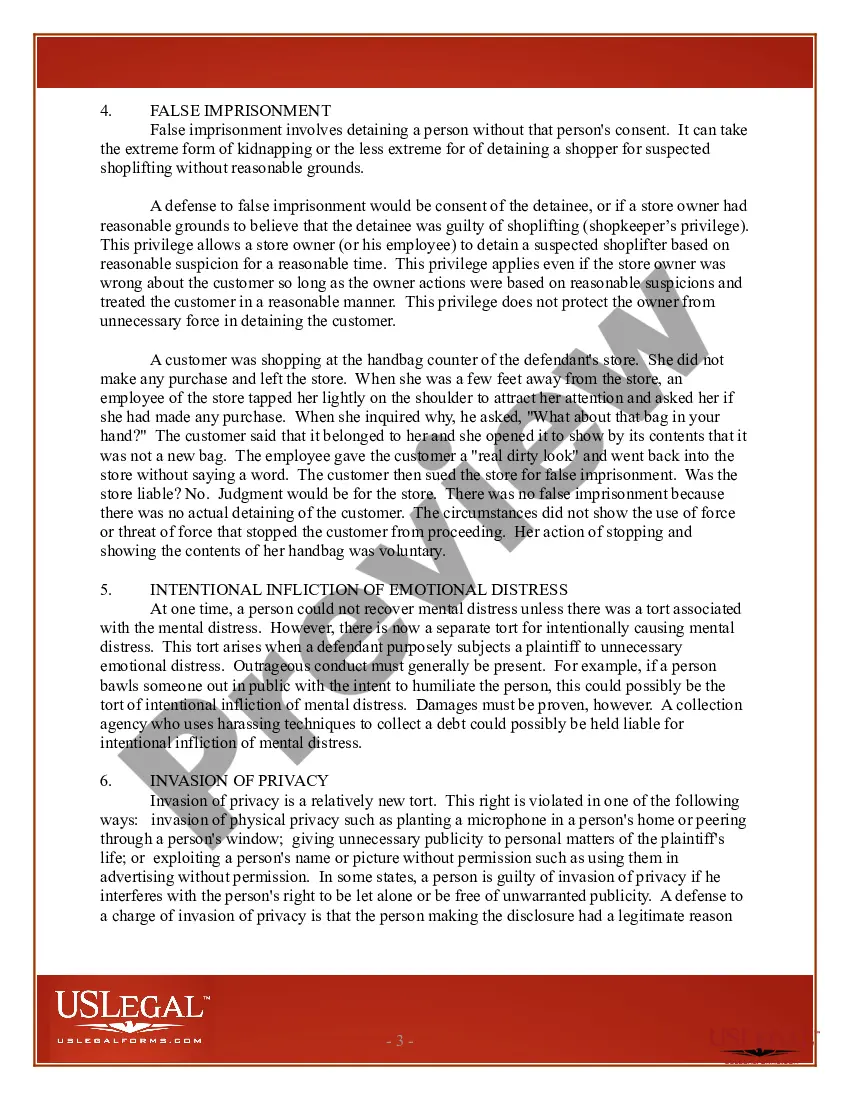
Four of them are personal: assault, battery, intentional infliction of emotional distress, and false imprisonment. The other three are trespass to chattels, trespass to property, and conversion. The most common intentional torts for which people contact an attorney are battery, assault, and trespass to property.
Four of them are personal: assault, battery, intentional infliction of emotional distress, and false imprisonment. The other three are trespass to chattels, trespass to property, and conversion. The most common intentional torts for which people contact an attorney are battery, assault, and trespass to property.
Common torts include:assault, battery, damage to personal property, conversion of personal property, and intentional infliction of emotional distress. Injury to people may include emotional harm as well as physical harm.
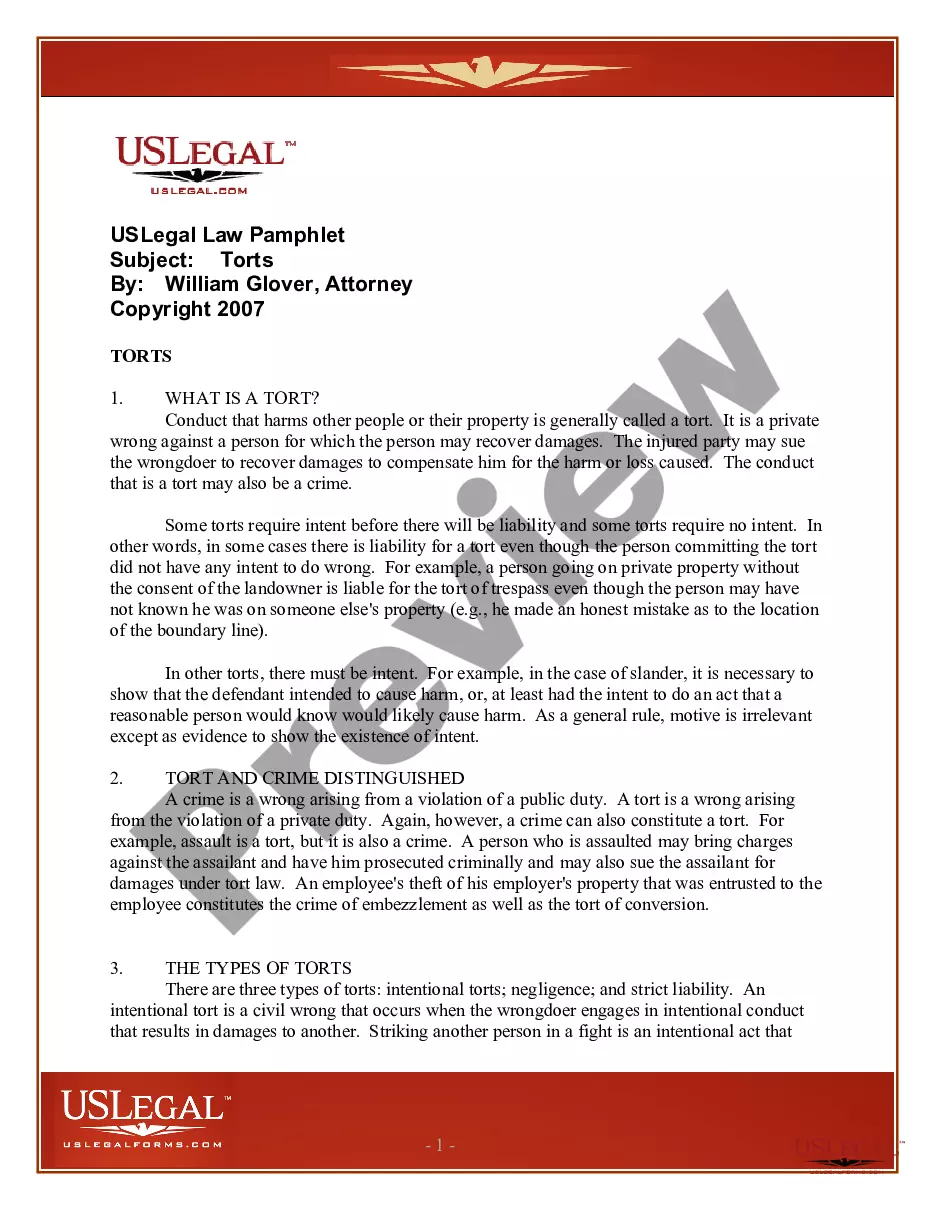
Conduct that harms other people or their property is generally called a tort. It is a private wrong against a person for which the person may recover damages. The injured party may sue the wrongdoer to recover damages to compensate him for the harm or loss caused.
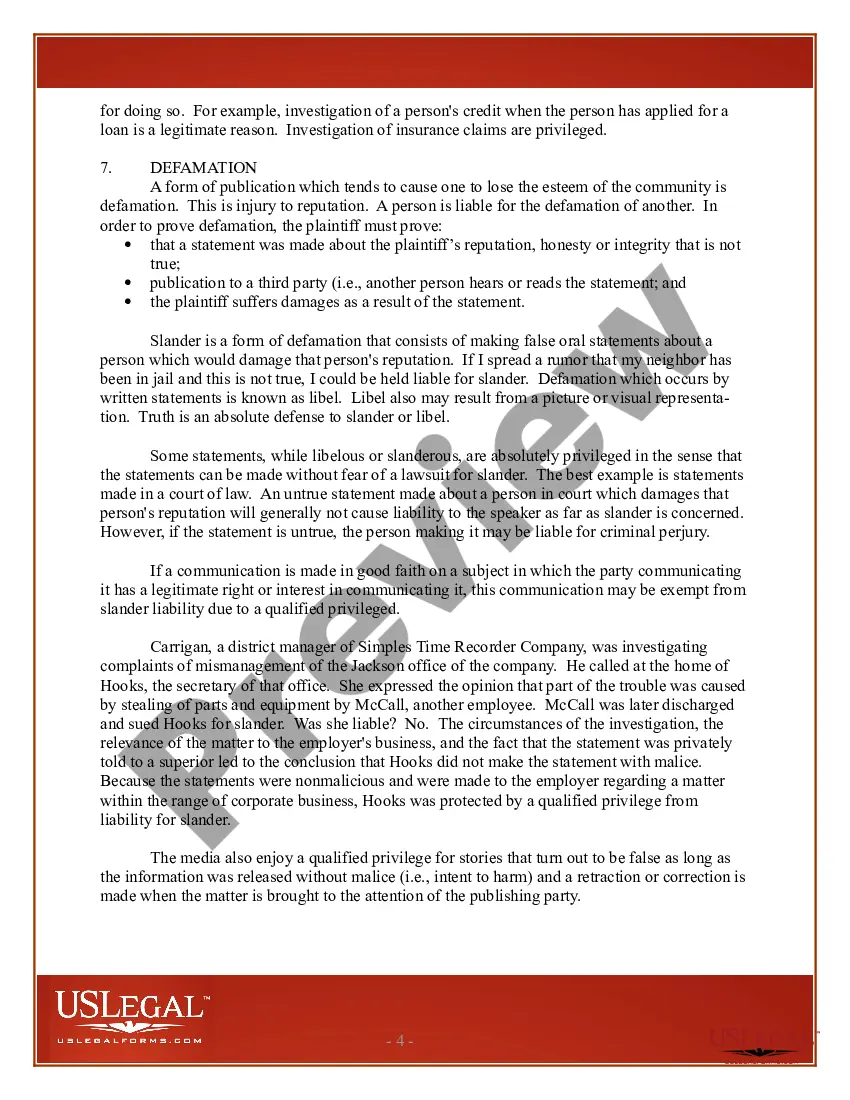
The Four Elements of a TortThe accused had a duty, in most personal injury cases, to act in a way that did not cause you to become injured.The accused committed a breach of that duty.An injury occurred to you.The breach of duty was the proximate cause of your injury.