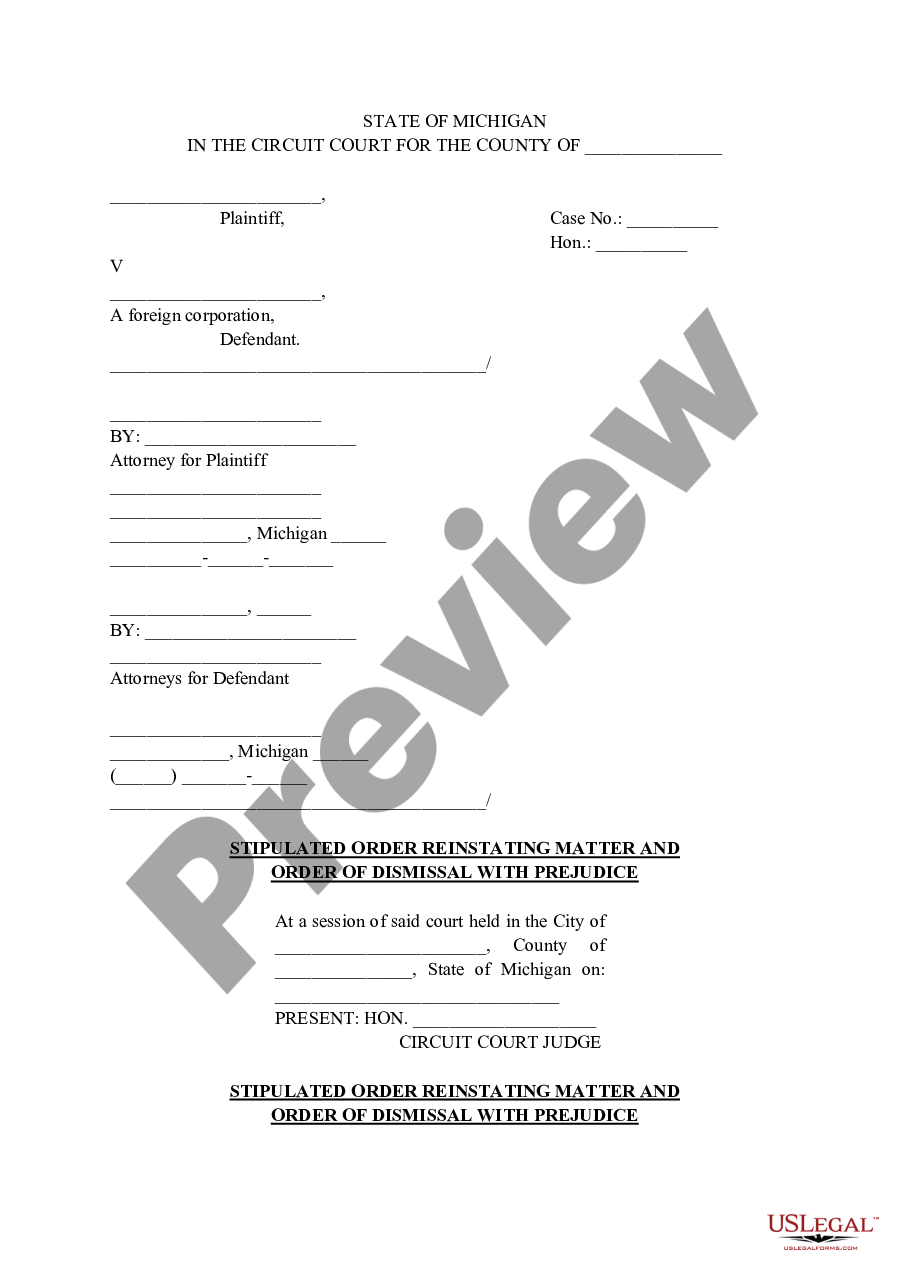
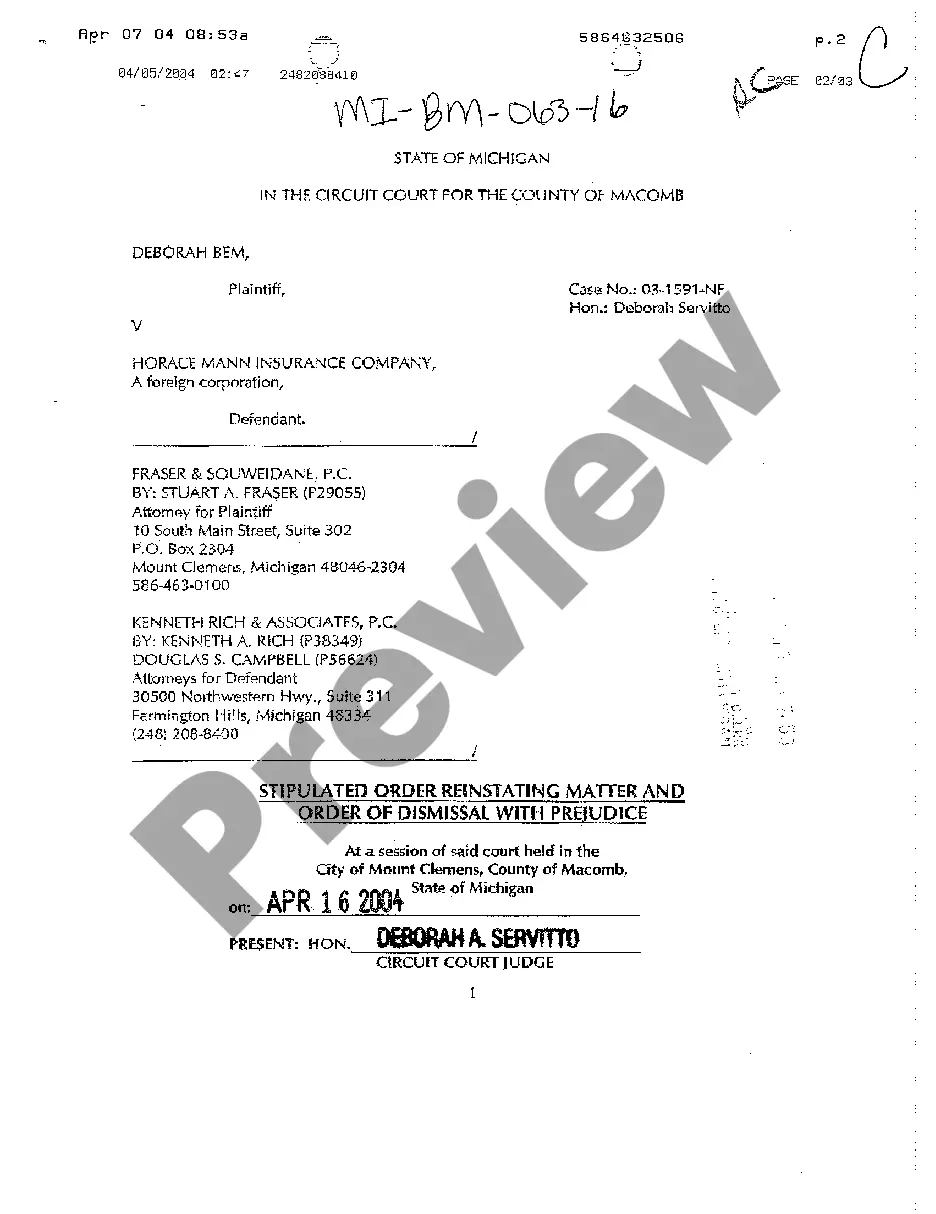
Michigan Stipulated Order Reinstating Matter And Order of Dismissal with Prejudice
About this form
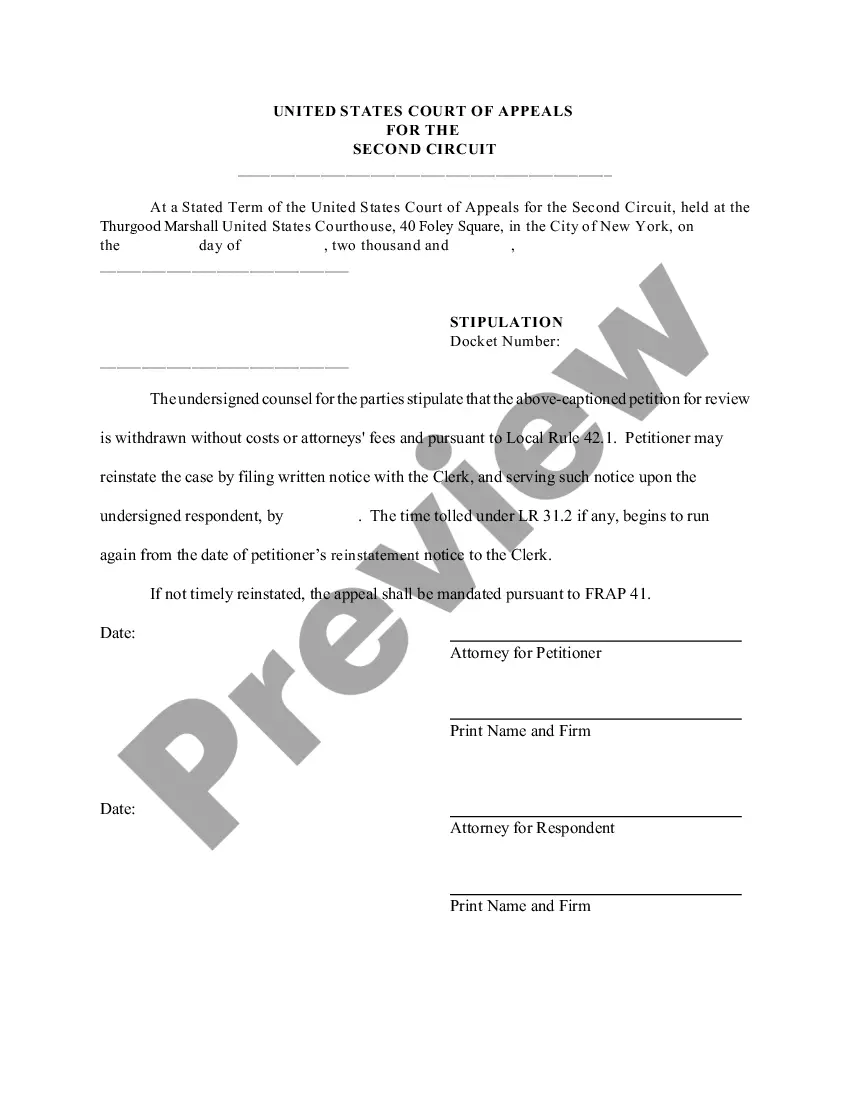
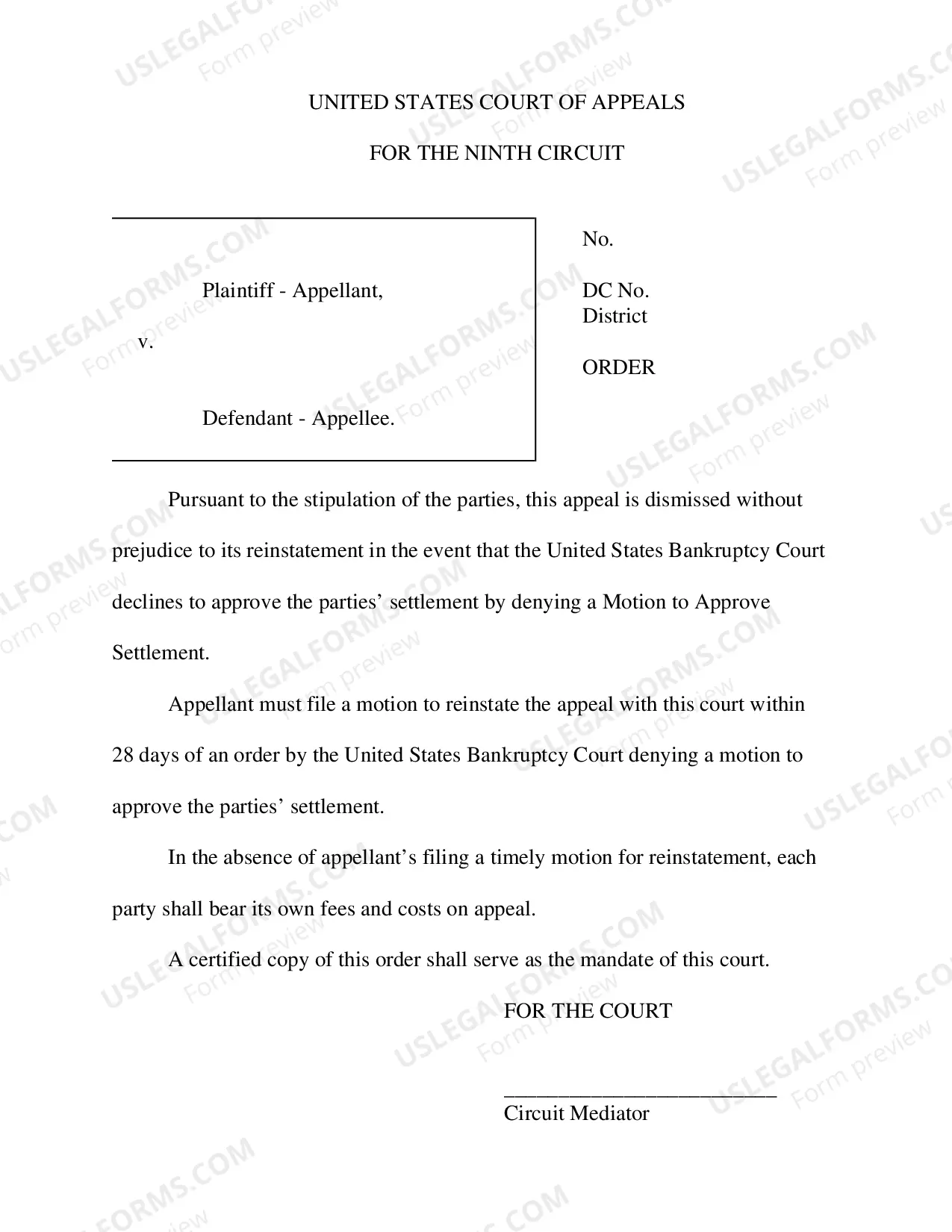
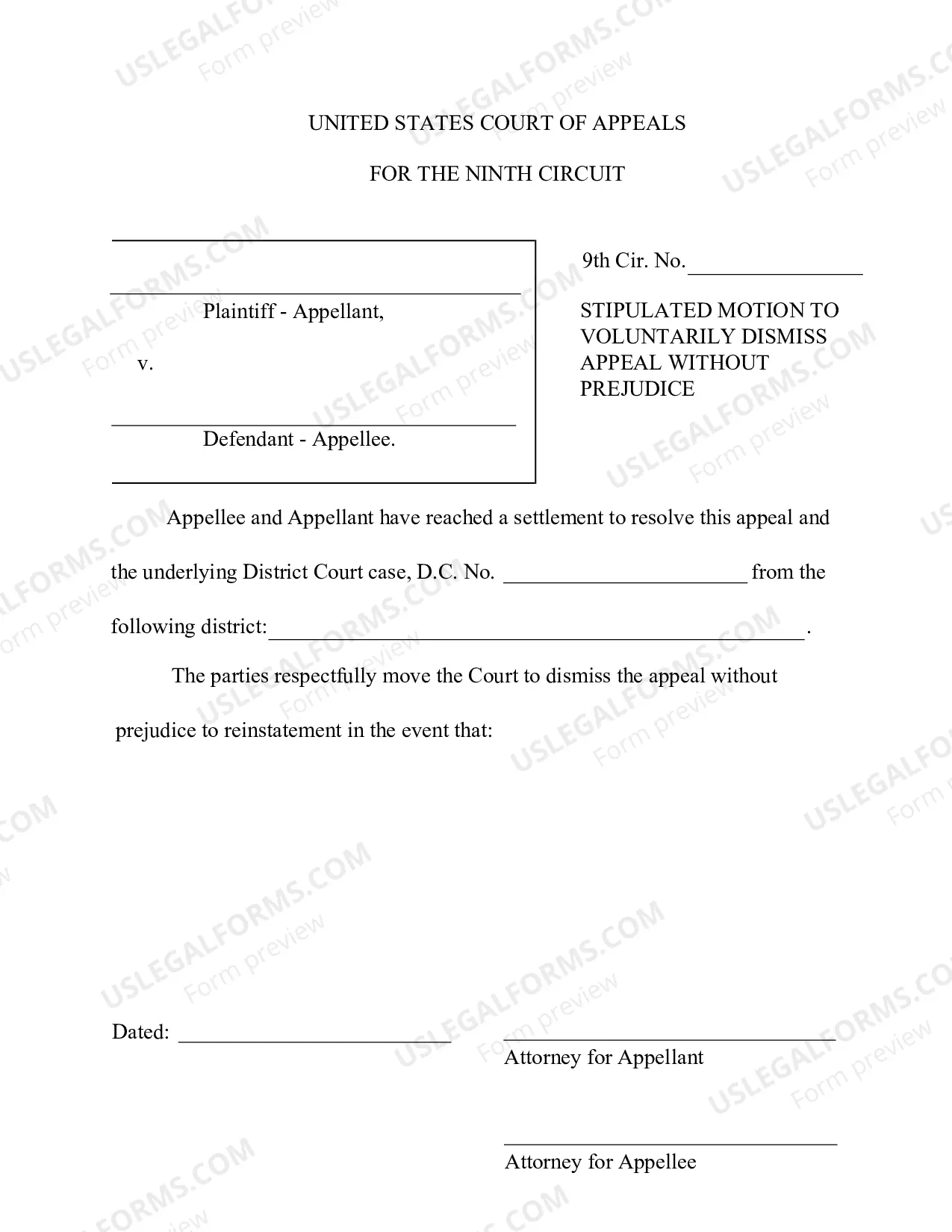
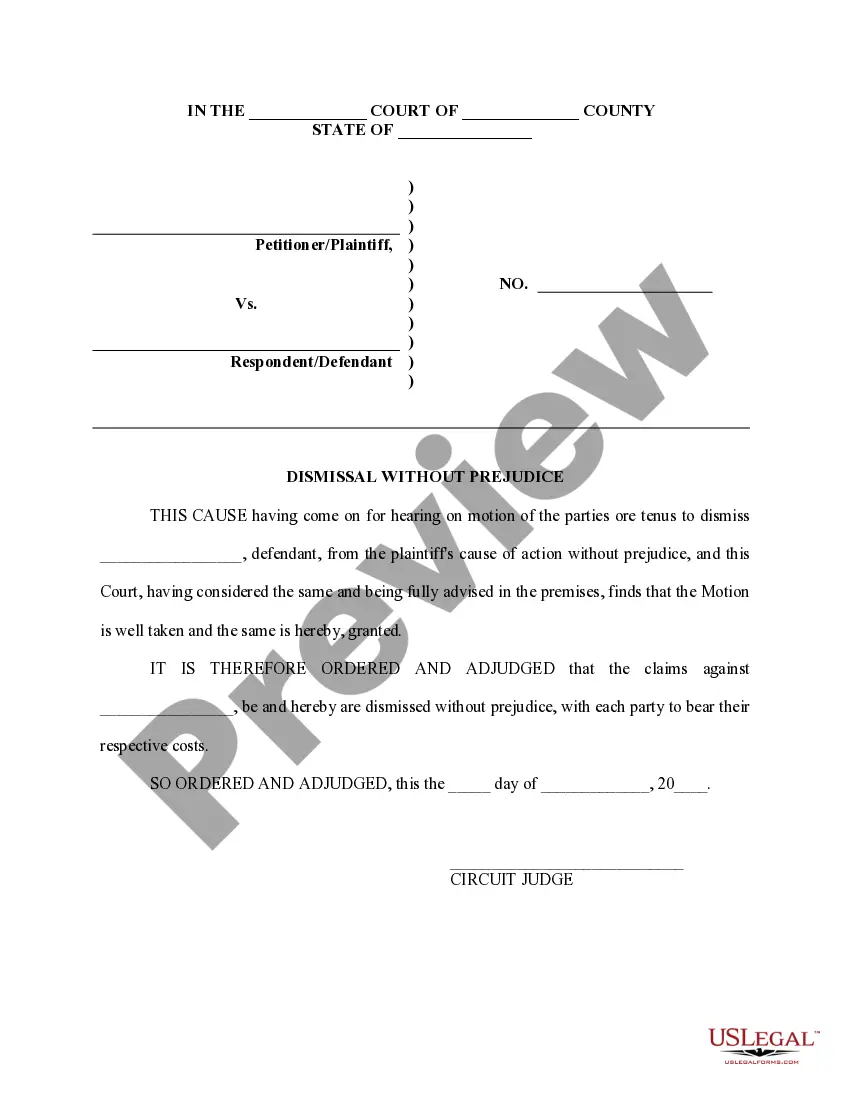
The stipulated order reinstating matter and order of dismissal with prejudice is a legal document that formalizes an agreement between parties to dismiss a case permanently. This form serves to finalize a legal dispute, ensuring that the matter cannot be reopened in court. It is distinct from other dismissal forms because it emphasizes a dismissal with prejudice, meaning the case is conclusively resolved and cannot be re-filed.
Main sections of this form
- Identification of parties involved, including plaintiff and defendant.
- Case number and jurisdiction specifics.
- Order to reinstate the matter for dismissal purposes.
- Finality clause that indicates dismissal with prejudice.
- Signatures of attorneys representing both parties.


Common use cases
This form is used when both parties in a legal dispute agree to resolve their differences and want to ensure that the case is dismissed without the possibility of reopening. It is applicable in scenarios where the plaintiff and defendant have reached a settlement or agreed upon terms that make further litigation unnecessary.
Who can use this document
- Individuals or businesses involved in a legal dispute who have come to a mutual agreement.
- Plaintiffs and defendants who wish to formally close their case without further legal action.
- Attorneys representing parties in a lawsuit who need to draft this final order for dismissal.
Completing this form step by step
- Begin by identifying the parties involved in the case, including their names and roles (plaintiff and defendant).
- Enter the case number and relevant court information at the top of the form.
- Include the date of the order being executed and the name of the presiding judge.
- Fill out the stipulation agreement terms as per the mutual understanding of both parties.
- Ensure that all required signatures from both parties' attorneys are included before submission.
Notarization guidance
This form does not typically require notarization unless specified by local law. It is important to check state-specific requirements to confirm if notarization is necessary for your case.
Get your form ready online
Our built-in tools help you complete, sign, share, and store your documents in one place.
Make edits, fill in missing information, and update formatting in US Legal Forms—just like you would in MS Word.
Download a copy, print it, send it by email, or mail it via USPS—whatever works best for your next step.
Sign and collect signatures with our SignNow integration. Send to multiple recipients, set reminders, and more. Go Premium to unlock E-Sign.
If this form requires notarization, complete it online through a secure video call—no need to meet a notary in person or wait for an appointment.
We protect your documents and personal data by following strict security and privacy standards.

Make edits, fill in missing information, and update formatting in US Legal Forms—just like you would in MS Word.

Download a copy, print it, send it by email, or mail it via USPS—whatever works best for your next step.

Sign and collect signatures with our SignNow integration. Send to multiple recipients, set reminders, and more. Go Premium to unlock E-Sign.

If this form requires notarization, complete it online through a secure video call—no need to meet a notary in person or wait for an appointment.

We protect your documents and personal data by following strict security and privacy standards.
Common mistakes
- Failing to include all parties involved in the case, leading to potential enforcement issues.
- Not providing the complete case number or jurisdiction information.
- Omitting attorney signatures, which can invalidate the order.
- Using vague language in the stipulation that may cause confusion about the dismissal terms.
Benefits of completing this form online
- Convenience of instant access to professionally drafted legal documents.
- Editable templates allow users to personalize information easily.
- Reliable formats ensure compliance with legal standards.
Looking for another form?

Form popularity
FAQ
To reopen a dismissed case, particularly one dismissed without prejudice, you typically need to file a motion with the court. However, for cases dismissed with prejudice, options are extremely limited. Engaging a legal professional can help you understand your rights and any specific procedures that may be available for your situation.
Reopening a case dismissed with prejudice is generally not possible. This type of dismissal indicates that the issue has been fully resolved and cannot be relitigated. If you find yourself in this situation, consulting with legal professionals may provide clarity on your options moving forward.
A case dismissed with prejudice is rarely reopenable. The Michigan Stipulated Order Reinstating Matter And Order of Dismissal with Prejudice signifies a conclusive end to the case. You might seek legal advice if you believe exceptional circumstances apply for reopening, but such opportunities are quite limited.
In Michigan, if a case is dismissed without prejudice, you typically have the same statute of limitations period to refile the case. This can depend on the type of claim you are pursuing. It's crucial to understand the specific timelines associated with your case to avoid losing your right to litigate.
Once a case is dismissed with prejudice, it cannot be tried again. The Michigan Stipulated Order Reinstating Matter And Order of Dismissal with Prejudice bars any future attempts to litigate the same issue. If your case faced dismissal without prejudice, you might have options to refile, but the rules differ significantly when a case is dismissed with prejudice.
A stipulation of dismissal with prejudice means that the case is permanently closed and cannot be brought back to court. This order signifies an agreement between the parties involved, indicating that all matters related to the case are resolved. Essentially, it is an acknowledgment that any claims made cannot be refiled in the future.
Generally, a case dismissed with prejudice cannot be overturned. Once the court issues a Michigan Stipulated Order Reinstating Matter And Order of Dismissal with Prejudice, it means that the matter is final and cannot be refiled. However, exceptional circumstances, such as a legal error during the dismissal, may provide a narrow avenue for appeal.
A stipulation of dismissal with prejudice is an agreement between parties to dismiss a case, barring any further claims on the matter. This means the dispute is fully resolved in a way that cannot be revisited in the future. This type of dismissal helps to bring closure and certainty to the parties involved. For anyone navigating legal challenges, services like uslegalforms can provide valuable resources for understanding the complexities of a Michigan Stipulated Order Reinstating Matter And Order of Dismissal with Prejudice.
Not necessarily, although dismissal with prejudice can suggest that the parties have reached a resolution. It may also happen due to a court ruling or failure to meet legal requirements. Whether the dismissal resulted from a settlement or other legal proceedings, the outcome prevents further litigation on the matter. Knowing how a Michigan Stipulated Order Reinstating Matter And Order of Dismissal with Prejudice affects future actions can help you plan ahead.
A case may be dismissed with prejudice for several reasons. Often, this occurs when the court finds that the claims lack merit or the parties reach an agreement that settles the matter conclusively. When a case is dismissed under these conditions, it prevents the parties from bringing the same claim back to court. Understanding the implications of a Michigan Stipulated Order Reinstating Matter And Order of Dismissal with Prejudice is essential for those involved.