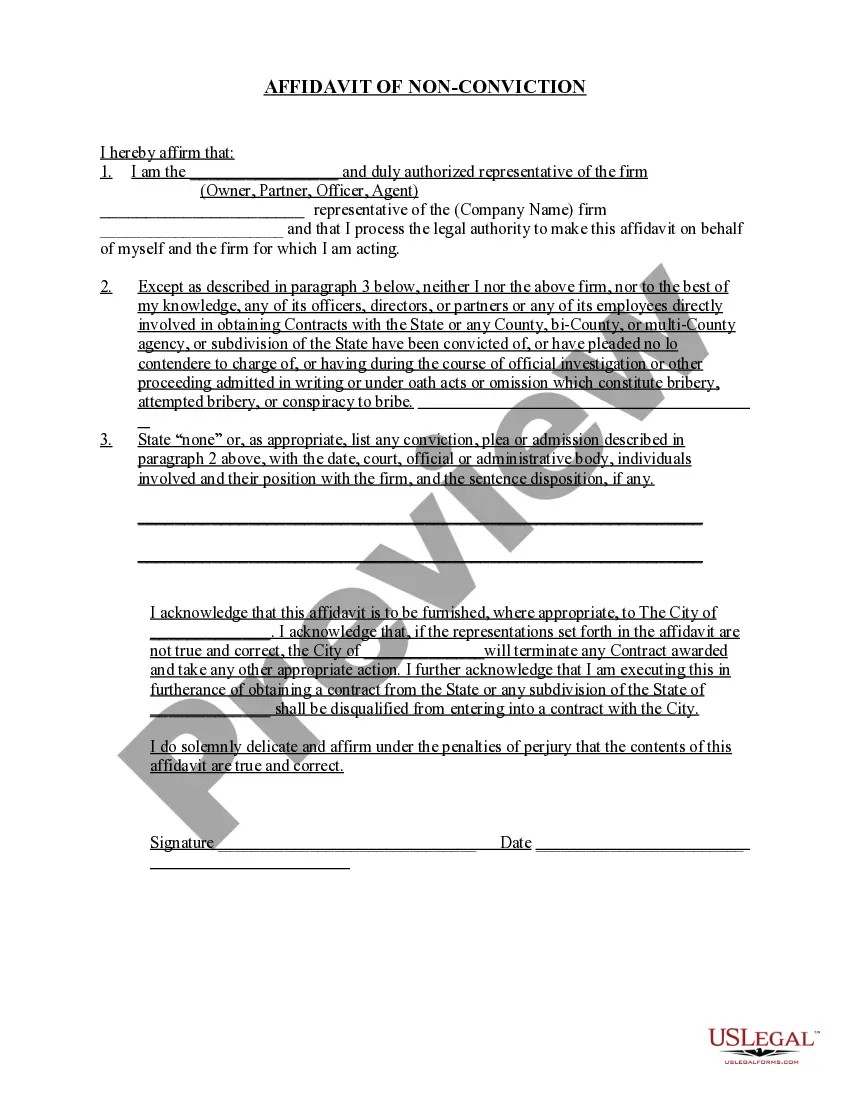
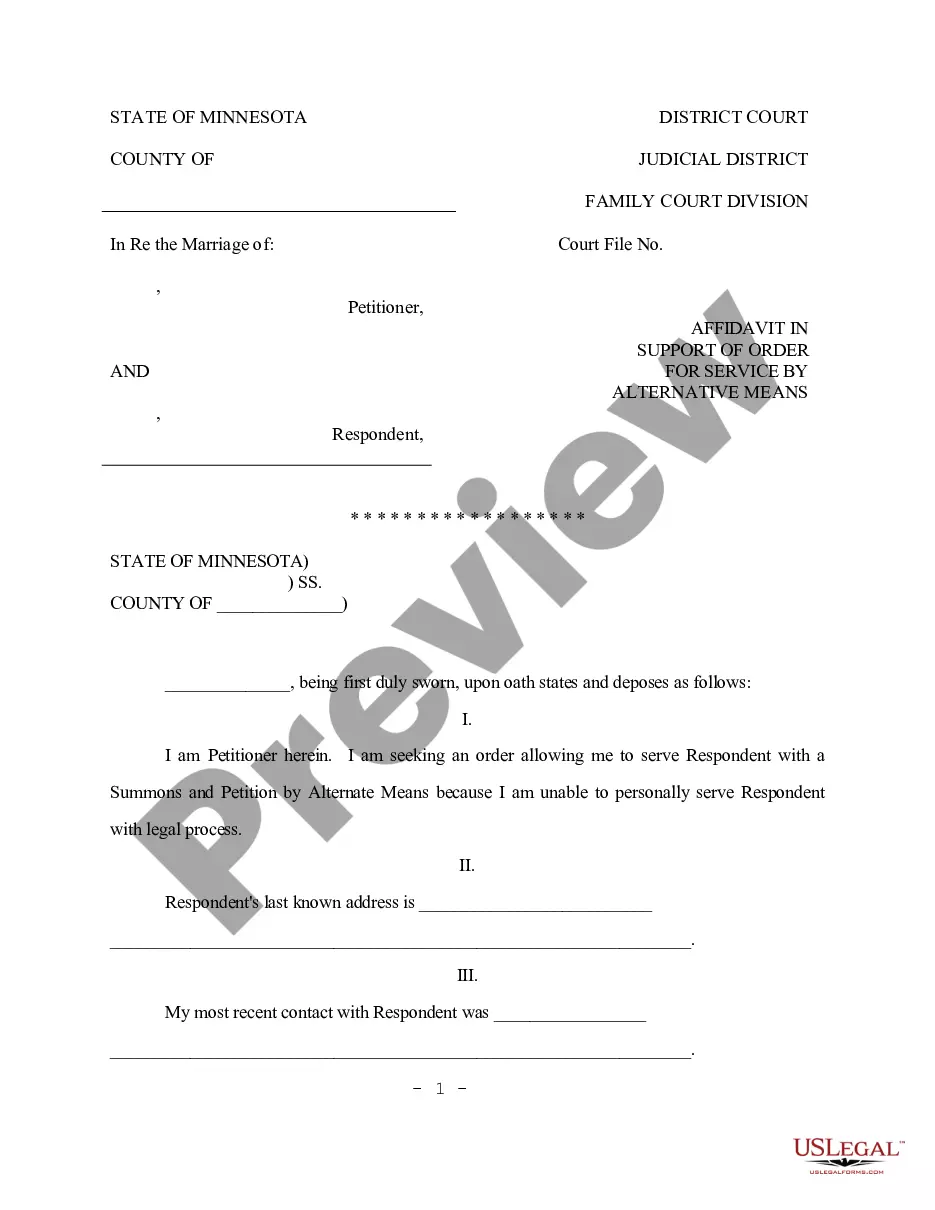
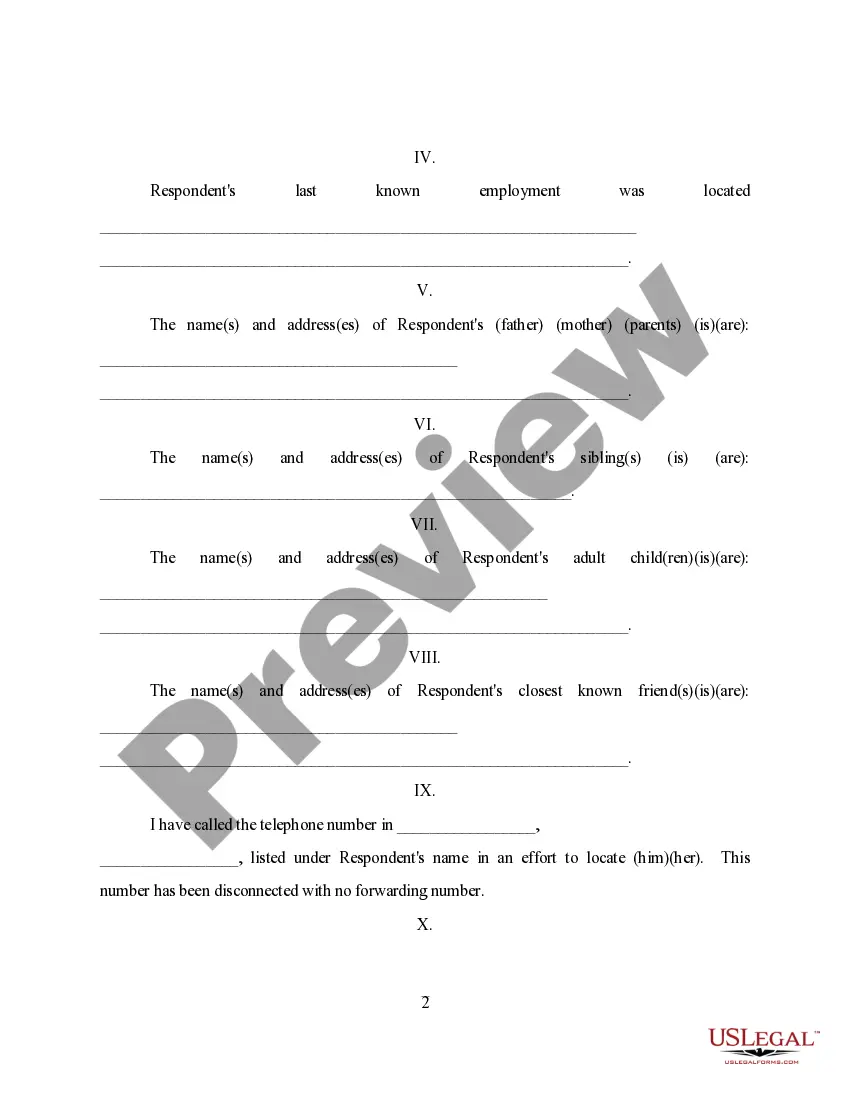
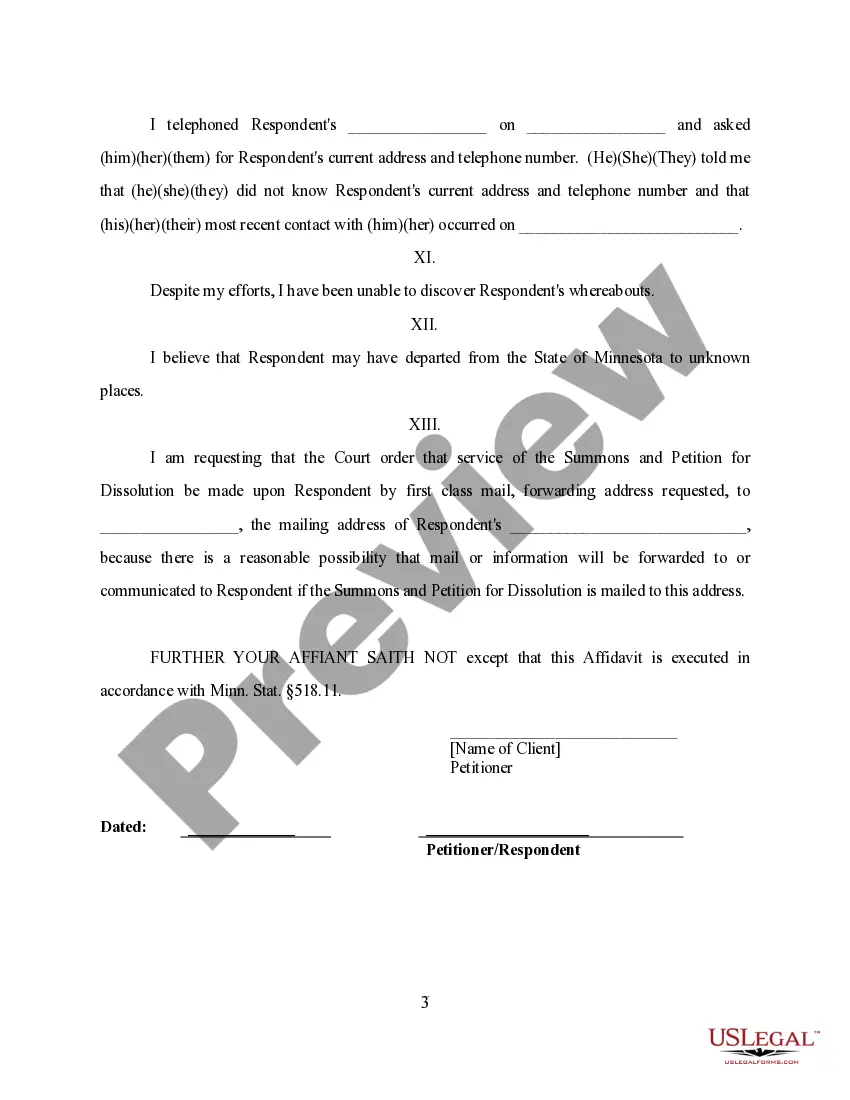
This form is an Affidavit in Support of an Order for Service by Alternate Means. The petitioner is seeking an order which will allow him/her to serve respondent with a summons and petition by alternate means because he/she is unable to personally serve the respondent with legal process.
Minneapolis Minnesota Motion Requesting Authority to Serve Process By Alternate Means
State:
Minnesota
City:
Minneapolis
Control #:
MN-8386D
Format:
Word;
Rich Text
61 downloads
Description
Free preview
Get your form ready online
Our built-in tools help you complete, sign, share, and store your documents in one place.
Built-in online Word editor
Make edits, fill in missing information, and update formatting in US Legal Forms—just like you would in MS Word.
Export easily
Download a copy, print it, send it by email, or mail it via USPS—whatever works best for your next step.
E-sign your document
Sign and collect signatures with our SignNow integration. Send to multiple recipients, set reminders, and more. Go Premium to unlock E-Sign.
Notarize online 24/7
If this form requires notarization, complete it online through a secure video call—no need to meet a notary in person or wait for an appointment.
Store your document securely
We protect your documents and personal data by following strict security and privacy standards.

Make edits, fill in missing information, and update formatting in US Legal Forms—just like you would in MS Word.

Download a copy, print it, send it by email, or mail it via USPS—whatever works best for your next step.

Sign and collect signatures with our SignNow integration. Send to multiple recipients, set reminders, and more. Go Premium to unlock E-Sign.

If this form requires notarization, complete it online through a secure video call—no need to meet a notary in person or wait for an appointment.

We protect your documents and personal data by following strict security and privacy standards.
Looking for another form?


How to fill out Minnesota Motion Requesting Authority To Serve Process By Alternate Means?
Locating validated forms tailored to your local regulations can be difficult unless you utilize the US Legal Forms repository.
It’s an online anthology of over 85,000 legal documents catering to both personal and business requirements as well as various real-life contexts.
All the files are accurately organized by category and jurisdiction, making it simple to find the Minneapolis Minnesota Affidavit Requesting Authority to Serve Process By Alternate Means.
Maintaining organized paperwork that adheres to legal standards is crucial. Utilize the US Legal Forms library to have vital document templates readily available for any obligations at your fingertips!
- Review the Preview mode and form description.
- Ensure you’ve chosen the correct one that fulfills your requirements and aligns perfectly with your local jurisdiction standards.
- Look for another template, if necessary.
- If you notice any discrepancies, employ the Search tab above to find the appropriate one.
- If it meets your needs, proceed to the next stage.
Form popularity
FAQ
Unless specifically required by court rule, a pleading, motion, affidavit, or other document filed with a court of the Minnesota judicial branch, or presented to a judge or judicial officer in support of a request for a court order, warrant, or other relief, is not required to be notarized.
If production or inspection is made at a time or place, in a manner, or to an extent and scope, different from that commanded in the subpoena, the party issuing the subpoena must give notice to all parties to the action at least seven days in advance of the rescheduled production.
Criminal Penalties for Committing Perjury in Minnesota For instance, if a person commits perjury when applying for an explosives permit or license or in a trial for a felony charge, they could face a fine of up to $14,000, a prison sentence of up to seven years, or both.
Service by mail shall be made only by the sheriff or by any other person who is at least 18 years of age who is not a party to the proceeding. Pursuant to Minnesota Statutes 2006, section 518A. 46, subdivision 2, paragraph (c), clause (4), an employee of the county agency may serve documents on the parties.
Only a Court Administrator or an attorney can issue a subpoena. If you are representing yourself and you want to get a subpoena, talk to the Court Administrator where your case is filed. Each court has its own steps to get a subpoena. You can get a subpoena in person at the courthouse or sometimes by mail.
Service by mail shall be made only by the sheriff or by any other person who is at least 18 years of age who is not a party to the proceeding. Pursuant to Minnesota Statutes 2006, section 518A. 46, subdivision 2, paragraph (c), clause (4), an employee of the county agency may serve documents on the parties.
Requirements to Become a Process Server in Minnesota Unless otherwise ordered by the court, the sheriff or any other person not less than 18 years of age and not a party to the action, may make service of a summons or other process.
An affidavit is a document written statement filed by an affiant as evidence in court. In order to be admissible, affidavits must be notarized by a notary public. There are two types of judicial notarizations: an acknowledgement and a jurat.