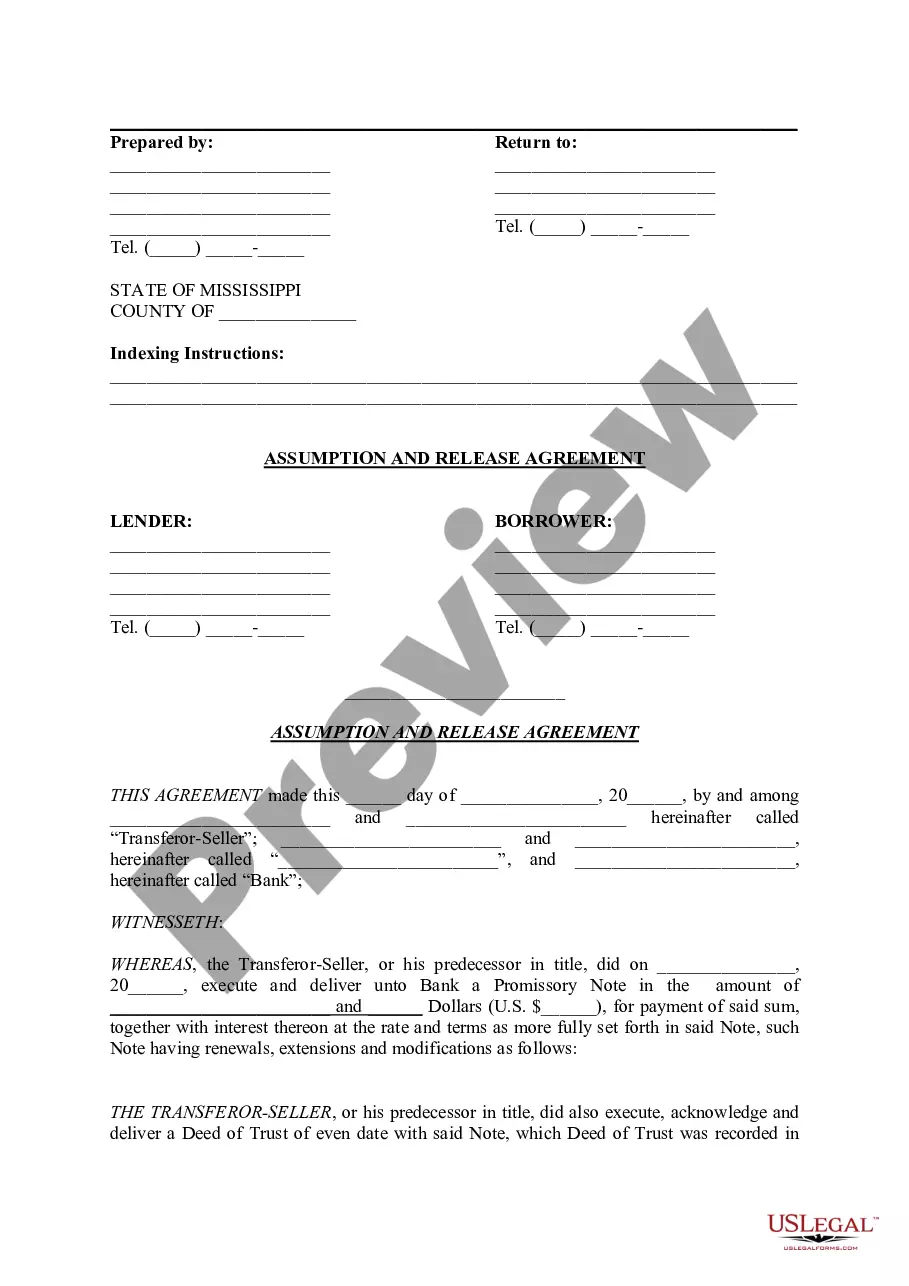
Louisiana Middle District Bankruptcy Guide and Forms Package for Chapters 7 or 13
What is this form?
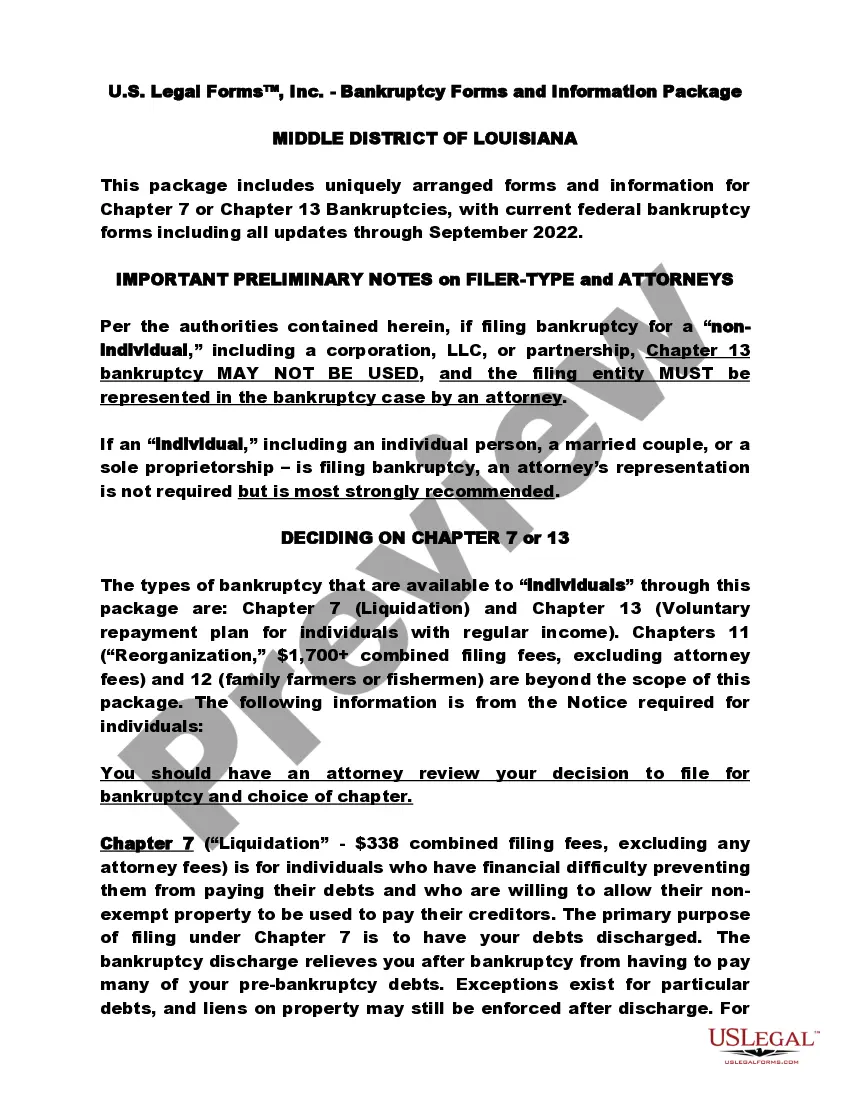
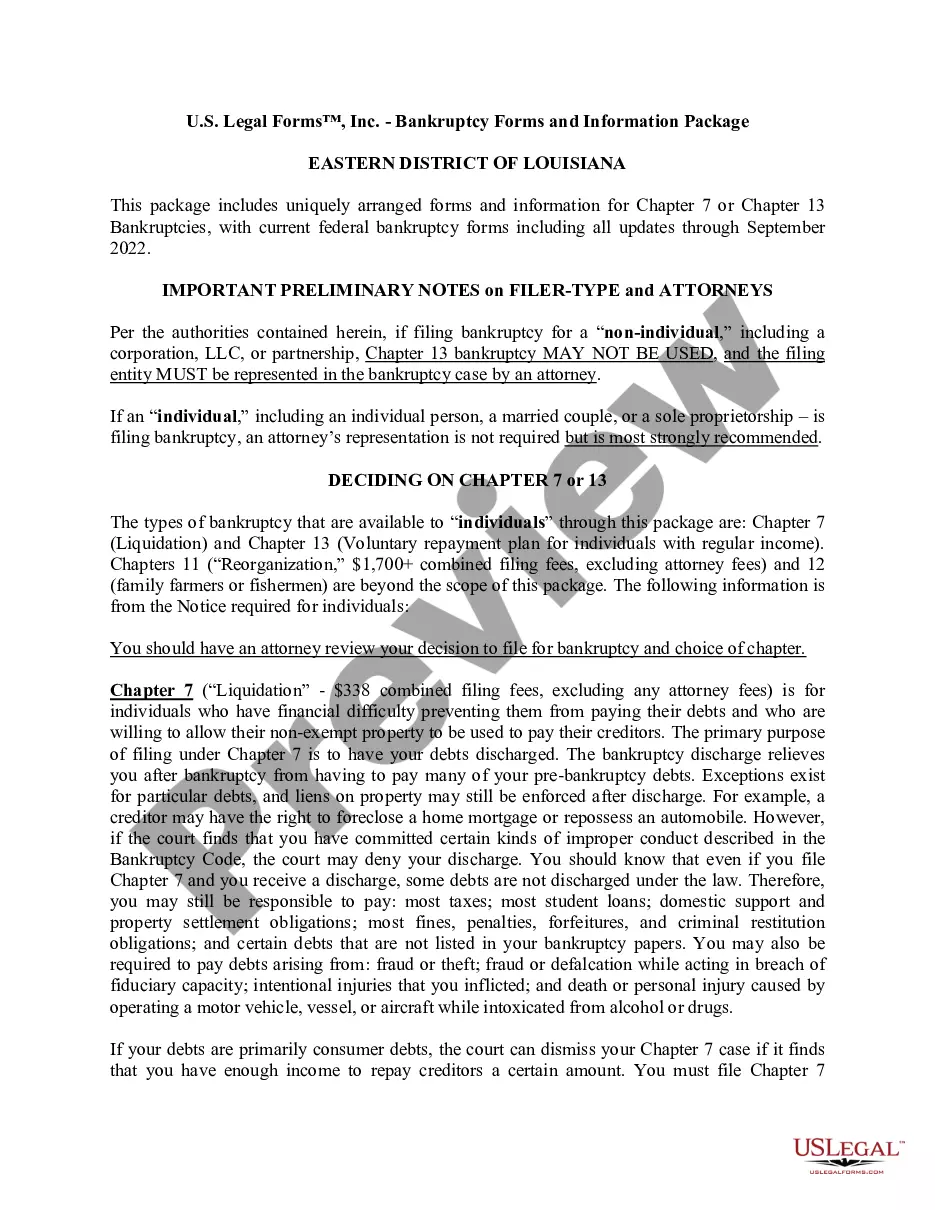
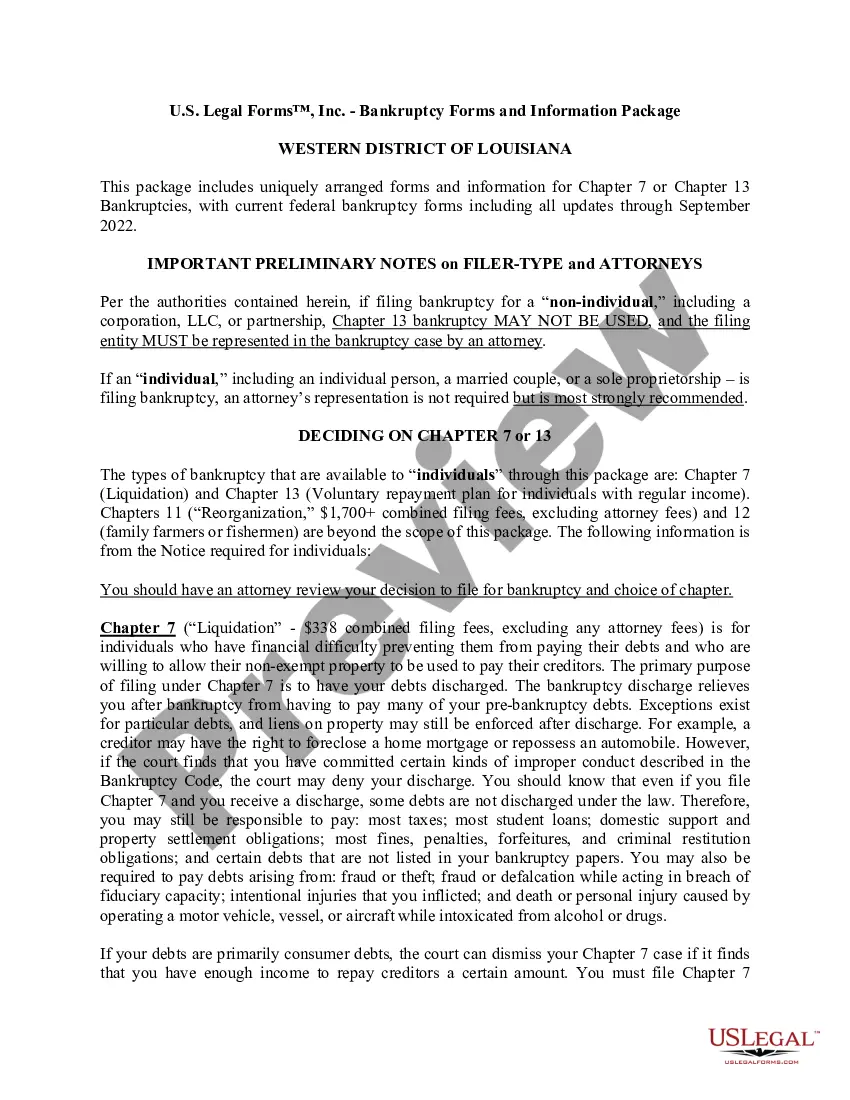
The Louisiana Middle District Bankruptcy Guide and Forms Package for Chapters 7 or 13 provides a comprehensive set of legal documents for individuals filing for bankruptcy in Louisiana. This package includes all necessary forms and detailed instructions tailored for both Chapter 7 and Chapter 13 bankruptcies, allowing users to navigate the bankruptcy process effectively and understand their options. Unlike other forms, this package specifically addresses the rules and procedures unique to Louisiana's Middle District, ensuring compliance with local regulations.
Key parts of this document
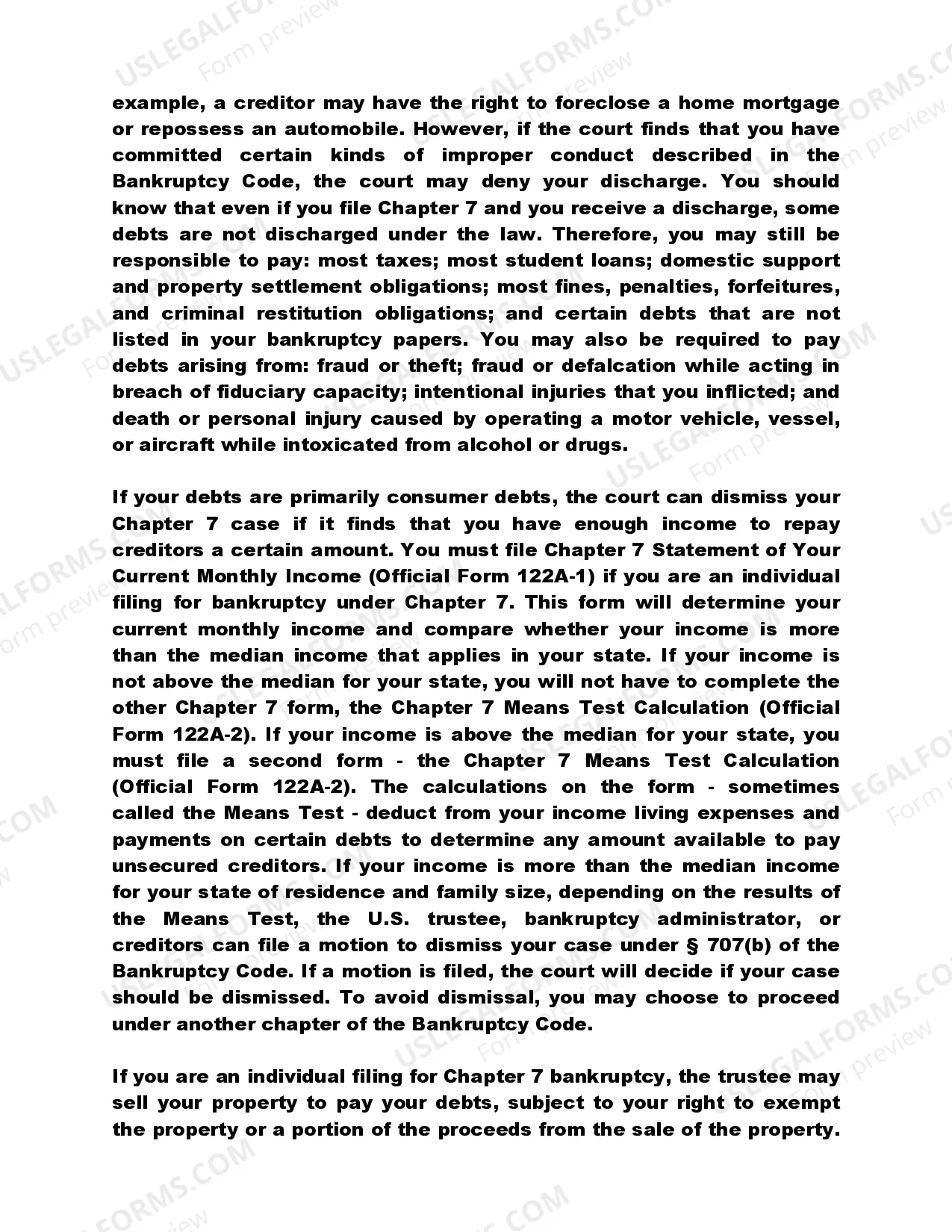
- Chapter 7 Statement of Your Current Monthly Income (Official Form 122A-1)
- Chapter 7 Means Test Calculation (Official Form 122A-2)
- Schedule C - The Property You Claim as Exempt (Official Form 106C)
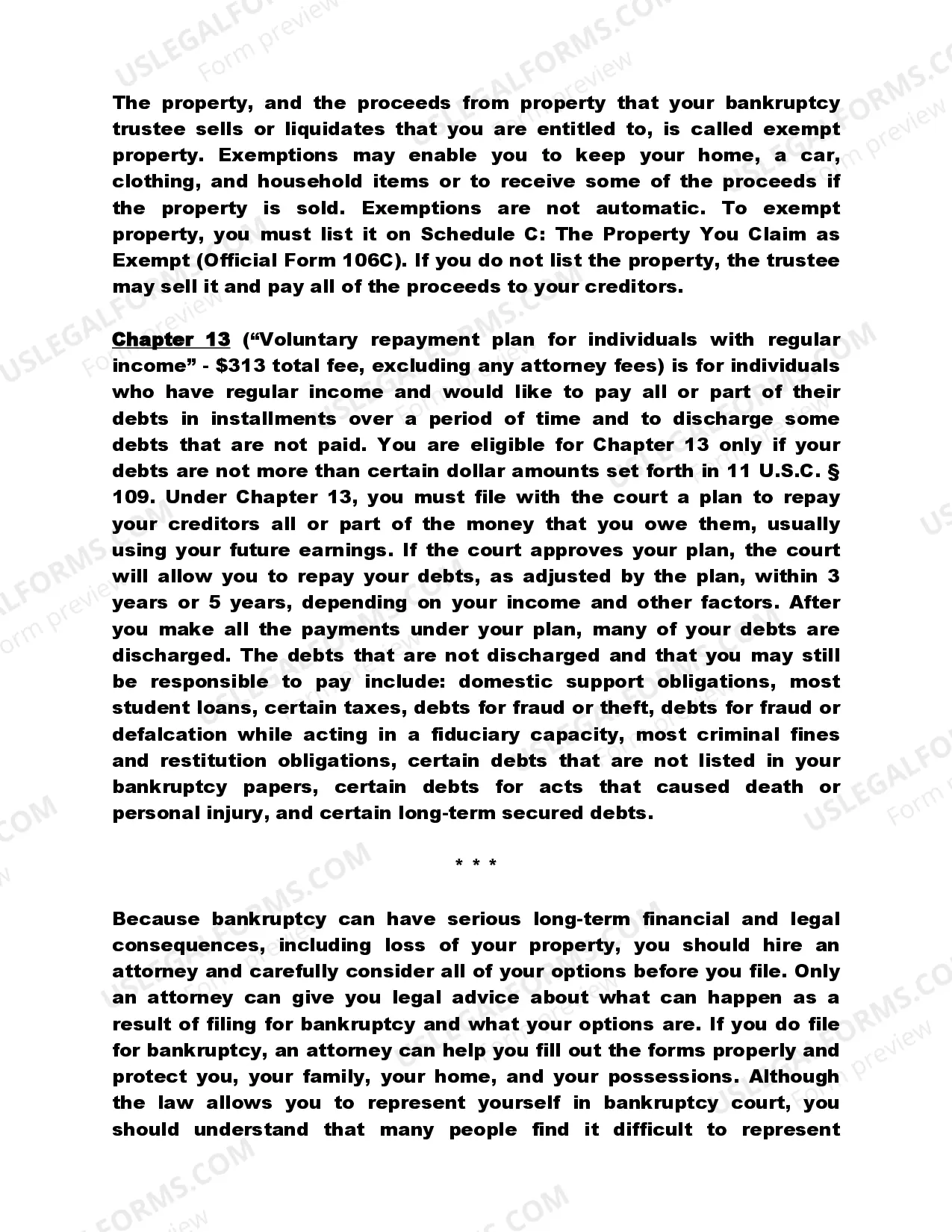
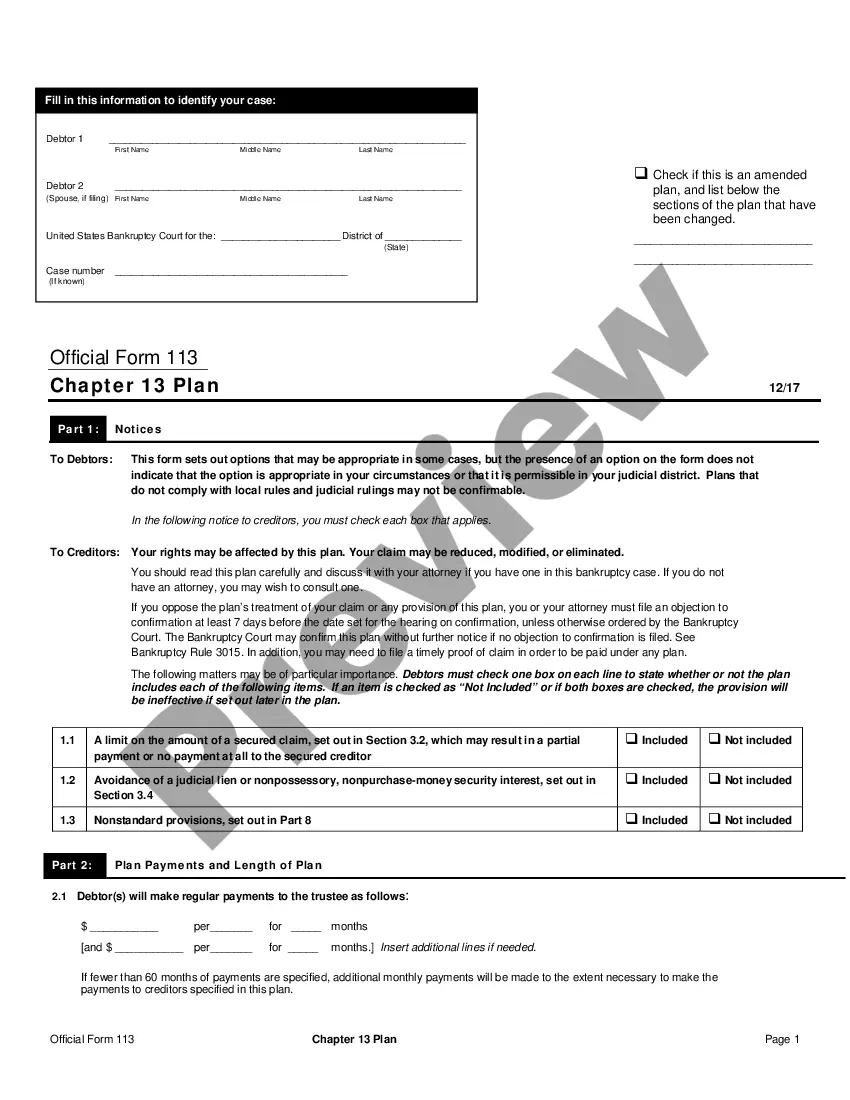
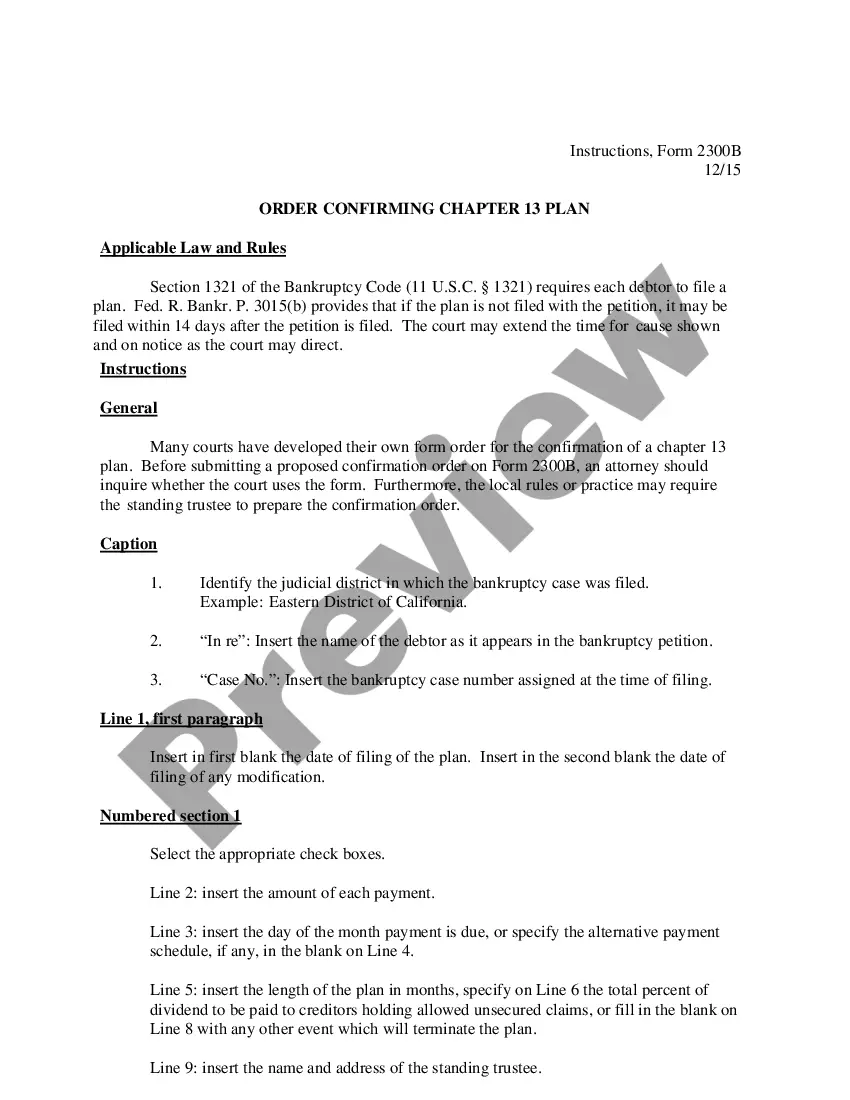
- Chapter 13 repayment plan to propose to the court
- Resources and instructions for filing and representing oneself or hiring an attorney
When this form is needed
This form package is essential if you are considering filing for bankruptcy in Louisiana under Chapter 7 or Chapter 13. Use this package when you need to legally discharge debts or set up a repayment plan. These forms are particularly useful for individuals facing financial difficulties, allowing them to take the appropriate legal steps to manage their debts and financial obligations.
Who should use this form
- Individuals or married couples filing for bankruptcy as individuals.
- Sole proprietors looking to address personal business debts.
- Those seeking to understand their bankruptcy options with a comprehensive guide.
- Individuals who do not have an attorney but wish to ensure correct filing.
Instructions for completing this form
- Begin by determining if you qualify for Chapter 7 or Chapter 13 bankruptcy.
- Fill out the Chapter 7 Statement of Your Current Monthly Income to evaluate your financial standing.
- Complete the Chapter 7 Means Test Calculation if your income exceeds the median for your state.
- Prepare your Chapter 13 repayment plan, outlining how you plan to repay your creditors.
- List any property you wish to claim as exempt on Schedule C and ensure all necessary forms are included.
- Submit your completed forms to the appropriate bankruptcy court along with any required fees.
Notarization guidance
Notarization is not commonly needed for this form. However, certain documents or local rules may make it necessary. Our notarization service, powered by Notarize, allows you to finalize it securely online anytime, day or night.
Get your form ready online
Our built-in tools help you complete, sign, share, and store your documents in one place.
Make edits, fill in missing information, and update formatting in US Legal Forms—just like you would in MS Word.
Download a copy, print it, send it by email, or mail it via USPS—whatever works best for your next step.
Sign and collect signatures with our SignNow integration. Send to multiple recipients, set reminders, and more. Go Premium to unlock E-Sign.
If this form requires notarization, complete it online through a secure video call—no need to meet a notary in person or wait for an appointment.
We protect your documents and personal data by following strict security and privacy standards.

Make edits, fill in missing information, and update formatting in US Legal Forms—just like you would in MS Word.

Download a copy, print it, send it by email, or mail it via USPS—whatever works best for your next step.

Sign and collect signatures with our SignNow integration. Send to multiple recipients, set reminders, and more. Go Premium to unlock E-Sign.

If this form requires notarization, complete it online through a secure video call—no need to meet a notary in person or wait for an appointment.

We protect your documents and personal data by following strict security and privacy standards.
Avoid these common issues
- Failing to list all debts or assets accurately, which may lead to complications.
- Not completing the Means Test Calculation if required, potentially resulting in case dismissal.
- Omitting the Schedule C declaration of exempt property, risking loss of assets.
- Ignoring local court requirements or submission deadlines.
Why use this form online
- Easy access to comprehensive resources and updated legal forms.
- Convenient downloading options that allow for quick completion and submission.
- Editable format enables you to customize forms to fit your specific financial situation.
- Reliable legal documents prepared by licensed attorneys to ensure compliance.
Looking for another form?
Form popularity
FAQ
There is no minimum amount of debt you must have in order to file for bankruptcy relief. While the amount of your debt is an important factor to consider, there are other more important factors to take into account in determining if a bankruptcy filing is in your best interest.
A chapter 13 bankruptcy is also called a wage earner's plan. It enables individuals with regular income to develop a plan to repay all or part of their debts. Under this chapter, debtors propose a repayment plan to make installments to creditors over three to five years.
You take and complete a credit counseling course. You'll prepare the bankruptcy petition and the proposed Chapter 13 plan. You file your bankruptcy petition, proposed plan, and other required documents. The court appoints a bankruptcy trustee to administer your case. The automatic stay takes effect.
In general, attorney fees for a Chapter 7 bankruptcy range from $1,000 to $3,500 depending on the complexity of the case. Larger firms with more advertising and overhead costs sometimes charge more than a solo practitioner, but not always.
The cost for filing a Chapter 7 bankruptcy is $306. This fee may not be waived but you may be able to pay it in installments. The fee of $281 for a Chapter 13 bankruptcy cannot be waived.
In the majority of cases where the court denies a chapter 13 plan, it is because a debtor did not comply with requirements outlined by your attorney or the court. In order for your chapter 13 plan to be confirmed, you must:2) Have made your first chapter 13 payment within 30 days of filing your case.
Collect Your Louisiana Bankruptcy Documents. Take Credit Counseling. Complete the Bankruptcy Forms. Get Your Filing Fee. Print Your Bankruptcy Forms. Go to Court to File Your Forms. Mail Documents to Your Trustee. Take Bankruptcy Course 2.
In most cases, an individual files for bankruptcy, performs their required duties and receives an automatic discharge at the end of the process all without ever having to talk with a lawyer or appear in court. The role of the Bankruptcy Trustee is to be an impartial administrator.
A chapter 13 bankruptcy is also called a wage earner's plan. It enables individuals with regular income to develop a plan to repay all or part of their debts. Under this chapter, debtors propose a repayment plan to make installments to creditors over three to five years.