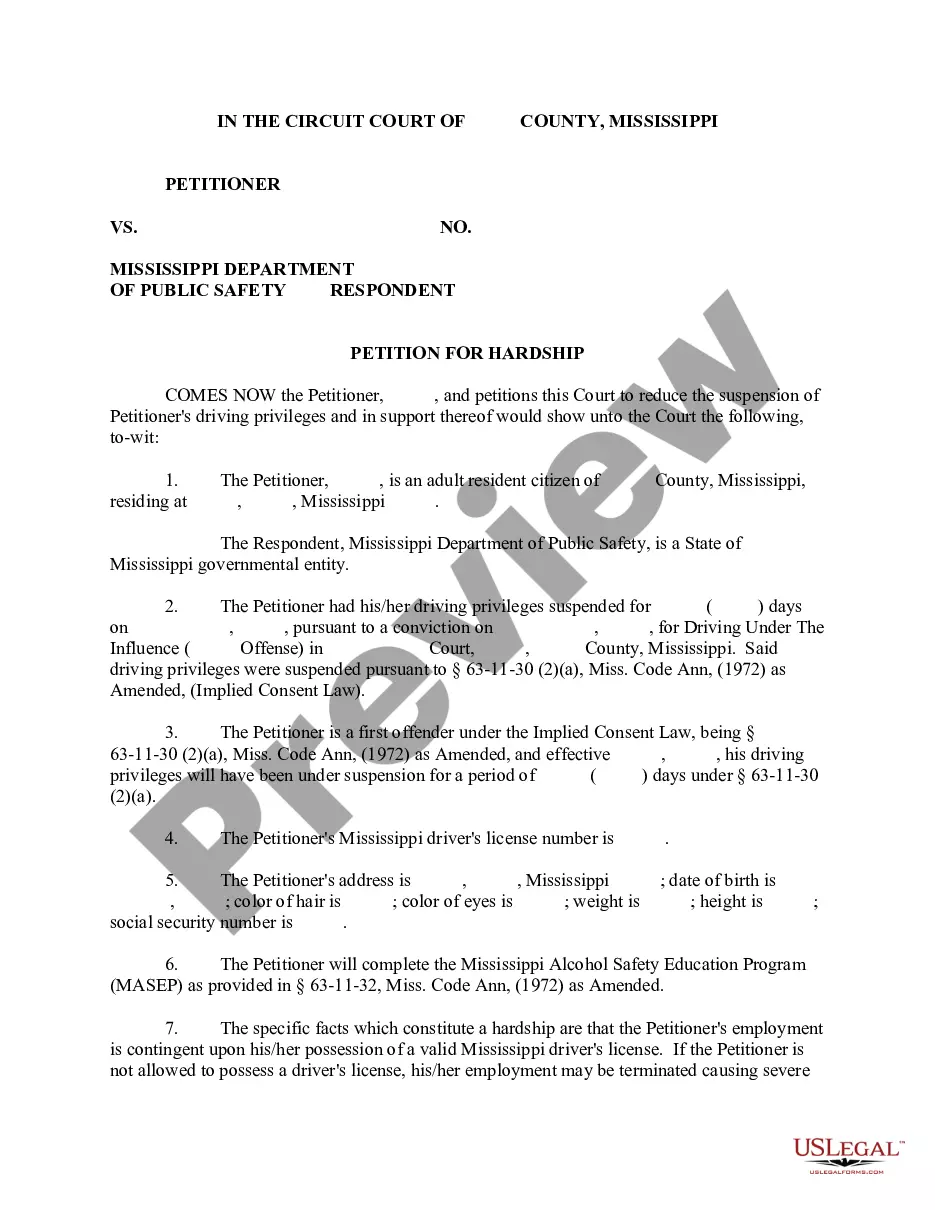
Louisiana Memorandum in Support of Motion to Suppress
What is this form?
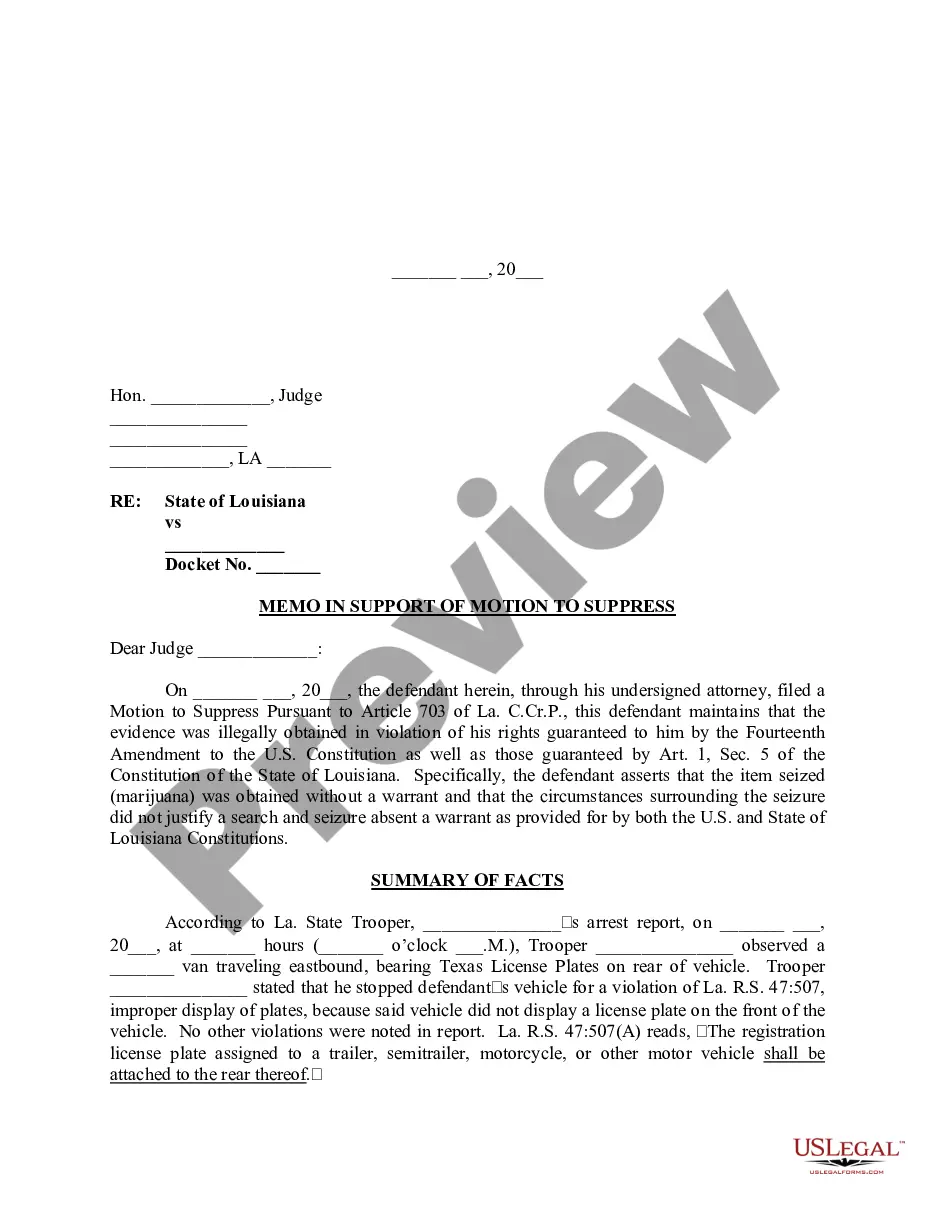
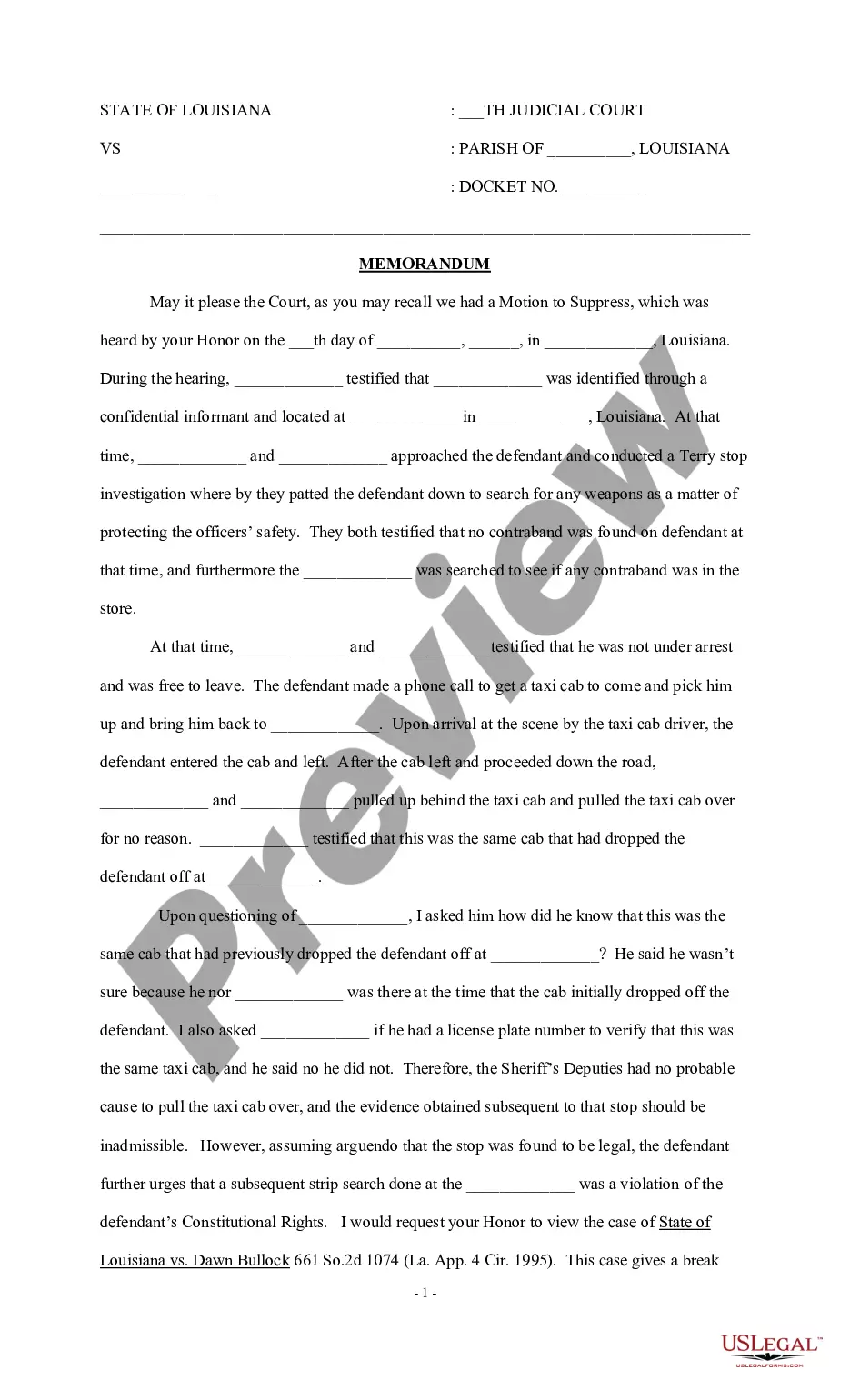
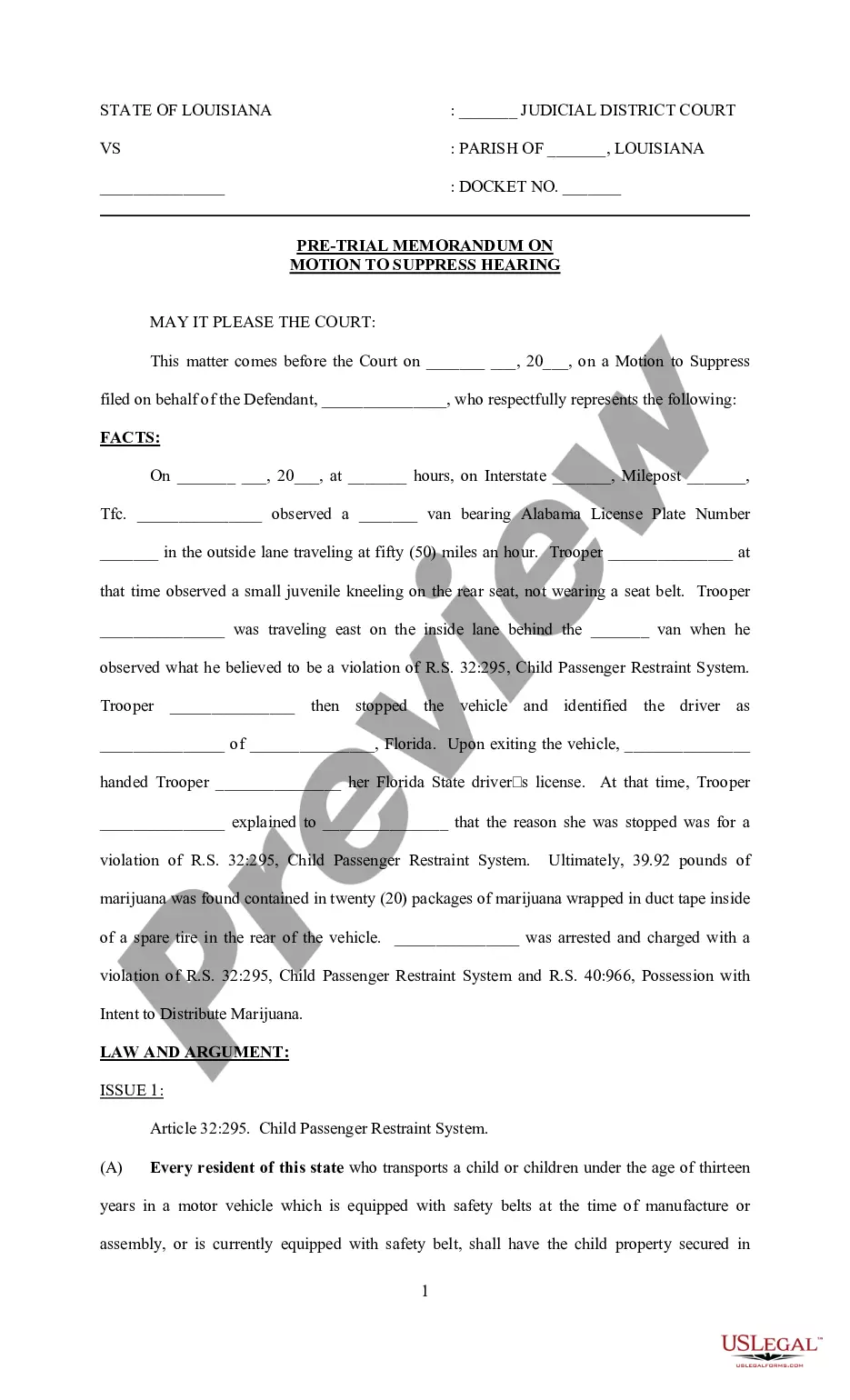
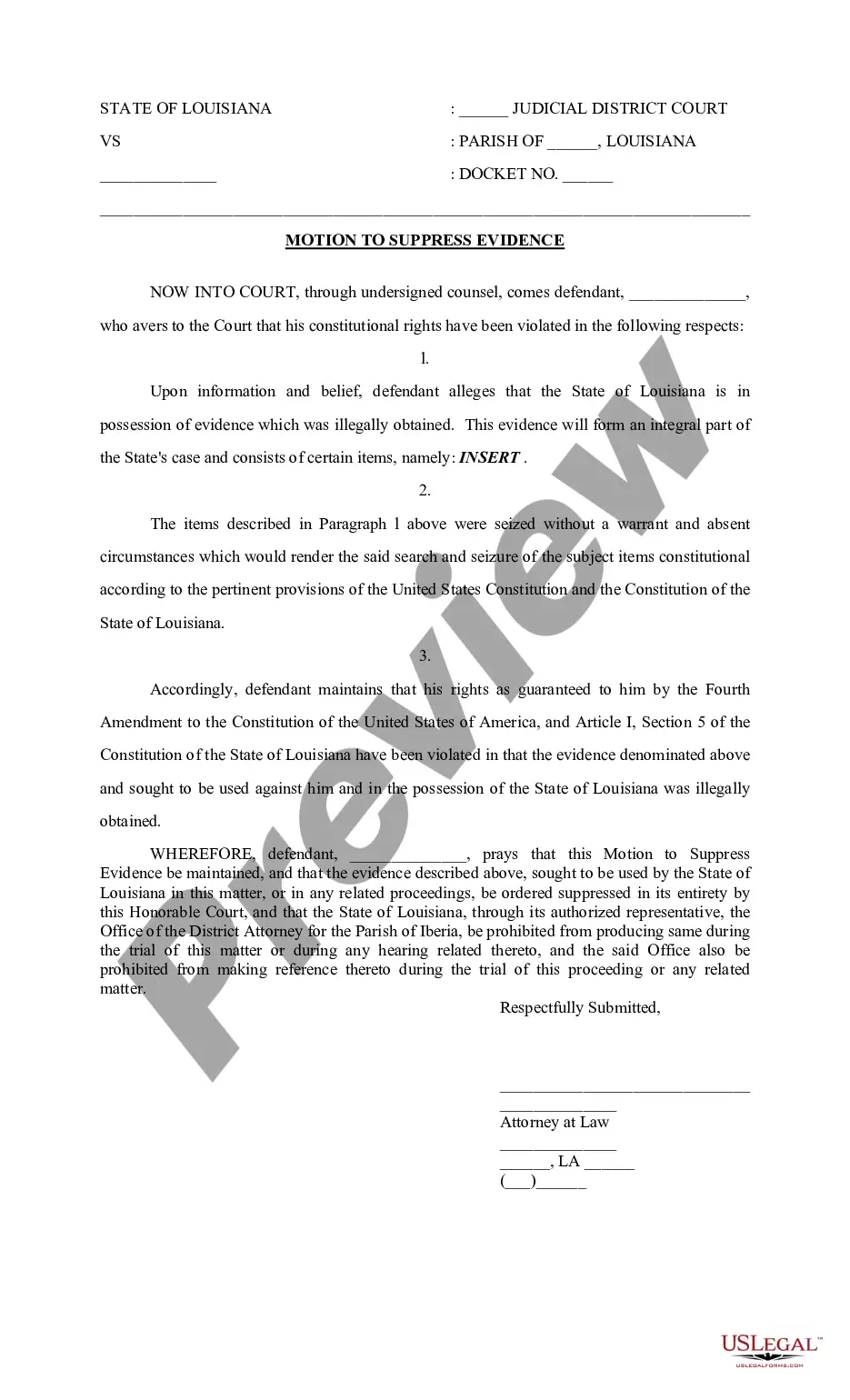
The Memorandum in Support of Motion to Suppress is a legal document prepared by the defense attorney to argue against the admissibility of evidence obtained during an illegal search and seizure. This form specifically addresses situations in which a defendant believes their rights have been violated under the laws of Louisiana, particularly when evidence is obtained without a legally valid reason to stop a vehicle. Its purpose is distinct from other motion forms as it focuses specifically on suppressing evidence due to constitutional violations.
What’s included in this form
- Header with court details and case information.
- Introduction stating the motion and the purpose of the memorandum.
- Summary of facts regarding the incident leading to the legal motion.
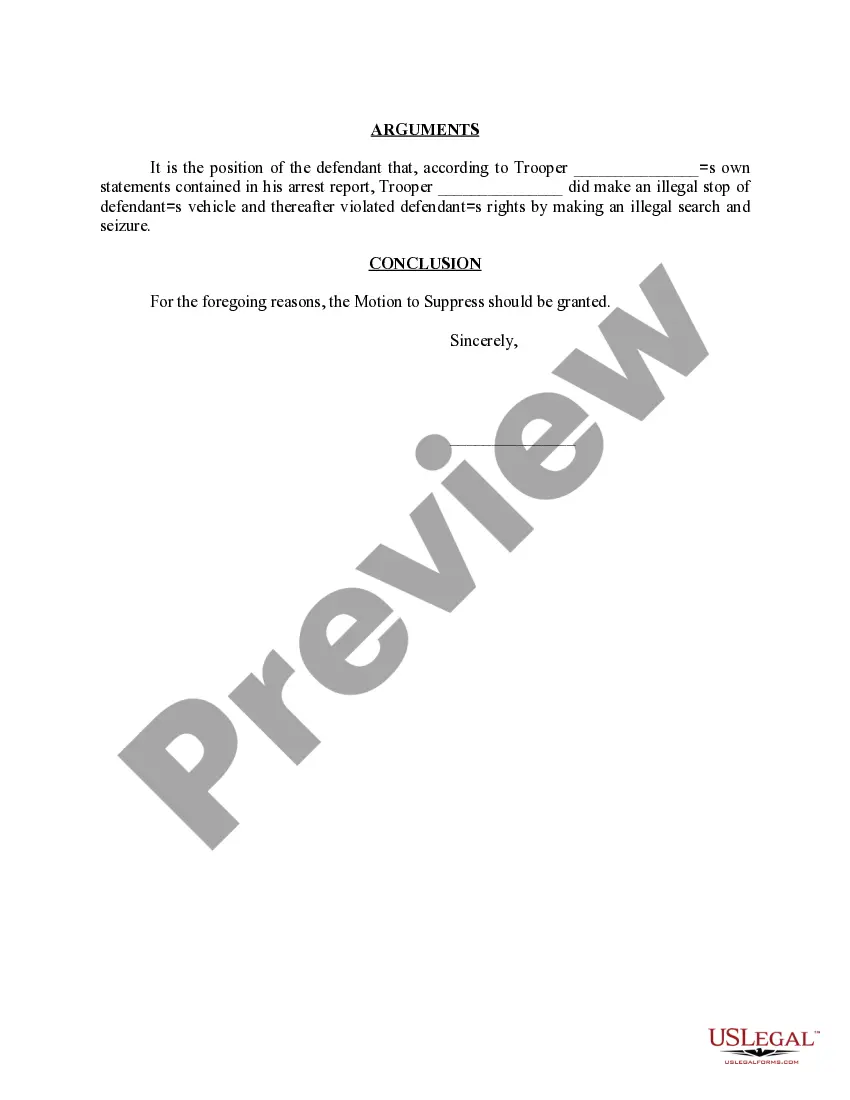
- Arguments outlining the constitutional violations related to the stop and search.
- Conclusion requesting the court to grant the motion to suppress evidence.
When this form is needed
This form should be utilized when a defendant is challenging the legality of evidence obtained through an allegedly unlawful stop and search conducted by law enforcement. Situations may include instances where the police stop a vehicle for minor violations, such as an improper display of license plates, and subsequently find incriminating evidence without a warrant.
Who can use this document
- Defendants facing criminal charges who believe their rights have been violated.
- Defense attorneys preparing to challenge evidence in court.
- Individuals who have been stopped by law enforcement in circumstances they believe were unlawful.
Completing this form step by step
- Fill in the date and address for the court and the judge.
- State the case name and docket number clearly at the top of the memorandum.
- Describe the date of the incident and the corresponding details from the arrest report.
- Present clear arguments specifying the constitutional violations related to the stop and search.
- Conclude by formally requesting the court to grant the motion to suppress the evidence.
Does this form need to be notarized?
This form does not typically require notarization unless specified by local law. However, some courts may require additional verification for filing, so it is advisable to check local regulations.
Get your form ready online
Our built-in tools help you complete, sign, share, and store your documents in one place.
Make edits, fill in missing information, and update formatting in US Legal Forms—just like you would in MS Word.
Download a copy, print it, send it by email, or mail it via USPS—whatever works best for your next step.
Sign and collect signatures with our SignNow integration. Send to multiple recipients, set reminders, and more. Go Premium to unlock E-Sign.
If this form requires notarization, complete it online through a secure video call—no need to meet a notary in person or wait for an appointment.
We protect your documents and personal data by following strict security and privacy standards.

Make edits, fill in missing information, and update formatting in US Legal Forms—just like you would in MS Word.

Download a copy, print it, send it by email, or mail it via USPS—whatever works best for your next step.

Sign and collect signatures with our SignNow integration. Send to multiple recipients, set reminders, and more. Go Premium to unlock E-Sign.

If this form requires notarization, complete it online through a secure video call—no need to meet a notary in person or wait for an appointment.

We protect your documents and personal data by following strict security and privacy standards.
Mistakes to watch out for
- Failing to accurately state the specific legal basis for the motion.
- Omitting critical facts or details from the incident report.
- Not adhering to the correct format required by the court.
- Neglecting to include all relevant arguments that support the motion.
Advantages of online completion
- Convenient access to a legally vetted template that can be customized for specific cases.
- Ability to download and edit the form at your convenience.
- Ensures compliance with current legal standards and formats.
Looking for another form?
Form popularity
FAQ
A motion to suppress evidence is a request by a defendant that the judge exclude certain evidence from trial. The defense often makes this motion well in advance of trialif the defendant wins it, the prosecution or judge may have to dismiss the case.
While in general, on a motion to suppress, the defendant has the burden of proving, by a preponderance of the evidence, that the material in question was seized in violation of his constitutional rights, there are several situations where the burden shifts to the government. United States v. De La Fuente, 548 F.
Use general discovery motions to your advantage. Always cite Tex. File a motion in limine along with your motion to suppress. Request a jury charge. Don't reveal specific grounds for the motion until the hearing. Consider Tex. Attack the probable cause affidavit.
Often, the suppression of the right evidence can lead a jury to acquit you at trial, or even to the dismissal of charges before a trial ever happens.This is often the main piece of evidence in drug cases and without it, the prosecution usually knows it cannot prove the drug charges beyond a reasonable doubt.
At the motion to suppress hearing, both parties have the opportunity to present evidence and arguments in support of or in opposition to the motion. Testimony is taken from: The arresting officer about how the evidence was obtained by the officeri.e., plain view, consent by the defendant. The defendant.
Rules of evidence do not apply to suppression hearings, except for privileges; transcript of another proceeding admitted. The rules of evidence do not strictly apply to suppression hearings, except as to privileges.
If the court grants the motion to suppress evidence (that is, rules in favor of the defendant), then the prosecutor is barred from introducing the evidence in question at trial. This often results in the case being dismissed, or a plea bargain agreement more favorable to the defense.