Louisiana Judgment of custody, visitation and child support
Understanding this form
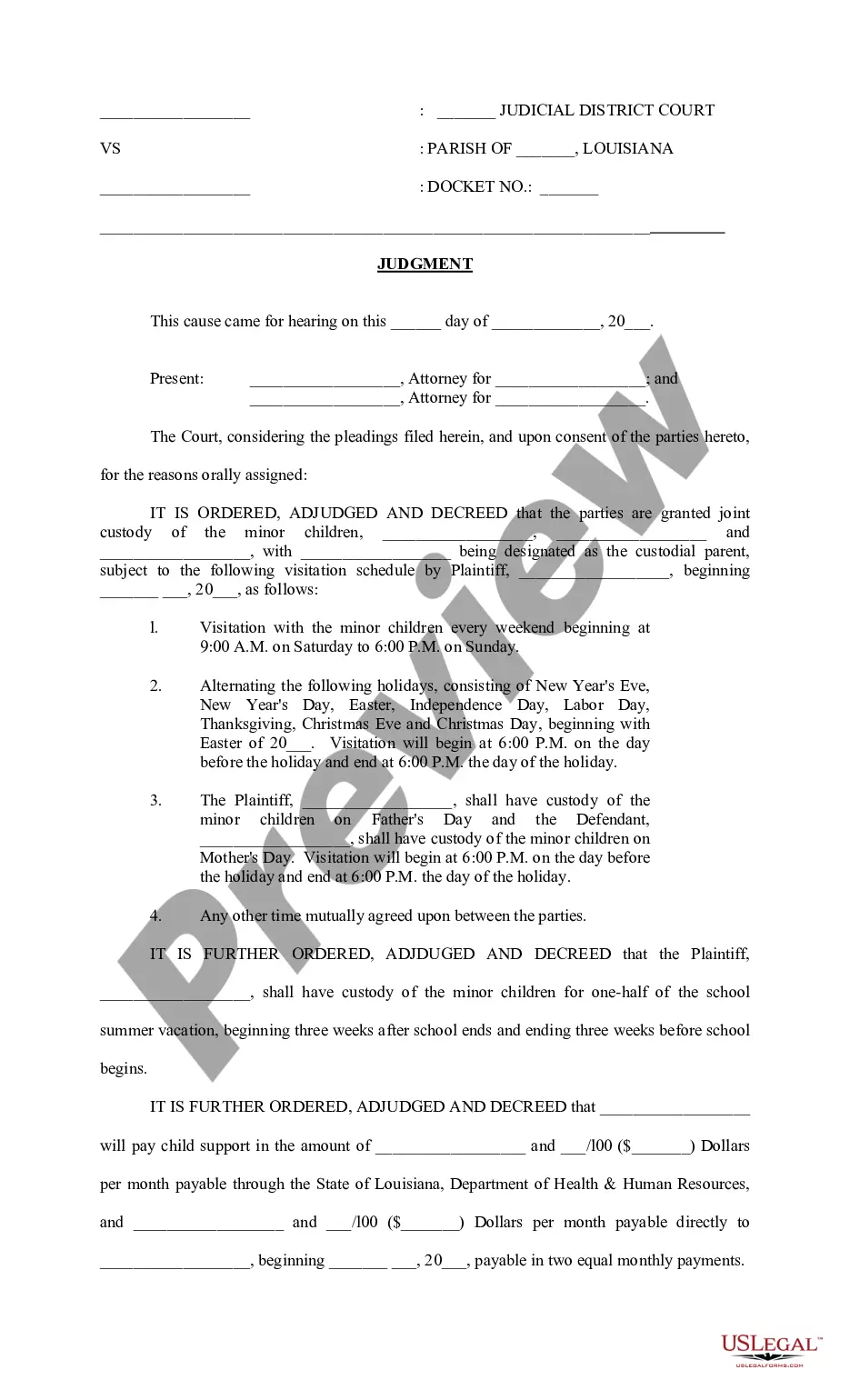
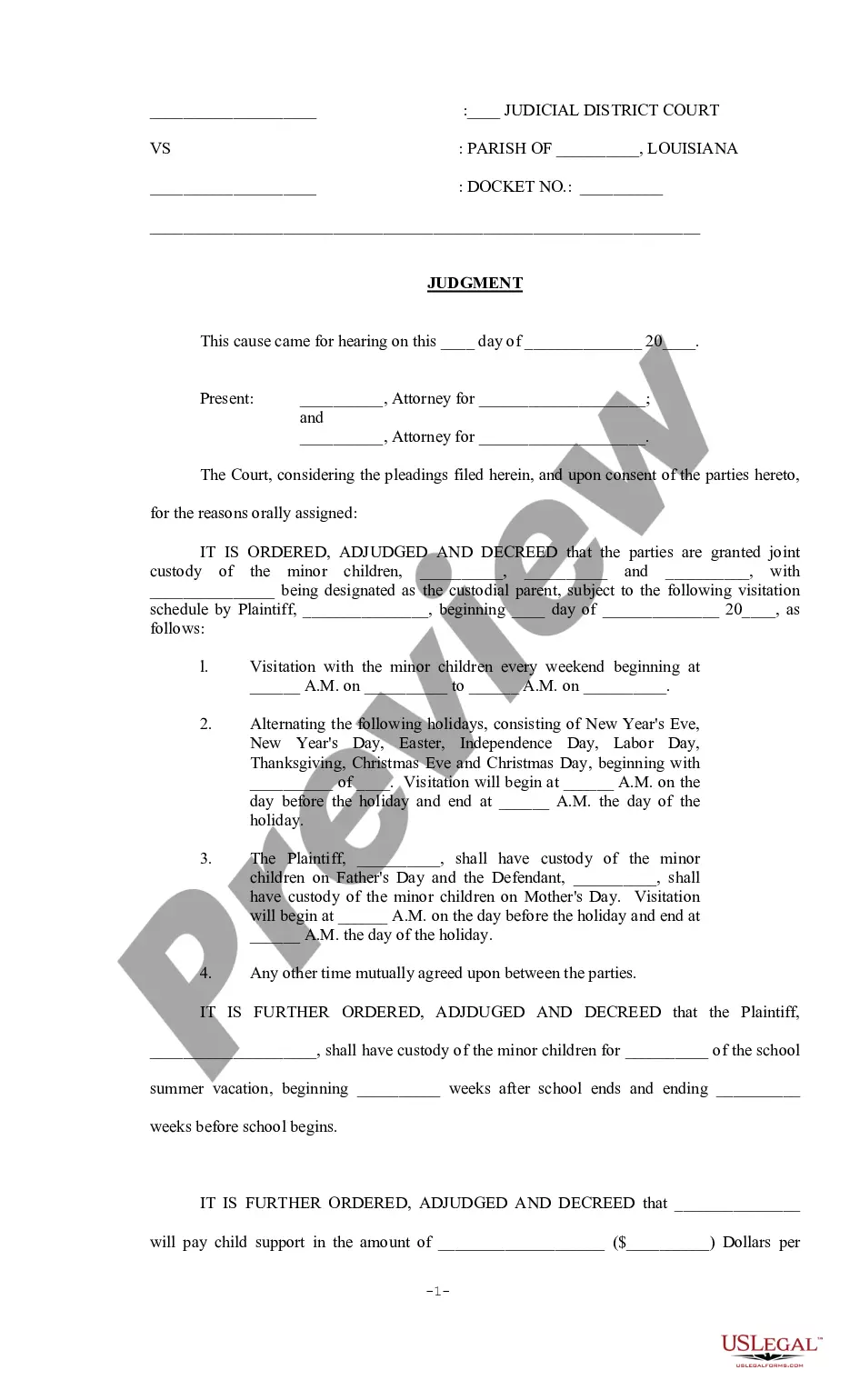
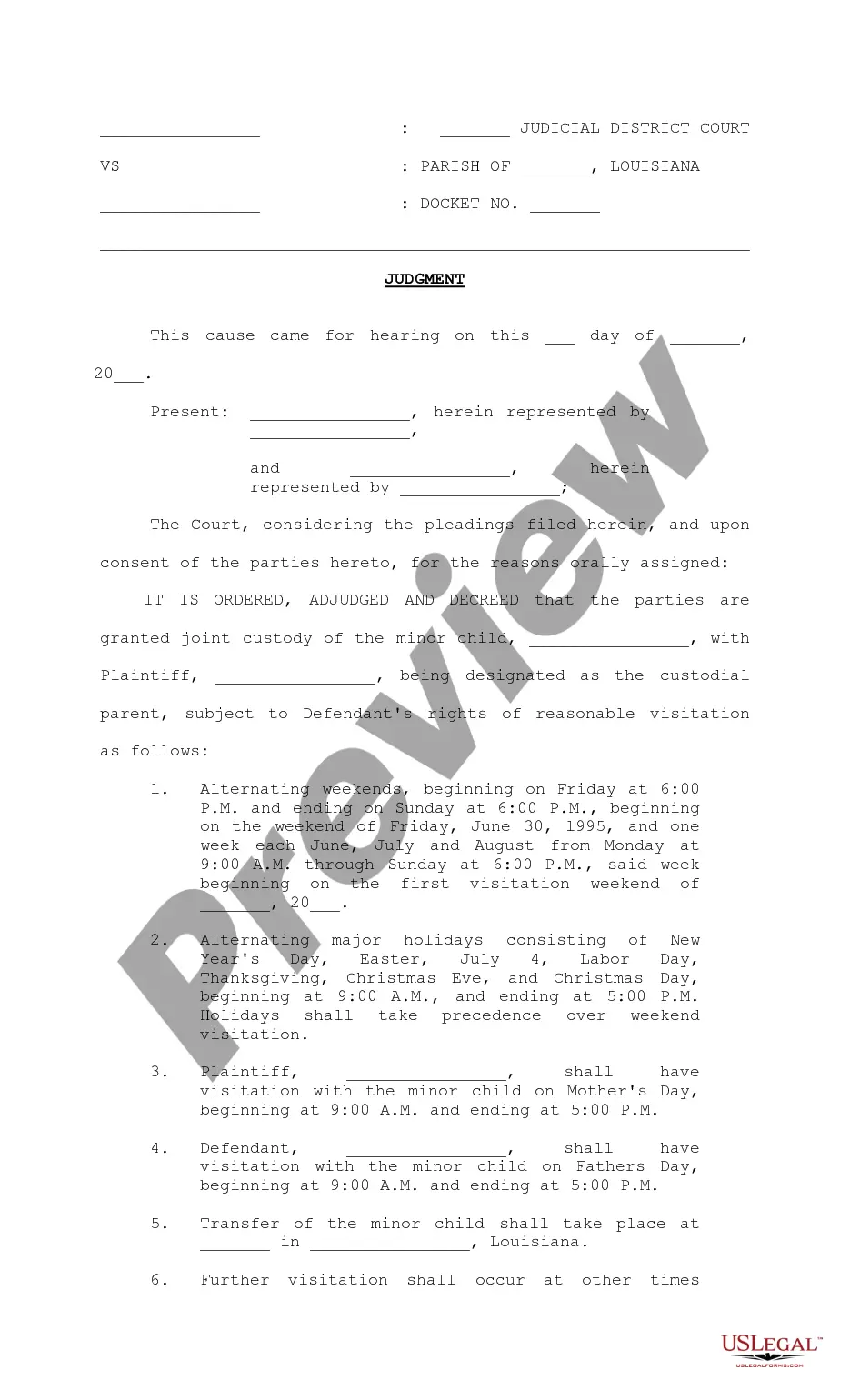
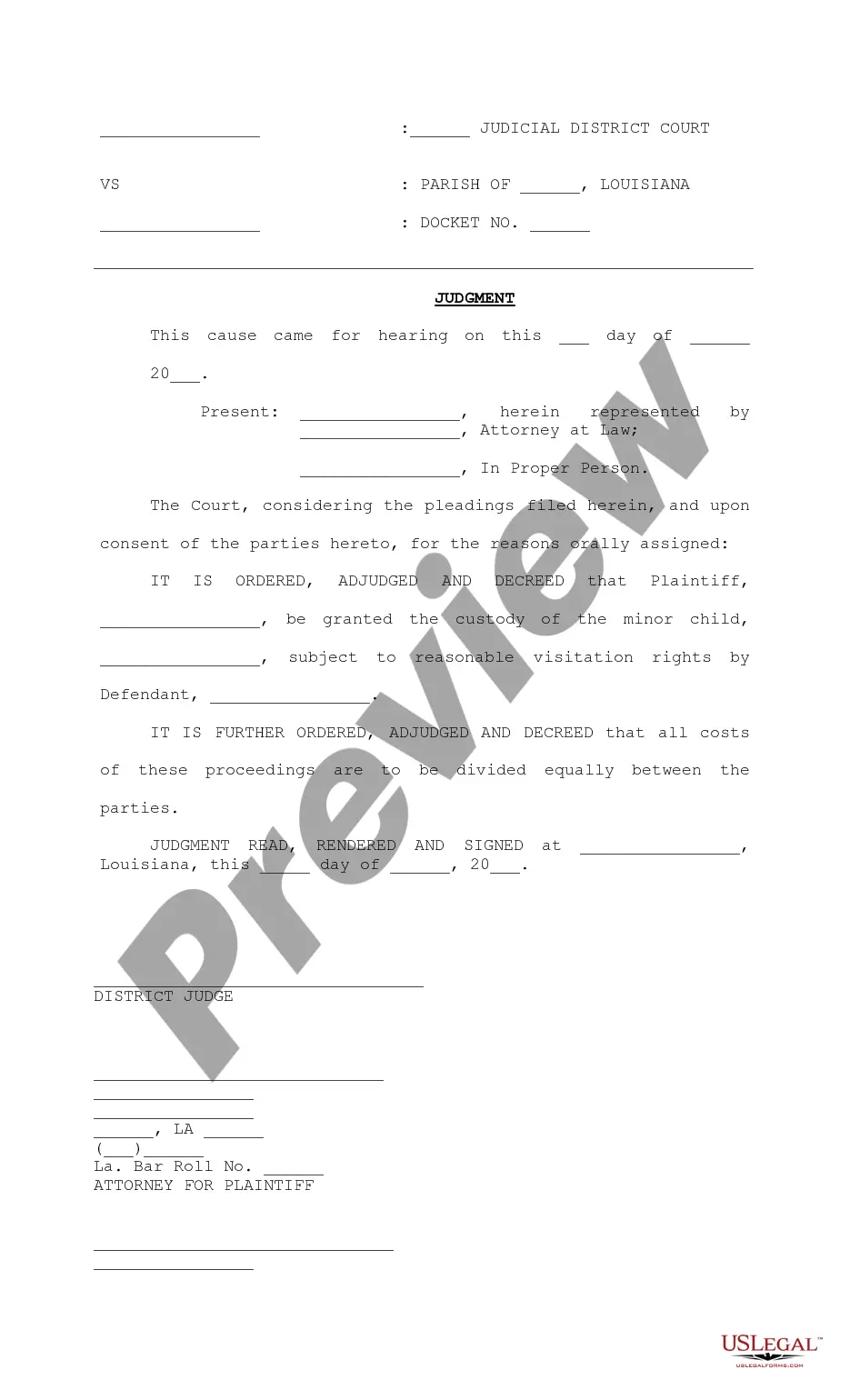
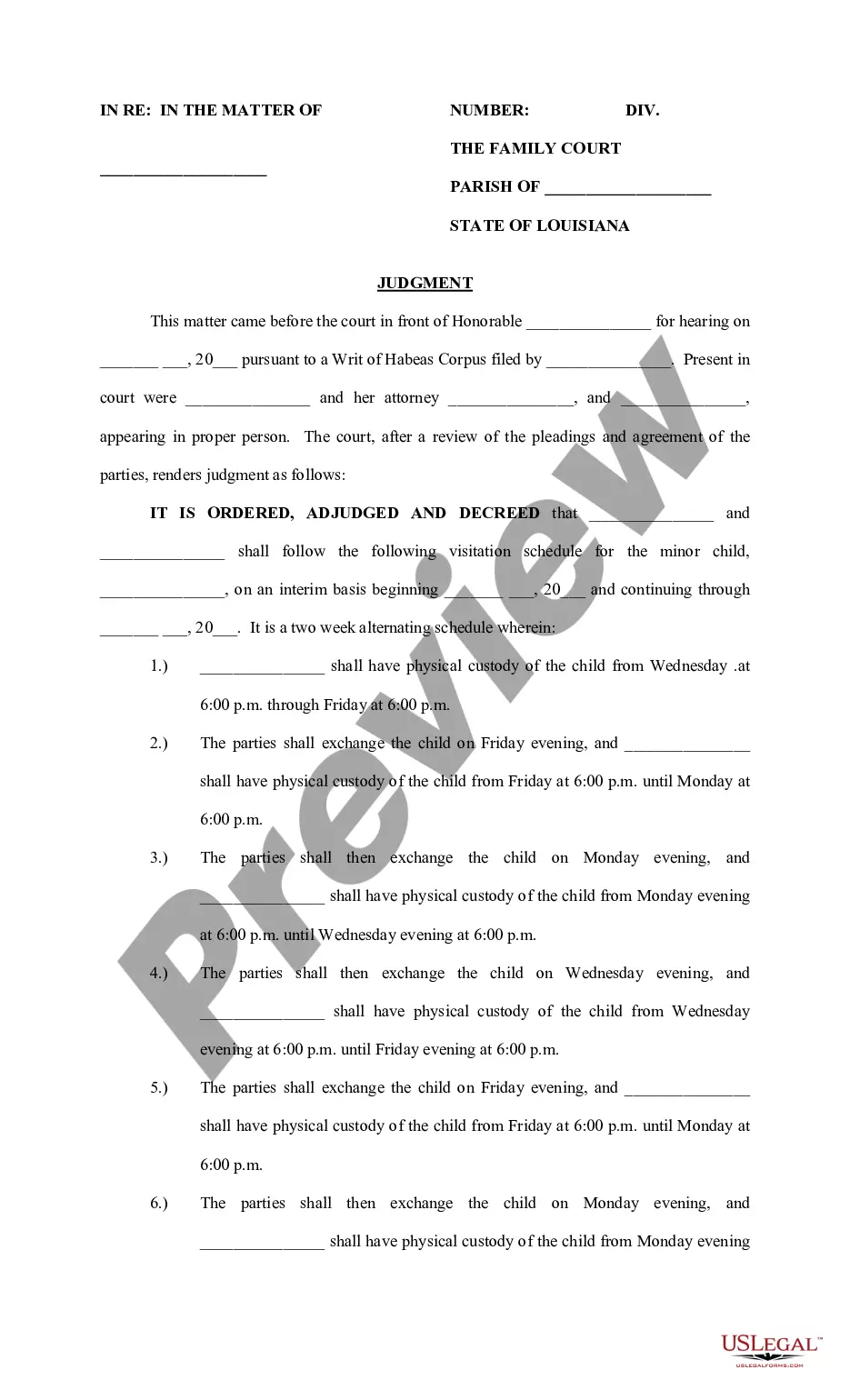
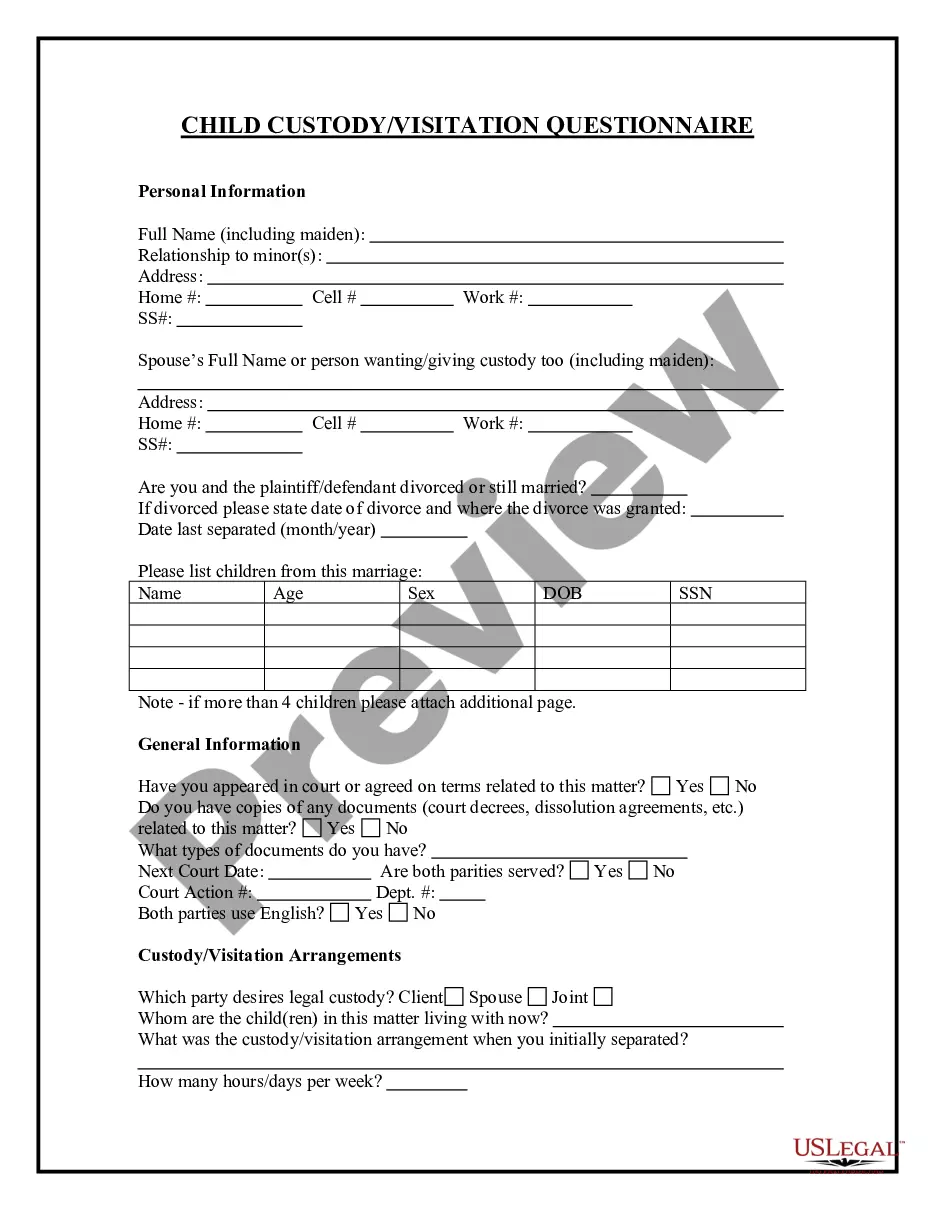
The Judgment of Custody, Visitation, and Child Support is a legal document that outlines the court's decisions regarding the custody and visitation rights of minor children after a custody case. This form is used to establish joint custody, define visitation schedules, and determine child support obligations between the involved parties. It differs from other custody agreements by formalizing the custody terms through a court judgment, making it legally enforceable.
Key parts of this document
- Joint custody arrangement for minor children.
- Designations of custodial parent and visitation rights.
- Specific visitation schedule including weekends and holidays.
- Child support payment details, including amounts and payment methods.
- Division of court costs between the parties.

When this form is needed
This form is used in situations where parents have reached an agreement regarding custody and child support but require formal court approval. It is applicable when parents seek joint custody, wish to establish visitation schedules, or need to outline child support payments. Use this form to ensure that the court recognizes your arrangements in a legally binding manner.
Who should use this form
This form is intended for:
- Parents or guardians involved in a custody case.
- Individuals seeking to formalize a custody arrangement through the court.
- Those who have reached an agreement on child support and visitation but need legal validation.
Steps to complete this form
- Identify the parties involved, including the plaintiff and defendant.
- Specify the names of the minor children and designate the custodial parent.
- Enter the visitation schedule, detailing weekends and holidays.
- Complete the child support payment amounts and identify payment methods.
- Ensure all parties sign and date the document in the designated areas.
Does this form need to be notarized?
In most cases, this form does not require notarization. However, some jurisdictions or signing circumstances might. US Legal Forms offers online notarization powered by Notarize, accessible 24/7 for a quick, remote process.
Get your form ready online
Our built-in tools help you complete, sign, share, and store your documents in one place.
Make edits, fill in missing information, and update formatting in US Legal Forms—just like you would in MS Word.
Download a copy, print it, send it by email, or mail it via USPS—whatever works best for your next step.
Sign and collect signatures with our SignNow integration. Send to multiple recipients, set reminders, and more. Go Premium to unlock E-Sign.
If this form requires notarization, complete it online through a secure video call—no need to meet a notary in person or wait for an appointment.
We protect your documents and personal data by following strict security and privacy standards.

Make edits, fill in missing information, and update formatting in US Legal Forms—just like you would in MS Word.

Download a copy, print it, send it by email, or mail it via USPS—whatever works best for your next step.

Sign and collect signatures with our SignNow integration. Send to multiple recipients, set reminders, and more. Go Premium to unlock E-Sign.

If this form requires notarization, complete it online through a secure video call—no need to meet a notary in person or wait for an appointment.

We protect your documents and personal data by following strict security and privacy standards.
Common mistakes to avoid
- Failing to accurately specify the visitation schedule.
- Not including all required signatures from both parties.
- Omitting payment details for child support.
- Incorrectly identifying the custodial parent or children involved.
Why complete this form online
- Immediate access to legally vetted templates created by licensed attorneys.
- Easy editing and customization to fit your unique situation.
- Convenience of downloading documents directly to your device.
Summary of main points
- The Judgment of custody, visitation and child support outlines custody and support arrangements between parents.
- A clear visitation schedule helps avoid confusion and establishes parental rights.
- Understanding and completing this form correctly can facilitate smoother parenting relationships post-judgment.
Looking for another form?

Form popularity
FAQ
Can my child write a letter or a Declaration to the Judge? The answer is usually, no. If your child writes a letter or a Declaration to the Judge, the Judge will not read it nor will it be accepted by the court.
You cannot write a letter to the family court judge. This would be considered an ex parte communication.
Begin your letter by introducing yourself and explaining your relationship to the parent and how long you've known her. Then, spend two or three paragraphs explaining why you think she should be awarded custody. Use your final paragraph to summarize the points you've made in the body of your letter.
Be willing to work with the child's other parent. See your children whenever possible. Don't involve your children in the court case. Don't put the children in the middle. Perception is everything. Hire an experienced child custody lawyer.
However, when a person is awaiting trial, writing a letter to the judge will not help. At best, the letter will go unread by the judge, and will be of no help. In a worst-case scenario, the letter will end up being used by the prosecution as evidence against that person.
Paying child support obligations alone is not enough of a factor for access or visitation to be given, if it is not deemed to be in the best interests of the child.
The best way to convince a judge that the parent most fit for custody is to provide real world evidence through behavior and actions. When there are certain situations that may be best for the child, it is important to seek these out and to offer better circumstances if possible.
File a Motion: If the custodial parent is consistently denying you visitation, you can file a motion requesting updated orders from the court.In contempt proceedings, the court may issue sanctions (fines) or require that the violator serve jail time.
You can write a letter to the Judge but the Judge will not read it. You have to provide testimony through witnesses including yourself. You do not have to agree with what the GAL proposes. You need an attorney to represent you.