Kentucky Last Will and Testament for Married person with Minor Children
What is this form?
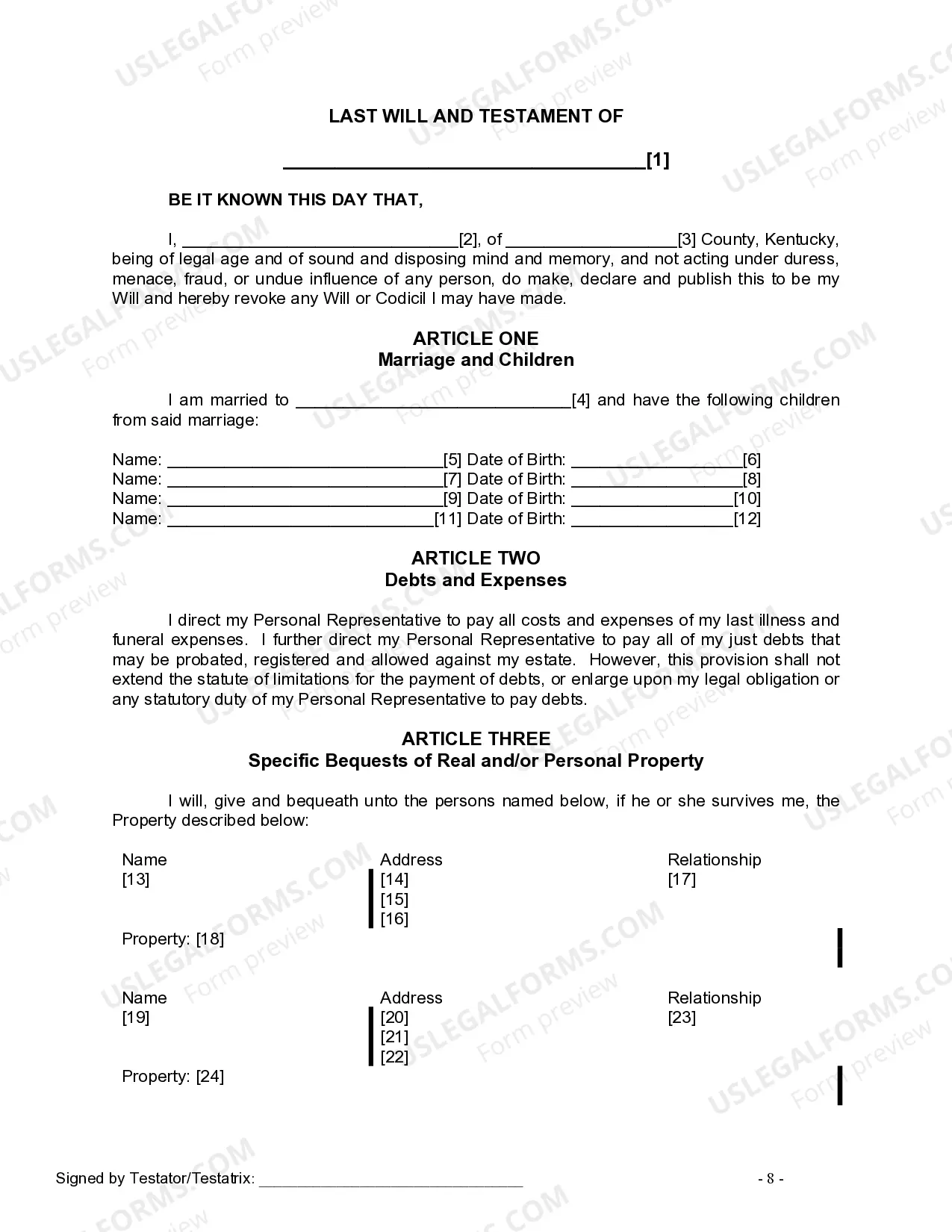
The Last Will and Testament for a married person with minor children is a legal document that outlines your wishes for the distribution of your assets after your passing. This form specifically accounts for your marriage and the presence of minor children, ensuring that provisions are made for their care and inheritance. Unlike other wills, this form designates guardianship for your children and names a personal representative to manage your estate, providing peace of mind to you and your family.
Key components of this form
- Personal Representative: Designate an individual to administer your estate.
- Guardianship for Minor Children: Specify who will take care of your children if you pass away.
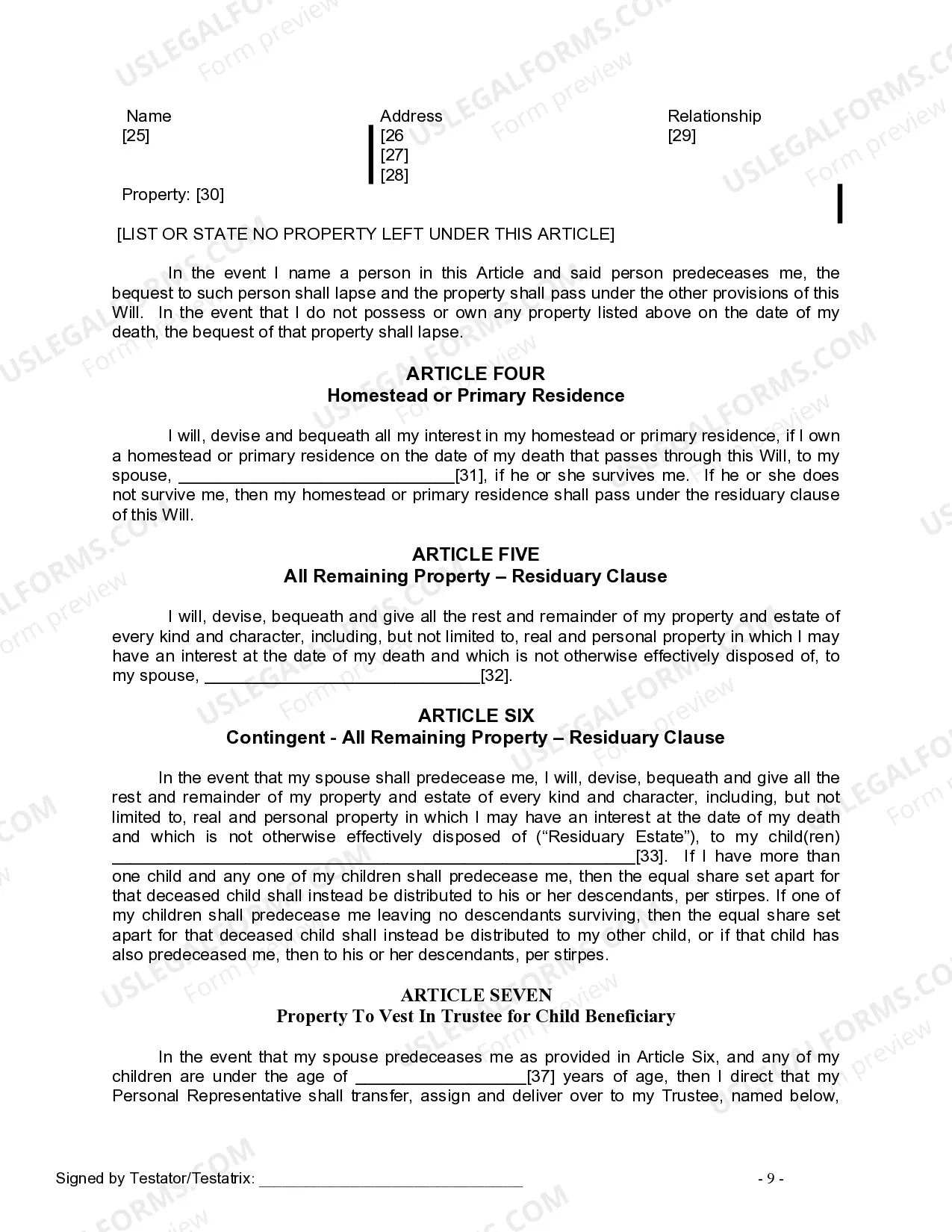
- Distribution of Assets: Clearly outline who will receive specific assets and property.
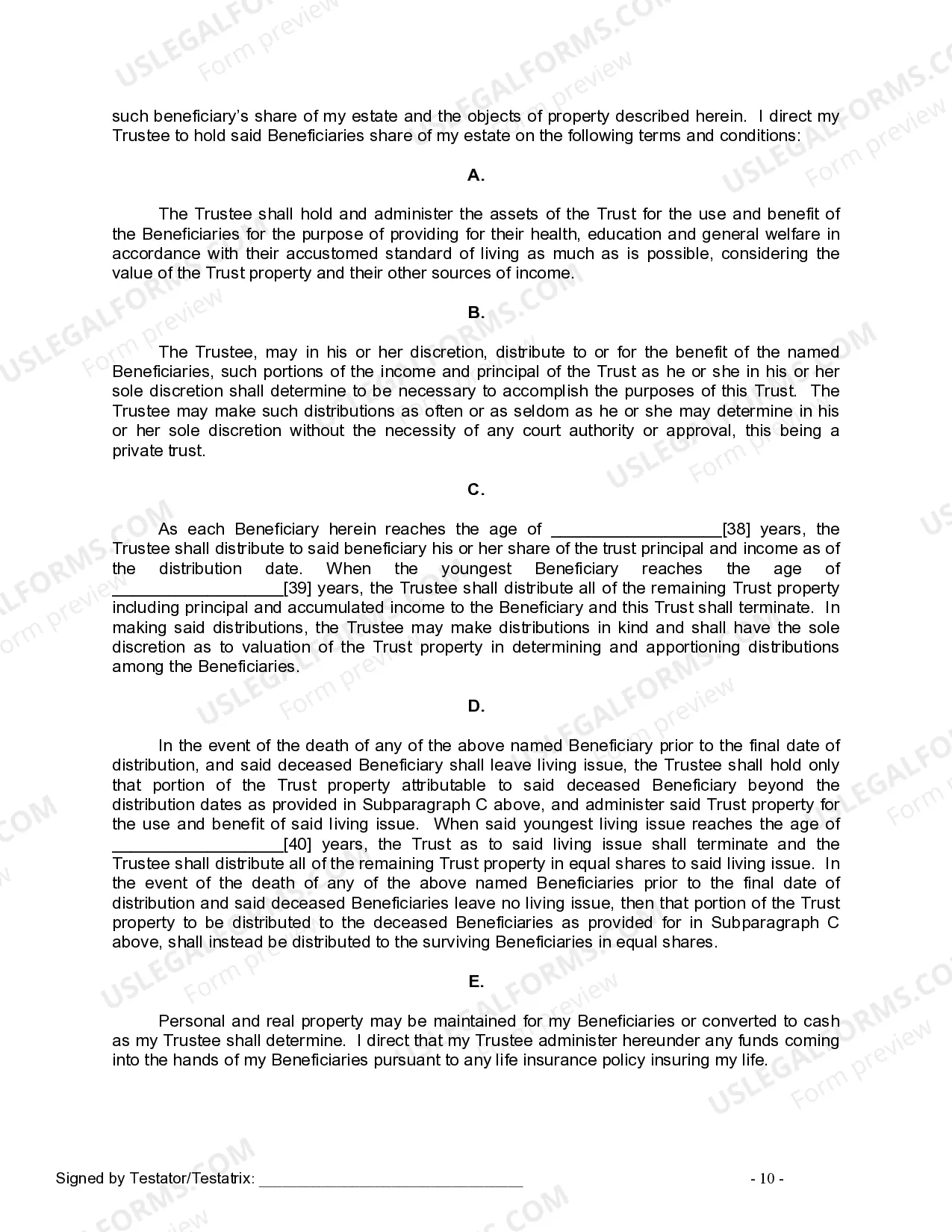
- Trust Provisions: Set up a trust for the benefit of minor children, detailing when they will receive their inheritance.
- Witness Requirements: The will must be signed in the presence of two witnesses.
- Self-Proving Affidavit: Includes a notary-signed affidavit for easier probate processing.







When to use this document
This form is needed when a married individual with minor children wants to ensure that their wishes regarding asset distribution and child guardianship are legally documented. Use this will if you want to avoid the default state laws regarding intestate succession, which could lead to unintended distributions of your estate. This document is particularly important for those seeking to protect their children's financial future and ensure their care if both parents are unable to do so.
Who should use this form
This form is suitable for:
- Married individuals who have minor children.
- Individuals who wish to specify how their assets will be distributed after death.
- Parents wanting to appoint guardians for their children.
- Those who want to minimize family disputes and clarify their intentions legally.
How to complete this form
To complete this form, follow these steps:
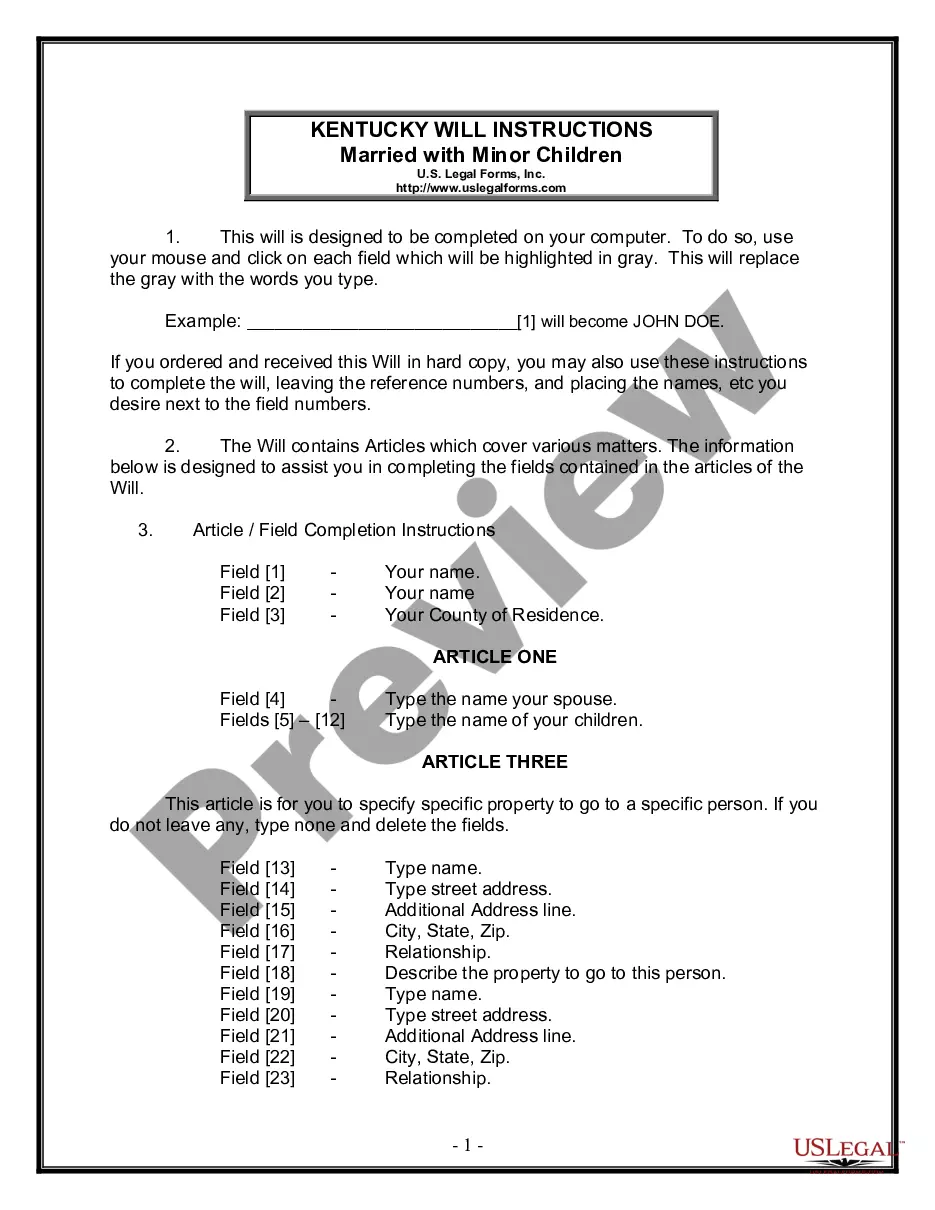
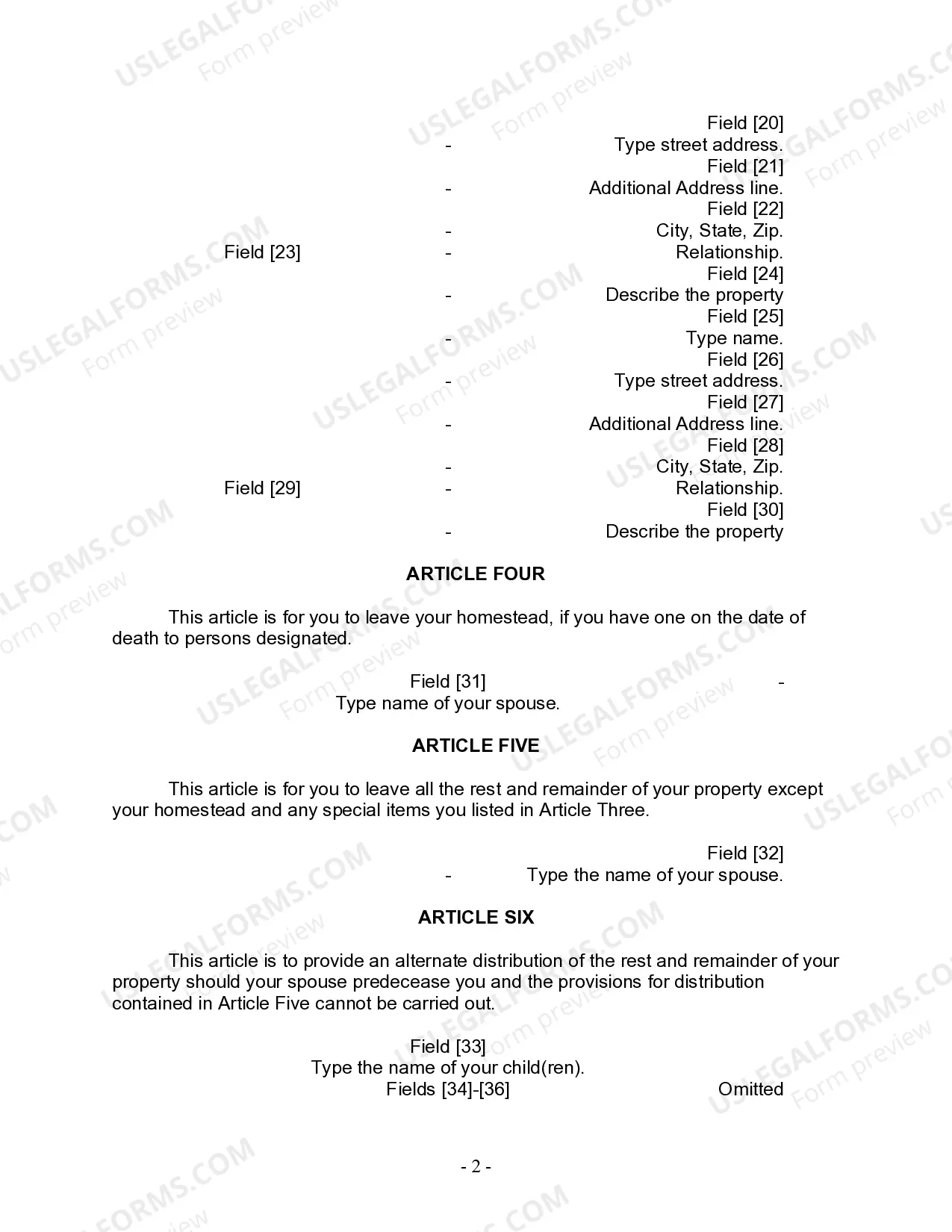
- Identify the parties involved: Enter your name, spouse's name, and the names of your children.
- Specify the distribution of your property: Indicate any specific bequests to individuals.
- Designate a personal representative and successor: Choose trustworthy individuals to manage your estate.
- Appoint a guardian for your minor children: Make sure to choose a responsible person who can care for them.
- Sign the will in front of two witnesses: Ensure that they are not related to you or named in the will.
- Consider notarization: If your state requires it, complete the self-proving affidavit.
Notarization guidance
Yes, this form must be notarized to be legally valid. Notarization ensures your will is recognized by courts and simplifies the probate process. US Legal Forms offers integrated online notarization services for your convenience, allowing for secure video calls with a notary public at any time, minimizing the need for physical visits.
Get your form ready online
Our built-in tools help you complete, sign, share, and store your documents in one place.
Make edits, fill in missing information, and update formatting in US Legal Forms—just like you would in MS Word.
Download a copy, print it, send it by email, or mail it via USPS—whatever works best for your next step.
Sign and collect signatures with our SignNow integration. Send to multiple recipients, set reminders, and more. Go Premium to unlock E-Sign.
If this form requires notarization, complete it online through a secure video call—no need to meet a notary in person or wait for an appointment.
We protect your documents and personal data by following strict security and privacy standards.

Make edits, fill in missing information, and update formatting in US Legal Forms—just like you would in MS Word.

Download a copy, print it, send it by email, or mail it via USPS—whatever works best for your next step.

Sign and collect signatures with our SignNow integration. Send to multiple recipients, set reminders, and more. Go Premium to unlock E-Sign.

If this form requires notarization, complete it online through a secure video call—no need to meet a notary in person or wait for an appointment.

We protect your documents and personal data by following strict security and privacy standards.
Common mistakes to avoid
- Not having the will signed and witnessed properly as per state requirements.
- Failing to update the will after major life changes, such as divorce or the birth of a child.
- Leaving out the guardian appointment for minor children.
- Not discussing your wishes with your appointed personal representative.
Advantages of online completion
- Convenience of completing the form online, allowing for easy edits and access.
- Legal compliance with templates drafted by licensed attorneys.
- Clear instructions ensure all necessary details are covered.
- A self-proving affidavit may simplify the probate process.
What to keep in mind
- A Last Will and Testament is essential for married individuals with minor children.
- Proper execution with witnesses and possible notarization is critical for legal validity.
- Provisions for guardianship and trusts ensure the protection of minor beneficiaries.
- Completing this document helps avoid intestate succession and provides clarity for your family.
Looking for another form?
Form popularity
FAQ
In Kentucky you can write a will in your own handwriting. This type of will is known as a holographic will.If you prepare your own will and type it, it must be signed by at least two witnesses.
The form may be downloaded in fillable Adobe PDF, Rich Text Format, and Microsoft Word templates and should be signed by the testator and at least two (2) witnesses or a notary public (See your State's Probate Code).
Create the initial document. Start by titling the document Last Will and Testament" and including your full legal name and address. Designate an executor. Appoint a guardian. Name the beneficiaries. Designate the assets. Ask witnesses to sign your will. Store your will in a safe place.
You can make your own will in Kentucky, using Nolo's Quicken WillMaker & Trust. However, you may want to consult a lawyer in some situations. For example, if you think that your will might be contested or if you want to disinherit your spouse, you should talk with an attorney.
The first step is to locate the deceased person's original will. The second step is to file a petition, using form AOC-805, which asks the District Court judge to admit the will to probate and to appoint an execu- tor to administer and settle the decedent's estate. KRS ?394.140, 394.145.
Kentucky law provides for many different manners in which to avoid probate. For example, probate is altogether unnecessary for small estates.In this way, the owner who dies first passes his or her interest in the property to the survivor, and the interest in property does not have to go through the probate process.
Age: The testator must be at least 18 years old. Capacity: The testator must be of sound mind. Signature: The will must be signed by the testator or by another person under his direction and in his presence.