Kentucky Last Will and Testament for Married person with Adult Children from Prior Marriage
What this document covers
This Last Will and Testament is specifically designed for married individuals with adult children from a prior marriage. It outlines how your property will be distributed upon your death, who will act as the personal representative or executor, and includes provisions for your adult children, ensuring that your wishes are honored after your passing. Unlike standard wills, this document accommodates the complexities of blended families and prior marital relationships, providing tailored instructions for the distribution of your assets.
What’s included in this form
- Personal information, including your name and residence.
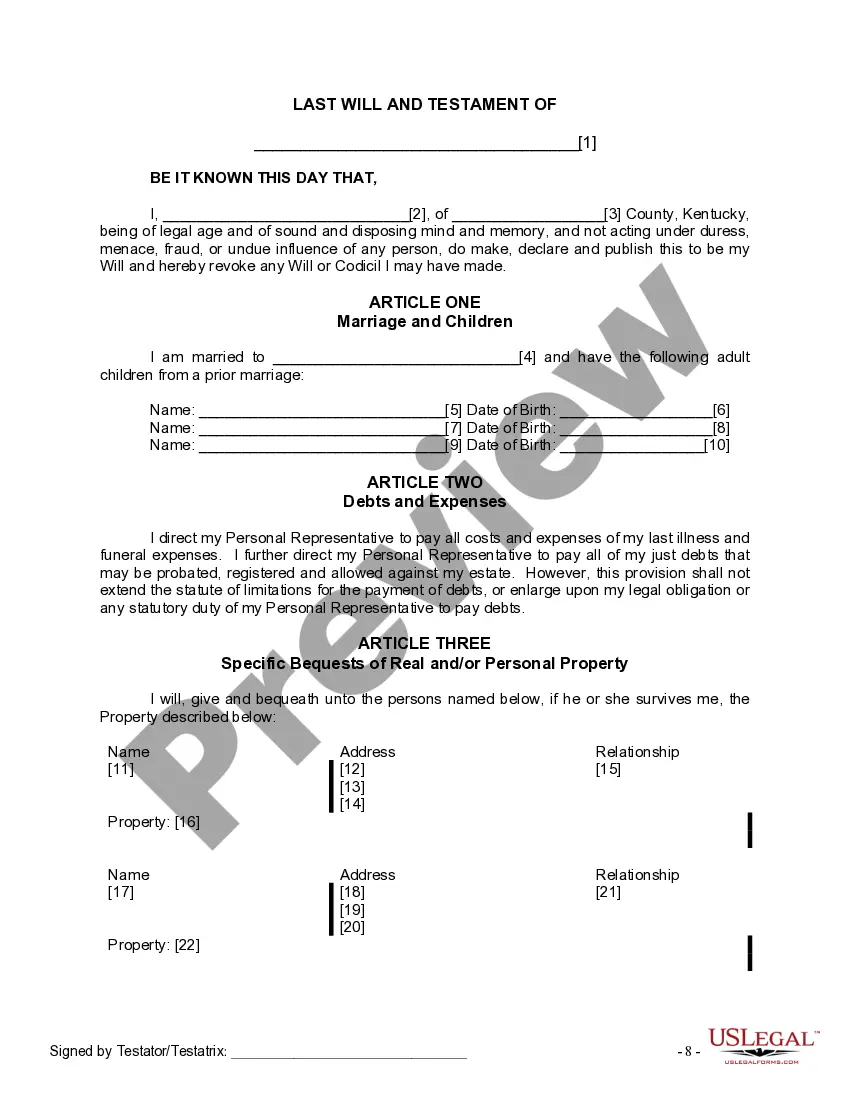
- Details of your spouse and adult children from your prior marriage.
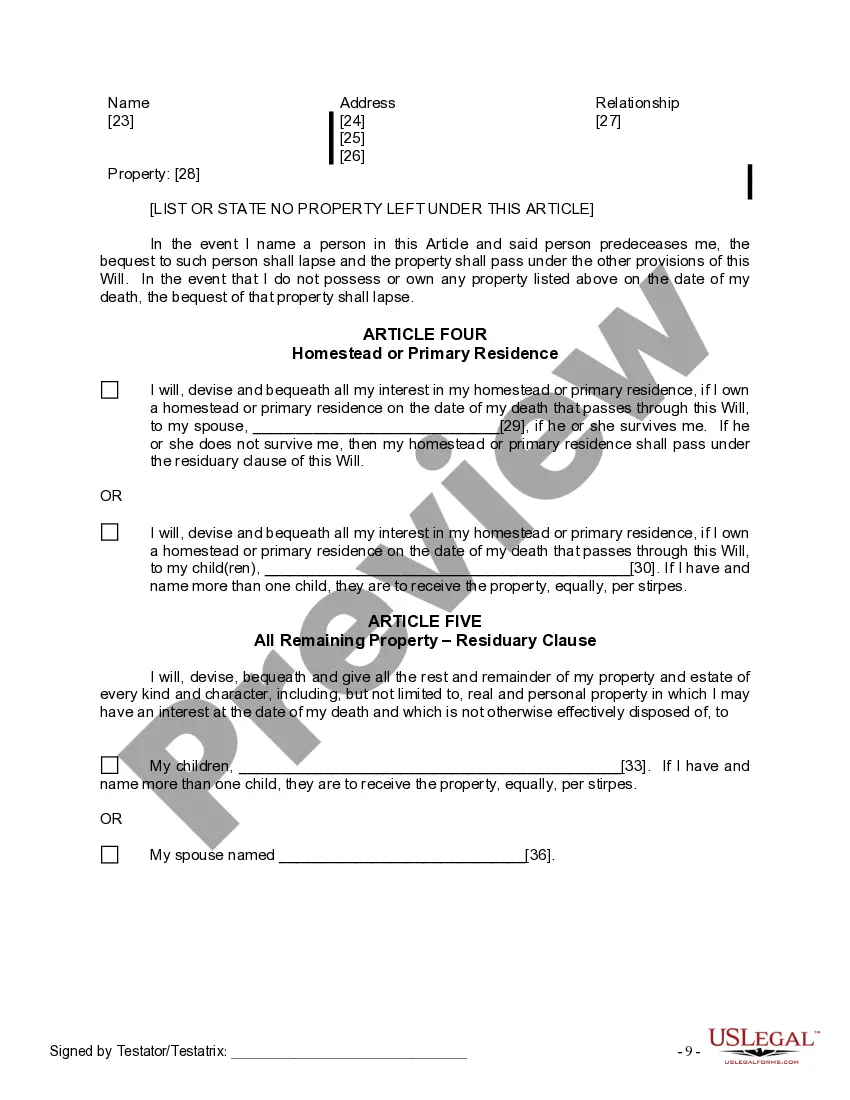
- Specific bequests of property to named individuals.
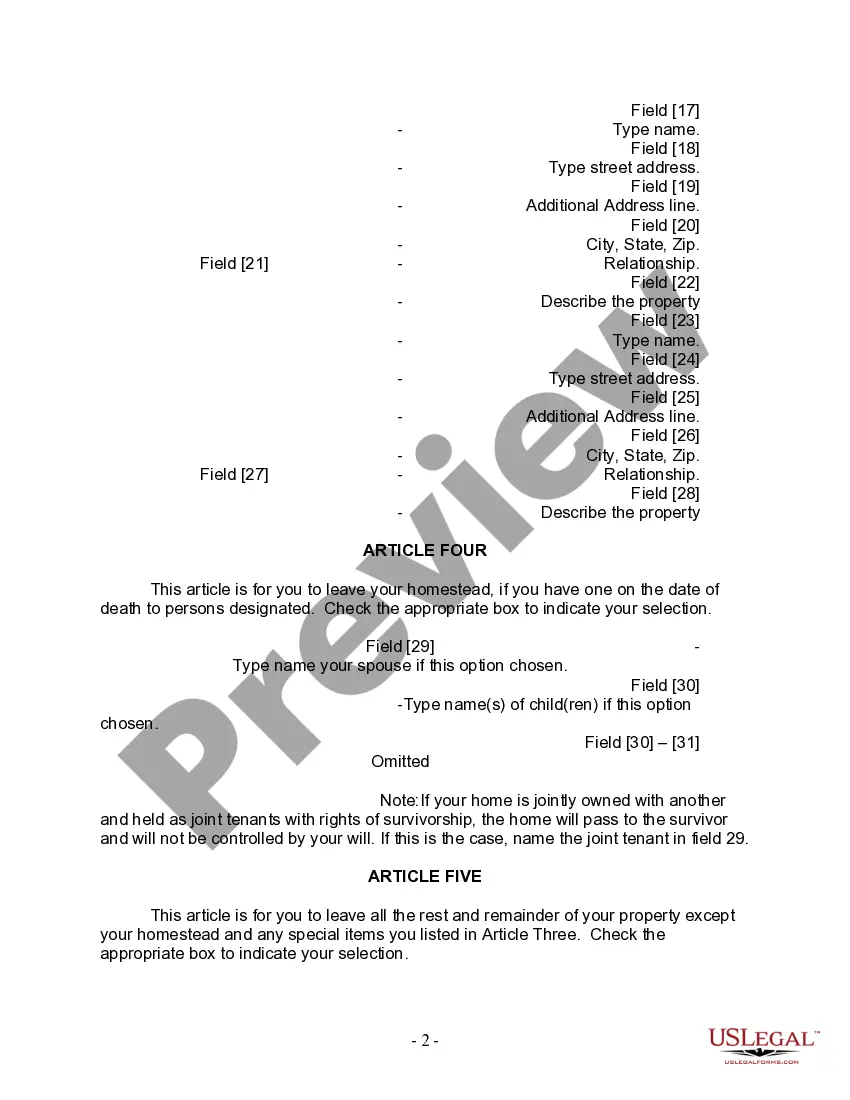
- Provisions for your homestead or primary residence.
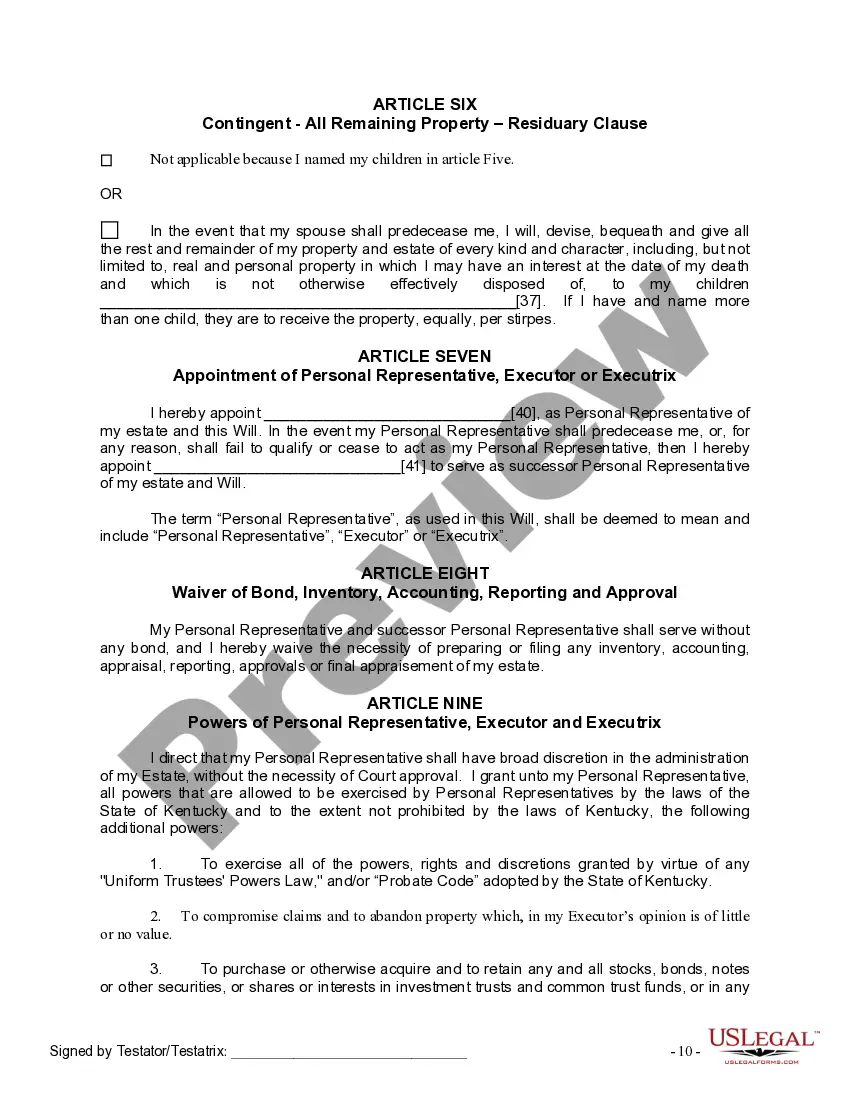
- Appointment of a personal representative to manage your estate.
- Clauses addressing debts and expenses related to your estate.




Common use cases
This form is necessary when you want to ensure that your assets are distributed according to your wishes, especially when you have adult children from a previous marriage. It is important if you want to provide clear instructions on how your property should be handled and to avoid potential disputes among beneficiaries after your death. If you want to appoint a trustworthy person to manage your estate, this will also serve as a crucial document in that regard.
Who can use this document
- Married individuals with adult children from a previous marriage.
- Persons seeking to clarify property distributions among blended family members.
- Anyone who desires to appoint a personal representative for their estate.
- Individuals looking to prevent disputes by explicitly stating their final wishes.
How to prepare this document
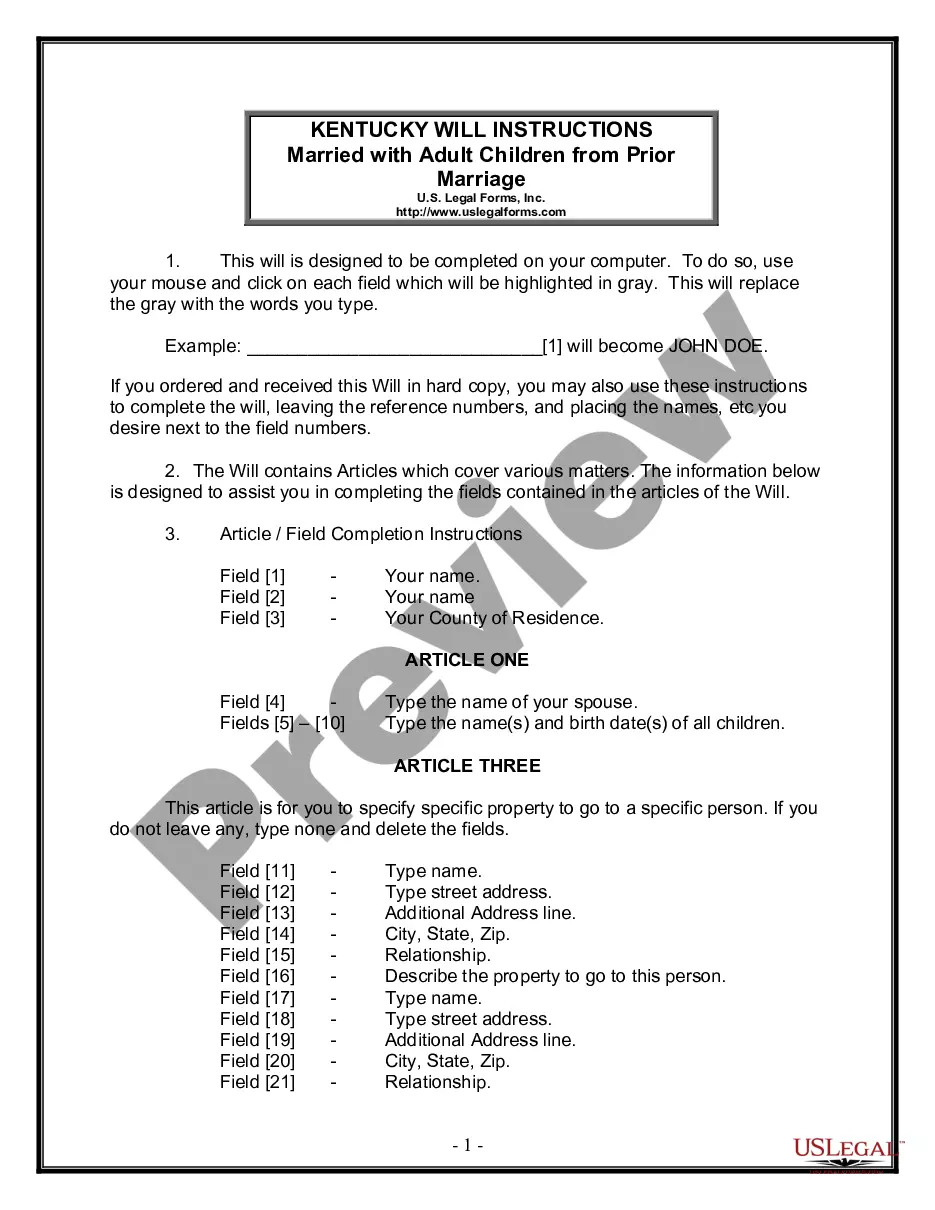
- Enter your personal information, including your name and the county of residence.
- Specify the name of your spouse and list your adult children, including their birth dates.
- Detail any specific property you wish to bequeath to individuals.
- Appoint your personal representative and any necessary successors.
- Ensure all sections are completed and sign in the presence of two witnesses.
Does this form need to be notarized?
This form must be notarized to be legally valid. US Legal Forms provides secure online notarization powered by Notarize, allowing you to complete the process through a verified video call.
Get your form ready online
Our built-in tools help you complete, sign, share, and store your documents in one place.
Make edits, fill in missing information, and update formatting in US Legal Forms—just like you would in MS Word.
Download a copy, print it, send it by email, or mail it via USPS—whatever works best for your next step.
Sign and collect signatures with our SignNow integration. Send to multiple recipients, set reminders, and more. Go Premium to unlock E-Sign.
If this form requires notarization, complete it online through a secure video call—no need to meet a notary in person or wait for an appointment.
We protect your documents and personal data by following strict security and privacy standards.

Make edits, fill in missing information, and update formatting in US Legal Forms—just like you would in MS Word.

Download a copy, print it, send it by email, or mail it via USPS—whatever works best for your next step.

Sign and collect signatures with our SignNow integration. Send to multiple recipients, set reminders, and more. Go Premium to unlock E-Sign.

If this form requires notarization, complete it online through a secure video call—no need to meet a notary in person or wait for an appointment.

We protect your documents and personal data by following strict security and privacy standards.
Common mistakes
- Failing to include all children from previous marriages, which may cause disputes.
- Not signing the document in front of the required number of witnesses.
- Neglecting to update the will after significant life changes, such as the birth of additional children or divorce.
- Not keeping the will in a safe location or failing to inform your executor about its location.
Advantages of online completion
- Convenience of completing the form from home at your own pace.
- Editable fields that allow you to customize the will to accurately reflect your wishes.
- Access to professionally drafted legal forms created by licensed attorneys.
- Immediate download upon completion, eliminating the need to wait for physical copies.
Legal use & context
- This will serves as a legal document that establishes your desires for asset distribution after death.
- It is enforceable in probate court, ensuring your instructions are legally recognized and followed.
- Without a valid will, state intestacy laws govern the distribution of your assets, potentially leading to unintended beneficiaries.
What to keep in mind
- The Last Will and Testament is essential for married individuals with adult children from prior marriages.
- It ensures that your wishes regarding asset distribution are clearly stated and legally binding.
- Proper execution and notarization can prevent disputes and simplify the probate process.
Looking for another form?



Form popularity
FAQ
It is a customary estate planning practice for each spouse to have his or her own will. While some practitioners may draft a joint will for a married couple, it is not recommended. Here are a few reasons why.
Make your own will: You can make your own will but you must make sure that it's valid. A will is a legal document so it needs to be written and signed correctly. If you decide to make your own will, it's best to seek advice first.
Create the initial document. Start by titling the document Last Will and Testament" and including your full legal name and address. Designate an executor. Appoint a guardian. Name the beneficiaries. Designate the assets. Ask witnesses to sign your will. Store your will in a safe place.
If each spouse has their own Will, California law allows them to make new Wills after the divorce has been filed and creating the new Will does not violate the Automatic Temporary Restraining Order (ATRO) against changing beneficiaries, selling assets, etc.
An adult can make a valid will without notifying their wife or husband. Not telling a spouse would be unusual, but not illegal.
The first step is to locate the deceased person's original will. The second step is to file a petition, using form AOC-805, which asks the District Court judge to admit the will to probate and to appoint an execu- tor to administer and settle the decedent's estate.
Effect of marriage on your will When you marry, any existing will is automatically revoked (cancelled) and becomes no longer valid. If you do not make a new one, then when you die the law of intestacy decides how your assets are divided. Usually, your entire estate would go to your wife, husband or civil partner.
No, in Kentucky, you do not need to notarize your will to make it legal. However, Kentucky allows you to make your will "self-proving" and you'll need to go to a notary if you want to do that. A self-proving will speeds up probate because the court can accept the will without contacting the witnesses who signed it.
Many married couples own most of their assets jointly with the right of survivorship. When one spouse dies, the surviving spouse automatically receives complete ownership of the property.Since one never knows which spouse will survive the other, it is important that both have a Will.