Kentucky Revocation of General Durable Power of Attorney
Overview of this form
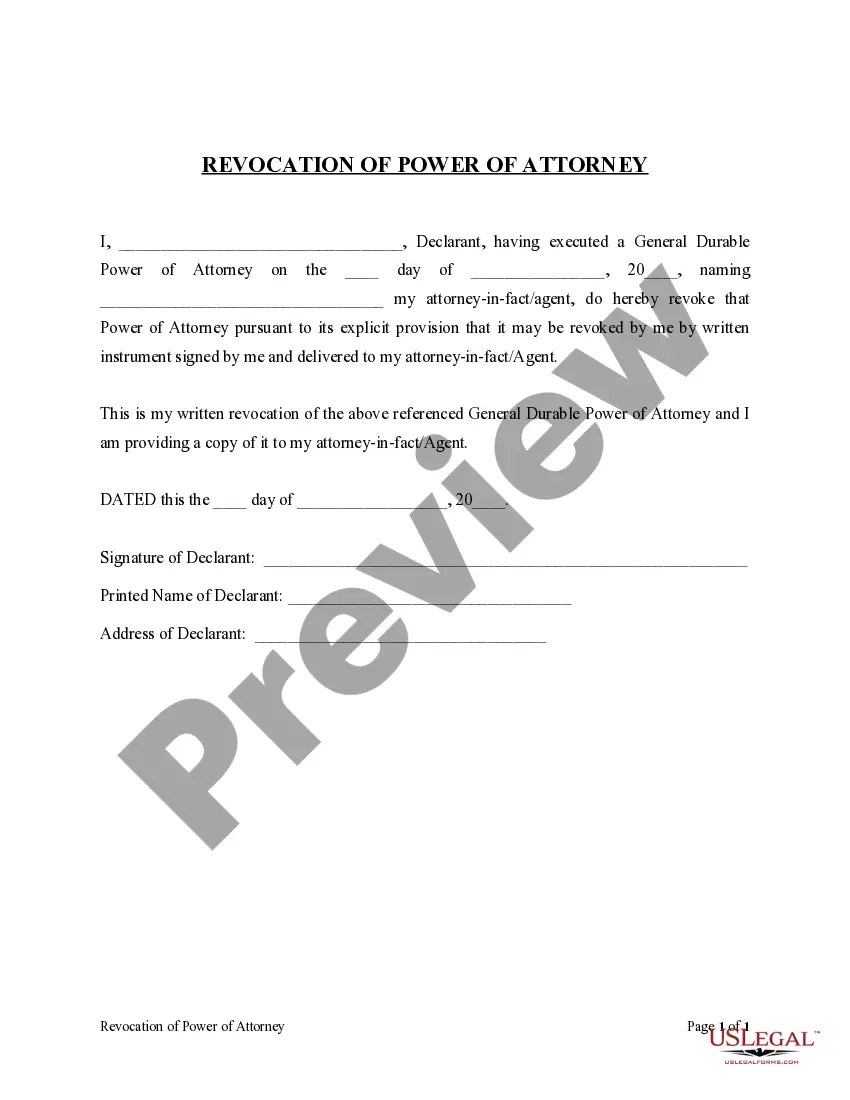
The Revocation of General Durable Power of Attorney allows an individual, known as the declarant, to formally revoke or cancel a previously established General Durable Power of Attorney. This document is crucial for those who want to withdraw the authority they granted to their attorney-in-fact (agent) for managing their financial and property matters. Unlike similar documents, this revocation explicitly refers to the date and details of the power of attorney being nullified, ensuring clarity and legal recognition.
Key parts of this document
- Declarant's name and details
- Date of the original General Durable Power of Attorney
- Name of the attorney-in-fact/agent being revoked
- Explicit statement of revocation
- Signature and printed name of the declarant
- Date of the revocation
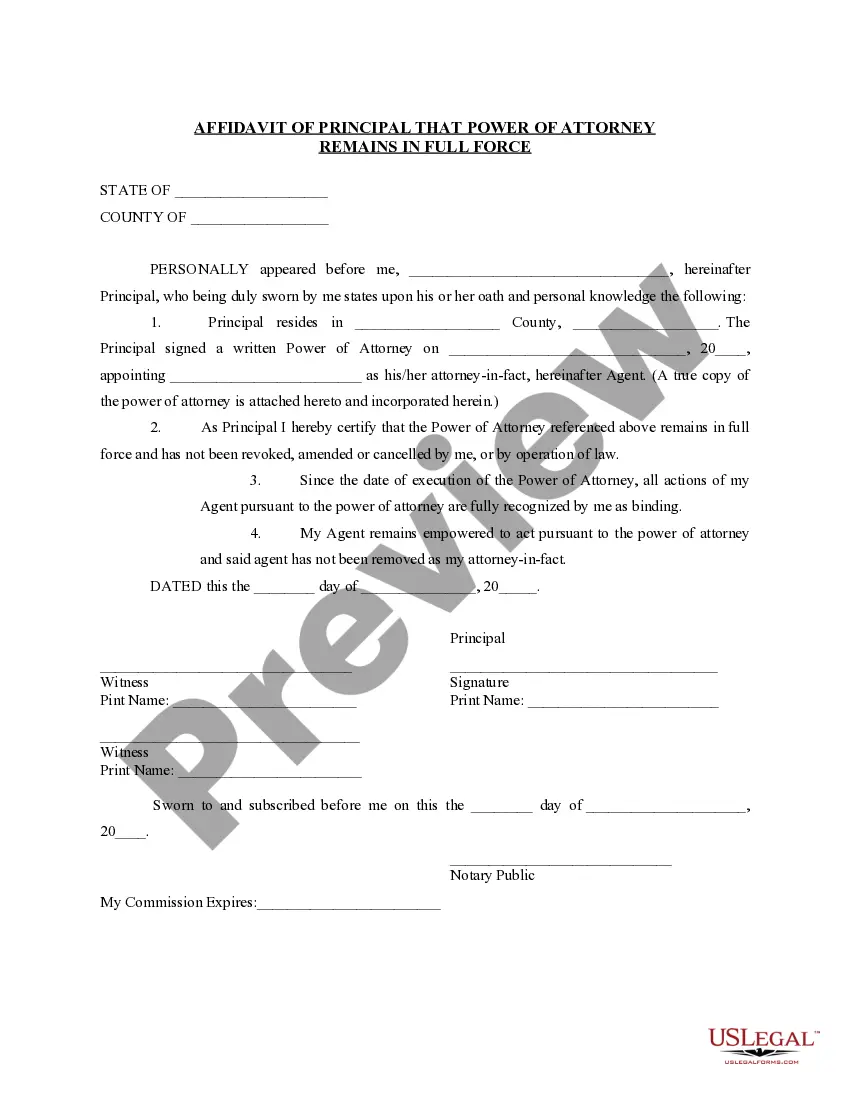
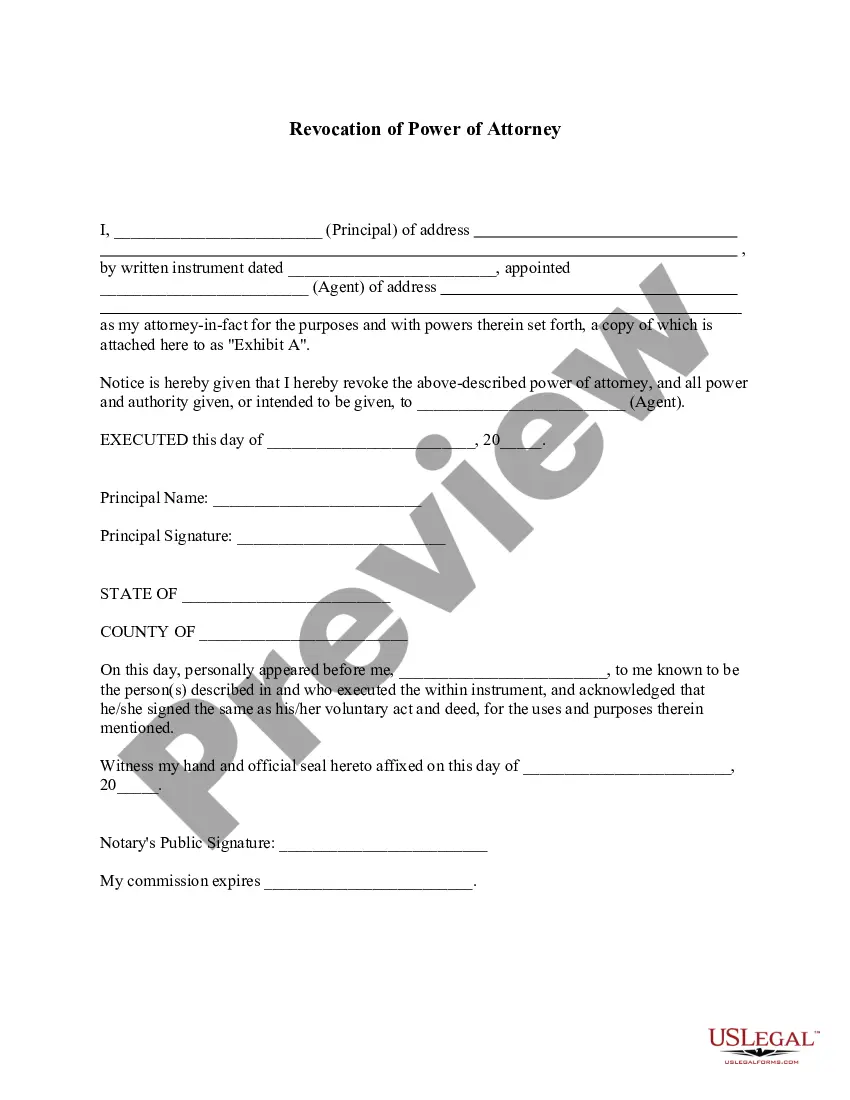
Common use cases
This form is essential in situations where an individual decides to revoke their previously granted power of attorney. Common scenarios include changes in personal relationships, such as divorce or falling out with a previous agent, or simply when the declarant wishes to appoint a different agent. It is also used if the original power of attorney is no longer needed due to changes in health or financial status.
Who this form is for
- Anyone who has previously executed a General Durable Power of Attorney
- Individuals wishing to change their attorney-in-fact/agent
- Those experiencing personal changes that require revocation of previous authority
- Persons who no longer need the services of their designated agent
Steps to complete this form
- Enter your full name as the declarant at the beginning of the form.
- Include the date when the original General Durable Power of Attorney was signed.
- Write the name of the attorney-in-fact/agent you are revoking.
- Sign and date the revocation statement to formalize the document.
- Provide a copy of the revocation to your attorney-in-fact/agent.
Notarization requirements for this form
This form does not typically require notarization unless specified by local law. However, it is advisable to check local regulations to ensure compliance with any specific requirements regarding the revocation of powers of attorney.
Get your form ready online
Our built-in tools help you complete, sign, share, and store your documents in one place.
Make edits, fill in missing information, and update formatting in US Legal Forms—just like you would in MS Word.
Download a copy, print it, send it by email, or mail it via USPS—whatever works best for your next step.
Sign and collect signatures with our SignNow integration. Send to multiple recipients, set reminders, and more. Go Premium to unlock E-Sign.
If this form requires notarization, complete it online through a secure video call—no need to meet a notary in person or wait for an appointment.
We protect your documents and personal data by following strict security and privacy standards.

Make edits, fill in missing information, and update formatting in US Legal Forms—just like you would in MS Word.

Download a copy, print it, send it by email, or mail it via USPS—whatever works best for your next step.

Sign and collect signatures with our SignNow integration. Send to multiple recipients, set reminders, and more. Go Premium to unlock E-Sign.

If this form requires notarization, complete it online through a secure video call—no need to meet a notary in person or wait for an appointment.

We protect your documents and personal data by following strict security and privacy standards.
Mistakes to watch out for
- Failing to include all required details, such as original dates or names.
- Not signing the document, which can invalidate the revocation.
- Forgetting to deliver a copy of the revocation to the attorney-in-fact/agent.
Benefits of completing this form online
- Convenience of accessing the form anytime, without the need for in-person visits.
- Editable fields make it easy to input your information accurately.
- Reliable legal templates crafted by licensed attorneys ensure compliance and validity.
Looking for another form?

Form popularity
FAQ
A principal can revoke the power of attorney while he or she is still mentally competent. A principal can complete a formal written document requesting the revocation of a power of attorney at any time, for any reason, while he or she is still competent. The principal must sign and notarize the revocation request.
The revocation should include your name, a statement that you are of sound mind, and your wish to revoke the power of attorney. You should also specify the date the original power of attorney was executed and the person selected as your agent.
An agent under a financial power of attorney should not have the right to bar a sibling from seeing their parent. A medical power of attorney may give the agent the right to prevent access to a parent if the agent believes the visit would be detrimental to the parent's health.
Until an attorney-in-fact's powers are properly revoked, they can continue to legally act for the principal. To cancel a Power of Attorney, the principal can create a document called a Revocation of Power of Attorney or create a new Power of Attorney that indicates the previous Power of Attorney is revoked.
You can revoke your power of attorney whenever you want, as long as you are mentally competent. This revocation should be in writing, signed by you in front of a notary public, and delivered to the attorney-in-fact and any third parties with whom your agent has been in contact (e.g., your bank).
Until an attorney-in-fact's powers are properly revoked, they can continue to legally act for the principal. To cancel a Power of Attorney, the principal can create a document called a Revocation of Power of Attorney or create a new Power of Attorney that indicates the previous Power of Attorney is revoked.
The more recent POA does not necessarily supersede the earlier one. The earlier one can be revoked, though. You can also have two POAs in effect at the same time.
It also says the only way to revoke the POA is by a written revocation that is also recorded like a conveyance, or a memo of revocation is made on the margin of the original record. (Most offices do not accept marginal notations.)
Revoke Your Current Power of Attorney. To change or cancel your current power of attorney, you should complete a formal, written revocation. Notify Your Power of Attorney. Once you complete your revocation, notify your agent of the cancellation in writing. Notify Relevant Third Parties. Execute a New Power of Attorney.