Kentucky Standby Temporary Guardian Legal Documents Package
What is this form package?
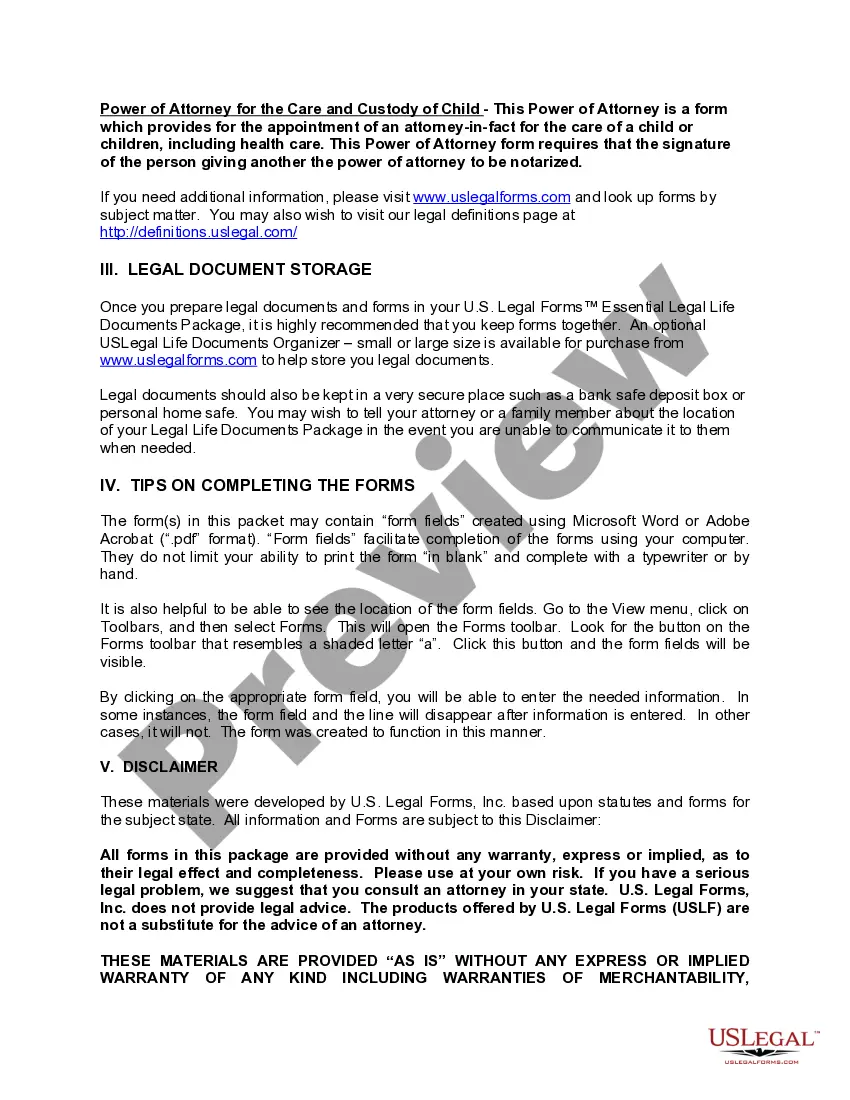
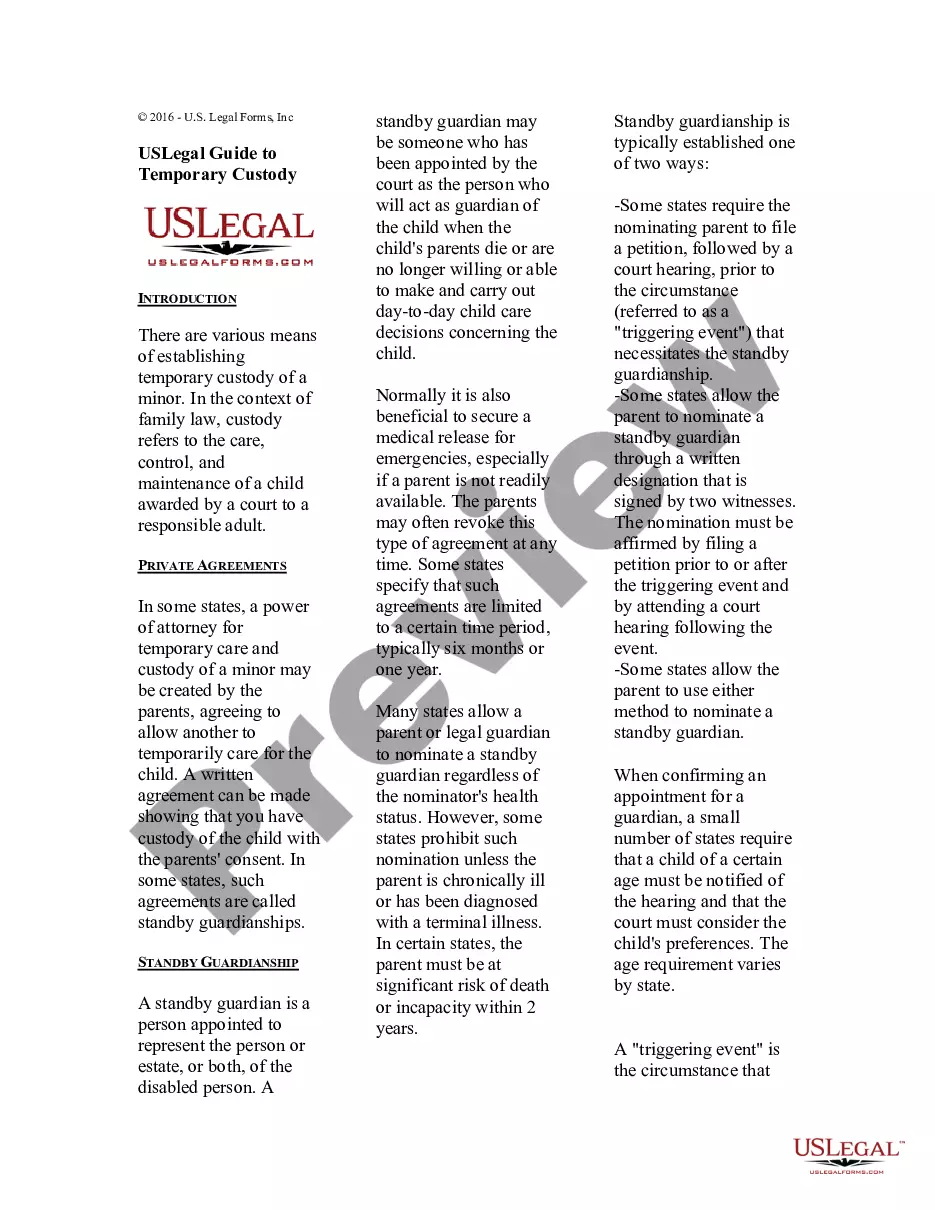
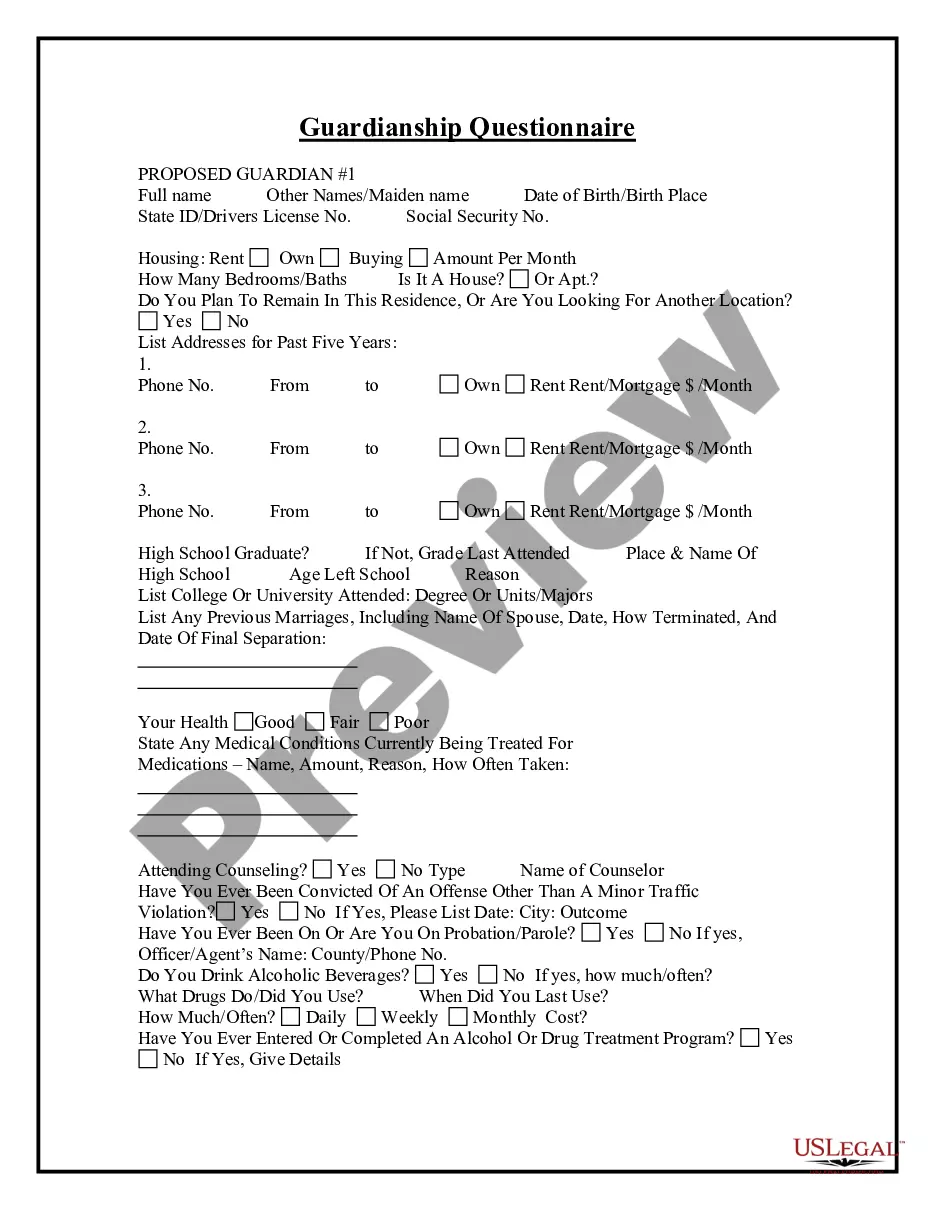
The Kentucky Standby Temporary Guardian Legal Documents Package provides you with essential legal forms and information for establishing standby guardianship. This package uniquely blends actionable forms and state law summaries to help guardianship representatives step in when necessary. With this comprehensive form package, you can ensure that your child's ongoing care and custody are managed effectively when their parents are unable to fulfill that role.
Forms included in this package




When this form package is needed
This form package is particularly useful in scenarios such as:
- When a childâs parents are temporarily incapacitated and need someone else to make day-to-day care decisions.
- When establishing a plan for future guardianship in case of unexpected events, such as illness or accidents.
- When a parent wishes to designate a trusted individual to assume caretaker responsibilities for their child.
Who can use this document
- Parents seeking to establish a standby guardian for their children.
- Guardians looking for lawful means to assume responsibility for a minor.
- Individuals involved in the custody arrangements for children either through informal or legal means.
Completing these forms step by step
- Review all included forms to understand their requirements and purposes.
- Identify and gather the necessary information about all parties involved, including the parental figures and the standby guardian.
- Fill out the forms using a computer or by hand, ensuring all details are accurate.
- Sign the Power of Attorney form in front of a notary if required.
- Store completed documents in a safe place and inform relevant parties about their locations.
Notarization details for included forms
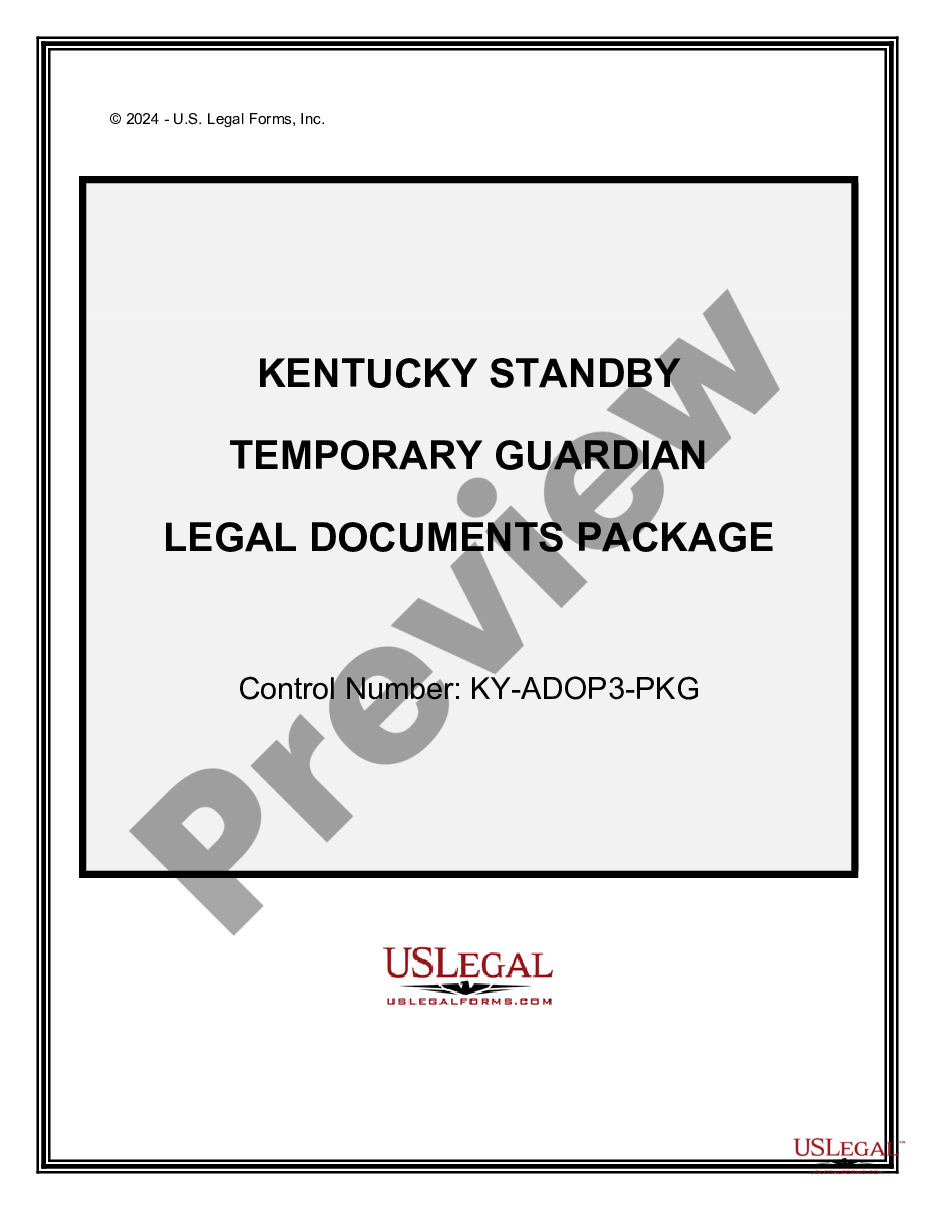
Yes, forms in this package must be notarized to be legally valid. The Power of Attorney for the care and custody of a child requires notarization. US Legal Forms simplifies this process by offering integrated online notarization, allowing you to complete this step through secure video calls any time.
Get your form ready online
Our built-in tools help you complete, sign, share, and store your documents in one place.
Make edits, fill in missing information, and update formatting in US Legal Forms—just like you would in MS Word.
Download a copy, print it, send it by email, or mail it via USPS—whatever works best for your next step.
Sign and collect signatures with our SignNow integration. Send to multiple recipients, set reminders, and more. Go Premium to unlock E-Sign.
If this form requires notarization, complete it online through a secure video call—no need to meet a notary in person or wait for an appointment.
We protect your documents and personal data by following strict security and privacy standards.

Make edits, fill in missing information, and update formatting in US Legal Forms—just like you would in MS Word.

Download a copy, print it, send it by email, or mail it via USPS—whatever works best for your next step.

Sign and collect signatures with our SignNow integration. Send to multiple recipients, set reminders, and more. Go Premium to unlock E-Sign.

If this form requires notarization, complete it online through a secure video call—no need to meet a notary in person or wait for an appointment.

We protect your documents and personal data by following strict security and privacy standards.
Typical mistakes to avoid
- Failing to have the Power of Attorney notarized when necessary.
- Not providing clear and complete information about the standby guardian and the child.
- Neglecting to review state laws that apply to the guardianship process.
Advantages of online completion
- Convenience: Download forms at any time without the need for physical visits to a law office.
- Editability: Easily fill out forms digitally and make changes as needed before printing.
- Reliability: Access expertly crafted legal documents that comply with state laws.
Looking for another form?
Form popularity
FAQ
Yes, you may be able to claim as a qualifying child if: He is under 19, or a full-time student and under 24 years of age. There is no age limit if he is permanently and totally disabled. He lives with you for more than half of the year (Temporary absences, like going to college does not count)
Temporary guardianship in California means that an adult someone over the age of 18 is responsible for a child for a set period of time. The guardian can make decisions related to finances, education, medical care and other important issues, and he or she is responsible for the child's care, as well.
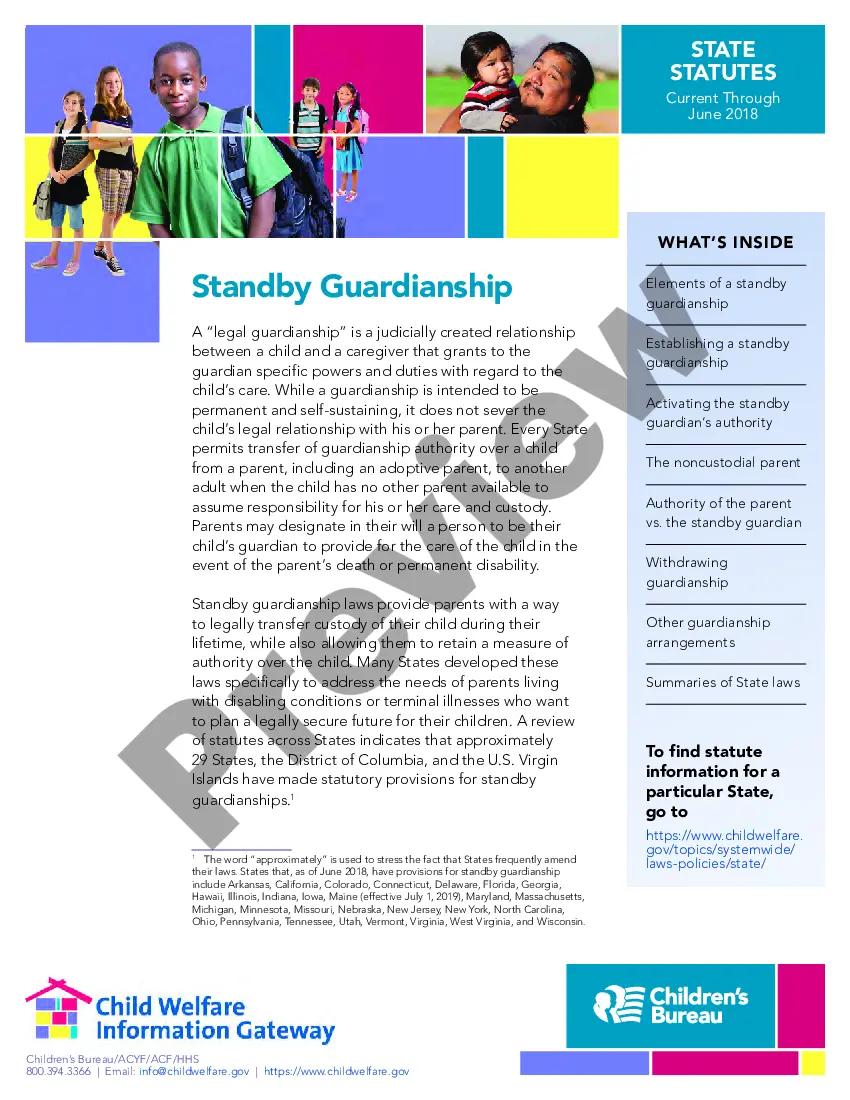
A standby guardianship can be accomplished by parental designation where a parent signs a document entitled Parental Designation and Consent to Beginning the Standby Guardianship (Designation Form) in the presence of two witnesses, which announces the parent's intention to appoint the standby guardian.
The names of the forms are usually: Petition for Appointment of Guardian (or Petition for Appointment of Guardian of Minor) Petition for Conservatorship (when dealing with an incompetent adult) Order Appointing Guardian.
Temporary guardianship refers to formally turning over the care of your children to another adult for a specific period of time.Also, the guardian would be responsible for making decisions and handling situations with the child's school.
A guardian is also prohibited from making gifts from the ward's estate. Generally, a guardian cannot tie up the ward's money by purchasing real estate, but can lend the money to someone else buying real estate if the property is sufficient security for the loan.
The legal guardianship document is a formal declaration to the court system that another party is responsible for the well-being of the minors. No one can predict when an accident or other disaster may occur. Some include a legal guardianship document in their wills to determine who will raise their children.
The person wishing to be appointed the child's guardian files a Petition and an Application with the district court in the county where the child lives, and the court, after a hearing at which the child's best interests are considered, appoints a guardian.
The main difference between custody and guardianship is the child's parents - custody is provided to the child's biological parents while guardianship is given to a non-biological parent.