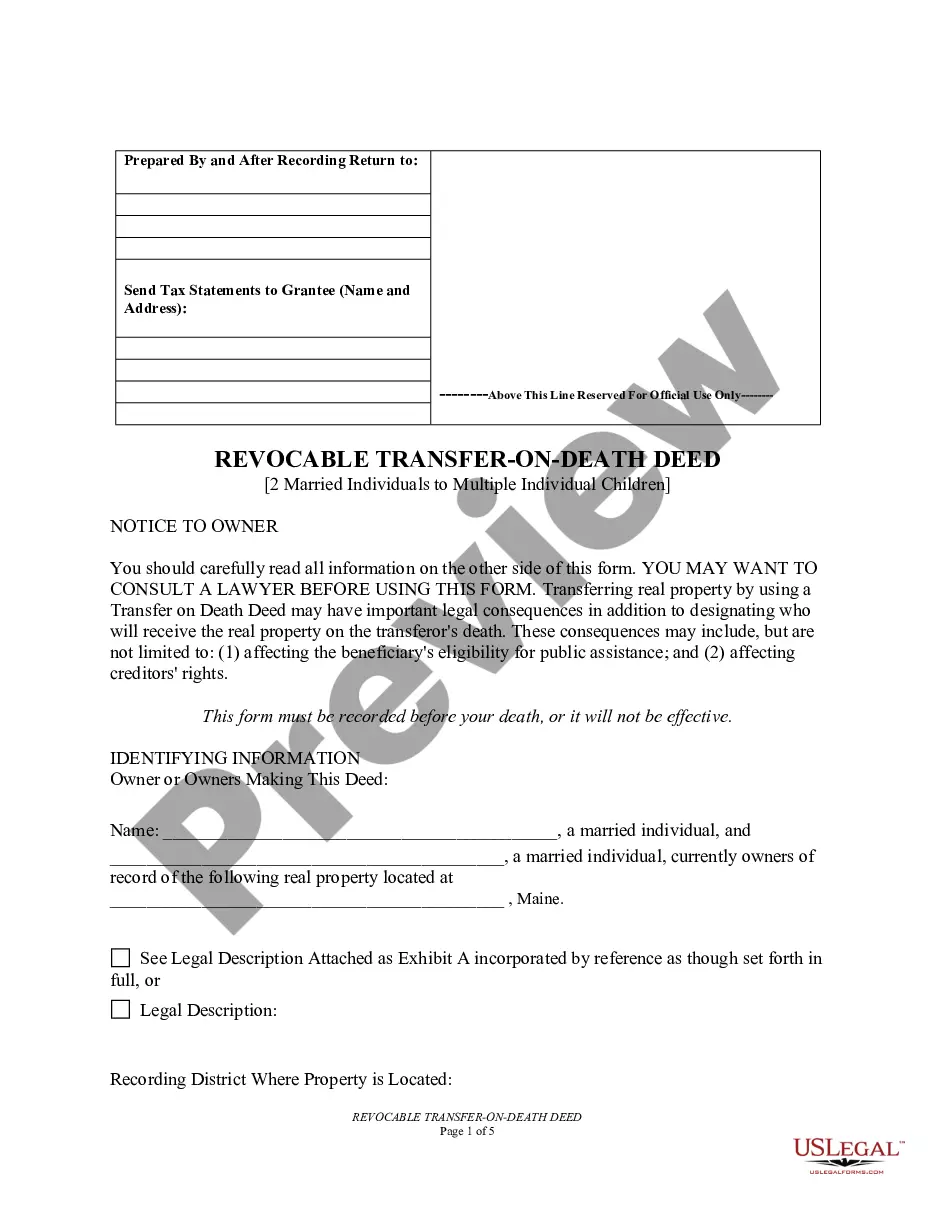
Kentucky Letter from Landlord to Tenant as Notice to remove unauthorized pets from premises
What this document covers
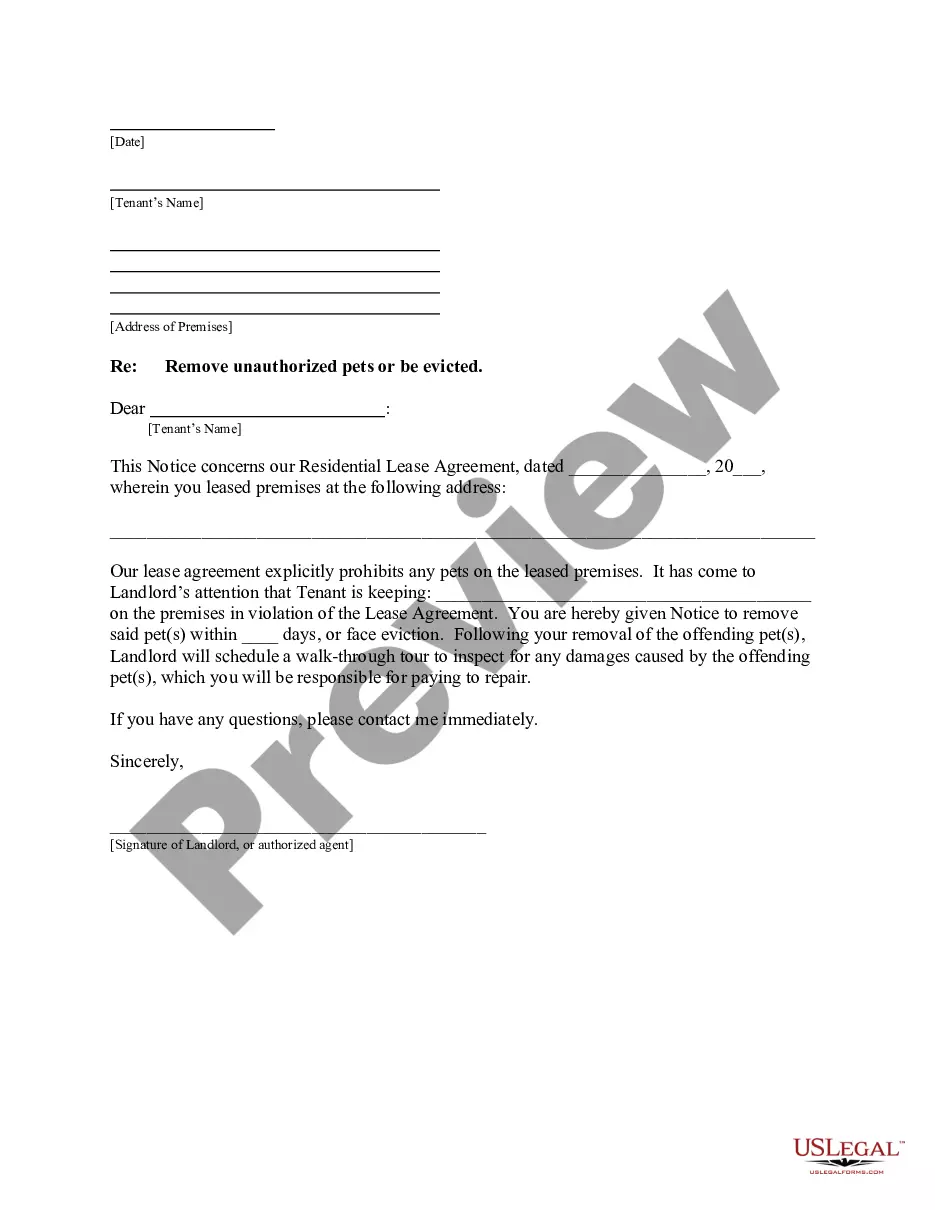
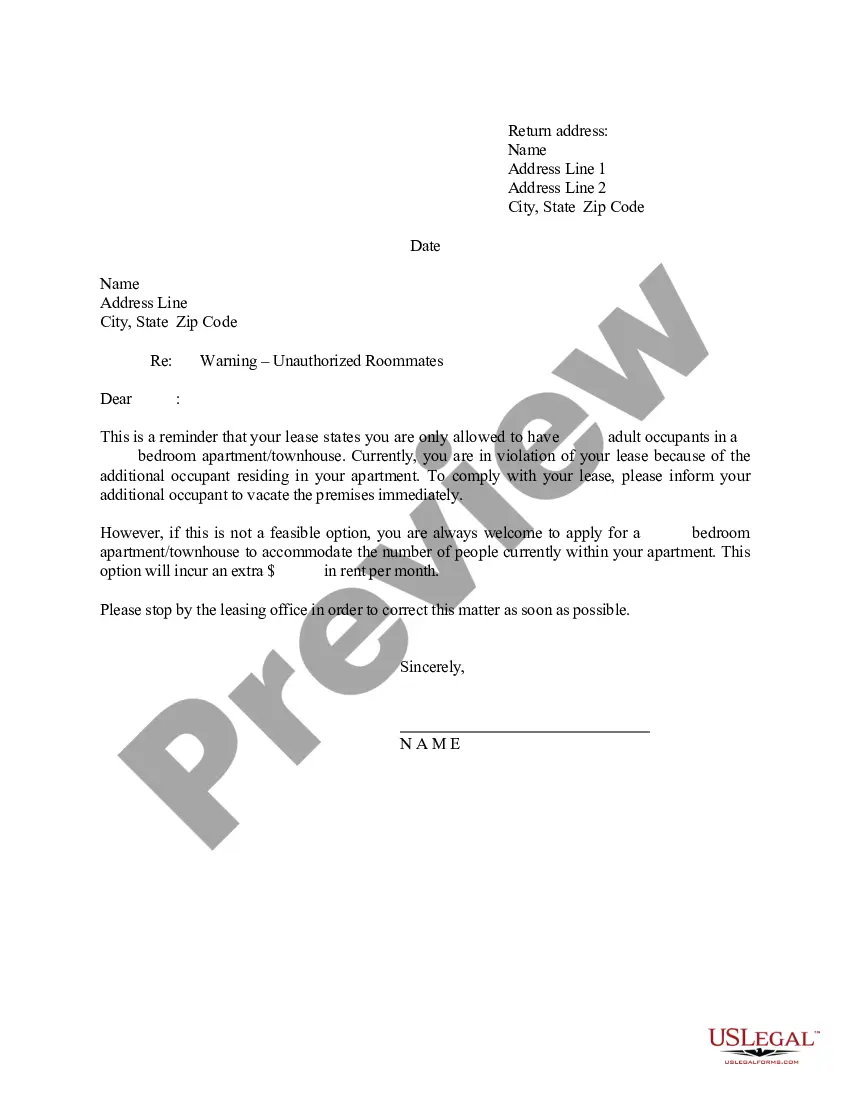
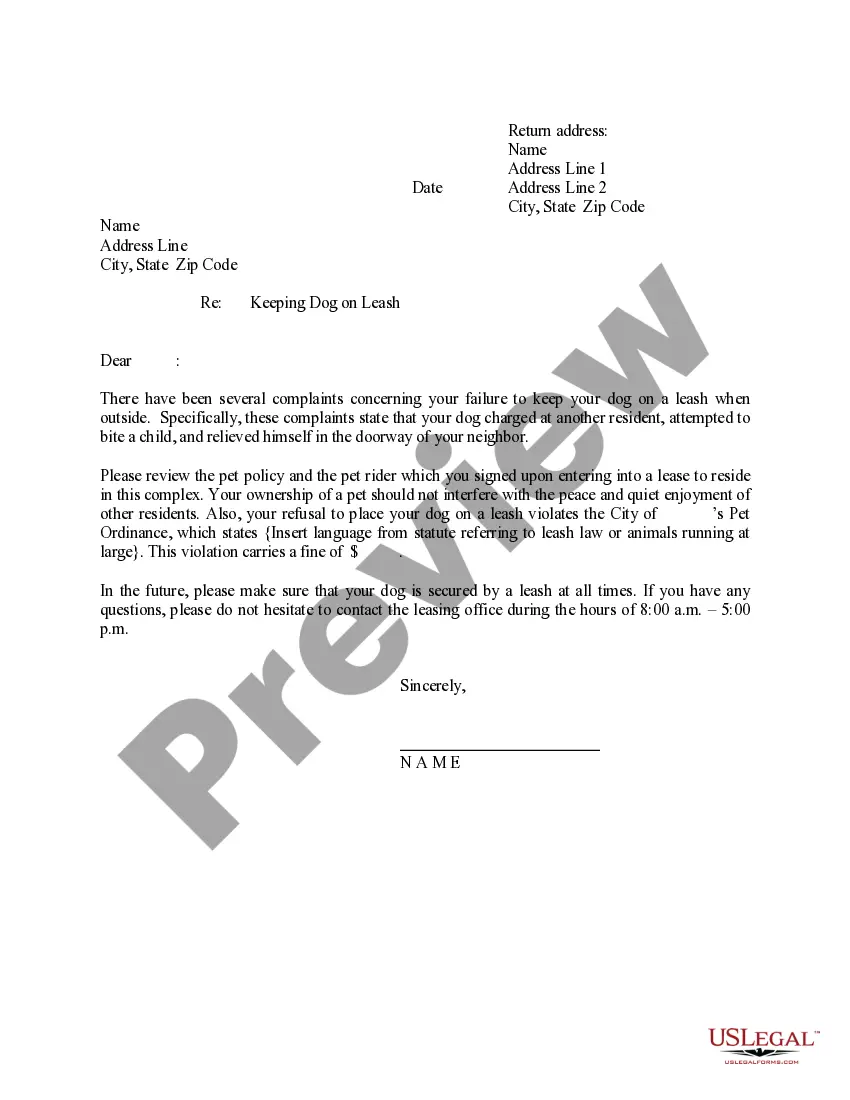
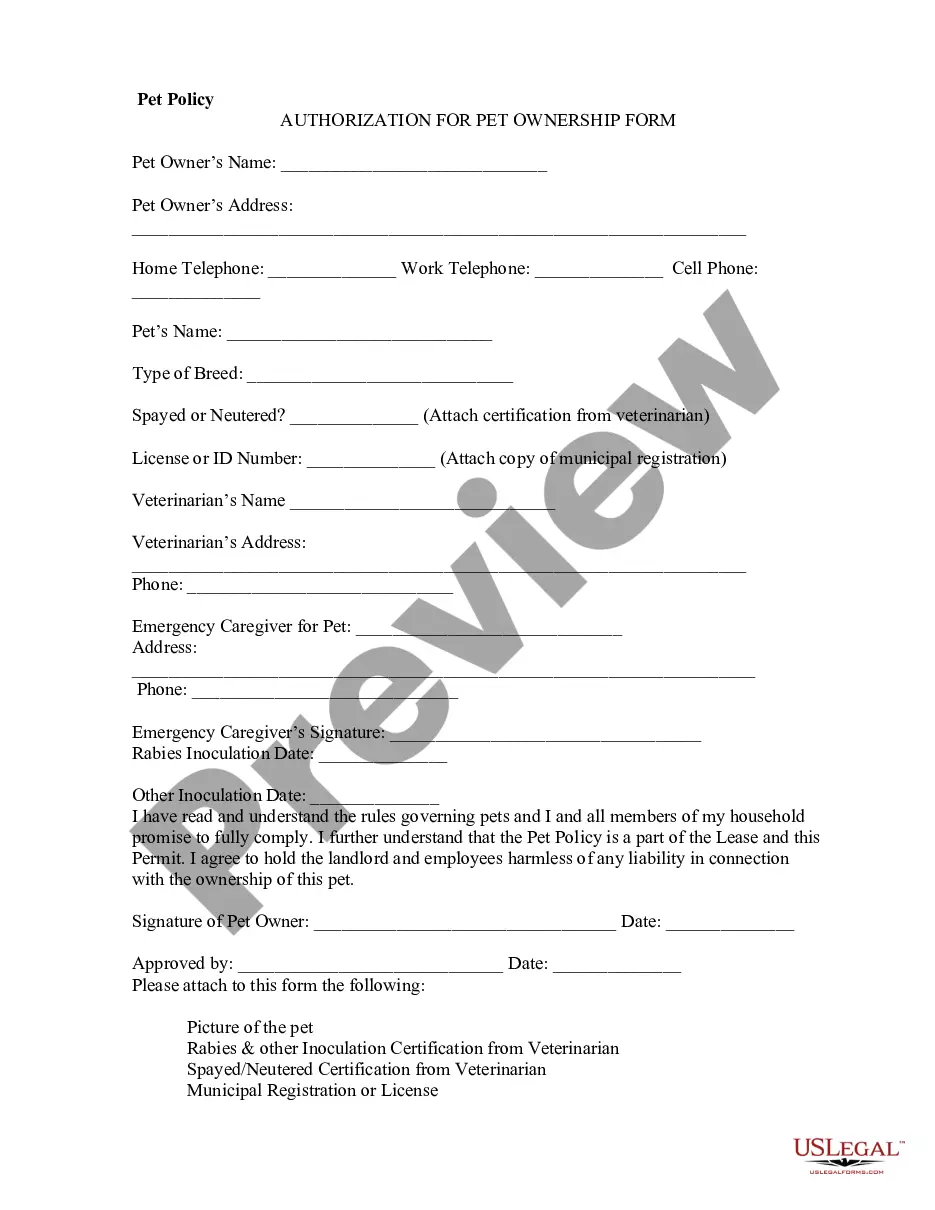
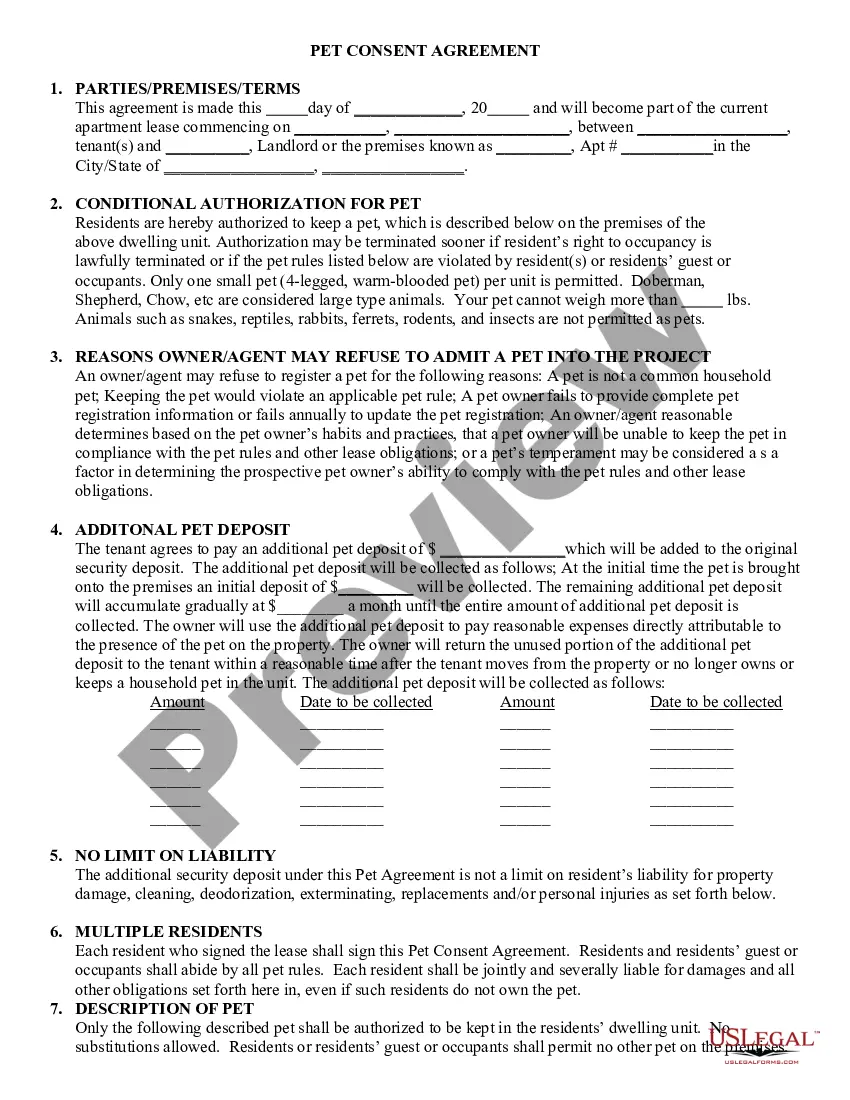
This form is a Letter from Landlord to Tenant as Notice to remove unauthorized pets from premises. Its primary purpose is to formally notify tenants that keeping unauthorized pets is a breach of their lease agreement, potentially leading to eviction. This document is crucial for landlords who seek to enforce lease terms regarding pet limitations.
Form components explained
- Identification of the lease agreement and property address.
- Specification of the unauthorized pet(s) present on the premises.
- Notice period for the tenant to remove the unauthorized pets.
- Provision for a walkthrough inspection post-removal for damages.
- Contact information for the landlord or authorized agent.
When to use this form
This form should be used when a landlord discovers that a tenant is keeping pets that are explicitly prohibited in the lease agreement. It serves as a formal notice that the tenant must comply by removing the pets within a specified timeframe to avoid potential eviction. This situation often arises when landlords conduct property inspections or receive complaints from neighbors.
Who should use this form
- Landlords who have a written lease agreement that prohibits pets.
- Property managers responsible for enforcing lease terms.
- Real estate investors seeking to maintain compliance with lease agreements.
Completing this form step by step
- Identify the lease agreement by entering the date and address of the rental property.
- Specify the unauthorized pet(s) that have been observed on the premises.
- State the number of days the tenant has to remove the pets.
- Include contact information for any follow-up inquiries.
- Sign and date the letter to provide it with legal validity.
Does this document require notarization?
In most cases, this form does not require notarization. However, some jurisdictions or signing circumstances might. US Legal Forms offers online notarization powered by Notarize, accessible 24/7 for a quick, remote process.
Get your form ready online
Our built-in tools help you complete, sign, share, and store your documents in one place.
Make edits, fill in missing information, and update formatting in US Legal Forms—just like you would in MS Word.
Download a copy, print it, send it by email, or mail it via USPS—whatever works best for your next step.
Sign and collect signatures with our SignNow integration. Send to multiple recipients, set reminders, and more. Go Premium to unlock E-Sign.
If this form requires notarization, complete it online through a secure video call—no need to meet a notary in person or wait for an appointment.
We protect your documents and personal data by following strict security and privacy standards.

Make edits, fill in missing information, and update formatting in US Legal Forms—just like you would in MS Word.

Download a copy, print it, send it by email, or mail it via USPS—whatever works best for your next step.

Sign and collect signatures with our SignNow integration. Send to multiple recipients, set reminders, and more. Go Premium to unlock E-Sign.

If this form requires notarization, complete it online through a secure video call—no need to meet a notary in person or wait for an appointment.

We protect your documents and personal data by following strict security and privacy standards.
Mistakes to watch out for
- Failing to provide specific details about the unauthorized pets.
- Not adhering to the required notice period as defined in the lease.
- Omitting contact information for follow-up questions.
Benefits of completing this form online
- Immediate access to a legally compliant document.
- Ability to customize the letter to fit specific circumstances.
- Convenience of downloading and printing from home.
Legal use & context
- Sending this notice is a crucial step in upholding lease agreements.
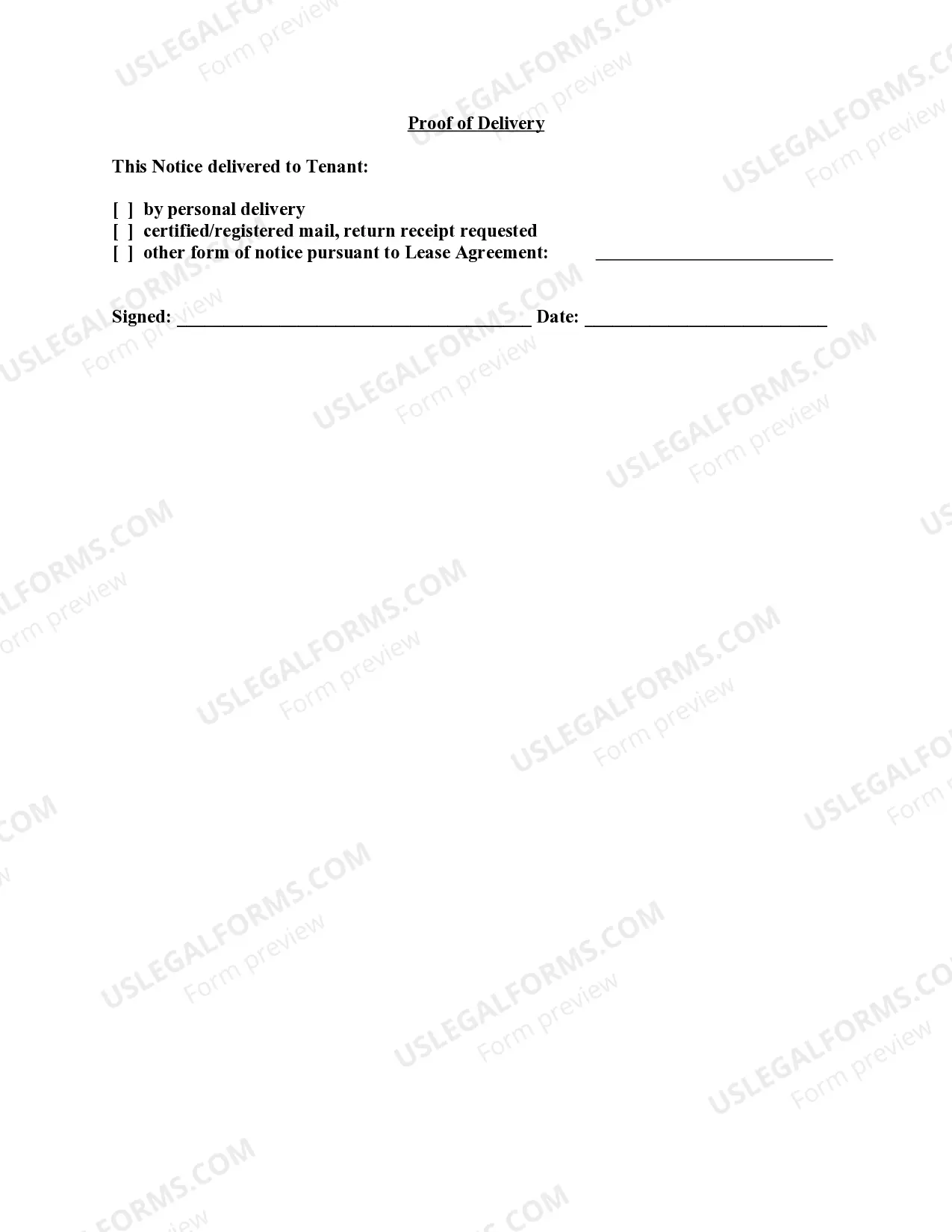
- Failure to serve this notice properly could weaken a landlord's position in eviction proceedings.
Summary of main points
- This letter serves as a formal notice for unauthorized pets.
- Directly addresses breach of lease agreement for pet policies.
- Ensures compliance with legal requirements regarding tenant eviction processes.
Looking for another form?









Form popularity
FAQ
Any guest residing on the property for more than 14 days in a six-month period or spending more than 7 nights consecutively will be considered a tenant. Anyone living on the property must be listed and sign the lease agreement.
Send a 3-day notice to fix or quit. If the tenant doesn't follow through with a fix, visit your local courthouse and begin a filing for eviction. In some states, you can file to only evict the unauthorized tenant. In others, you'll have the option to evict your tenant as well as the unauthorized occupant.
If you want to hide your pet from your landlord, always cover up any evidence (odor, hair). Vacuum your house thoroughly, including the couches, curtains, and the rugs/carpets. Regularly make use of scented candles, room sprays to mask the pet smell. A portable air purifier can help in eliminating the pet odor.
Most landlords are willing to work with their tenants, even if you do break the lease, but some landlords won't. If you're caught sneaking in a pet, your landlord may have the right to evict you. If you're evicted, your landlord may sue you for the remainder of your lease payment.
Once you have notified your landlord, you should also present him/her with your ESA letter from your mental health professional. You may provide an original hard copy of your letter or send your landlord a digital copy via email.
Your landlord cannot go into your apartment and remove a pet or show up and force you or your pet out.Generally the landlord cannot even enter the home without giving the tenant notice except in an emergency, unless the lease specifies otherwise.
There is no written agreement When your roommate has month-to-month tenancy, California state law says that you can evict them by serving 30 or 60 days' notice without any reasoning.
Dear (Name of landlord or manager), This letter constitutes my written (number of days' notice that you need to give based on your lease agreement)-day notice that I will be moving out of my apartment on (date), the end of my current lease. I am leaving because (new job, rent increase, etc.)
A landlord can terminate a California tenancy early and evict the tenant for a variety of reasons, including failure to pay rent, violating the lease or rental agreement, or committing an illegal act. Before terminating the tenancy, the landlord must give the tenant written notice.