Kansas Last Will and Testament for a Married Person with No Children
Overview of this form
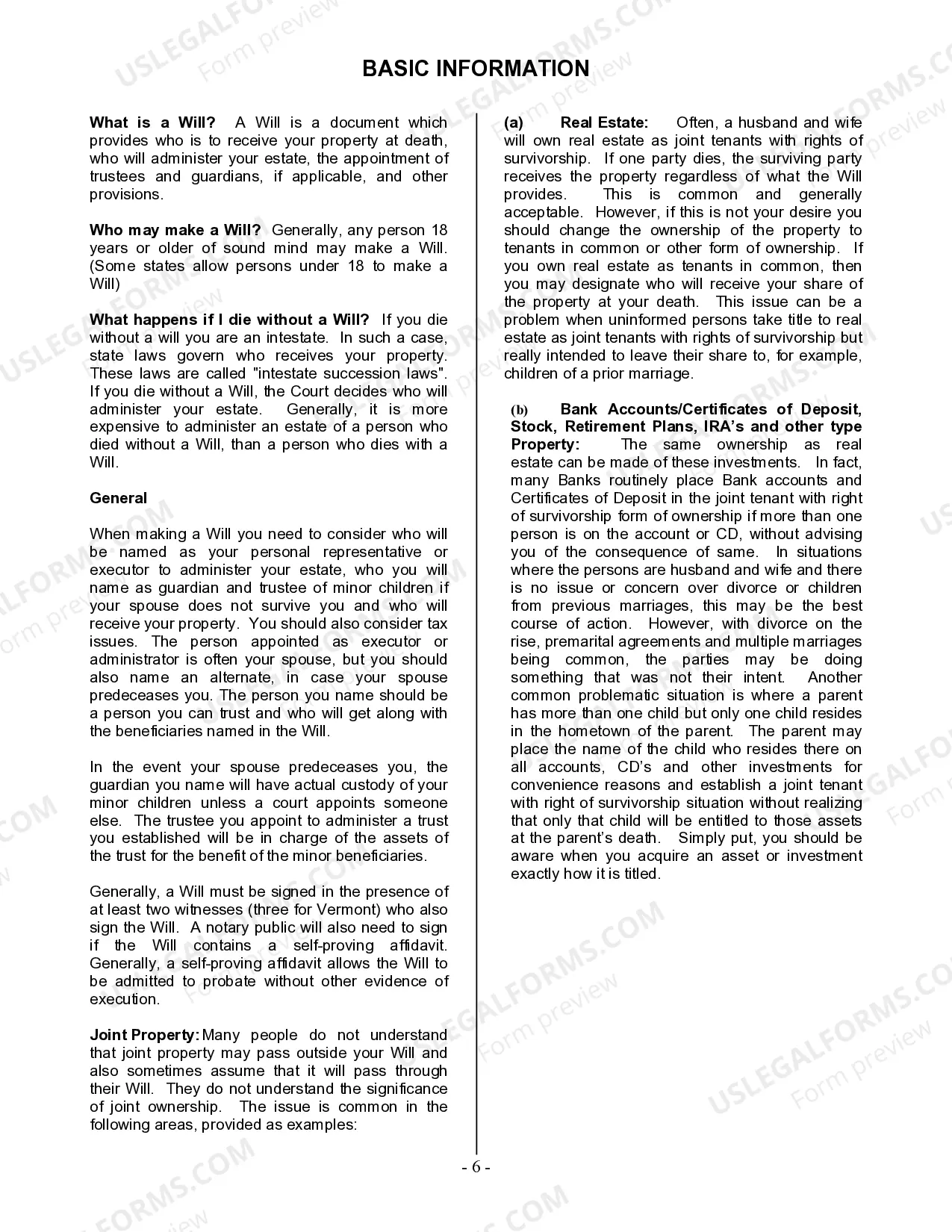
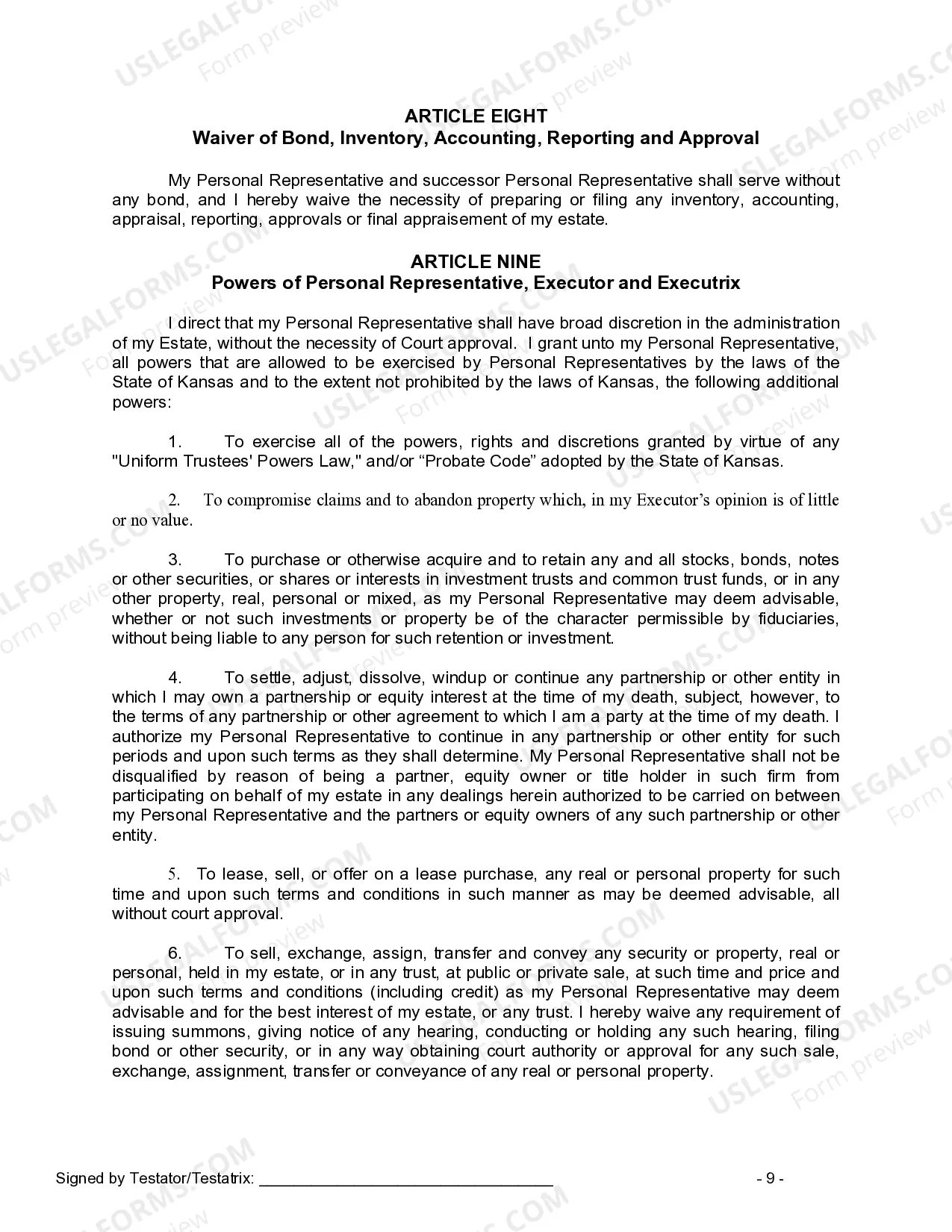
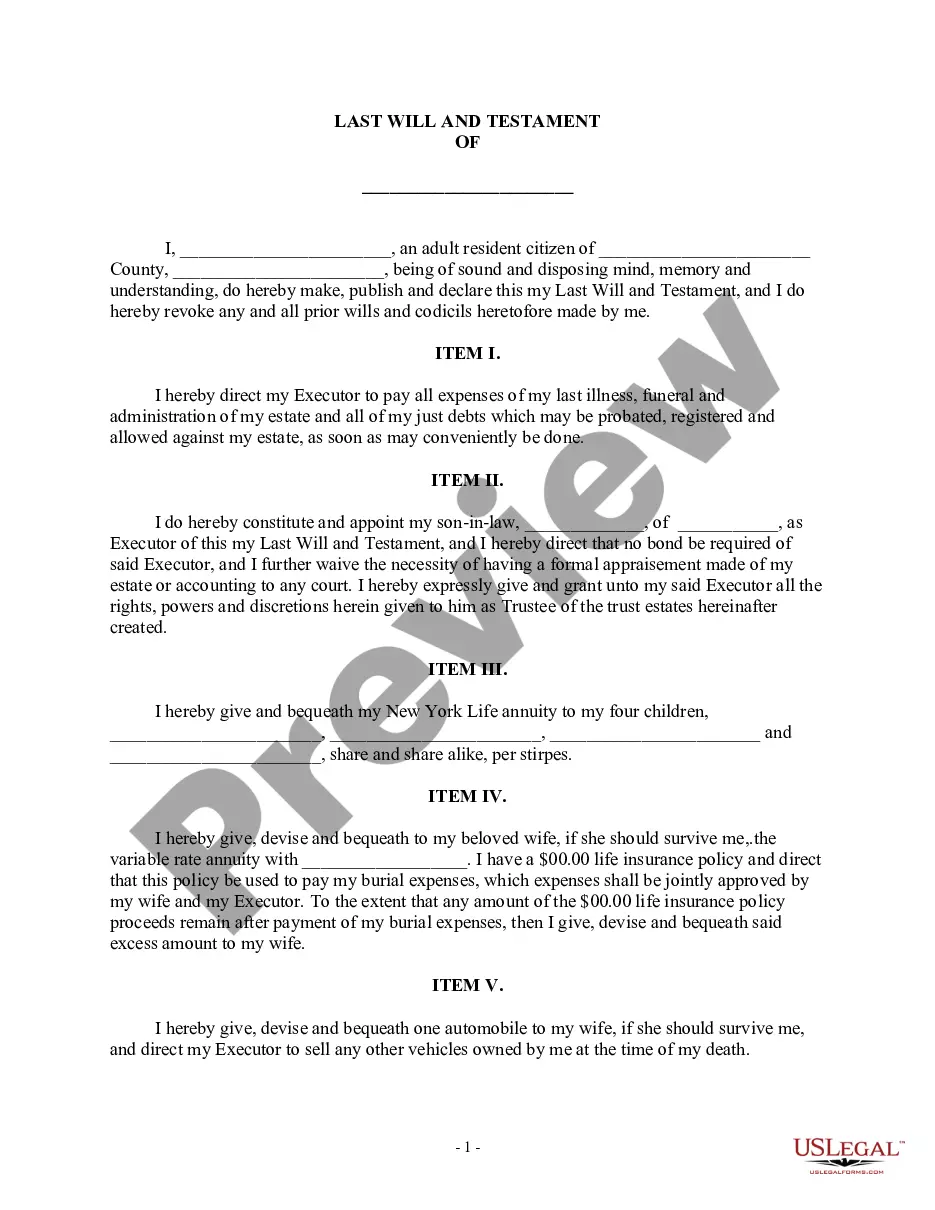
The Last Will and Testament for a Married Person with No Children is a legal document that outlines how your property and assets will be distributed after your death. It specifically caters to married individuals without children, detailing the appointment of an executor, bequests to your spouse, and provisions for other beneficiaries. This type of will provides a clear plan for the distribution of your estate, differentiating it from wills designed for individuals with children or those who are single.
Form components explained
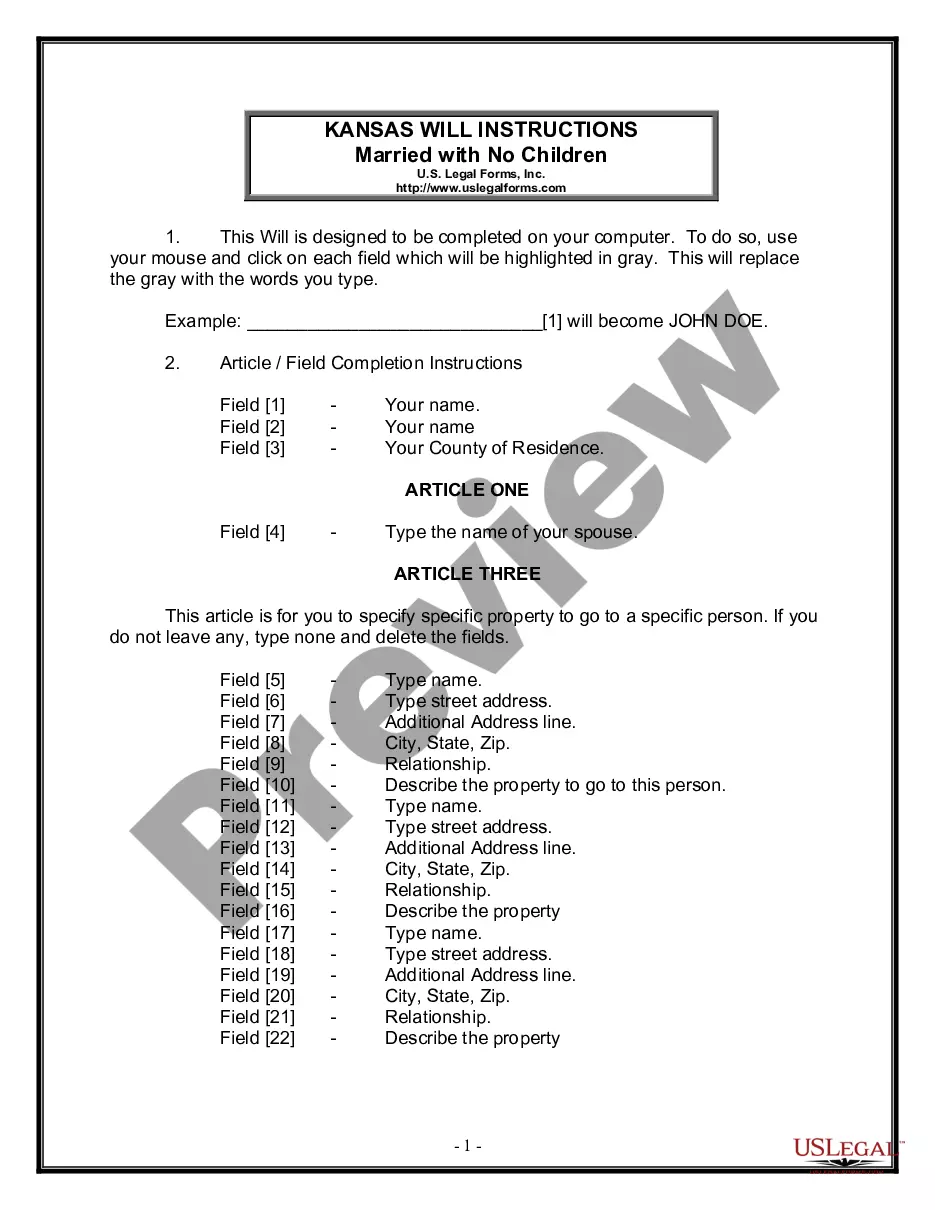
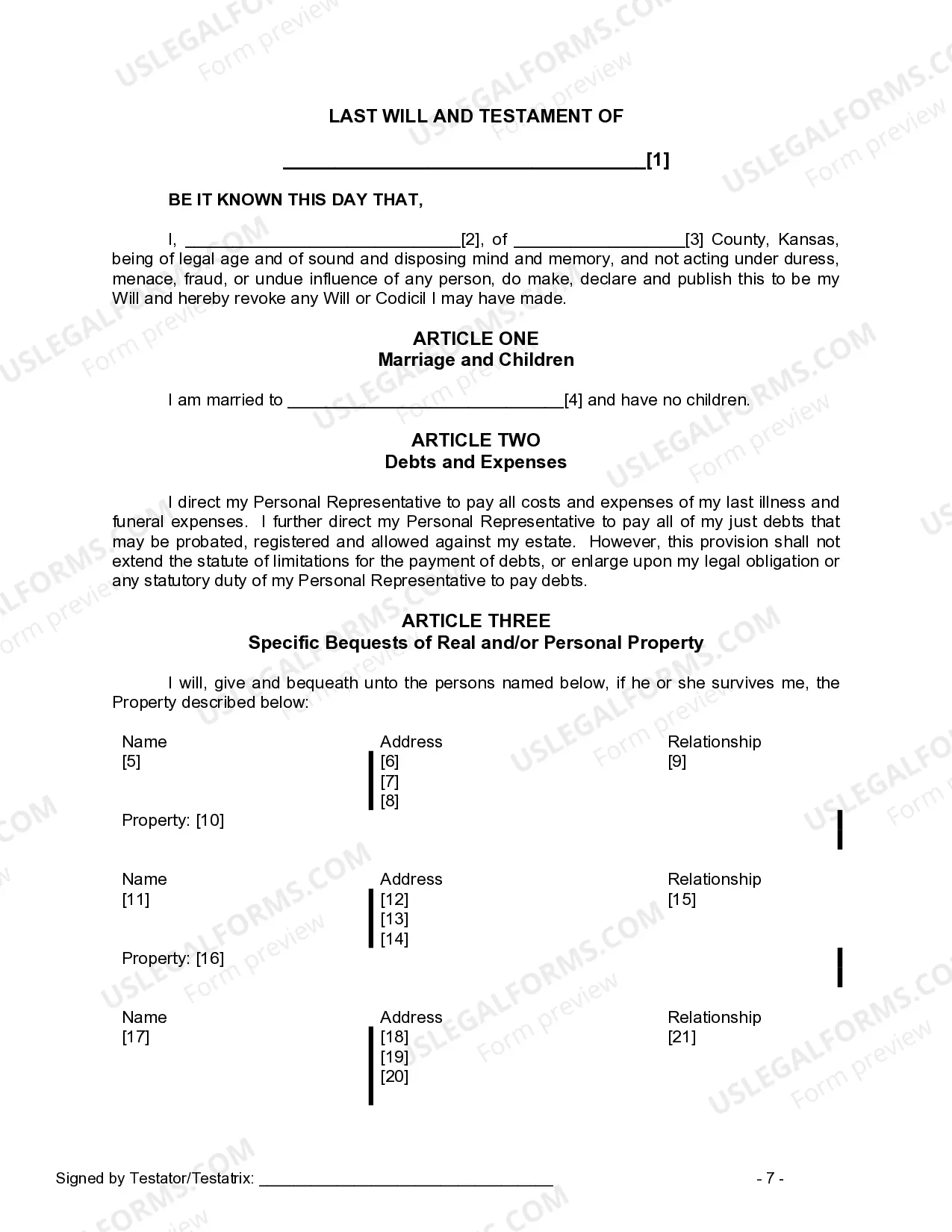
- Your Information: Personal details including your name and county of residence.
- Spouse Information: The name of your spouse, who will primarily inherit your estate.
- Specific Bequests: Instructions for any property you wish to leave to specific individuals.
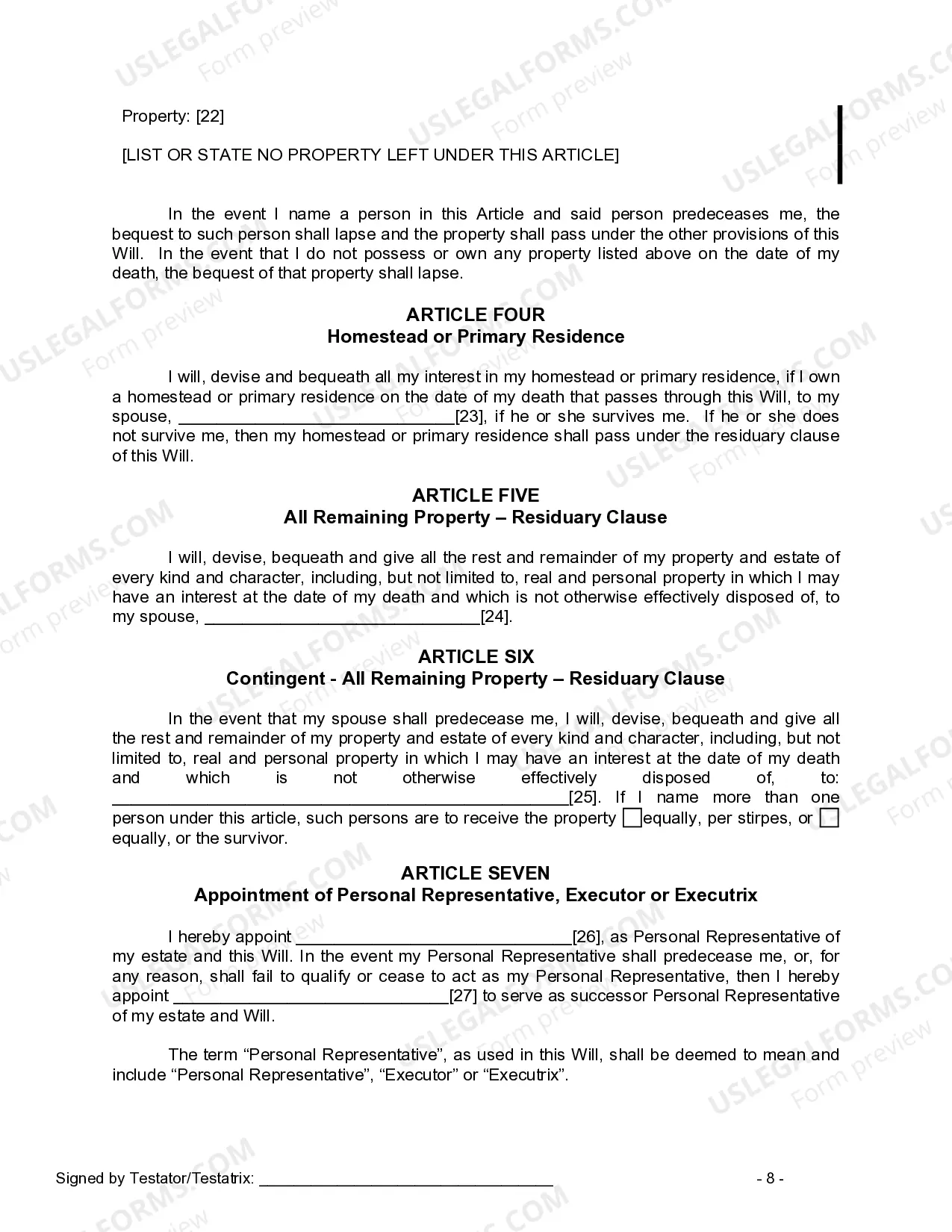
- Homestead Provision: Designation of your primary residence to your spouse upon your death.
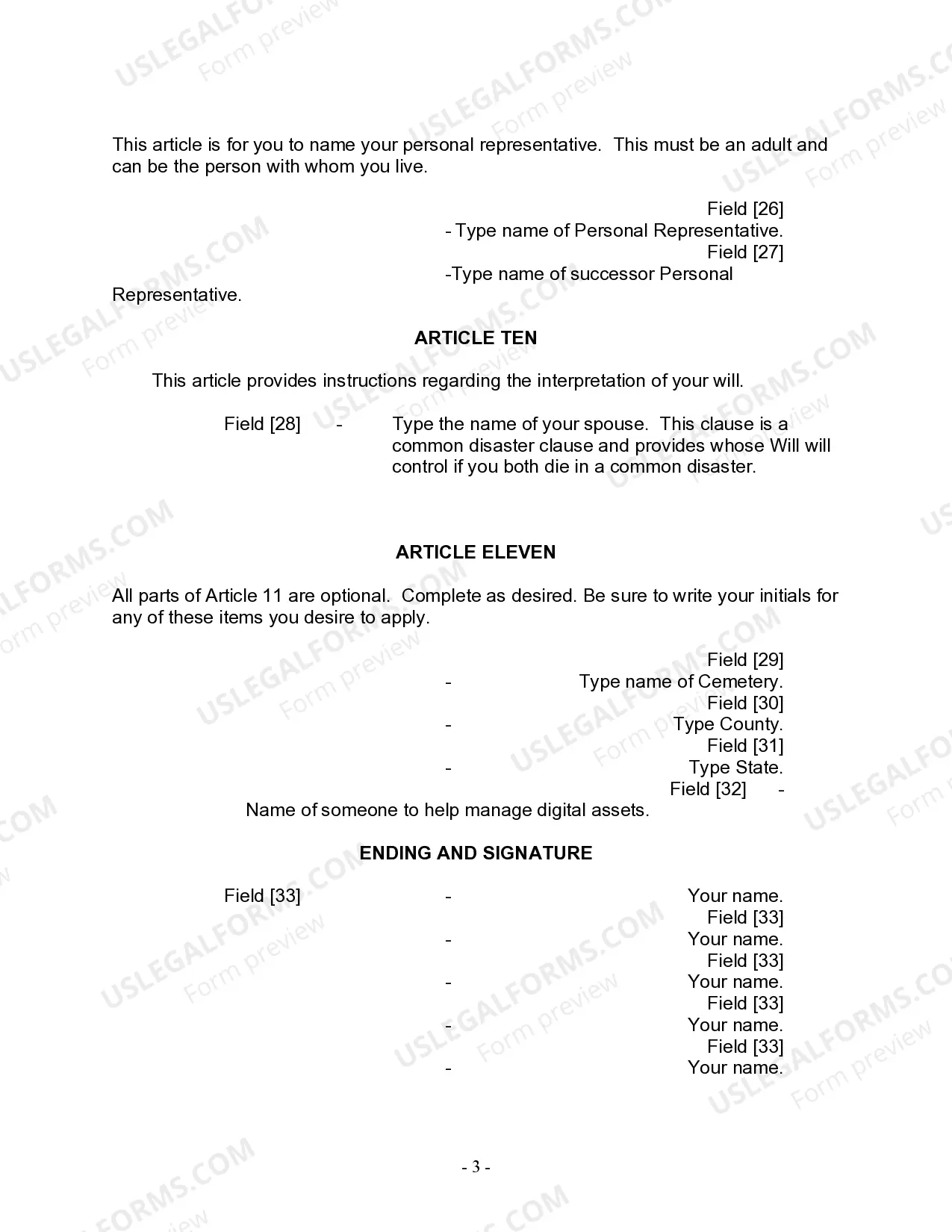
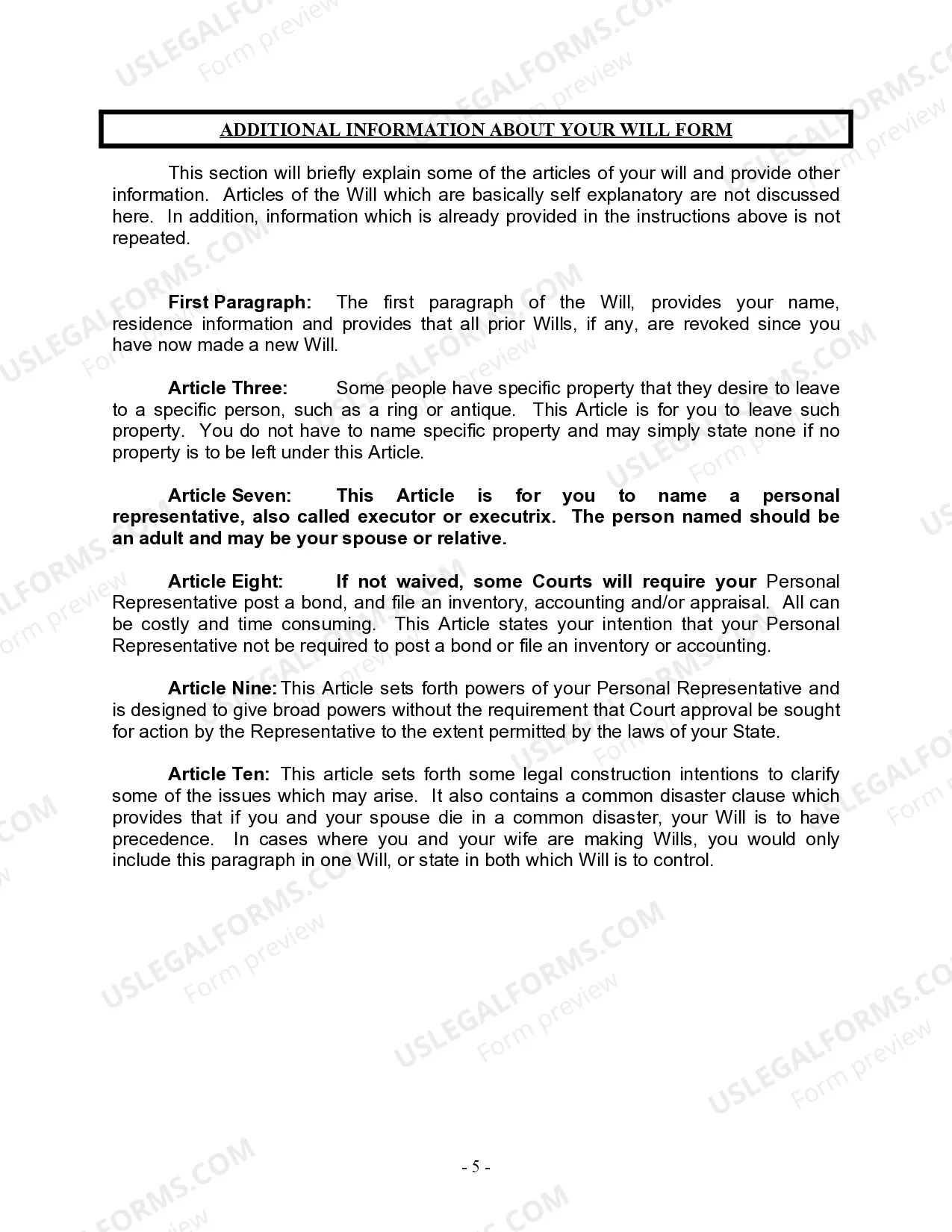
- Personal Representative: Appointment of an executor to manage your estate and fulfill the terms of your will.
- Witness Signatures: Signature requirements to validate the will, including witness and notarization provisions if applicable.







When to use this document
This form is necessary when a married person without children wishes to outline the distribution of their assets after death. It is particularly useful for individuals who want to ensure their spouse inherits their estate and for those who might want to designate specific properties or make special provisions regarding their personal representative. Additionally, using this legal form can help avoid complications and ensure clarity in the distribution of assets.
Who this form is for
- Married individuals without children.
- Persons seeking a clear legal directive for asset distribution.
- Individuals who wish to appoint a personal representative for their estate.
- Those looking to ensure their spouse benefits from their estate without complications.
How to prepare this document
- Input your full name and county of residence at the beginning of the document.
- Clearly specify the name of your spouse as the primary beneficiary.
- Fill in any specific items you wish to bequeath to designated individuals.
- Choose a personal representative and include their contact information.
- Have the completed will signed in front of two witnesses, ensuring they are not related or beneficiaries.
Notarization requirements for this form
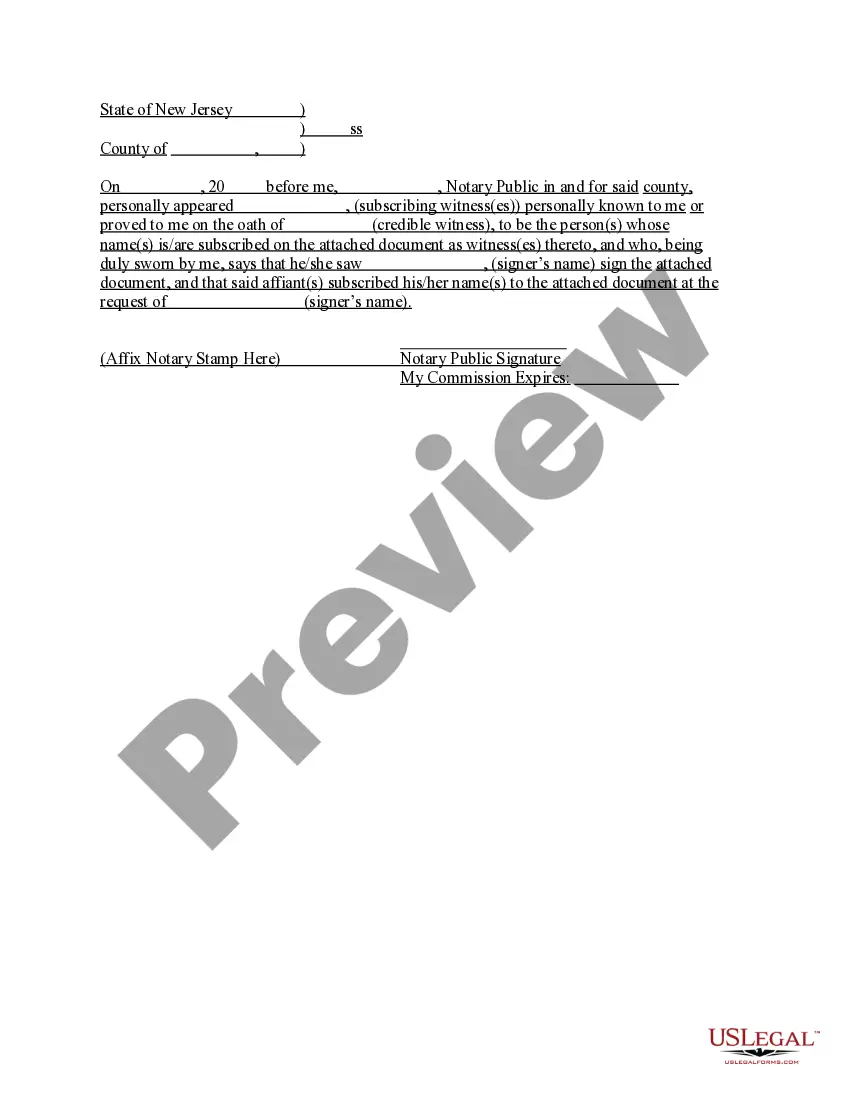
Yes, this form must be notarized to be legally valid. It also requires the signatures of two witnesses who are not related to you or named in your will. Using online notarization through U.S. Legal Forms is convenient, allowing for secure video consultations and completion of the notarization process without the need for in-person travel.
Get your form ready online
Our built-in tools help you complete, sign, share, and store your documents in one place.
Make edits, fill in missing information, and update formatting in US Legal Forms—just like you would in MS Word.
Download a copy, print it, send it by email, or mail it via USPS—whatever works best for your next step.
Sign and collect signatures with our SignNow integration. Send to multiple recipients, set reminders, and more. Go Premium to unlock E-Sign.
If this form requires notarization, complete it online through a secure video call—no need to meet a notary in person or wait for an appointment.
We protect your documents and personal data by following strict security and privacy standards.

Make edits, fill in missing information, and update formatting in US Legal Forms—just like you would in MS Word.

Download a copy, print it, send it by email, or mail it via USPS—whatever works best for your next step.

Sign and collect signatures with our SignNow integration. Send to multiple recipients, set reminders, and more. Go Premium to unlock E-Sign.

If this form requires notarization, complete it online through a secure video call—no need to meet a notary in person or wait for an appointment.

We protect your documents and personal data by following strict security and privacy standards.
Avoid these common issues
- Failing to have the will signed by required witnesses.
- Not specifying alternative beneficiaries if the spouse predeceases you.
- Leaving out important details about specific property or accounts.
- Relying on verbal instructions instead of ensuring the will encompasses all wishes.
Benefits of completing this form online
- Easy and quick download process, allowing for immediate access and use.
- Editable format, ensuring all personal details can be easily customized to your needs.
- Comprehensive instructions provided to guide you through each section of the will.
- Reliability, as the form is drafted by licensed attorneys, ensuring legal validity.
Main things to remember
- This form is specifically designed for married individuals with no children.
- Clearly outline your wishes for asset distribution and appoint an executor.
- Ensure compliance with state requirements to make the will legally effective.
Looking for another form?

Form popularity
FAQ
A joint will is a legal document executed by two (or more) people, which merges their individual wills into a single, combined last will and testament. Like most wills, a joint will lets the will-makers name who will get their property and assets after they die. Joint wills are usually created by married couples.
You can make your own will in Kansas, using Nolo's Quicken WillMaker & Trust. However, you may want to consult a lawyer in some situations. For example, if you think that your will might be contested or if you want to disinherit your spouse, you should talk with an attorney.
In order for a will to be valid, it must be: made by a person who is 18 years old or over and. made voluntarily and without pressure from any other person and.signed by the two witnesses, in the presence of the person making the will, after it has been signed.
A. You don't have to have a lawyer to create a basic will you can prepare one yourself. It must meet your state's legal requirements and should be notarized.But be careful: For anything complex or unusual, like distributing a lot of money or cutting someone out, you'd do best to hire a lawyer.
Include personal identifying information. Include a statement about your age and mental status. Designate an executor. Decide who will take care of your children. Choose your beneficiaries. List your funeral details. Sign and date your Last Will and Testament.
As long as it was properly signed and witnessed by two adult independent witnesses who are present at the time you sign your will, it should be legally binding.Using the wrong wording could mean that your instructions aren't followed, or even that your will isn't valid.
For example, California requires that all sections of the will necessary to make the will valid must be written entirely by hand and that the person writing the will must sign it. If these state rules aren't followed, the holographic will won't be valid.
Find an online template or service. Make a list of your assets. Be specific about who gets what. If you have minor children, choose a guardian. Give instructions for your pet. Choose an executor. Name a 'residuary beneficiary' List your funeral preferences.
Create the initial document. Start by titling the document Last Will and Testament" and including your full legal name and address. Designate an executor. Appoint a guardian. Name the beneficiaries. Designate the assets. Ask witnesses to sign your will. Store your will in a safe place.