Kansas Last Will and Testament for Married person with Adult Children from Prior Marriage
Overview of this form
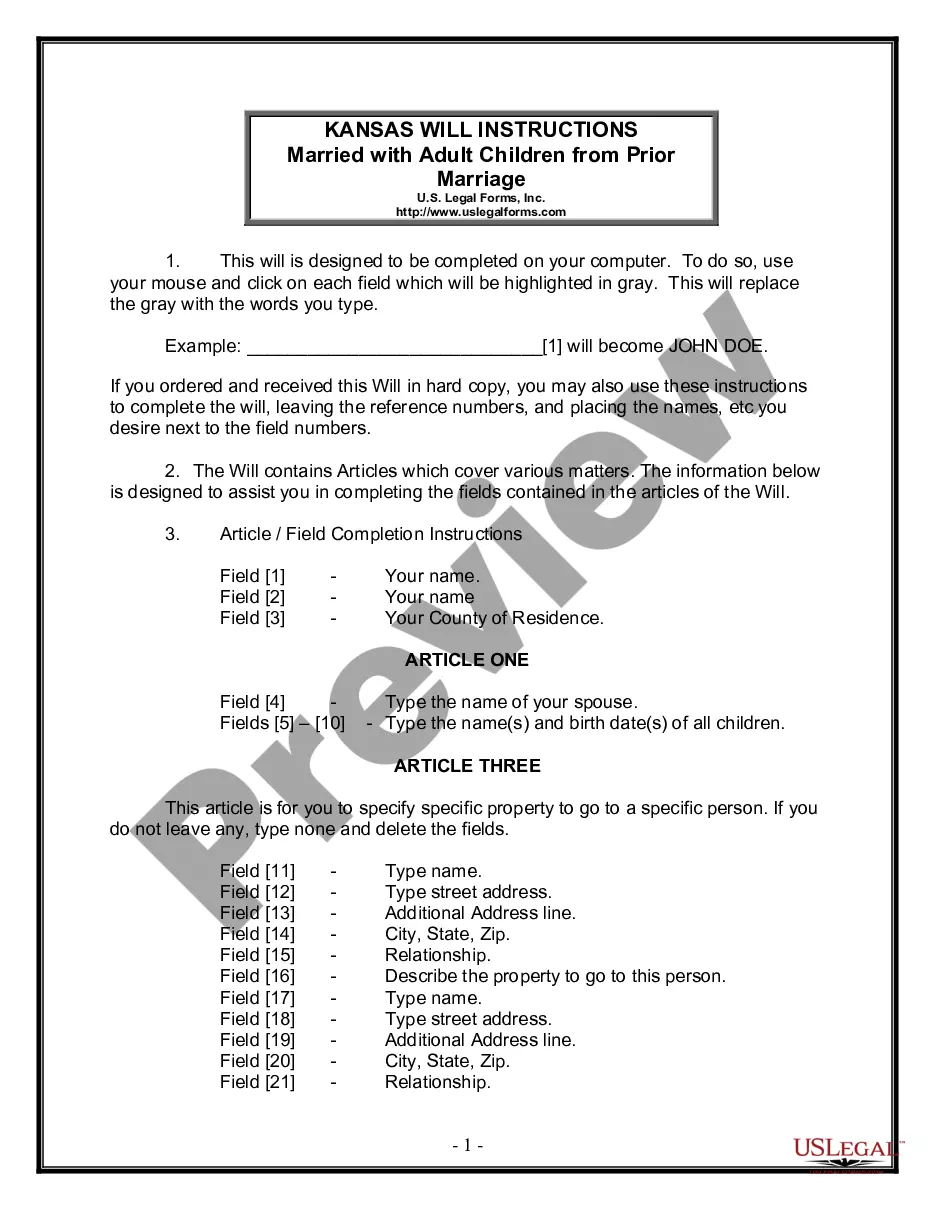
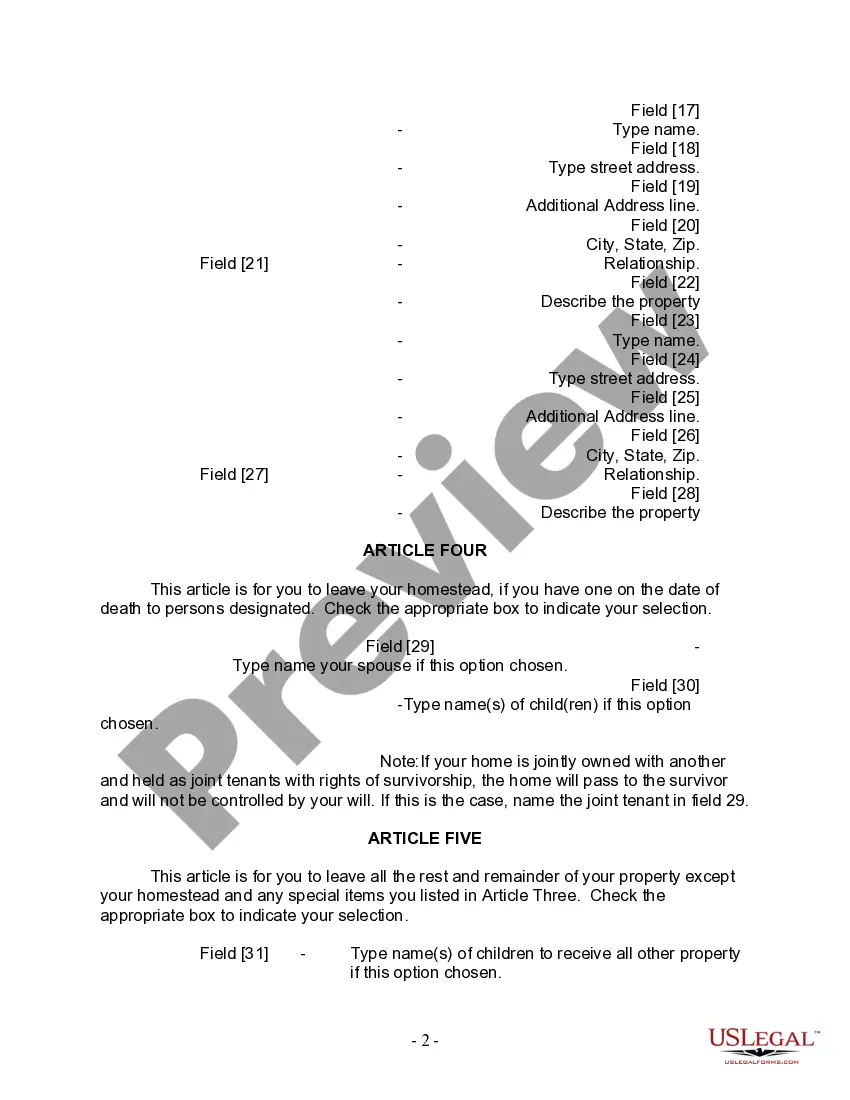
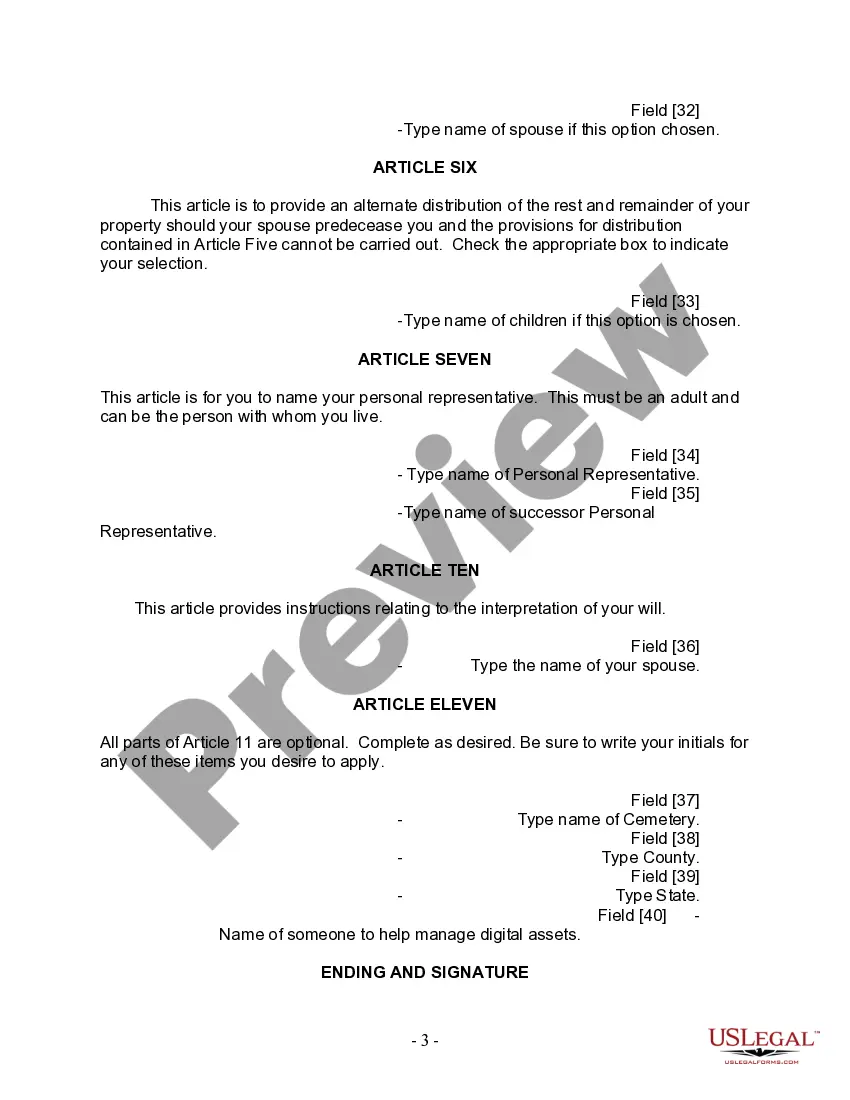
The Last Will and Testament for a married person with adult children from a prior marriage is a legal document that outlines how your assets will be distributed upon your death. This will is particularly tailored for individuals who are married and have adult children from previous relationships, providing specific provisions for both the spouse and the children. It serves to ensure that your wishes are clearly stated and legally binding, distinguishing it from other types of wills by addressing unique family dynamics and complexities.
Key components of this form
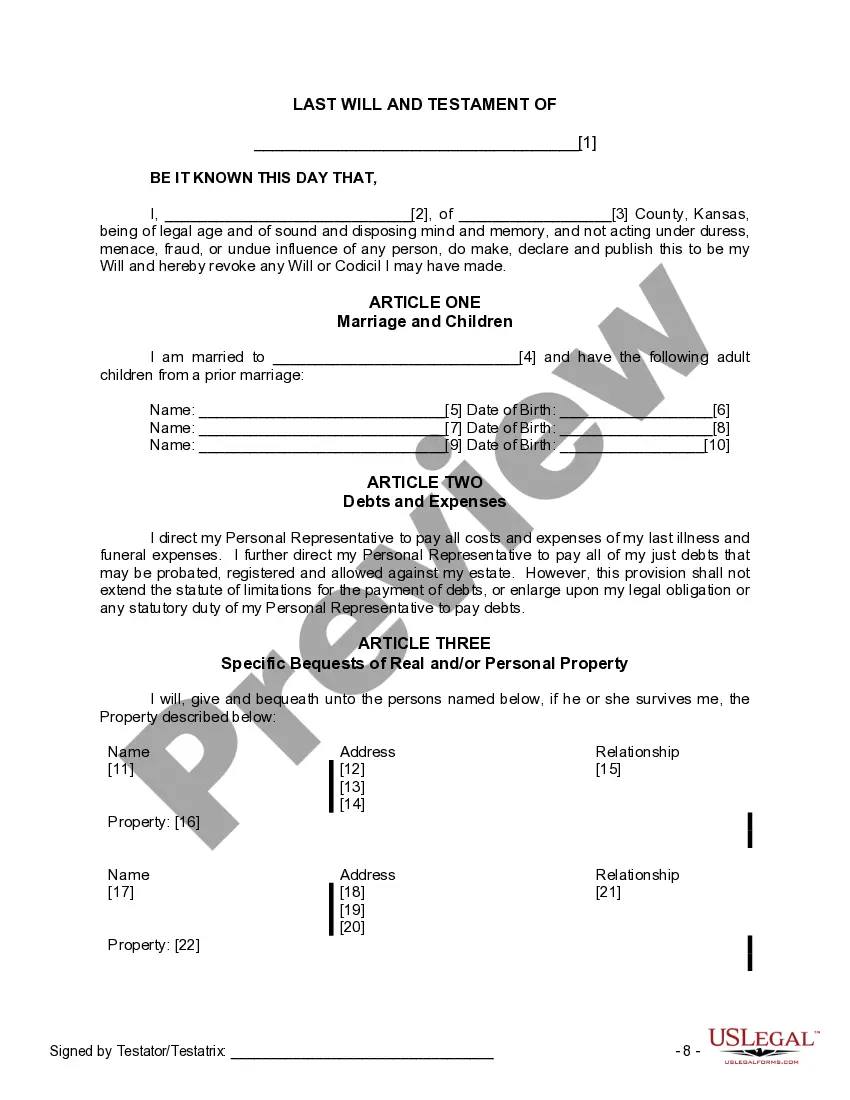
- Article for marriage and children information.
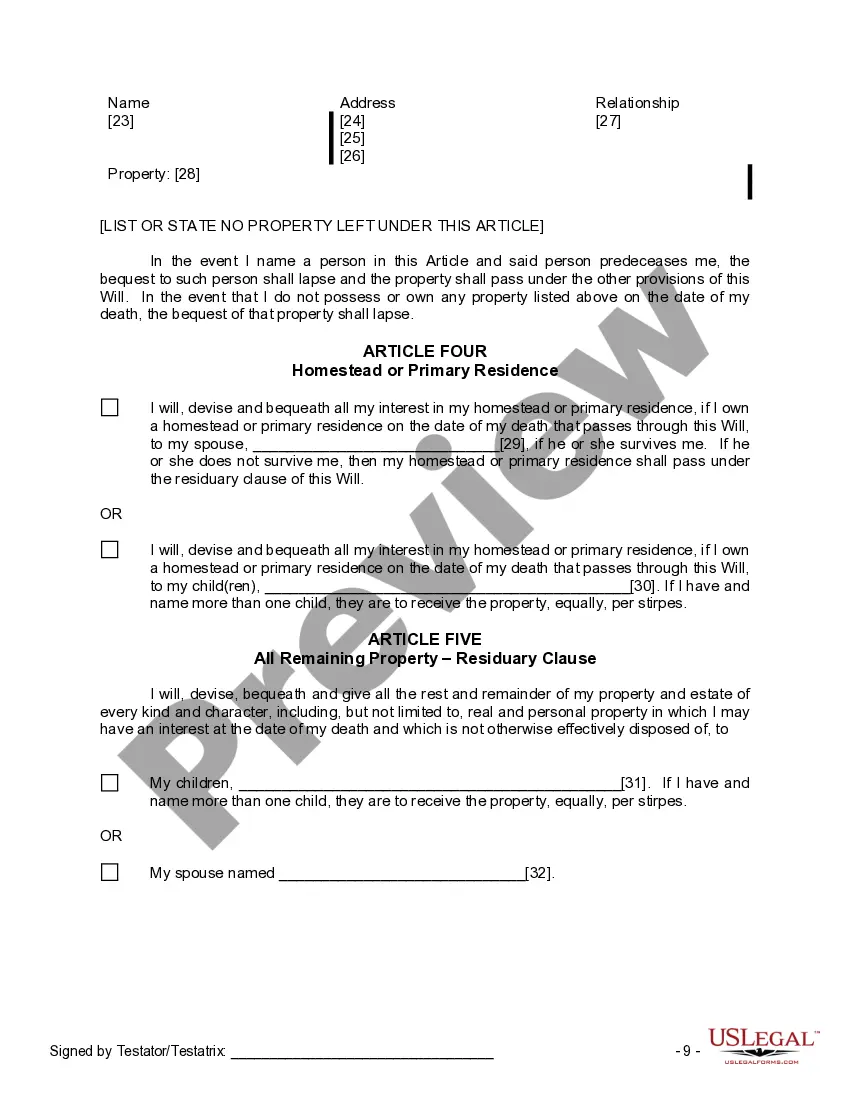
- Provisions for specific bequests of real and personal property.
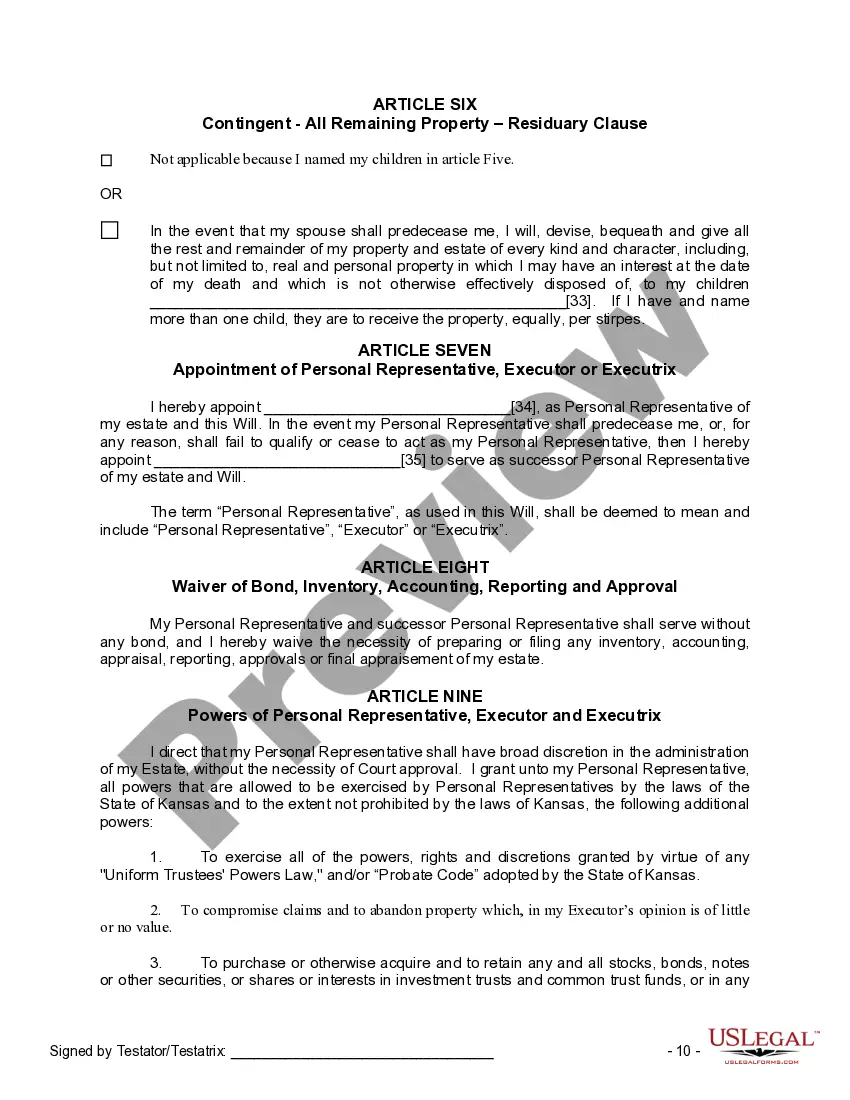
- Instructions on how to designate your personal representative or executor.
- Homestead or primary residence distribution clause.
- Residue clause for remaining assets distribution.
- Self-proving affidavit for smoother probate process.




Situations where this form applies
This form is essential when you want to clearly specify how your assets should be divided after your death, especially if you have children from a previous marriage. Use this will to protect the interests of your spouse and adult children, ensuring all parties are accounted for and that your property is distributed according to your wishes. It is particularly important if you have complex family arrangements or significant assets.
Who can use this document
- Married individuals with adult children from a previous relationship.
- Persons who wish to clarify asset distribution among a blended family.
- Individuals who want to designate a personal representative to manage their estate.
- Anyone seeking to create a legally recognized will without the need for extensive legal resources.
Completing this form step by step
- Begin by entering your name and residence information in the designated fields.
- List your spouse's name and the names and birthdates of your adult children from a prior marriage.
- Specify any specific bequests of property you wish to distribute to individuals.
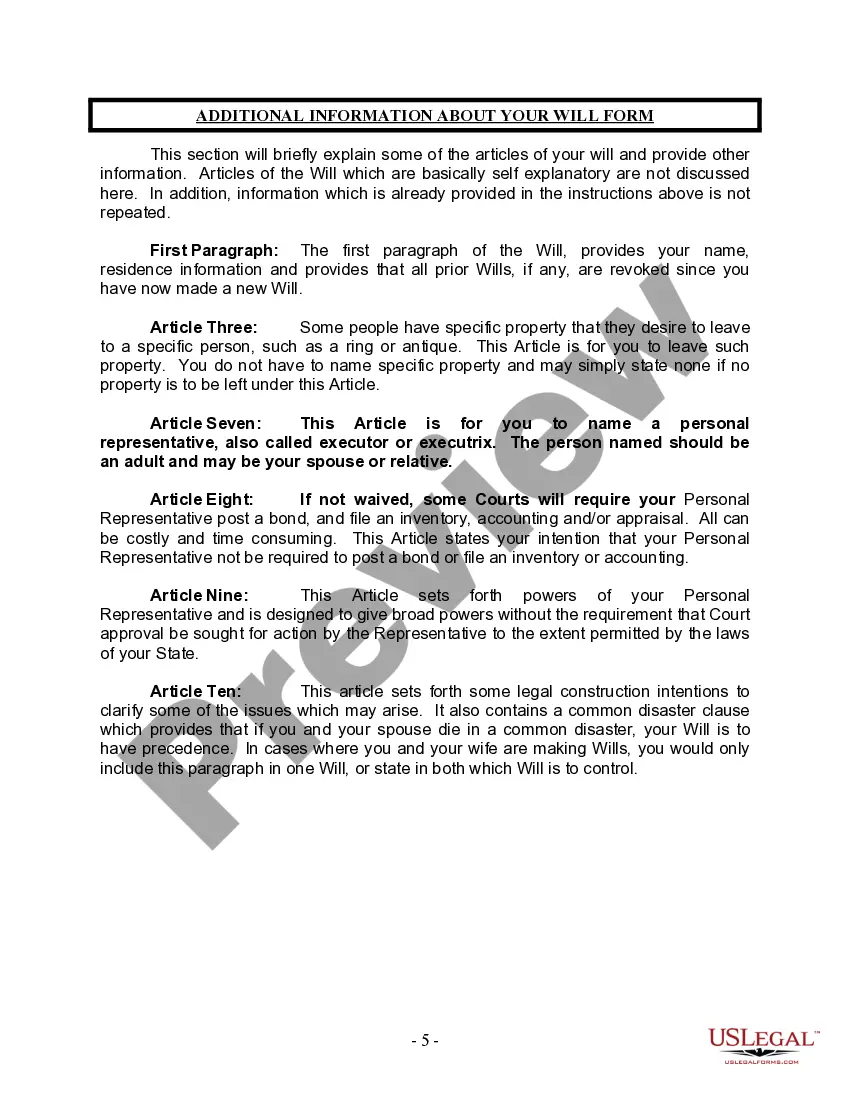
- Designate your personal representative and any successor in the appropriate articles.
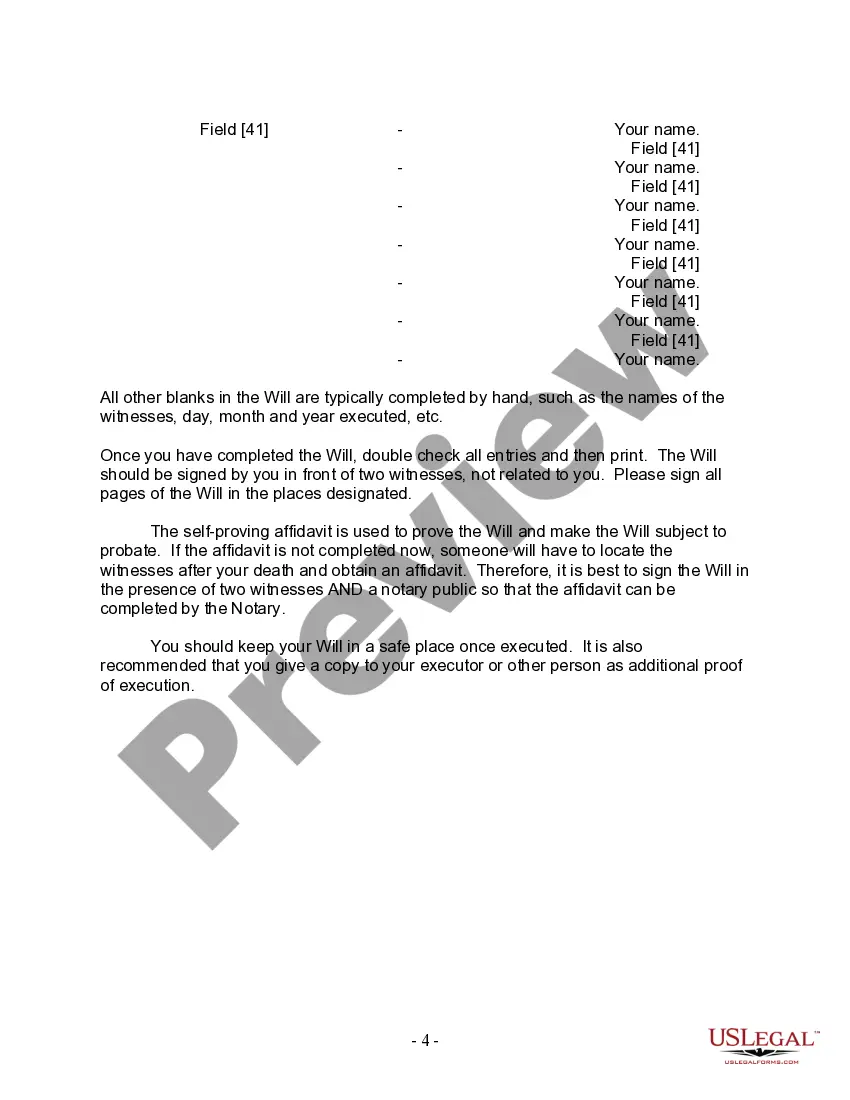
- Carefully review all entries, ensuring that all information is accurate before printing and signing in front of witnesses.
Notarization guidance
Notarization is required for this form to take effect. Our online notarization service, powered by Notarize, lets you verify and sign documents remotely through an encrypted video session, available 24/7.
Get your form ready online
Our built-in tools help you complete, sign, share, and store your documents in one place.
Make edits, fill in missing information, and update formatting in US Legal Forms—just like you would in MS Word.
Download a copy, print it, send it by email, or mail it via USPS—whatever works best for your next step.
Sign and collect signatures with our SignNow integration. Send to multiple recipients, set reminders, and more. Go Premium to unlock E-Sign.
If this form requires notarization, complete it online through a secure video call—no need to meet a notary in person or wait for an appointment.
We protect your documents and personal data by following strict security and privacy standards.

Make edits, fill in missing information, and update formatting in US Legal Forms—just like you would in MS Word.

Download a copy, print it, send it by email, or mail it via USPS—whatever works best for your next step.

Sign and collect signatures with our SignNow integration. Send to multiple recipients, set reminders, and more. Go Premium to unlock E-Sign.

If this form requires notarization, complete it online through a secure video call—no need to meet a notary in person or wait for an appointment.

We protect your documents and personal data by following strict security and privacy standards.
Common mistakes to avoid
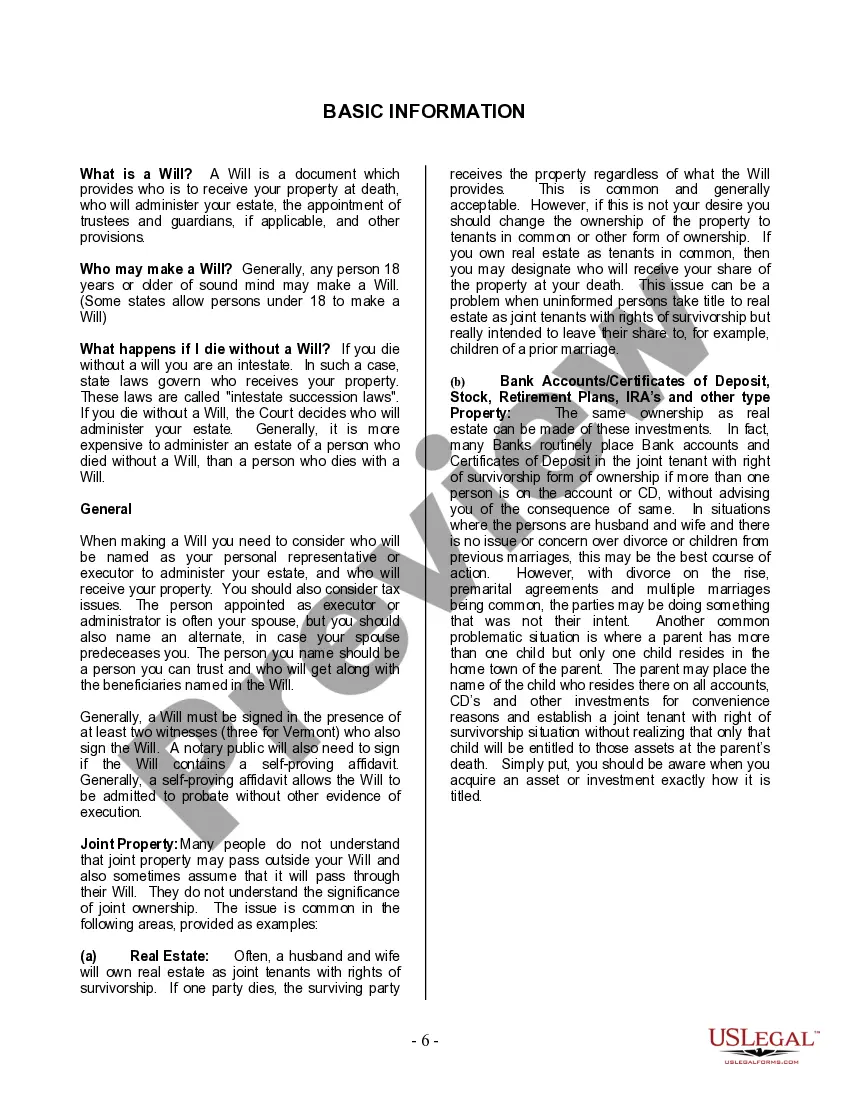
- Failing to have the will signed in front of the necessary witnesses.
- Not providing clear identification for specific bequests, leading to confusion.
- Neglecting to update the will after significant life changes, such as marriage or the birth of a child.
- Forgetting to include a self-proving affidavit, which can delay the probate process.
Why use this form online
- Convenience of completing the form on your computer at your own pace.
- Editable fields allow for customized provisions to better reflect your wishes.
- Access to attorney-drafted templates ensures legal compliance.
- Secure and easy storage options for your finalized documents.
Quick recap
- This will is tailored for married individuals with adult children from a previous marriage.
- It empowers you to dictate the distribution of your estate and appoint a representative.
- Proper execution requires witnesses and can include notarization to facilitate probate.
Looking for another form?


Form popularity
FAQ
Contrary to popular belief, you do not need to have an attorney draft a will for you. Anyone can write this document on their own, and as long as it meets all of the legal requirements of the state, courts will recognize one you wrote yourself.
Find an online template or service. Make a list of your assets. Be specific about who gets what. If you have minor children, choose a guardian. Give instructions for your pet. Choose an executor. Name a 'residuary beneficiary' List your funeral preferences.
Create the initial document. Start by titling the document Last Will and Testament" and including your full legal name and address. Designate an executor. Appoint a guardian. Name the beneficiaries. Designate the assets. Ask witnesses to sign your will. Store your will in a safe place.
Choose an online legal services provider or locate a will template. Carefully consider your distribution wishes. Identify a personal representative/executor. Understand the requirements to make your will legal. Make sure someone else knows about your will. Consult a lawyer if you have a more complicated estate.
Contrary to popular belief, you do not need to have an attorney draft a will for you. Anyone can write this document on their own, and as long as it meets all of the legal requirements of the state, courts will recognize one you wrote yourself.
Yes! Your Free Will Kit will be delivered to you at no-cost, no purchase necessary.
A joint will is a legal document executed by two (or more) people, which merges their individual wills into a single, combined last will and testament. Like most wills, a joint will lets the will-makers name who will get their property and assets after they die. Joint wills are usually created by married couples.
Decide what property to include in your will. Decide who will inherit your property. Choose an executor to handle your estate. Choose a guardian for your children. Choose someone to manage children's property. Make your will. Sign your will in front of witnesses. Store your will safely.
Include personal identifying information. Include a statement about your age and mental status. Designate an executor. Decide who will take care of your children. Choose your beneficiaries. List your funeral details. Sign and date your Last Will and Testament.