Kansas Commercial Sublease
What this document covers
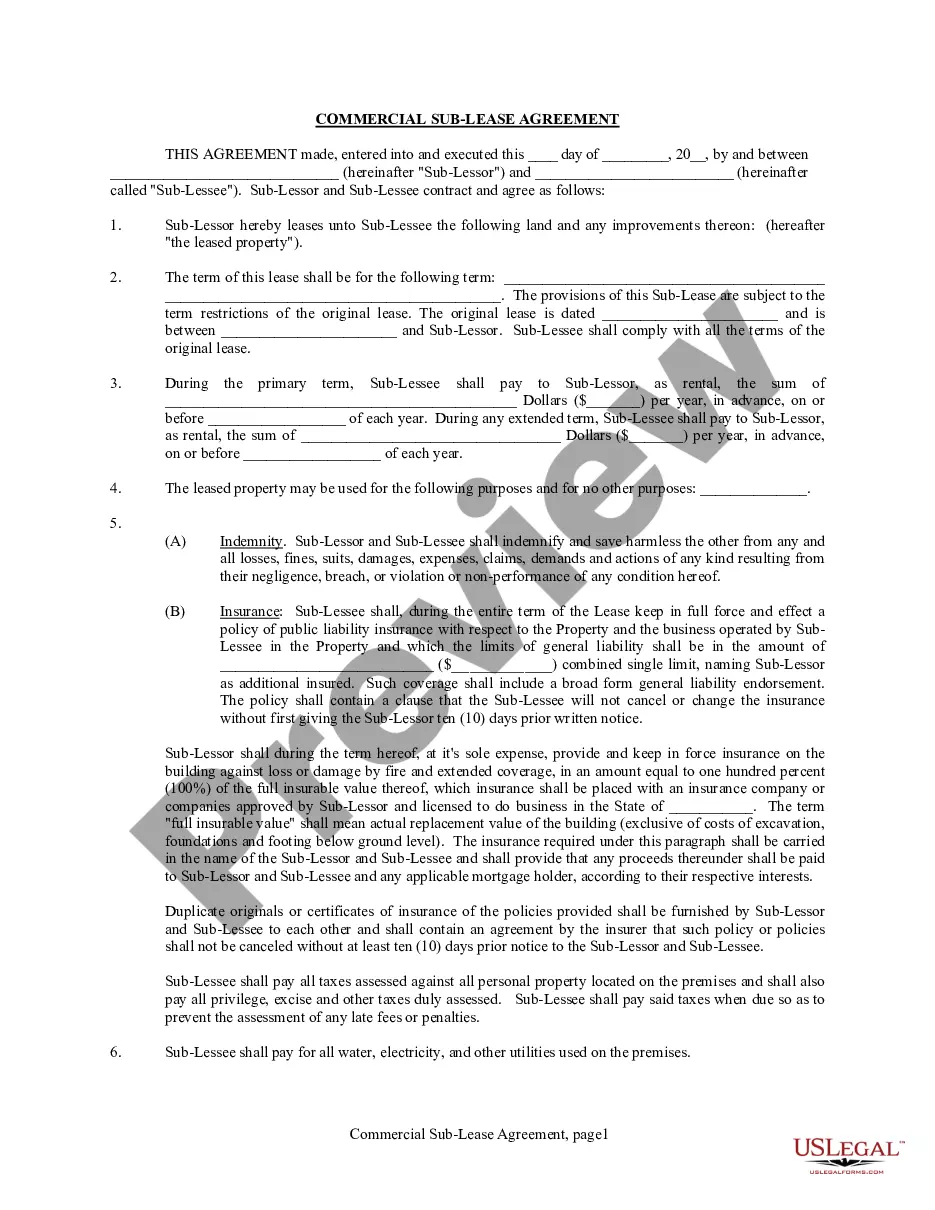
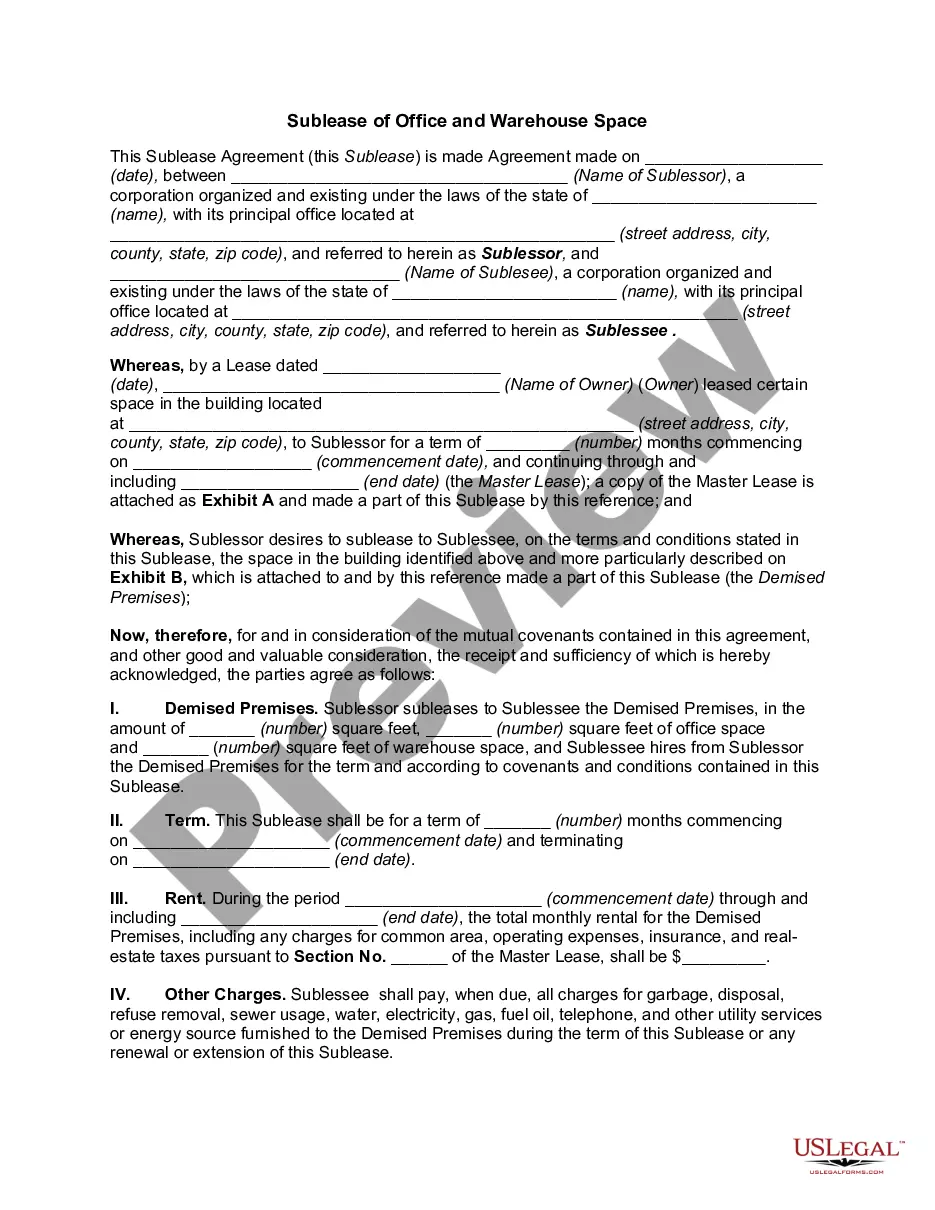
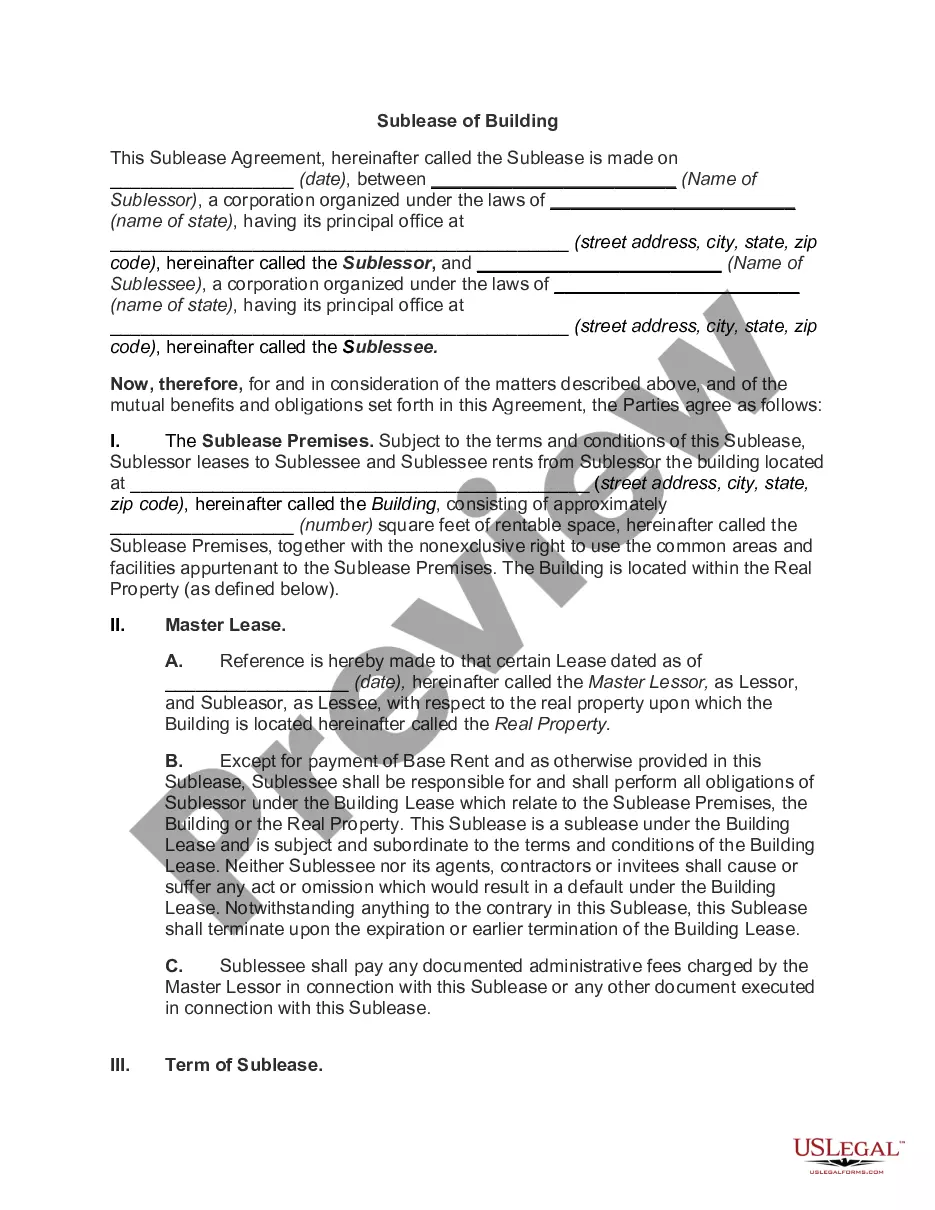
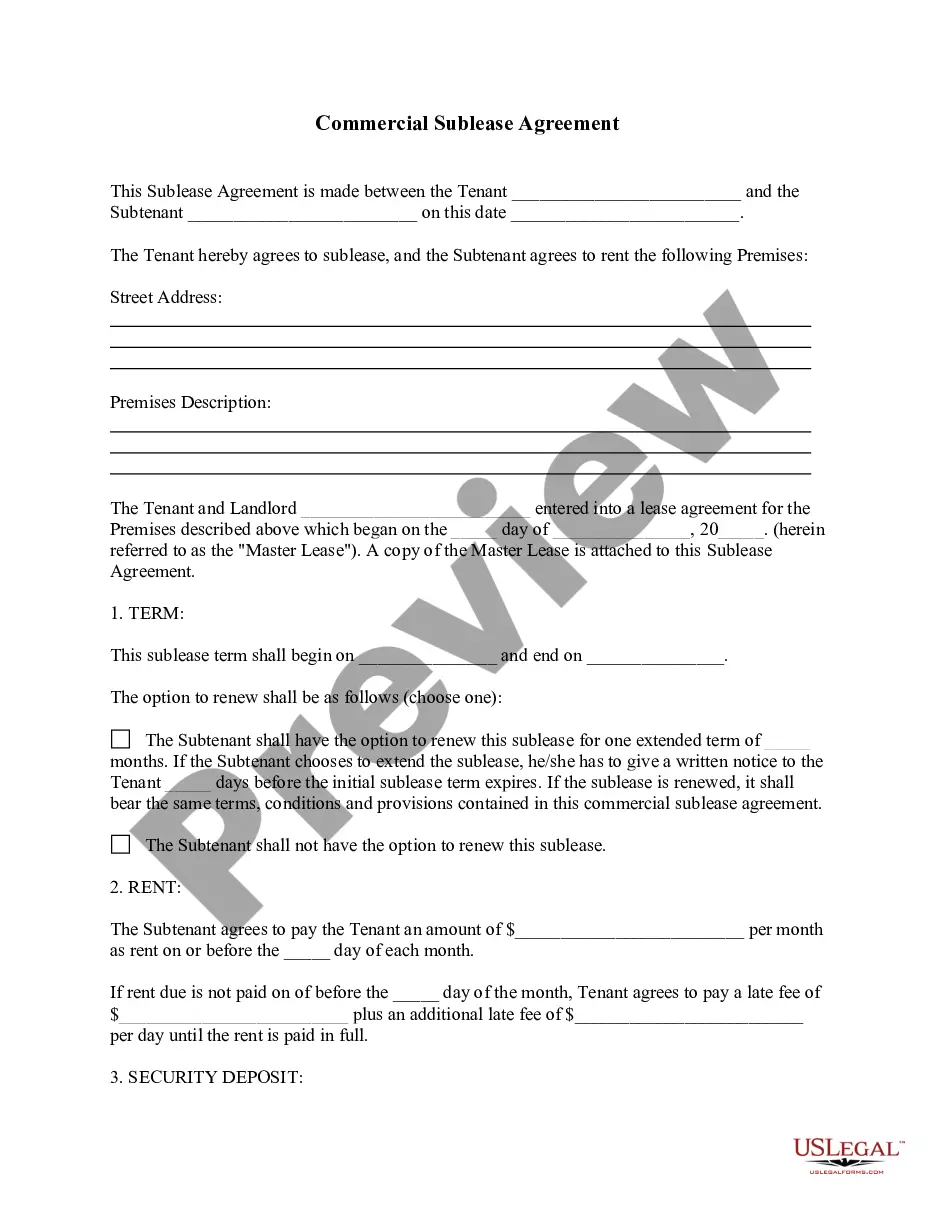
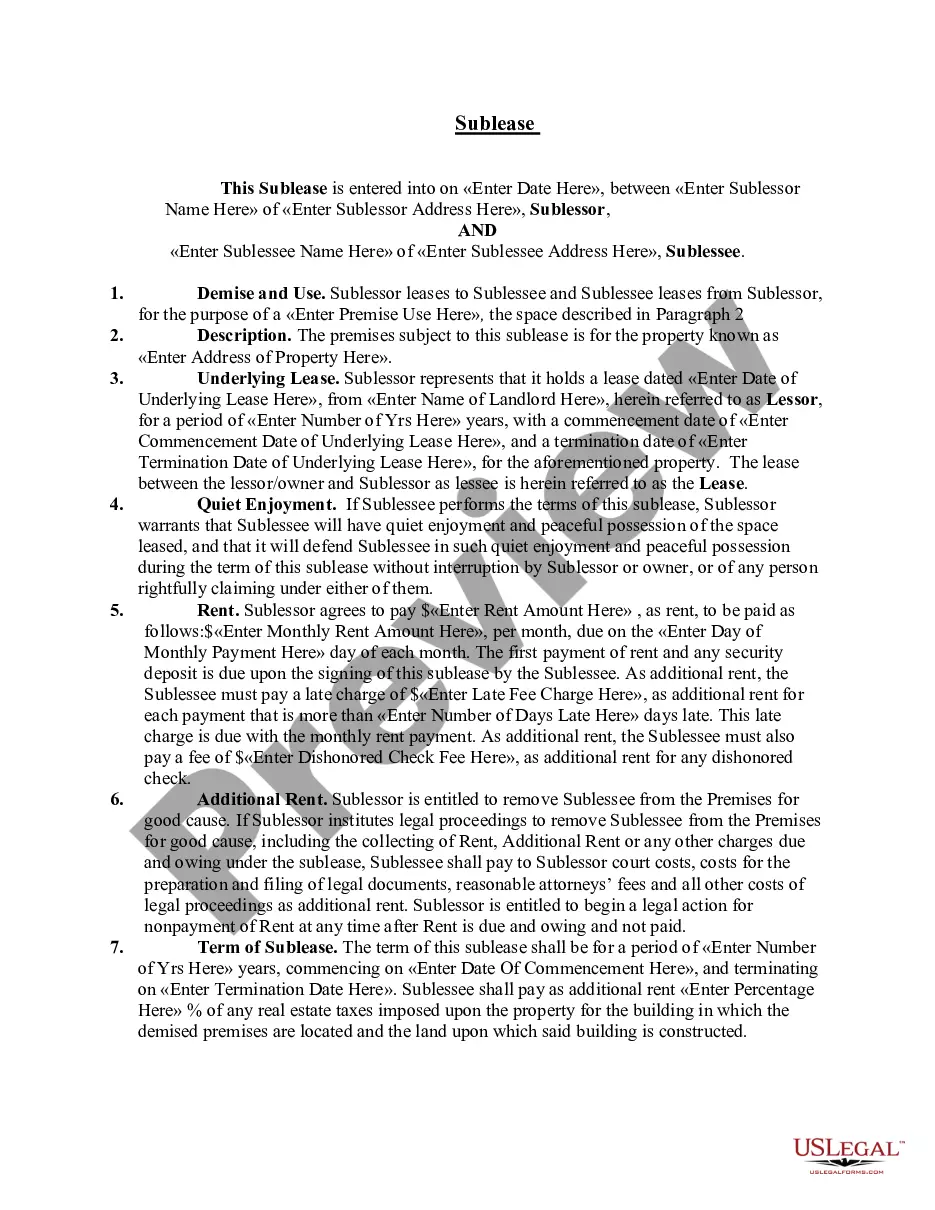
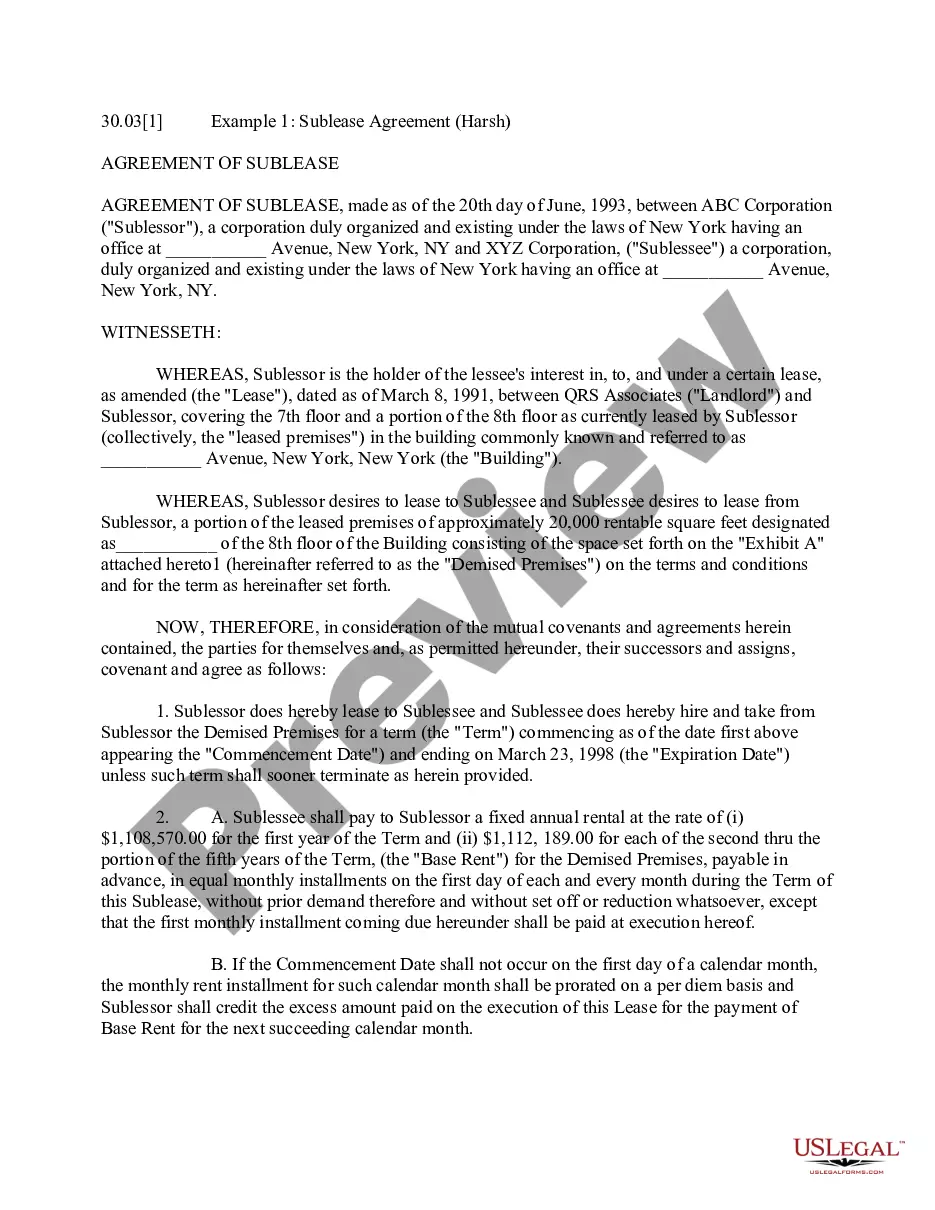
The Commercial Sublease form is a legal document that allows a tenant (the Sub-Lessor) to rent out a commercial property to another tenant (the Sub-Lessee). This agreement outlines the terms under which the Sub-Lessee will use the property and is governed by the provisions of the original lease between the Sub-Lessor and the property owner. It is distinct from a standard lease because it involves subletting, meaning the original tenant retains responsibilities while granting occupancy rights to another party.
Key components of this form
- Identification of the Sub-Lessor and Sub-Lessee.
- Description of the leased property and its intended use.
- Rental payment amounts and due dates.
- Liability and insurance requirements for both parties.
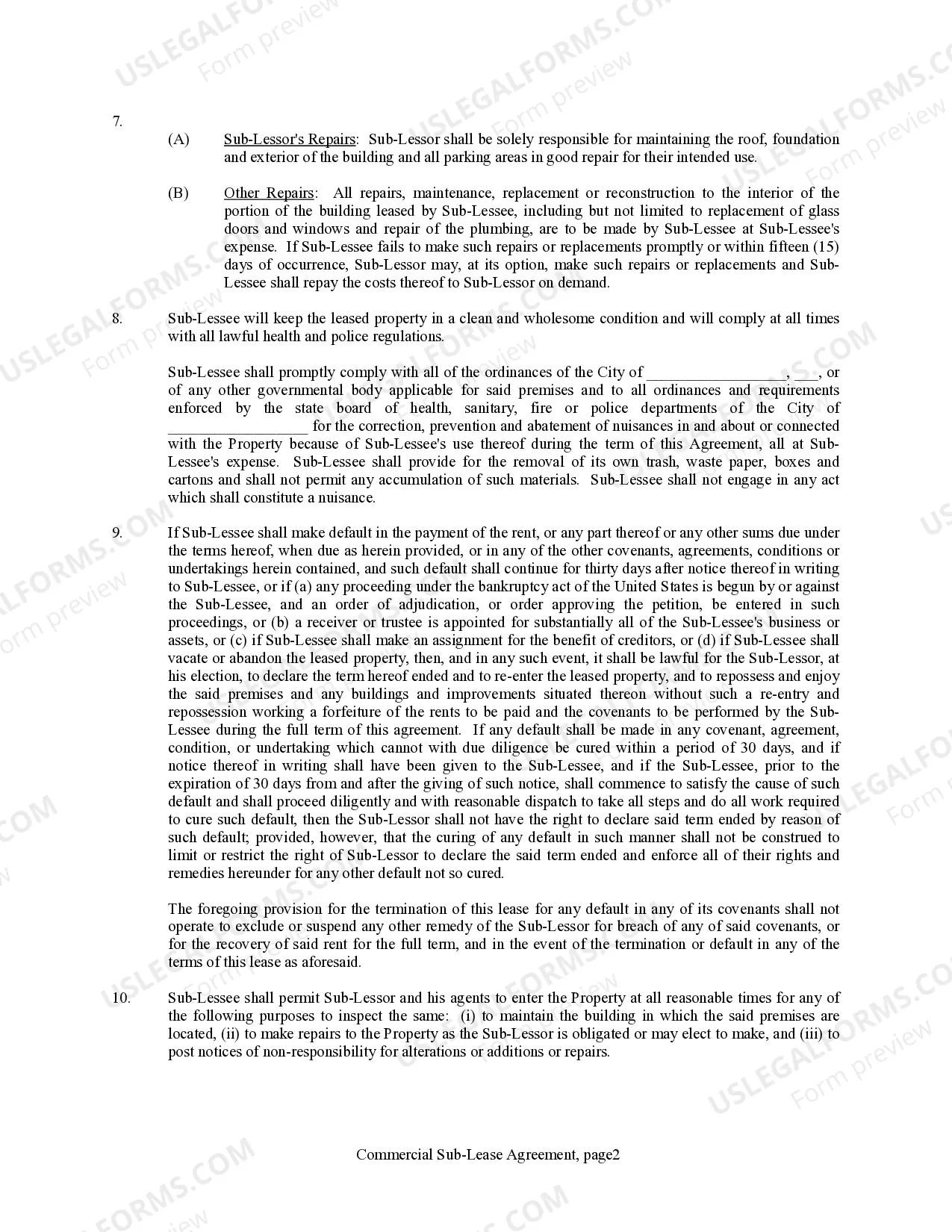
- Maintenance and repair responsibilities.
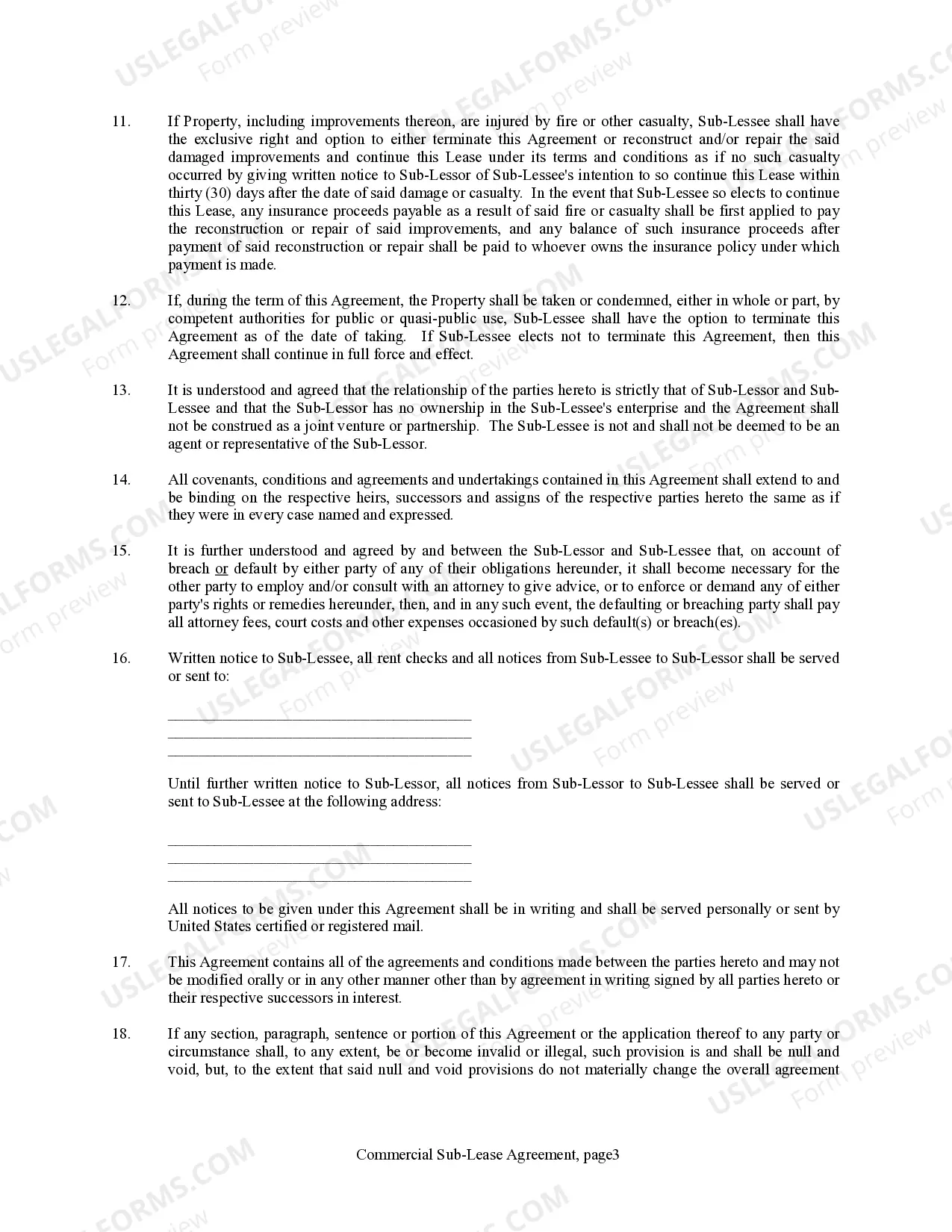
- Default and termination clauses.
When to use this document
This form is used when a commercial tenant wants to sublease all or part of their leased property to another party. It is especially useful in situations where the original tenant anticipates being unable to occupy the space for a certain period or wishes to transfer their rental obligations temporarily while remaining bound by the original lease terms. Examples include businesses seeking to share space or when a tenant is relocating but wishes to maintain lease continuity.
Who can use this document
- Commercial tenants (Sub-Lessors) looking to sublease their property.
- Businesses seeking to rent space from an existing tenant (Sub-Lessees).
- Landlords requiring a legally binding agreement between original and new tenants.
- Any party involved in commercial leasing arrangements that require clear guidelines on subletting practices.
Steps to complete this form
- Identify the Sub-Lessor and Sub-Lessee by filling in their names and addresses.
- Specify the commercial property address and description, including any improvements included in the lease.
- Enter the lease term and rental amounts, including payment frequency and due dates.
- Outline the intended use of the property and any restrictions on its use.
- Complete any additional clauses as required, such as indemnity and insurance details.
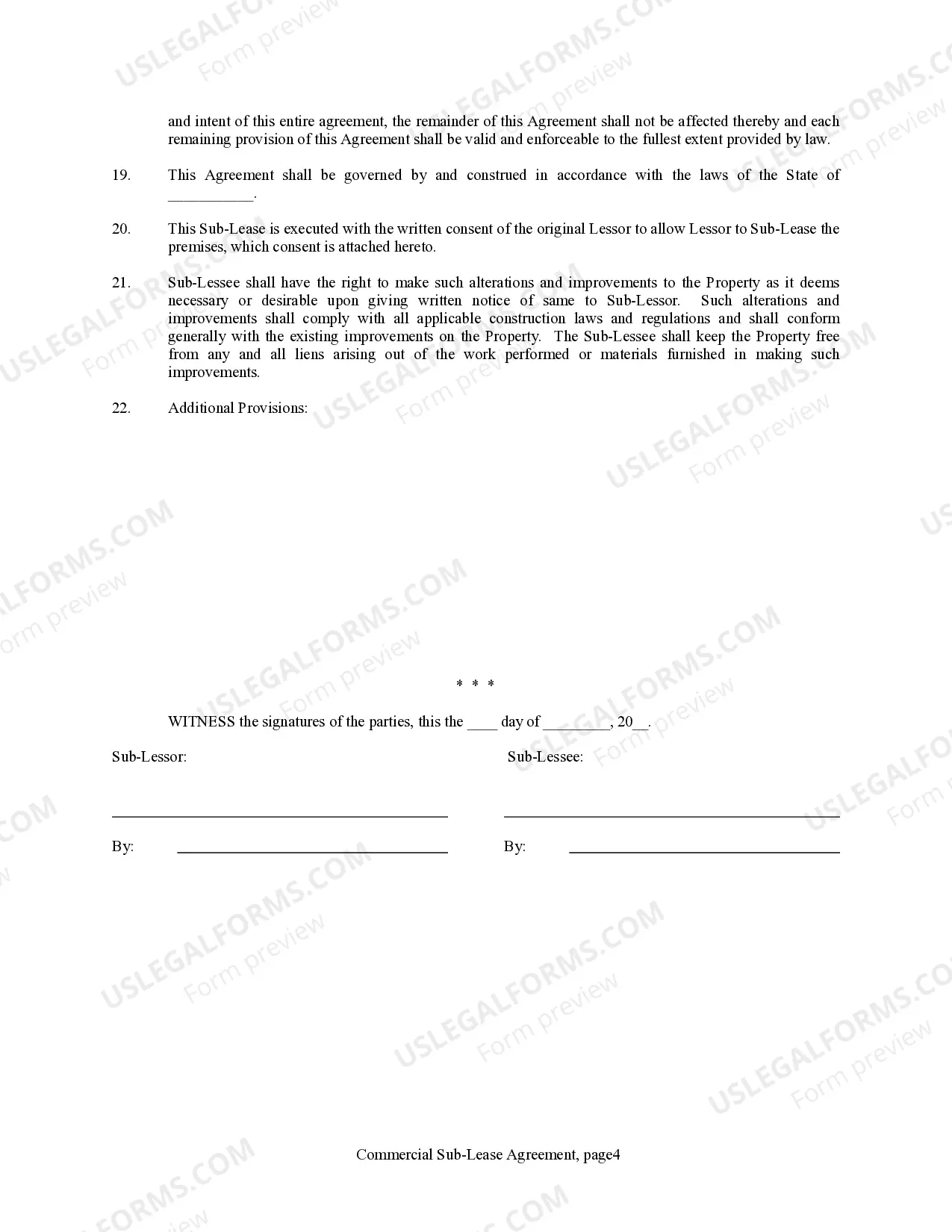
- Ensure both parties sign and date the form to make it legally binding.
Does this document require notarization?
Notarization is generally not required for this form. However, certain states or situations might demand it. You can complete notarization online through US Legal Forms, powered by Notarize, using a verified video call available anytime.
Get your form ready online
Our built-in tools help you complete, sign, share, and store your documents in one place.
Make edits, fill in missing information, and update formatting in US Legal Forms—just like you would in MS Word.
Download a copy, print it, send it by email, or mail it via USPS—whatever works best for your next step.
Sign and collect signatures with our SignNow integration. Send to multiple recipients, set reminders, and more. Go Premium to unlock E-Sign.
If this form requires notarization, complete it online through a secure video call—no need to meet a notary in person or wait for an appointment.
We protect your documents and personal data by following strict security and privacy standards.

Make edits, fill in missing information, and update formatting in US Legal Forms—just like you would in MS Word.

Download a copy, print it, send it by email, or mail it via USPS—whatever works best for your next step.

Sign and collect signatures with our SignNow integration. Send to multiple recipients, set reminders, and more. Go Premium to unlock E-Sign.

If this form requires notarization, complete it online through a secure video call—no need to meet a notary in person or wait for an appointment.

We protect your documents and personal data by following strict security and privacy standards.
Common mistakes
- Failing to specify the exact terms of the original lease, leading to confusion.
- Not clearly defining the intended use of the leased property.
- Leaving out important details regarding payment schedules and amounts.
- Not including insurance requirements that protect both parties.
- Neglecting to have both parties sign the document, which can invalidate the agreement.
Why use this form online
- Convenience of instant access and downloadable format.
- Editable templates that can be customized to fit specific needs.
- Guidance from licensed attorneys to ensure legal compliance.
- Time-saving - no need for a lawyer visit to draft the lease from scratch.
Legal use & context
- Commercial subleases must adhere to terms set forth in the original lease agreement.
- Both parties must understand their rights and responsibilities to avoid legal disputes.
- The agreement can be enforced in court should there be non-compliance with its terms.
Looking for another form?





Form popularity
FAQ
A sublease is a legally binding contract made between a tenant and a new tenant (also known as a subtenant or a sublessee).Usually, the first tenant must get consent from the landlord before he/she is allowed to sublease the premises.
As long as the contract spells out specific details and both parties have signed that they agree to the contract's terms, a handwritten contract is legally binding and enforceable in court.
Recording a lease means that it (or a Notice of Lease) is submitted to the public record, usually at the local Registry of Deeds following the signing of it by both parties. Generally, recording of the lease protects the tenant against subsequent claims to the property.
A sublease is the re-renting of property by an existing tenant to a new third party for a portion of the tenant's existing lease contract.Even if a sublease is permitted, the original tenant is still liable for the obligations stated in the lease agreement, such as the payment of rent each month.
OFFICE LEASES This form is used to lease commercial property where there are more than one tenant/s occupying a building and they share a common area (landscape areas, parking lots, ingress/egress and loading areas) outside the building and a common area (hallways, restrooms and lobbies) inside the building.
A commercial sublease is an agreement between a tenant currently leasing a property, a new tenant looking for space, and the property owner. When you sublease your space you are the sublessor (or sublandlord) and your new tenant is the sublessee (or subtenant).
The Introduction. The beginning of the lease agreement should contain the name of the landlord and tenant, as well as a statement of the agreement into which they are entering. Rent. Deposit. Taxes. Property Insurance. Utilities and Amenities. Remodeling and Improvements. Repairs and Maintenance.
Under California law, a lease does have to be in writing to be enforceable, but only when the lease is for a period of more than a year.There is, however, an additional legal doctrine called partial performance which does make oral contracts enforceable even if they are covered by the Statute of Frauds.
Name the parties. A simple rental agreement form needs to name the parties signing the lease and where they live. Describe the premises. Define the term of the lease. Set how much rent is owed. Assign a security deposit amount. Finalize the lease.