Kansas Notice of Default in Payment of Rent as Warning Prior to Demand to Pay or Terminate for Nonresidential or Commercial Property
What this document covers
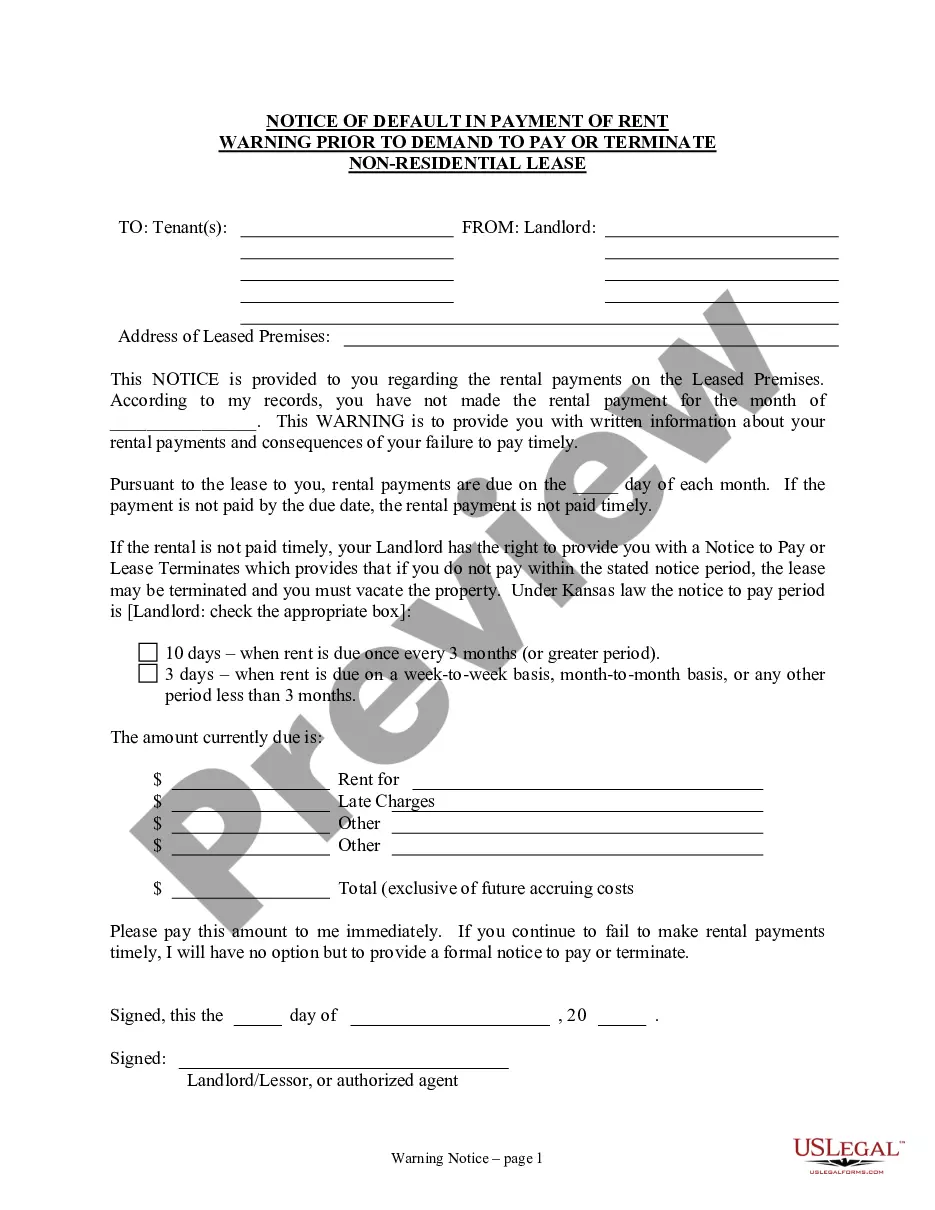
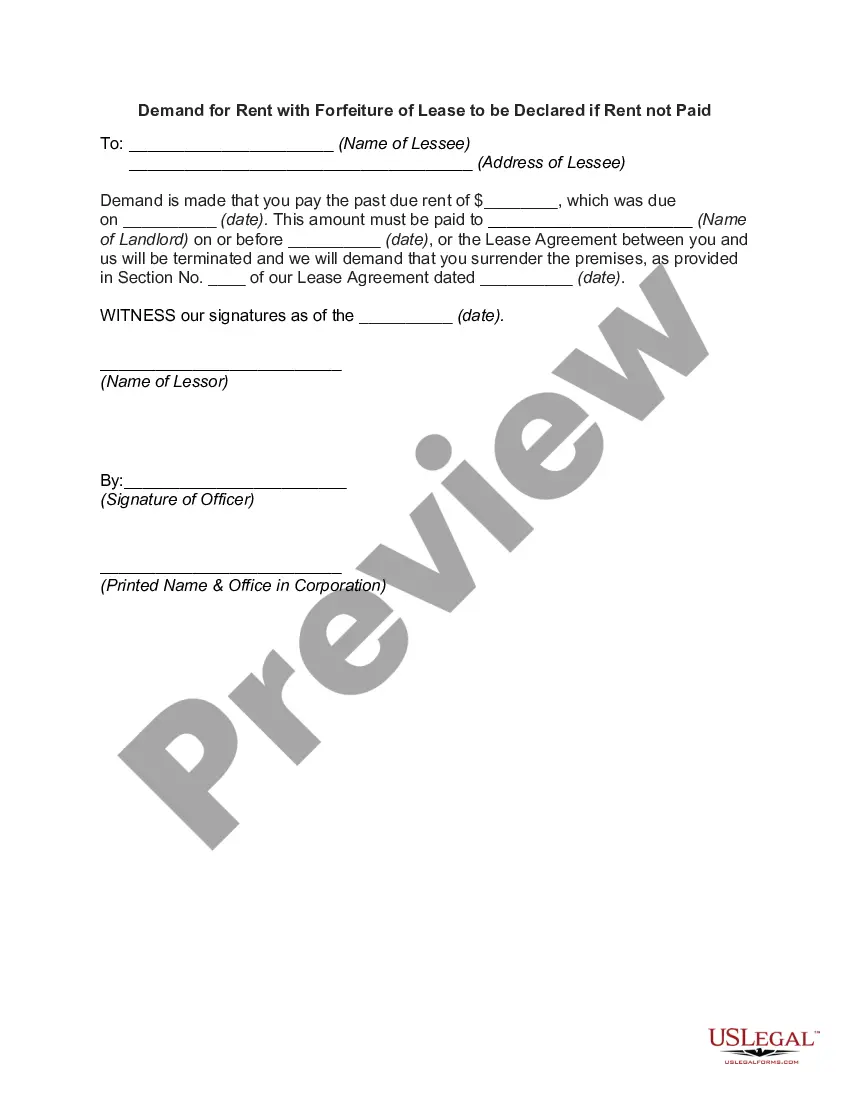
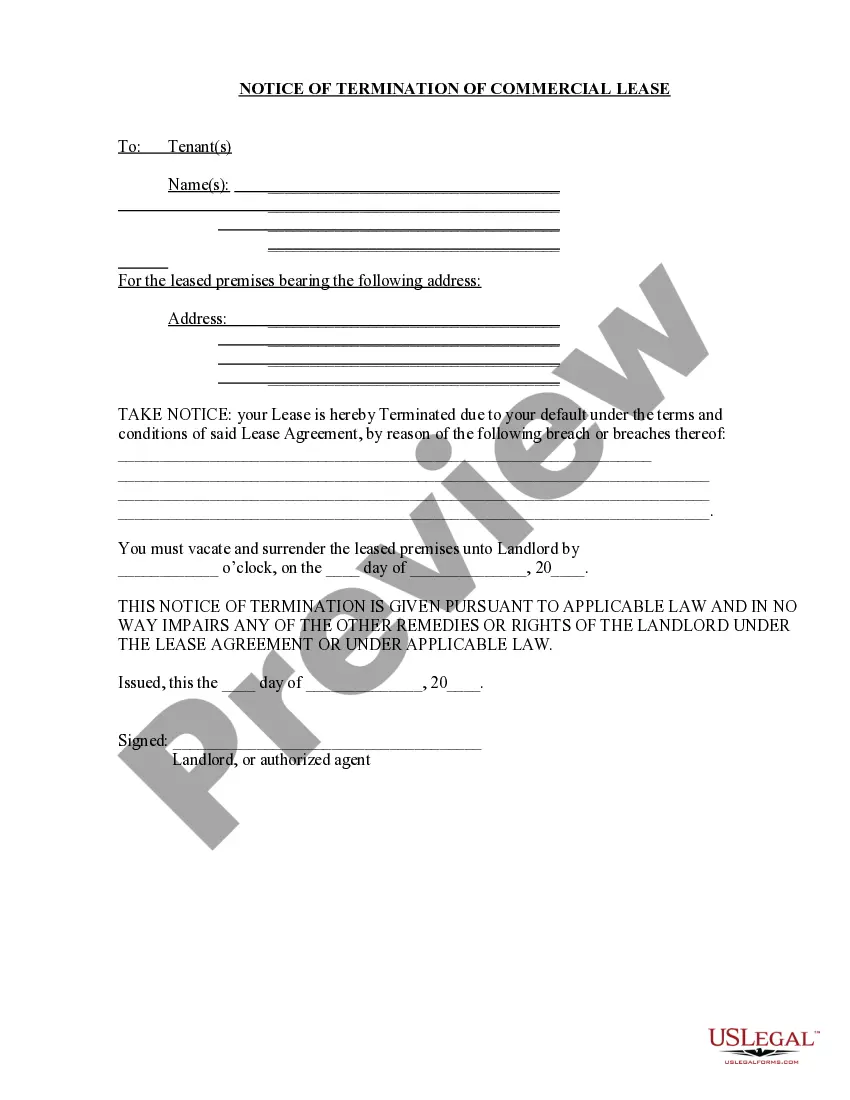
This Notice of Default in Payment of Rent as Warning Prior to Demand to Pay or Terminate for Non-Residential or Commercial Property is a legal document that allows landlords to formally inform tenants about their failure to pay rent on time. This form serves as a preliminary warning before a formal eviction notice and highlights the due date for rent, the amount owed, and potential consequences for continued non-payment. Unlike a standard eviction notice, this document functions as an initial reminder and indication of the landlord's rights under the lease agreement.
Key components of this form
- Identification of the landlord and tenant.
- Address of the leased premises where the rent is due.
- Details of the rent that is overdue, including amounts and due dates.
- Consequences of non-payment, including potential lease termination.
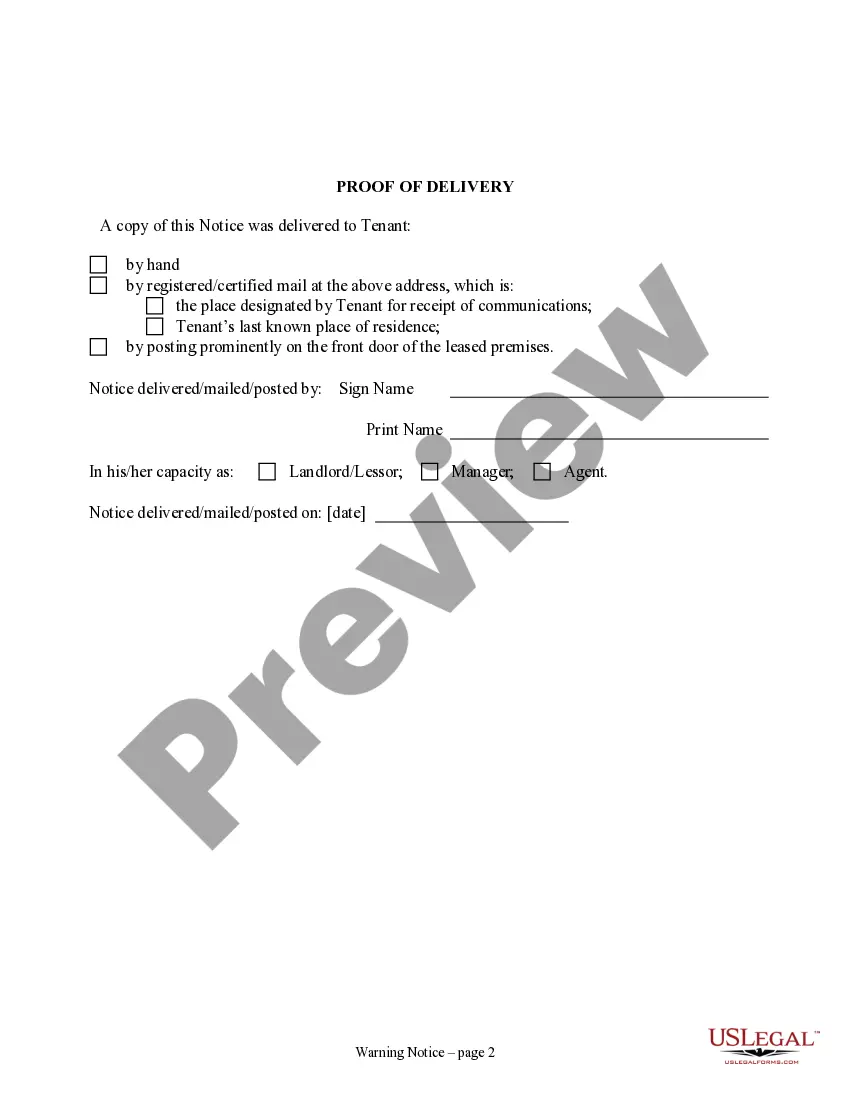
- Proof of delivery of the notice to the tenant.


When this form is needed
This form is used by landlords when tenants fall behind on rent payments. It serves as an official notice giving tenants a chance to rectify their payment status before further action is taken. Use this form when you need to remind the tenant of their obligations and the risks of lease termination due to delinquent payments.
Who can use this document
- Landlords of non-residential or commercial properties.
- Property managers acting on behalf of a landlord.
- Real estate investors who lease commercial spaces.
Completing this form step by step
- Identify and enter the landlord's name and contact information.
- Specify the tenant's name and the address of the leased property.
- Fill in the month and year for which rent is overdue.
- Detail the total amount due, including any late charges.
- Choose the appropriate notice period based on your existing lease agreement.
- Sign and date the notice to finalize it.
Does this form need to be notarized?
This form usually doesn’t need to be notarized. However, local laws or specific transactions may require it. Our online notarization service, powered by Notarize, lets you complete it remotely through a secure video session, available 24/7.
Get your form ready online
Our built-in tools help you complete, sign, share, and store your documents in one place.
Make edits, fill in missing information, and update formatting in US Legal Forms—just like you would in MS Word.
Download a copy, print it, send it by email, or mail it via USPS—whatever works best for your next step.
Sign and collect signatures with our SignNow integration. Send to multiple recipients, set reminders, and more. Go Premium to unlock E-Sign.
If this form requires notarization, complete it online through a secure video call—no need to meet a notary in person or wait for an appointment.
We protect your documents and personal data by following strict security and privacy standards.

Make edits, fill in missing information, and update formatting in US Legal Forms—just like you would in MS Word.

Download a copy, print it, send it by email, or mail it via USPS—whatever works best for your next step.

Sign and collect signatures with our SignNow integration. Send to multiple recipients, set reminders, and more. Go Premium to unlock E-Sign.

If this form requires notarization, complete it online through a secure video call—no need to meet a notary in person or wait for an appointment.

We protect your documents and personal data by following strict security and privacy standards.
Avoid these common issues
- Failing to provide accurate details on overdue amounts.
- Not specifying the correct notice period as per state law.
- Neglecting to deliver the notice properly to ensure it is legally binding.
Benefits of completing this form online
- Immediate access to professionally drafted templates.
- Convenient download options for quick use.
- Flexibility to customize to specific tenant circumstances.
Looking for another form?
Form popularity
FAQ
To delay an eviction in Kansas, you can respond to the eviction lawsuit or negotiate payment arrangements with your landlord. Additionally, you may request a hearing to present your case in front of a judge. Understanding your rights and options is crucial, and using resources like US Legal Forms can provide valuable guidance. Engaging with your landlord and maintaining communication may also help prolong the eviction process.
A rent arrears warning notice is a document that informs tenants of their overdue rent. This notice is often a Kansas Notice of Default in Payment of Rent as Warning Prior to Demand to Pay or Terminate for Nonresidential or Commercial Property. It serves as a formal alert that if payments are not made, further actions may follow. Receiving this notice indicates that tenants should take immediate steps to remedy their rent situation.
When you go into arrears, you owe the unpaid rent, which could lead to legal actions such as eviction. Landlords may issue a Kansas Notice of Default in Payment of Rent as Warning Prior to Demand to Pay or Terminate for Nonresidential or Commercial Property to alert you of the situation. Ignoring arrears can result in significant consequences, including loss of housing and financial penalties. It is advisable to address the issue as soon as possible.
In Kansas, a landlord typically needs to give at least 14 days' notice for nonpayment of rent. This notice can be served as a Kansas Notice of Default in Payment of Rent as Warning Prior to Demand to Pay or Terminate for Nonresidential or Commercial Property. It is vital for landlords to provide this notice properly to ensure they follow legal procedures. Failure to do so can complicate the eviction process.
Arrears of a lease refer to the amount of rent that remains unpaid after the due date. When a tenant fails to make timely payments, their account moves into arrears, which can lead to further actions, such as a Kansas Notice of Default in Payment of Rent as Warning Prior to Demand to Pay or Terminate for Nonresidential or Commercial Property. Understanding this concept is crucial for both tenants and landlords to manage their obligations effectively.
To legally evict a tenant in Kansas, landlords must follow the legal process established by state law. This includes serving a Kansas Notice of Default in Payment of Rent as Warning Prior to Demand to Pay or Terminate for Nonresidential or Commercial Property. After the notice period, if payment has not been received, landlords can file an eviction lawsuit in court. It is essential to comply with all legal requirements to avoid delays.
Yes, landlords can evict someone without a lease in Kansas, especially under tenant-at-will arrangements. However, proper legal procedures must be followed, including providing adequate notice according to state laws. Understanding the Kansas Notice of Default in Payment of Rent as Warning Prior to Demand to Pay or Terminate for Nonresidential or Commercial Property can aid in ensuring the eviction process is conducted lawfully.
Tenants at will in Kansas have an informal agreement that allows them to occupy property without a formal lease. Either party can terminate this arrangement with proper notice, usually 30 days. Familiarizing yourself with the Kansas Notice of Default in Payment of Rent as Warning Prior to Demand to Pay or Terminate for Nonresidential or Commercial Property could help clarify your rights and responsibilities.
In Kansas, a guest may become a tenant if they stay for an extended period and establish residency. Typically, if a person remains in a rental property for more than 30 days, they may be considered a tenant. For landlords, it’s crucial to be aware of these distinctions and the implications of the Kansas Notice of Default in Payment of Rent as Warning Prior to Demand to Pay or Terminate for Nonresidential or Commercial Property.
Yes, Kansas is an at-will employment state, meaning employers can terminate employees without cause, as long as it is not discriminatory. This flexibility also extends to landlords and tenants by allowing lease agreements to be terminated with appropriate notice. Understanding terms like the Kansas Notice of Default in Payment of Rent as Warning Prior to Demand to Pay or Terminate for Nonresidential or Commercial Property could be beneficial in managing tenancy effectively.