Kansas Warranty Deed from Husband and Wife to Corporation
What is this form?
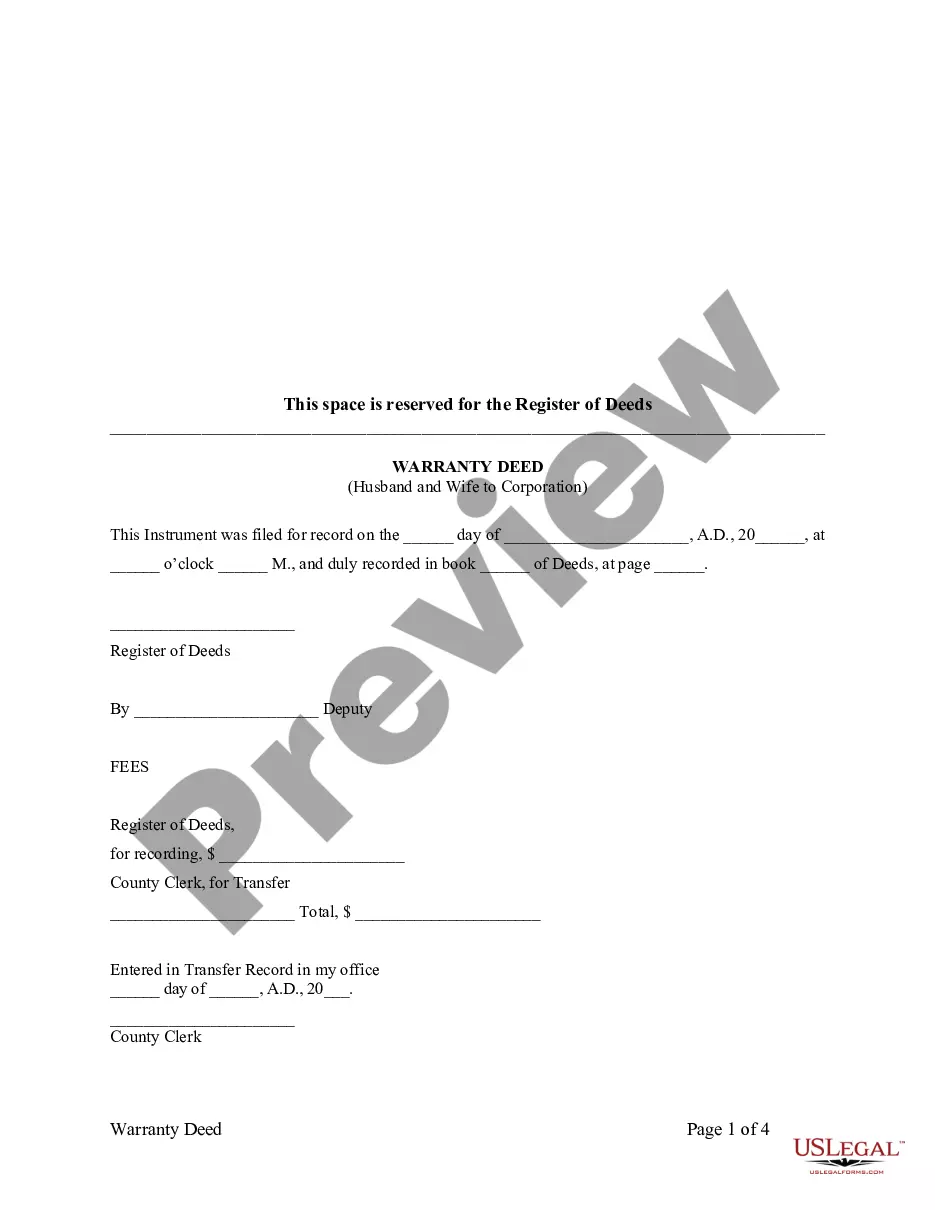
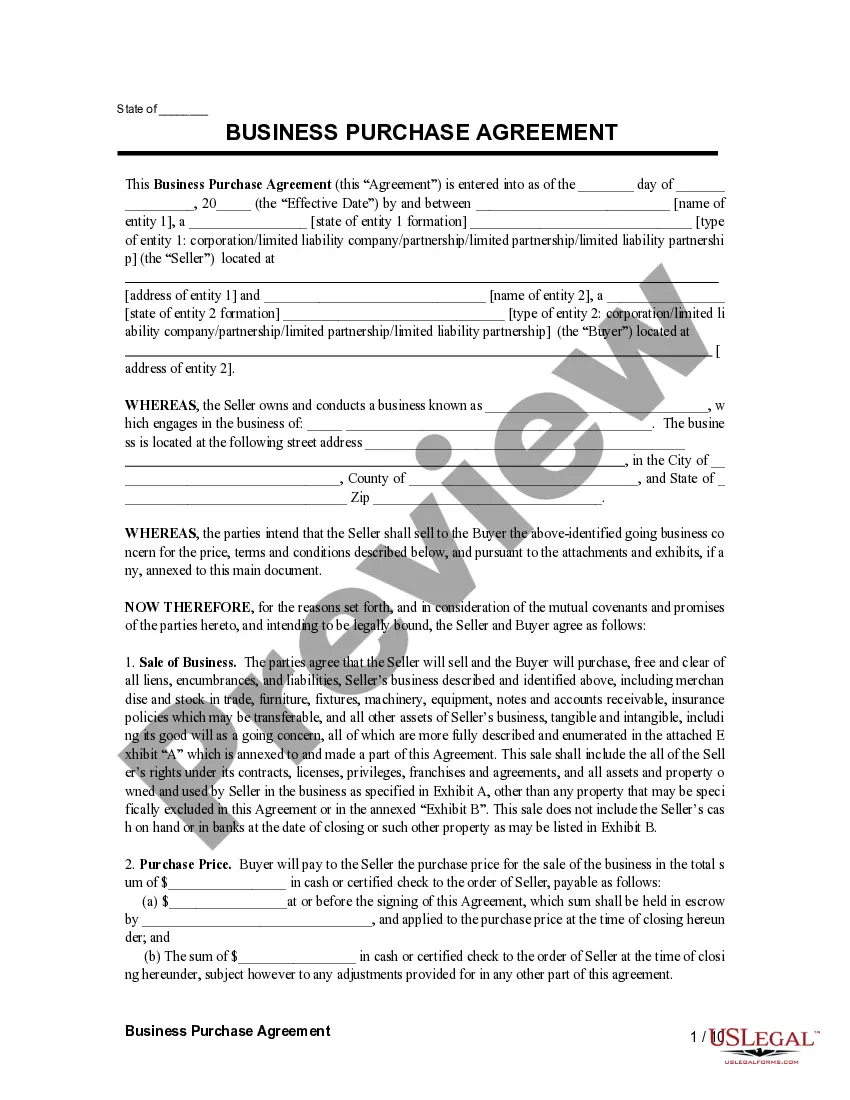
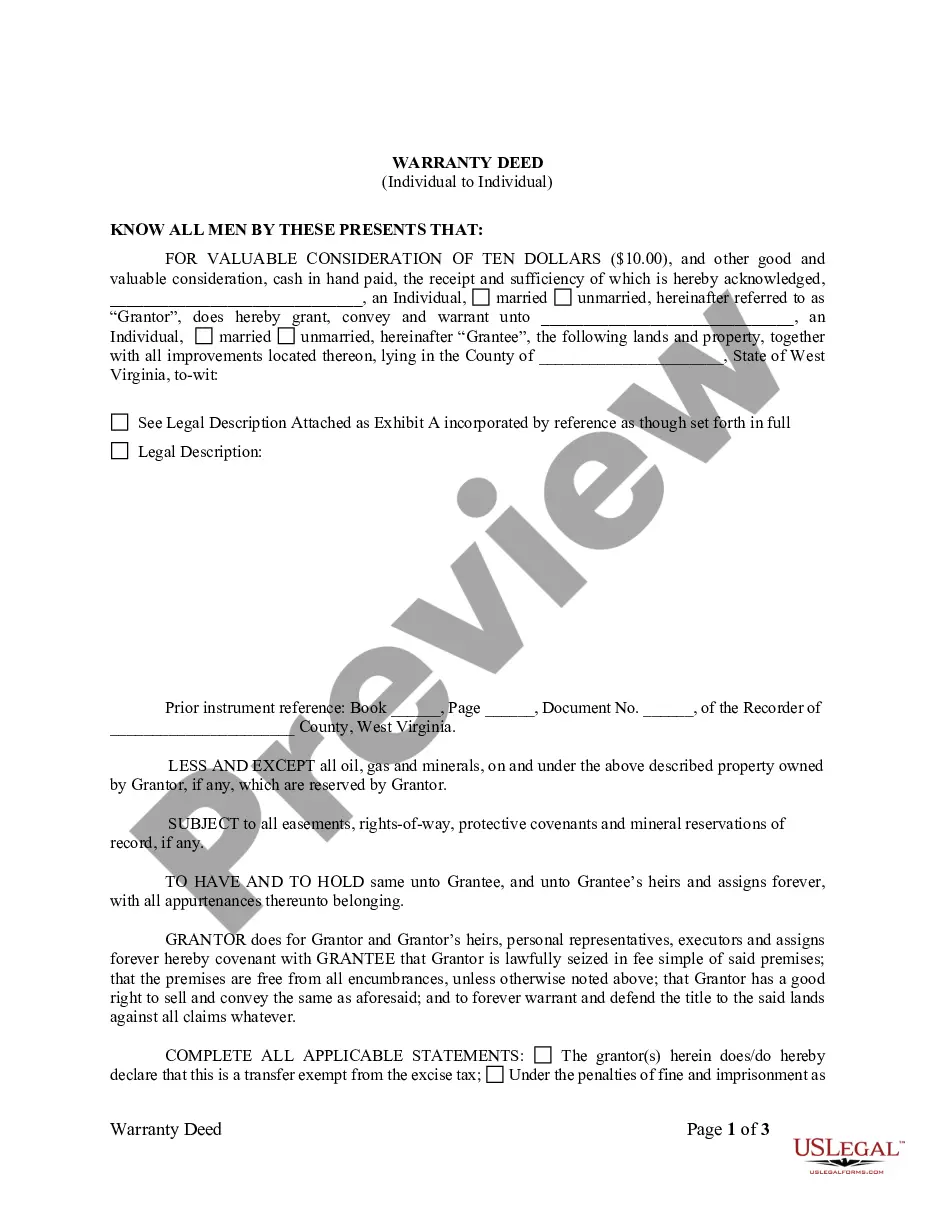
The Warranty Deed from Husband and Wife to Corporation is a legal document that allows a married couple to transfer ownership of real estate to a corporation. This form ensures that the grantors, in this case, the husband and wife, declare they hold clear title to the property and are legally able to convey it. Unlike other types of deeds, this warranty deed specifically includes certain reservations, such as oil, gas, and mineral rights, that may affect the property.
What’s included in this form
- Identifying details of the grantors (husband and wife) and the grantee (corporation).
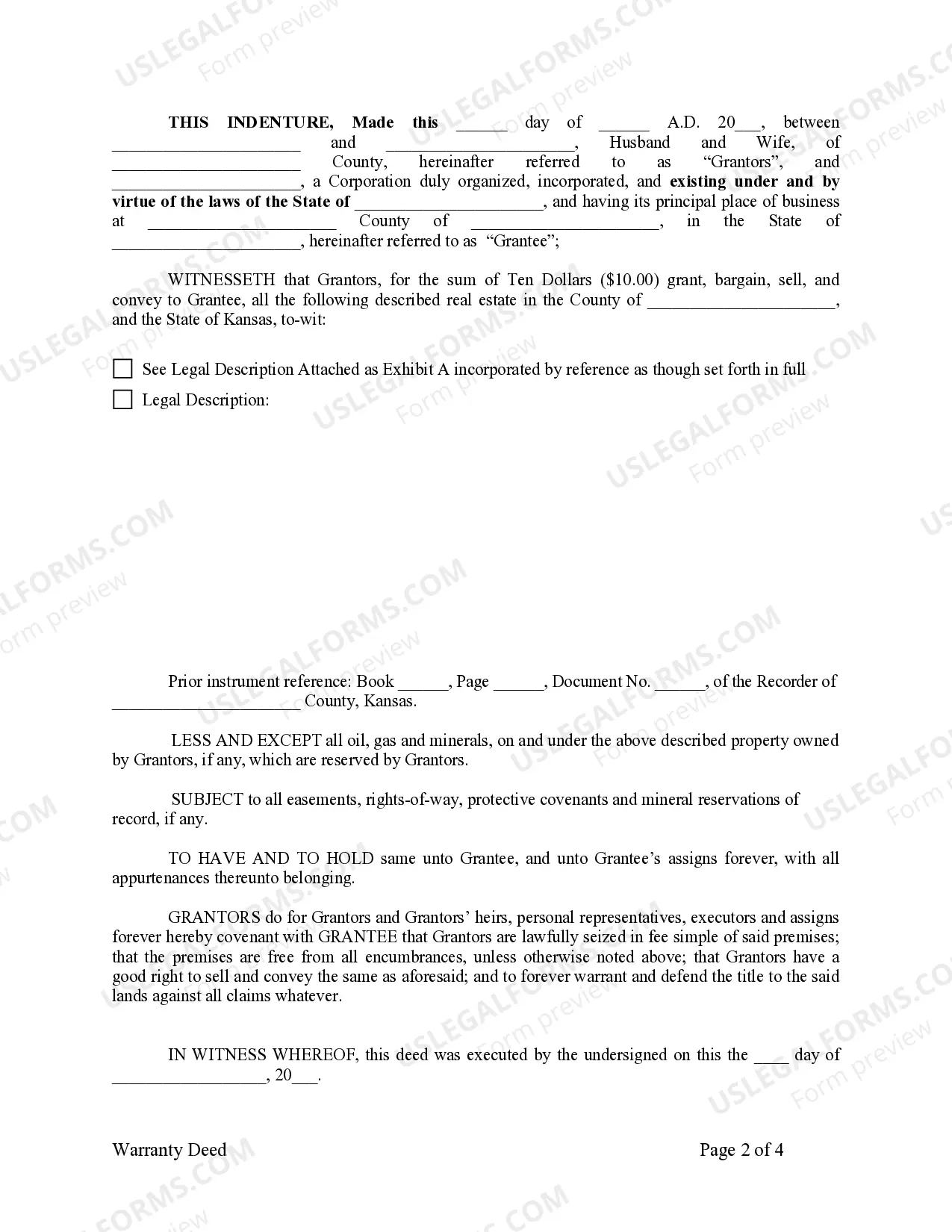
- A legal description of the property being transferred.
- Consideration amount (typically Ten Dollars) indicating the sale and transfer of the property rights.
- Warranties and covenants from the grantors ensuring free title and the absence of encumbrances.
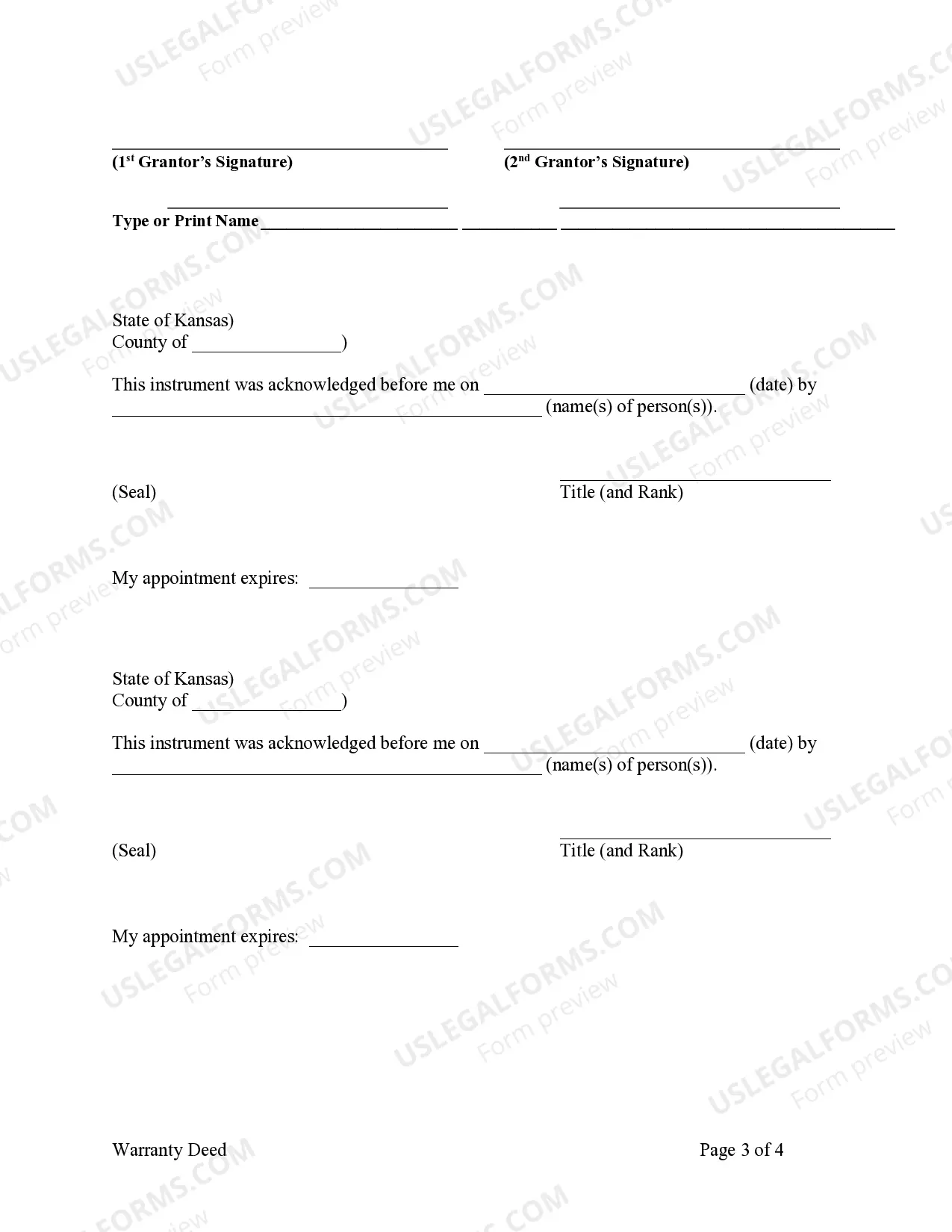
- Spaces for signatures of the grantors and notarization details.





Situations where this form applies
This form is typically used when a husband and wife decide to convey their property ownership to a corporation, perhaps for business purposes or asset management. It is essential when planning legal ownership transitions within family-run corporations or transferring personal assets to a corporate entity for tax or liability reasons.
Who can use this document
This form is intended for:
- Married couples who jointly own a property and wish to transfer it to a corporation.
- Business owners who need to formalize the transfer of real estate assets for corporate purposes.
- Legal representatives handling property transfers between individuals and corporations.
Instructions for completing this form
- Identify the grantors by entering their legal names and address.
- Insert the name and business address of the corporation receiving the property.
- Provide a complete legal description of the property being transferred.
- Fill in the date of the transfer and complete the consideration amount.
- Have both grantors sign the document in the presence of a notary public.
Does this document require notarization?
Notarization is required for this form to take effect. Our online notarization service, powered by Notarize, lets you verify and sign documents remotely through an encrypted video session, available 24/7.
Get your form ready online
Our built-in tools help you complete, sign, share, and store your documents in one place.
Make edits, fill in missing information, and update formatting in US Legal Forms—just like you would in MS Word.
Download a copy, print it, send it by email, or mail it via USPS—whatever works best for your next step.
Sign and collect signatures with our SignNow integration. Send to multiple recipients, set reminders, and more. Go Premium to unlock E-Sign.
If this form requires notarization, complete it online through a secure video call—no need to meet a notary in person or wait for an appointment.
We protect your documents and personal data by following strict security and privacy standards.

Make edits, fill in missing information, and update formatting in US Legal Forms—just like you would in MS Word.

Download a copy, print it, send it by email, or mail it via USPS—whatever works best for your next step.

Sign and collect signatures with our SignNow integration. Send to multiple recipients, set reminders, and more. Go Premium to unlock E-Sign.

If this form requires notarization, complete it online through a secure video call—no need to meet a notary in person or wait for an appointment.

We protect your documents and personal data by following strict security and privacy standards.
Mistakes to watch out for
- Failing to provide a complete legal description of the property.
- Not including the correct names of all grantors.
- Omitting the necessary signatures or notary acknowledgment.
- Forgetting to specify whether any mineral rights are reserved in the transfer.
Benefits of using this form online
- Convenience of downloading and filling out the form at your own pace.
- Accessibility to templates drafted by licensed attorneys ensuring legal compliance.
- Editable forms allow you to make necessary adjustments before finalizing.
Summary of main points
- This form facilitates the transfer of property from a married couple to a corporation.
- It includes essential warranties to protect the grantee against claims.
- Proper completion and notarization are vital to ensure legality and enforceability.
Looking for another form?
Form popularity
FAQ
Key Takeaways. A property deed is a legal document that transfers the ownership of real estate from a seller to a buyer.General warranty deeds give the grantee the most protection, special warranty deeds give the grantee more limited protection, and a quitclaim deed gives the grantee the least protection under the law
A warranty deed is a legal document used to transfer, or convey, rights in real property from a grantor (seller) to a grantee (buyer). For Kansas residential property, the primary methods for holding title in co-ownership are tenancy in common and joint tenancy.
A warranty deed guarantees that: The grantor is the rightful owner of the property and has the legal right to transfer the title. The property is free and clear of all liens and outstanding claims. The title would withstand third-party claims to ownership of the property.
In a Non-Warranty Deed, the seller gives no warranties.In a Non-Warranty or Quitclaim Deed, the seller merely is giving the buyer whatever rights, if any, that the seller has in the property and the seller makes no warranties of any nature about the seller's rights in the property.
It's important to note that a warranty deed does not actually prove the grantor has ownership (a title search is the best way to prove that), but it is a promise by the grantor that they are transferring ownership and if it turns out they don't actually own the property, the grantor will be responsible for compensating
Recording A quitclaim deed must be filed with the County Recorder's Office where the real estate is located. Go to your County Website to locate the office nearest you. Signing (§ 58-2205) A quitclaim deed is required to be authorized with a notary public present.
Let's start with the definition of a deed: DEED: A written instrument by which one party, the Grantor, conveys the title of ownership in property to another party, the Grantee. A Warranty Deed contains promises, called covenants, that the Grantor makes to the Grantee.
A warranty deed, also known as a general warranty deed, is a legal real estate document between the seller (grantor) and the buyer (grantee). The deed protects the buyer by pledging that the seller holds clear title to the property and there are no encumbrances, outstanding liens, or mortgages against it.
The mortgage company usually prepares this deed as part of the loan package and delivers it to the title company for you to sign at closing. The title company is commonly the trustee to the deed and holds legal title to the property until the loan gets fully repaid.