What Is Lis Pendens? Understanding Its Legal Implications
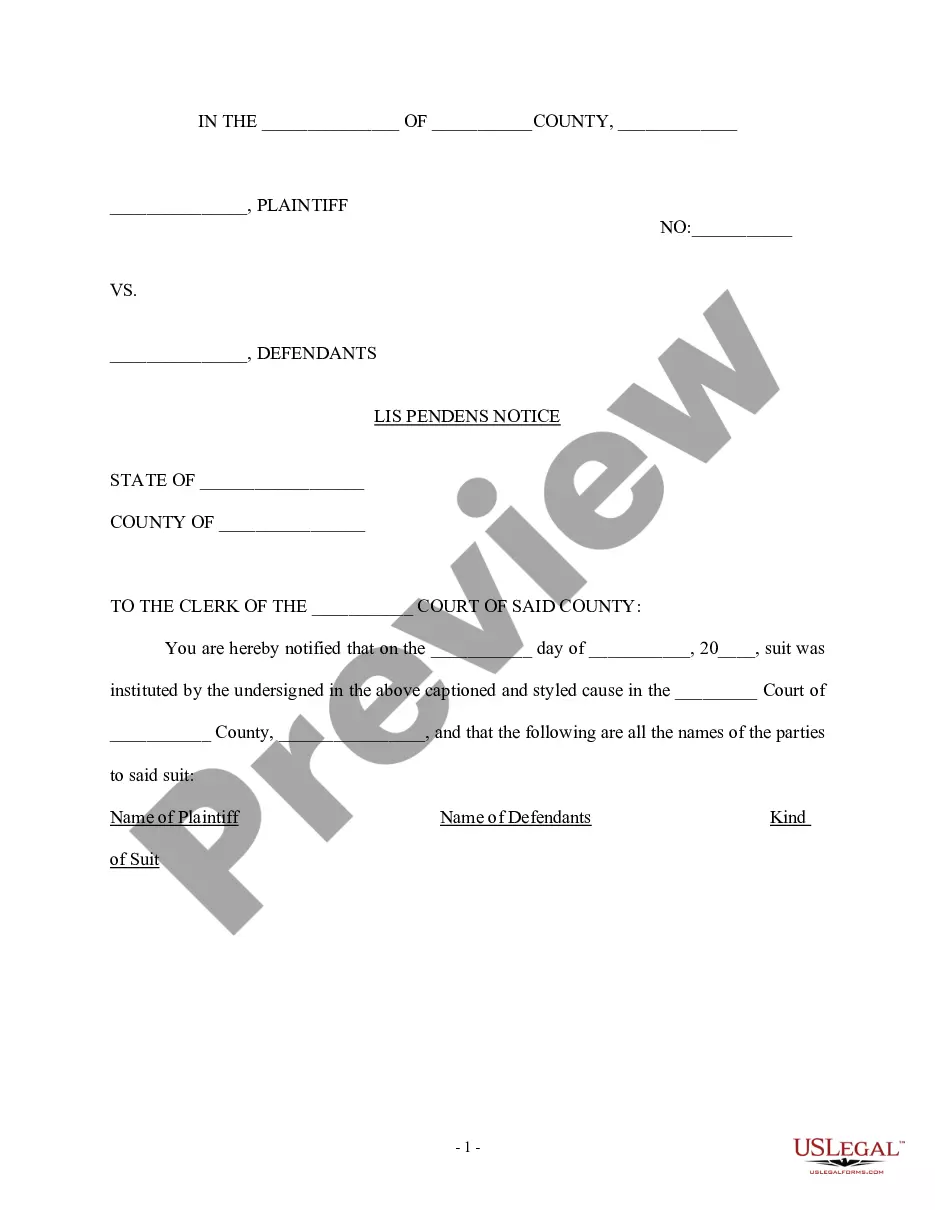
Lis pendens is a Latin term that translates to "suit pending." It is a legal notice indicating that a lawsuit has been filed regarding a specific property. This notice serves to inform interested parties that the property in question is involved in litigation, which may affect its ownership and rights associated with it. Lis pendens can prevent the sale or transfer of the property until the litigation is resolved.
Legal use and context
The lis pendens is commonly used in real estate disputes, including foreclosure actions, boundary disputes, or contract disagreements. It is intended to protect the interests of the party who initiated the lawsuit by making potential buyers or lenders aware that the property is legally encumbered. Failure to recognize a lis pendens may result in the buyer or lender suffering losses due to the ongoing litigation.
Key components of the form
A lis pendens notice typically includes several essential components:
- The names of the parties involved in the lawsuit.
- The specific court where the case is filed.
- A description of the property in question.
- The type of action being pursued.
- The case number for the litigation.
These elements help ensure that the notice is properly recorded and understood by all relevant parties.
Who should use this form
This form should be used by individuals or entities who are initiating legal action concerning a property and need to formally put the public on notice of the pending action. It may be utilized by homeowners, landlords, attorneys, or any party who has a legitimate claim to a property involved in a lawsuit. Using this form protects their legal interests during ongoing litigation.
Common mistakes to avoid when using this form
When completing a lis pendens form, there are several common mistakes that should be avoided:
- Incomplete or vague descriptions of the property.
- Failing to properly identify all parties involved in the lawsuit.
- Neglecting to include the correct jurisdiction or court details.
- Not recording the notice in the appropriate recording district.
Correctly addressing these issues is crucial to ensuring the lis pendens is legally effective.