What is a community property disclaimer and how does it work?
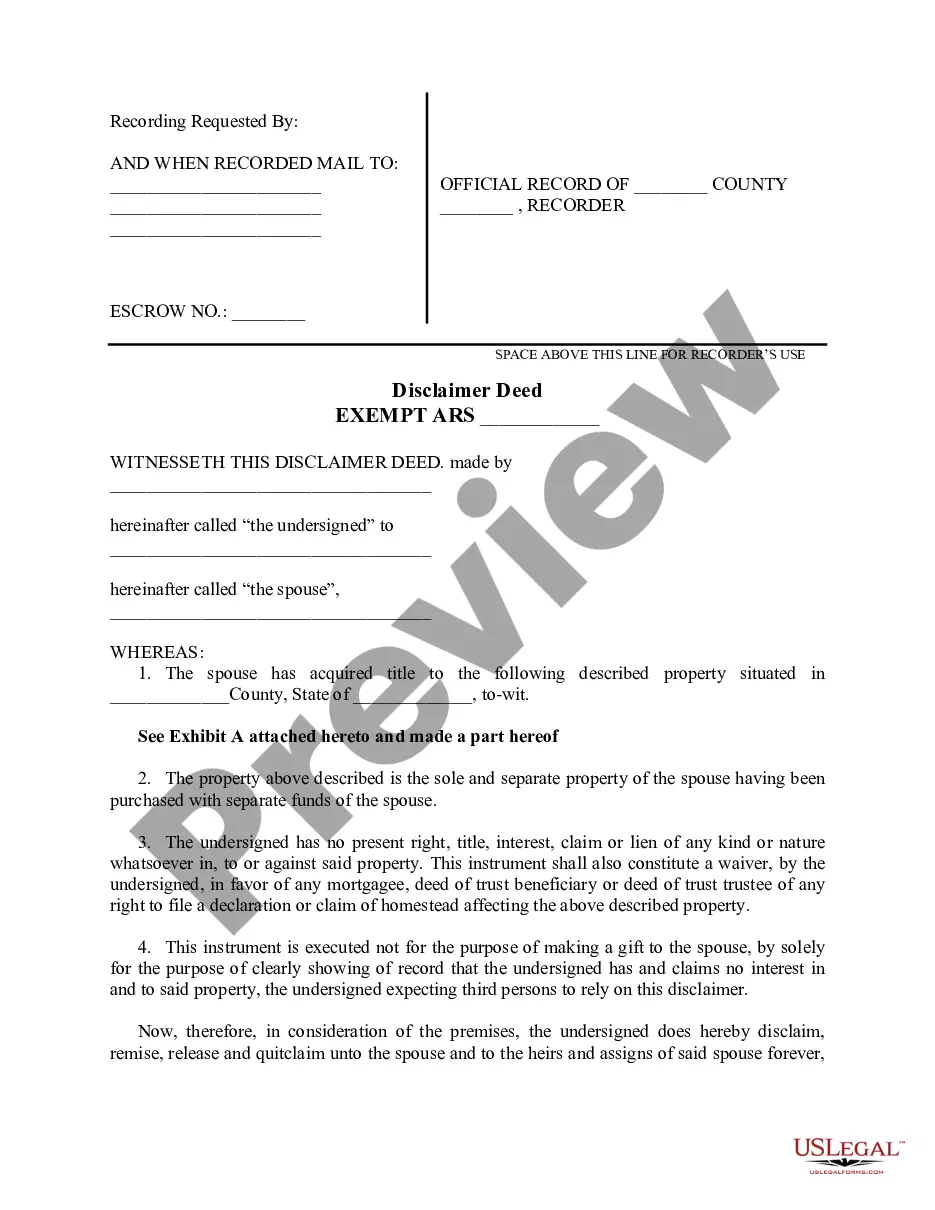
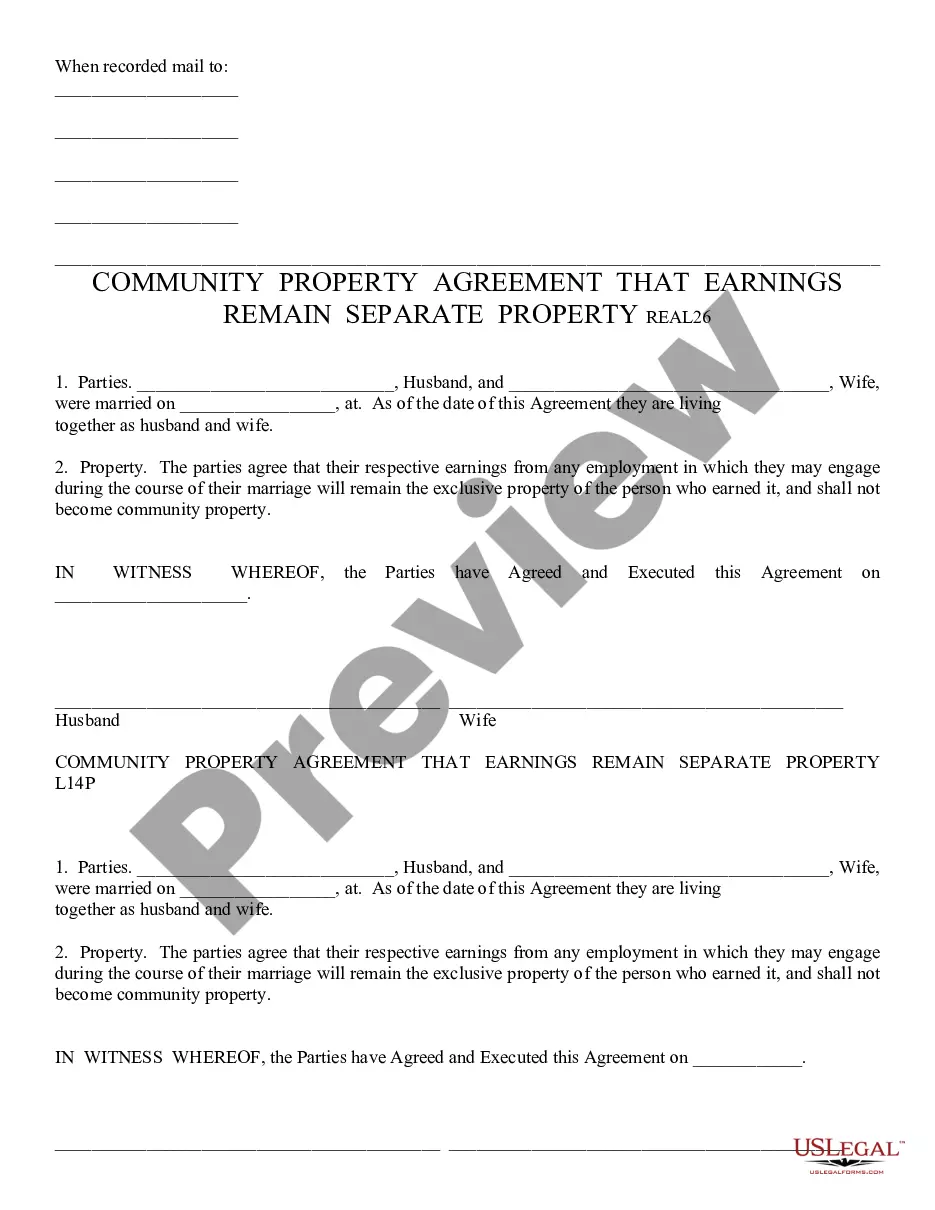
A community property disclaimer is a legal document that clarifies the ownership of property during marriage or partnership. It serves as a formal declaration made by one partner, indicating that certain property is not considered community property. This means that the specified property remains the individual and separate asset of one partner, despite being acquired during the course of the relationship.
The disclaimer often helps in preventing misunderstandings regarding property rights and interests, ensuring that both parties recognize the separate ownership of the mentioned assets.
Who should use this form
This form is typically used by individuals in a marriage or partnership who wish to clearly outline the separate nature of specific property. It is beneficial for:
- People entering into a marriage where they own significant assets individually.
- Partners who wish to protect their separate property from being classified as community property.
- Individuals planning to pass on property to heirs without the interference of marital claims.
Key components of the form
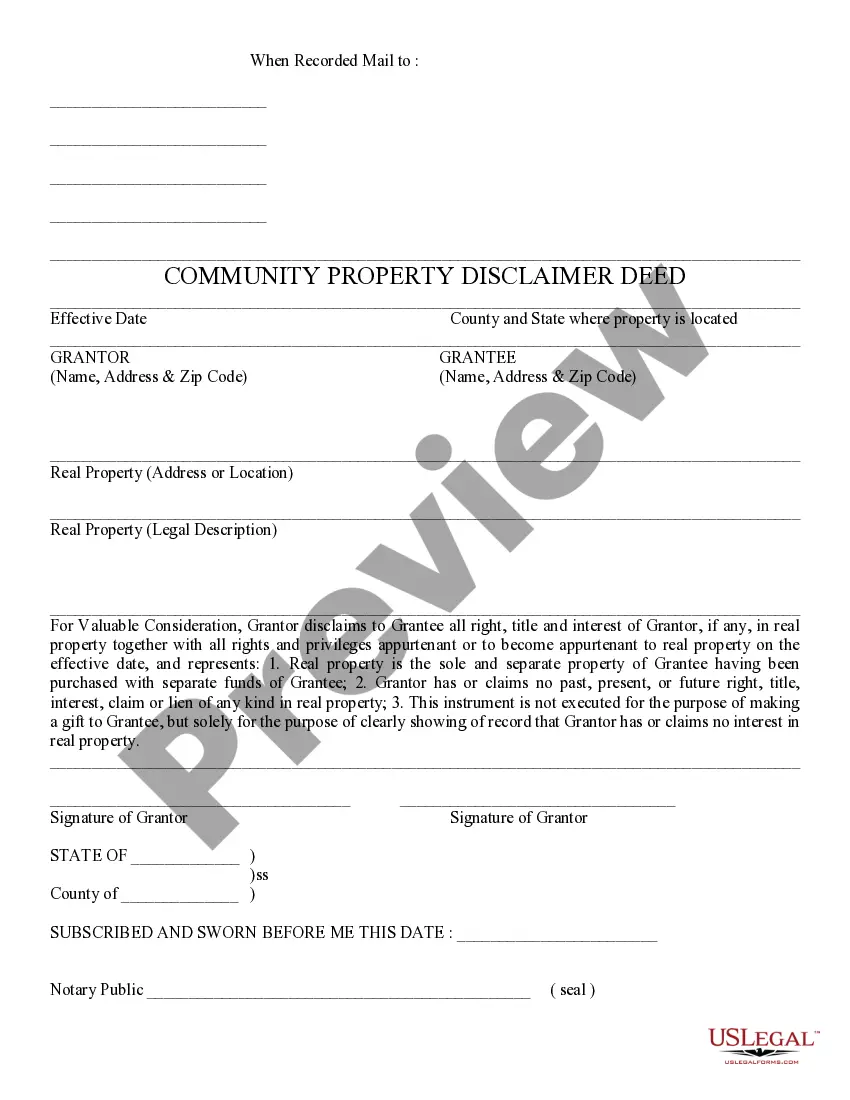
The community property disclaimer includes several important elements:
- Grantor and Grantee Information: Names and addresses of the person disclaiming property (Grantor) and the recipient (Grantee).
- Property Description: A detailed account of the property in question, including its legal description and physical address.
- Disclaimer Statement: A clear declaration that the Grantor relinquishes any claims to the property being disclaimed.
- Effective Date: The date when the disclaimer will take effect.
- Signatures: Signatures of the Grantor and a notary public to validate the document.
Common mistakes to avoid when using this form
When completing a community property disclaimer, individuals should be cautious of several common pitfalls:
- Failing to provide a complete legal description of the property.
- Not having the document notarized, which can invalidate it.
- Leaving out the effective date, which may lead to confusion regarding when the disclaimer takes effect.
- Improperly naming the parties involved in the disclaimer.
It is crucial to carefully review the form to ensure all information is accurate and complete.
What to expect during notarization or witnessing
Notarization is an essential step in the execution of a community property disclaimer. An individual seeking to notarize this document can expect the following:
- Identification: Present valid identification to the notary to verify the identity of the Grantor.
- Witnesses: Depending on local laws, witnesses may be required to observe the signing of the document.
- Signature: The notary will witness the Grantor signing the document and then affix their official seal to validate it.
It is advisable to discuss any specific requirements for notarization with your chosen notary in advance.
Legal use and context
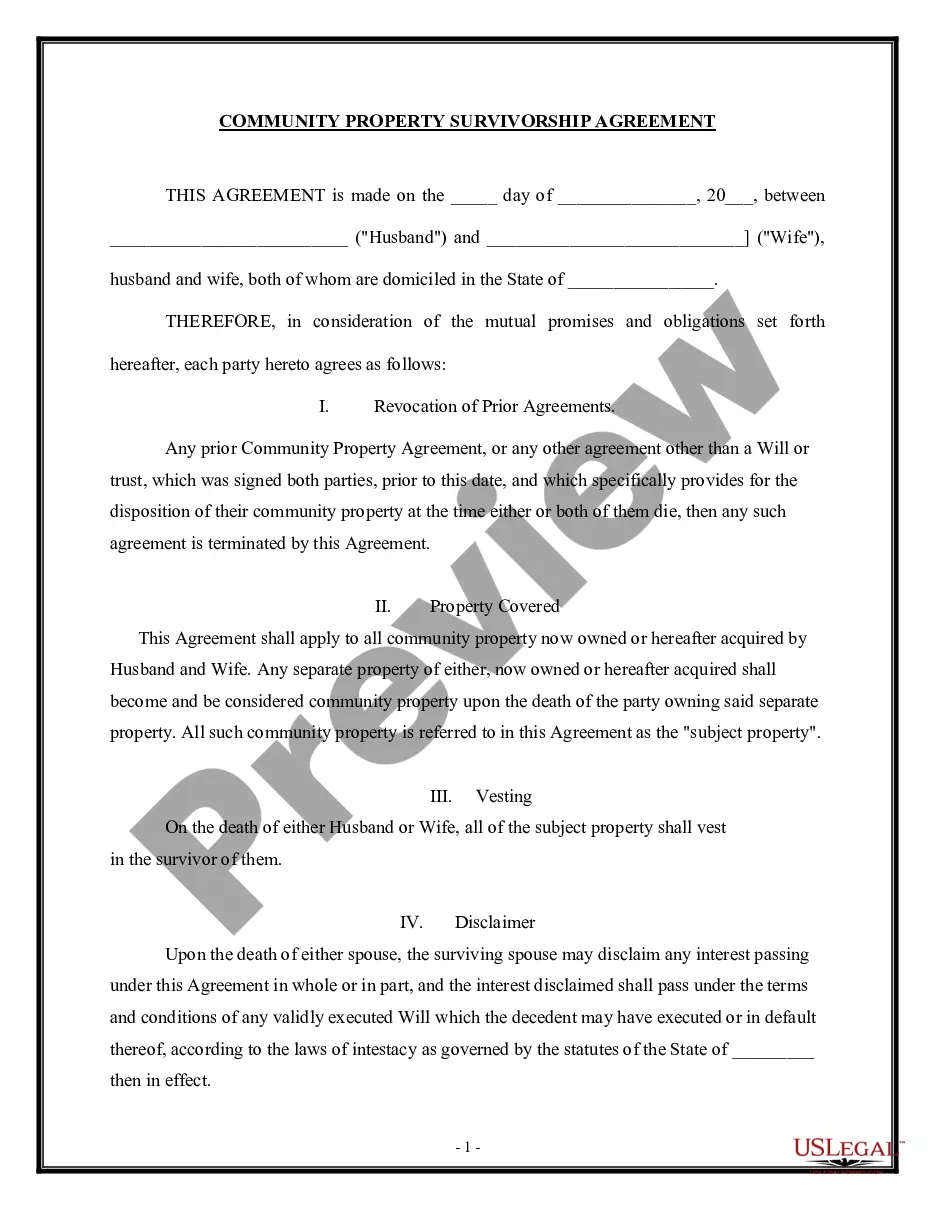
A community property disclaimer is often used in jurisdictions where community property laws apply. These laws dictate that property acquired during marriage is considered owned jointly by both partners. By using a disclaimer, an individual can actively assert that specific assets should remain separate, thus protecting them from claims by the other partner in case of divorce or legal disputes.
Understanding when and how to use this form can significantly impact financial planning and asset protection.
Key takeaways
In summary, a community property disclaimer serves as a crucial tool for individuals who wish to maintain clear distinctions regarding property ownership in a partnership or marriage. Here are the main points to remember:
- It defines and protects separate property rights.
- It's important to ensure all information is correct to prevent future issues.
- Proper notarization is essential for the disclaimer to be legally binding.