What Is a Motion to Quash and How Does It Work?
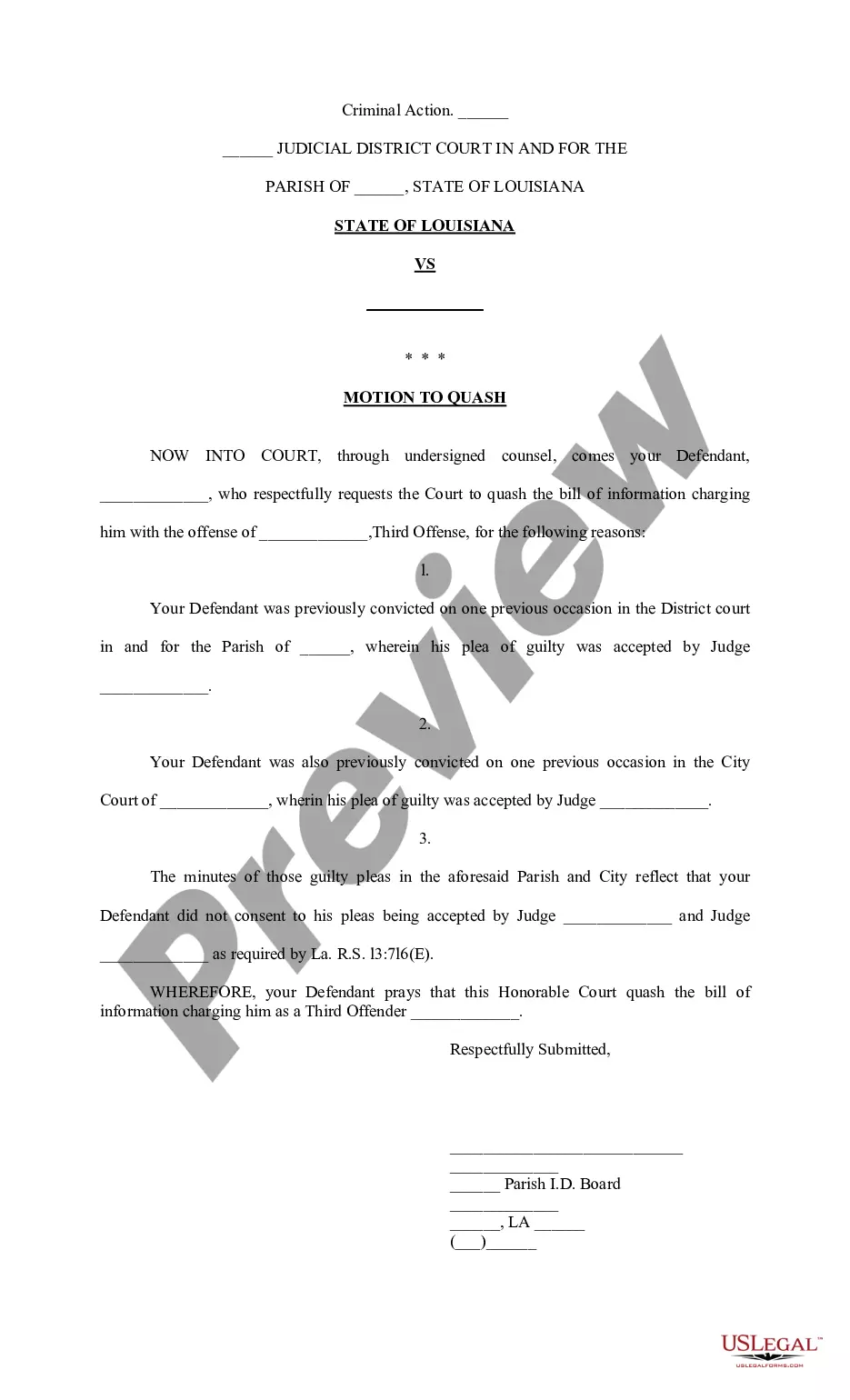
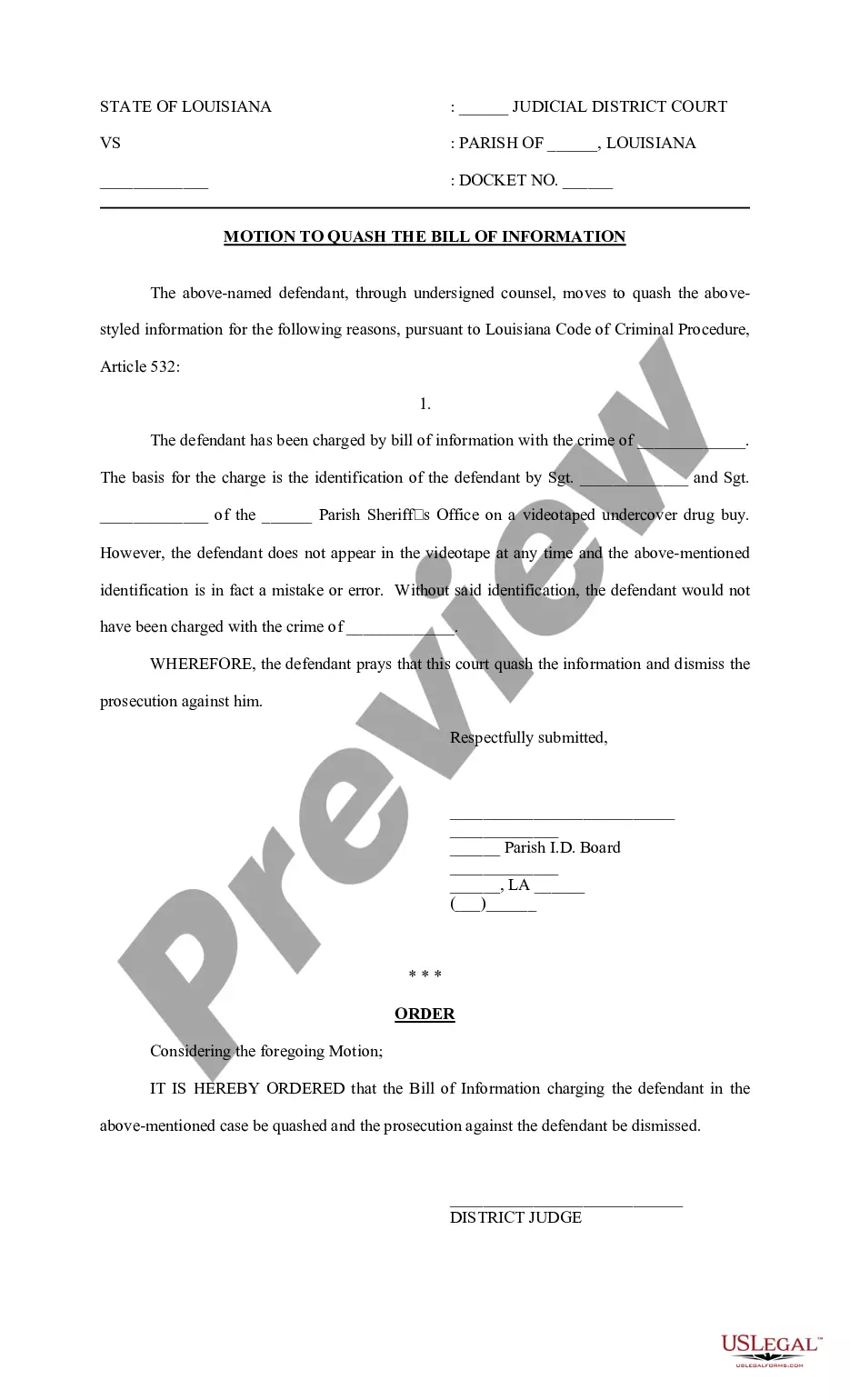
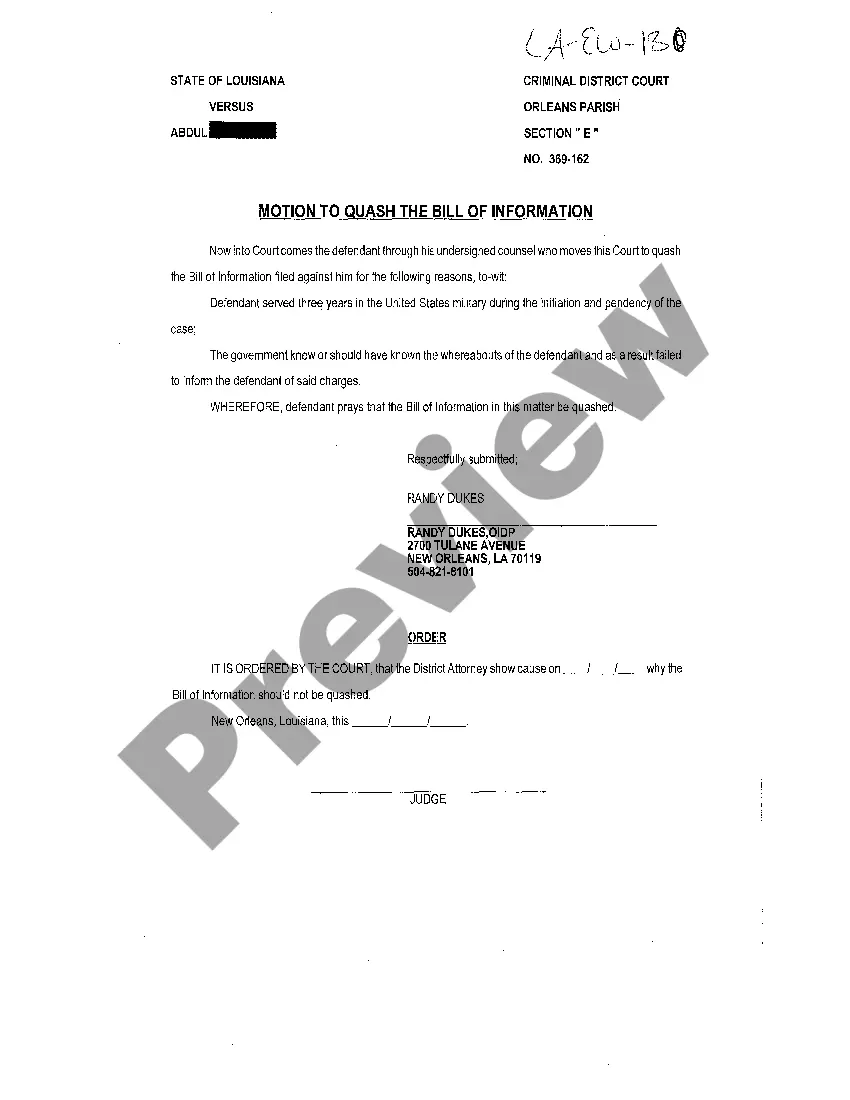
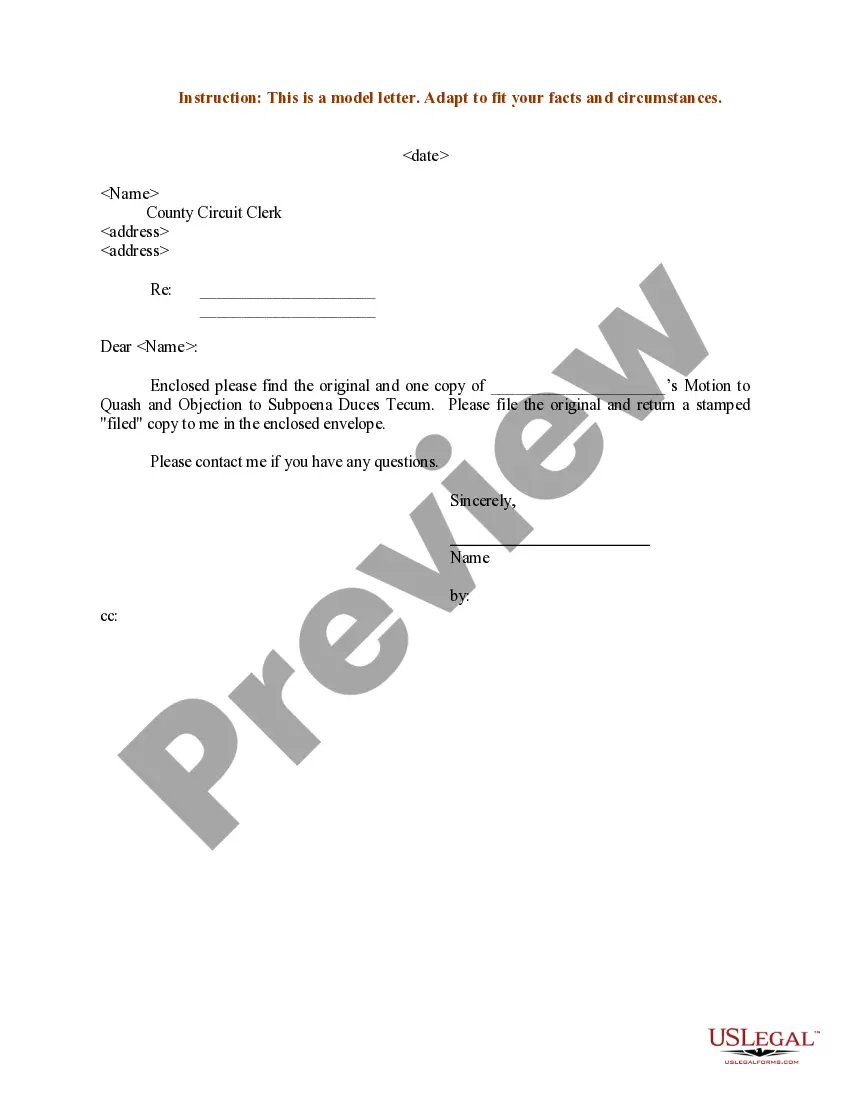
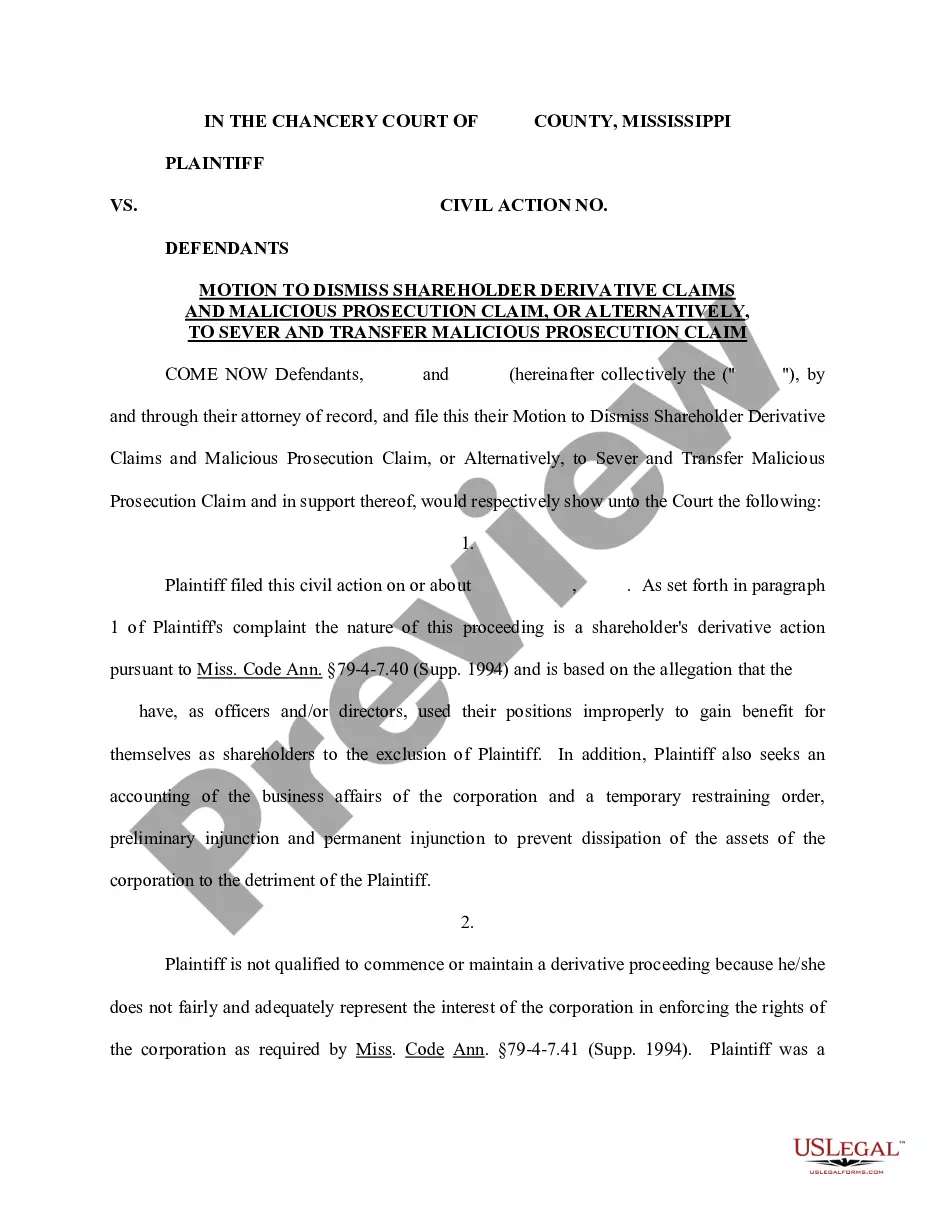
A motion to quash is a legal document filed by a party in a case requesting the court to nullify or void a specific action or order. This might relate to summons, subpoenas, or other legal processes that the filer believes are unjustly applied, improperly issued, or without proper authority.
Who should use this form
This form is typically used by individuals or entities (defendants or attorneys) who receive a summons or subpoena and believe that it should be dismissed for reasons such as lack of jurisdiction, improper service, or other legal deficiencies. It is important for anyone receiving a legal command to consider if they have valid grounds for filing a motion to quash.
Legal use and context
A motion to quash is utilized during various legal proceedings, particularly in civil and criminal cases. It is a mechanism to protect rights by challenging the legality of processes. For example, you might file this motion if you receive a subpoena to appear in a court that you believe lacks jurisdiction over you or if the subpoena was served improperly.
Common mistakes to avoid when using this form
When completing a motion to quash, it is crucial to avoid several common errors:
- Neglecting to provide all relevant facts and evidence supporting your claim.
- Failing to file within the required time frame set by the court.
- Omitting necessary signatures or documentation attached to your motion.
- Not properly serving the motion to the opposing party or court, which could invalidate your request.
What documents you may need alongside this one
Along with your motion to quash, you may need to include:
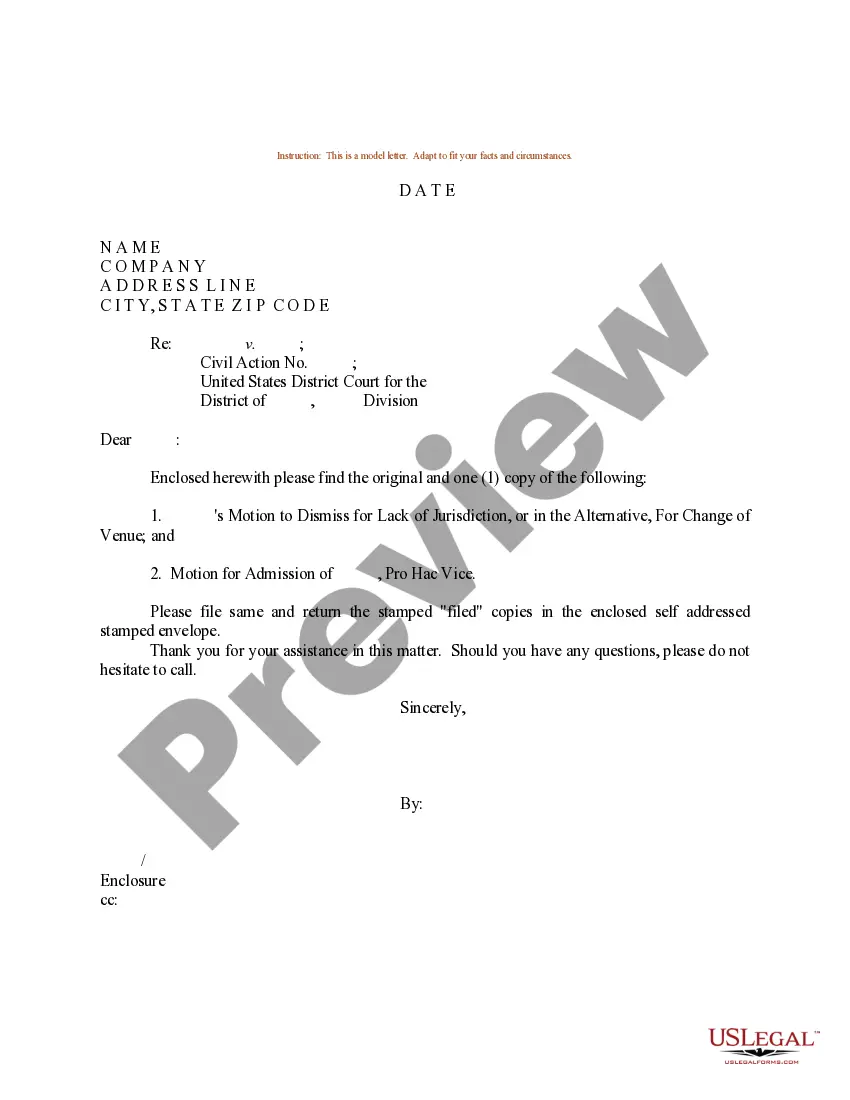
- Copies of the original subpoena or summons.
- Any correspondence related to the case or the service of the legal documents.
- Supporting affidavits or evidence that substantiate your request.
Key components of the form
When completing a motion to quash, include the following key components:
- Your contact information as the filer.
- The court's name and case number.
- A clear statement of your request to quash, including the specific document or action you are challenging.
- Detailed grounds for your motion, explaining why the action should be quashed.
- A conclusion or request for relief from the court.
What to expect during notarization or witnessing
Most motions to quash require notarization. Expect the following during this process:
- Present your signed motion to the notary public.
- Provide a valid photo ID for verification.
- The notary may administer an oath before you finalize your signature.
Ensure all documents are completed correctly prior to the notary appointment.