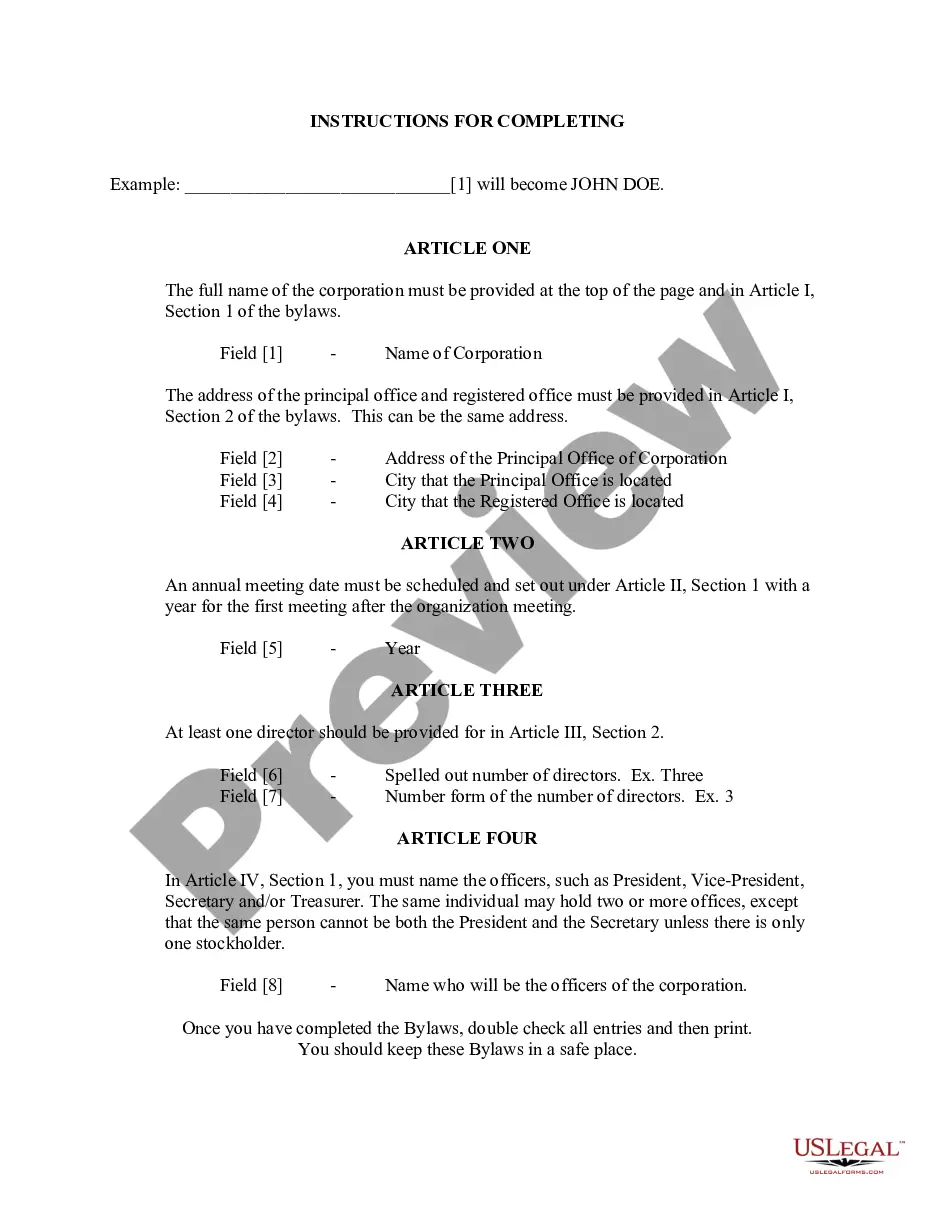
Indiana Last Will and Testament for Married person with Minor Children
About this form
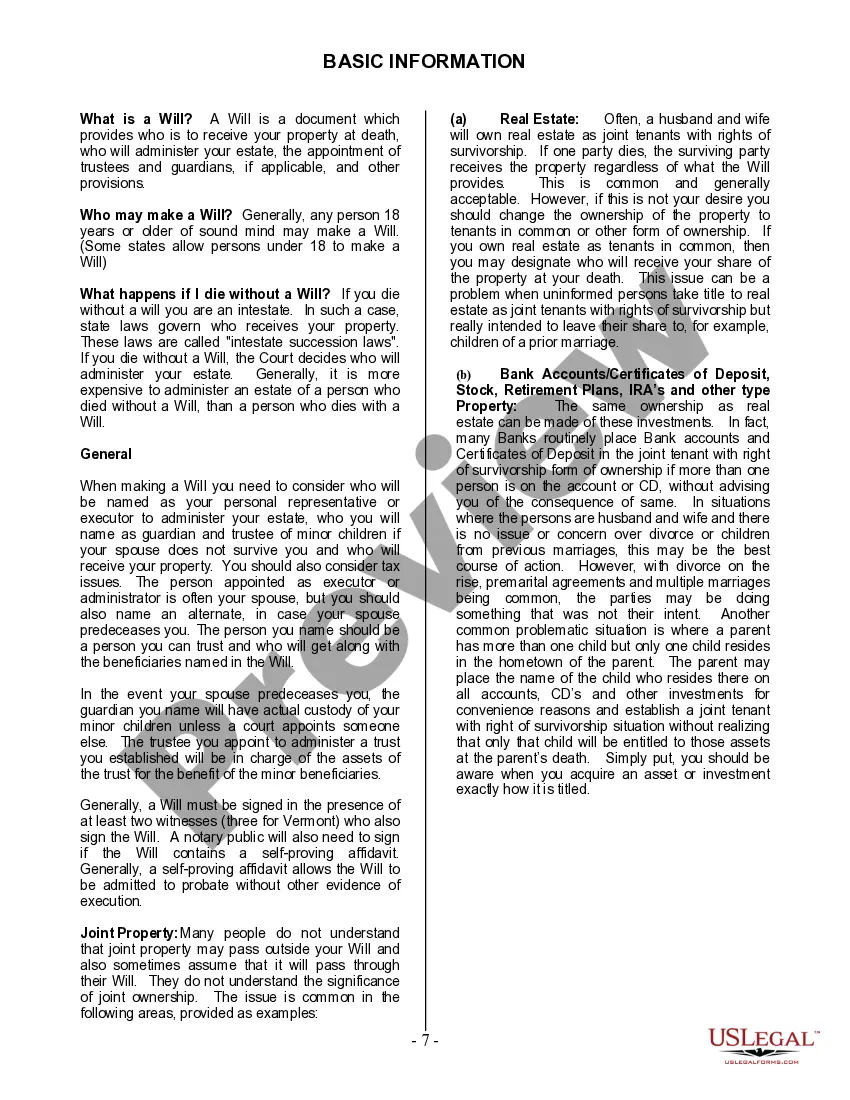
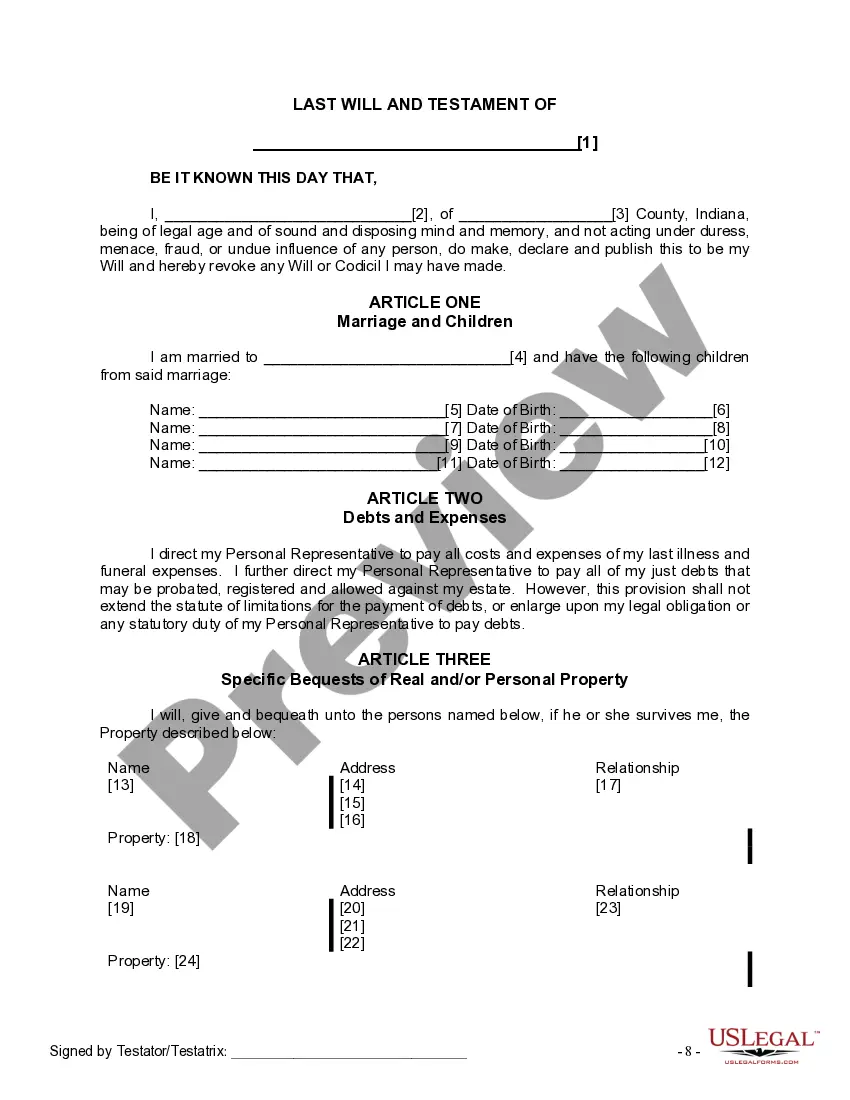
This Last Will and Testament is specifically designed for a married person with minor children. It serves to specify how your assets will be distributed upon your passing, appoint a personal representative to manage your estate, and designate guardians for your minor children. Through this form, you can ensure that your loved ones are cared for and your wishes are respected after your death. Unlike simpler wills, this form includes provisions tailored to the needs of families with children.
What’s included in this form
- Appointment of a personal representative or executor.
- Designation of beneficiaries for your property.
- Instructions for specific property bequests.
- Provisions for guardianship of minor children.
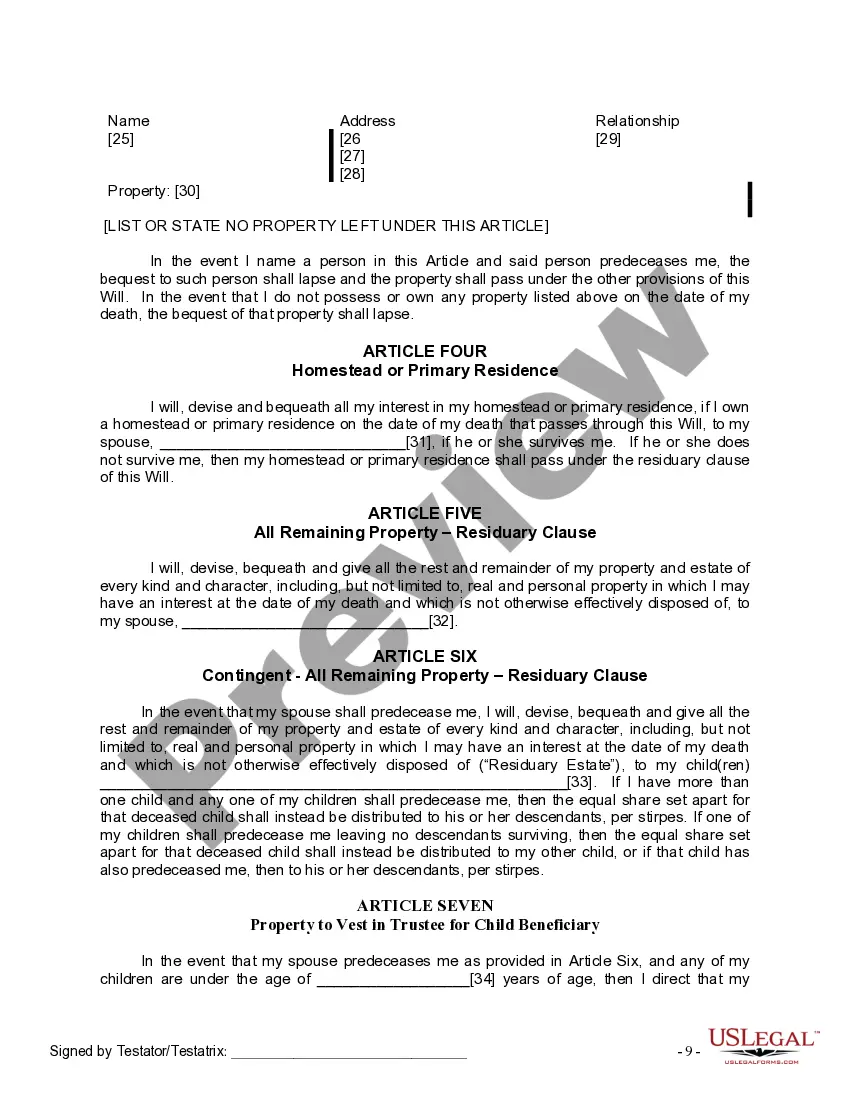
- Creation of trusts for minor beneficiaries.
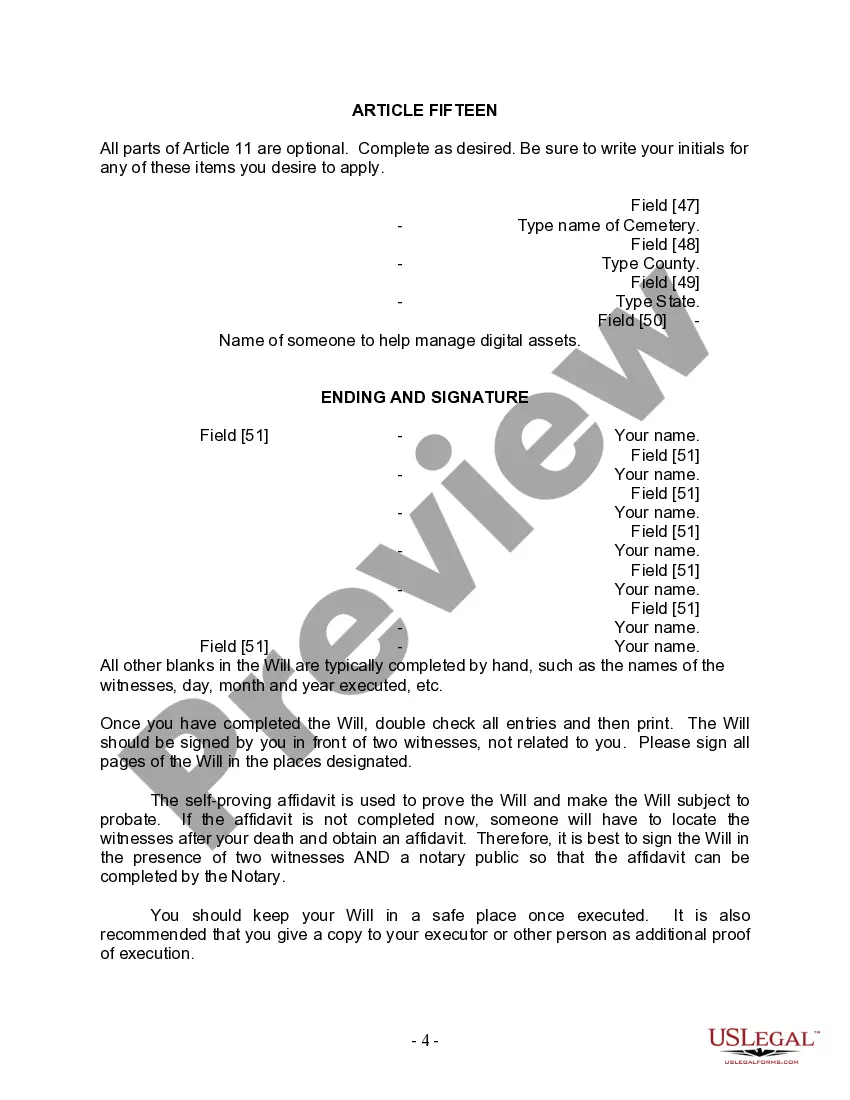
- Options for funeral and burial arrangements.






When to use this form
This form should be used when you want to legally outline your wishes regarding property distribution and the care of your minor children after your death. It is essential for married individuals with children who wish to ensure that their family is provided for in a way that reflects their specific desires. Utilizing this form will help avoid potential disputes and confusion amongst family members regarding your intentions.
Who this form is for
- Married individuals with minor children.
- Individuals seeking to designate guardians for their children.
- Those who want to ensure that their assets are distributed according to their wishes.
- People who wish to appoint a personal representative to manage their estate.
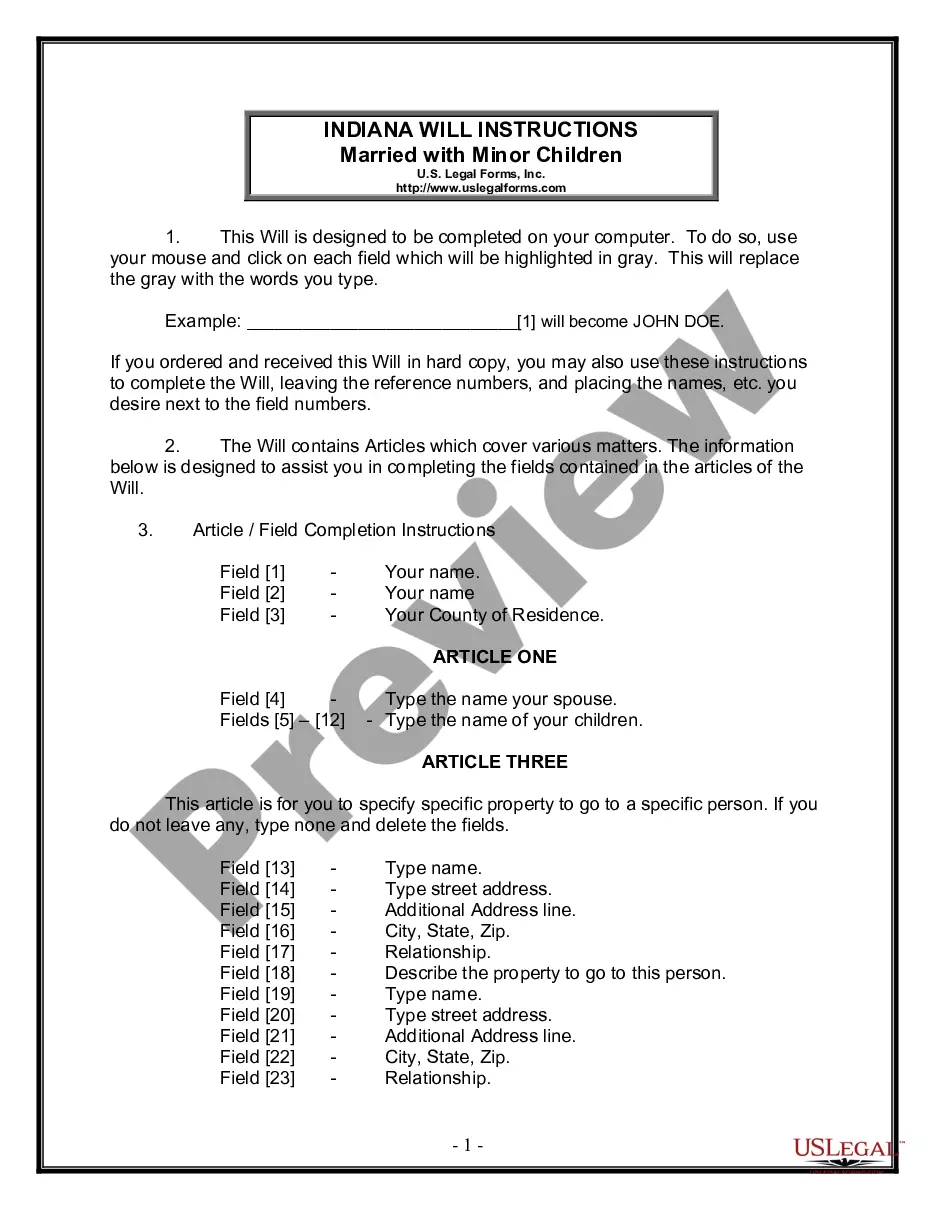
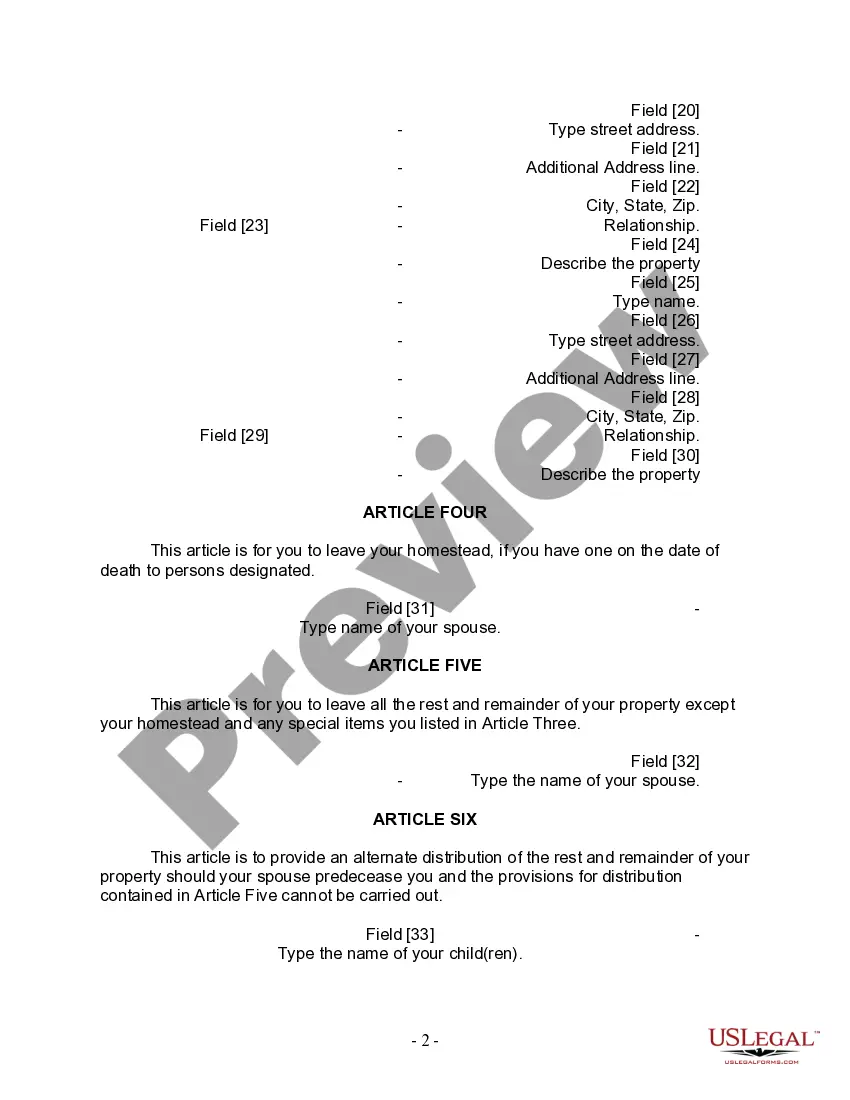
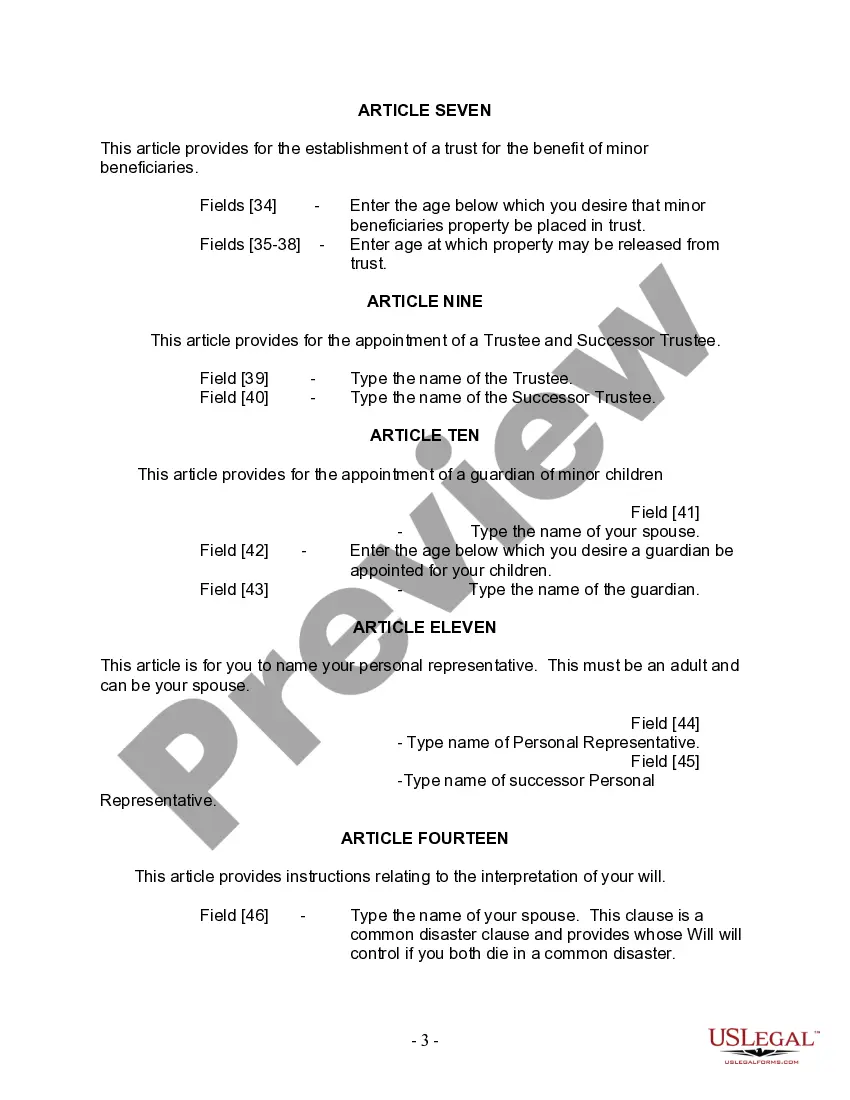
Steps to complete this form
- Identify yourself and your spouse by entering your names and county of residence.
- List the names and dates of birth for your minor children.
- Designate specific property bequests, if any, to specific individuals.
- Appoint guardians for your minor children and a personal representative for your estate.
- Ensure that the will is signed in front of two witnesses and, if needed, notarized.
Notarization requirements for this form
Yes, this form must be notarized to be legally valid. The presence of a notary public at the time of signing helps to establish authenticity and can facilitate the probate process. Utilizing online notary services allows for secure and immediate notarization, making it easy to complete your will.
Get your form ready online
Our built-in tools help you complete, sign, share, and store your documents in one place.
Make edits, fill in missing information, and update formatting in US Legal Forms—just like you would in MS Word.
Download a copy, print it, send it by email, or mail it via USPS—whatever works best for your next step.
Sign and collect signatures with our SignNow integration. Send to multiple recipients, set reminders, and more. Go Premium to unlock E-Sign.
If this form requires notarization, complete it online through a secure video call—no need to meet a notary in person or wait for an appointment.
We protect your documents and personal data by following strict security and privacy standards.

Make edits, fill in missing information, and update formatting in US Legal Forms—just like you would in MS Word.

Download a copy, print it, send it by email, or mail it via USPS—whatever works best for your next step.

Sign and collect signatures with our SignNow integration. Send to multiple recipients, set reminders, and more. Go Premium to unlock E-Sign.

If this form requires notarization, complete it online through a secure video call—no need to meet a notary in person or wait for an appointment.

We protect your documents and personal data by following strict security and privacy standards.
Common mistakes to avoid
- Failing to include all minor children or misrepresenting their names.
- Omitting the guardian designation for minor children.
- Not signing the will in the presence of two witnesses.
- Neglecting to keep the will in a secure location after it is signed.
Why use this form online
- Convenience of filling out the document from home.
- Editability, allowing you to make changes as needed before finalizing.
- Access to professionally drafted legal templates that ensure compliance with state laws.
- This form outlines the legal distribution of assets according to your wishes.
- Having a Will in place can prevent higher costs associated with intestate succession.
- It provides peace of mind by clearly defining guardianship and asset management for minor children.
Key takeaways
- Ensure your Last Will and Testament is properly signed and witnessed to avoid disputes.
- Clearly designate a guardian for your minor children to ensure their proper care.
- Specify how you want your assets to be distributed, taking care to include all property and beneficiaries.
- Utilize online tools to easily complete and notarize your will for added convenience.
Looking for another form?


Form popularity
FAQ
Physical assets such as a house, cars or jewellery. Financial assets such as shares or bank savings, and. Heirlooms or possessions with sentimental value.
A will or testament is a legal document that expresses a person's (testator) wishes as to how their property (estate) is to be distributed after their death and as to which person (executor) is to manage the property until its final distribution.
Property in a living trust. One of the ways to avoid probate is to set up a living trust. Retirement plan proceeds, including money from a pension, IRA, or 401(k) Stocks and bonds held in beneficiary. Proceeds from a payable-on-death bank account.
In short, the executor makes the majority of the decisions regarding the distribution of the estate. Although they must follow the instructions in the deceased's Will, sometimes they do have the power to make certain decisions.In these cases, the court can appoint a new executor.
There are certain types of property that legally cannot be included in a person's will. Depending on state laws, these may include: Any Property that is Co-Owned with Someone Else Through Joint-Tenancy: Married couples typically own the marital home in joint tenancy.Property being held in a living trust.
Bank accounts. Brokerage or investment accounts. Retirement accounts and pension plans. A life insurance policy.
Your home, and any other property you own. savings in bank and building society accounts. National Savings, such as premium bonds. insurance, such as life assurance or an endowment policy. pension funds that include a lump sum payment on death. investments such as stocks and shares or investment trusts.
When writing a will, you might note who should take care of your animals after you die, and what money they'll use to do so. Your last will and testament form can also include your wishes regarding funeral arrangements, too. Do you have a preference on where your funeral should be held?