Maryland Renovation Contract for Contractor
Understanding this form
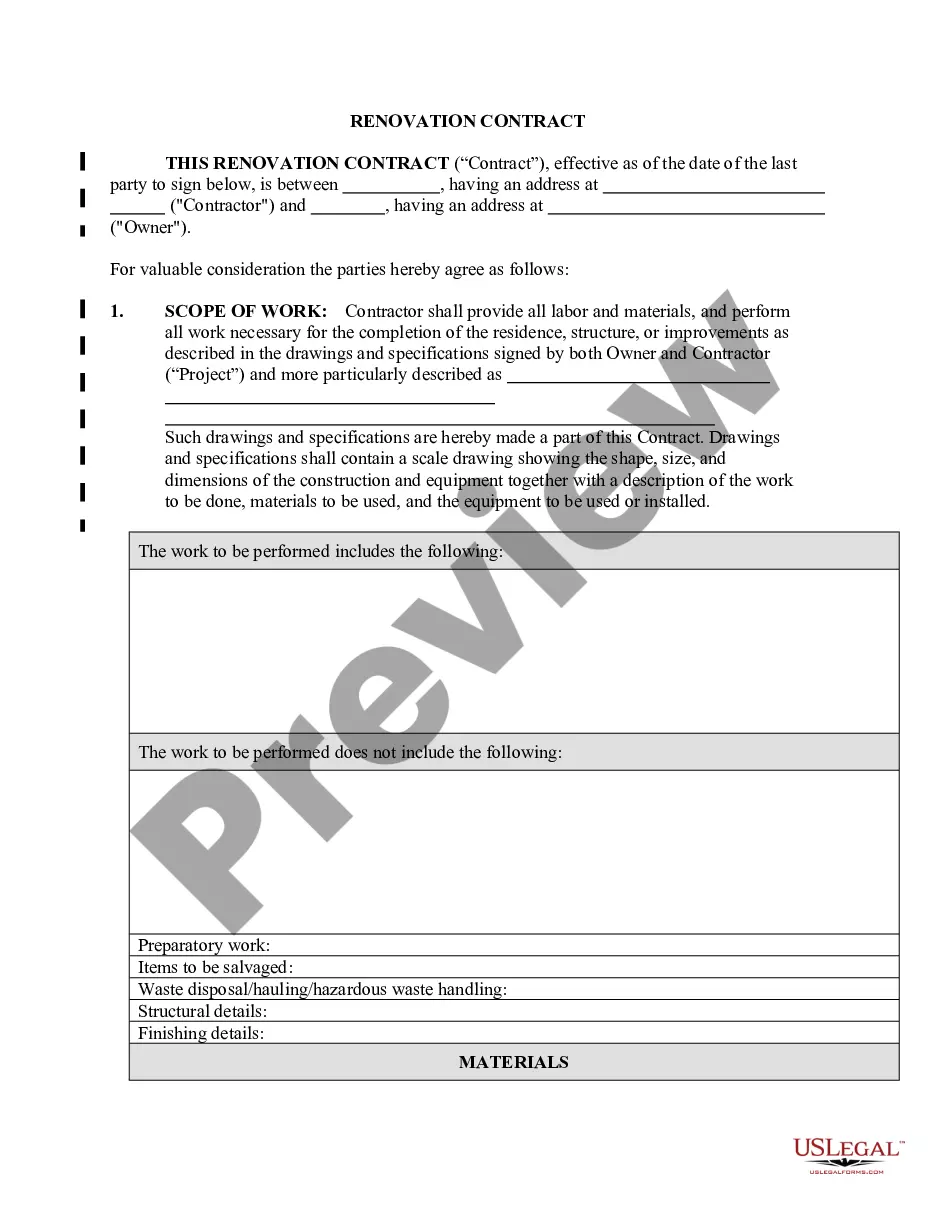
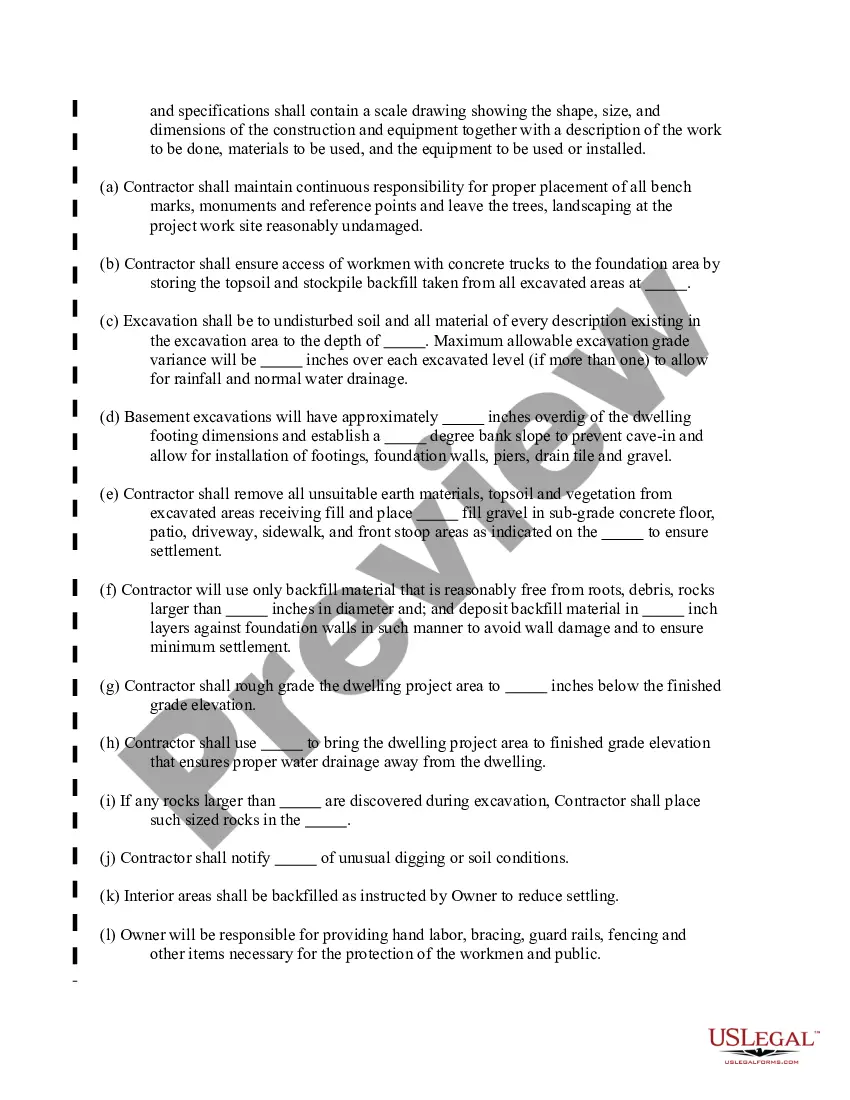
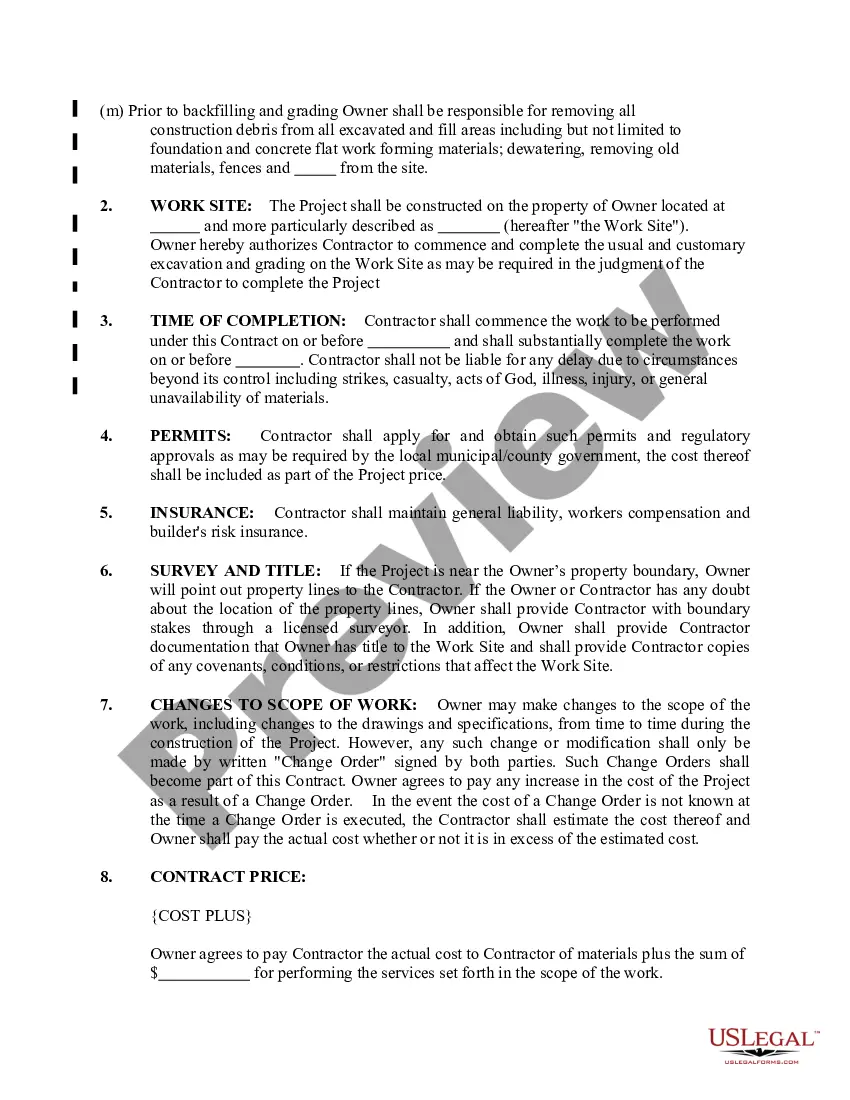
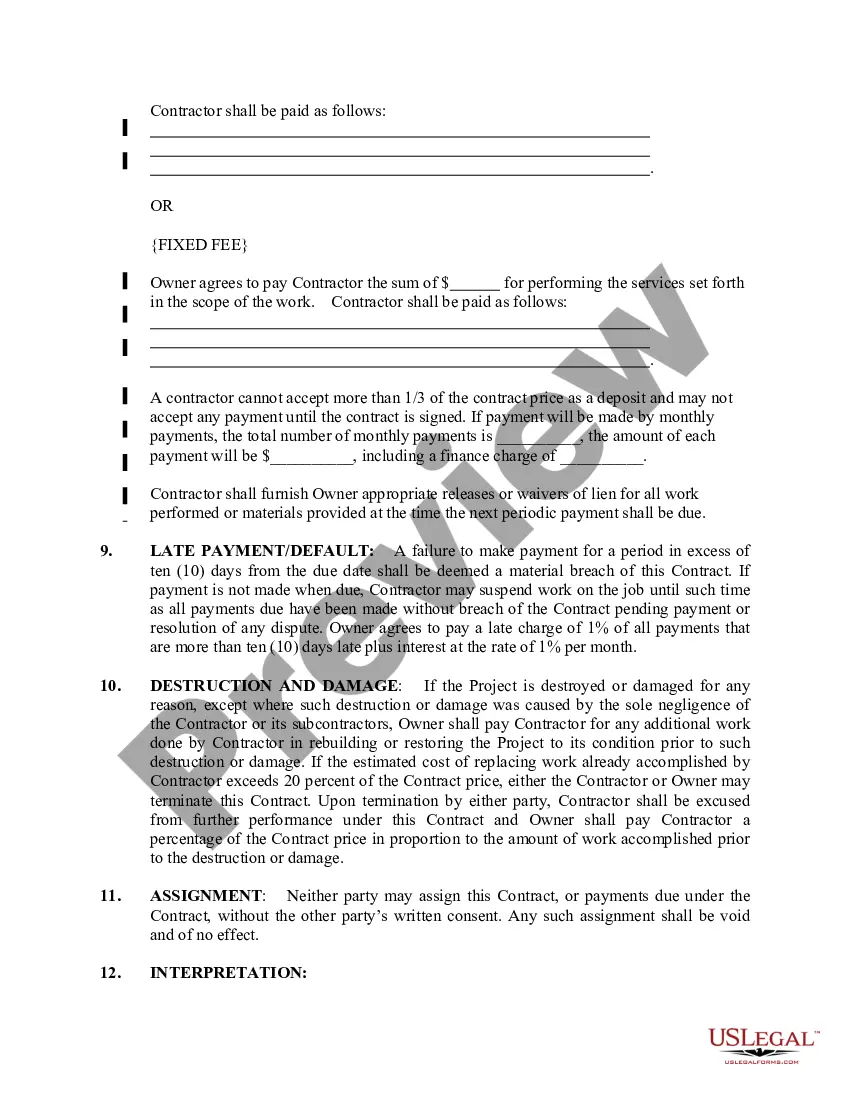
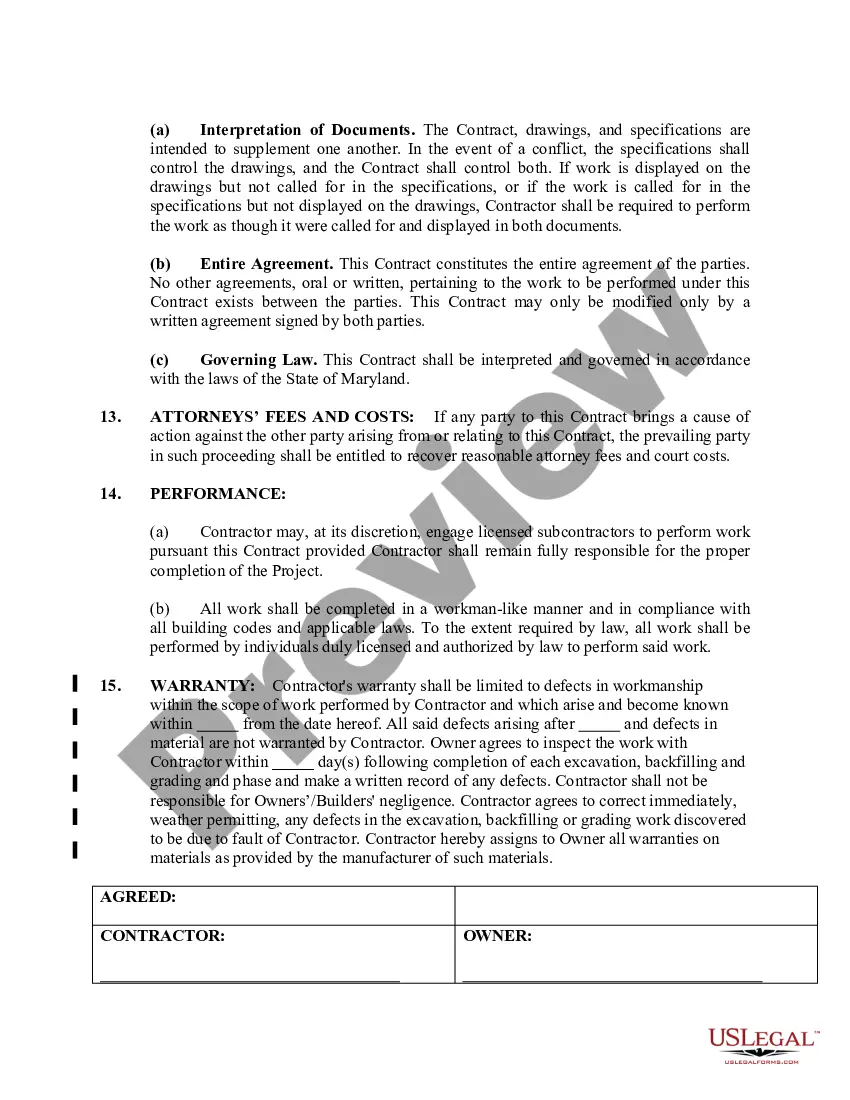
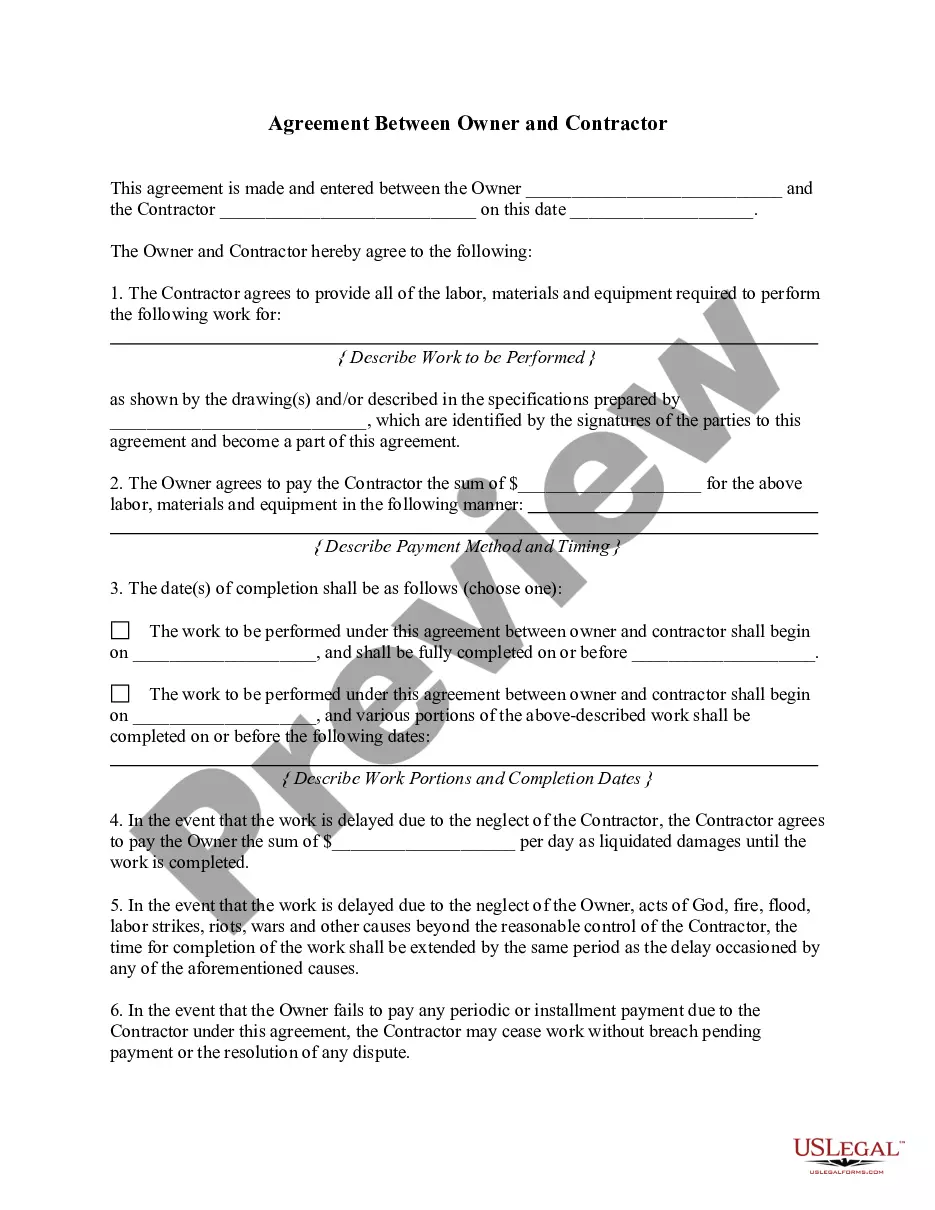
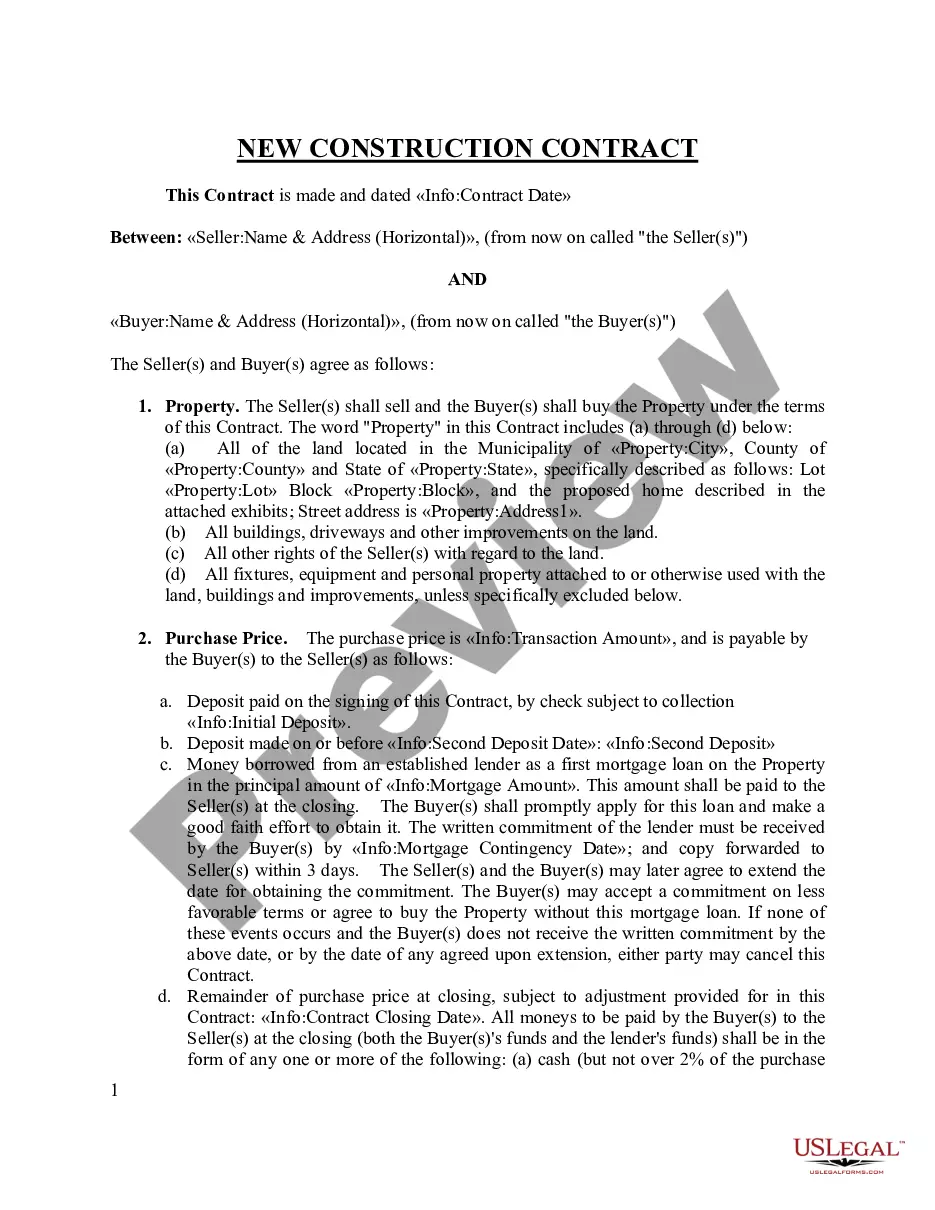
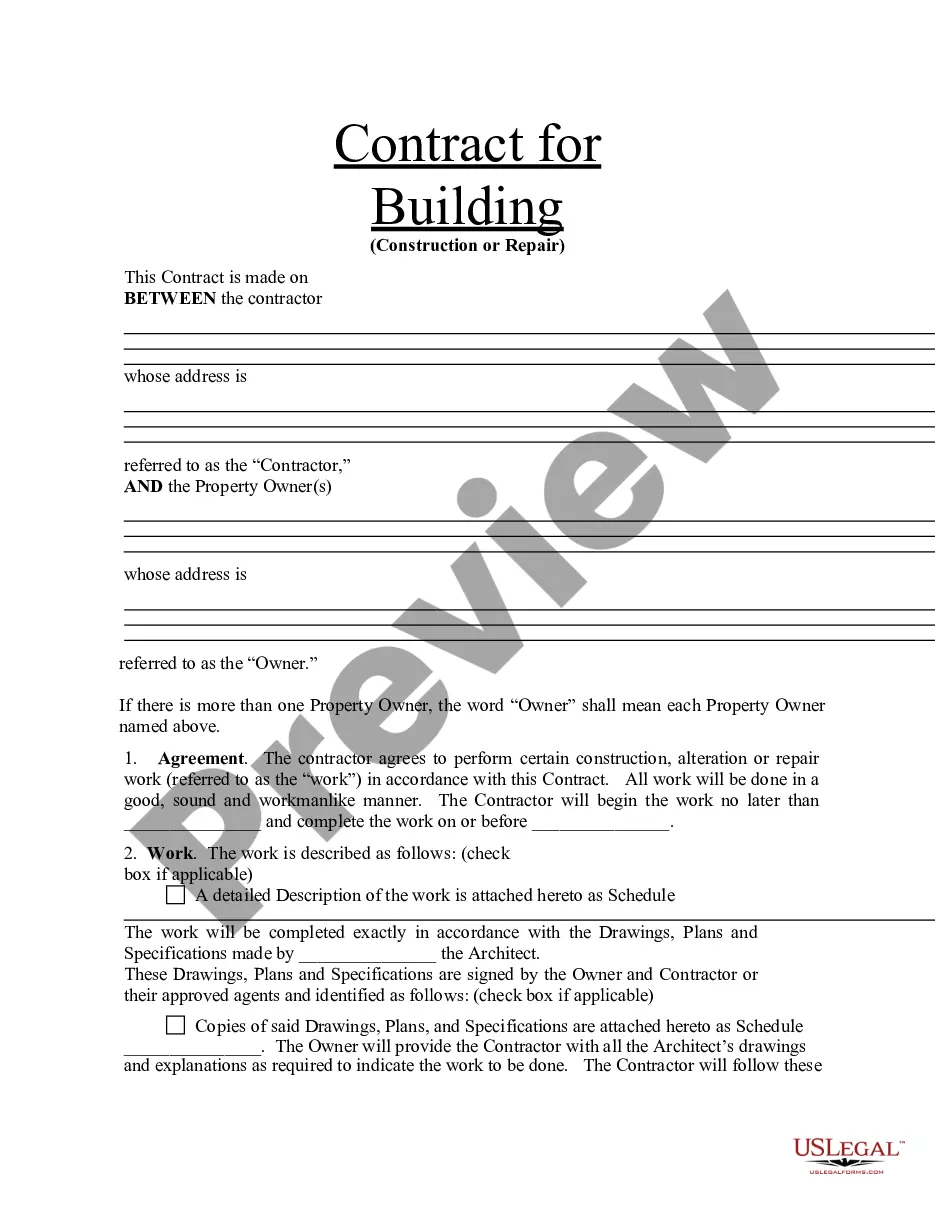
The Renovation Contract for Contractor is a legal document that outlines the agreement between a renovation contractor and a property owner. This contract can be executed under a cost-plus or fixed fee payment arrangement and covers critical components such as permits, insurance, and changes in project scope. Its primary purpose is to establish clear terms of engagement, responsibilities, and expectations for both parties involved in the renovation project, ensuring compliance with the laws of Maryland.
What’s included in this form
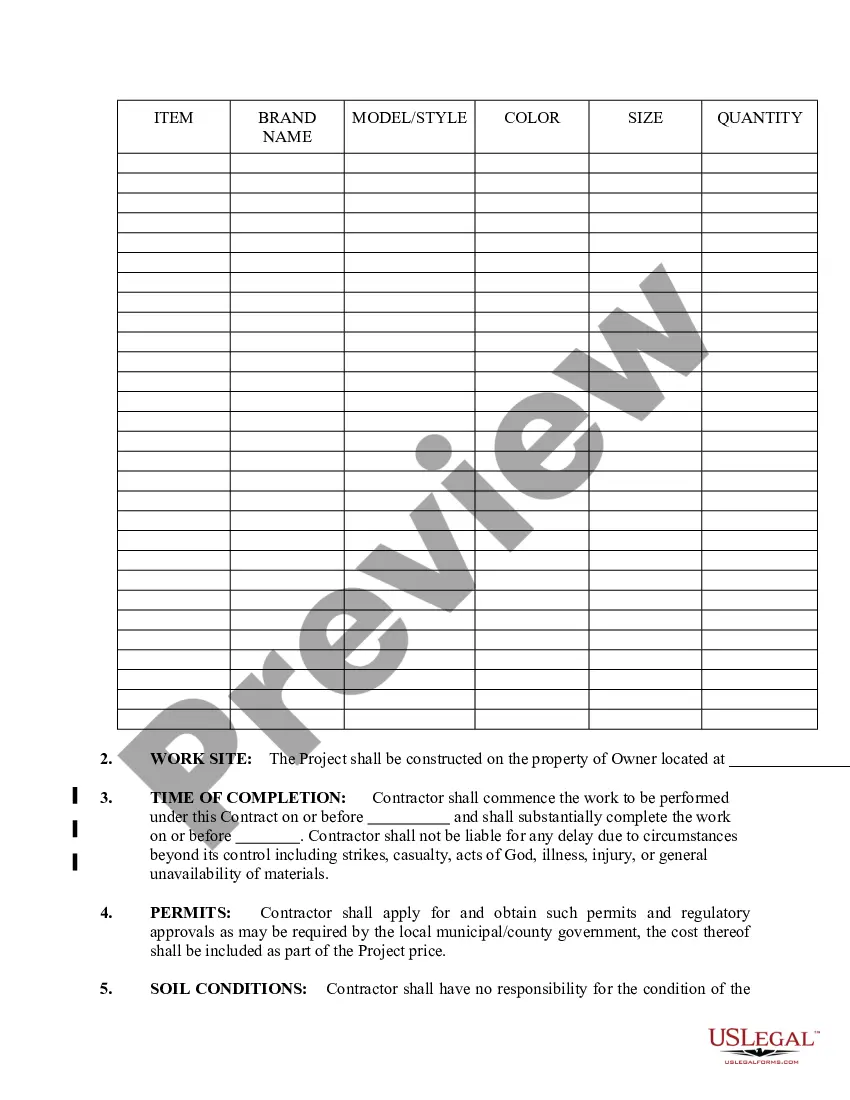
- Permits and regulatory approvals required for the renovation.
- Conditions regarding soil responsibility and additional excavation work.
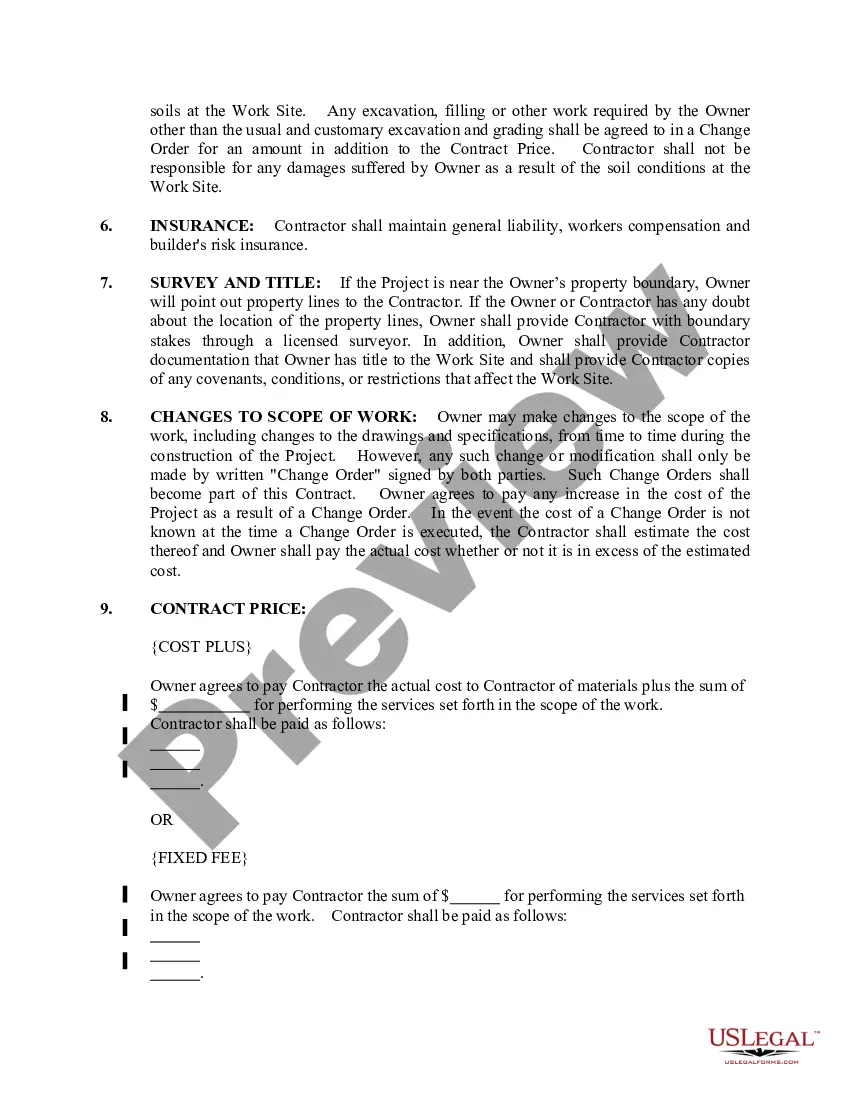
- Insurance requirements to protect both parties during the project.
- Process for making changes to the scope of work through written change orders.
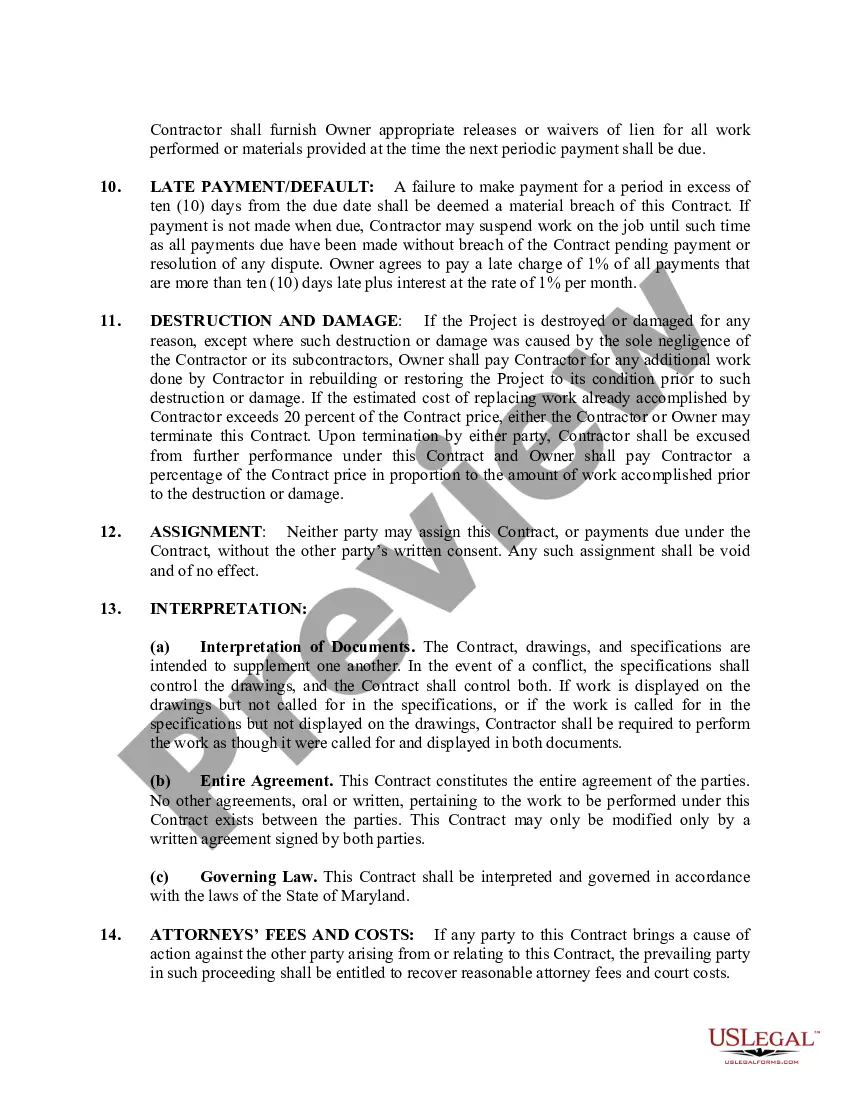
- Details about payment arrangements, including consequences for late payments.
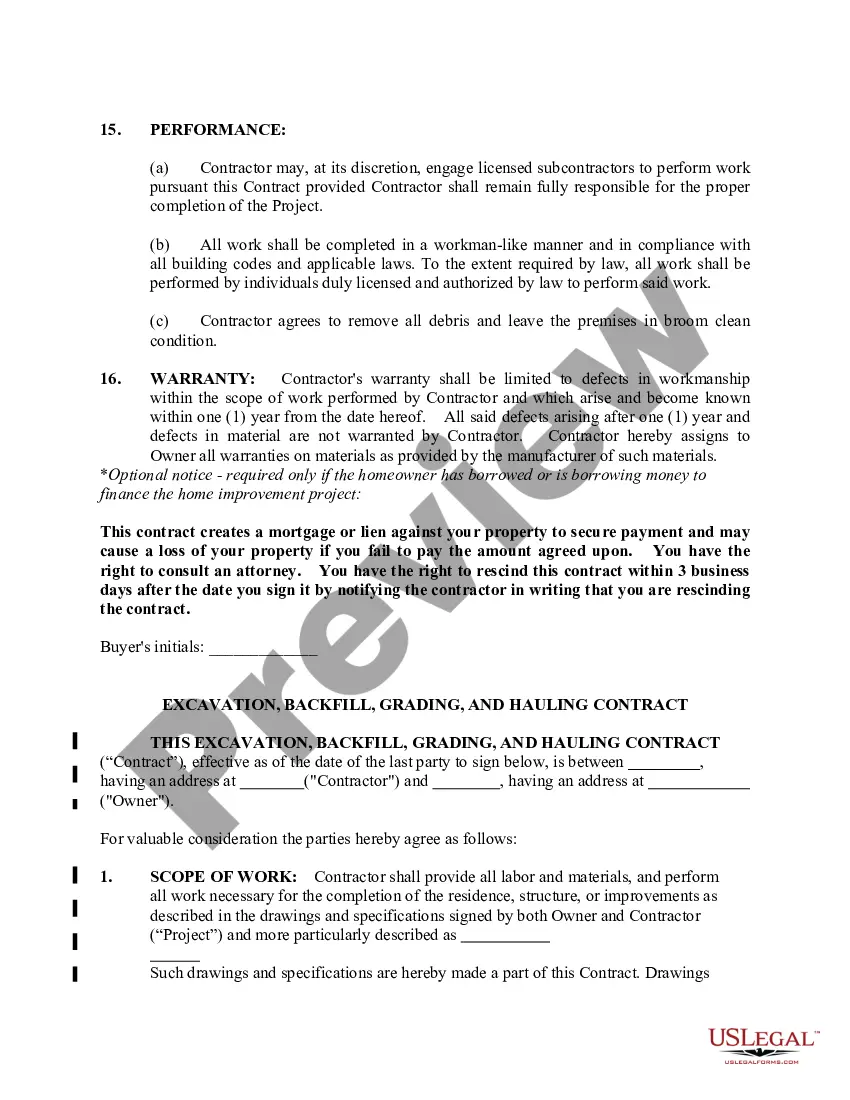
- Warranty terms covering the quality of workmanship.


When to use this document
This form should be used when a property owner hires a renovation contractor to carry out improvements or repairs on their property. It is required when there are significant alterations that necessitate detailed agreements regarding scope, warranties, and payments. Use this contract to ensure that both parties are protected legally and to specify clear procedures for managing changes or unforeseen issues that may arise during the project.
Who needs this form
- Property owners looking to renovate their homes or commercial properties.
- Renovation contractors who require a clear agreement to outline their responsibilities.
- Individuals or businesses engaging in significant construction projects in Maryland.
How to prepare this document
- Identify the parties involved: include the names and addresses of the contractor and property owner.
- Specify the project details: describe the renovation work to be performed.
- Enter payment arrangements: indicate whether it will be a cost-plus or fixed fee agreement.
- Provide details for changes: outline the procedures for change orders related to the work.
- Review and sign: ensure both parties read and sign the agreement to make it legally binding.
Does this document require notarization?
Notarization is not commonly needed for this form. However, certain documents or local rules may make it necessary. Our notarization service, powered by Notarize, allows you to finalize it securely online anytime, day or night.
Get your form ready online
Our built-in tools help you complete, sign, share, and store your documents in one place.
Make edits, fill in missing information, and update formatting in US Legal Forms—just like you would in MS Word.
Download a copy, print it, send it by email, or mail it via USPS—whatever works best for your next step.
Sign and collect signatures with our SignNow integration. Send to multiple recipients, set reminders, and more. Go Premium to unlock E-Sign.
If this form requires notarization, complete it online through a secure video call—no need to meet a notary in person or wait for an appointment.
We protect your documents and personal data by following strict security and privacy standards.

Make edits, fill in missing information, and update formatting in US Legal Forms—just like you would in MS Word.

Download a copy, print it, send it by email, or mail it via USPS—whatever works best for your next step.

Sign and collect signatures with our SignNow integration. Send to multiple recipients, set reminders, and more. Go Premium to unlock E-Sign.

If this form requires notarization, complete it online through a secure video call—no need to meet a notary in person or wait for an appointment.

We protect your documents and personal data by following strict security and privacy standards.
Mistakes to watch out for
- Failing to specify payment terms, which can lead to misunderstandings about compensation.
- Not obtaining necessary permits before starting work, risking legal issues.
- Ignoring the need for change orders, which can complicate project scope changes.
- Not reviewing warranty and insurance clauses thoroughly, leading to potential liabilities.
Why complete this form online
- Convenient access to legal forms that can be downloaded instantly.
- Editable templates that allow you to customize the contract to fit specific project needs.
- Reliability, as forms are drafted by licensed attorneys with legal compliance in mind.
Legal use & context
- This contract protects all parties involved by detailing obligations and expectations.
- Adheres to licensing requirements for contractors in Maryland.
- Ensures compliance with local regulations regarding construction and renovation.
Summary of main points
- The Renovation Contract for Contractor provides a clear framework for renovation projects.
- It is specifically designed for use in Maryland, meeting all legal requirements.
- Properly completing and signing this contract can help prevent disputes during the renovation process.
Looking for another form?

Form popularity
FAQ
To start your handyman company in Maryland, you will have to complete a few different steps. -Register your handyman business name. -Select your business structure. Sole-proprietor, LLC, Partnership, Corporation, etc. -Register your handyman business with the state of Maryland. -Open a business account at your bank.
In Maryland, general contractors do not need a license to perform work in the state. A license is only required if you wish to work on home improvement projects or do electrical, plumbing or HVACR work. The licensing process is handled by the Department of Labor, Licensing and Regulation (DLLR).
Businesses located in Maryland may need to obtain one or more of the following licenses from their local Clerk of the Court: auctioneer; chain store; cigarette; commercial garage; console machine; construction firm; hawkers and peddlers; junk dealers; laundry; plumber and gas fitter; restaurant; special cigarette; e-
In Maryland, general contractors do not need a license to perform work in the state. A license is only required if you wish to work on home improvement projects or do electrical, plumbing or HVACR work. The licensing process is handled by the Department of Labor, Licensing and Regulation (DLLR).
Define and describe the project in detail. Include what materials must be used; be as specific as possible. Include weight, brand name and other identifying features. Specify the work being performed and all equipment being used or installed.
A handyman working in Maryland will need a Home Improvement license from the Department of Labor, Licensing and Regulation.You must show two years of experience in home improvement work and a certificate of insurance. You must also pass an exam that questions about business and law.
Schedule and pass an exam through PSI Exams. Register your business name through the Maryland Department of Assessment and Taxation. Provide documents confirming financial solvency or purchase a surety bond. Submit real estate and property assessment notices as well as bank statements.
Check Contract Basics. The basic job of a contractor agreement is to spell out the scope of the project's work. Set a Payment Schedule. Schedule Start and End Dates. Specify Change Orders. Research Your Arbitration Options. Turn Down the Contractor's Warranty.