Indiana Last Will and Testament for a Married Person with No Children
Understanding this form
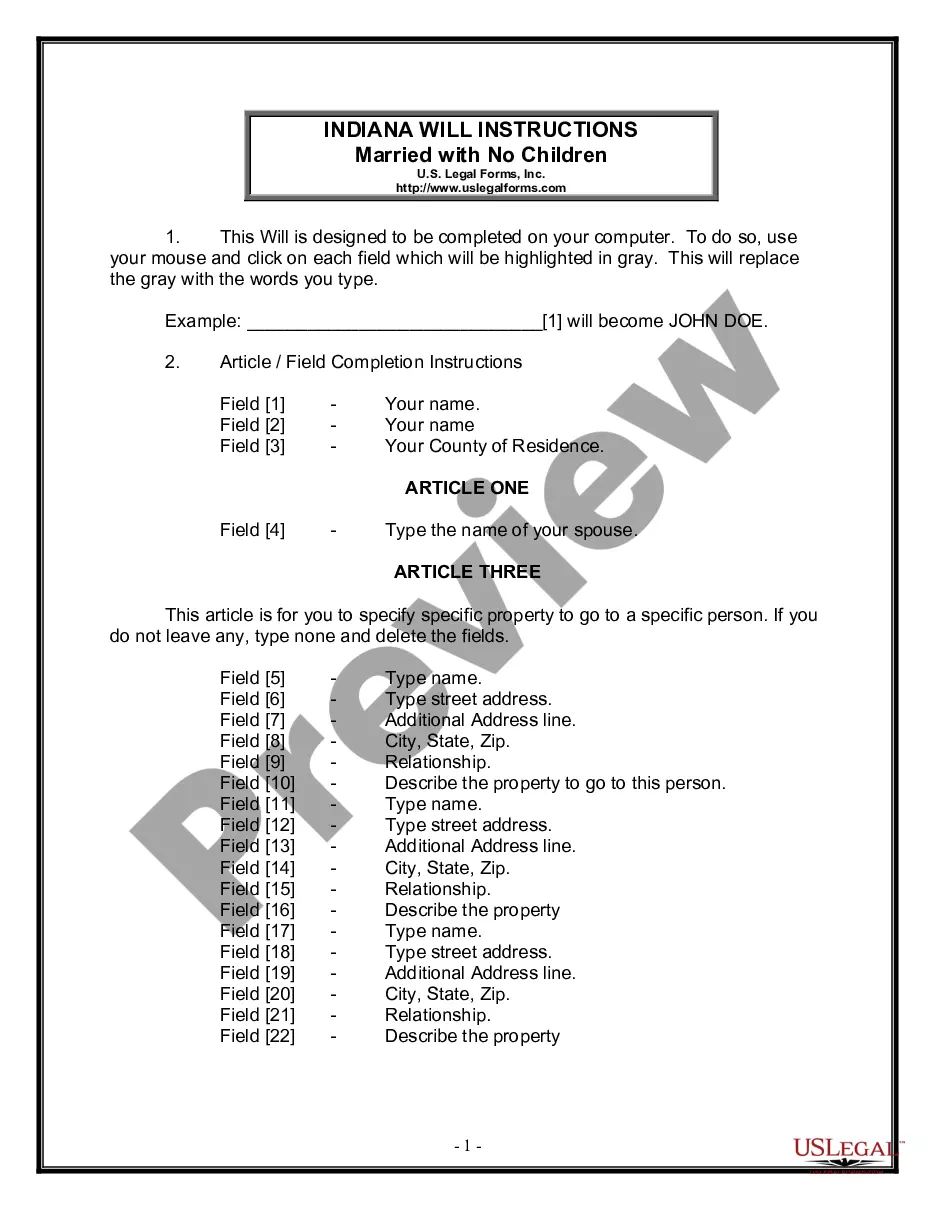
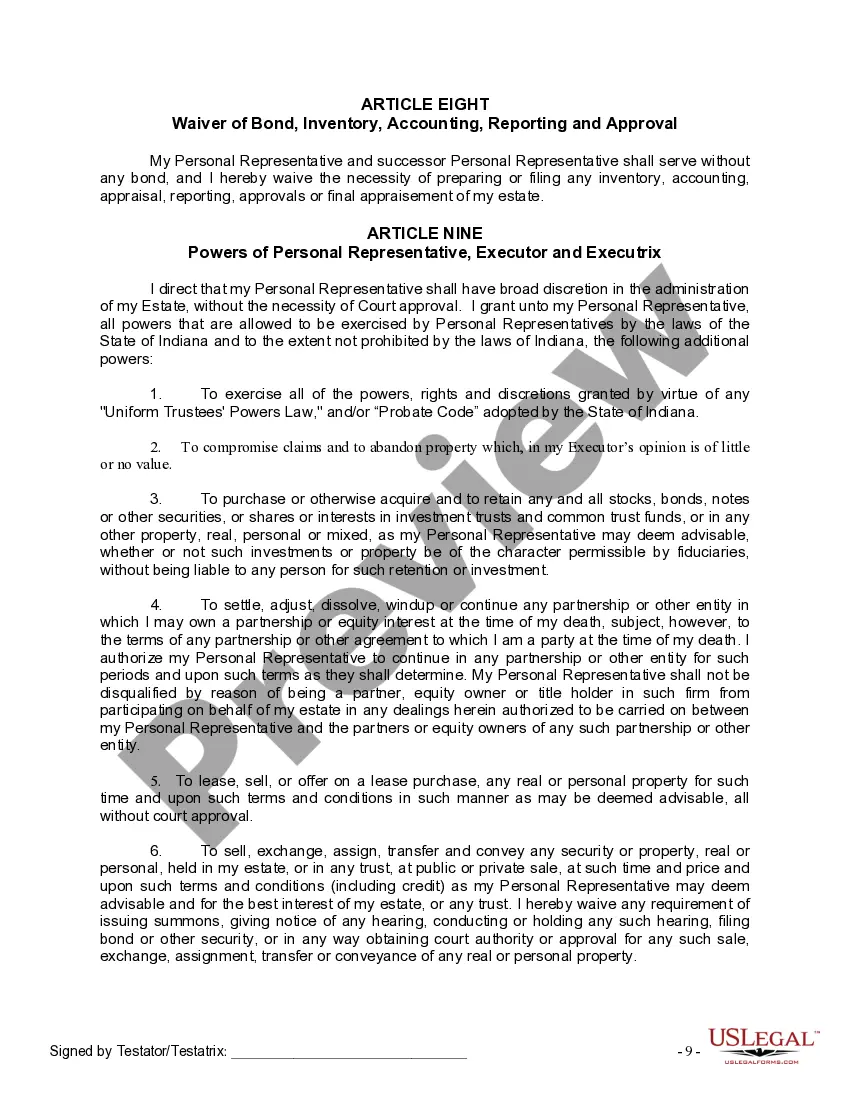
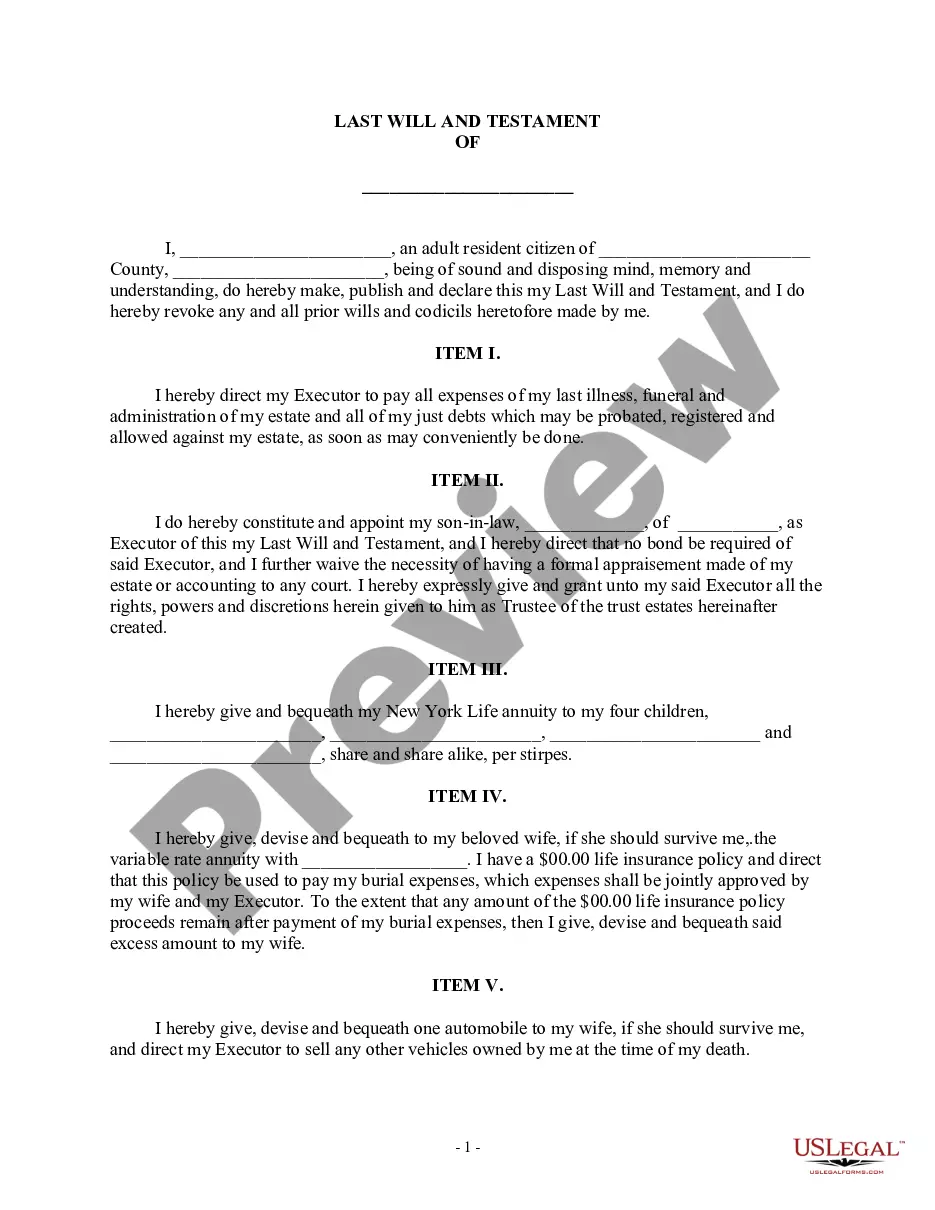
The Last Will and Testament for a Married Person with No Children is a legal document that outlines how a married individual wishes to distribute their assets after death, specifically when they do not have children. This will differs from other wills by focusing on the needs and wishes of a spouse and includes the appointment of a personal representative to handle the estate. It includes various provisions to ensure that the spouse is well provided for and specifies any bequests of property or assets to other individuals if desired.
Key parts of this document
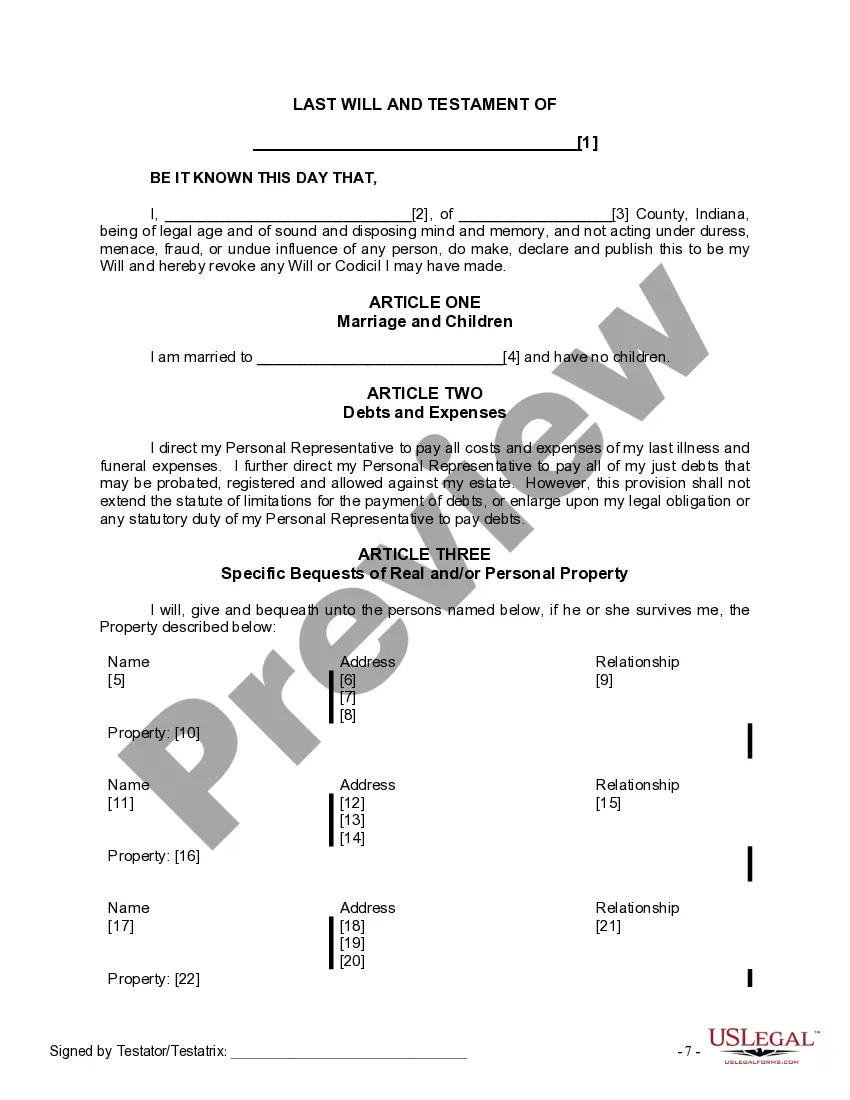
- Personal information: Your name, residency, and marital status.
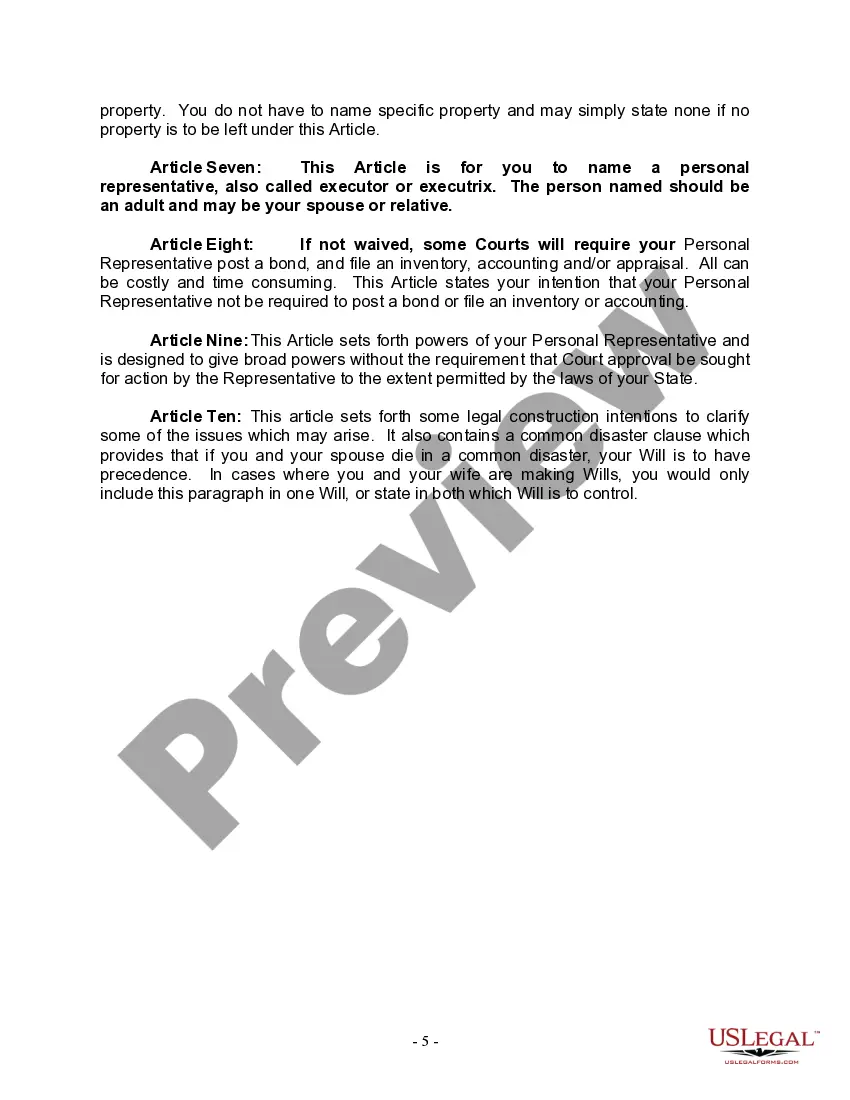
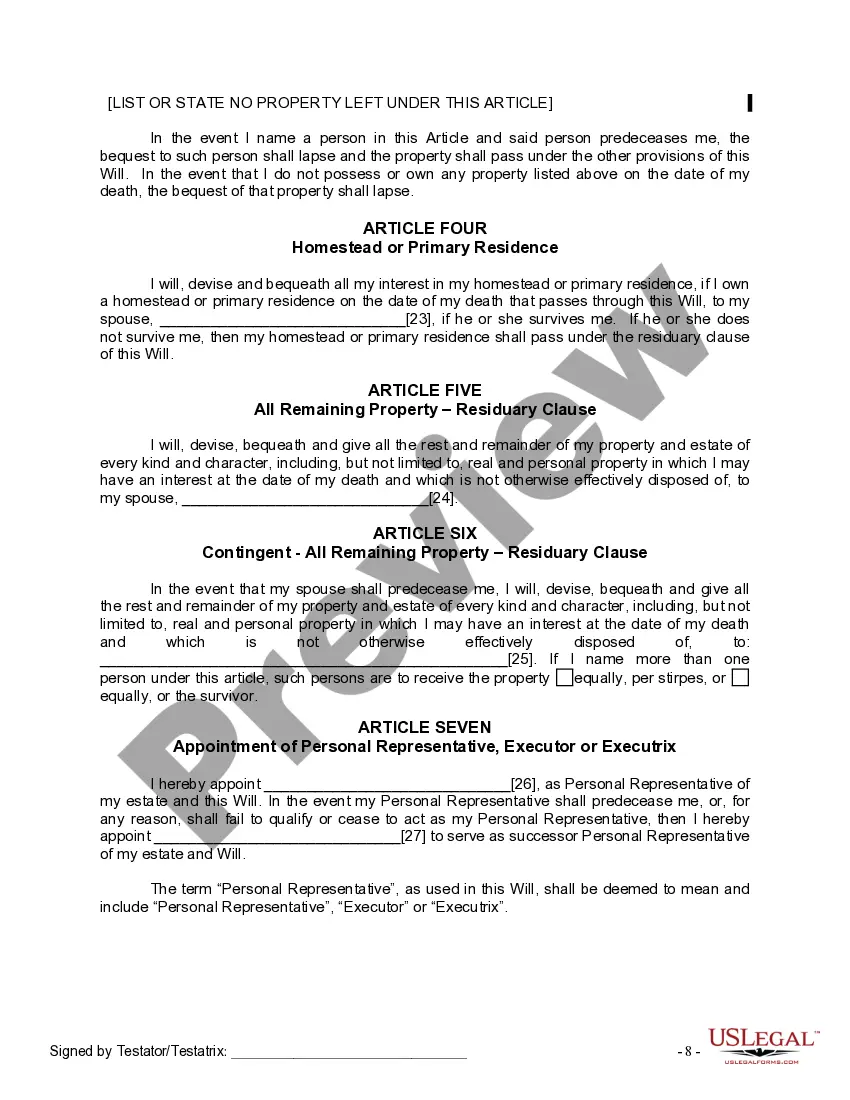
- Appointment of personal representative: Designating someone to manage your estate.
- Specific bequests: Allocating specific property or assets to individuals.
- Residue of the estate: Outlining what happens to the remainder of your assets.
- Instructions for debts and expenses: Directions on handling any outstanding obligations and funeral costs.
- Signature and witness requirements: Details on how to properly sign the document in front of witnesses.





Situations where this form applies
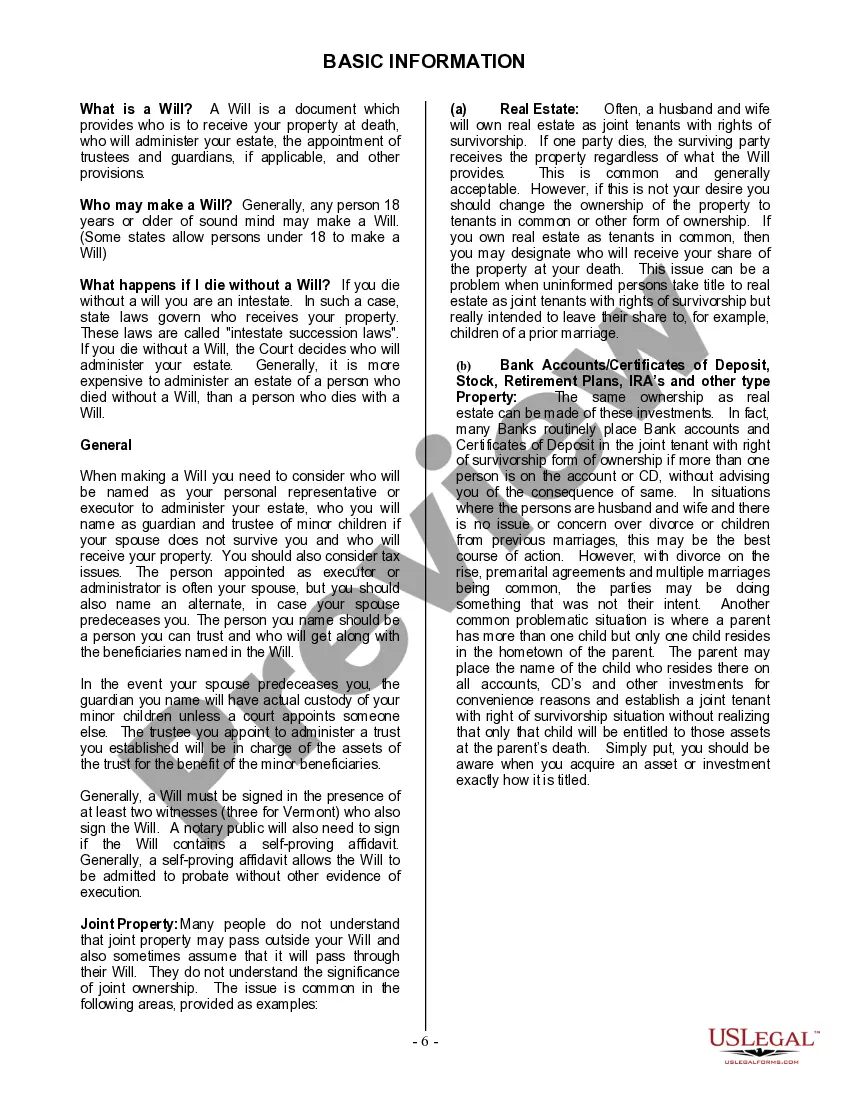
This form is ideal for individuals who are married and wish to ensure their spouse is taken care of after their passing. It is especially relevant when there are no children involved, allowing for straightforward asset distribution to the spouse or designated individuals. This will should be used if you want to clarify your intentions for your estate and avoid the complexities that arise from dying intestate (without a will).
Intended users of this form
- Married individuals without children.
- Individuals wanting to ensure that their spouse receives their estate.
- People who have specific items of value they wish to bequeath to others.
- Anyone looking to formalize their wishes about asset distribution after death.
Completing this form step by step
- Identify your personal information, including name and county of residence.
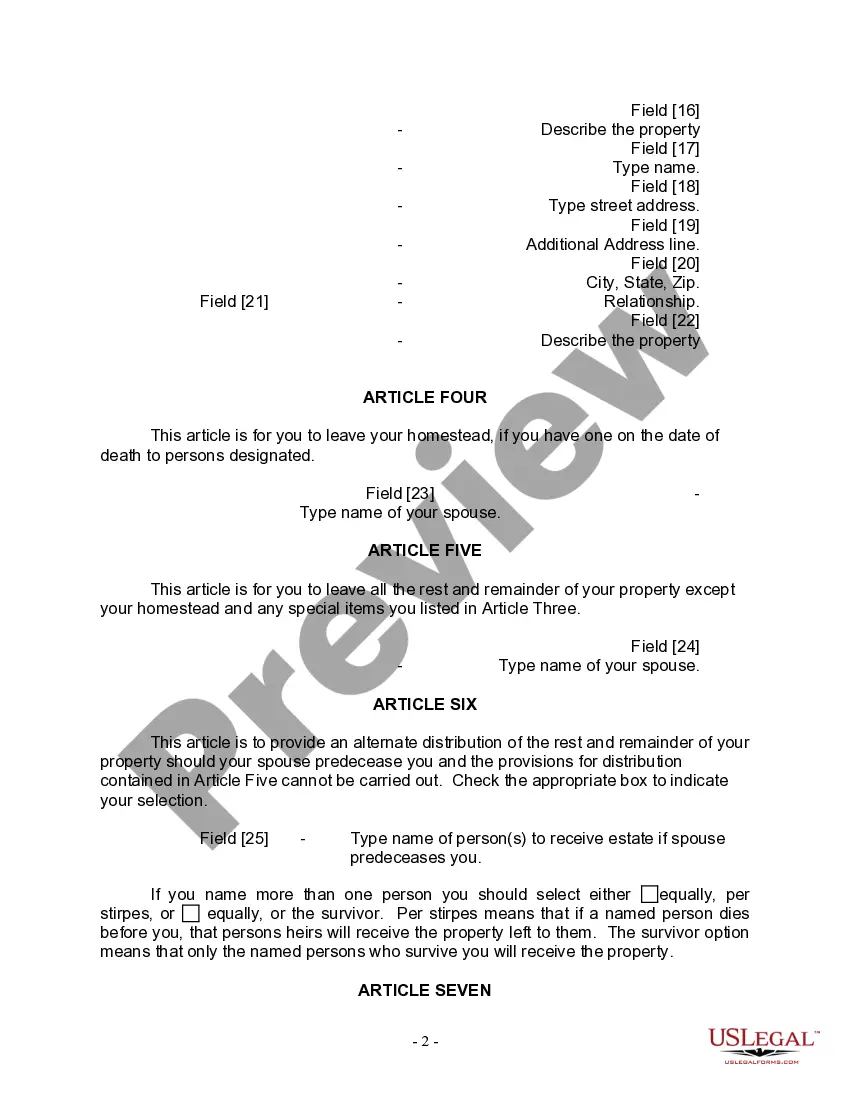
- Designate your spouse and any specific property or assets you wish to bequeath.
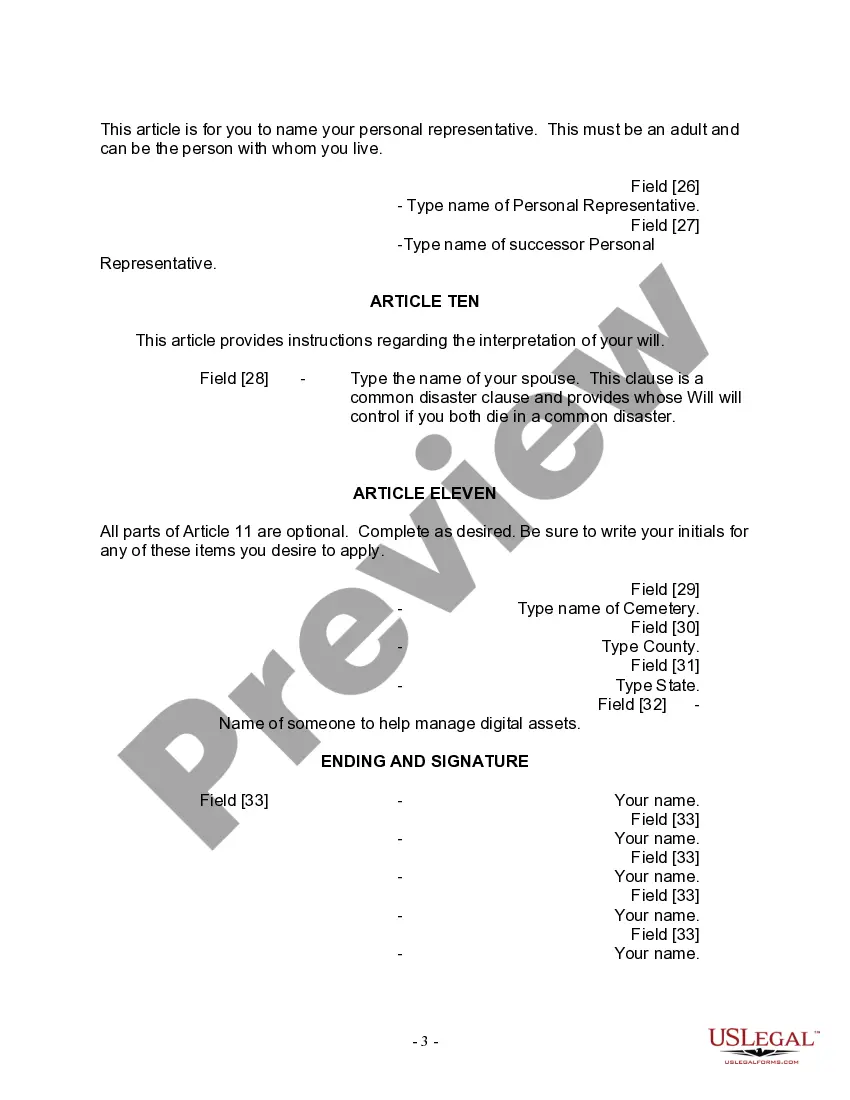
- Choose a personal representative to handle your estate and provide their contact information.
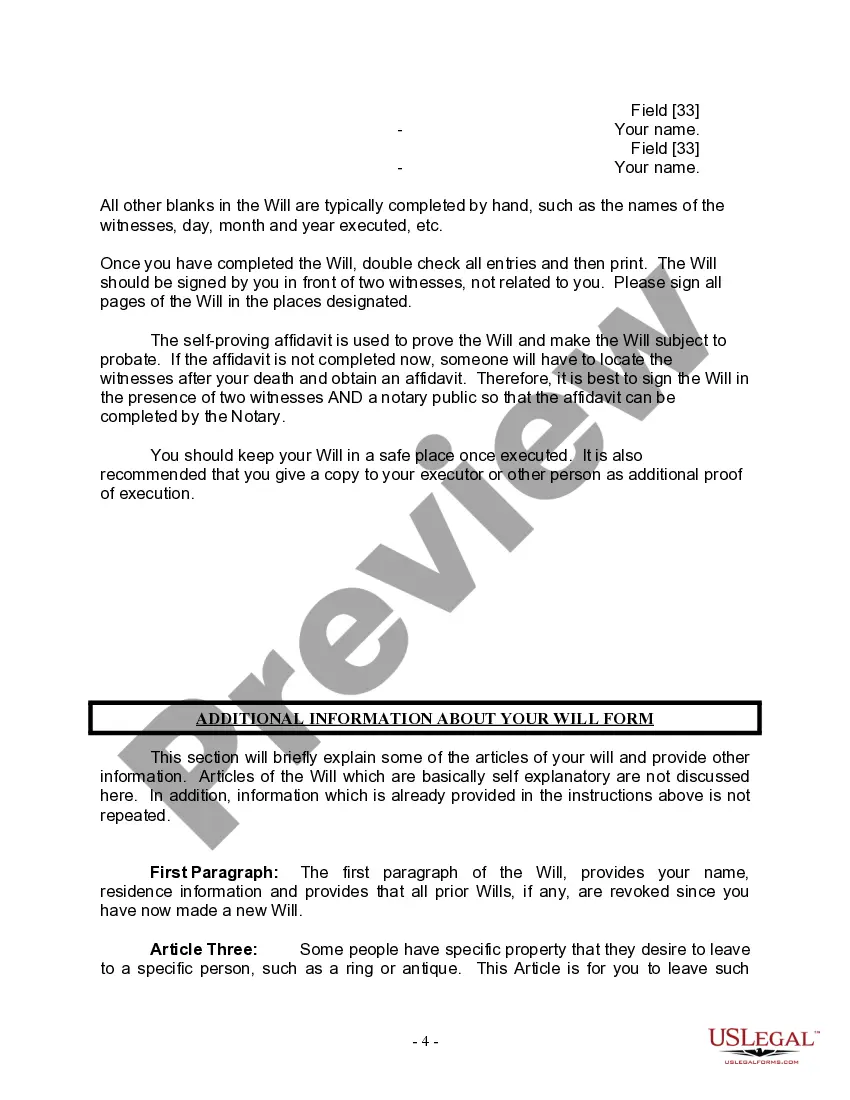
- Review and sign the will in the presence of two disinterested witnesses.
- Consider having the will notarized for added legal validity, especially if required by your state.
Is notarization required?
This document requires notarization to meet legal standards. US Legal Forms provides secure online notarization powered by Notarize, allowing you to complete the process through a verified video call, available 24/7.
Get your form ready online
Our built-in tools help you complete, sign, share, and store your documents in one place.
Make edits, fill in missing information, and update formatting in US Legal Forms—just like you would in MS Word.
Download a copy, print it, send it by email, or mail it via USPS—whatever works best for your next step.
Sign and collect signatures with our SignNow integration. Send to multiple recipients, set reminders, and more. Go Premium to unlock E-Sign.
If this form requires notarization, complete it online through a secure video call—no need to meet a notary in person or wait for an appointment.
We protect your documents and personal data by following strict security and privacy standards.

Make edits, fill in missing information, and update formatting in US Legal Forms—just like you would in MS Word.

Download a copy, print it, send it by email, or mail it via USPS—whatever works best for your next step.

Sign and collect signatures with our SignNow integration. Send to multiple recipients, set reminders, and more. Go Premium to unlock E-Sign.

If this form requires notarization, complete it online through a secure video call—no need to meet a notary in person or wait for an appointment.

We protect your documents and personal data by following strict security and privacy standards.
Mistakes to watch out for
- Not having the will witnessed correctly, which can lead to challenges in probate.
- Failing to keep the will in a safe place and informing the appointed personal representative.
- Neglecting to specify details about any specific bequests, leaving ambiguity about your wishes.
Why complete this form online
- Convenience of completing your will from home without needing legal counsel.
- Editable format allows you to customize the document as your circumstances change.
- Access to state-specific versions, ensuring compliance with local laws.
- Immediate availability for download and printing.
Looking for another form?

Form popularity
FAQ
A will can also be declared invalid if someone proves in court that it was procured by undue influence. This usually involves some evil-doer who occupies a position of trust -- for example, a caregiver or adult child -- manipulating a vulnerable person to leave all, or most, of his property to the manipulator instead
You can include your funeral arrangements in your will or trust, but it should not be the only place where you list your final wishes.Usually, by the time your will or trust is located, your loved ones will have already made all of the decisions about the disposition of your remains and memorial.
The following are the key requirements of a valid Will: It must be in writing; It must be signed by the testator; It must be attested to by witnesses.
It must be in writing. Generally, of course, wills are composed on a computer and printed out. The person who made it must have signed and dated it. A will must be signed and dated by the person who made it. Two adult witnesses must have signed it. Witnesses are crucial.
Bank accounts. Brokerage or investment accounts. Retirement accounts and pension plans. A life insurance policy.
The people named in the deceased's will as their executors (or, if the deceased didn't make a will, their nearest relatives) are primarily responsible for arranging their funeral.The executors should check to see if the deceased had taken out a funeral plan.
There are strict legal requirements under the Wills Act for a will to be valid.A will must be properly witnessed to be valid. All signatures in the will must be witnessed by at least two (2) other people. Your signature as testator (one who makes the will) of the will must be made in the presence of the two witnesses.
Most funerals are arranged by the nearest relatives and if not by a close friend. If there is no one, the local or health authority will arrange a simple funeral. The person may have left instructions about the type of funeral and burial they wanted.
Steps to Make a Will: Decide what property to include in your will. Decide who will inherit your property. Choose an executor to handle your estate. Choose a guardian for your children. Choose someone to manage children's property. Make your will. Sign your will in front of witnesses.