Maryland Commercial Contract for Contractor

Overview of this form
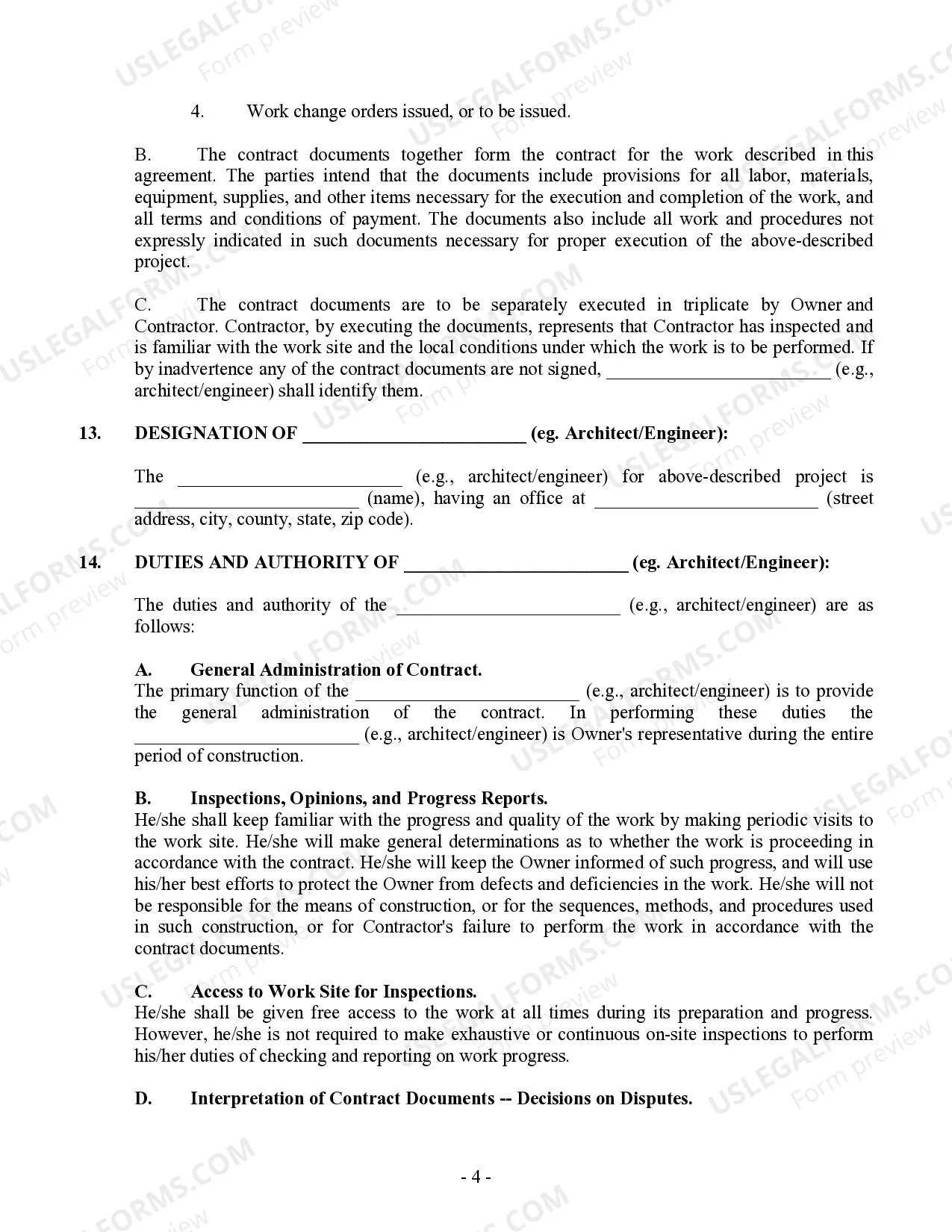
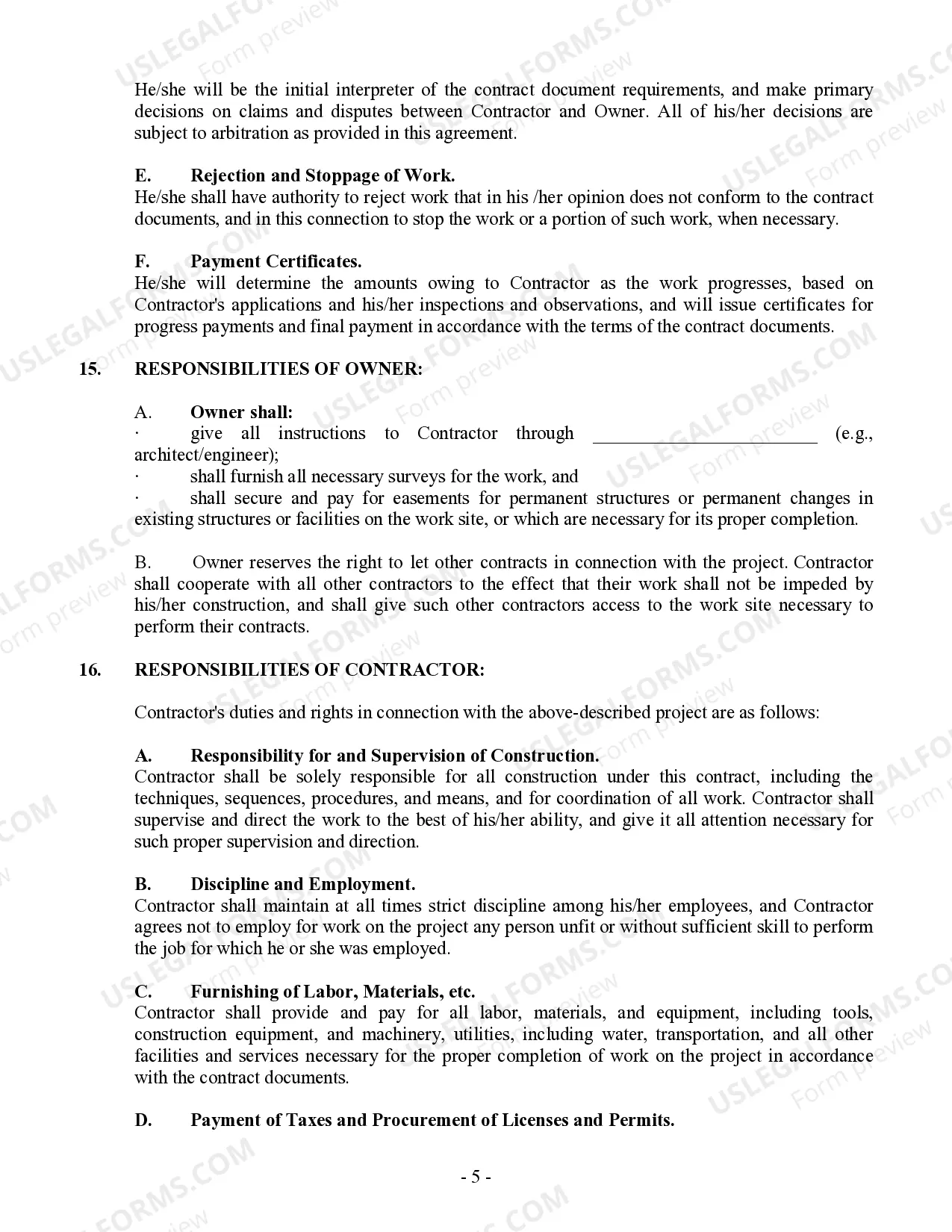
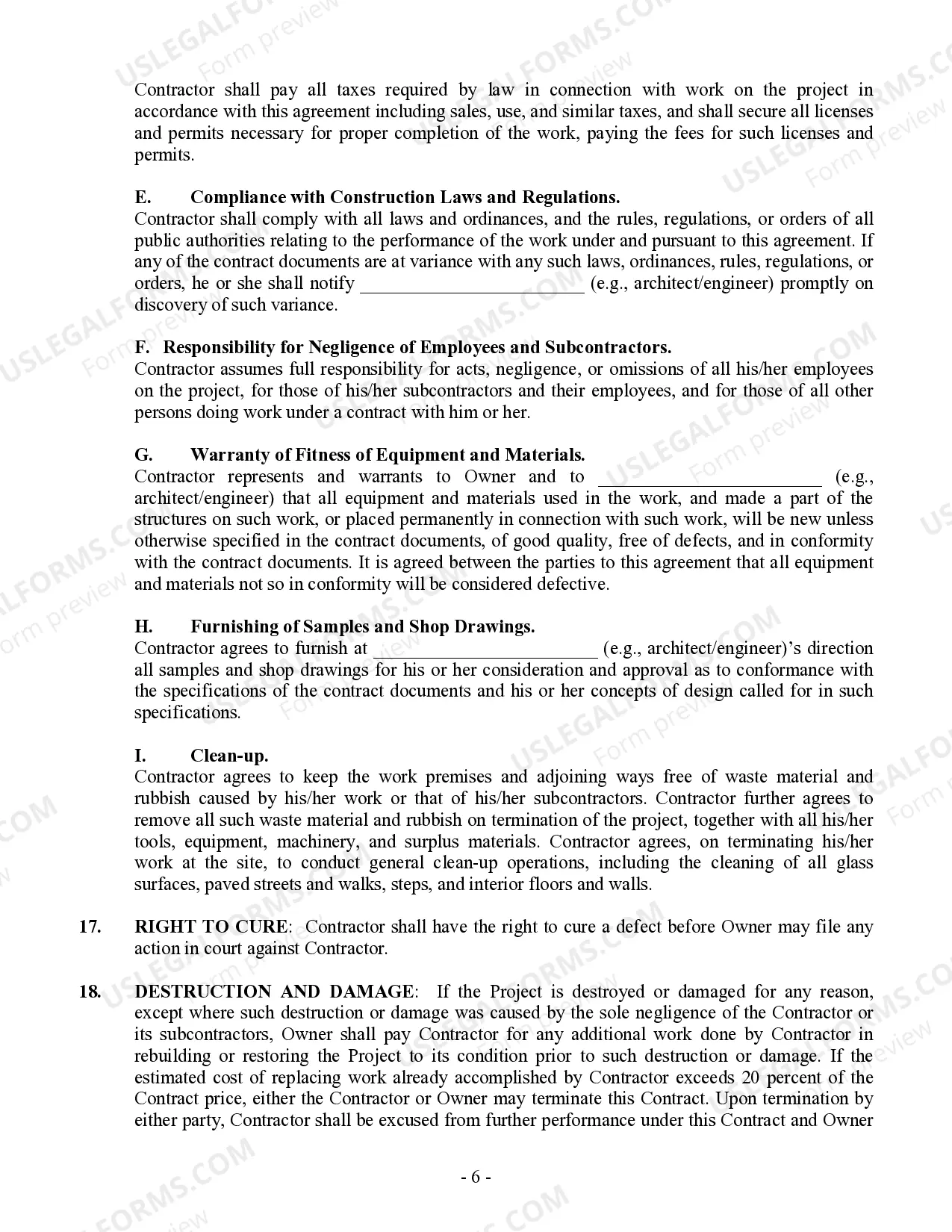
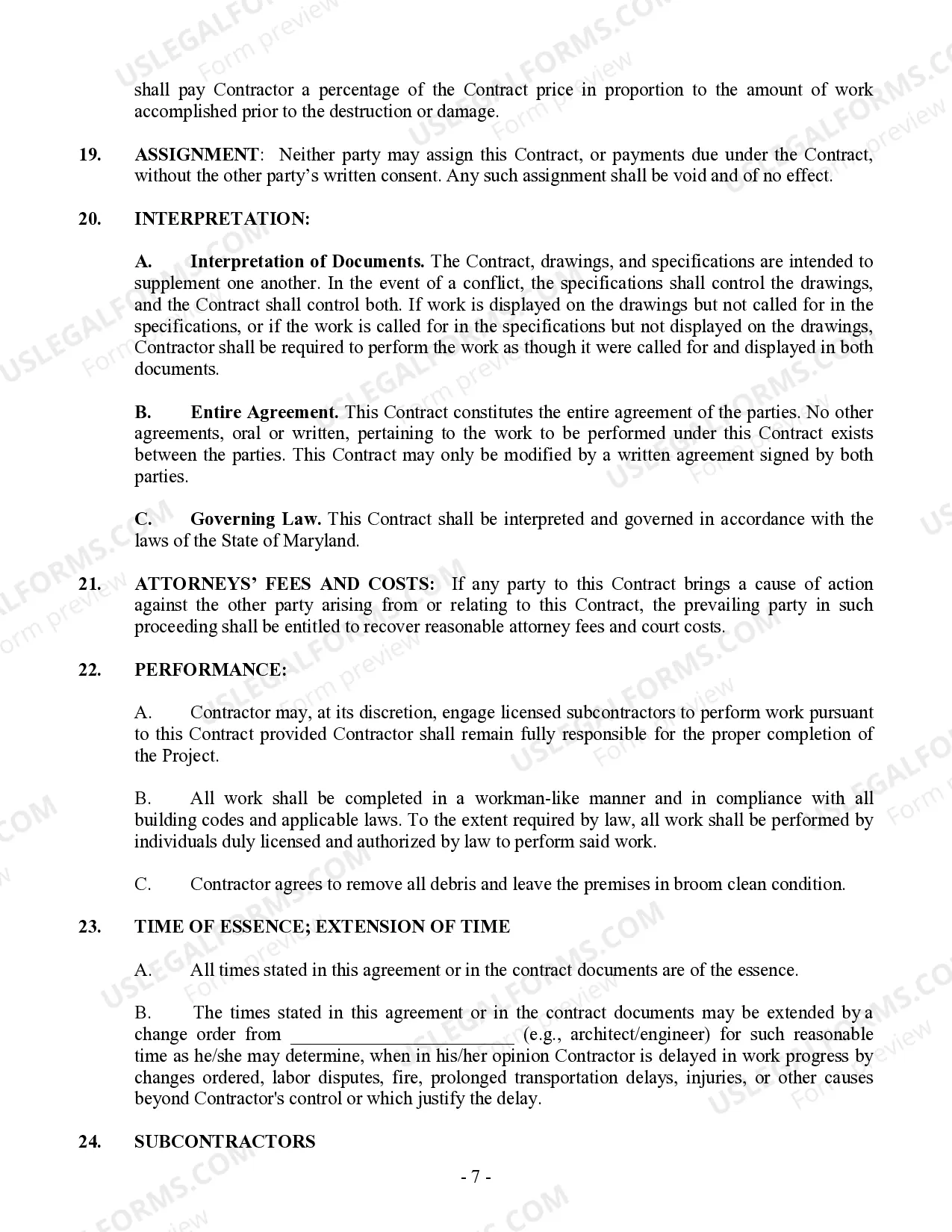
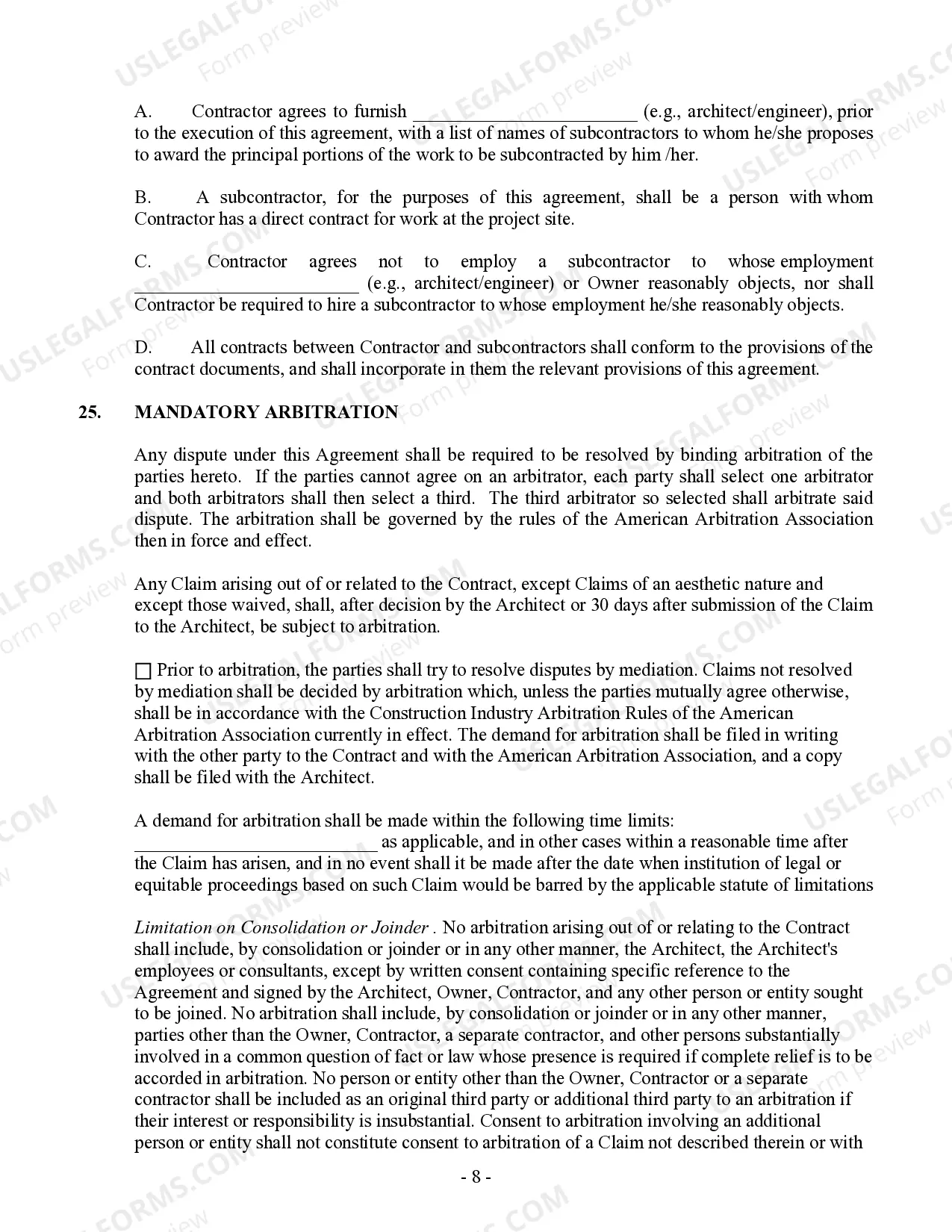
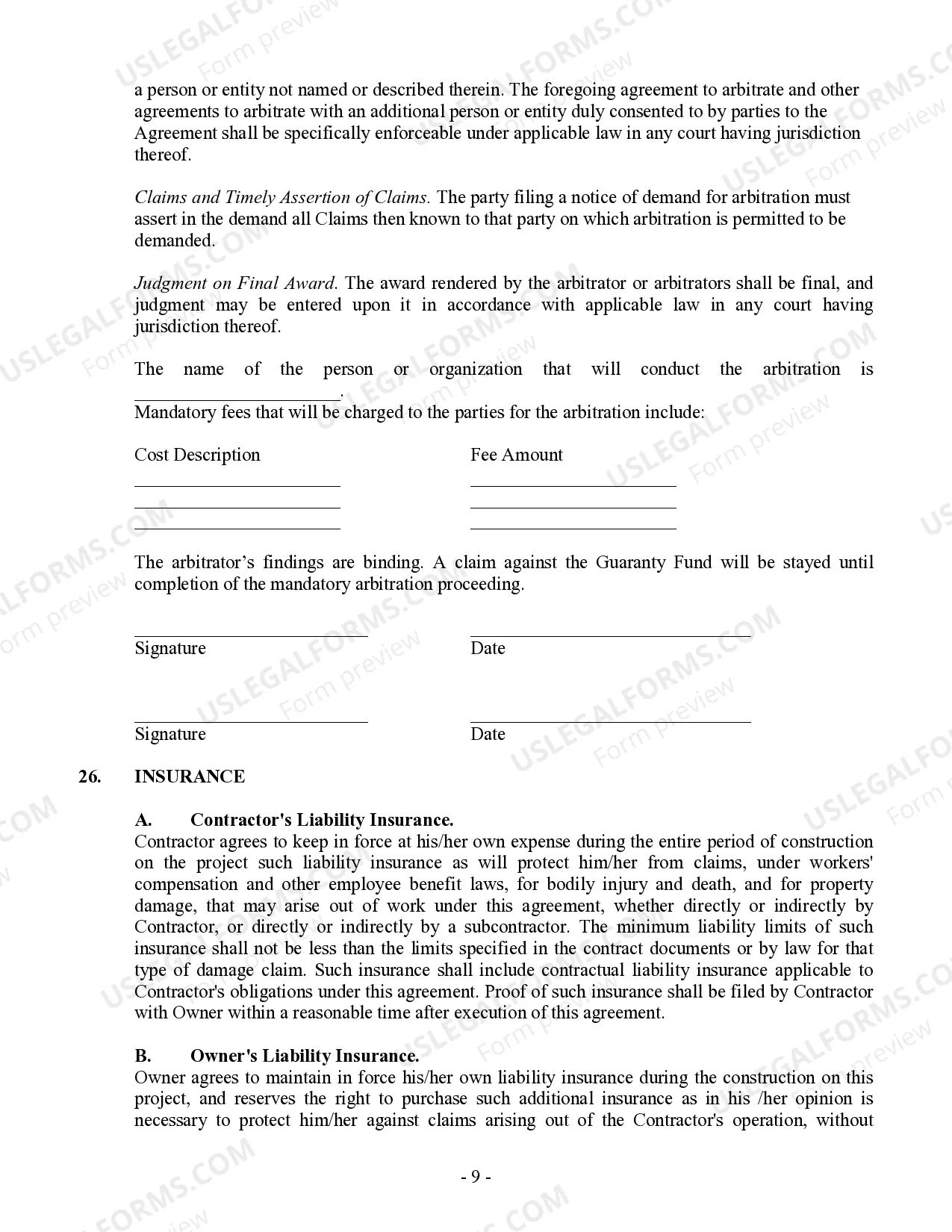
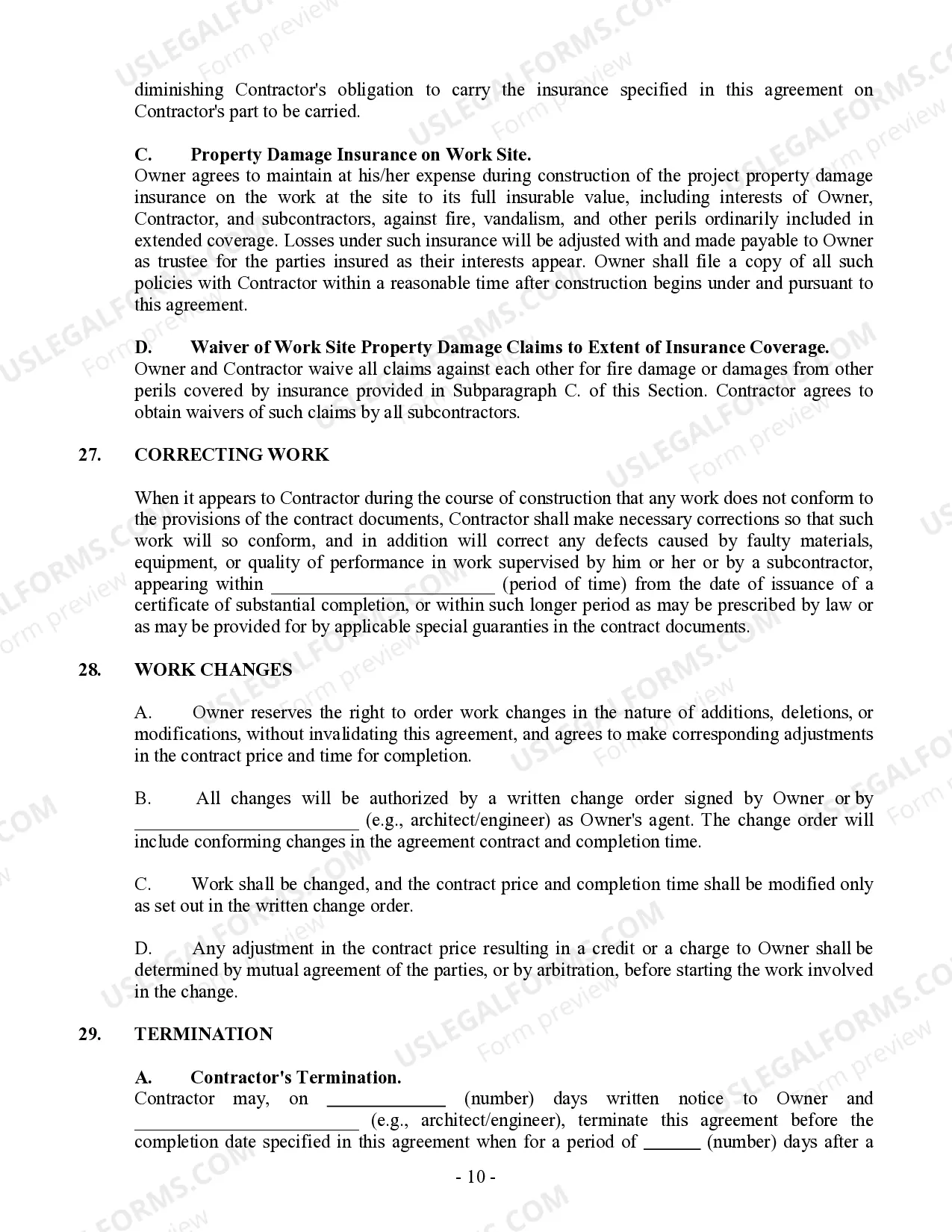
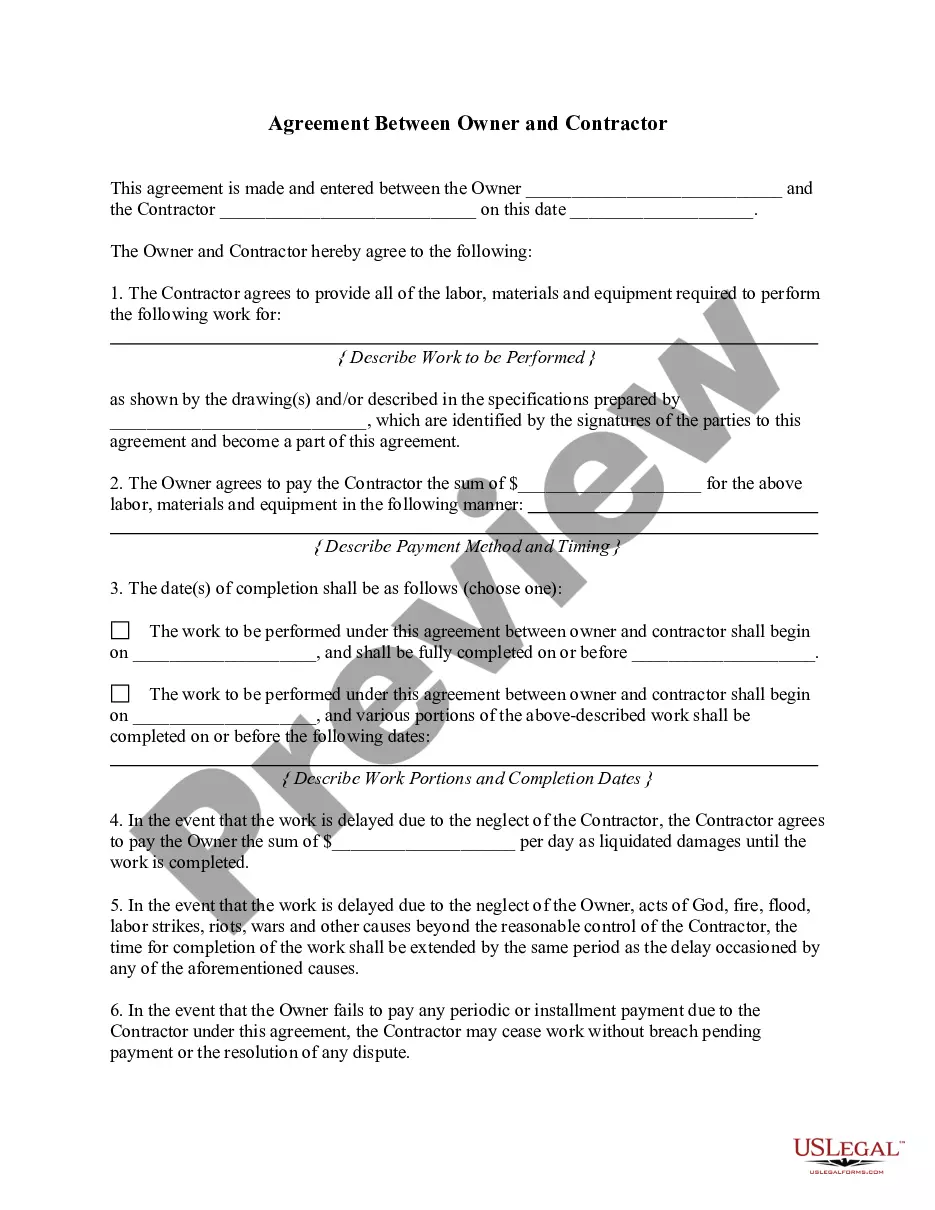
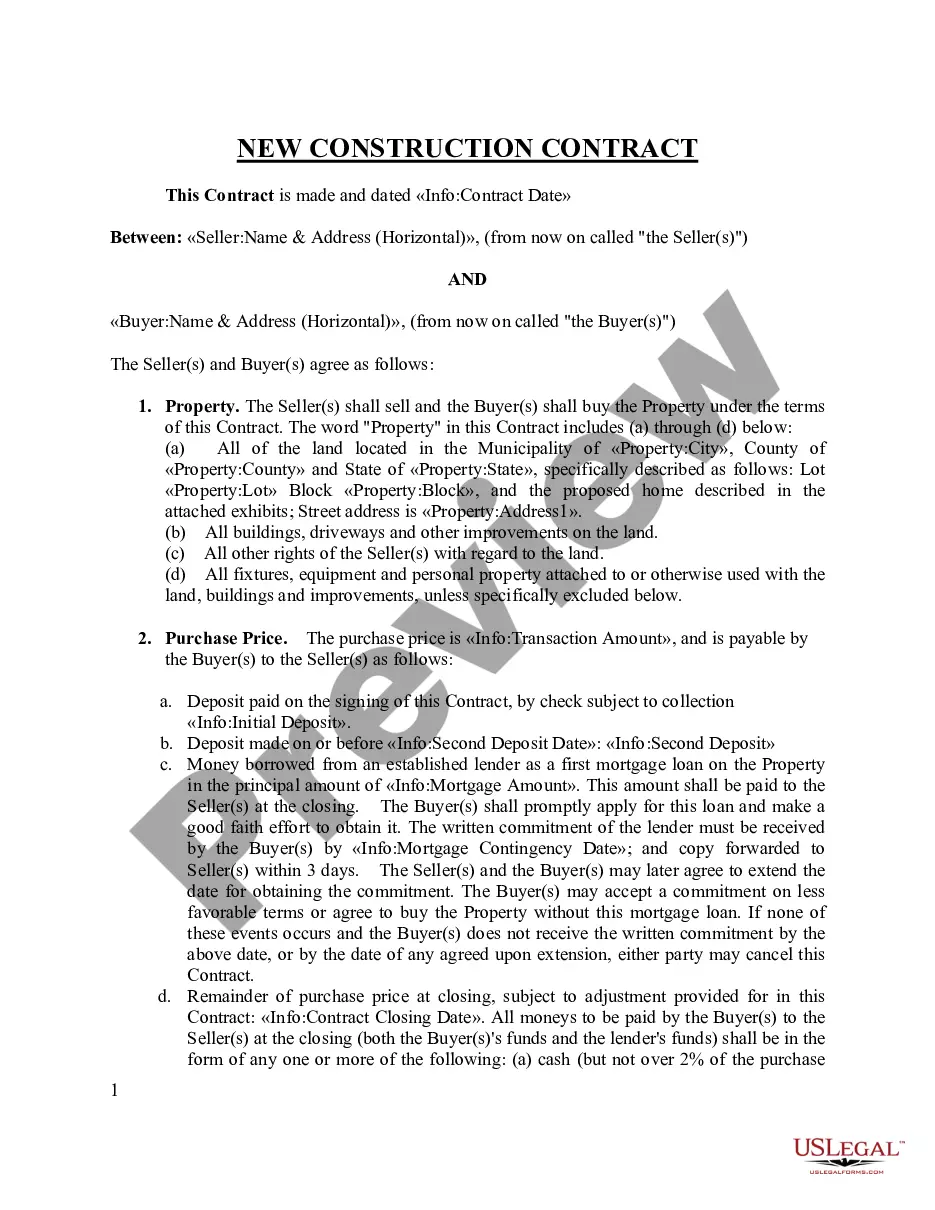
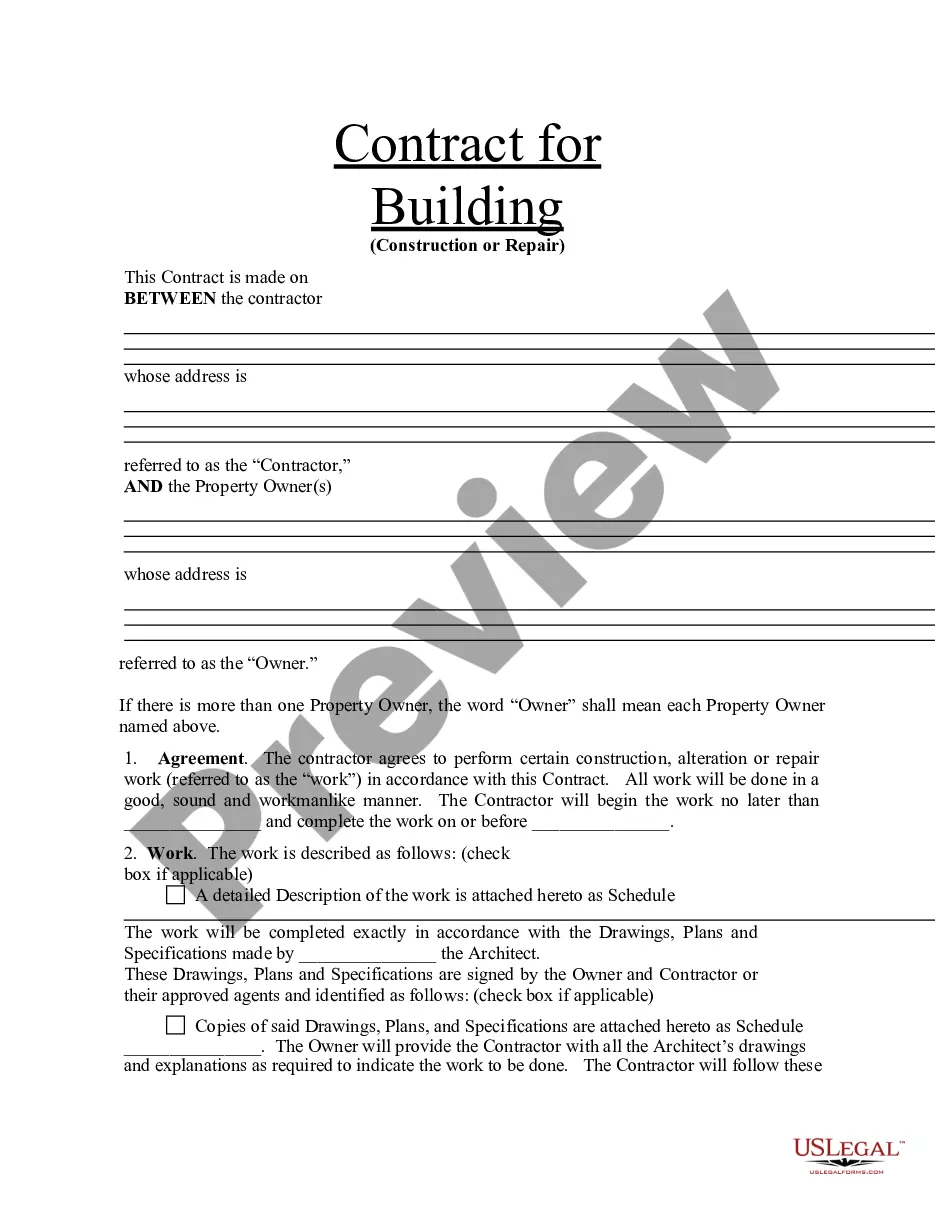
The Commercial Contract for Contractor serves as a legally binding agreement between commercial contractors and property owners. This form allows for either a cost-plus or fixed fee payment arrangement and specifically addresses essential aspects such as change orders, work site information, warranties, and insurance. Designed to comply with the laws of the State of Maryland, this contract ensures clarity and protection for both parties involved in a construction project.
Form components explained
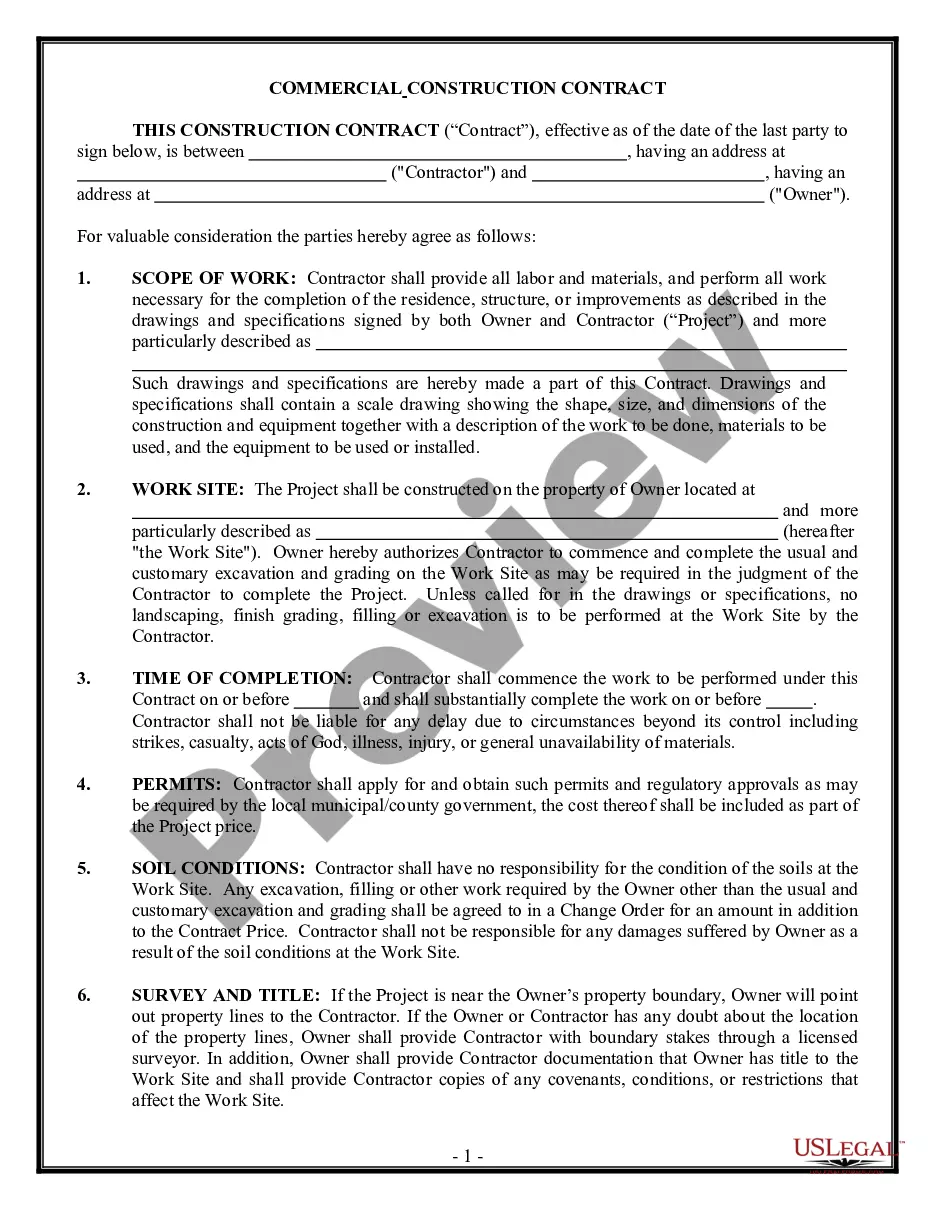
- Work Site: Details the location of the construction project.
- Permits: Outlines the contractor's responsibility to obtain necessary permits.
- Soil Conditions: Clarifies the contractor's liability concerning site soil conditions.
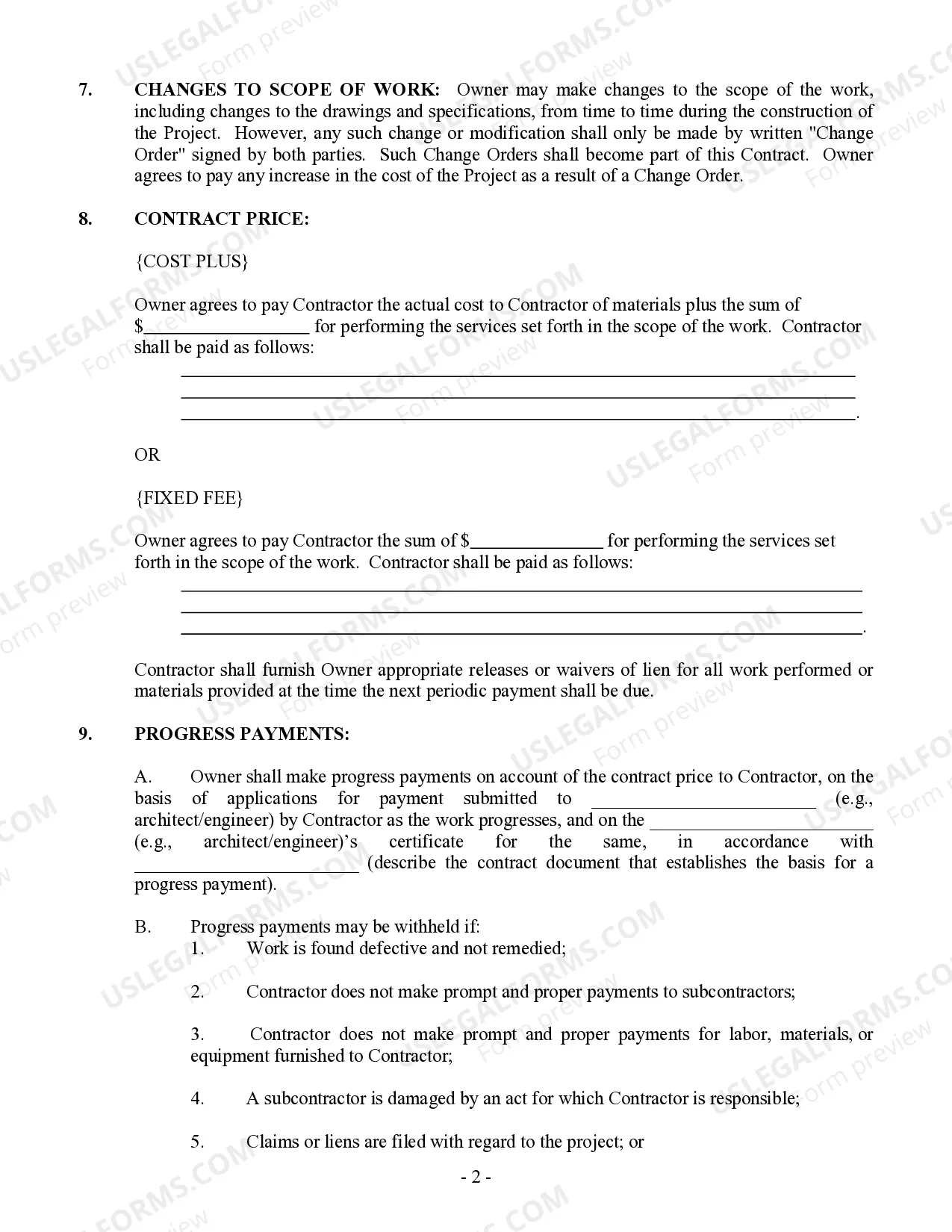
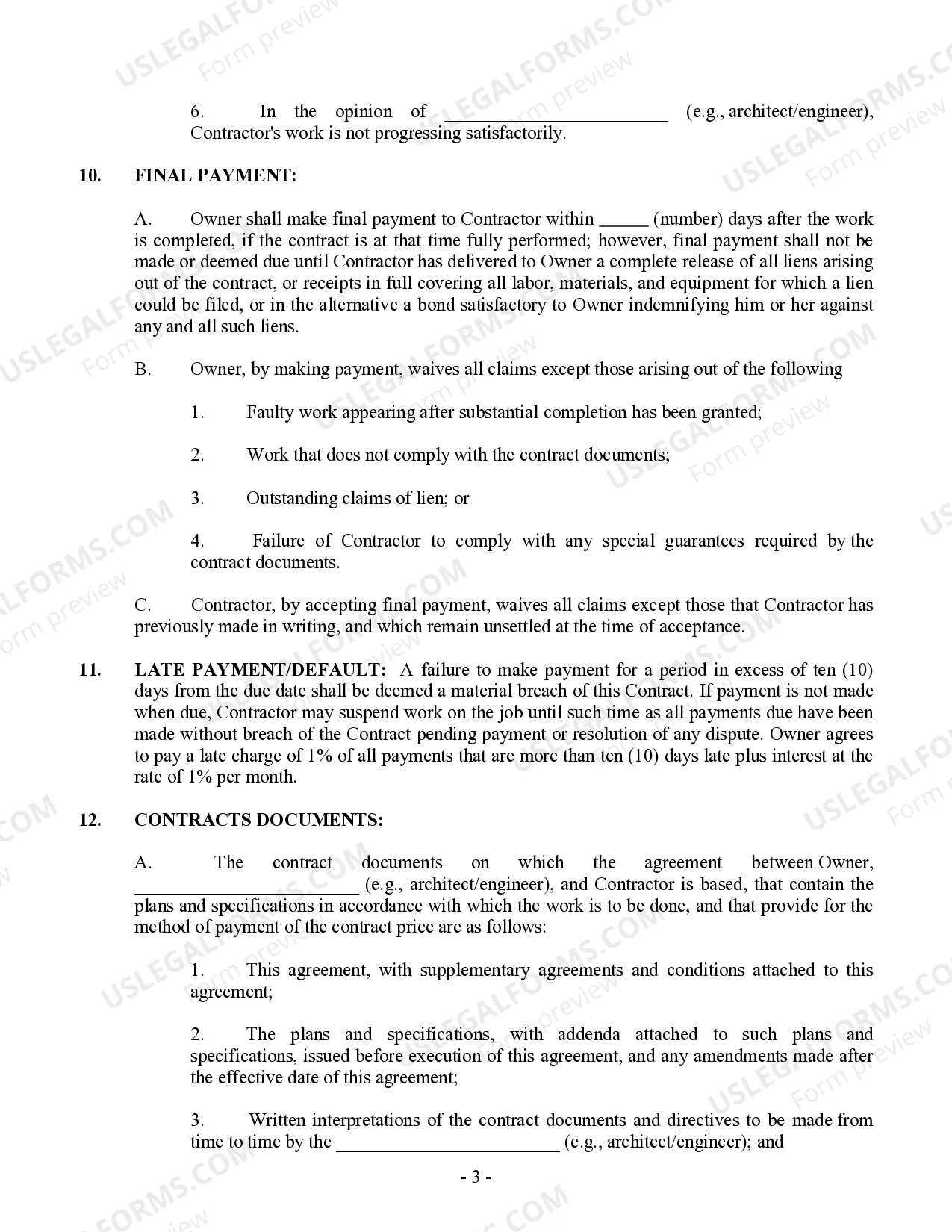
- Progress Payments: Specifies payment processes and conditions for withholding payments.
- Insurance: Identifies liability and property damage insurance requirements for both parties.
- Dispute Resolution: Establishes mandatory arbitration procedures for resolving conflicts.


Common use cases
This form should be used when a property owner hires a commercial contractor for construction or renovation projects. It is particularly beneficial when both parties need to define their obligations, responsibilities, and payment details clearly. Such a contract helps prevent misunderstandings and disputes by providing a formal framework for the working relationship.
Intended users of this form
- Property owners engaging commercial contractors for construction projects.
- Commercial contractors seeking to formalize agreements with property owners.
- Individuals or businesses operating in the construction industry within Maryland.
Steps to complete this form
- Identify the parties involved in the contract: the property owner and the contractor.
- Specify the work site location clearly to prevent disputes over boundaries.
- Include details about the payment structure, whether cost-plus or fixed fee.
- Document the required permits that must be obtained for the project.
- Enter information regarding insurance coverage for liability and property damage.
Is notarization required?
In most cases, this form does not require notarization. However, some jurisdictions or signing circumstances might. US Legal Forms offers online notarization powered by Notarize, accessible 24/7 for a quick, remote process.
Get your form ready online
Our built-in tools help you complete, sign, share, and store your documents in one place.
Make edits, fill in missing information, and update formatting in US Legal Forms—just like you would in MS Word.
Download a copy, print it, send it by email, or mail it via USPS—whatever works best for your next step.
Sign and collect signatures with our SignNow integration. Send to multiple recipients, set reminders, and more. Go Premium to unlock E-Sign.
If this form requires notarization, complete it online through a secure video call—no need to meet a notary in person or wait for an appointment.
We protect your documents and personal data by following strict security and privacy standards.

Make edits, fill in missing information, and update formatting in US Legal Forms—just like you would in MS Word.

Download a copy, print it, send it by email, or mail it via USPS—whatever works best for your next step.

Sign and collect signatures with our SignNow integration. Send to multiple recipients, set reminders, and more. Go Premium to unlock E-Sign.

If this form requires notarization, complete it online through a secure video call—no need to meet a notary in person or wait for an appointment.

We protect your documents and personal data by following strict security and privacy standards.
Avoid these common issues
- Failing to clearly define the scope of work and responsibilities.
- Not including a detailed payment schedule and terms for progress payments.
- Neglecting to comply with local permit requirements.
- Omitting vital clauses regarding dispute resolution or arbitration.
Benefits of completing this form online
- Easy access to legal forms drafted by licensed attorneys.
- Convenient editable templates that can be customized to fit specific needs.
- Time-saving downloading process to get your contract ready quickly.
Summary of main points
- The Commercial Contract for Contractor is essential for any construction project in Maryland.
- Clear definitions and obligations reduce the risk of disputes.
- Ensure all necessary permits and insurance are documented within the contract.
Looking for another form?

Form popularity
FAQ
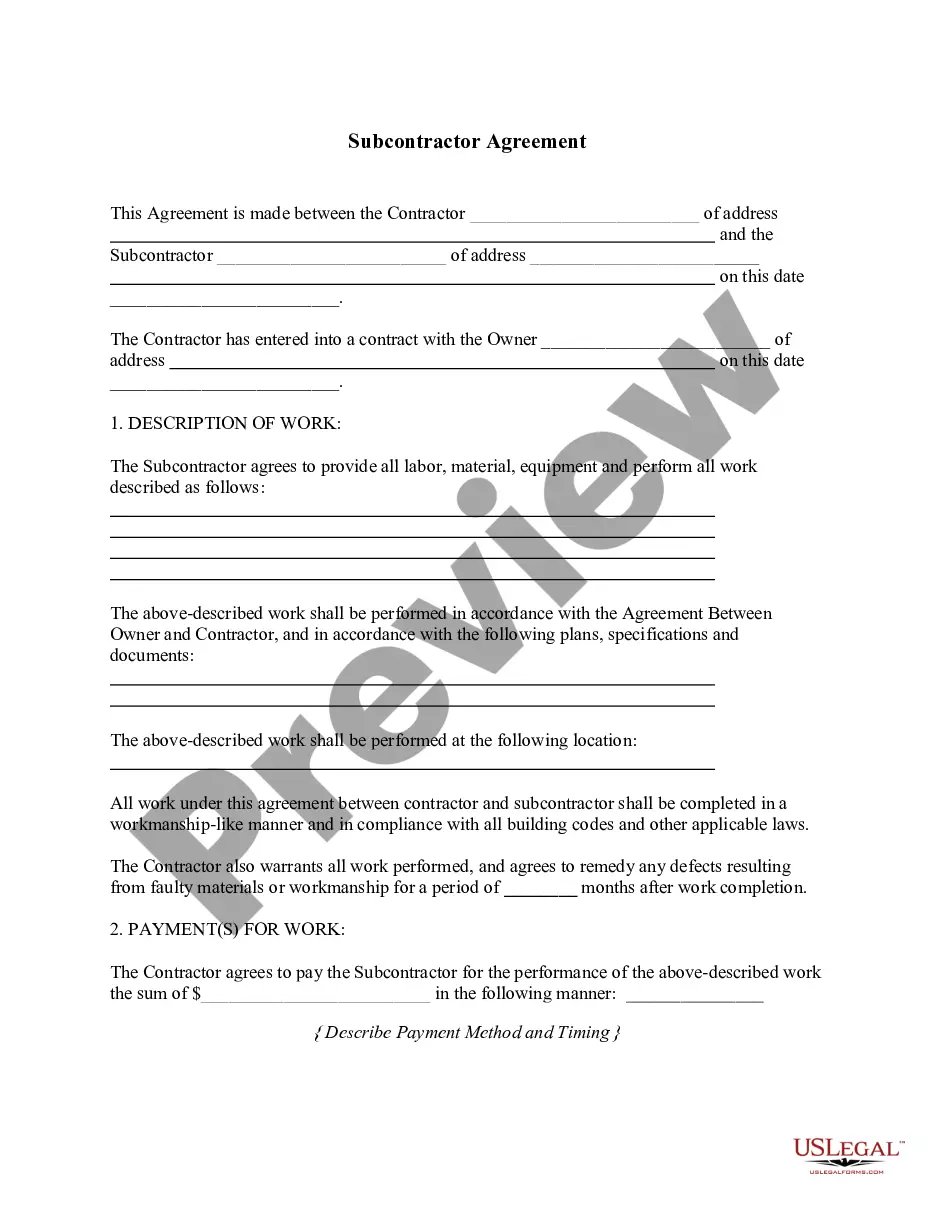
For example, a building contractor may hire a subcontractor to complete the electrical wiring part of the contractor's building job. The contractor is responsible to the client for the building job including the part performed by the subcontractor.
Name of contractor and contact information. Name of homeowner and contact information. Describe property in legal terms. List attachments to the contract. The cost. Failure of homeowner to obtain financing. Description of the work and the completion date. Right to stop the project.
Contract Types Overview. Express and Implied Contracts. Unilateral and Bilateral Contracts. Unconscionable Contracts. Adhesion Contracts. Aleatory Contracts. Option Contracts. Fixed Price Contracts.
Call to have a Complaint Form mailed to you 1-800-321-CSLB (2752), OR. Use the On-line Complaint Form, OR. Download and Print a Complaint Form.
#1: Review Your Bid. #2: Review Complete Plans. #3: Review All Specifications. #4: Visit the Job Site. #5: Review the Job Schedule. #6: Complete a Project Checklist. #7: Verify Project Funding. #8: Read Complete Contract.
Begin with the Date and the Address of the Other Party. Start with the Basic Details of the Planned Work. Include Special Stipulations. State Whether There Will be a Further Agreement. Create an Area for Signatures. Sign and Date the Contract Letter.
The amount you will pay to file a small claims lawsuit in California depends on how much you are suing the contractor for. You will pay between $30 to $75 to file the lawsuit. If you cannot afford to pay court fees, you can ask the court to waive the fees.
Identifying/Contact Information. Title and Description of the Project. Projected Timeline and Completion Date. Cost Estimate and Payment Schedule. Stop Work Clause and Stop Payment Clause. Act of God Clause. Change Order Agreement. Warranty.
In Maryland, general contractors do not need a license to perform work in the state. A license is only required if you wish to work on home improvement projects or do electrical, plumbing or HVACR work. The licensing process is handled by the Department of Labor, Licensing and Regulation (DLLR).