Indiana Durable Power of Attorney for Health Care
About this form
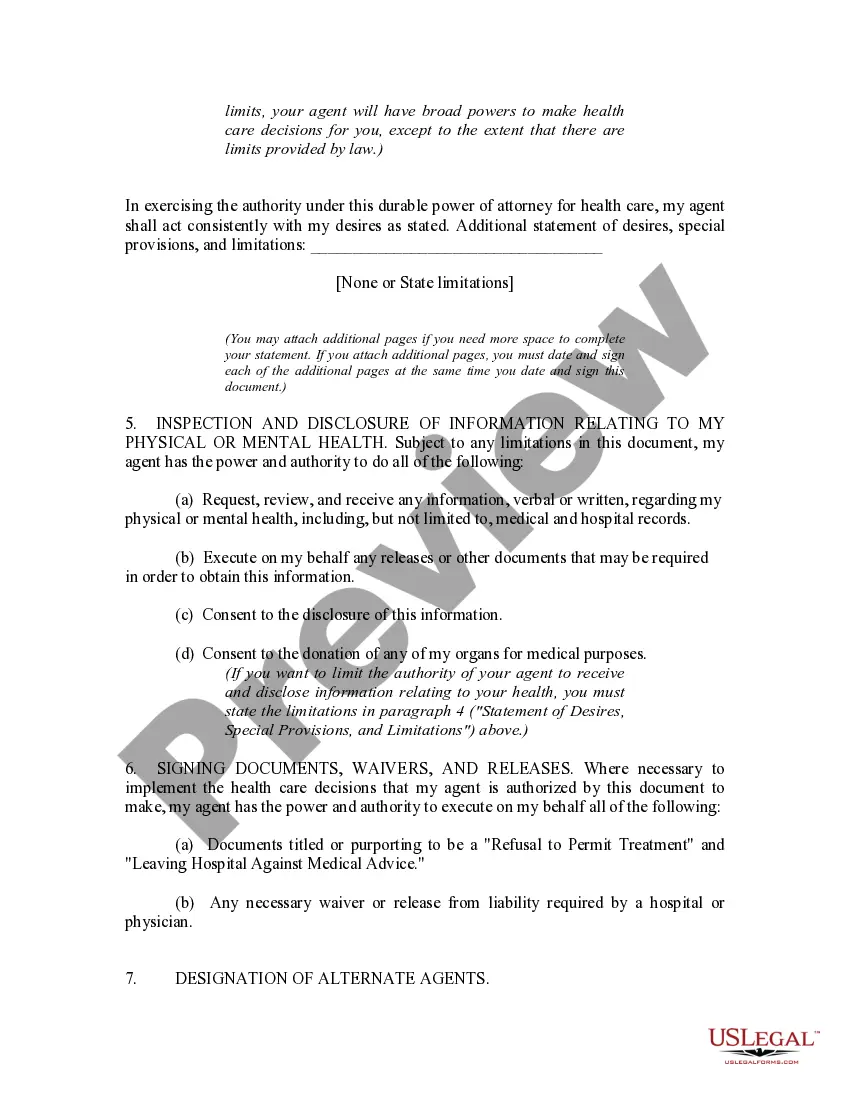
The Durable Power of Attorney for Health Care is a legal document that allows you to appoint an agent to make health care decisions on your behalf when you are unable to do so. Unlike other powers of attorney that might address financial matters, this form specifically focuses on your health care needs and treatment preferences. It ensures that your health care choices align with your values and wishes, even if you are incapacitated.
What’s included in this form
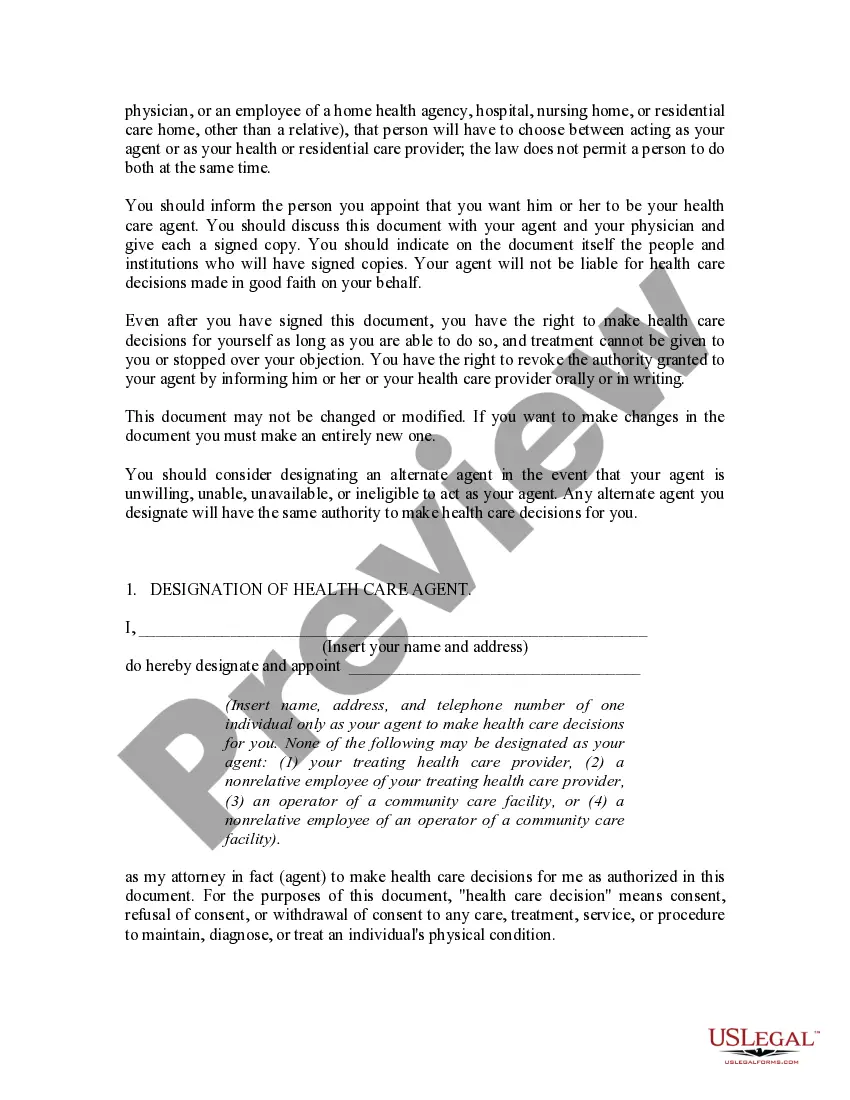
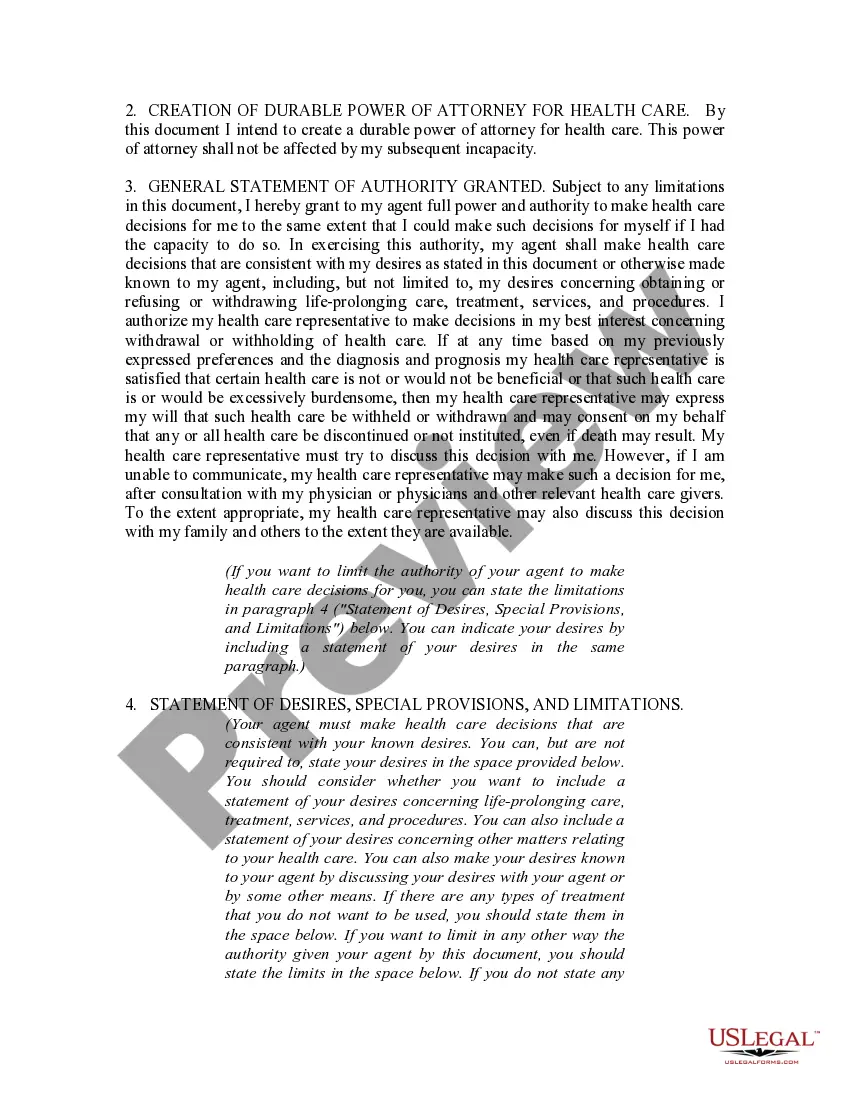
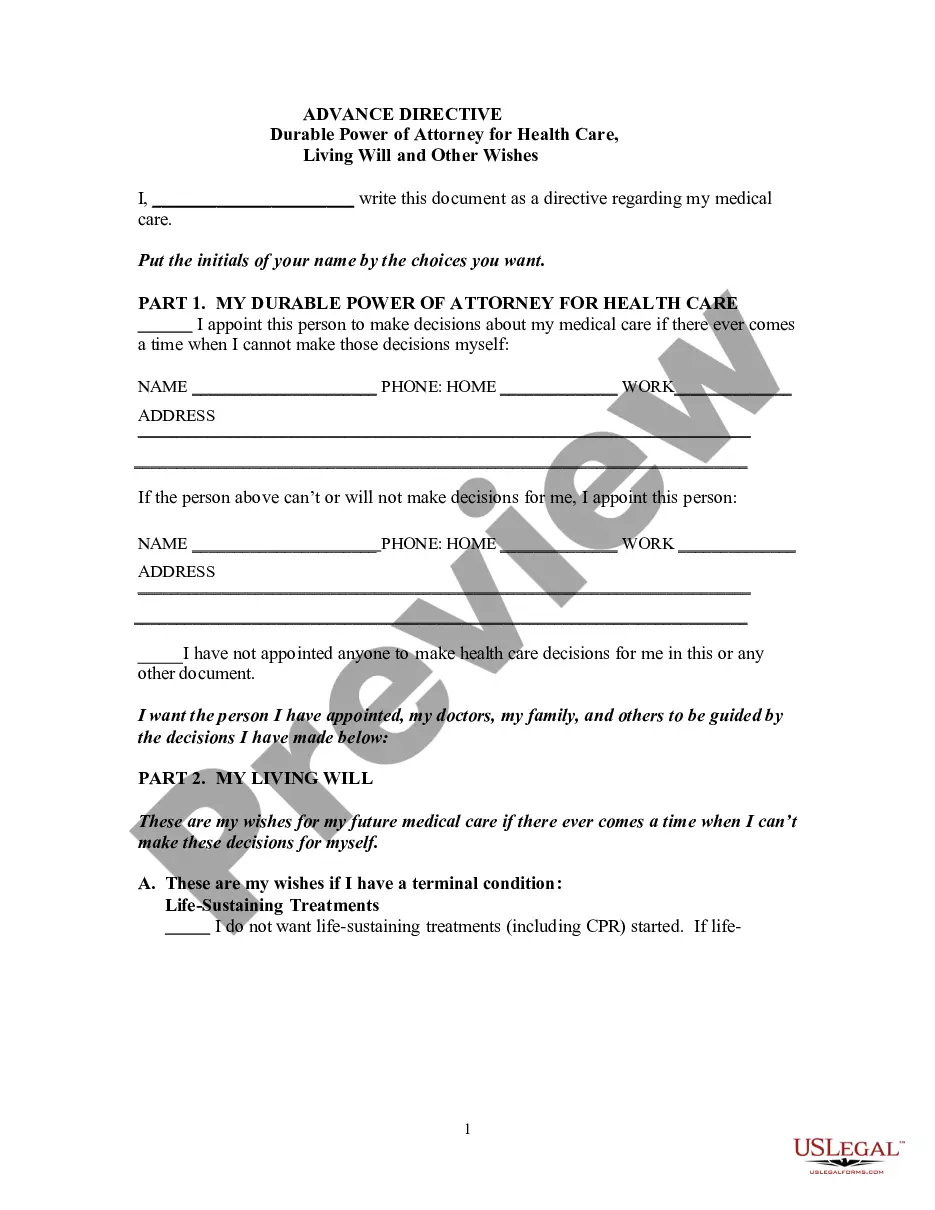
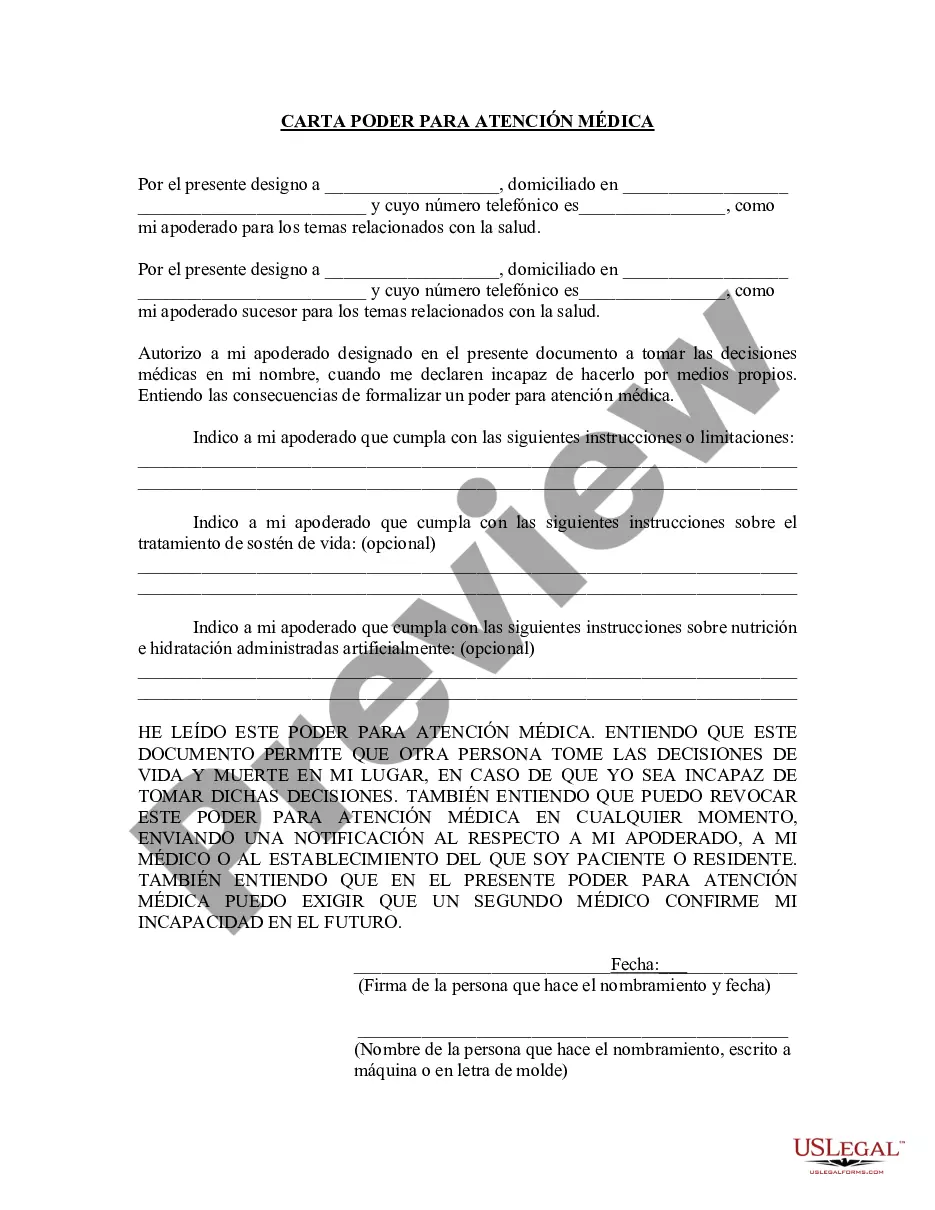
- Designation of health care agent: Choose an individual to make medical decisions for you.
- Authority granted: Specify the scope of decision-making powers given to your agent.
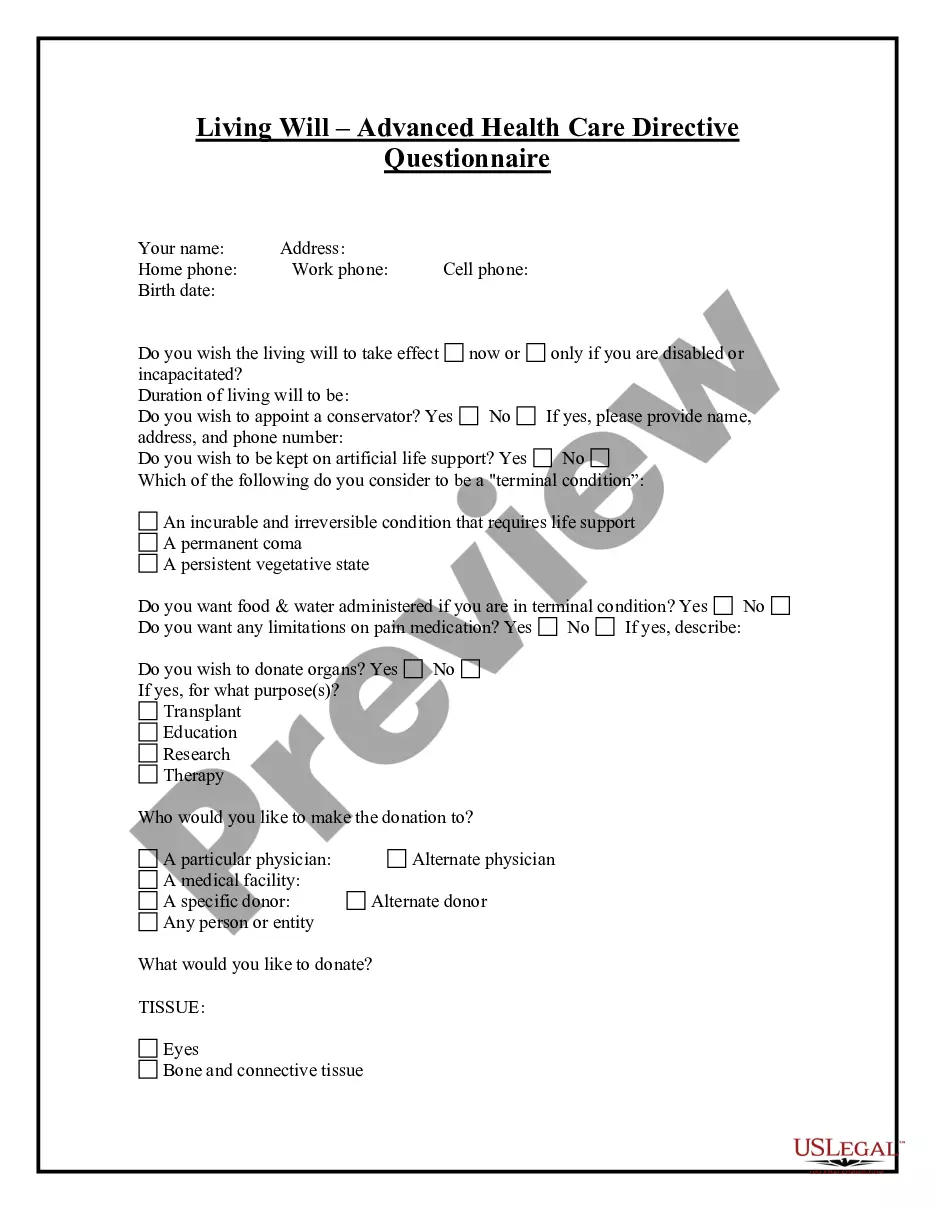
- Statement of desires: Outline your preferences regarding treatment and medical intervention.
- Inspection and disclosure powers: Allow your agent access to your medical information.
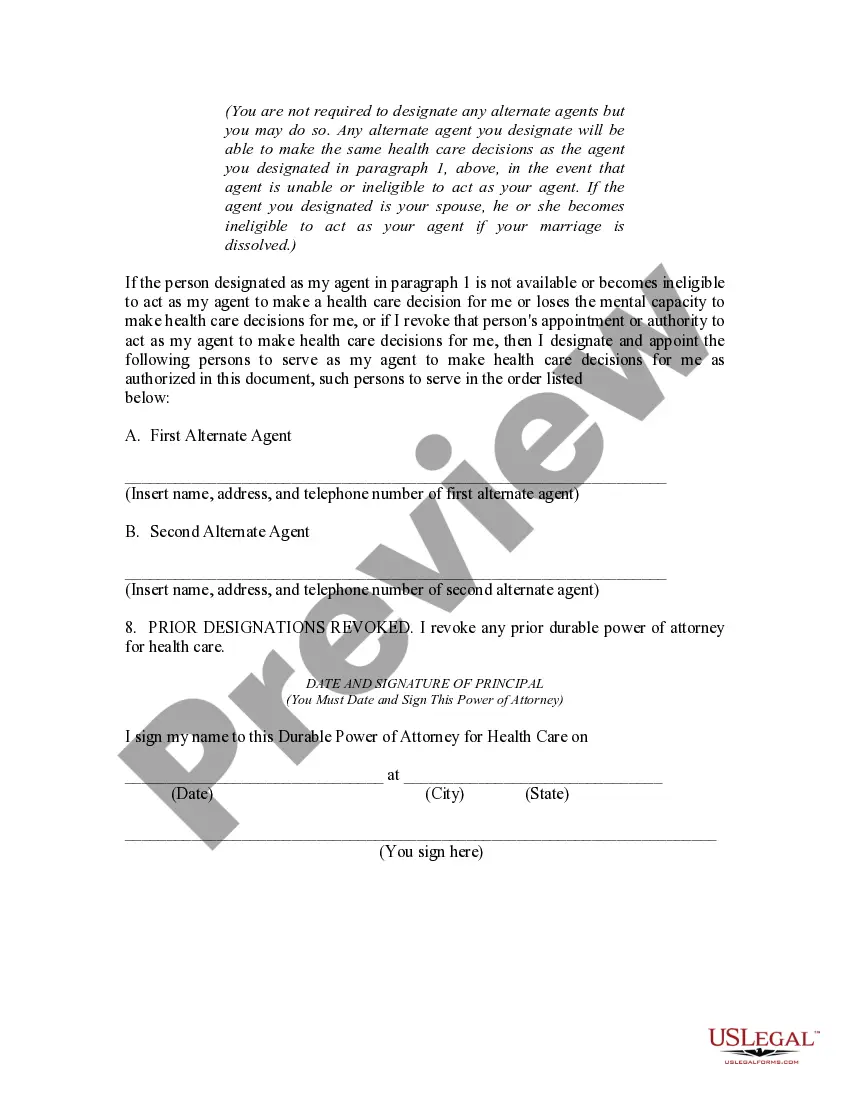
- Alternate agents: Designate additional individuals to act in case your primary agent is unavailable.
- Witness and notary requirements: Ensure the document is legally signing and witnessed for validity.



Situations where this form applies
This form is essential in situations where you wish to ensure that your health care preferences are respected, particularly in cases of severe illness or incapacitation. It can be invaluable if you face surgery, a serious diagnosis, or any medical emergency where you may be unable to communicate your wishes. Using this document allows your designated agent to make decisions consistent with your values and desires during critical times.
Intended users of this form
This Durable Power of Attorney for Health Care is suitable for:
- Anyone who wants to make their health care preferences known in advance.
- Individuals who are planning for potential health crises or surgeries.
- People seeking assurance that their medical treatment will align with their personal values.
- Adults over 18 years who can comprehensively designate an agent.
How to prepare this document
- Identify yourself by providing your name and address.
- Designate your health care agent, including their name, address, and contact information.
- Select any alternate agents to step in if your primary agent cannot serve.
- Clearly state your desires regarding medical treatments, particularly relating to life-sustaining procedures.
- Ensure the document is dated and signed in the presence of two qualified witnesses.
- Consult with a healthcare provider if necessary to clarify your treatment preferences.
Is notarization required?
Notarization is required for this form to take effect. Our online notarization service, powered by Notarize, lets you verify and sign documents remotely through an encrypted video session, available 24/7.
Get your form ready online
Our built-in tools help you complete, sign, share, and store your documents in one place.
Make edits, fill in missing information, and update formatting in US Legal Forms—just like you would in MS Word.
Download a copy, print it, send it by email, or mail it via USPS—whatever works best for your next step.
Sign and collect signatures with our SignNow integration. Send to multiple recipients, set reminders, and more. Go Premium to unlock E-Sign.
If this form requires notarization, complete it online through a secure video call—no need to meet a notary in person or wait for an appointment.
We protect your documents and personal data by following strict security and privacy standards.

Make edits, fill in missing information, and update formatting in US Legal Forms—just like you would in MS Word.

Download a copy, print it, send it by email, or mail it via USPS—whatever works best for your next step.

Sign and collect signatures with our SignNow integration. Send to multiple recipients, set reminders, and more. Go Premium to unlock E-Sign.

If this form requires notarization, complete it online through a secure video call—no need to meet a notary in person or wait for an appointment.

We protect your documents and personal data by following strict security and privacy standards.
Avoid these common issues
- Failing to discuss your wishes with your chosen agent before signing.
- Not updating the document when personal circumstances change (e.g., health, relationships).
- Choosing an agent who may have conflicts of interest, such as a current health care provider.
- Not having the document witnessed or notarized as required.
Advantages of online completion
- Convenience: Easily access and complete the form from home.
- Editability: Modify your preferences as your situation changes.
- Reliability: Ensure that you have a legally sound document prepared by licensed professionals.
Quick recap
- Designating a health care agent allows you to manage your medical decisions effectively.
- This document is effective when you can no longer communicate your wishes.
- It is crucial to discuss your health care preferences with your agent to avoid confusion later.
- Regularly review and update your Durable Power of Attorney for Health Care as your situation changes.
Looking for another form?








Form popularity
FAQ
The Indiana Durable Power of Attorney for Health Care lets you name a trusted person to make medical decisions for you if you become unable to communicate. It focuses on health care choices and treatment preferences and ensures your values guide care even during incapacity. The form also permits designating an alternate agent and requires witnesses and a notary for validity.
Not always required by every situation, but this form includes both witness and notary requirements to help ensure validity under Indiana practice. The exact rules depend on who relies on the document. For the best protection, consult an attorney and follow the form’s provisions for signing, witnessing, and notarization.
With this health care form, the agent’s authority is limited to the health care decisions you designate. It does not grant unrelated powers, such as financial decisions, and it cannot override your competent decisions if you can communicate. The scope is defined by the 'Authority granted' section and any alternates you name.
Possible downsides include relying on the designated agent to follow your values since the agent acts when you cannot. Misunderstandings can occur without clear instructions in the 'Statement of desires.' The appointment should be made with trust, and the document may require timely witnessing or notarization to remain effective.
The best person is someone you trust to honor your health care values and make decisions in line with your wishes. The form requires an adult (18+) who can comprehensively designate an agent and be prepared to act in emergencies if you cannot communicate.
This form not only states treatment preferences but also appoints a health care agent with defined authority and access to medical information. A living will only records preferences and does not name an agent. The Indiana document also includes alternate agents and explicit witness and notary requirements.