Indiana Mutual Wills or Last Will and Testaments for Man and Woman living together, not Married with Minor Children
What is this form?
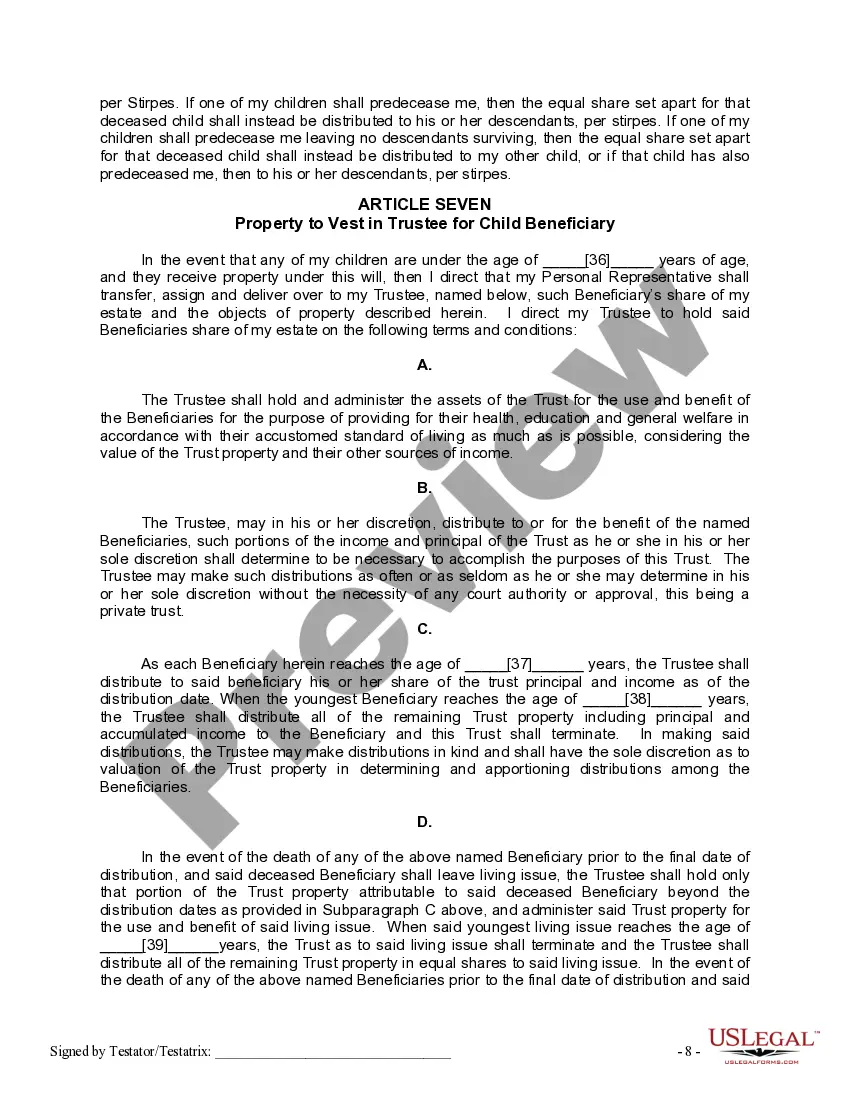
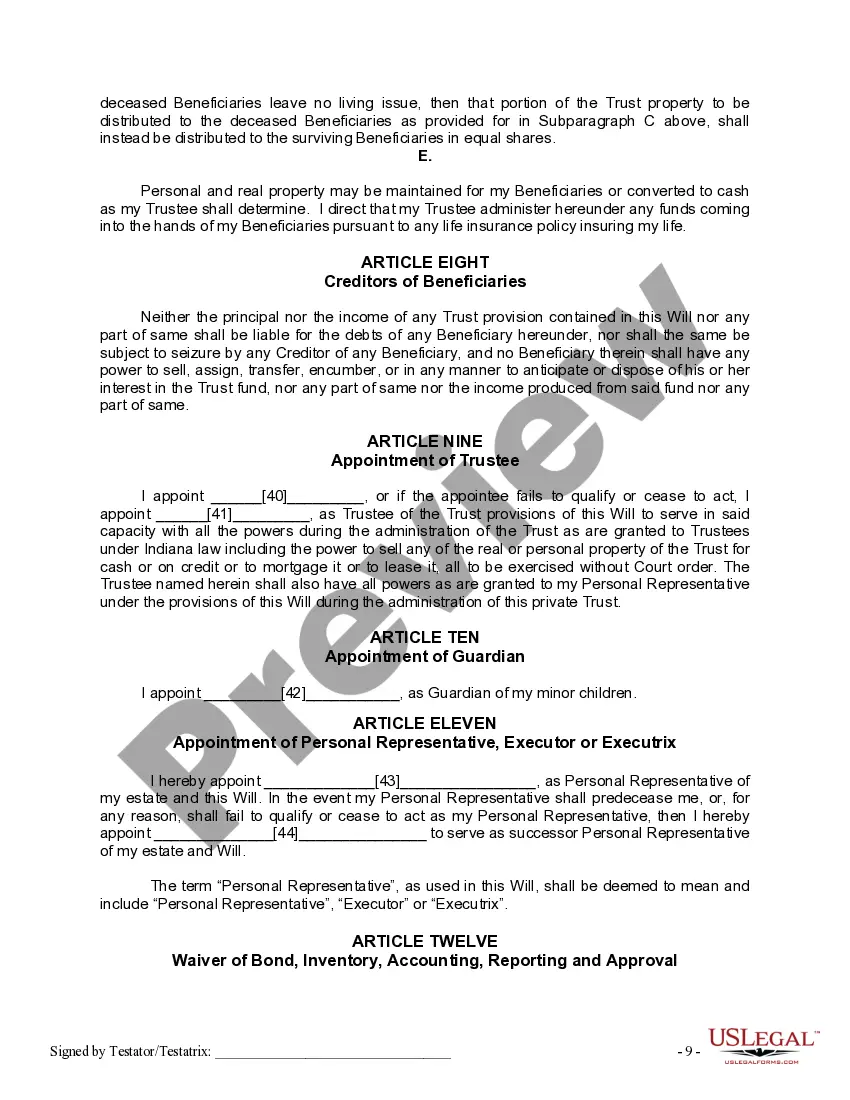
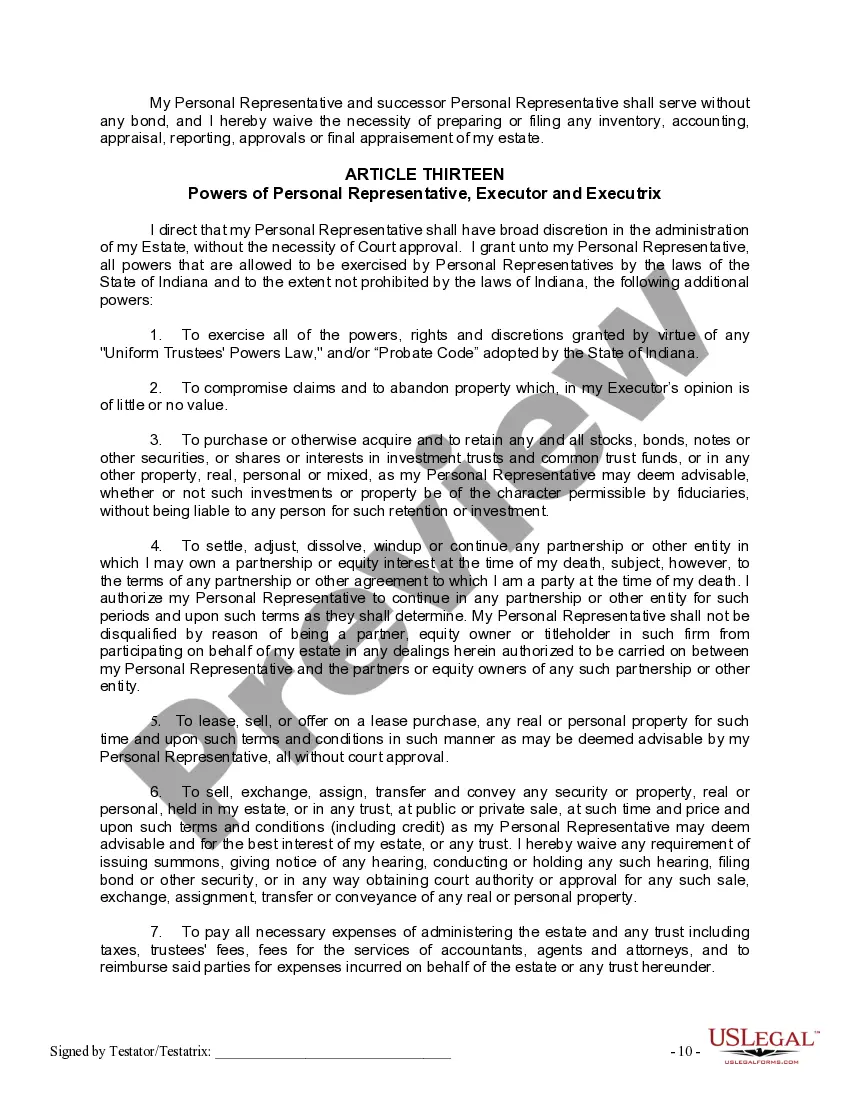
This Mutual Wills package is designed for a man and woman living together, not married, who have minor children. It enables them to create mutual last wills and testaments that outline how their property will be distributed after their passing, ensuring some assets go to each other and their children. This form differs from standard wills by specifically addressing the unique situation of an unmarried couple with dependents.
What’s included in this form
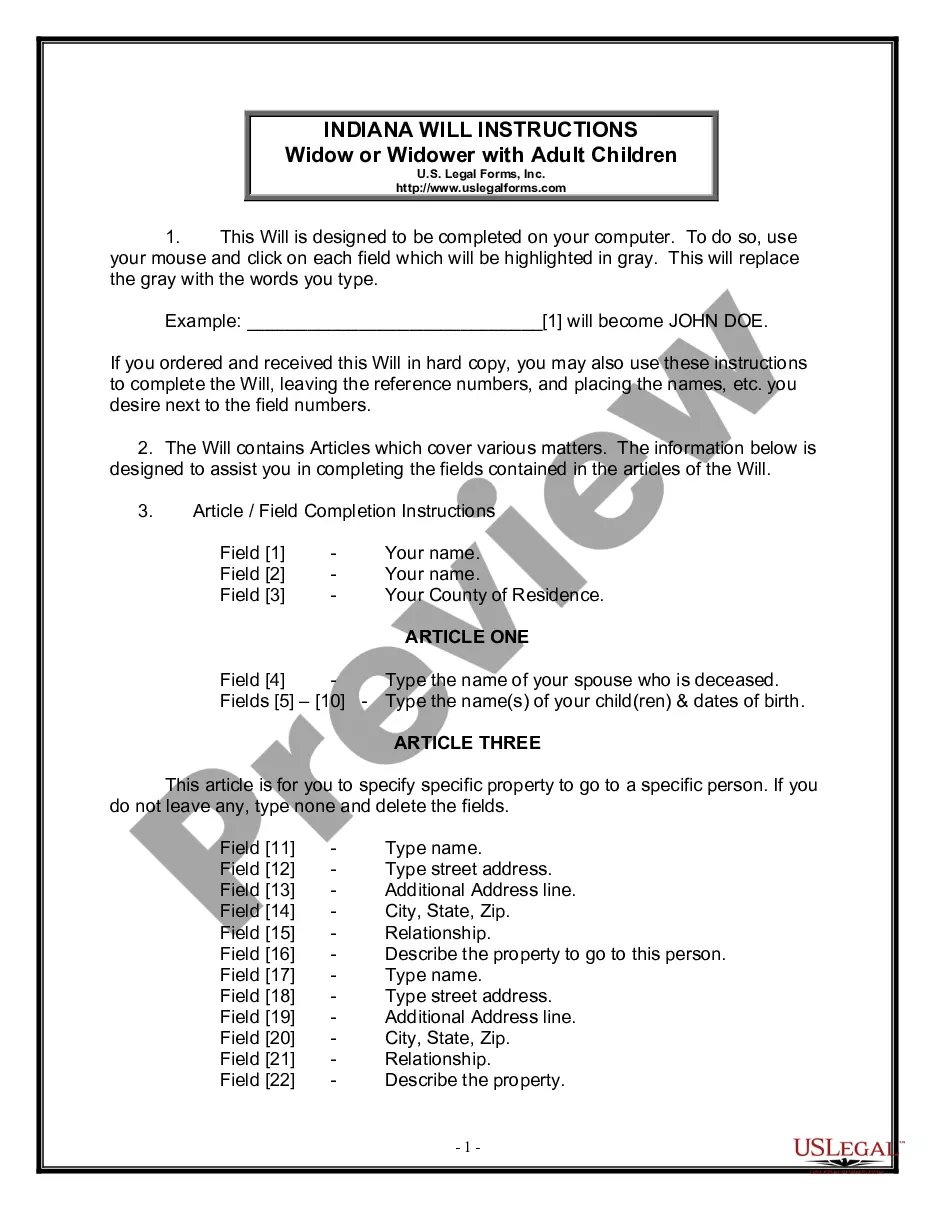
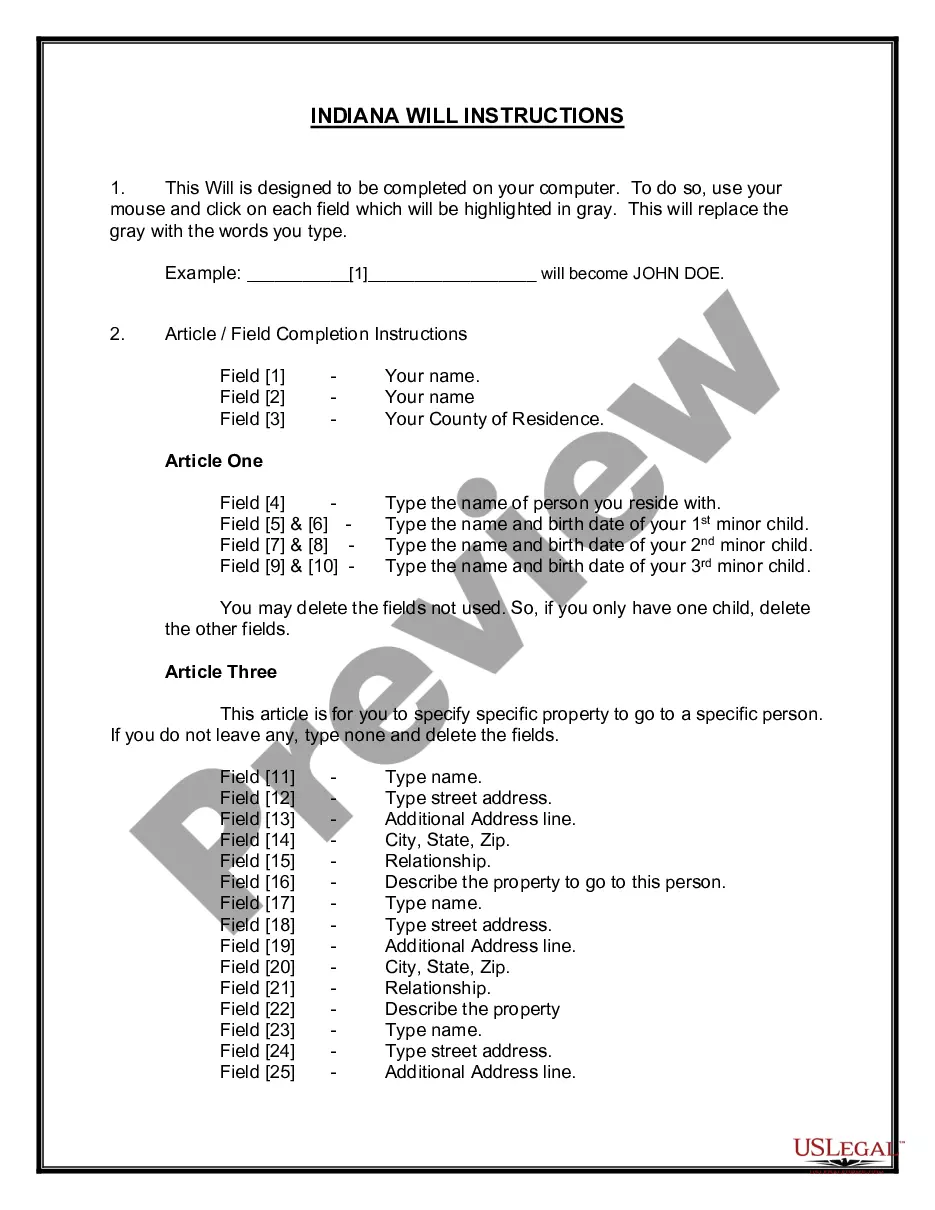
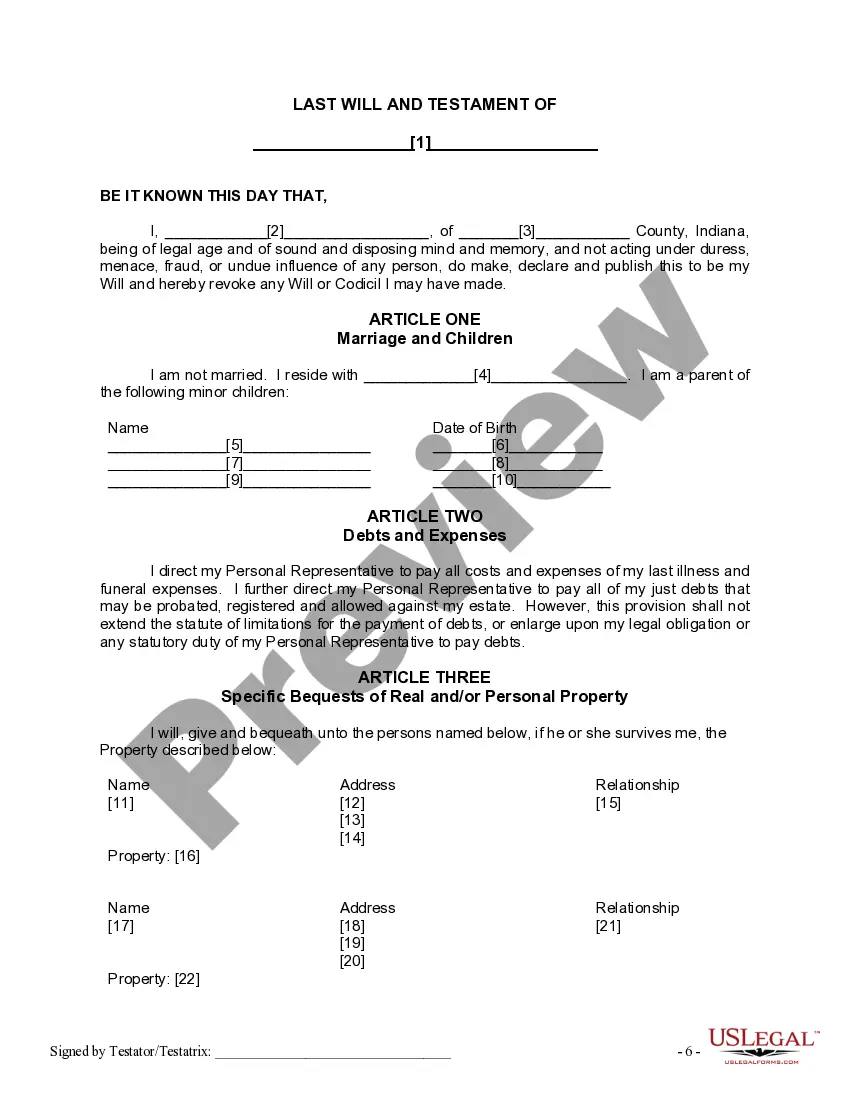
- Article One: Identifies the parties involved, including children.
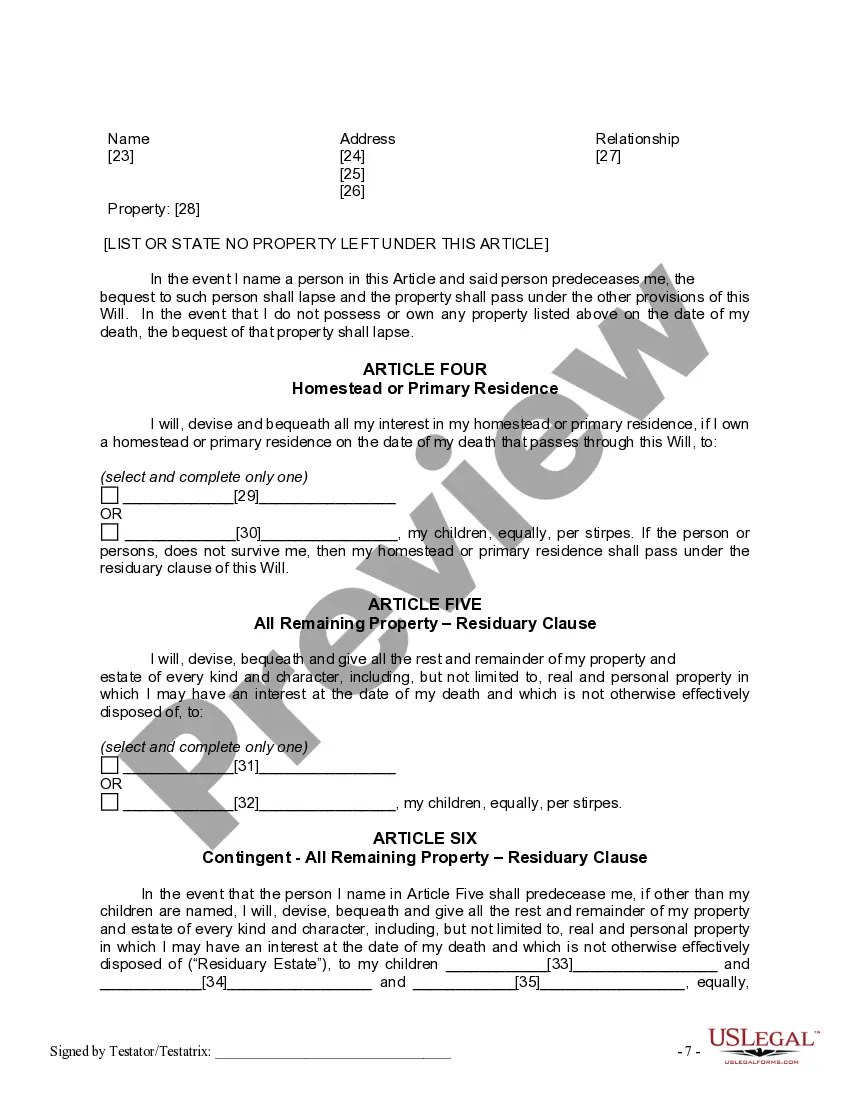
- Article Three: Allows for specific bequests of property to designated individuals.
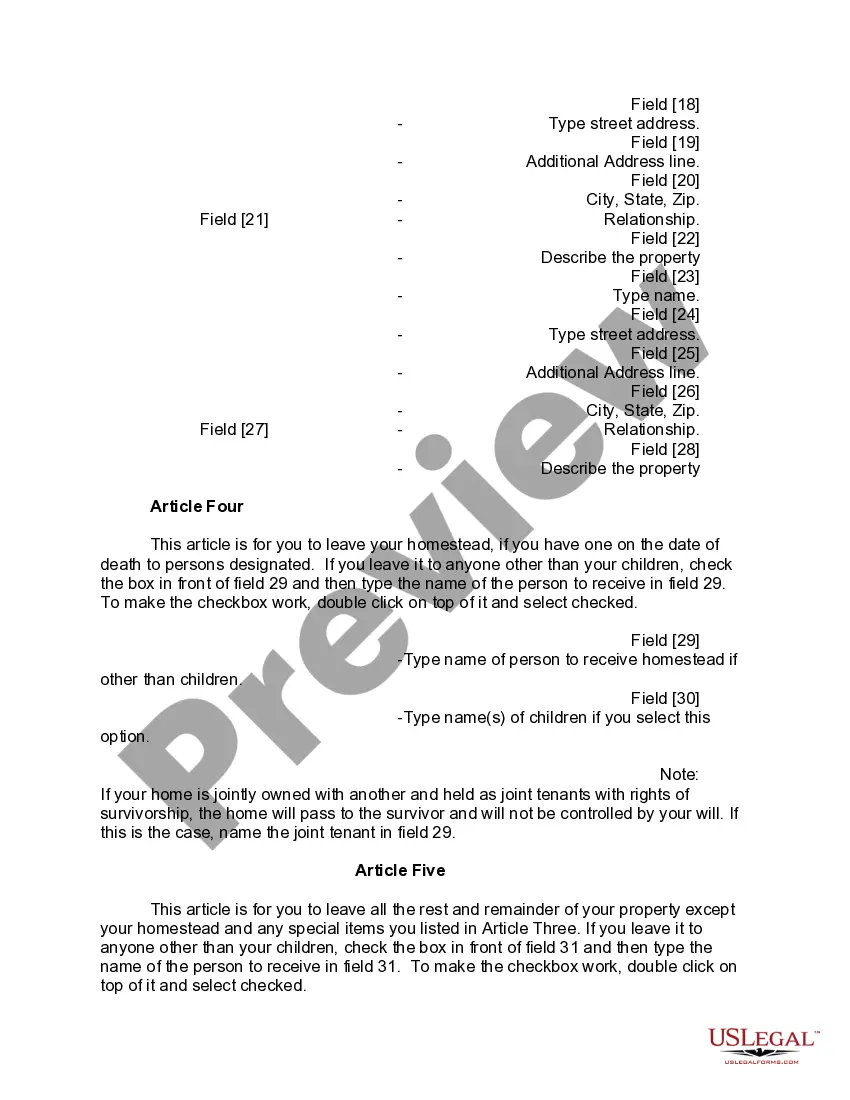
- Article Four: Discusses the distribution of the homestead or primary residence.
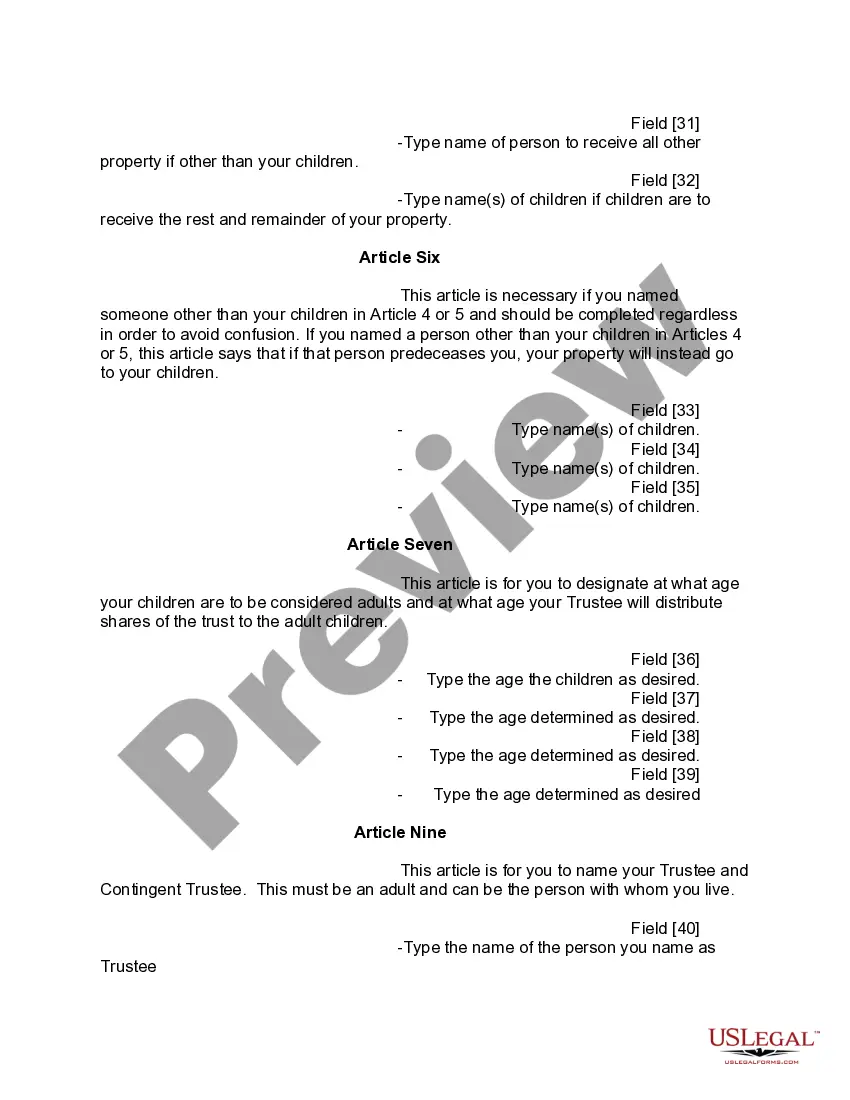
- Article Five: Covers the residuary clause for all remaining property.
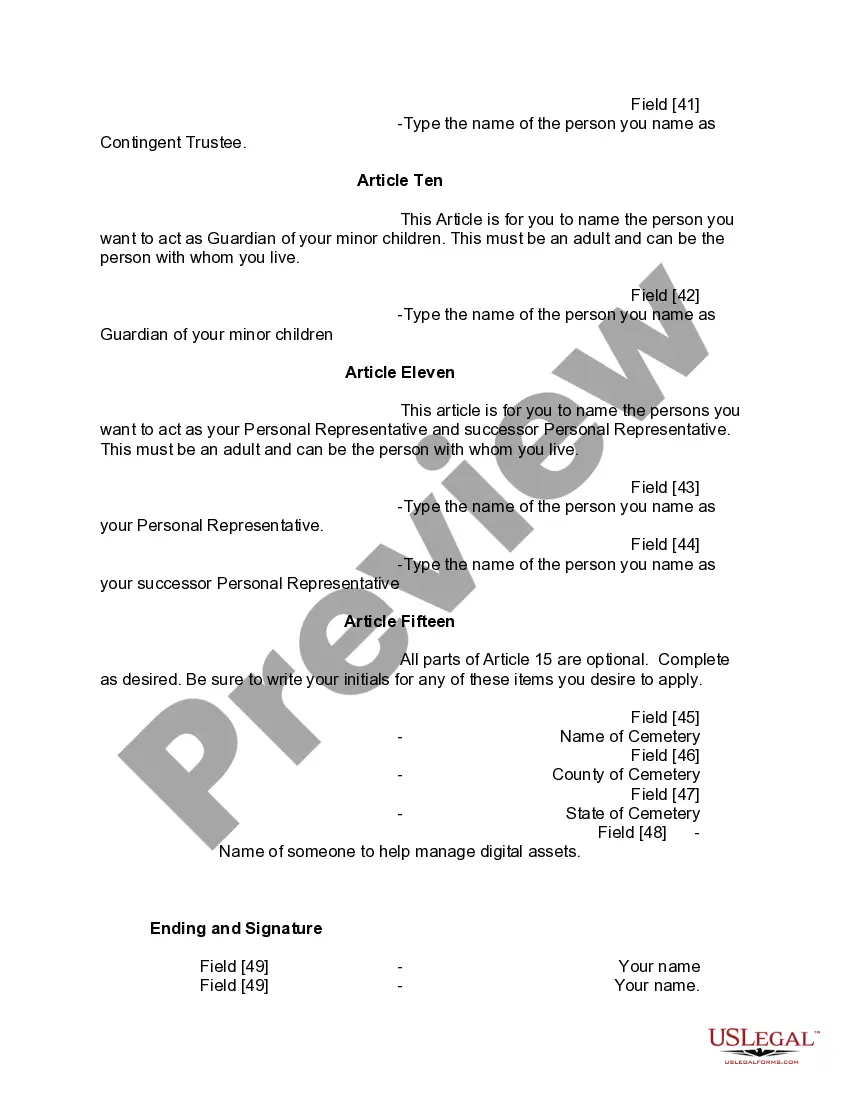
- Article Nine: Appoints a Trustee and a Contingent Trustee.
- Article Ten: Designates a Guardian for minor children.



When this form is needed
This form is useful for unmarried couples who wish to ensure their partner and children are cared for in the event of their death. It provides a way for these couples to make legally binding decisions about asset distribution and guardianship arrangements without being formally married, thereby addressing their specific family dynamics.
Who needs this form
- Unmarried couples with minor children.
- Individuals who want to ensure that their partner inherits property and assets.
- Those seeking to appoint a guardian for their children in the event of their death.
- Partners who wish to provide for each other and declare mutual intentions regarding asset distribution.
Completing this form step by step
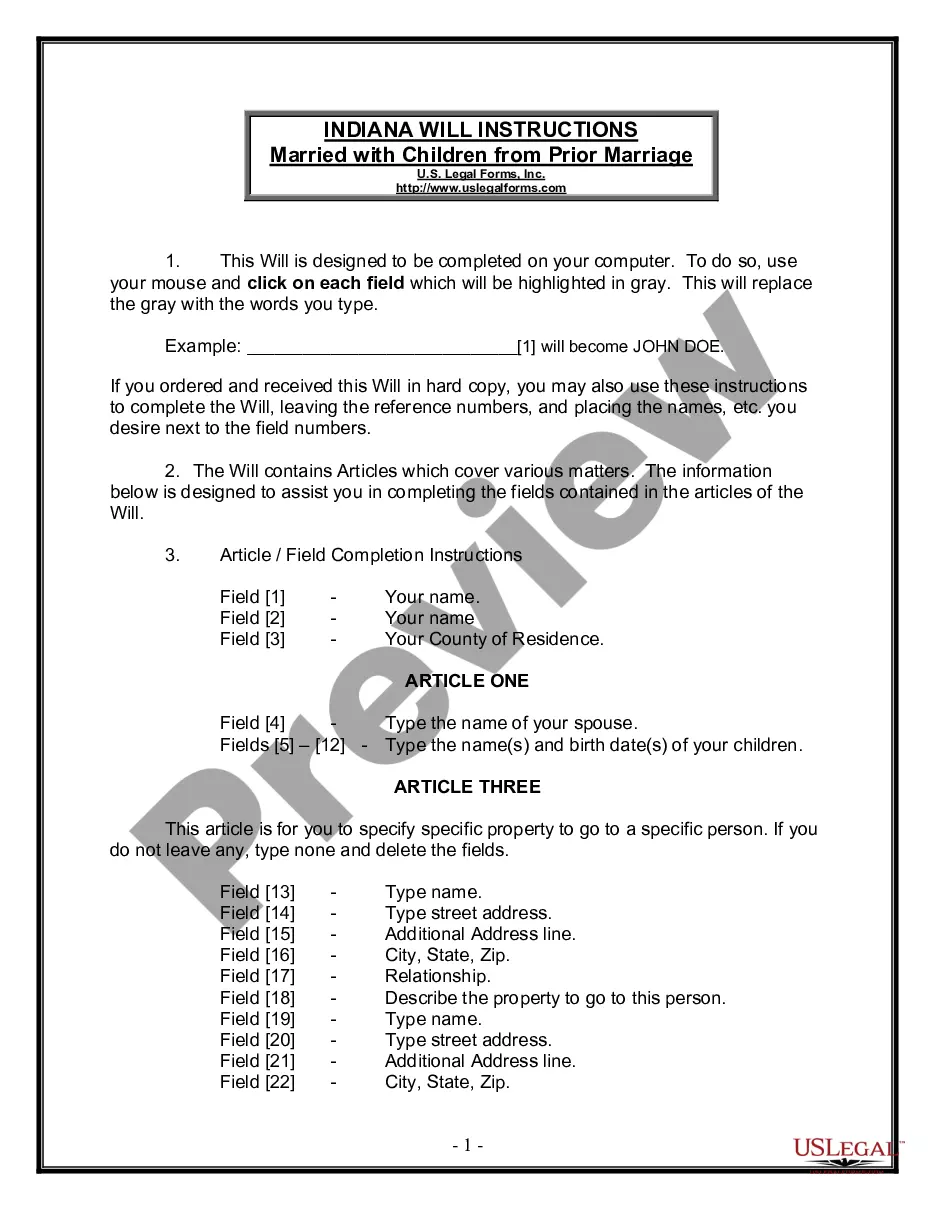
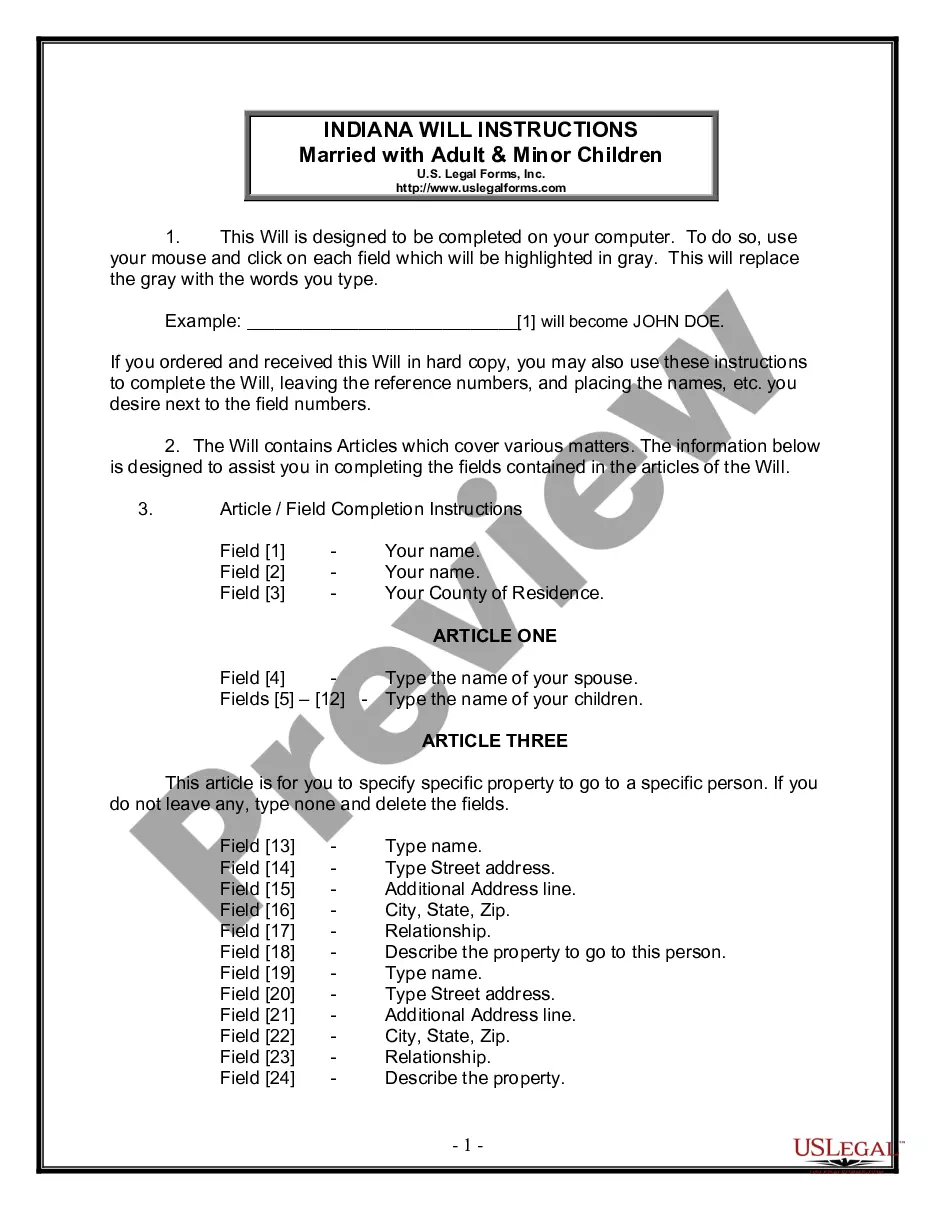
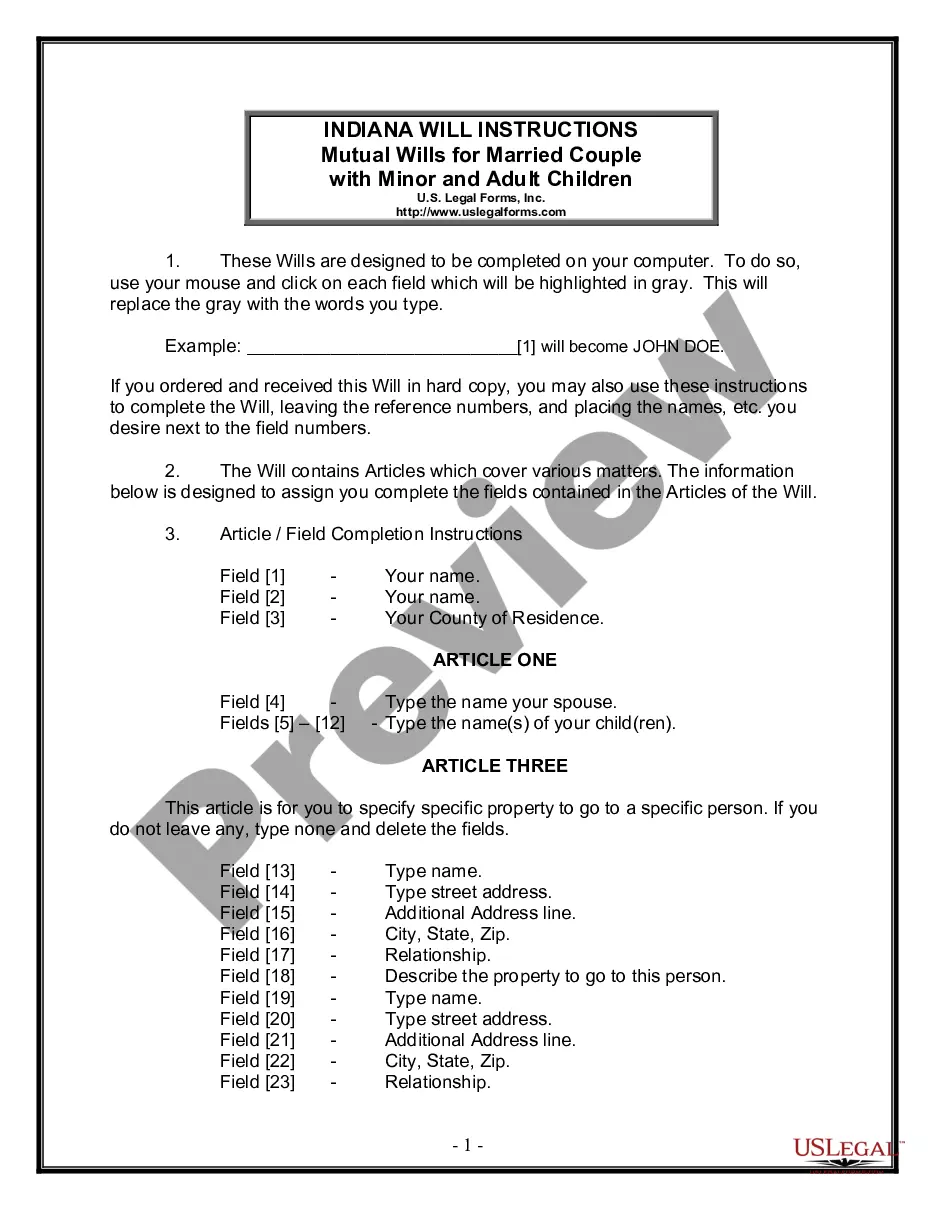
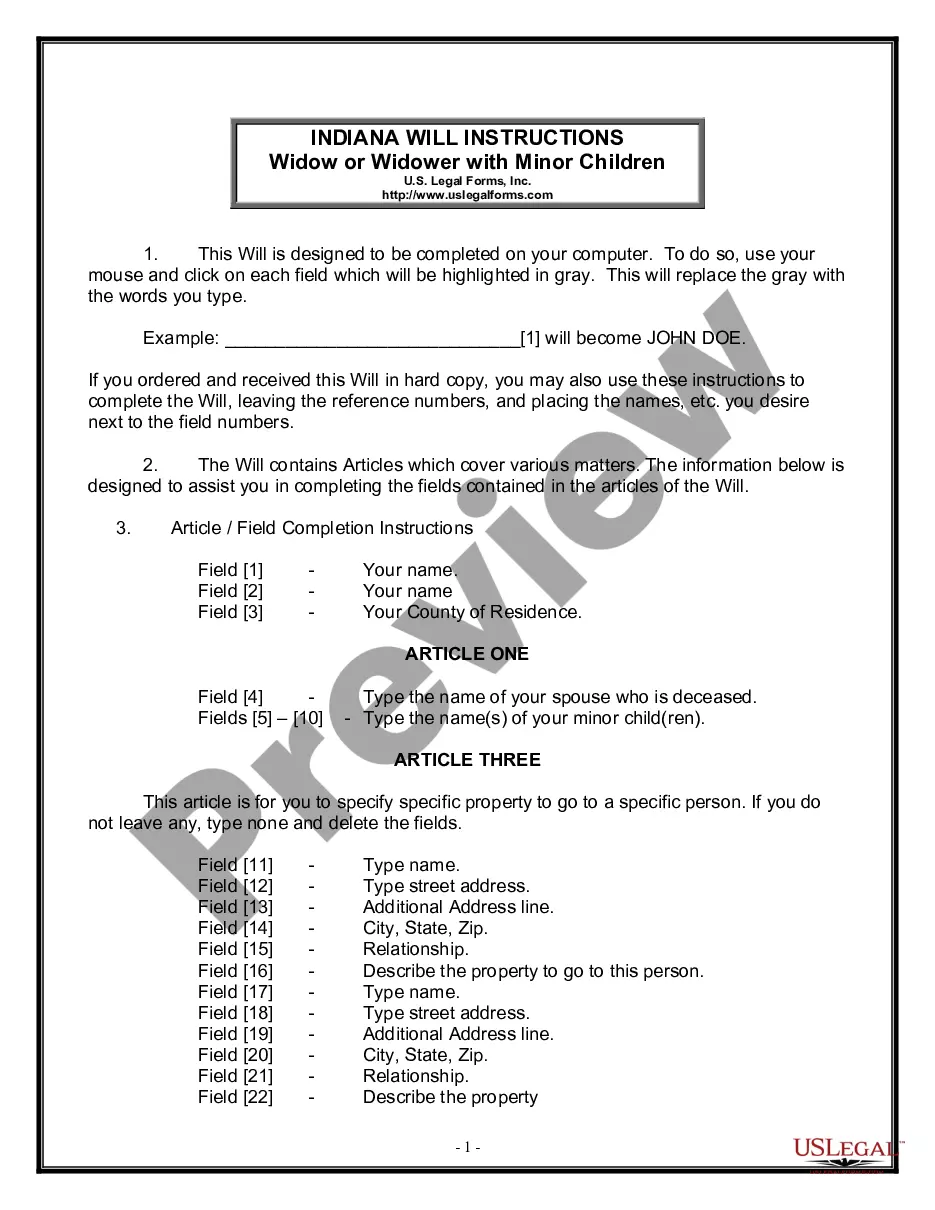
- Specify your name and the name of your partner, along with your county of residence.
- List the names and birth dates of all minor children.
- Indicate specific property you wish to leave to mentioned individuals in the designated sections.
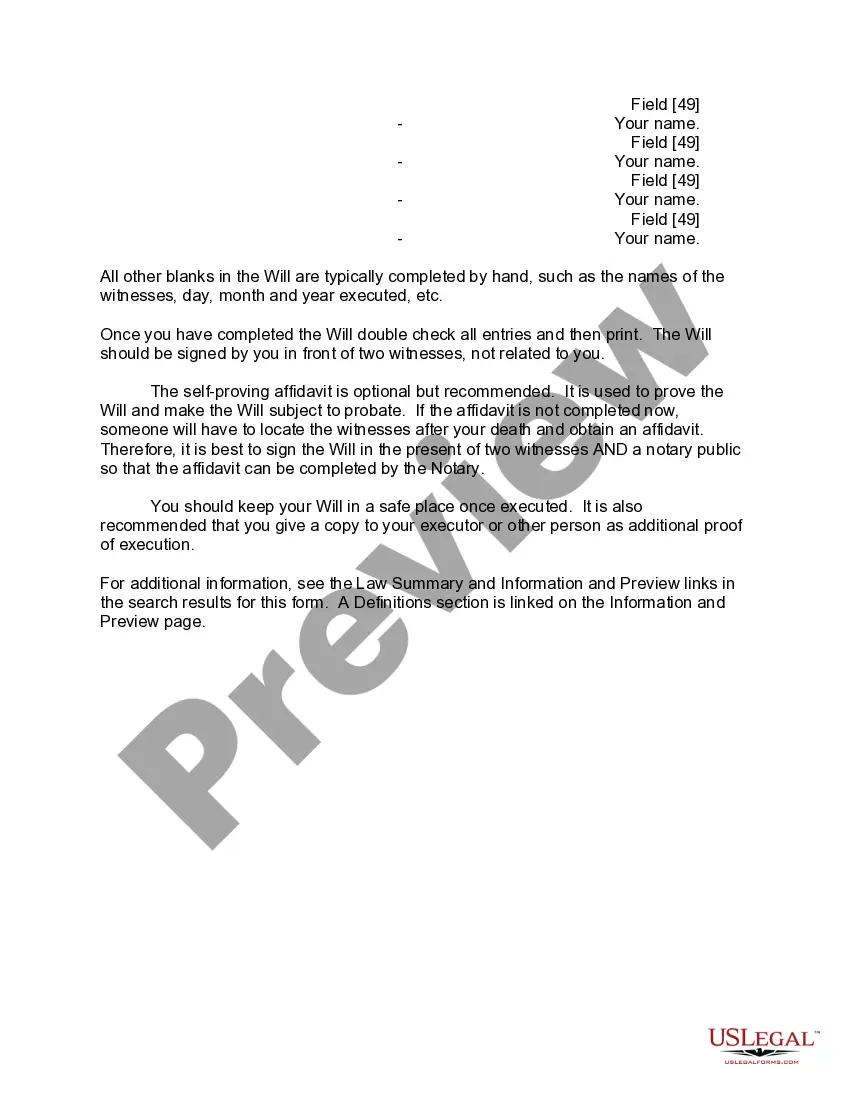
- Ensure that the will is signed in the presence of two unrelated witnesses.
- If required, complete the self-proving affidavit in front of a notary public for added legal validity.
Notarization requirements for this form
Yes, this form must be notarized to be legally valid. It's advisable to have the wills signed in front of a notary public to complete the self-proving affidavit, making the wills easier to probate without the need to locate witnesses after death.
Get your form ready online
Our built-in tools help you complete, sign, share, and store your documents in one place.
Make edits, fill in missing information, and update formatting in US Legal Forms—just like you would in MS Word.
Download a copy, print it, send it by email, or mail it via USPS—whatever works best for your next step.
Sign and collect signatures with our SignNow integration. Send to multiple recipients, set reminders, and more. Go Premium to unlock E-Sign.
If this form requires notarization, complete it online through a secure video call—no need to meet a notary in person or wait for an appointment.
We protect your documents and personal data by following strict security and privacy standards.

Make edits, fill in missing information, and update formatting in US Legal Forms—just like you would in MS Word.

Download a copy, print it, send it by email, or mail it via USPS—whatever works best for your next step.

Sign and collect signatures with our SignNow integration. Send to multiple recipients, set reminders, and more. Go Premium to unlock E-Sign.

If this form requires notarization, complete it online through a secure video call—no need to meet a notary in person or wait for an appointment.

We protect your documents and personal data by following strict security and privacy standards.
Common mistakes
- Not having the will signed by two witnesses or failing to meet state-specific requirements for execution.
- Failing to list all minor children or incorrectly entering their information.
- Using vague terms instead of specifying property clearly in bequest sections.
- Not reviewing and updating the wills as family circumstances change.
Why use this form online
- Convenience: Complete the form from the comfort of your home at your own pace.
- Editability: Easily make changes to the form as your situation evolves, such as adding or removing beneficiaries.
- Reliability: Access legally vetted forms drafted by licensed attorneys to ensure compliance and validity.
Key takeaways
- This package contains mutual wills for unmarried partners with minor children.
- It ensures that both partnersâ wishes regarding property and guardianship are clearly documented.
- Proper signing and notarization are crucial for the validity of the wills.
- Utilizing this form can simplify estate planning and enhance the protection of family interests.
Looking for another form?





Form popularity
FAQ
Bank accounts. Brokerage or investment accounts. Retirement accounts and pension plans. A life insurance policy.
Step 1 - Names of Testator: Step 2 - Add Relatives: Step 3 - Add Children: Step 4 - Burial and Funeral Arrangements: Step 5 - Debts and Expenses: Step 6 - Outline Your Property: Step 7 - Pet Care: Step 8 - Appointment Of Executor or Trustee:
You do not need a lawyer to make a living will, although you can get one from a lawyer if you prefer to. Every state has its own requirements for making a living will, so if you make one on your own, make sure you find a form that meets your state's requirements.
Step 1 Download Your Living Will. Download in Adobe PDF, Microsoft Word (. Step 2 Health Care Directive. Step 3 Life Support. Step 4 Life-Sustaining Treatment. Step 5 End of Life Wishes. Step 6 Medical Power of Attorney. Step 7 Witness Acknowledgment. Step 8 Notary Acknowledgment.
Most single people should have a will. A will can help you determine who will get your property (including your home, business, pets, and digital assets), name guardians for your children, and name an executor. A will also puts your wishes in writing so there's no confusion about your intentions.
Include personal identifying information. Include a statement about your age and mental status. Designate an executor. Decide who will take care of your children. Choose your beneficiaries. List your funeral details. Sign and date your Last Will and Testament.
Contrary to popular belief, you do not need to have an attorney draft a will for you. Anyone can write this document on their own, and as long as it meets all of the legal requirements of the state, courts will recognize one you wrote yourself.
Notarization is not required in California to make your will legal. Some states allow you to make your will self-proving by signing a special affidavit in front of a notary that accompanies the will. However, California allows your will to be self-proved without a self-proving affidavit.