Indiana Letter from Landlord to Tenant where Tenant Complaint was caused by the deliberate or negligent act of Tenant or Tenant's guest
What this document covers
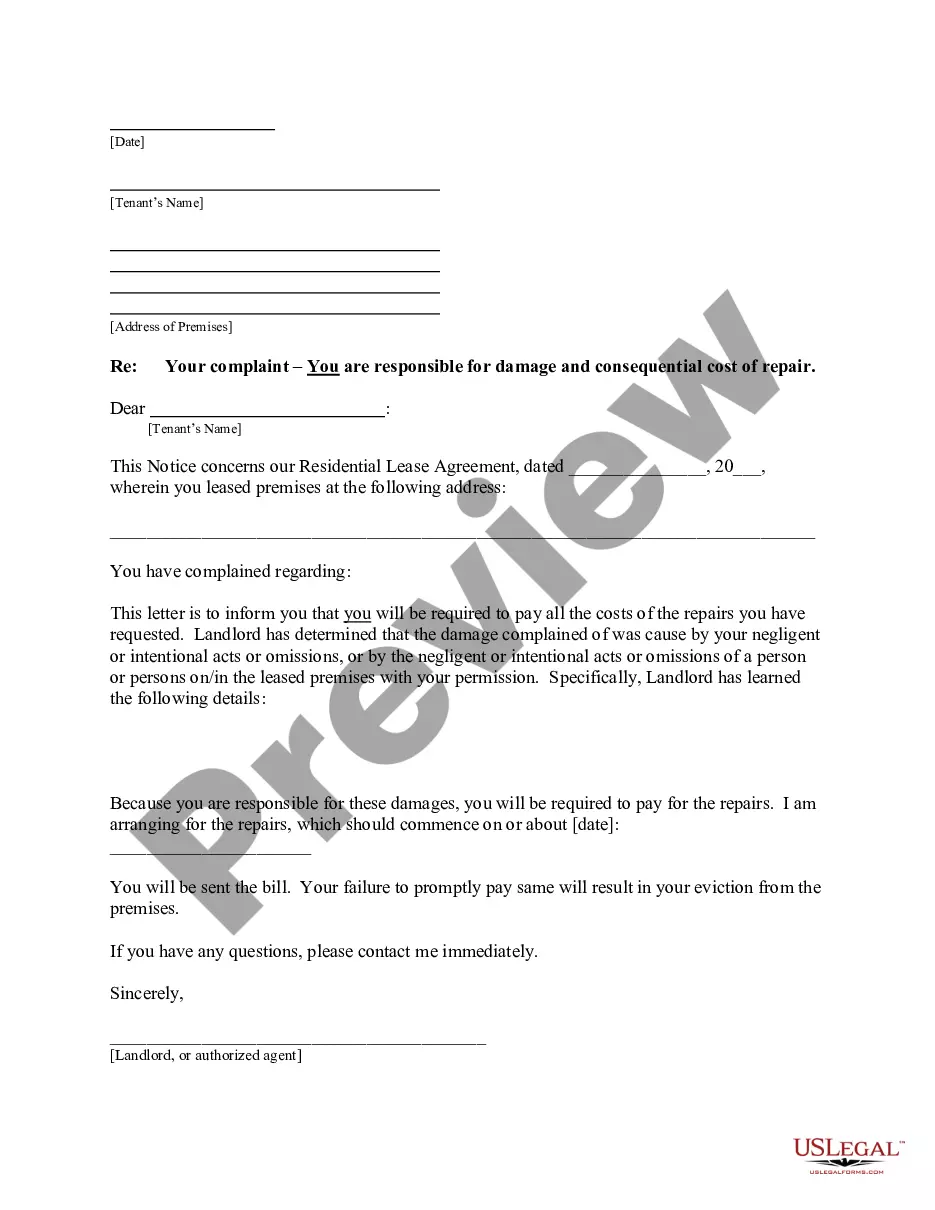
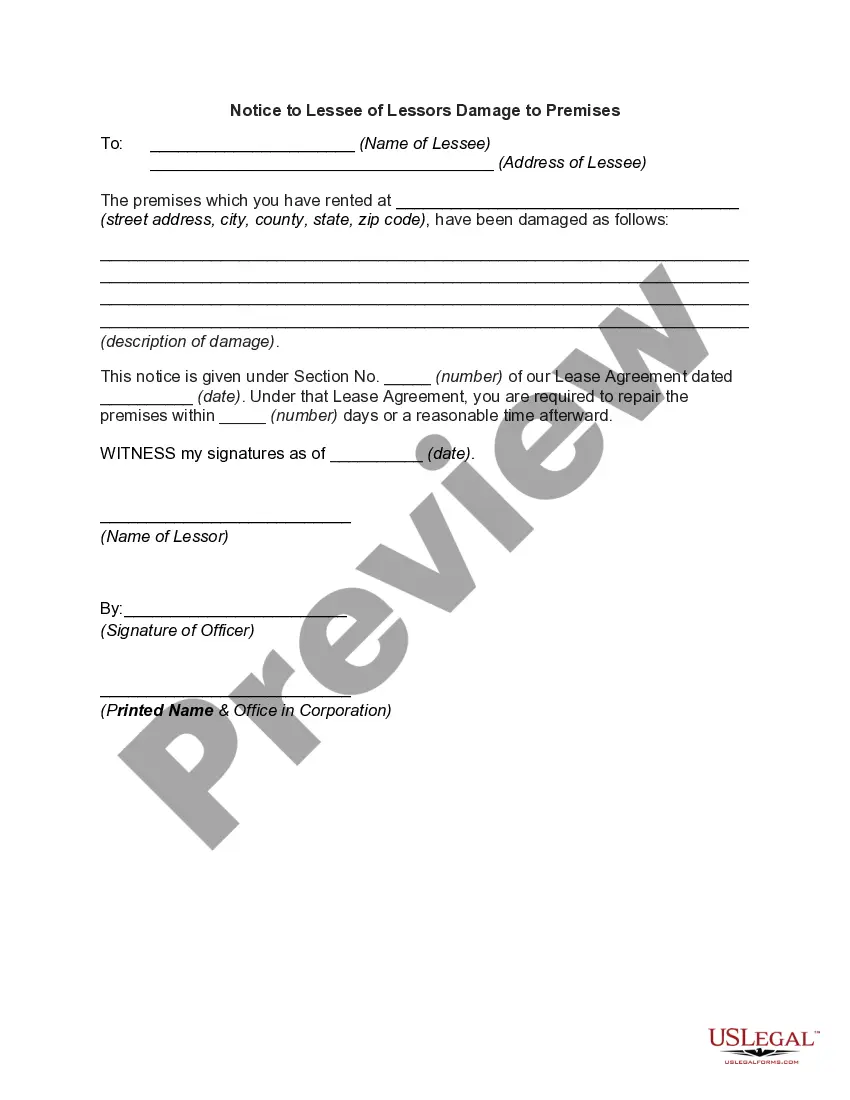
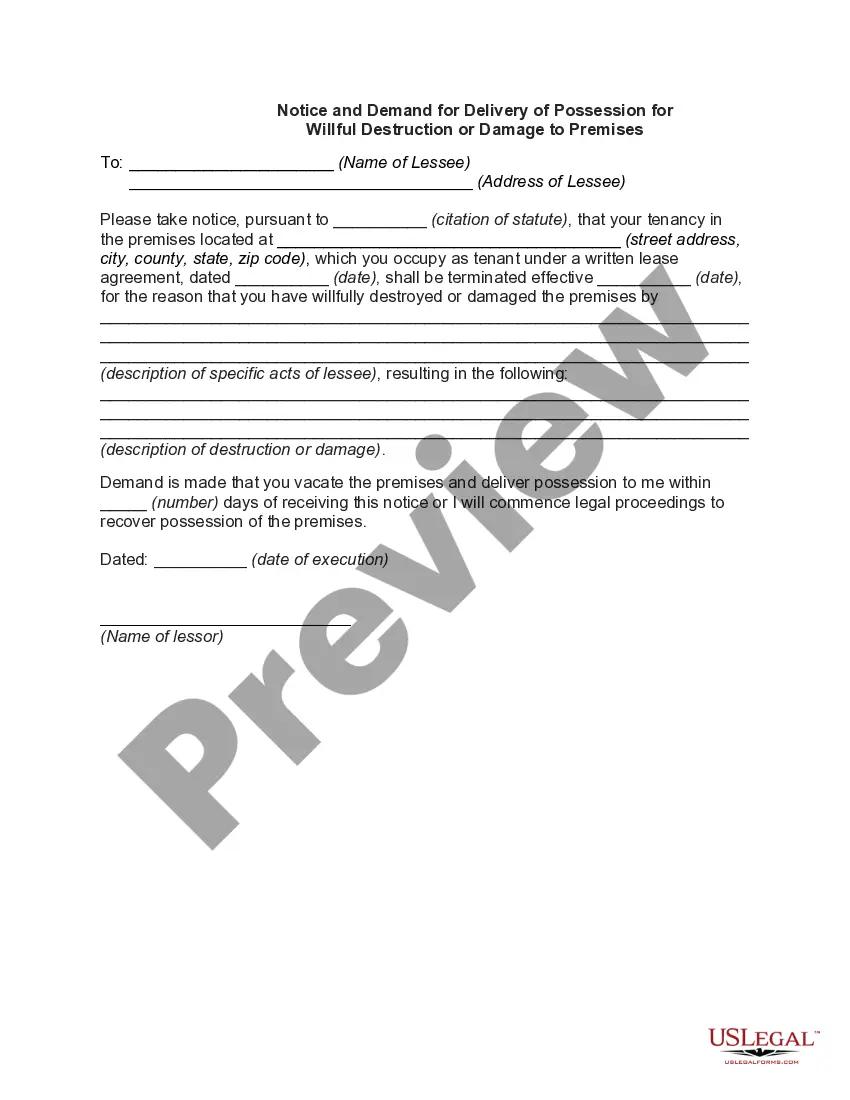
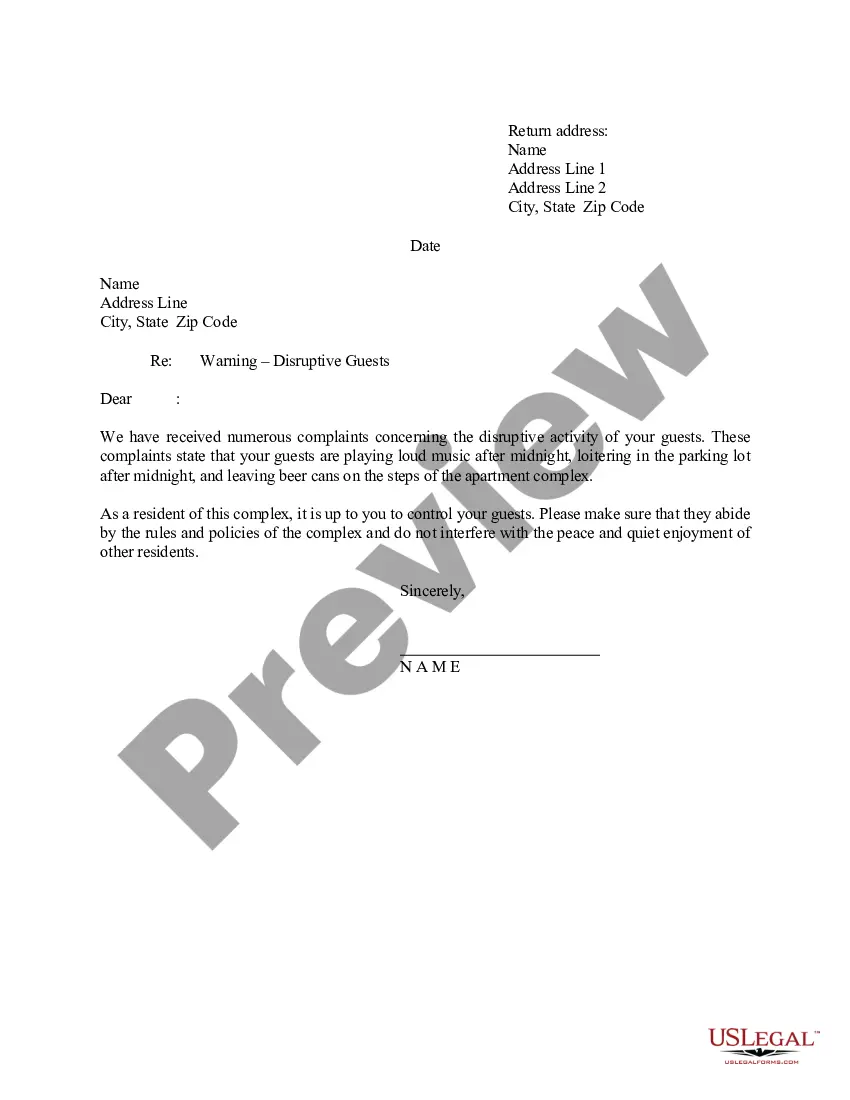
This letter from a landlord to a tenant serves to clarify that a complaint filed by the tenant was due to actions taken by the tenant or their guests. This form is essential for landlords who need to address misunderstandings arising from tenant complaints while maintaining a professional and clear line of communication. Unlike other forms that might address different tenant issues, this one specifically focuses on tenant-initiated complaints resulting from their behavior or the behavior of their guests.
Main sections of this form
- Sender's information: Name and contact details of the landlord or authorized agent.
- Recipient's information: Name and address of the tenant.
- Statement of the complaint: A clear outline indicating the complaint is related to the tenant's or their guest's actions.
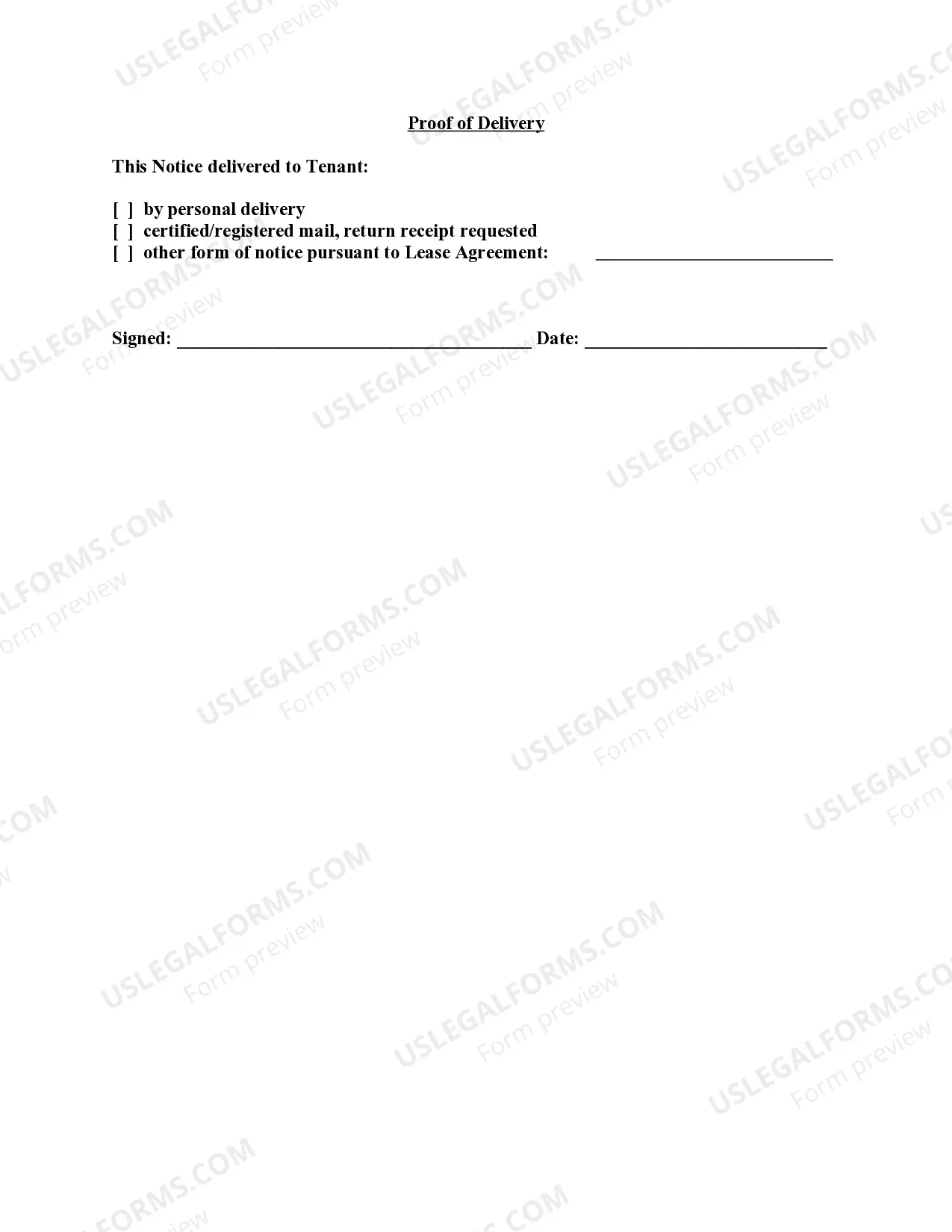
- Proof of delivery methods: Options for how the letter was delivered to the tenant, ensuring receipt of the correspondence.


When this form is needed
This form should be utilized when a tenant has filed a complaint against the landlord, yet the landlord believes that the issue stems from the actions of the tenant or their guests. It is particularly helpful in maintaining documentation of communication and clarifying disputes to prevent escalation and misunderstandings.
Who should use this form
- Landlords seeking to address tenant complaints efficiently.
- Property management companies managing rental properties.
- Landlords who want to document issues arising from tenant behavior.
- Authorized agents acting on behalf of landlords.
How to prepare this document
- Identify the parties: Fill in the sender's and recipient's names along with their contact information.
- Draft the statement of the complaint: Clearly outline how the tenant's actions or the actions of their guests led to the issue at hand.
- Choose the proof of delivery method: Indicate how the letter was delivered to the tenant.
Does this document require notarization?
In most cases, this form does not require notarization. However, some jurisdictions or signing circumstances might. US Legal Forms offers online notarization powered by Notarize, accessible 24/7 for a quick, remote process.
Get your form ready online
Our built-in tools help you complete, sign, share, and store your documents in one place.
Make edits, fill in missing information, and update formatting in US Legal Forms—just like you would in MS Word.
Download a copy, print it, send it by email, or mail it via USPS—whatever works best for your next step.
Sign and collect signatures with our SignNow integration. Send to multiple recipients, set reminders, and more. Go Premium to unlock E-Sign.
If this form requires notarization, complete it online through a secure video call—no need to meet a notary in person or wait for an appointment.
We protect your documents and personal data by following strict security and privacy standards.

Make edits, fill in missing information, and update formatting in US Legal Forms—just like you would in MS Word.

Download a copy, print it, send it by email, or mail it via USPS—whatever works best for your next step.

Sign and collect signatures with our SignNow integration. Send to multiple recipients, set reminders, and more. Go Premium to unlock E-Sign.

If this form requires notarization, complete it online through a secure video call—no need to meet a notary in person or wait for an appointment.

We protect your documents and personal data by following strict security and privacy standards.
Mistakes to watch out for
- Failing to include clear and specific details regarding the tenant's actions.
- Not accurately completing the proof of delivery section.
- Ignoring local laws that may require different notice periods or methods.
Why use this form online
- Convenience: Downloadable and printable format allows for quick access and completion.
- Editability: Forms can be customized for specific details related to the situation.
- Reliability: Ensures that communication is formal and documented appropriately, which is crucial for legal proceedings.
What to keep in mind
- This letter clarifies tenant complaints, attributing responsibility to the tenant or their guests.
- Using this form helps maintain clear communication between landlords and tenants.
- It is essential for landlords to document issues to protect their rights and interests.
Looking for another form?

Form popularity
FAQ
Uninhabitable conditions can include dangerous ones, such as holes in the floor, unsafe or exposed wiring, or non-working air conditioning in dangerously hot summer months. Gross infestations of roaches, fleas or other pests are also uninhabitable conditions.
Write a letter to your landlord asking for the harassment to stop. Send the letter with proof of mailing and keep a copy of the letter. Ask a witness to be there for landlord interactions. Witness accounts and video recordings of your interactions can be used in court as long as they were done legally.
If you're seeking damages for emotional distress caused by a landlord's discrimination, or punitive damages for especially blatant and intentional discrimination, a lawsuit may well be your best bet. Understand what's involved in suing your landlord. You may file a lawsuit in either federal or state court.
When a crime occurs at a rental property, the tenant is responsible for insuring his or her possessions, while the landlord is responsible for the premises and any damage incurred. The only exception would be in the highly unlikely event that the landlord could prove that you were somehow responsible for the damage.
Damage to the Property: A landlord can sue a tenant if the tenant has caused damage to the property.To Recover Lost Rent From an Illegal Move Out: If the tenant moved out before their lease was actually up, you can take them to court to recover the rent they owed for the remaining time on their lease.
Any malicious or accidental damage to the property caused by a tenant or their guests is the tenant's responsibility. However, it should still be reported to the property manager or landlord. Malicious damage could be a hole punched in a wall or even nails hammered into the wall without a landlord's permission.
Instead, it is harm that's committed on purpose, by accident or through neglect that affects the normal function or usefulness of the property. Examples of tenant damage can include anything from a broken toilet seat to a smashed mirror, missing door handles, holes or dents in walls, or carpets soaked with pet urine.
The landlord had a duty to reasonably maintain the property; The landlord knew or should have known of the dangerous condition; The landlord breached their duty by failing to repair/fix the dangerous condition;
Know your state's landlord/tenant laws. Read and respond to the court summons. Try to work out a settlement. Consider legal counsel. Show up for court. Look sharp and provide evidence.