Indiana Quitclaim Deed from Corporation to Two Individuals
What is this form?
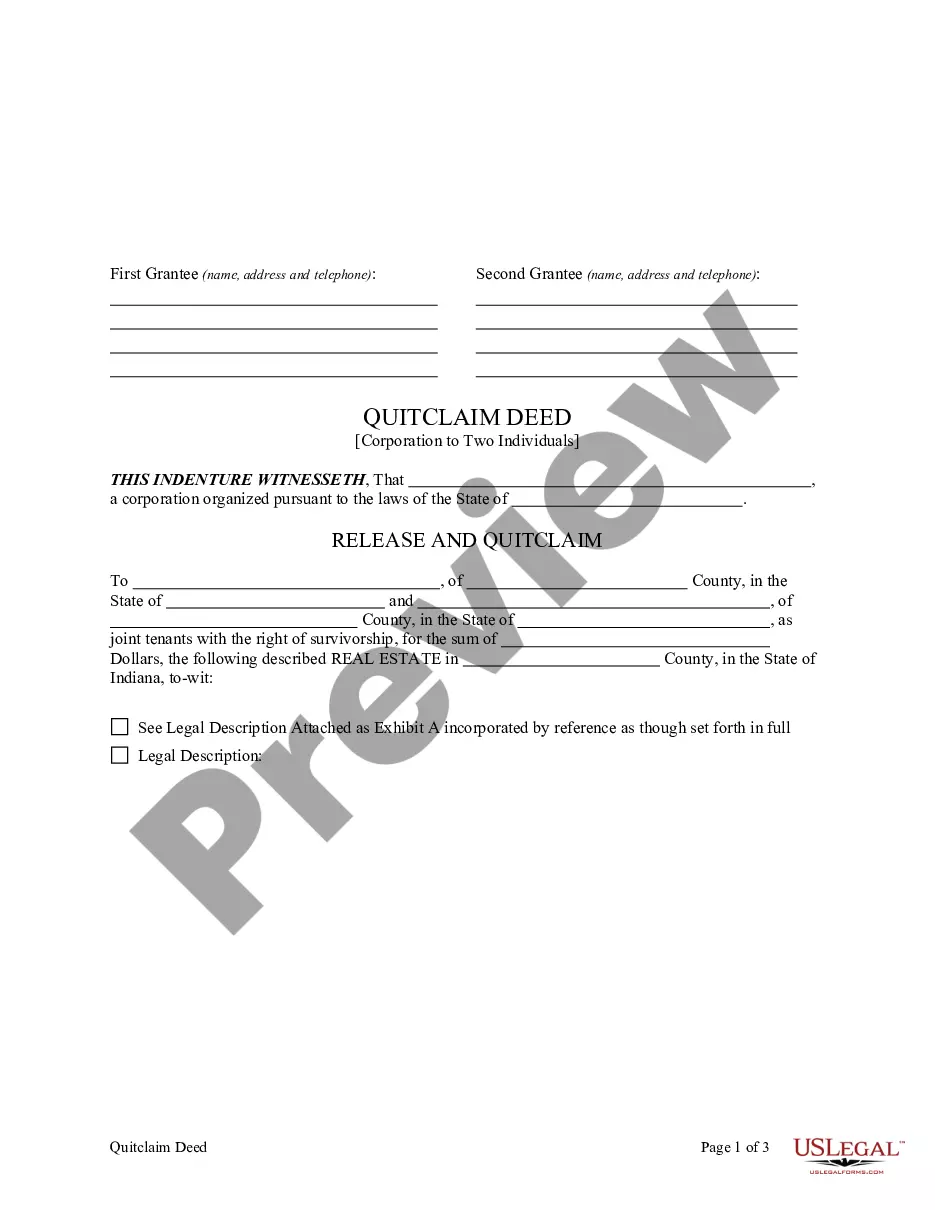
This Quitclaim Deed is a legal document that allows a corporation to transfer its interest in real property to two individuals. Unlike other deeds that provide warranty or assurances, a quitclaim deed transfers whatever interest the grantor holds without guarantees. This form is specifically tailored for use when a corporation is the grantor and two people are designated as grantees, ensuring a clear and straightforward transfer of property rights.
Key components of this form
- Identification of the parties: Names and addresses of the corporation (grantor) and the two individuals (grantees).
- Description of the property: Detailed legal description of the real estate being transferred.
- Effective date: The date when the transfer of interest becomes effective.
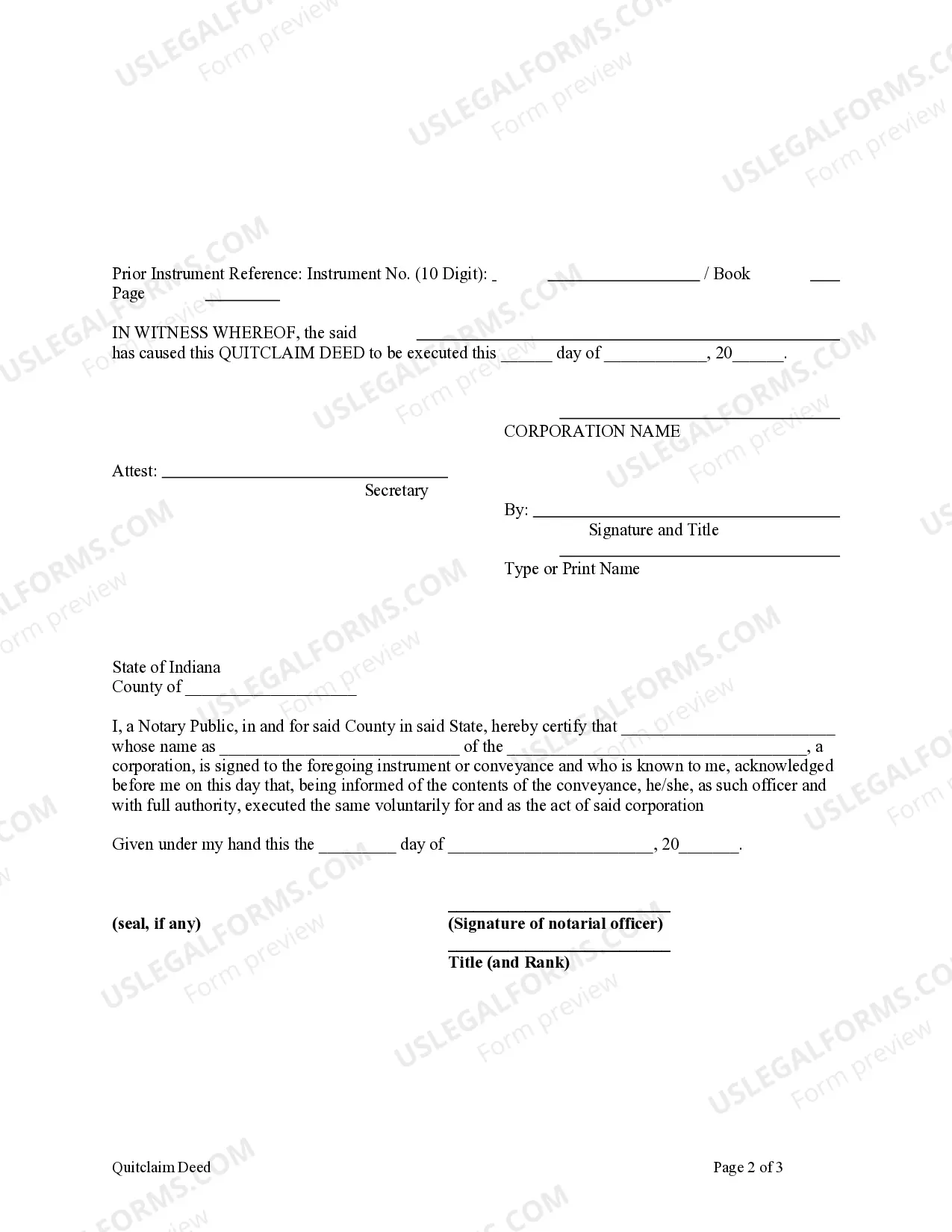
- Signatures: Required signatures of authorized representatives from the corporation and the individuals.
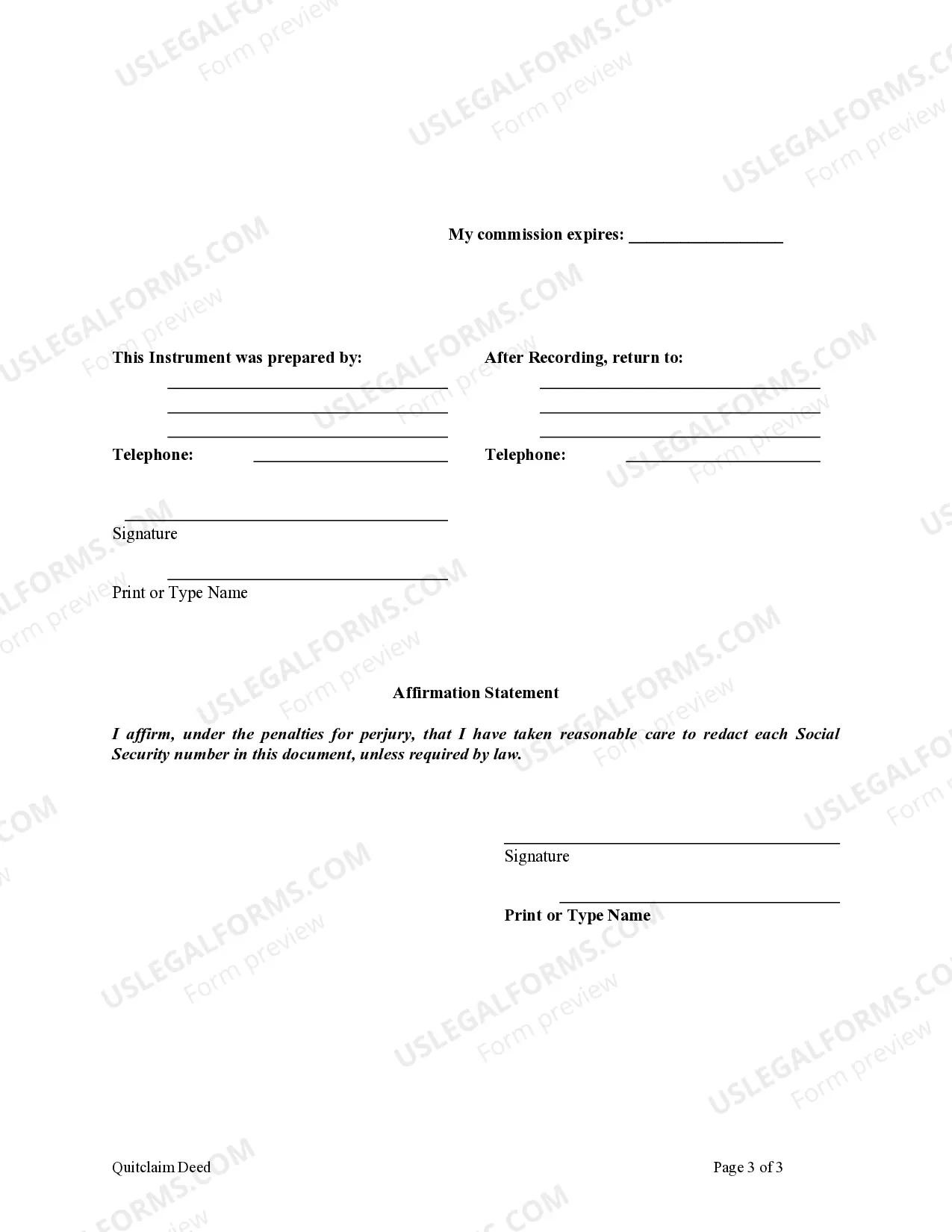
- Notarization section: Area designated for notarization, if applicable.




When to use this form
This quitclaim deed is used when a corporation wants to convey property rights to two individuals without making any warranties about the title. Common scenarios include transferring property as part of a business transaction, real estate development, or personal agreements where formal assurances are not necessary.
Who needs this form
This form is ideal for:
- Corporations looking to transfer property ownership without warranties.
- Individuals receiving property from a corporation.
- Legal professionals facilitating property transfers between entities.
How to prepare this document
- Identify the parties: Fill in the names and addresses of the corporation and the two individuals involved in the transfer.
- Specify the property: Enter the legal description of the property being conveyed.
- Enter the effective date: Indicate the date when the deed will take effect.
- Gather signatures: Ensure that the authorized corporate representative and the grantees sign the form.
- Complete notarization: If required, have the document notarized to validate the transfer.
Does this document require notarization?
This document requires notarization to meet legal standards. US Legal Forms provides secure online notarization powered by Notarize, allowing you to complete the process through a verified video call, available 24/7.
Get your form ready online
Our built-in tools help you complete, sign, share, and store your documents in one place.
Make edits, fill in missing information, and update formatting in US Legal Forms—just like you would in MS Word.
Download a copy, print it, send it by email, or mail it via USPS—whatever works best for your next step.
Sign and collect signatures with our SignNow integration. Send to multiple recipients, set reminders, and more. Go Premium to unlock E-Sign.
If this form requires notarization, complete it online through a secure video call—no need to meet a notary in person or wait for an appointment.
We protect your documents and personal data by following strict security and privacy standards.

Make edits, fill in missing information, and update formatting in US Legal Forms—just like you would in MS Word.

Download a copy, print it, send it by email, or mail it via USPS—whatever works best for your next step.

Sign and collect signatures with our SignNow integration. Send to multiple recipients, set reminders, and more. Go Premium to unlock E-Sign.

If this form requires notarization, complete it online through a secure video call—no need to meet a notary in person or wait for an appointment.

We protect your documents and personal data by following strict security and privacy standards.
Mistakes to watch out for
- Failing to provide a complete legal description of the property.
- Not including all required signatures on the form.
- Using incorrect or outdated information for the parties involved.
Benefits of completing this form online
- Convenience: Download the form immediately after purchase without waiting for delivery.
- Editability: Easily fill out the template with accurate information.
- Reliability: Access a professionally drafted legal form that meets necessary standards.
Looking for another form?





Form popularity
FAQ
The general way to convey real property in Indiana is through a warranty deed. In certain cases, you may also use a quitclaim deed, a deed of trust or a grant deed. Most deeds require the name of the grantor who is the current owner; the grantee (the new owner) as well as the legal property description.
But you might be wondering if an owner can transfer a deed to another person without a real estate lawyer. The answer is yes. Parties to a transaction are always free to prepare their own deeds.A quitclaim deed, for example, is far simpler than a warranty deed.
A Quitclaim Deed must be notarized by a notary public or attorney in order to be valid.Consideration in a Quitclaim Deed is what the Grantee will pay to the Grantor for the interest in the property.
Signing (§ 32-21-2-3) All deed must be executed by one of the following: judge, clerk of a court of record, county auditor, county recorder, notary public, mayor of a city in Indiana or any other state, commissioner appointed in a state other than Indiana by the governor of Indiana, clerk of the city county council
A quitclaim deed is a legal instrument that is used to transfer interest in real property.The owner/grantor terminates (quits) any right and claim to the property, thereby allowing the right or claim to transfer to the recipient/grantee.
In most states you can file a disclaimer or deed of disclaimer that says specifically you were placed in title without your knowledge or consent and disclaim the deed.
If you've recently married and already own a home or other real estate, you may want to add your new spouse to the deed for your property so the two of you own it jointly. To add a spouse to a deed, all you have to do is literally fill out, sign and record a new deed in your county recorder's office.
Step 1: Find your IN quitclaim deed form. Step 2: Gather the information you need. Step 3: Enter the information about the parties. Step 4: Enter the legal description of the property. Step 5: Have the grantor sign the document in the presence of a Notary Public.
Adding someone to your house deed requires the filing of a legal form known as a quitclaim deed. When executed and notarized, the quitclaim deed legally overrides the current deed to your home. By filing the quitclaim deed, you can add someone to the title of your home, in effect transferring a share of ownership.