Indiana Notice of Default for Past Due Payments in connection with Contract for Deed
What is this form?
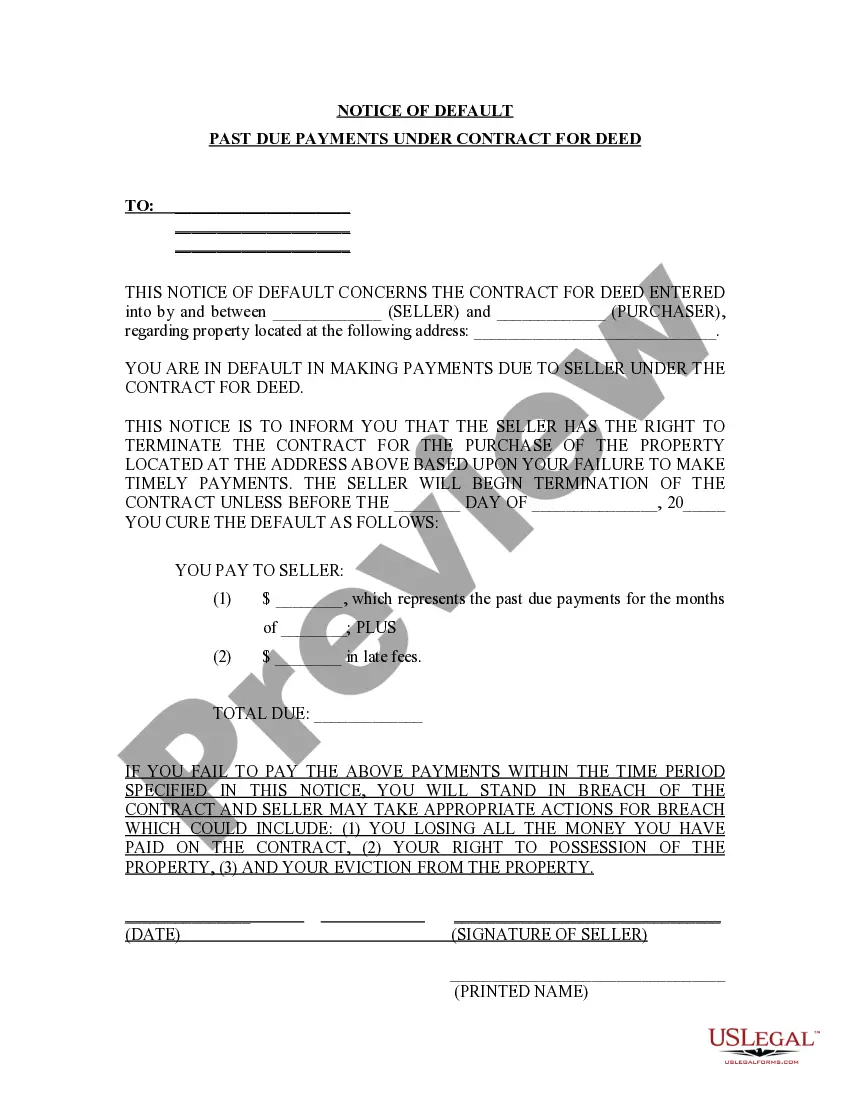
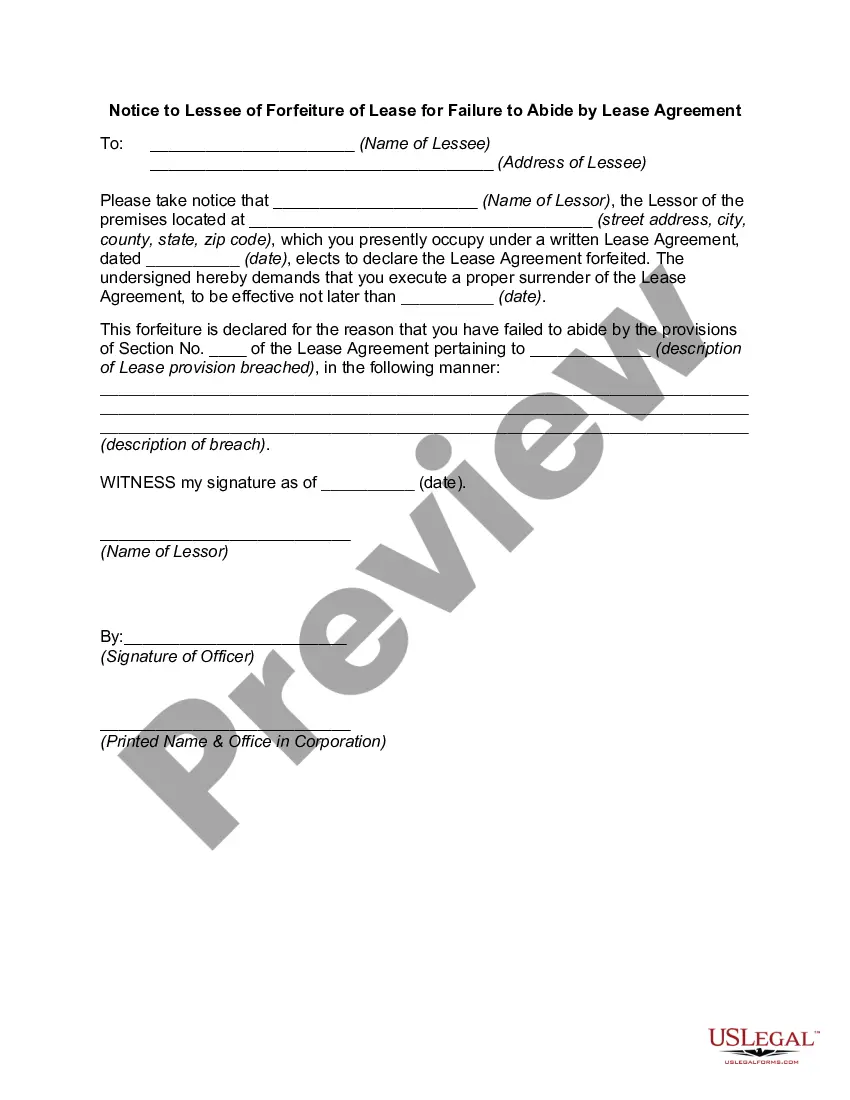
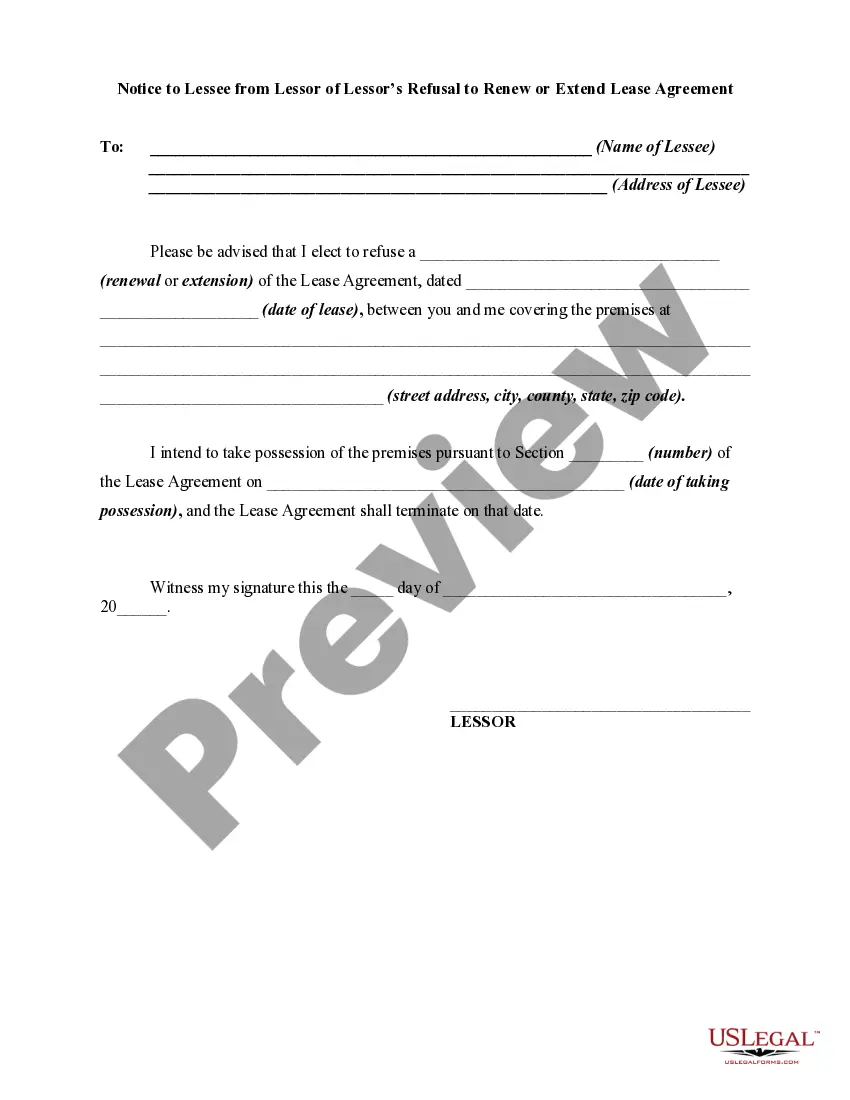
The Notice of Default for Past Due Payments in connection with Contract for Deed is a legal document used by a seller to inform a purchaser that payments due under the contract for deed have not been received. This form serves as an official notification that the terms of the agreement are not being met, and it warns the purchaser that failing to remedy the situation could lead to default of the contract. This form is distinct from other notices as it specifically addresses payment failures within a contract for deed context.
Key components of this form
- Identification of the seller and purchaser involved in the contract.
- Details of the payment terms that have not been fulfilled.
- A statement of the specific late payment amount.
- Notification of consequences for not addressing the payment issue.
- Space for necessary signatures and dates.
When this form is needed
This form should be used when a purchaser has not made timely payments as required by a contract for deed. It is the seller's responsibility to issue this notice before pursuing further actions, such as termination of the contract or seeking legal remedies. Using this form helps formalize the communication regarding the late payment and signals the need for the purchaser to respond promptly to avoid defaulting on the agreement.
Who needs this form
- Sellers who have entered into a contract for deed with a purchaser.
- Purchasers who have missed payments and wish to understand their obligations.
- Attorneys representing either party in disputes related to the contract.
Instructions for completing this form
- Identify and clearly list the full names of the seller and purchaser.
- Detail the payment terms, specifying the due date and overdue amount.
- Include a clear statement of the consequences of defaulting on payments.
- Provide space for signatures, ensuring both parties acknowledge the notice.
- Set a specific deadline for the purchaser to respond or rectify the payment issue.
Notarization guidance
This form does not typically require notarization unless specified by local law. It is important to check local regulations to ensure compliance.
Get your form ready online
Our built-in tools help you complete, sign, share, and store your documents in one place.
Make edits, fill in missing information, and update formatting in US Legal Forms—just like you would in MS Word.
Download a copy, print it, send it by email, or mail it via USPS—whatever works best for your next step.
Sign and collect signatures with our SignNow integration. Send to multiple recipients, set reminders, and more. Go Premium to unlock E-Sign.
If this form requires notarization, complete it online through a secure video call—no need to meet a notary in person or wait for an appointment.
We protect your documents and personal data by following strict security and privacy standards.

Make edits, fill in missing information, and update formatting in US Legal Forms—just like you would in MS Word.

Download a copy, print it, send it by email, or mail it via USPS—whatever works best for your next step.

Sign and collect signatures with our SignNow integration. Send to multiple recipients, set reminders, and more. Go Premium to unlock E-Sign.

If this form requires notarization, complete it online through a secure video call—no need to meet a notary in person or wait for an appointment.

We protect your documents and personal data by following strict security and privacy standards.
Common mistakes
- Failing to provide accurate payment amounts and dates.
- Not including signatures from both parties on the notice.
- Neglecting to state the consequences of continued non-payment.
- Sending the notice through informal means rather than a formal delivery method.
Why use this form online
- Convenient access to a legally validated template created by licensed attorneys.
- Editability to adapt the notice to fit specific situations easily.
- Immediate download to ensure timely communication with the purchaser.
- Clear guidance throughout the completion process, reducing errors.
Looking for another form?



Form popularity
FAQ
An installment agreement is a contractual arrangement that outlines how payments will be made over time for a specific item or service. This agreement typically details the amount, frequency, and duration of payments. Such arrangements are crucial for individuals who wish to avoid an Indiana Notice of Default for Past Due Payments in connection with Contract for Deed by ensuring timely payments.
Contract for Deed Seller Financing. A contract for deed is used by some sellers who finance the sale of their homes. Seller's Ownership Liability. Buyer Default Risk. Seller Performance. Property Liens Could Hinder Purchase.
A contract for deed is an agreement for buying property without going to a mortgage lender. The buyer agrees to pay the seller monthly payments, and the deed is turned over to the buyer when all payments have been made.
The Difference Between Renting to Own and a Contract for Deed. Renting to own usually means renting now, with an option to buy later. When you make this kind of deal, you are still a tenant, and the seller is still a landlord, until the final purchase. A contract for deed is very different.
A land contract is traditionally defined as a conditional real property sale agreement.This agreement generally occurs when a buyer buys a property, but obtaining title is conditioned upon paying the entire purchase price plus any other interest and charges, as applicable. In Indiana, pursuant to Skendzel v.
A disadvantage to the seller is that a contract for deed is frequently characterized by a low down payment and the purchase price is paid in installments instead of one lump sum. If a seller needs funds from the sale to buy another property, this would not be a beneficial method of selling real estate.
Usually the contract requires the buyer to make payments over time with interest payable on the unpaid balance. Once a buyer pays all of the payments called for under the contract, the owner transfers to the buyer a deed to the property.
The average length of a Contract for Deed is five years, but it can be for any amount of time that the buyer and seller agree on. Interest rates on a Contract for Deed are not regulated, so they can be as high or as low as the buyer and seller can agree on.
A disadvantage to the seller is that a contract for deed is frequently characterized by a low down payment and the purchase price is paid in installments instead of one lump sum.The legal fees and time frame for this process will be more extensive than a standard Power of Sale foreclosure.
Loss of Service Control. A major disadvantage of contract management is that the organization gives up a considerable amount of control over the services that will be provided to customers. Potential Time Delays. Loss of Business Flexibility. Loss of Product Quality. Compliance and Legal Issues.