Illinois Last Will and Testament for a Married Person with No Children
Understanding this form
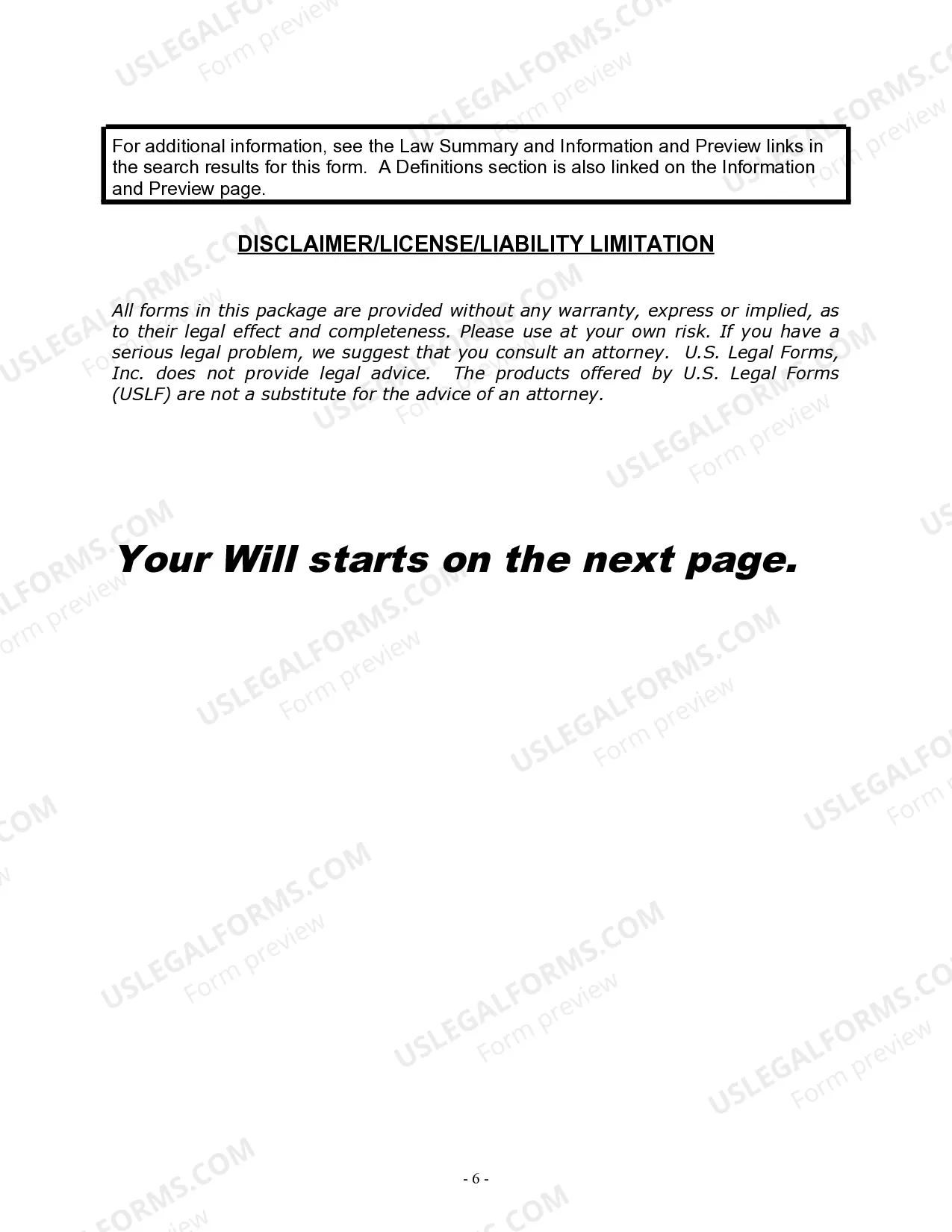
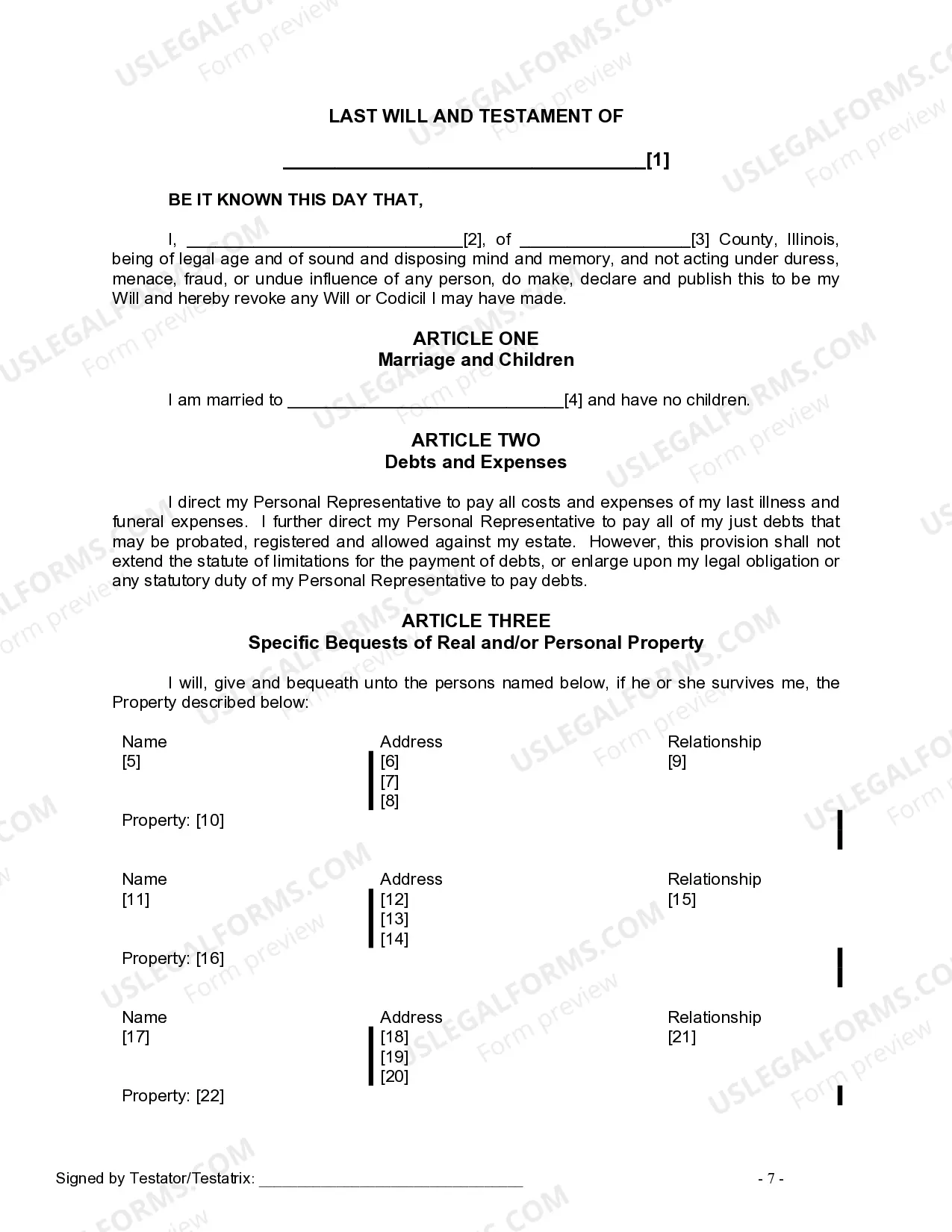
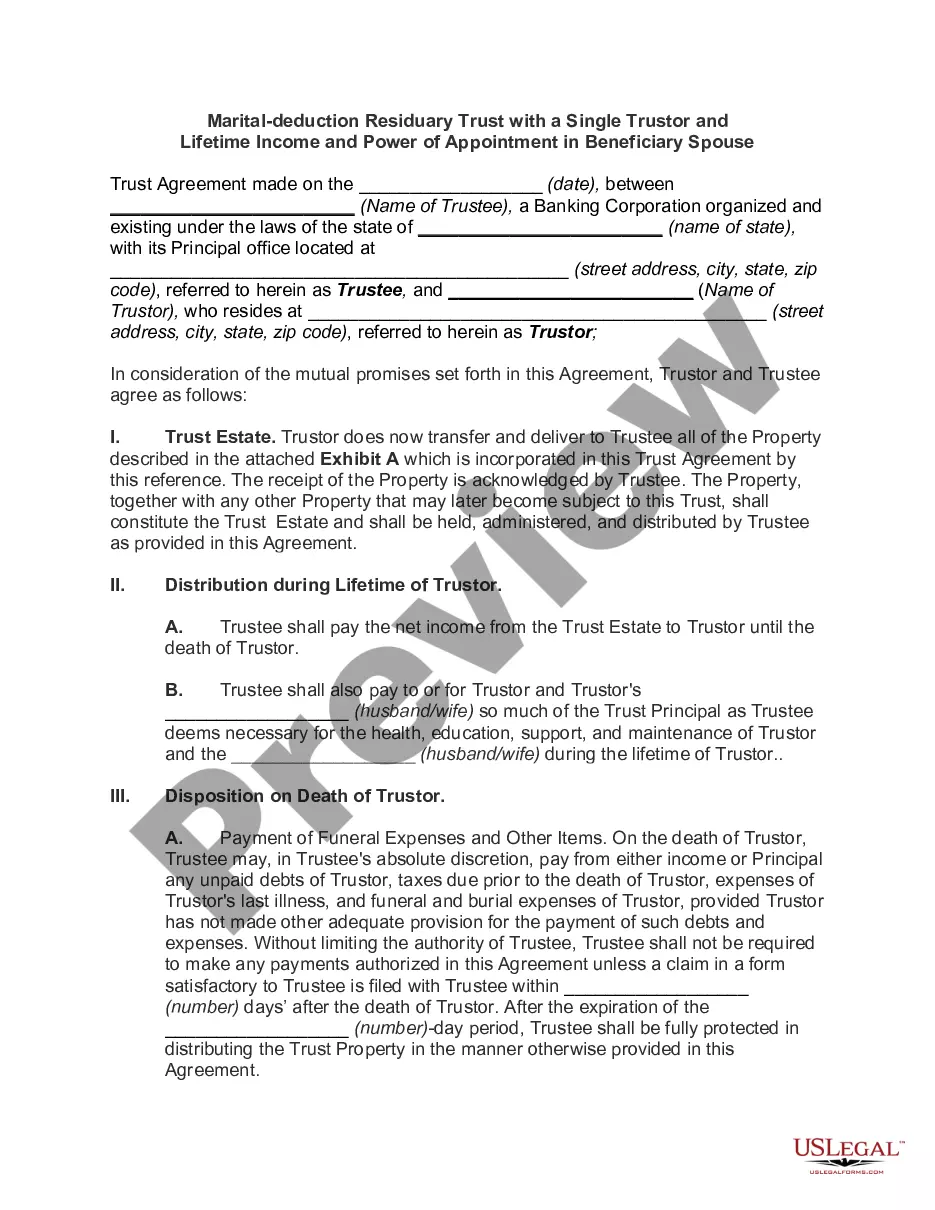
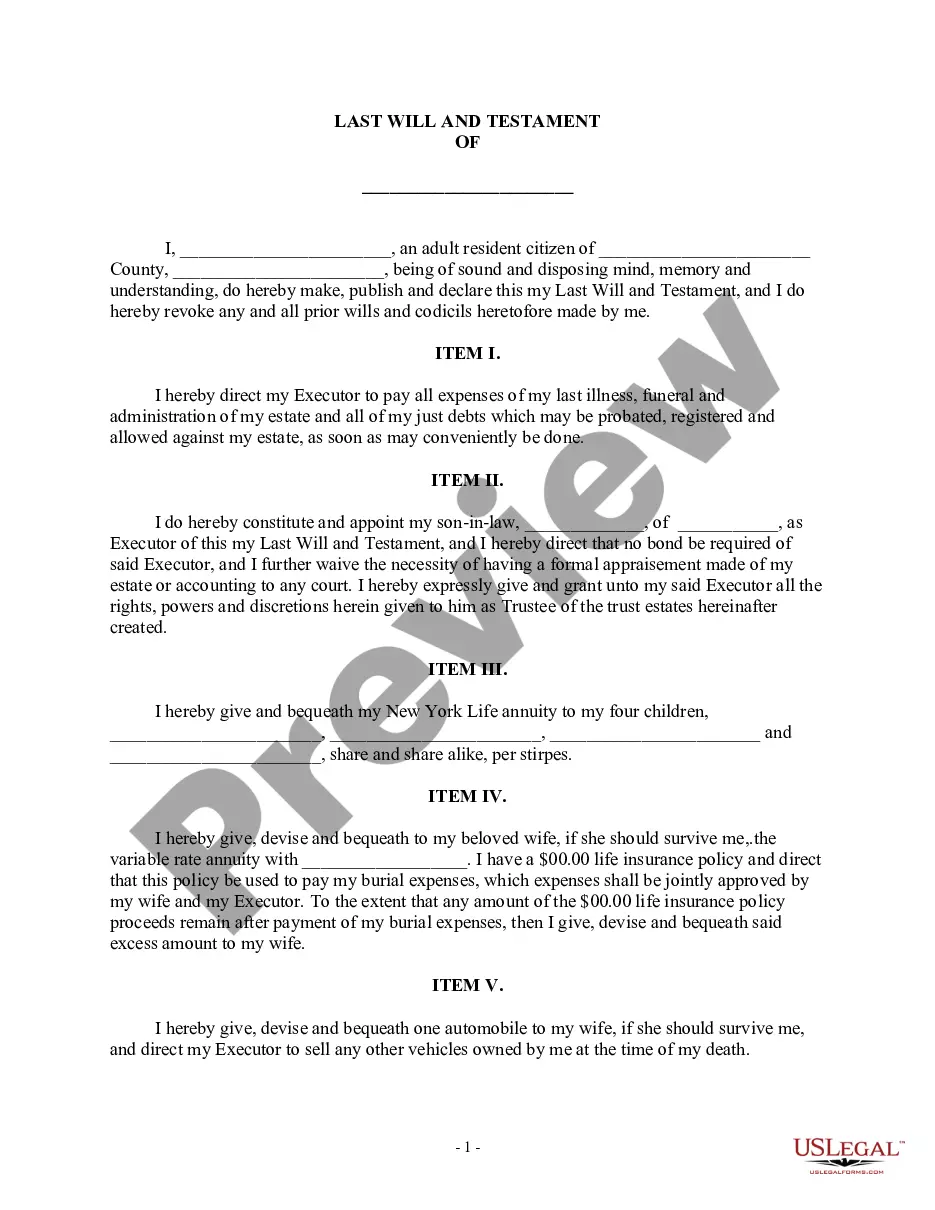
This Last Will and Testament for a Married Person with No Children is a legal document that specifies how your assets will be distributed upon your death, and it appoints a personal representative to manage your estate. Unlike other wills, this form is tailored specifically for individuals who are married and do not have children, ensuring that your spouse is prioritized in the inheritance process.
Form components explained
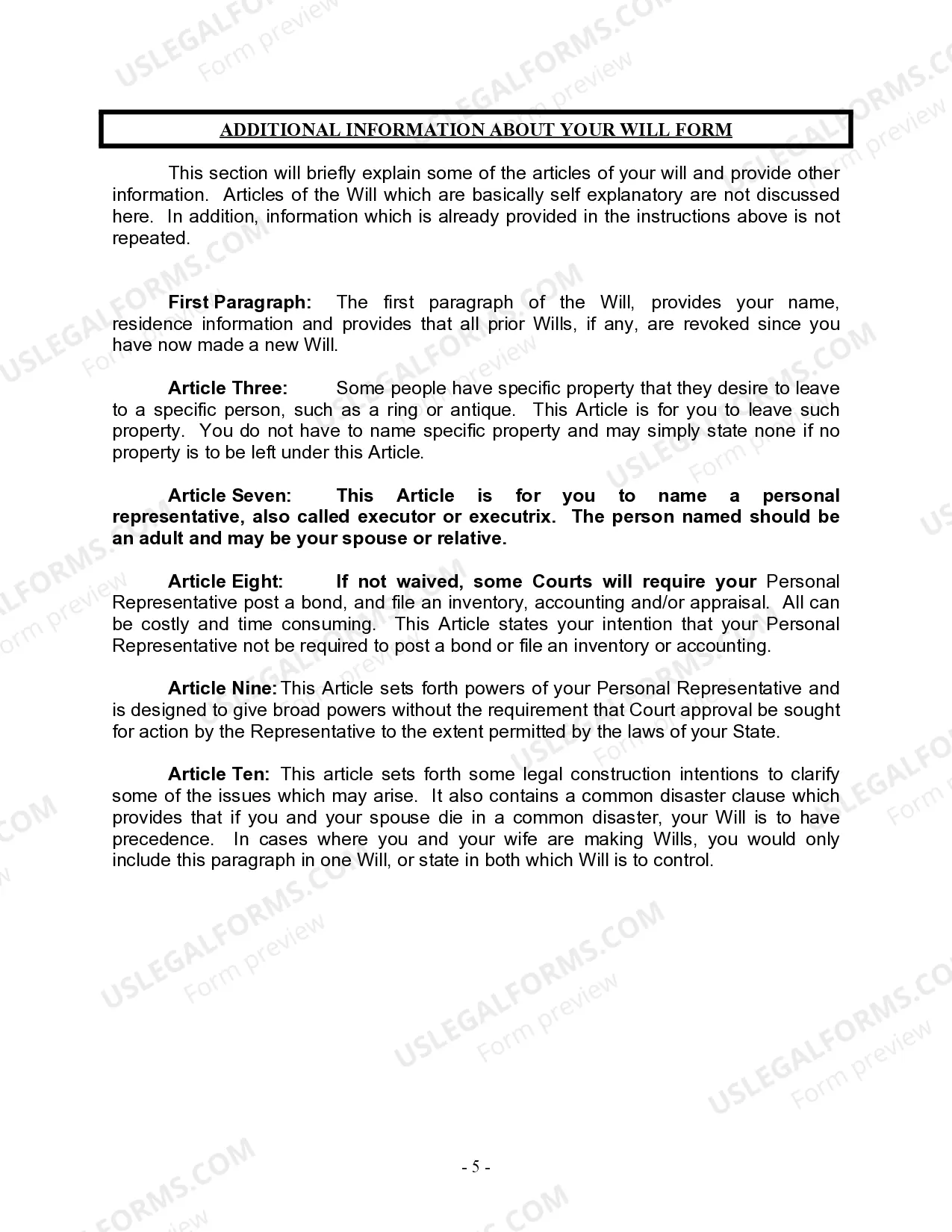
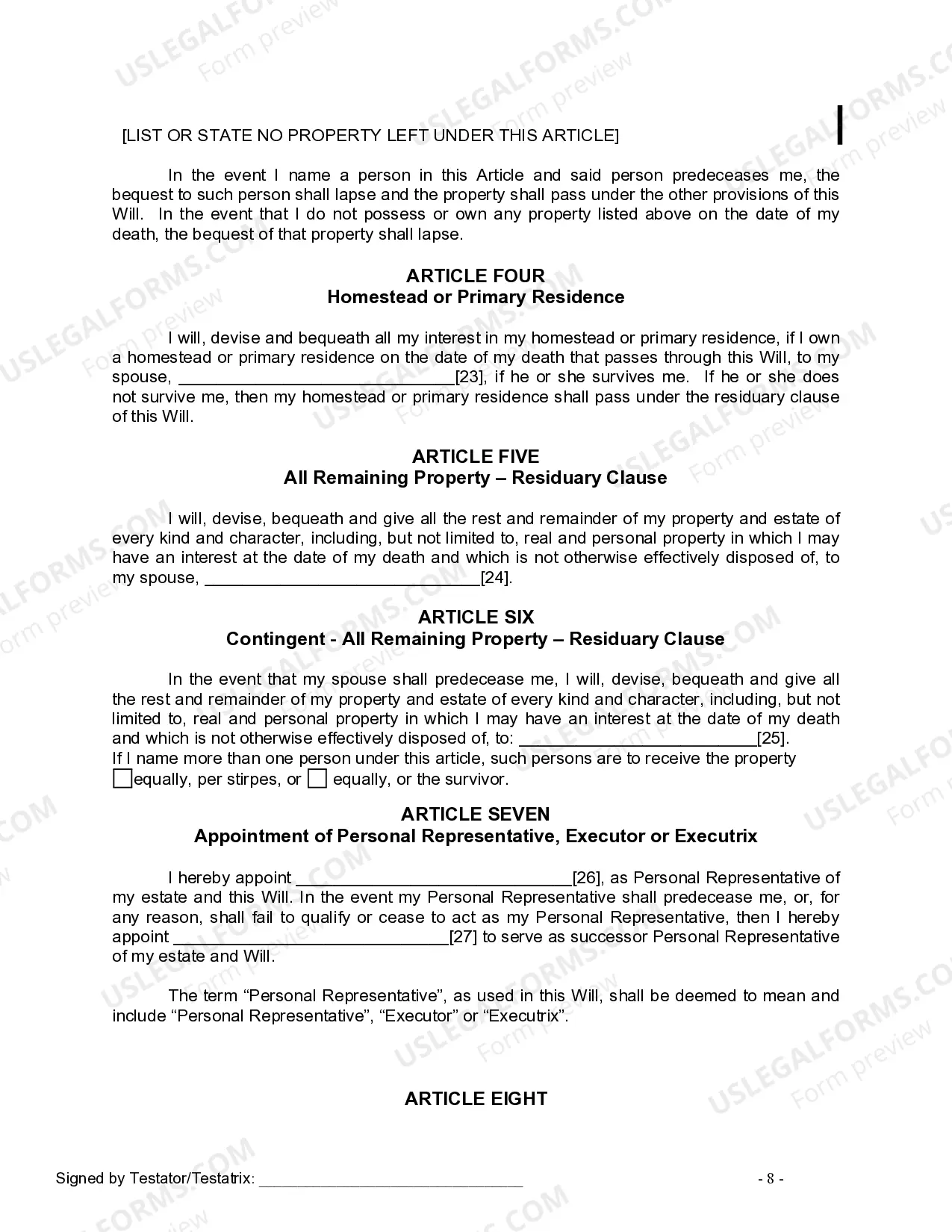
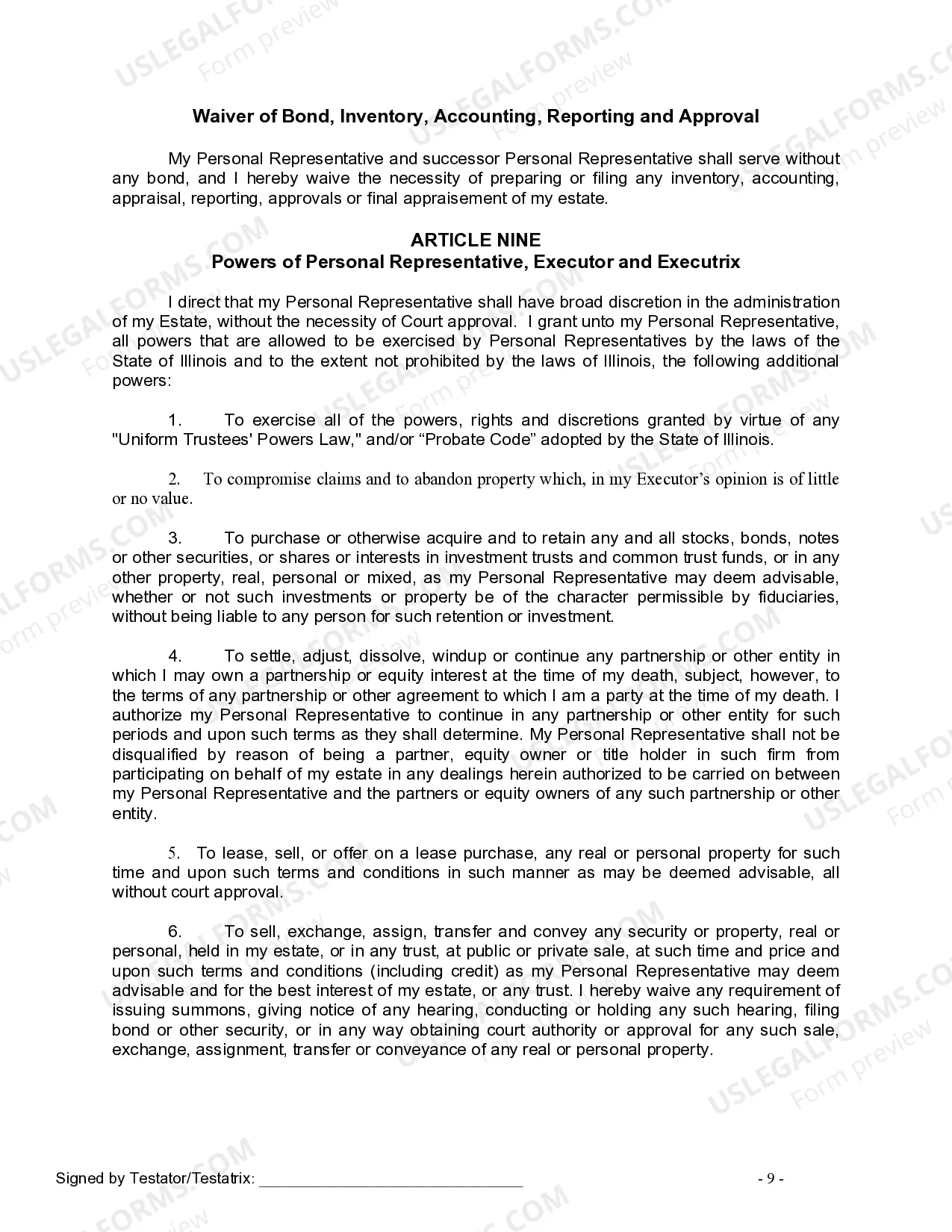
- Appointment of personal representative or executor to manage your estate.
- Designations for specific property bequests and who receives them.
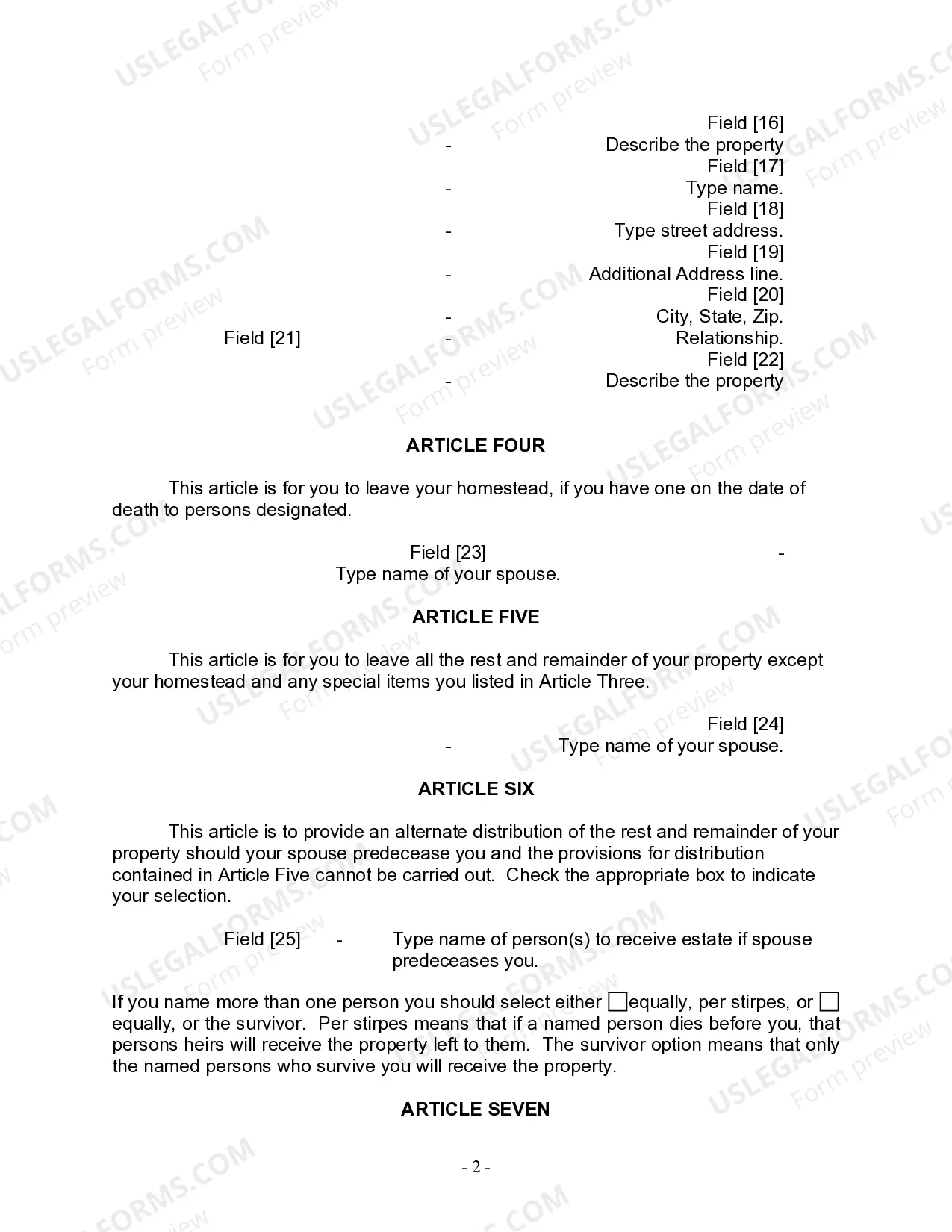
- Provisions for distribution of the homestead to your spouse.
- Alternate beneficiaries in case your spouse predeceases you.
- Guidelines for the signing and witnessing process to ensure legality.




Situations where this form applies
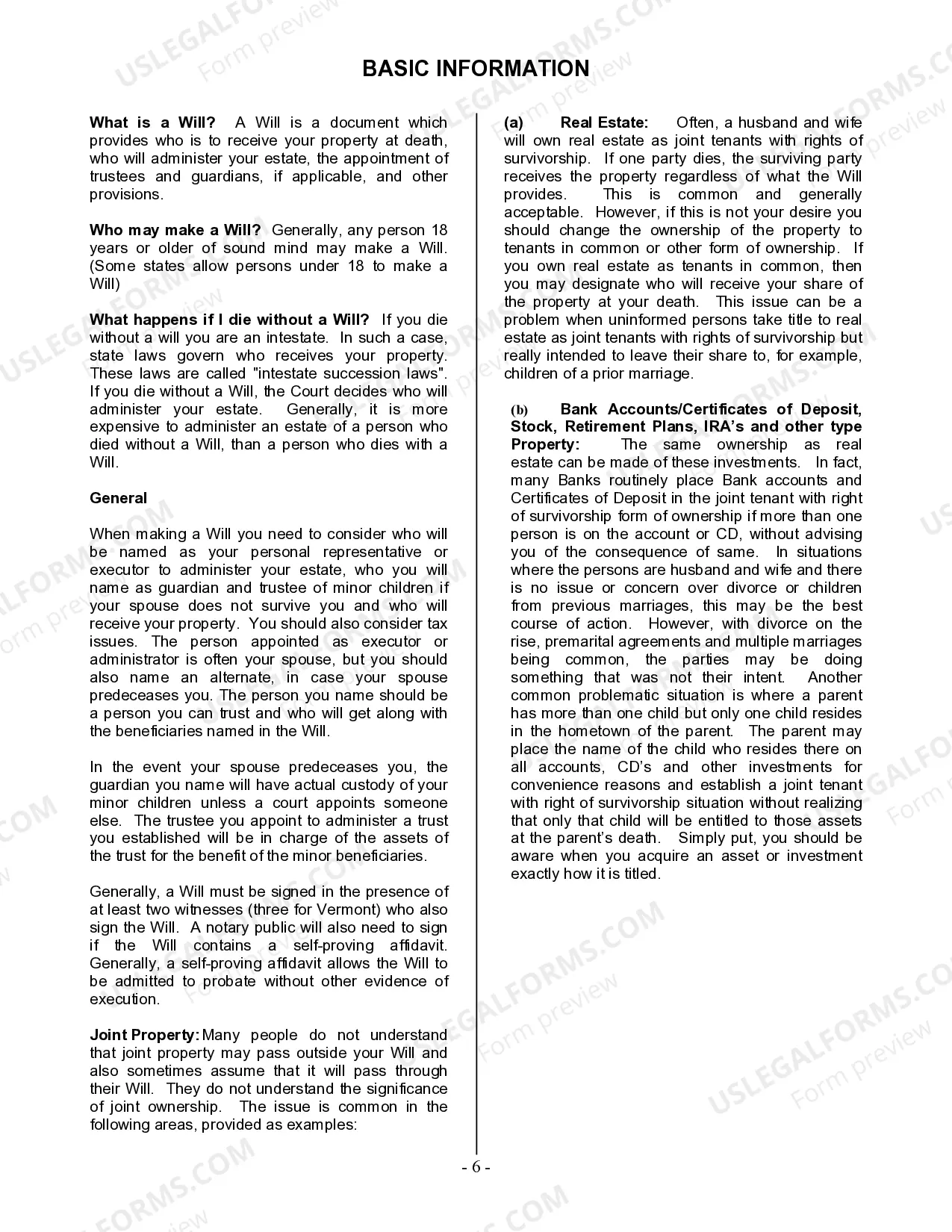
This form is needed in situations where a married person without children desires to have a legally binding document outlining asset distribution upon their death. It is especially useful for ensuring that your spouse receives your assets directly and can simplify the probate process.
Who should use this form
- Married individuals without children who wish to prepare a last will.
- Individuals wanting to designate a personal representative to handle their estate.
- People looking to specify their property distribution to their spouse.
How to complete this form
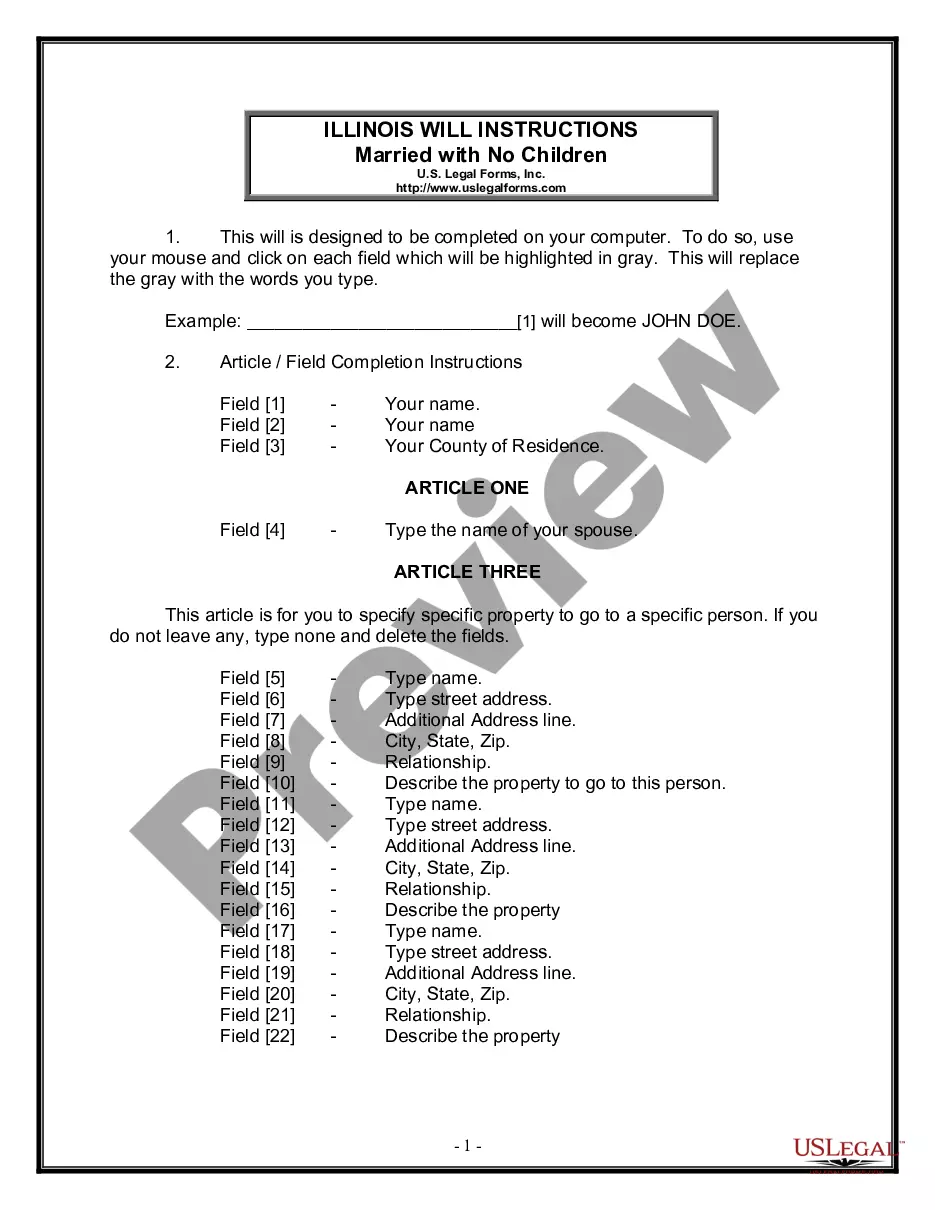
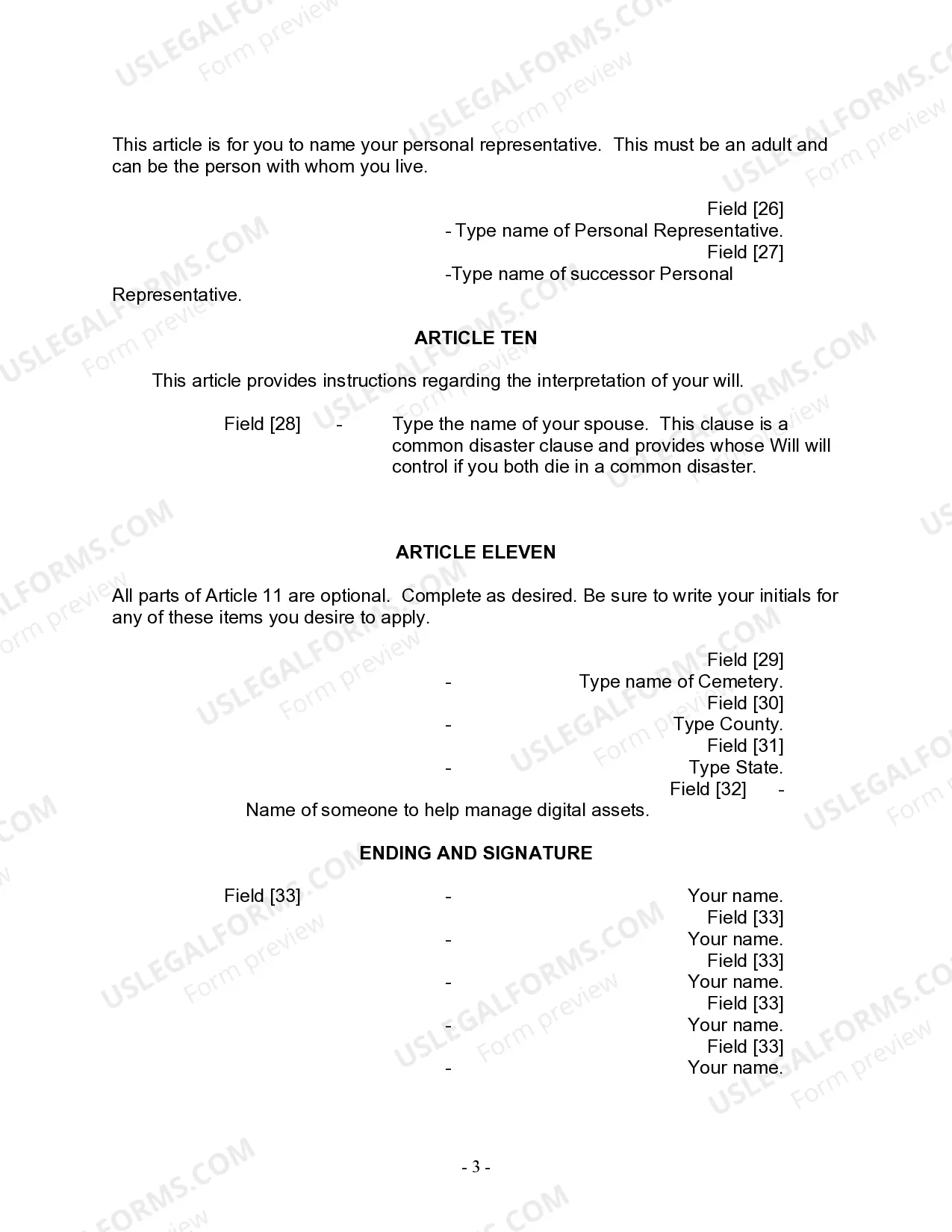
- Fill out your personal information, including your name and county of residence.
- Specify your spouse's name and any specific property you wish to bequeath.
- Designate your personal representative and any alternate representatives.
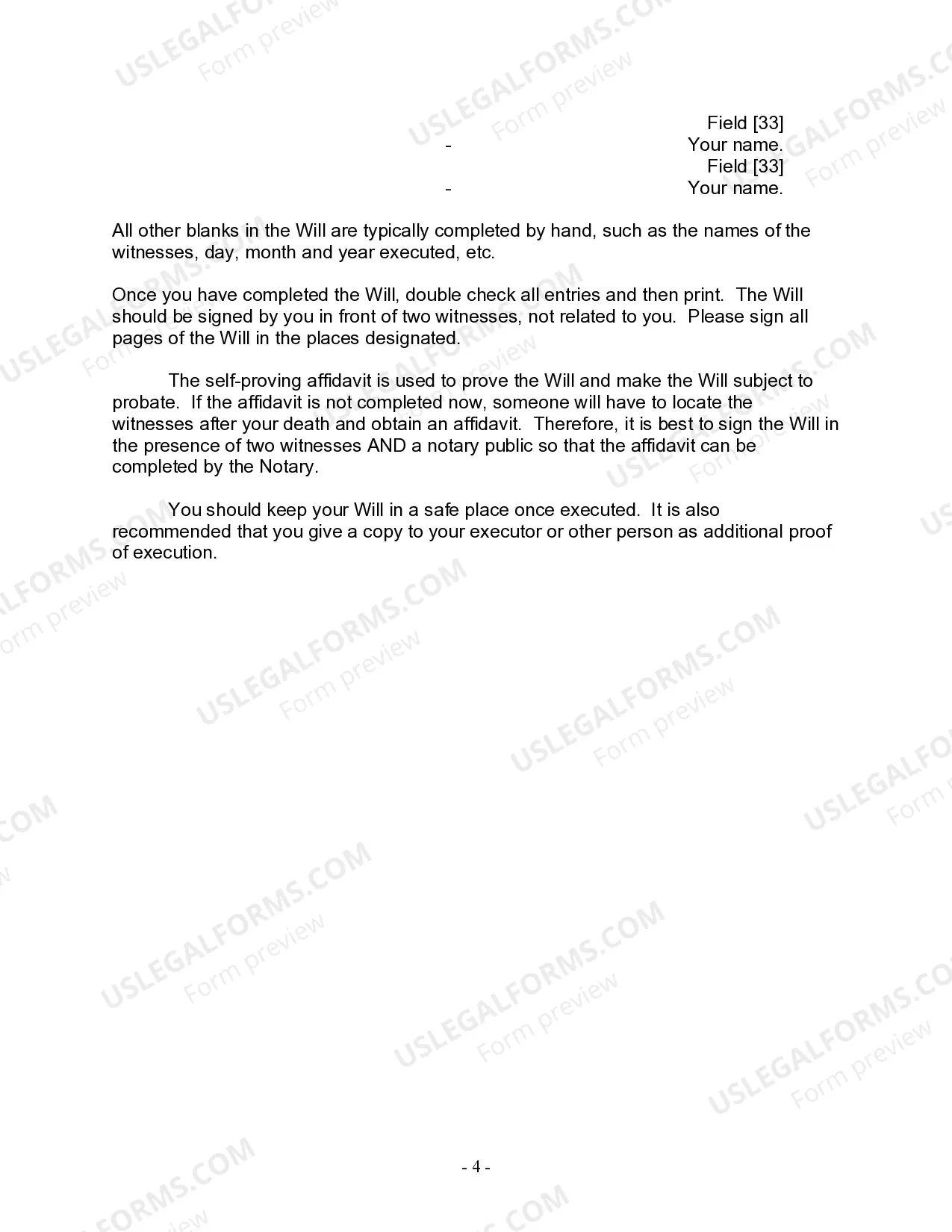
- Complete the signing section in the presence of two witnesses and a notary public if required.
- Verify all entries and ensure the document is stored in a safe place after execution.
Is notarization required?
Yes, this form must be notarized to be legally valid. It is recommended to sign the will in the presence of a notary public, which can assist in ensuring that the self-proving affidavit is correctly completed.
Get your form ready online
Our built-in tools help you complete, sign, share, and store your documents in one place.
Make edits, fill in missing information, and update formatting in US Legal Forms—just like you would in MS Word.
Download a copy, print it, send it by email, or mail it via USPS—whatever works best for your next step.
Sign and collect signatures with our SignNow integration. Send to multiple recipients, set reminders, and more. Go Premium to unlock E-Sign.
If this form requires notarization, complete it online through a secure video call—no need to meet a notary in person or wait for an appointment.
We protect your documents and personal data by following strict security and privacy standards.

Make edits, fill in missing information, and update formatting in US Legal Forms—just like you would in MS Word.

Download a copy, print it, send it by email, or mail it via USPS—whatever works best for your next step.

Sign and collect signatures with our SignNow integration. Send to multiple recipients, set reminders, and more. Go Premium to unlock E-Sign.

If this form requires notarization, complete it online through a secure video call—no need to meet a notary in person or wait for an appointment.

We protect your documents and personal data by following strict security and privacy standards.
Common mistakes to avoid
- Not signing the will in front of the required witnesses.
- Failing to keep a copy of the will in a secure location.
- Not specifying alternate beneficiaries if your spouse predeceases you.
Why use this form online
- Convenient and accessible: Complete the form from your computer.
- Edit and customize your will easily before finalizing it.
- Guidance throughout the process to ensure compliance with legal standards.
Key takeaways
- The Last Will and Testament is essential for outlining how your assets will be handled after death.
- It is crucial to appoint a trustworthy personal representative to execute your wishes.
- Proper execution, including witnesses and notarization, is necessary for the will's validity.
Looking for another form?
Form popularity
FAQ
How Do I Find Marriage Records In Illinois? Marriage records for unions that occured in the state of Illinois can be obtained by querying the office of the County Clerk in the county where the license was issued. To obtain this record, interested persons may contact the concerned county clerk in person or via mail.
Bring with you a form of identification, such as a birth certificate, driver's license, or passport. The marriage license is valid for 60 days, and is valid only in the county in which it was issued, which means that your marriage ceremony must take place within that county.
Illinois divorce records are maintained by the Illinois Department of Public Health's Division of Vital Records as well as by the circuit clerk in the county courthouse where the divorce was finalized. The Division of Vital Records carries marriage and divorce Indexes from January 1962 to present day.
FamilySearch is a free website with indexes and some images to many Family History Library vital records collections. GenWed is a free genealogical research database for marriage records and a directory to other marriage records online for the United States.
Go to the courthouse of the city where the marriage was likely to occur. Public records can be useful for finding out whether someone is married now, or what their marriage history has been in the past. Marriage records are public; you can usually see a copy for free or for a small fee.
Marriage records are not kept by the Illinois Department of Public Health, Division of Vital Records. Certified copies are only available at the county clerk in the county where the marriage occurred (see RESOURCES in the right-hand column and click on List of County Clerks).
Marriage records are not kept by the Illinois Department of Public Health, Division of Vital Records. Certified copies are only available at the county clerk in the county where the marriage occurred (see RESOURCES in the right-hand column and click on List of County Clerks).
How Do I Find Marriage Records In Illinois? Marriage records for unions that occured in the state of Illinois can be obtained by querying the office of the County Clerk in the county where the license was issued. To obtain this record, interested persons may contact the concerned county clerk in person or via mail.
Only marital property is divided during an Illinois divorce. Marital property generally includes property obtained by either spouse during the marriage.For example, if a spouse receives an inheritance from a relative during the marriage, those funds are typically considered separate property.